New Jersey Notice of Dishonored Check - Civil - Keywords: bad check, bounced check
Understanding this form
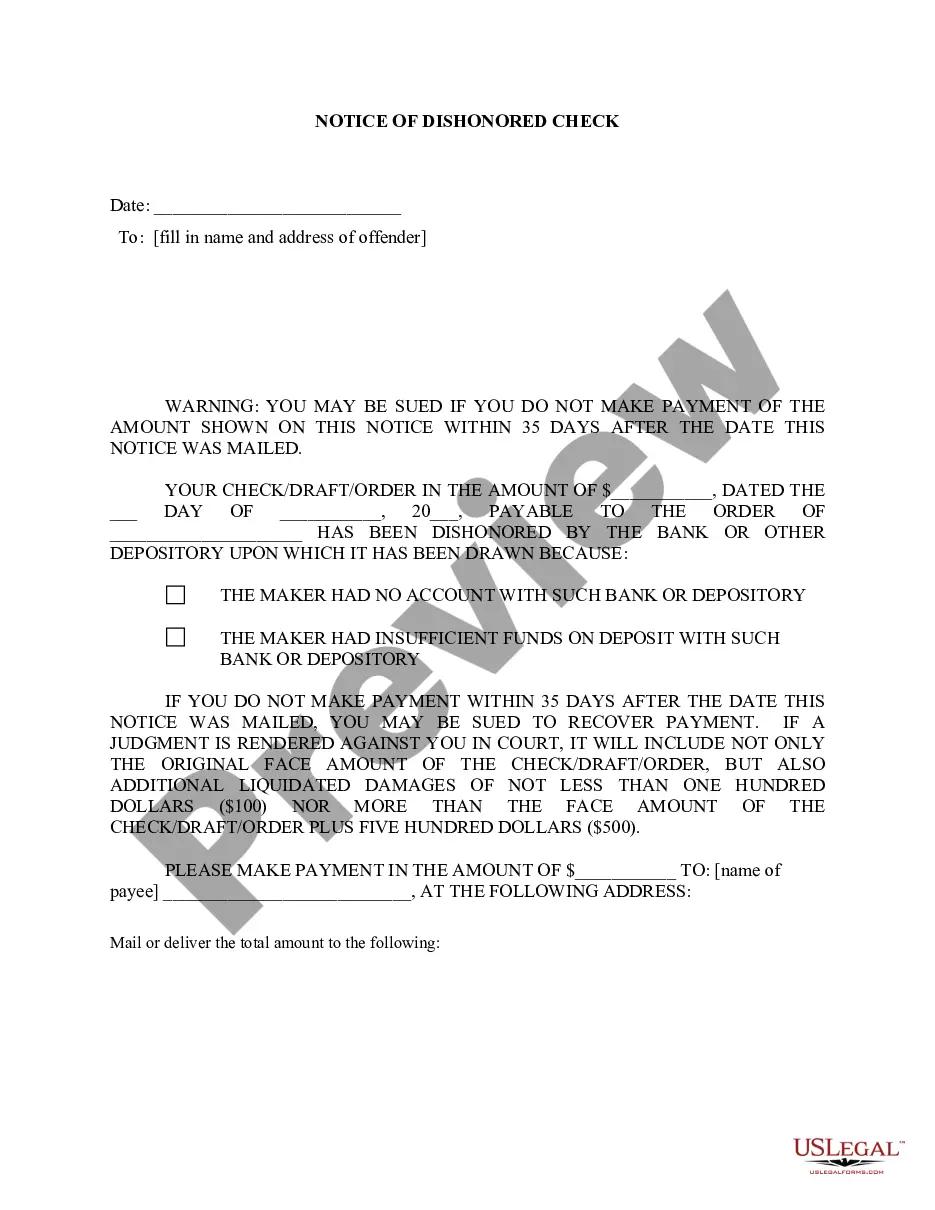
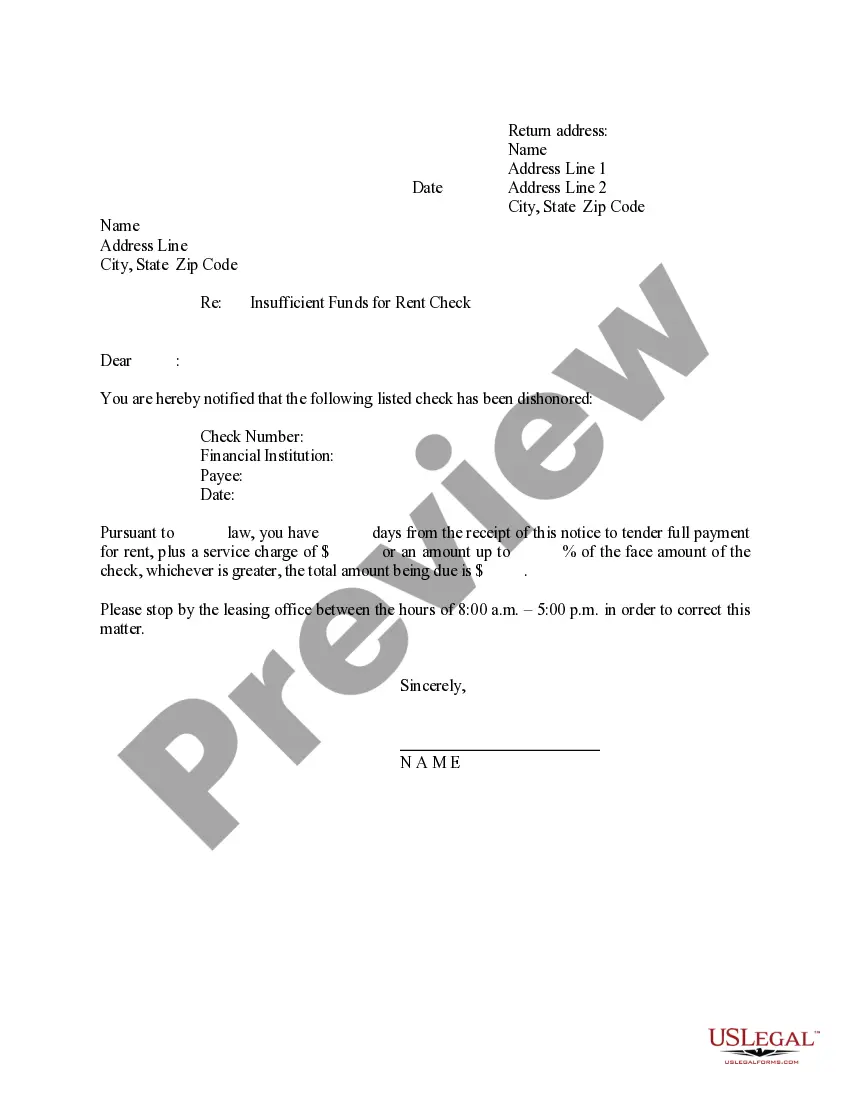
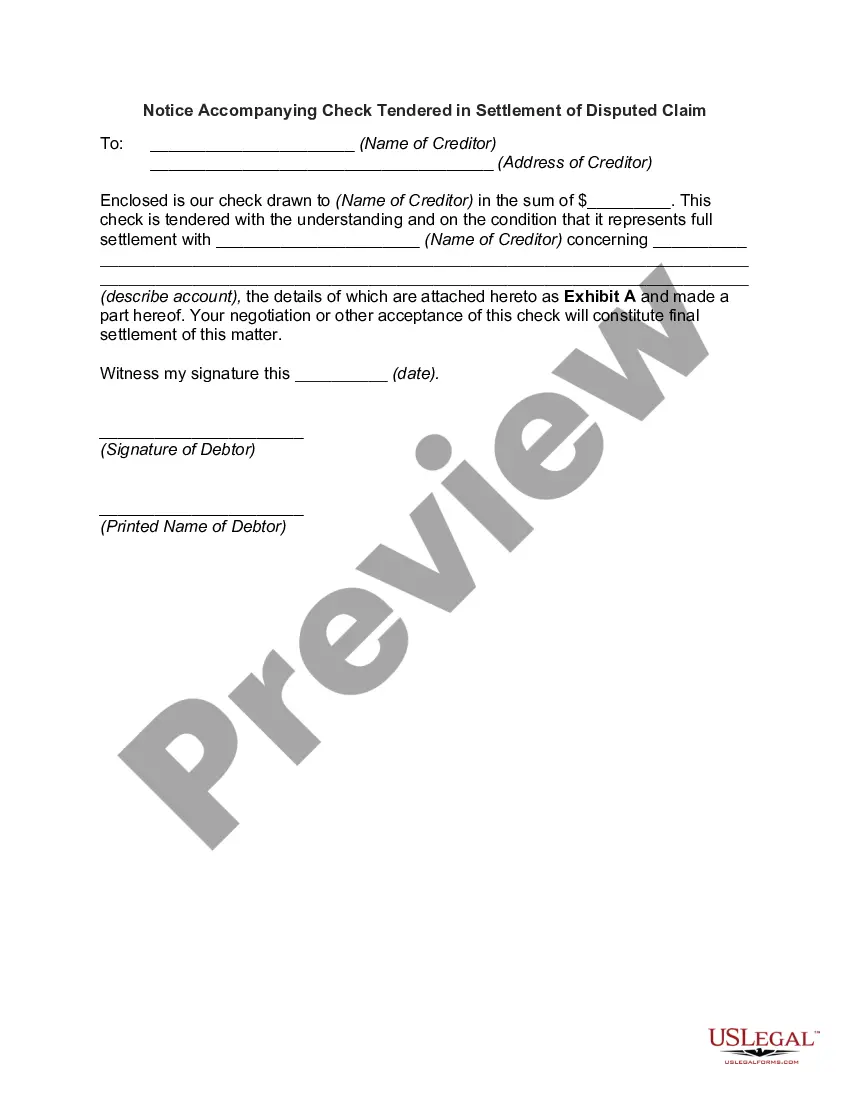
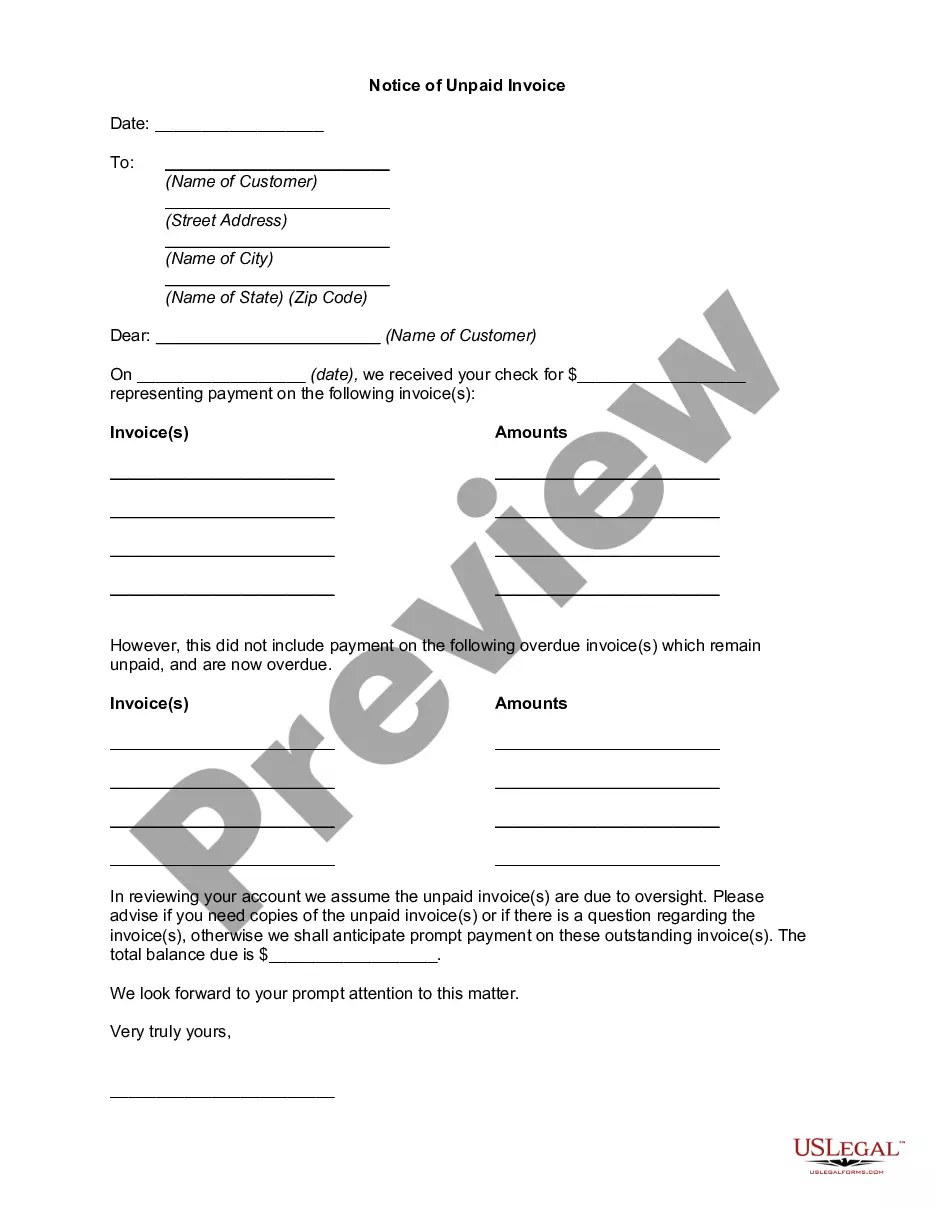
The Notice of Dishonored Check is a legal document used to inform an individual or entity that their check has been returned unpaid by the bank, commonly referred to as a bounced check or bad check. This form serves as a formal notification to the debtor, highlighting the reasons for the dishonor, which may include insufficient funds or the absence of an account. It is essential for a business owner or any recipient of the dishonored check to send this notice to comply with state law, which may detail specific steps for attempting to recover the amount owed.
What’s included in this form
- Amount of the dishonored check or draft.
- Date of the dishonored check.
- Name of the payee (the person or entity to whom the check was written).
- Reasons for dishonor (e.g., no account or insufficient funds).
- Deadline for payment (typically 35 days following notice).
- Potential legal consequences for failure to pay.

Common use cases
This form should be used when a check you received has bounced or been returned unpaid. If a business or individual has received a bad check, sending this notice is an important step to formally alert the debtor. This form acts as a precursor to potential legal action if the debt is not settled within the specified timeframe.
Who should use this form
This notice is intended for:
- Business owners who have accepted checks as payment.
- Individuals who have received checks that have been dishonored.
- Legal representatives acting on behalf of creditors.
Instructions for completing this form
- Enter the amount of the check that was dishonored.
- Specify the date on which the check was written.
- Provide the name of the payee, as it appears on the check.
- Select the appropriate reason for the dishonor of the check.
- Record the date on which this notice is mailed.
Does this document require notarization?
This form does not typically require notarization unless specified by local law. It is advisable to verify your local regulations to ensure compliance.
Get your form ready online
Our built-in tools help you complete, sign, share, and store your documents in one place.
Make edits, fill in missing information, and update formatting in US Legal Forms—just like you would in MS Word.
Download a copy, print it, send it by email, or mail it via USPS—whatever works best for your next step.
Sign and collect signatures with our SignNow integration. Send to multiple recipients, set reminders, and more. Go Premium to unlock E-Sign.
If this form requires notarization, complete it online through a secure video call—no need to meet a notary in person or wait for an appointment.
We protect your documents and personal data by following strict security and privacy standards.

Make edits, fill in missing information, and update formatting in US Legal Forms—just like you would in MS Word.

Download a copy, print it, send it by email, or mail it via USPS—whatever works best for your next step.

Sign and collect signatures with our SignNow integration. Send to multiple recipients, set reminders, and more. Go Premium to unlock E-Sign.

If this form requires notarization, complete it online through a secure video call—no need to meet a notary in person or wait for an appointment.

We protect your documents and personal data by following strict security and privacy standards.
Common mistakes
- Failing to provide all necessary information about the check.
- Missing the deadline for sending the notice.
- Not specifying the reason for the check's dishonor.
Why complete this form online
- Convenience of instant downloadâno waiting for physical copies.
- Easy to customize with your specific details.
- Access to accurate templates drafted by licensed attorneys.
Legal use & context
- This notice serves as a legal first step in seeking recovery for a dishonored check.
- It is vital for establishing a paper trail should the matter escalate to legal action.
- Failure to send this notice may affect your ability to collect further damages in court.
Key takeaways
- This notice is a necessary step in the process of recovering funds from a dishonored check.
- Providing complete and accurate information is essential to ensure the effectiveness of the notice.
- Understanding your state's specific requirements can significantly impact the process.
Looking for another form?

Form popularity
FAQ
A bounced payment occurs when there isn't enough money in your current account to fund a pre-arranged payment, so your bank refuses to make the payment. Banks usually charge you for each bounced payment.If a bank refuses to make a payment it must generally tell you as soon as possible and explain why.
The phrase in payment of an obligation means that the check should not be issued in payment of a pre-existing obligation. When a check was issued in payment of a debt contracted prior to such issuance, there is no estafa.This law has made the mere act of issuing a bouncing check a criminal act.
But, the bank never notified me, so other checks bounced and I got hit with several overdraft fees. Shouldn't the bank have sent me a notice? The bank is not required to notify you when a check bounces because of insufficient funds. You are responsible for keeping a current and accurate check/transaction register.
When there are insufficient funds in an account, and a bank decides to bounce a check, it charges the account holder an NSF fee. If the bank accepts the check, but it makes the account negative, the bank charges an overdraft (OD) fee. If the account stays negative, the bank may charge an extended overdraft fee.