New Jersey Warranty Deed from Husband and Wife to a Trust
About this form
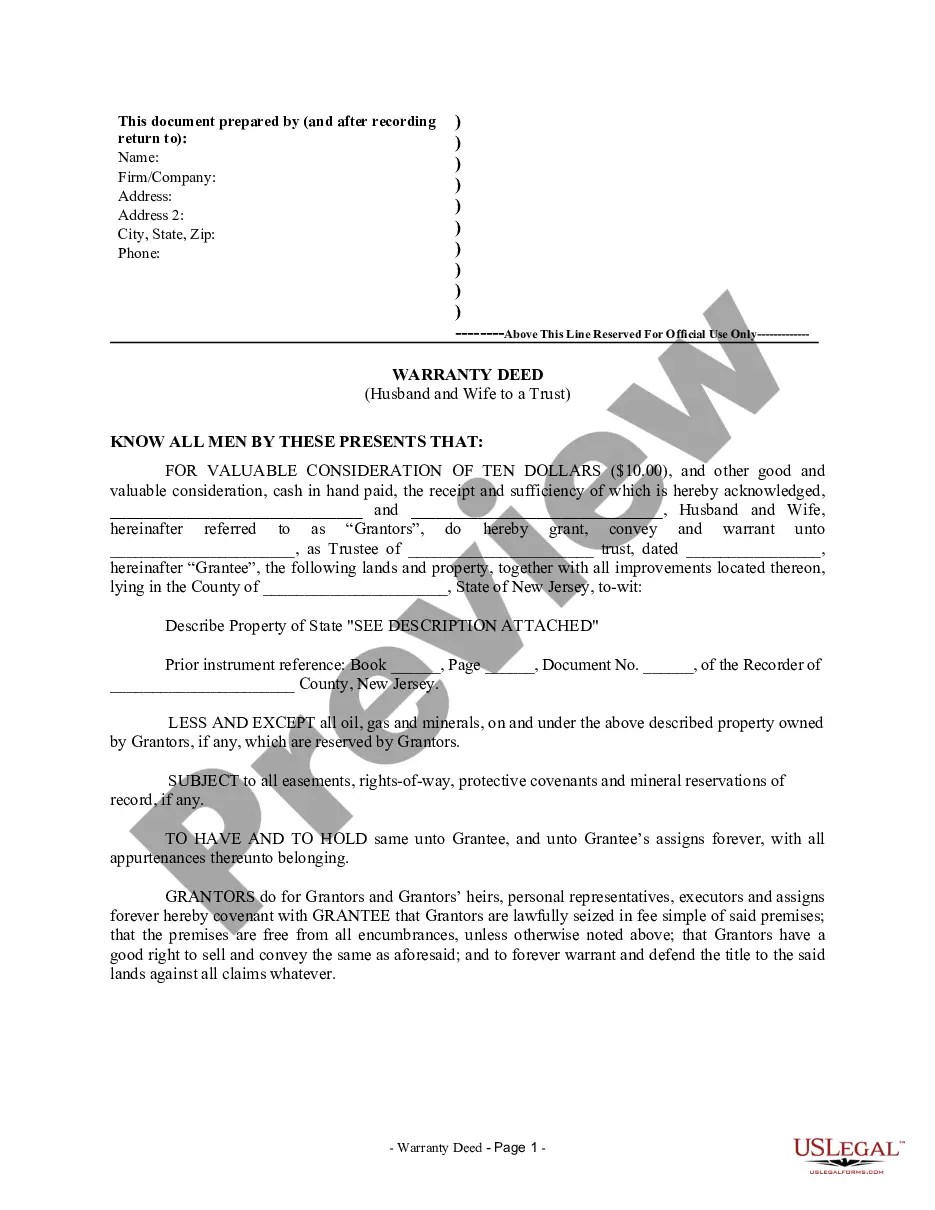
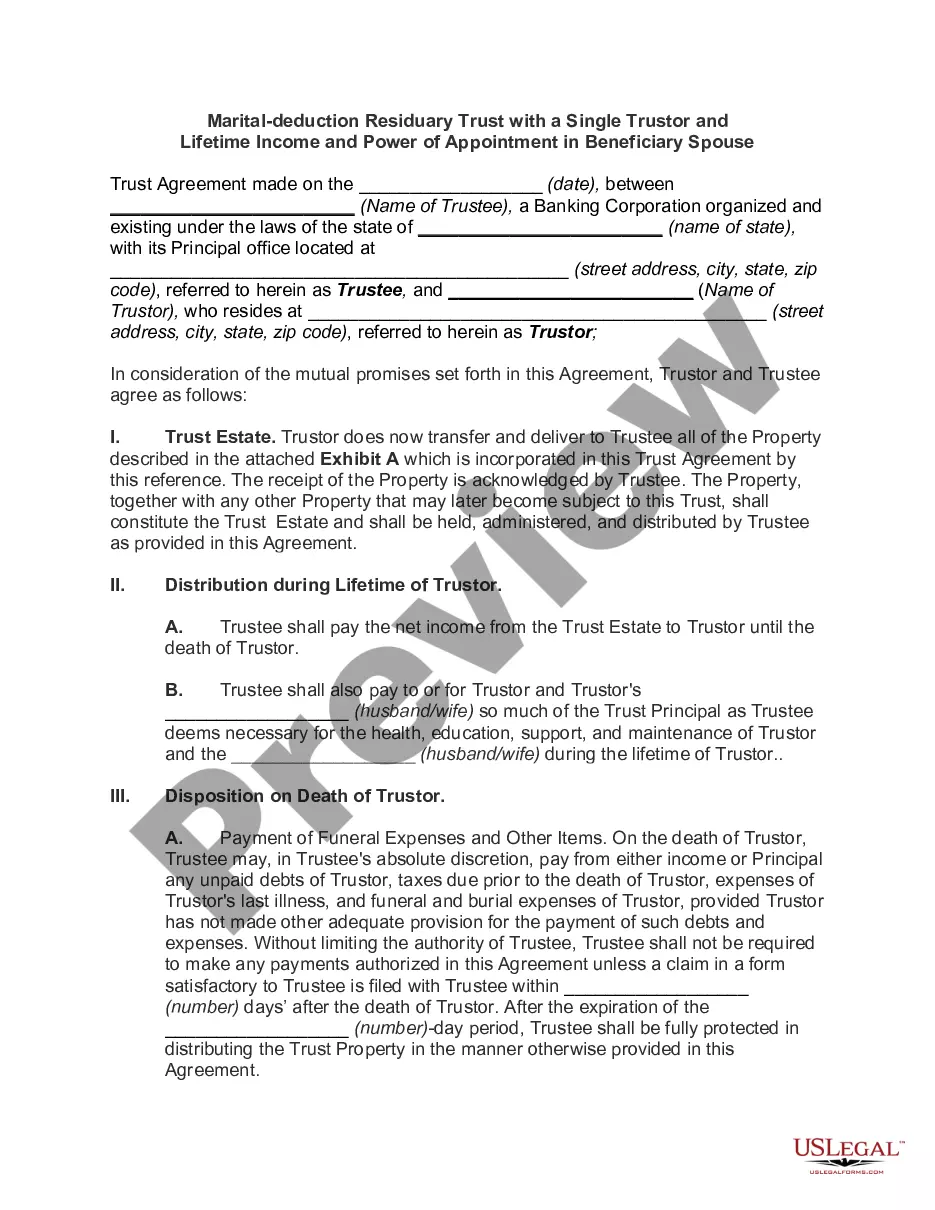
This Warranty Deed from Husband and Wife to a Trust is a legal document used to transfer property ownership from a married couple (the grantors) to a trust (the grantee). This form provides a warranty of the title, meaning the grantors assure that they own the property free of encumbrances and have the right to transfer it. This type of deed is essential when establishing a trust to manage and protect assets while ensuring that any mineral rights beneath the property are excluded from the transfer.
Key parts of this document
- Identification of grantors: Names of the husband and wife transferring the property.
- Identification of grantee: Name of the trust receiving the property.
- Description of property: Detailed description of the real estate being conveyed.
- Reservation clause: Excludes rights to oil, gas, and minerals beneath the property from the transfer.
- Covenant of title: Assurance that grantors hold clear title to the property.
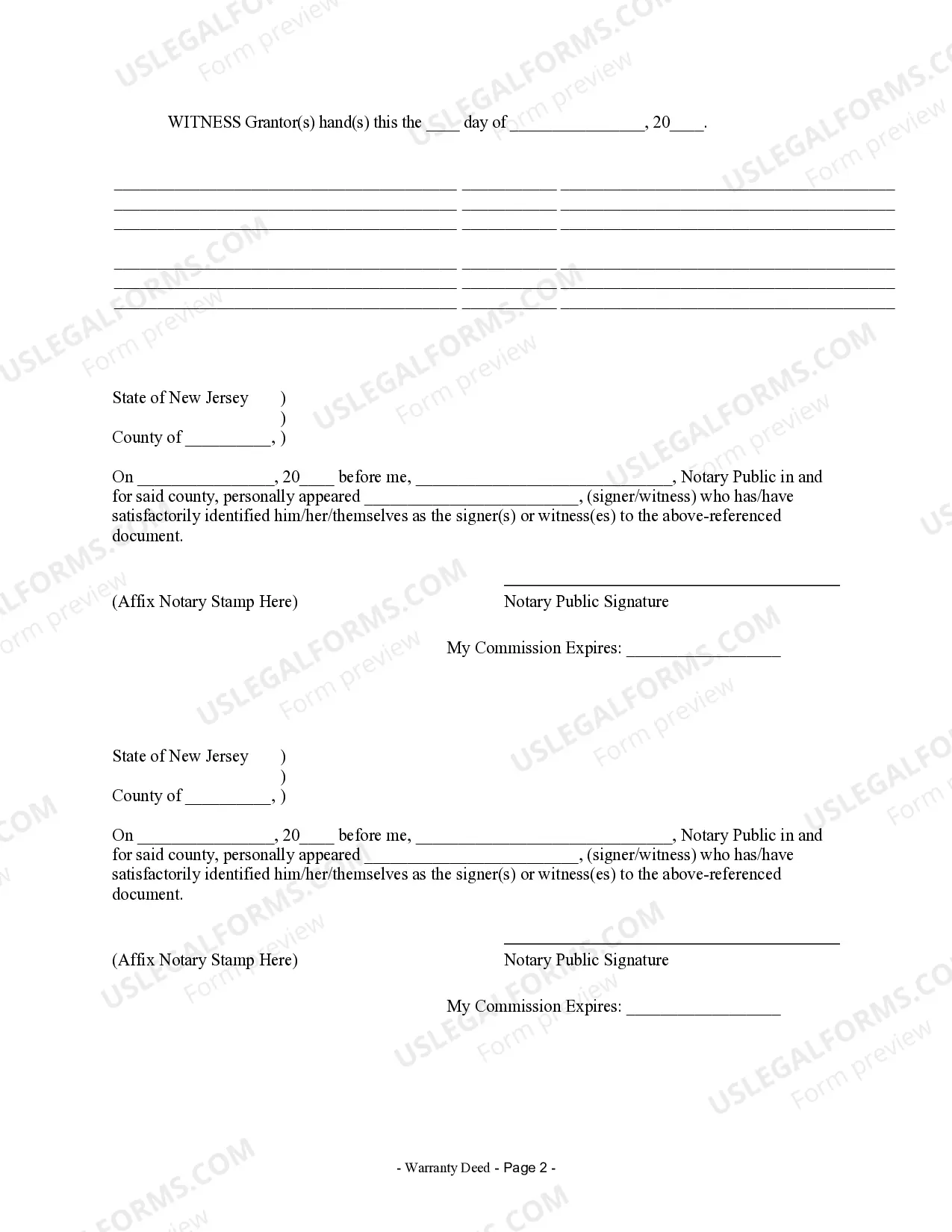
- Notarization section: Space for a notary public to confirm the identities of the signers.




Common use cases
This form is commonly used when a husband and wife wish to transfer their jointly-owned property into a trust for estate planning purposes. It may be appropriate when the couple aims to manage their property efficiently, avoid probate, or provide for beneficiaries while maintaining control over the property during their lifetimes.
Who should use this form
- Married couples looking to transfer real estate into a trust.
- Individuals setting up a trust for estate planning purposes.
- Legal representatives working on behalf of married clients.
- Real estate professionals who assist clients in property transfers.
Completing this form step by step
- Identify the grantors by including the full names of both spouses.
- Specify the trust that will hold the property, including its name and any trustee details.
- Provide a detailed description of the property, referencing any attached documentation.
- Complete the reservation clause to denote any retained rights to minerals beneath the property.
- Have both grantors sign the document in the presence of a notary public.
- Fill in the date of the signing and details required by the notary for validation.
Does this form need to be notarized?
Yes, this form must be notarized to be legally valid. US Legal Forms offers integrated online notarization services available 24/7. This allows you to securely complete your notarization via a video call, ensuring that your transaction meets all legal requirements without the need for in-person travel.
Get your form ready online
Our built-in tools help you complete, sign, share, and store your documents in one place.
Make edits, fill in missing information, and update formatting in US Legal Forms—just like you would in MS Word.
Download a copy, print it, send it by email, or mail it via USPS—whatever works best for your next step.
Sign and collect signatures with our SignNow integration. Send to multiple recipients, set reminders, and more. Go Premium to unlock E-Sign.
If this form requires notarization, complete it online through a secure video call—no need to meet a notary in person or wait for an appointment.
We protect your documents and personal data by following strict security and privacy standards.

Make edits, fill in missing information, and update formatting in US Legal Forms—just like you would in MS Word.

Download a copy, print it, send it by email, or mail it via USPS—whatever works best for your next step.

Sign and collect signatures with our SignNow integration. Send to multiple recipients, set reminders, and more. Go Premium to unlock E-Sign.

If this form requires notarization, complete it online through a secure video call—no need to meet a notary in person or wait for an appointment.

We protect your documents and personal data by following strict security and privacy standards.
Typical mistakes to avoid
- Failing to include a complete property description, which can lead to confusion about what is being transferred.
- Not clearly stating the trust's name or failing to identify the trustee properly.
- Omitting the reservation clause, potentially leading to unintended transfers of minerals or resources.
- Not obtaining notarization, which is crucial for the documentâs legal validity.
Why complete this form online
- Convenience of downloading and filling out the form at any time.
- Editability to customize the document to meet specific needs or requirements.
- Access to templates drafted by licensed attorneys, ensuring legal compliance.
- Step-by-step guidance available, making the completion process user-friendly.
What to keep in mind
- The Warranty Deed from Husband and Wife to a Trust is essential for legally transferring property into a trust.
- Carefully complete all sections, especially property descriptions and reservations.
- Ensure notarization and proper recording to uphold the deed's validity and enforceability.
Looking for another form?


Form popularity
FAQ
Ownership in a business can also be transferred through a living trust. To do this, the business owner must first transfer the business to the trust, then name the intended successor as successor trustee to the trust. The business owner, while living, would serve as both trustee and beneficiary of the trust.
1Retrieve your original deed.2Get the appropriate deed form.3Draft the deed.4Sign the deed before a notary.5Record the deed with the county recorder.6Obtain the new original deed.
1Discuss property ownership interests.2Access a copy of your title deed.3Complete, review and sign the quitclaim or warranty form.4Submit the quitclaim or warranty form.5Request a certified copy of your quitclaim or warranty deed.
Paperwork. Setting up a living trust isn't difficult or expensive, but it requires some paperwork. Record Keeping. After a revocable living trust is created, little day-to-day record keeping is required. Transfer Taxes. Difficulty Refinancing Trust Property. No Cutoff of Creditors' Claims.
Draft and Execute the Transfer Document. Draft and File an Amendment to your Articles of Organization with the Arizona Corporation Commission. Amend the Operating Agreement. Have LLC Members Sign a Resolution Accepting Transfer.
In New Jersey, the deed must be in English, identify the seller/buyer (grantor/grantee), name the person that prepared the deed, state the consideration (amount paid) for the transfer, contain a legal description of the property (a survey), include the signature of the grantor and be signed before a notary.
A warranty deed guarantees that: The grantor is the rightful owner of the property and has the legal right to transfer the title.The title would withstand third-party claims to ownership of the property. The grantor will do anything to ensure the grantee's title to the property.
A trust can be used to run a business. But because it is not a legal entity, the trustee undertakes the business activities on behalf of the trust. A trustee can be an individual or a company we recommend a corporate trustee.
Bypass Trusts Couples can set up a living trust, including ownership of an LLC, as a "bypass." In this type of trust, the surviving spouse is guaranteed support from the trust and its assets, including an LLC, for his or her lifetime, but all assets and income go to the trust on the death of the second spouse.