New Hampshire Inventory and Condition of Leased Premises for Pre Lease and Post Lease
Overview of this form
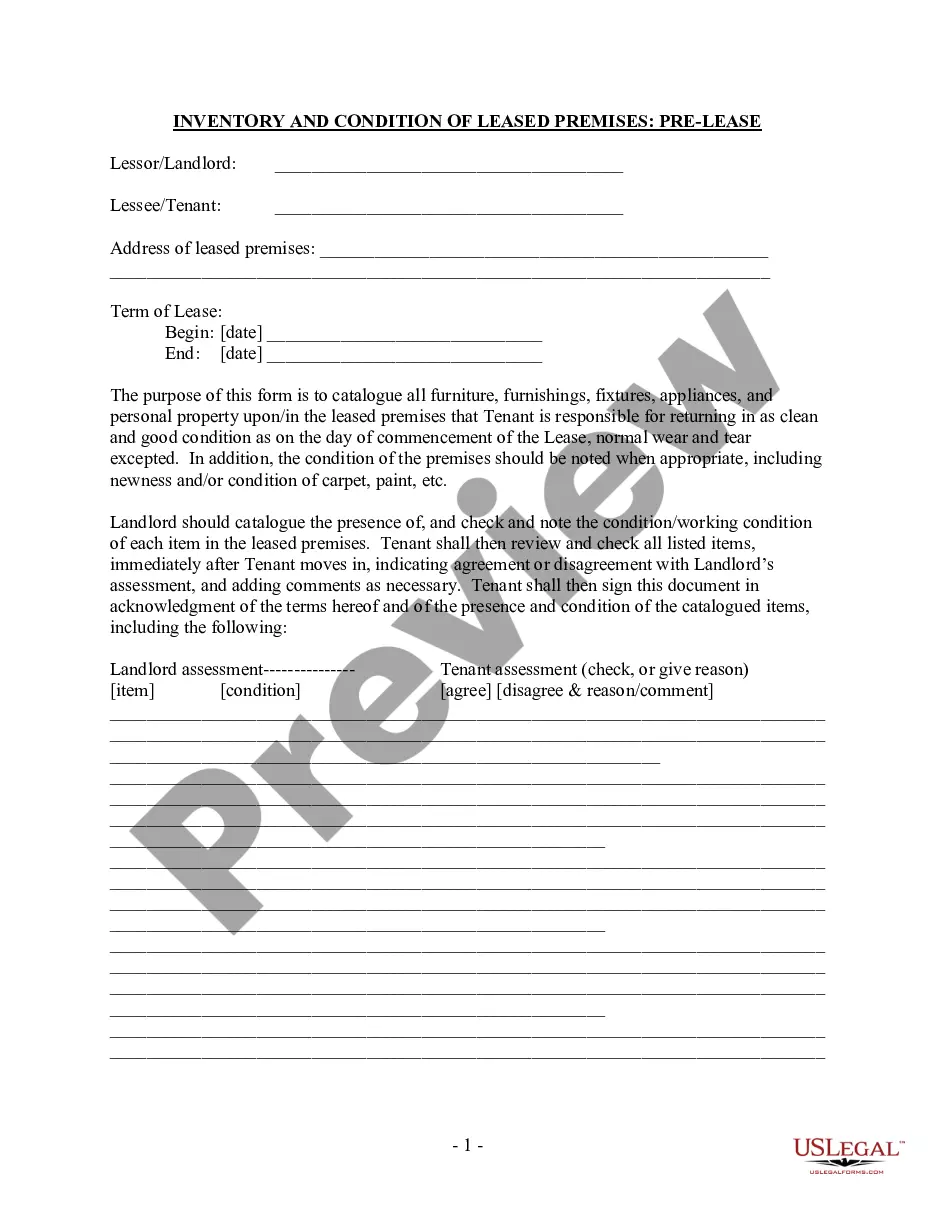
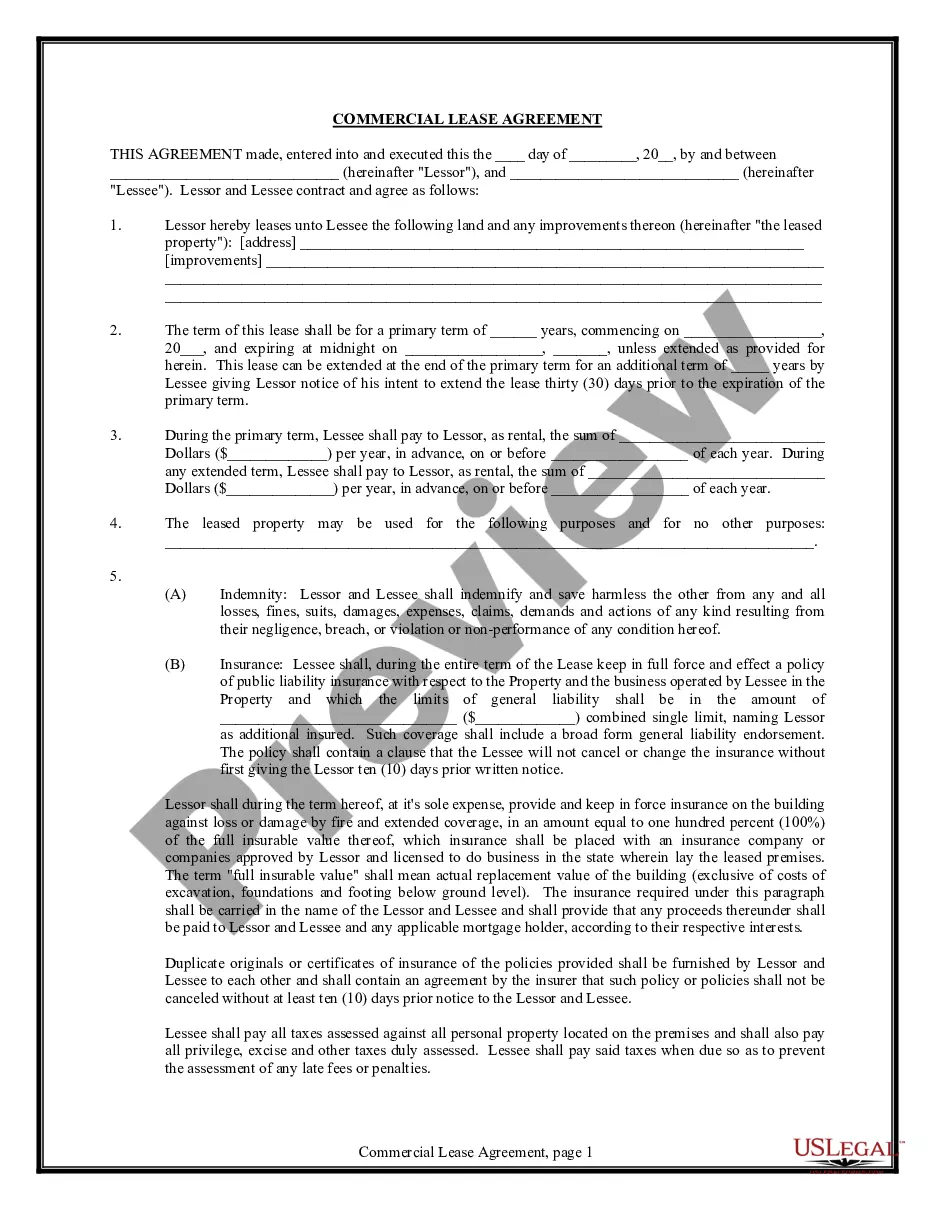
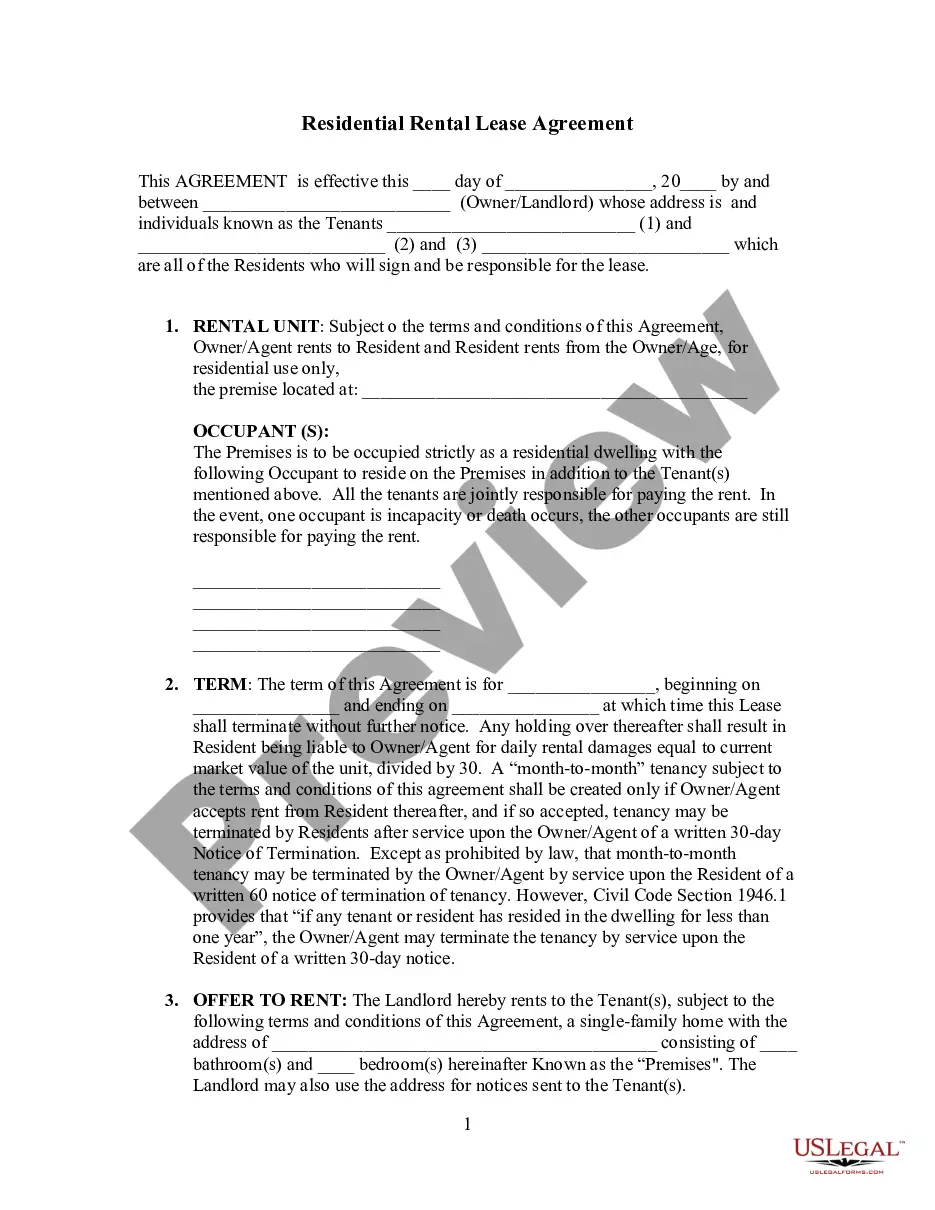
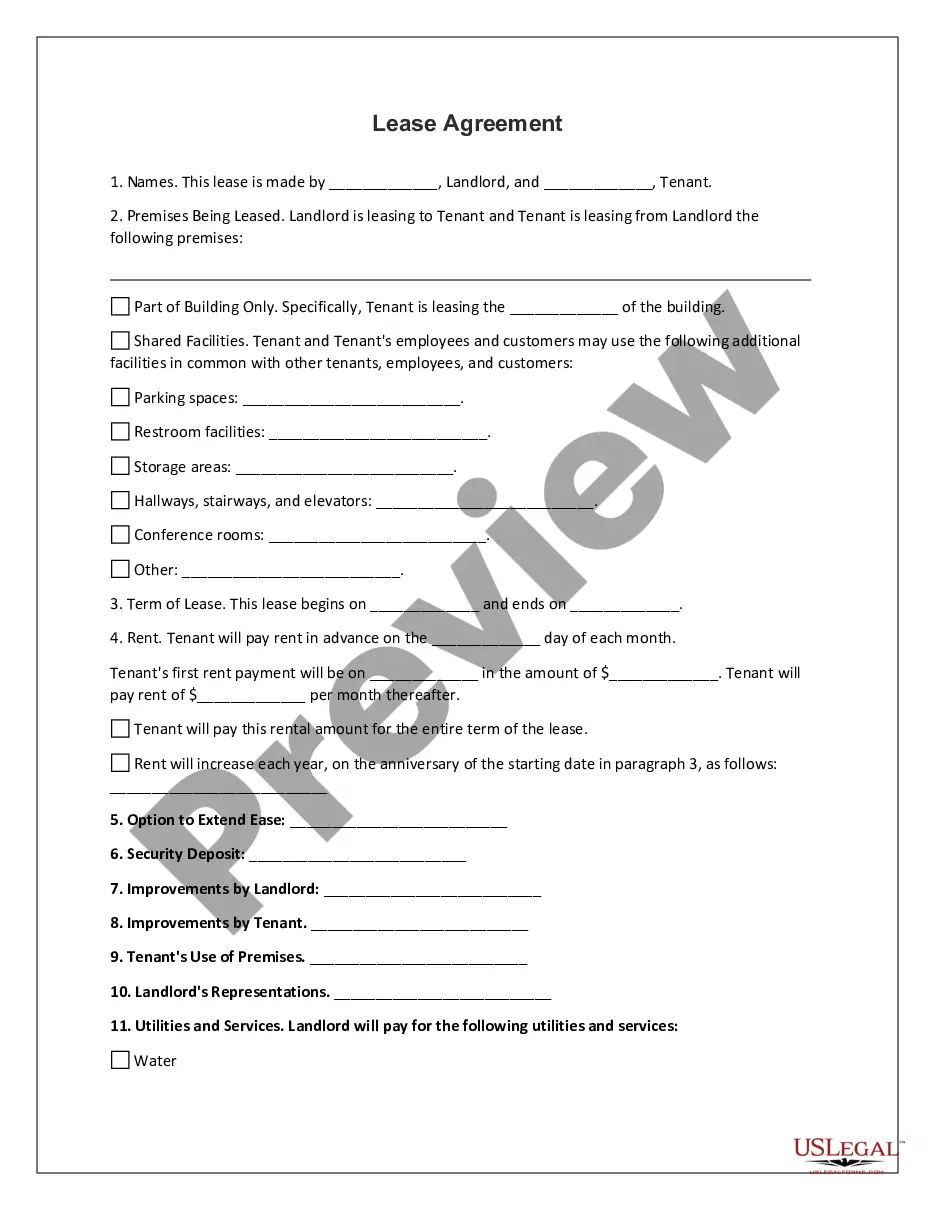
The Inventory and Condition of Leased Premises for Pre Lease and Post Lease is a legal document used by tenants and landlords to assess and agree upon the condition of a rental property both before and after the lease period. This inventory includes detailed descriptions of all furniture, fixtures, appliances, and personal property included with the lease. Unlike generic lease agreements, this form serves to document specific item conditions, helping to avoid disputes over damages when the lease ends.
Form components explained
- Identification of the landlord and tenant parties.
- Address and details of the leased premises.
- Beginning and ending dates of the lease term.
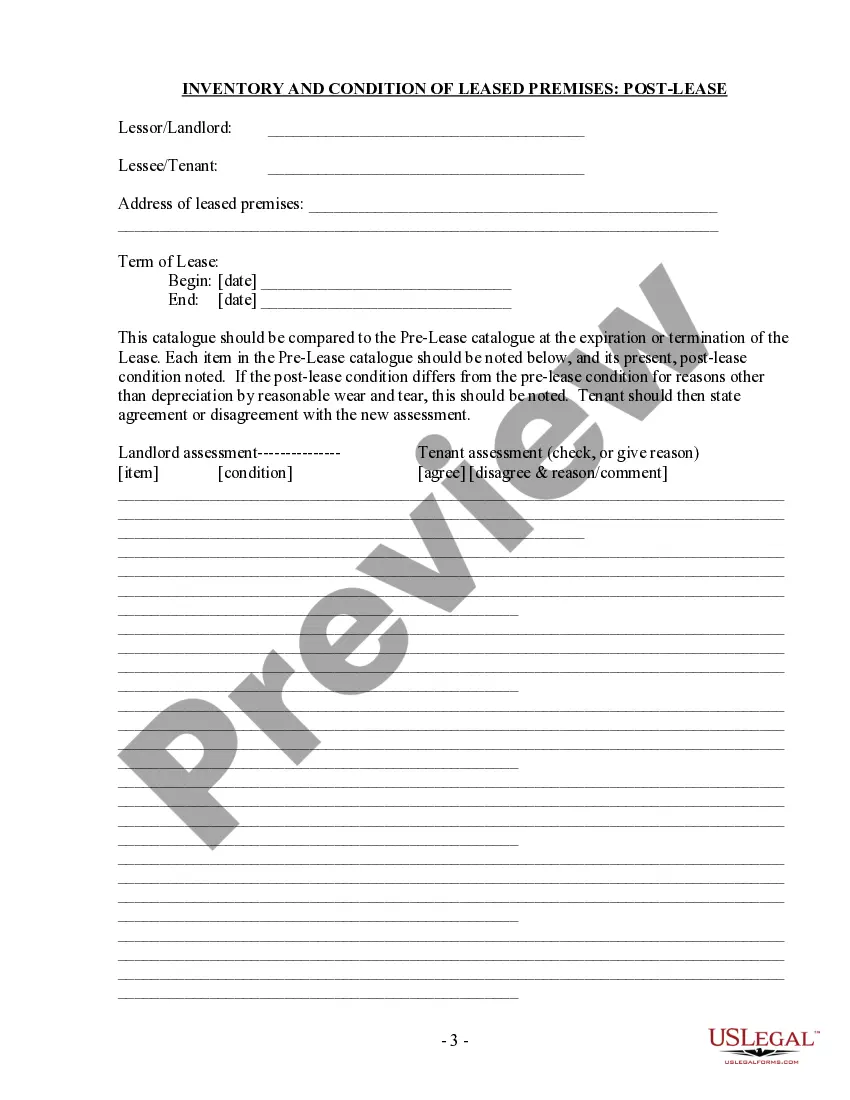
- A checklist of items present in the property, with space for condition assessments.
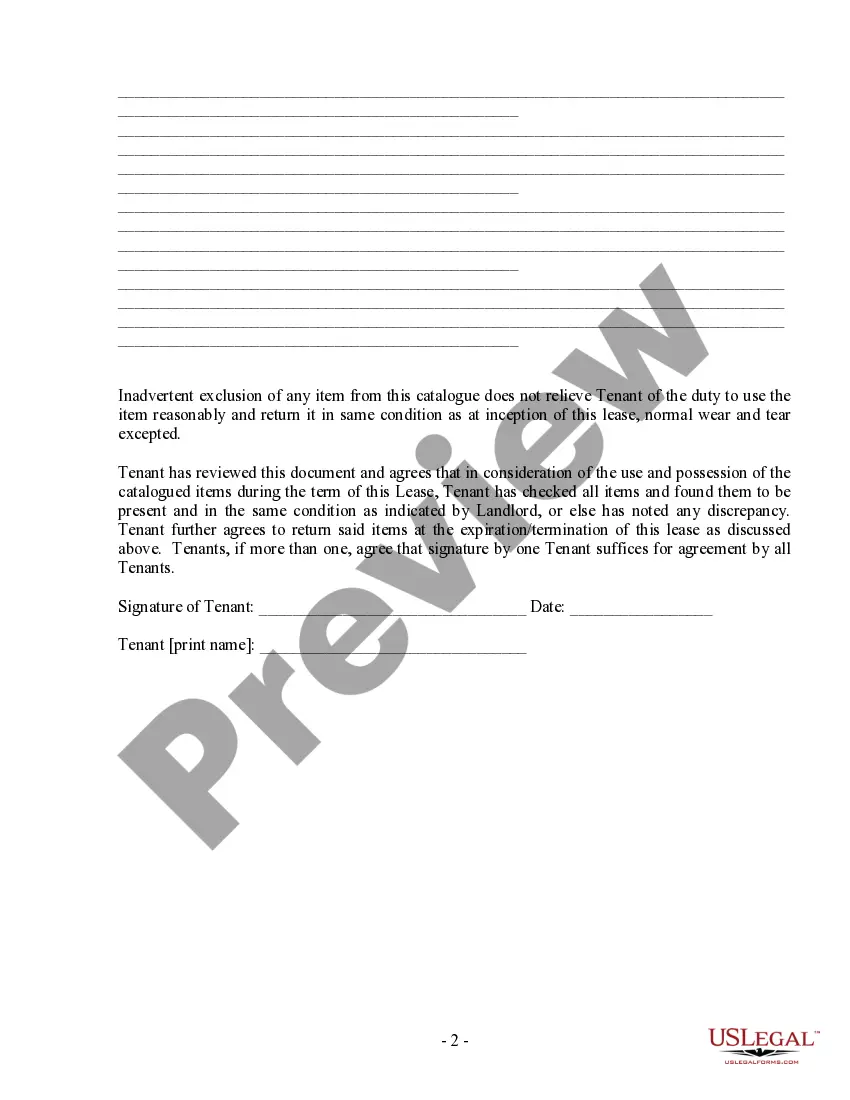
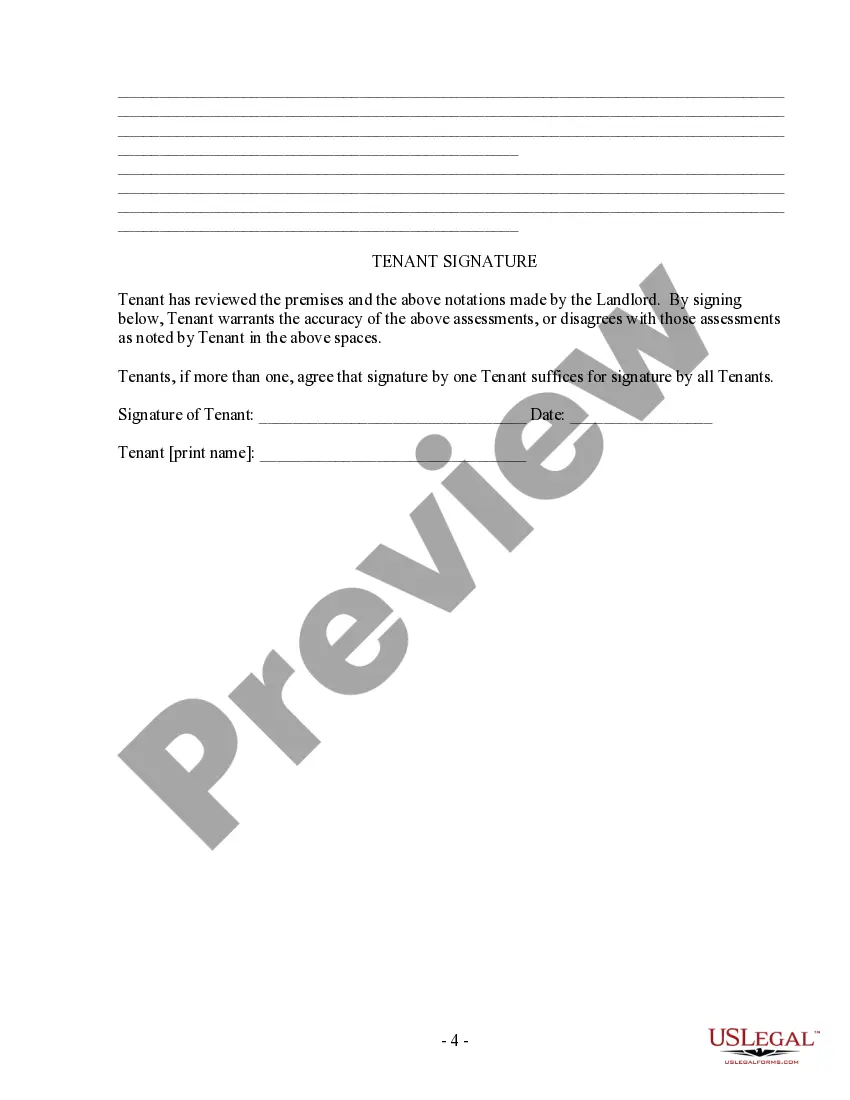
- Agreement or disagreement sections for the tenant to verify the condition noted by the landlord.
- Signatures of the tenant and landlord for acknowledgment.
When to use this form
This form should be used at the beginning of a rental agreement to document the condition of the leased premises and any included items. It is vital for protecting both the tenant's and landlord's interests. It's also essential to use the form again at the end of the lease term to compare the current condition with the initial inventory, ensuring that any changes or damages are adequately addressed.
Who can use this document
This form is suitable for:
- Tenants renting residential properties.
- Landlords managing rental agreements.
- Property managers overseeing multiple rental units.
- Any party involved in a lease agreement who wishes to legally document the condition of the premises.
How to complete this form
- Identify the parties by entering the names and contact information for both the landlord and tenant.
- Specify the leased property's address and the term of the lease, including start and end dates.
- List all furniture, fixtures, and appliances present in the premises, noting their condition as assessed by the landlord.
- Have the tenant review the inventory, marking their agreement or disagreement with the landlord's assessments and adding comments as necessary.
- Both parties must sign and date the form to acknowledge their agreement on the condition of the premises at the time of lease commencement.
Notarization guidance
This form does not typically require notarization unless specified by local law. Always verify local requirements to ensure compliance with any applicable regulations.
Get your form ready online
Our built-in tools help you complete, sign, share, and store your documents in one place.
Make edits, fill in missing information, and update formatting in US Legal Forms—just like you would in MS Word.
Download a copy, print it, send it by email, or mail it via USPS—whatever works best for your next step.
Sign and collect signatures with our SignNow integration. Send to multiple recipients, set reminders, and more. Go Premium to unlock E-Sign.
If this form requires notarization, complete it online through a secure video call—no need to meet a notary in person or wait for an appointment.
We protect your documents and personal data by following strict security and privacy standards.

Make edits, fill in missing information, and update formatting in US Legal Forms—just like you would in MS Word.

Download a copy, print it, send it by email, or mail it via USPS—whatever works best for your next step.

Sign and collect signatures with our SignNow integration. Send to multiple recipients, set reminders, and more. Go Premium to unlock E-Sign.

If this form requires notarization, complete it online through a secure video call—no need to meet a notary in person or wait for an appointment.

We protect your documents and personal data by following strict security and privacy standards.
Common mistakes to avoid
- Failing to complete the inventory for both pre-lease and post-lease evaluations.
- Not allowing sufficient time for both parties to review and agree on the condition of items.
- Providing incomplete or vague descriptions of the condition of items.
- Not obtaining signatures from both the landlord and tenant, which can lead to disputes.
- Ignoring to compare the pre-lease inventory with the post-lease condition assessment.
Why complete this form online
- Instant access to professionally drafted forms that ensure legal compliance.
- Easy to edit and customize according to specific lease agreements.
- Downloadable and printable formats for convenience in record keeping.
- A secure method of documenting property conditions, reducing the potential for disputes.
Legal use & context
- This form provides a clear record of property conditions, which is crucial for dispute resolution.
- It is a proactive measure to protect both tenants and landlords from future disagreements regarding property damages.
- The assessments help ensure accountability for the condition of leased premises, supporting fair practices in property leasing.
Summary of main points
- Using the Inventory and Condition of Leased Premises form is essential for both tenants and landlords to document property conditions.
- The form creates a mutual understanding of property condition before and after leasing.
- It mitigates potential disputes over property damage and ensures accountability.
Looking for another form?
Form popularity
FAQ
How does a fixed-term lease protect tenants and owners or managers? When a tenant signs a lease, s/he is signing a legally enforceable contract. All the terms and conditions stated in the lease remain valid throughout the period specified. These constraints also apply to the owner or manager.
A rental inspection checklist is a tool used by landlords or property managers to ensure that rental properties are in good condition before, during, and after the tenant's occupation. Conducting a rental inspection involves a thorough visual check of the property's rooms and exterior.
Inspect the Property and Record Any Current Damages. Know What's Included in the Rent. Can You Make Adjustments and Customizations? Clearly Understand the Terms Within the Agreement and Anticipate Problems. Communicate with Your Landlord About Your Expectations.
Name the parties. A simple rental agreement form needs to name the parties signing the lease and where they live. Describe the premises. Define the term of the lease. Set how much rent is owed. Assign a security deposit amount. Finalize the lease.
Tenant's name & address. Move-in date. Date of move-in inspection. Move-out date. Date of move-out inspection. Tenant signature. Landlord name & address. Landlord contact information.
#1: Know your rights as an American. #2: Know tenants' rights in your state. #3: Investigate buildings and properties. #4: Get a lease -- and read it. #5: Expect a background check. #6: Keep records and receipts. #7: Use renters insurance. #8: Communicate.
The Lease Must be in Writing It does not matter if the lease is handwritten or typed.
Names of all tenants. Limits on occupancy. Term of the tenancy. Rent. Deposits and fees. Repairs and maintenance. Entry to rental property. Restrictions on tenant illegal activity.
Names of all tenants. Limits on occupancy. Term of the tenancy. Rent. Deposits and fees. Repairs and maintenance. Entry to rental property. Restrictions on tenant illegal activity.