New Hampshire Notice of Default in Payment of Rent as Warning Prior to Demand to Pay or Terminate for Nonresidential or Commercial Property
Understanding this form
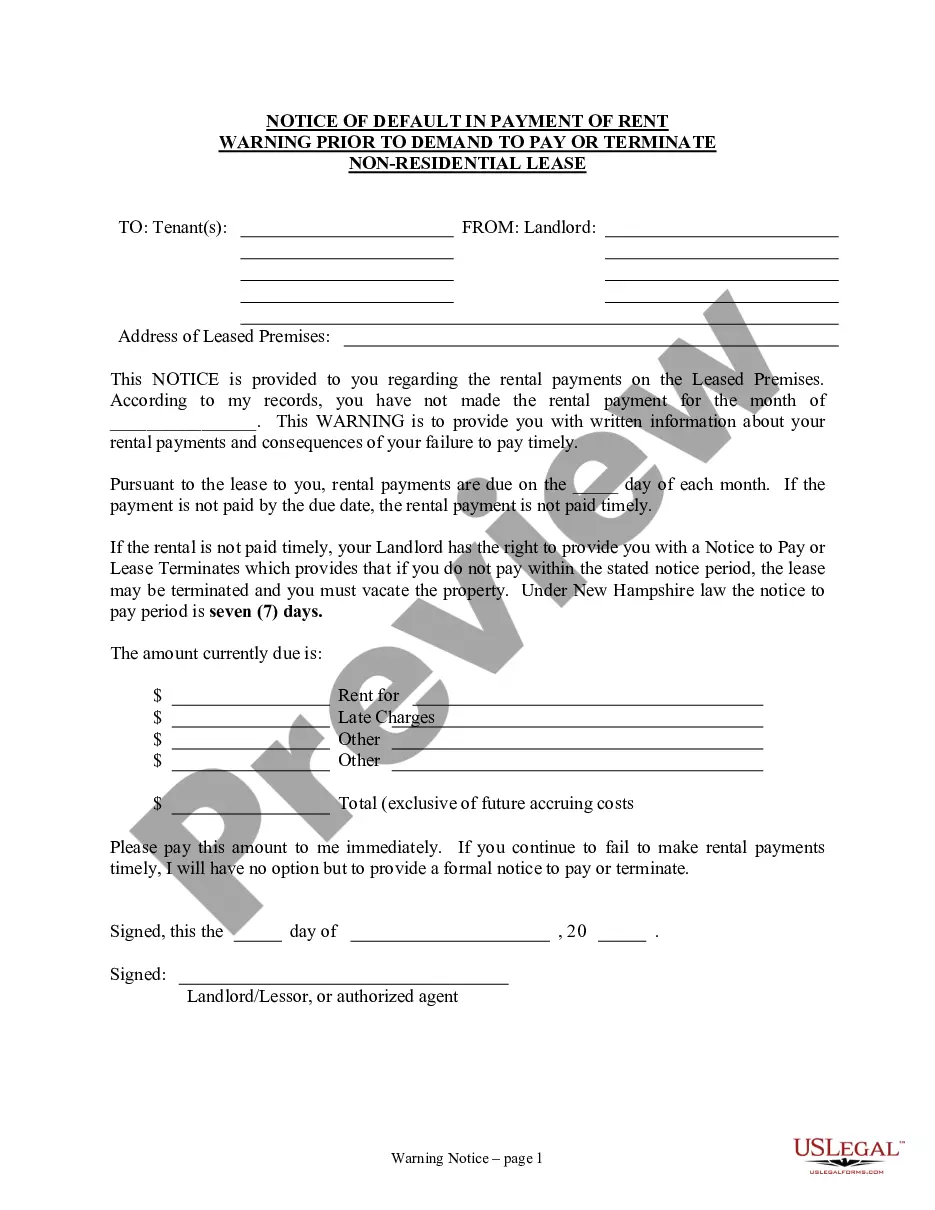
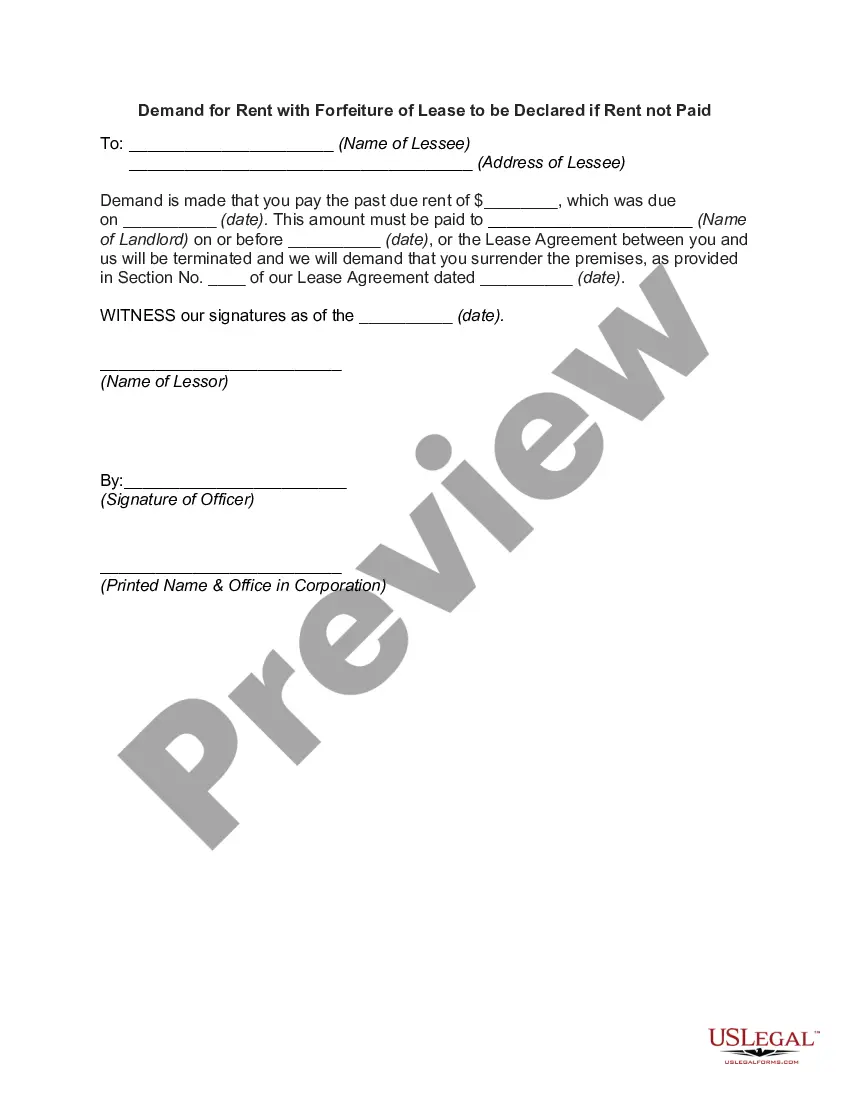
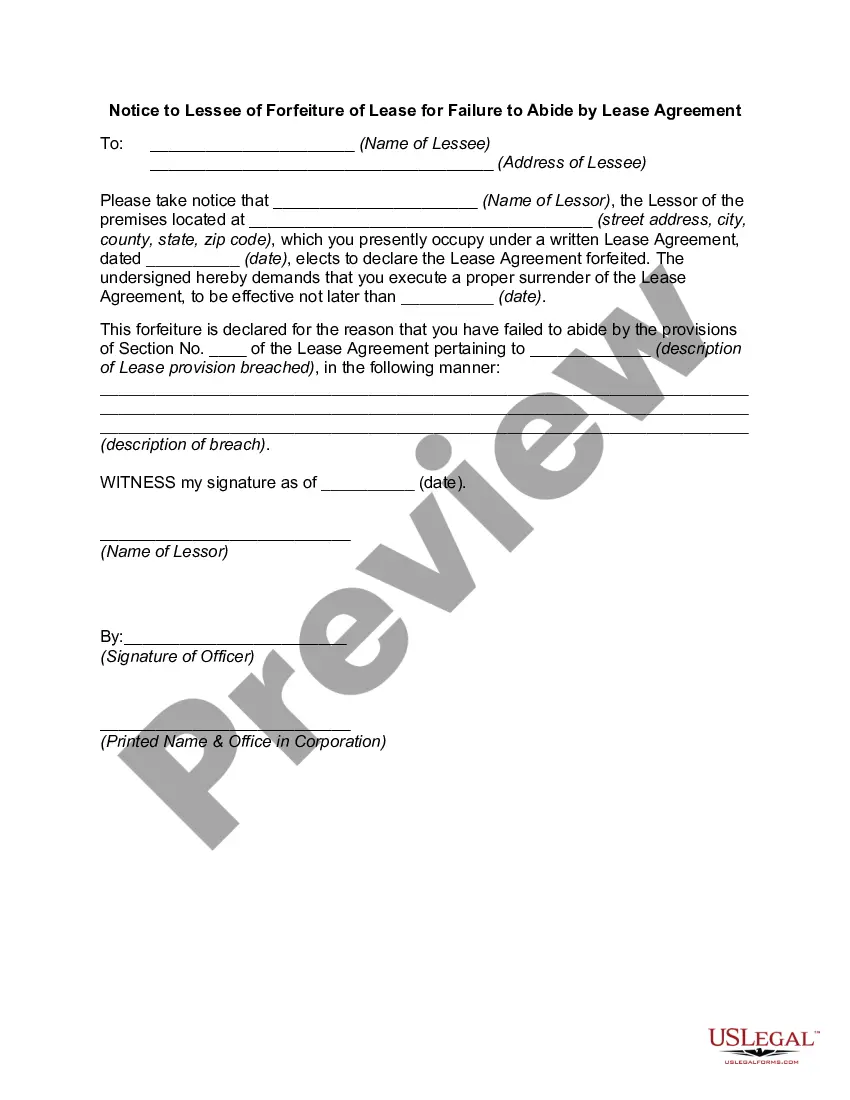
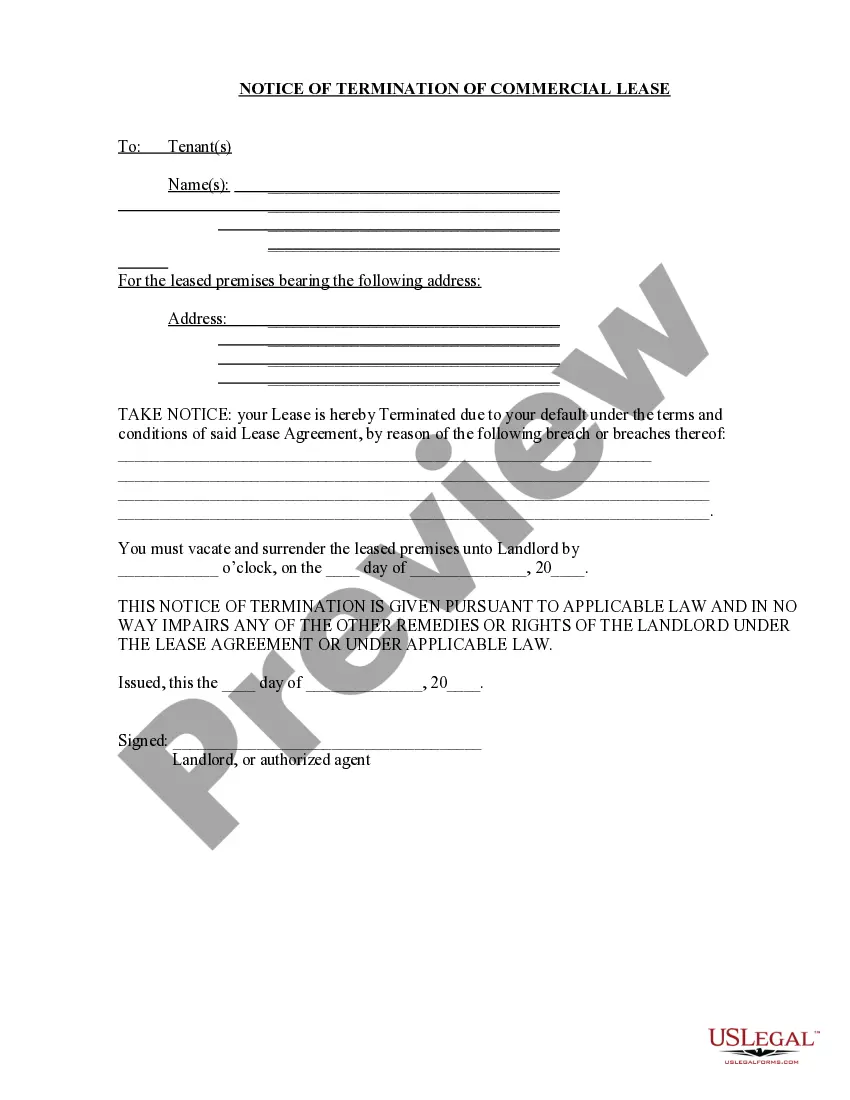
The Notice of Default in Payment of Rent as Warning Prior to Demand to Pay or Terminate for Nonresidential or Commercial Property is a legal document used by landlords to officially notify tenants of a missed rent payment. This form serves as a preliminary warning before more severe actions, such as seeking payment or terminating the lease. It outlines the tenant's obligations, the consequences of failing to pay on time, and the landlord's rights under the lease and state law. This form is specifically designed for non-residential or commercial properties, distinguishing it from similar forms used in residential contexts.
Key parts of this document
- Contact information for both the landlord and tenant.
- Date when the notice is issued.
- Statement of the rental payment due, including late charges and total amount owed.
- Specification of the due date according to the lease.
- Consequences of failing to pay on time, including potential lease termination.
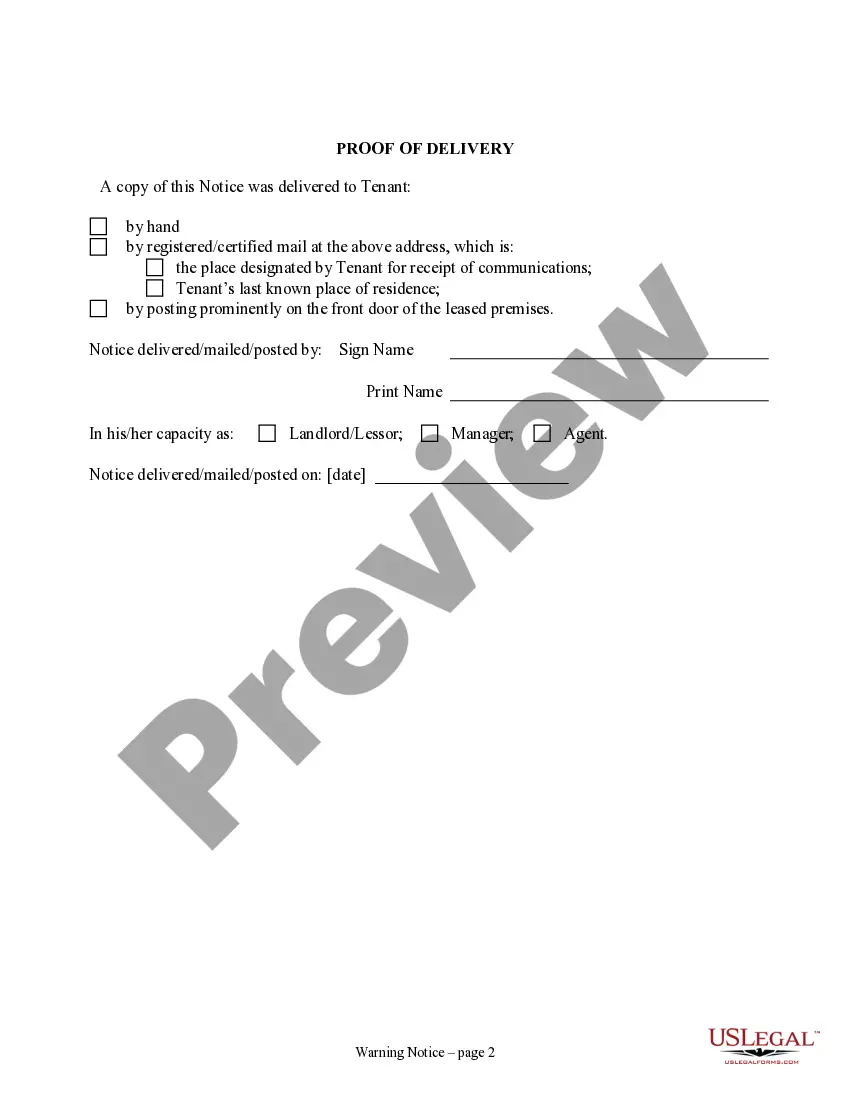
- Proof of delivery section to confirm the notice was received by the tenant.

When this form is needed
This form should be used when a tenant has failed to make a rental payment on time for non-residential or commercial property. It serves as a formal reminder of the debt and warns the tenant of the potential consequences if the payment is not made promptly. Use this notice before taking further action such as issuing a demand for payment or terminating the lease.
Intended users of this form
- Landlords or property managers responsible for collecting rent from tenants of commercial or non-residential properties.
- Landlords seeking to document attempts to resolve payment issues before escalating to formal eviction processes.
- Authorized agents acting on behalf of the landlord in managing property leases.
How to complete this form
- Identify and enter the landlord's and tenant's names and addresses at the top of the form.
- Specify the property description and the month for which rent is due.
- Enter the specific due date for rent payments as stated in the lease.
- Calculate and enter the total amount due, including any late fees.
- Sign and date the notice to formally deliver it to the tenant.
- Provide proof of delivery by noting how and when the notice was delivered to the tenant.
Is notarization required?
This form usually doesn’t need to be notarized. However, local laws or specific transactions may require it. Our online notarization service, powered by Notarize, lets you complete it remotely through a secure video session, available 24/7.
Get your form ready online
Our built-in tools help you complete, sign, share, and store your documents in one place.
Make edits, fill in missing information, and update formatting in US Legal Forms—just like you would in MS Word.
Download a copy, print it, send it by email, or mail it via USPS—whatever works best for your next step.
Sign and collect signatures with our SignNow integration. Send to multiple recipients, set reminders, and more. Go Premium to unlock E-Sign.
If this form requires notarization, complete it online through a secure video call—no need to meet a notary in person or wait for an appointment.
We protect your documents and personal data by following strict security and privacy standards.

Make edits, fill in missing information, and update formatting in US Legal Forms—just like you would in MS Word.

Download a copy, print it, send it by email, or mail it via USPS—whatever works best for your next step.

Sign and collect signatures with our SignNow integration. Send to multiple recipients, set reminders, and more. Go Premium to unlock E-Sign.

If this form requires notarization, complete it online through a secure video call—no need to meet a notary in person or wait for an appointment.

We protect your documents and personal data by following strict security and privacy standards.
Common mistakes
- Failing to specify the correct amount owed can lead to disputes.
- Not adhering to state-specific notice periods and requirements.
- Neglecting to document how the notice was delivered to the tenant.
Benefits of completing this form online
- Easy to download and use, ensuring you have the most current legal language.
- Editable fields allow for quick customization to suit specific situations.
- Secure and reliable option for managing important legal documents without the need for physical paperwork.
Looking for another form?

Form popularity
FAQ
One pervasive fiction is that tenants can't be turned out of the rental during cold weather. Is this true? Mostly, no. However, there are actions that a landlord may not take during the eviction process.
Substantial Violation If the landlord is evicting the tenant for any of these reasons, the landlord must give the tenant a three-day notice to quit. (Colo. Rev.If the tenant does not move out of the rental unit by the end of three days, then the landlord can file an eviction lawsuit against the tenant.
In Colorado, evictions are sometimes referred to as forcible entry & detainer (FED). Before you can file for eviction, you must generally provide 10 days' notice (increased from 3 days prior) for tenants to correct a deficiency or leave the property, except in certain circumstances.
7 days is required for almost all evictions. 30 days is required for month-to-month leases. The notice must state the specific reason for eviction, and can be delivered in person, or left on their door. When the notice is up, issue a writ of summons.
In Illinois, if there is no lease or if the lease does not specify a move out date, the Landlord must give at least 30 days of notice to a tenant that the landlord wants to move out. This notice must be in writing and must arrive to the tenant at least 30 days prior to their move out date.
A landlord can legally evict a tenant only by sending a written notice to the tenant. This written notice must be in the form of a "written notice to quit or leave" which is a legal document. Eviction for not paying rent, damages to the property or danger to the health or safety of others require seven days' notice.
7 days is required for almost all evictions. 30 days is required for month-to-month leases. The notice must state the specific reason for eviction, and can be delivered in person, or left on their door. When the notice is up, issue a writ of summons.
Evicting a tenant in Colorado can take around 2 weeks to 4 months, depending on whether the eviction is for illegal activity or another type of eviction. If the tenant files an answer with the court, the process could take longer (read more).