Nebraska Last Will and Testament with All Property to Trust called a Pour Over Will
Overview of this form
The Last Will and Testament with All Property to Trust, also known as a Pour Over Will, is a legal document that ensures any property not already placed into a living trust is transferred into that trust upon the individualâs death. This type of will is essential for those who want a seamless estate planning process, allowing them to ensure their remaining assets are managed according to their wishes rather than state law. Unlike a standard will, which distributes assets directly, a pour over will directs assets into an established trust, providing greater control and potential tax benefits.
Form components explained
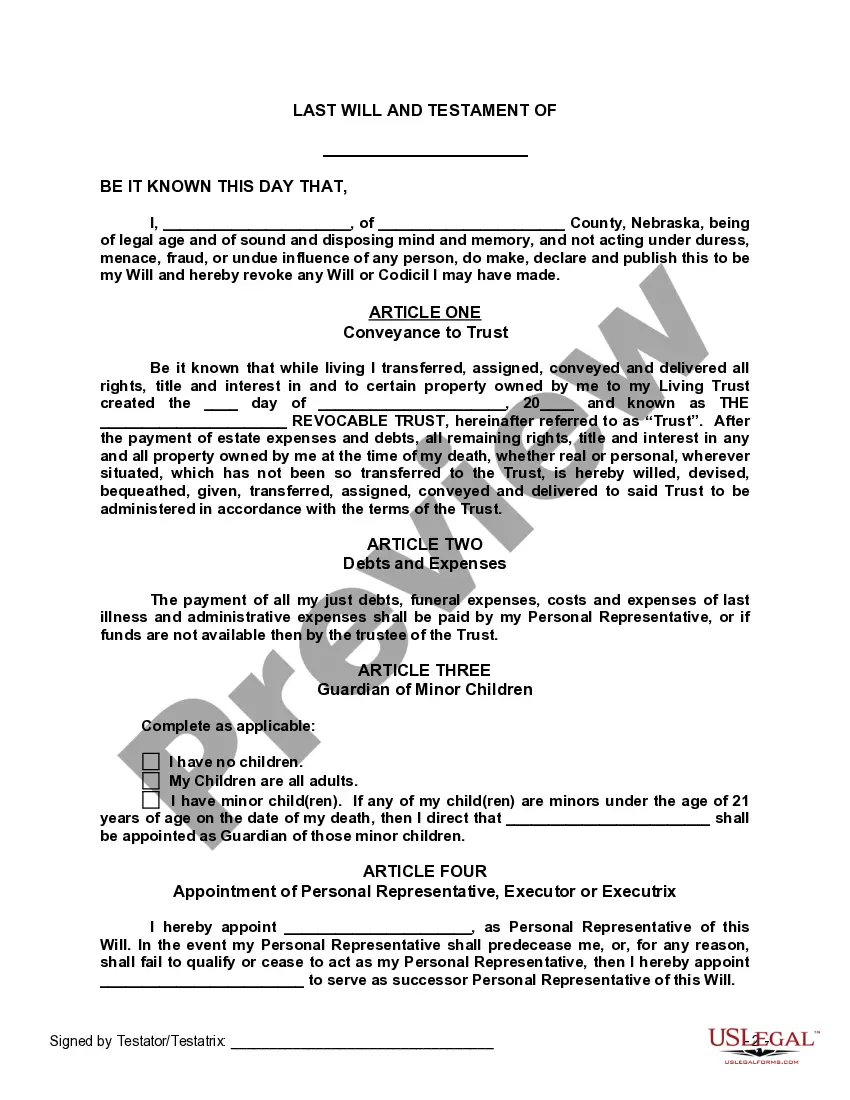
- Conveyance to Trust: Directs that all assets not transferred to the living trust before death are to be transferred to the trust.
- Debts and Expenses: Outlines that all debts and funeral expenses will be paid from the estate before distribution.
- Guardian Provision: Allows the appointment of a guardian for minor children if applicable.
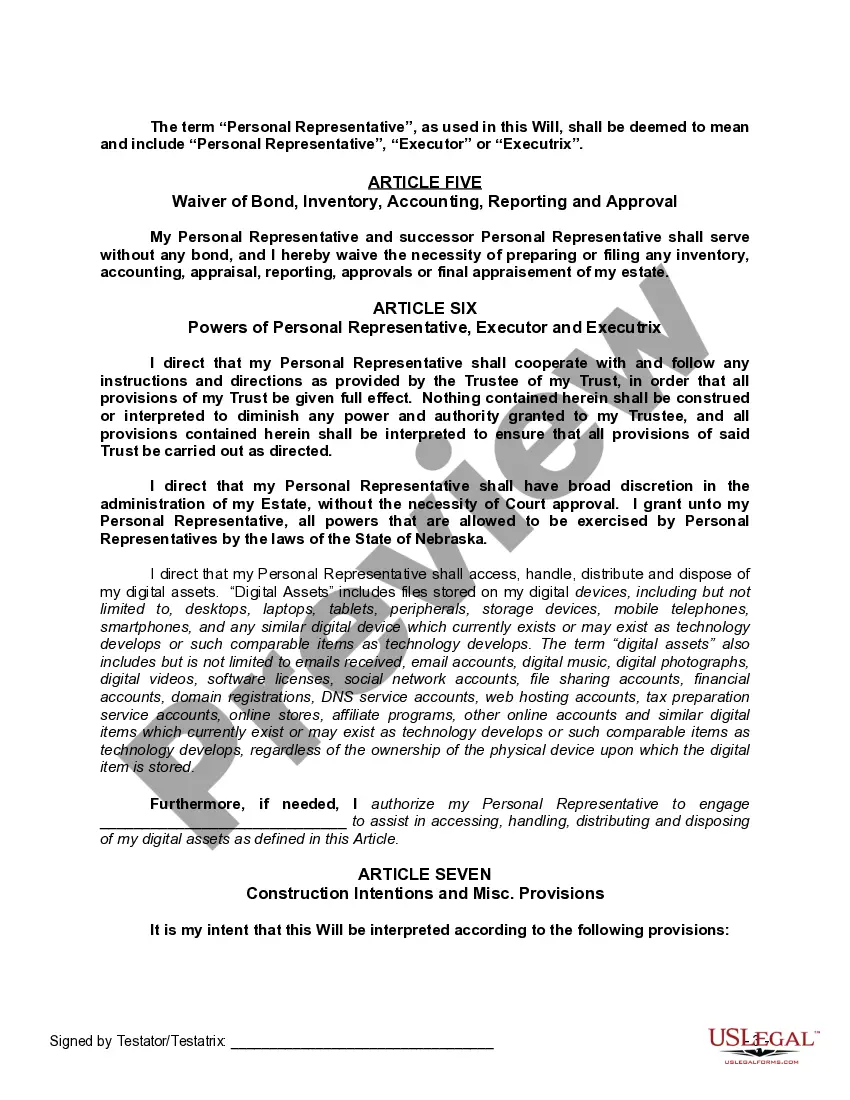
- Personal Representative: Names an individual responsible for administering the estate and carrying out the terms of the will.
- Digital Assets: Provides guidance for handling digital assets, specifying what they include.
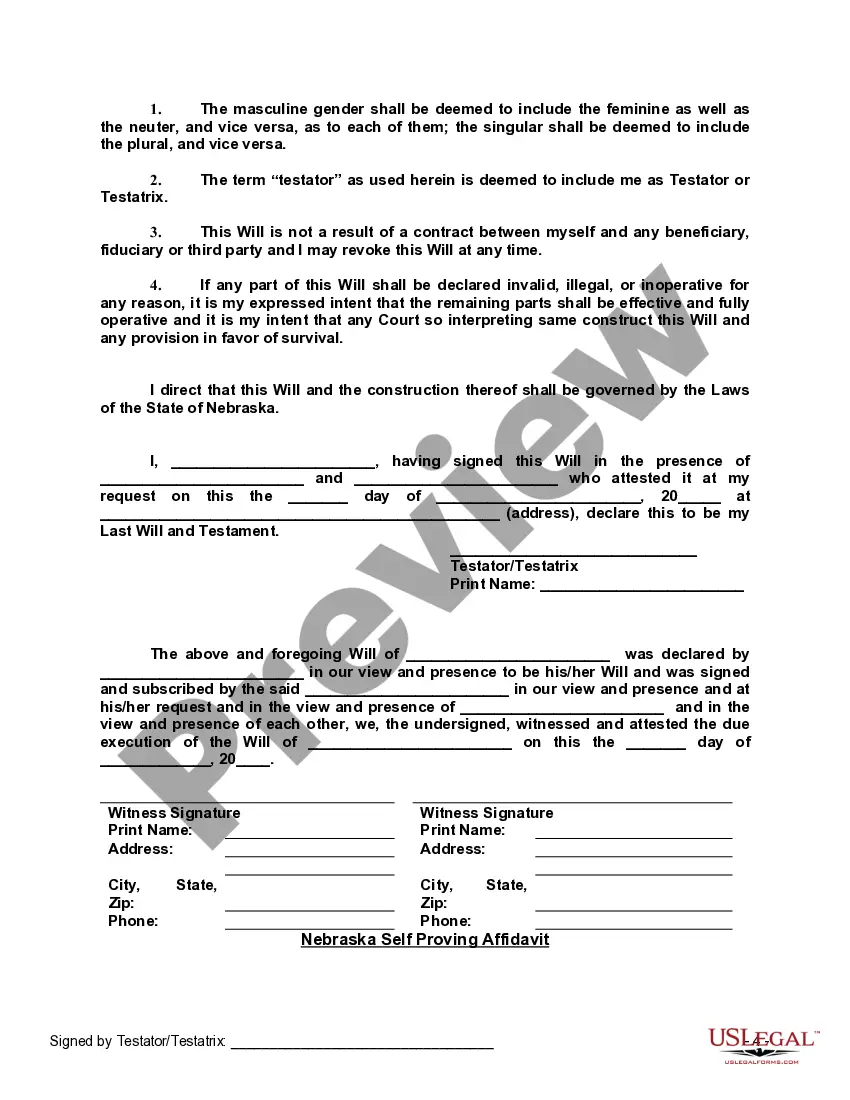
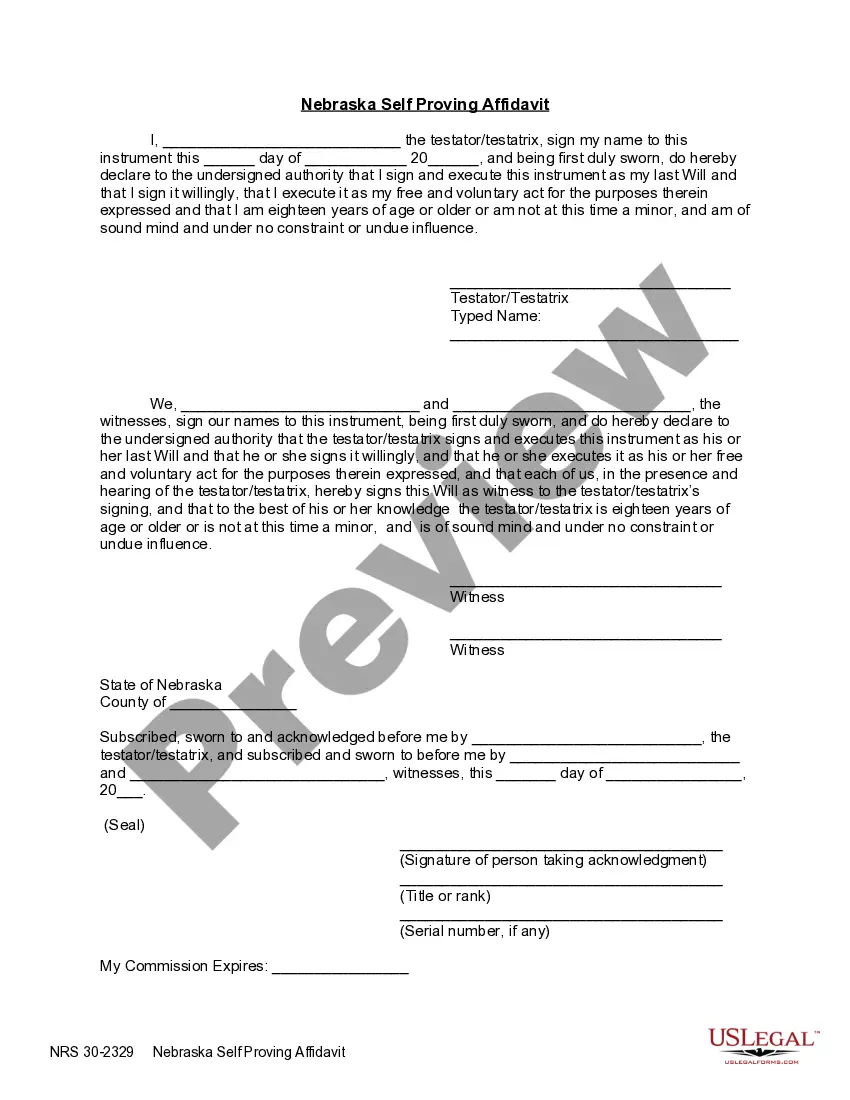
- Notarization and Witnessing: Details the requirements for the will to be valid, including witness signatures and potential notarization.



When to use this form
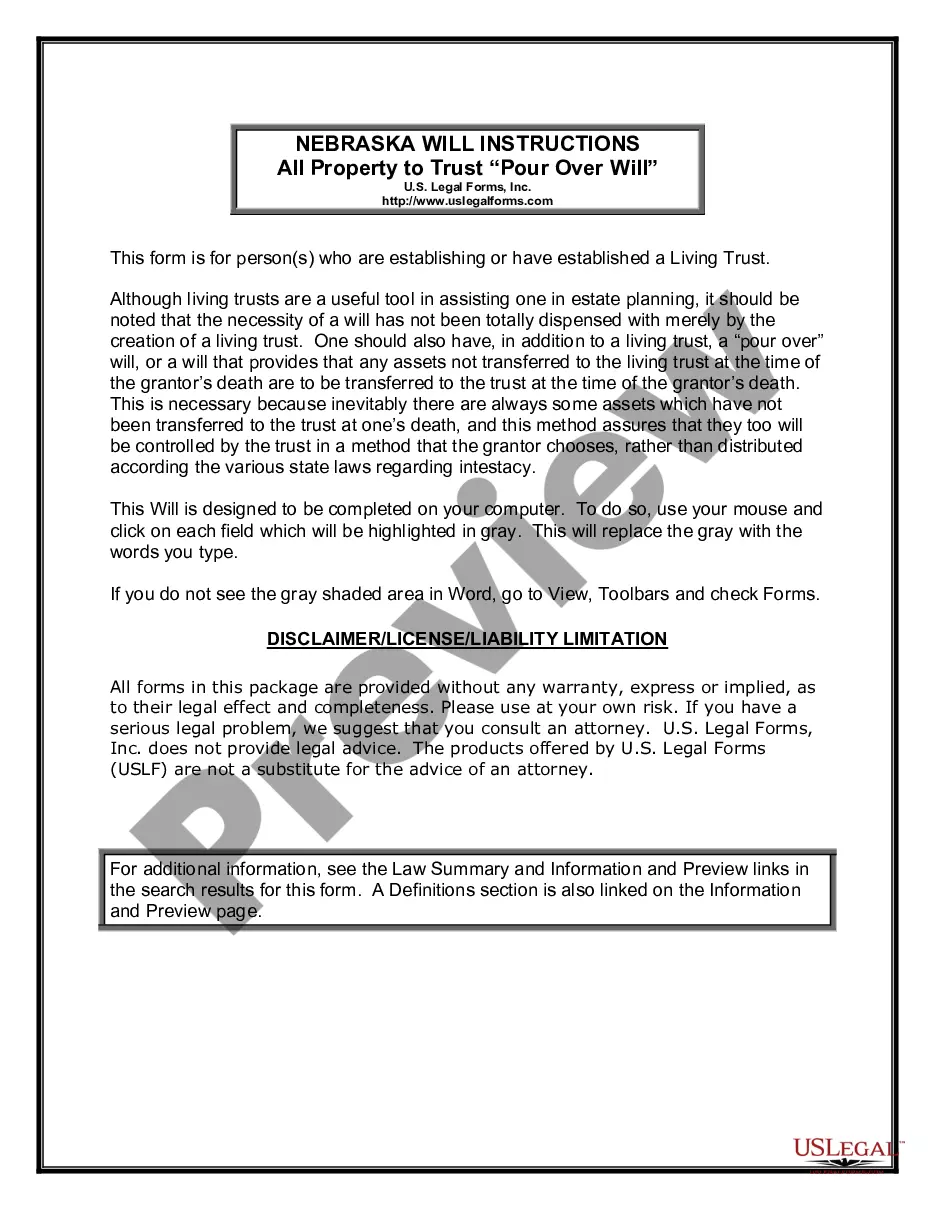
This form is suitable when you have established a living trust but also want to ensure that any remaining assets, not previously transferred, are included in the trust's management after your death. It is particularly useful if you have multiple assets and want to avoid complications related to intestacy laws.
Who needs this form
This form is intended for:
- Individuals who have established or are in the process of establishing a living trust.
- People who wish to ensure all their assets are managed according to personal wishes after their death.
- Those with minor children needing a guardian appointed in the event of their passing.
- Individuals looking to simplify their estate management and minimize estate taxes.
How to prepare this document
To complete this form, follow these steps:
- Identify the parties involved, including the testator and the trust.
- Fill in the date and details of your living trust in the conveyance section.
- Identify any minor children and complete the guardian appointment section if applicable.
- Name your personal representative and any successor in the relevant section.
- Ensure that the will is signed in the presence of witnesses, following the stateâs requirements.
- If required, notarize the completed document for legal validity.
Notarization requirements for this form
This form does not typically require notarization unless specified by local law. However, notarization can provide additional validity and is recommended to prevent disputes.
Get your form ready online
Our built-in tools help you complete, sign, share, and store your documents in one place.
Make edits, fill in missing information, and update formatting in US Legal Forms—just like you would in MS Word.
Download a copy, print it, send it by email, or mail it via USPS—whatever works best for your next step.
Sign and collect signatures with our SignNow integration. Send to multiple recipients, set reminders, and more. Go Premium to unlock E-Sign.
If this form requires notarization, complete it online through a secure video call—no need to meet a notary in person or wait for an appointment.
We protect your documents and personal data by following strict security and privacy standards.

Make edits, fill in missing information, and update formatting in US Legal Forms—just like you would in MS Word.

Download a copy, print it, send it by email, or mail it via USPS—whatever works best for your next step.

Sign and collect signatures with our SignNow integration. Send to multiple recipients, set reminders, and more. Go Premium to unlock E-Sign.

If this form requires notarization, complete it online through a secure video call—no need to meet a notary in person or wait for an appointment.

We protect your documents and personal data by following strict security and privacy standards.
Typical mistakes to avoid
- Failing to transfer all assets into the trust before death, which can lead to complications.
- Not specifying should a personal representative not be available.
- Neglecting to name guardians for minor children.
- Forgetting to have the document witnessed or notarized where necessary.
Benefits of completing this form online
- Convenient access to legal documents without the need for a legal office appointment.
- Edit and personalize the form according to individual needs before downloading.
- Reliable templates crafted by licensed attorneys, ensuring legal compliance.
Legal use & context
- Legally binding in Nebraska as part of estate planning.
- Aligns with the requirements for a pour over will, ensuring all assets are handled per the trust agreement.
- Protects against state intestacy laws by specifying asset distribution.
Summary of main points
- A pour over will ensures all remaining assets are directed to an established living trust upon death.
- This form aids in thorough estate planning, avoiding state intestacy laws.
- Robust provisions protect minor children and ensure their guardianship is clearly defined.
Looking for another form?


Form popularity
FAQ
A pour-over will is a testamentary device wherein the writer of a will creates a trust, and decrees in the will that the property in his or her estate at the time of his or her death shall be distributed to the Trustee of the trust.
The pour over will does not need to be notarized; however, in California it does need to be signed by two disinterested witnesses.
Deciding between a will or a trust is a personal choice, and some experts recommend having both. A will is typically less expensive and easier to set up than a trust, an expensive and often complex legal document.
Include personal identifying information. Include a statement about your age and mental status. Designate an executor. Decide who will take care of your children. Choose your beneficiaries. List your funeral details. Sign and date your Last Will and Testament.
One main difference between a will and a trust is that a will goes into effect only after you die, while a trust takes effect as soon as you create it. A will is a document that directs who will receive your property at your death and it appoints a legal representative to carry out your wishes.
There are certain types of property that legally cannot be included in a person's will. Depending on state laws, these may include: Any Property that is Co-Owned with Someone Else Through Joint-Tenancy: Married couples typically own the marital home in joint tenancy.Property being held in a living trust.
Pour-over wills are subject to probate since the assets have not yet been transferred into the trust. Some states also require your assets to go through the probate process any time your assets or property are over a certain value.Even though pour-over wills don't avoid probate, there is still a measure of privacy.
Types Of Property And Assets To Include In A WillCash, including money in checking accounts, savings accounts, and money market accounts, etc. Intangible personal property, such as stocks, bonds, and other forms of business ownership, as well as intellectual property, royalties, patents, and copyrights, etc.
In most situations, a will template is an easy and inexpensive way to make sure your wishes are known and carried out. Most people can get everything they need by using a will template, with little cost or hassle.