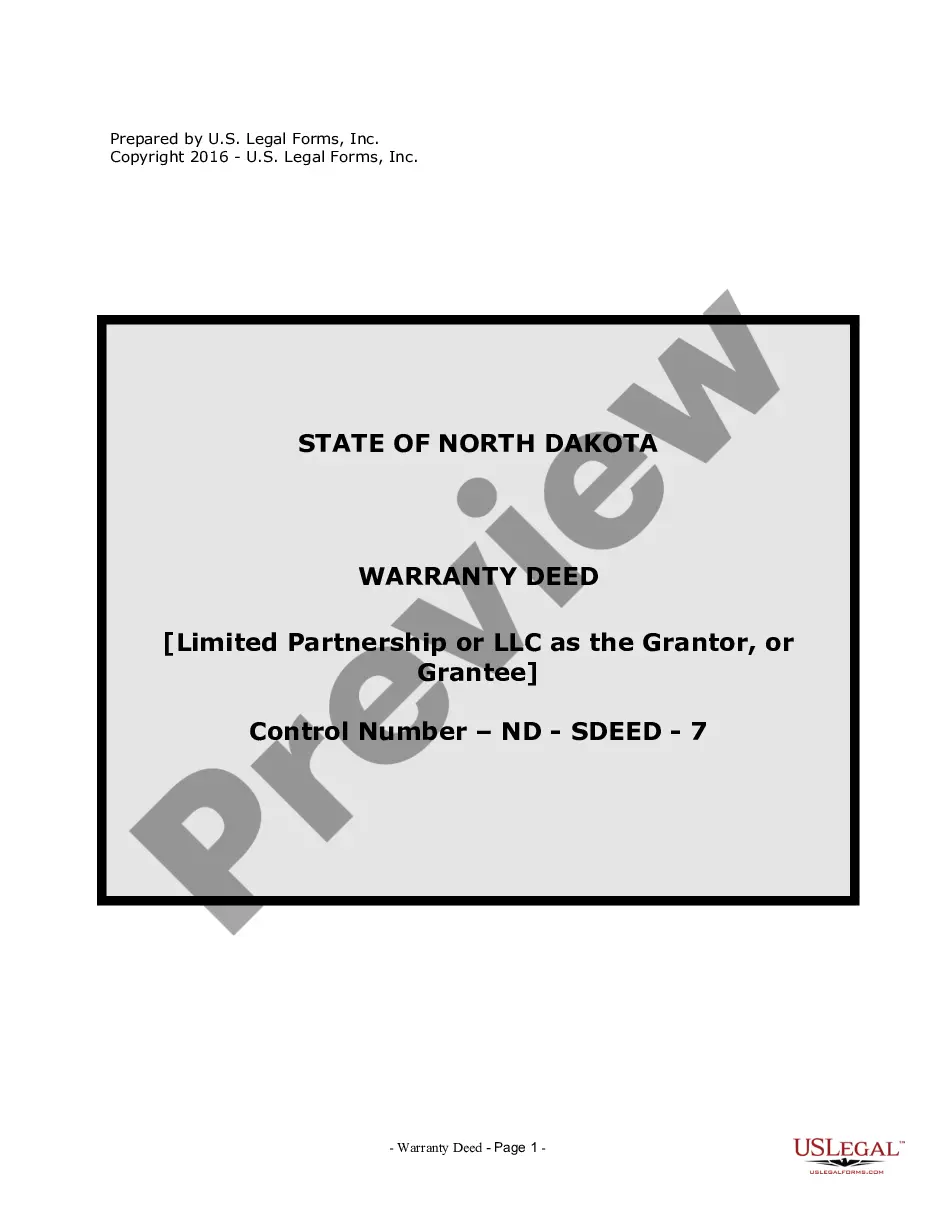
North Dakota Warranty Deed from Limited Partnership or LLC is the Grantor, or Grantee
About this form
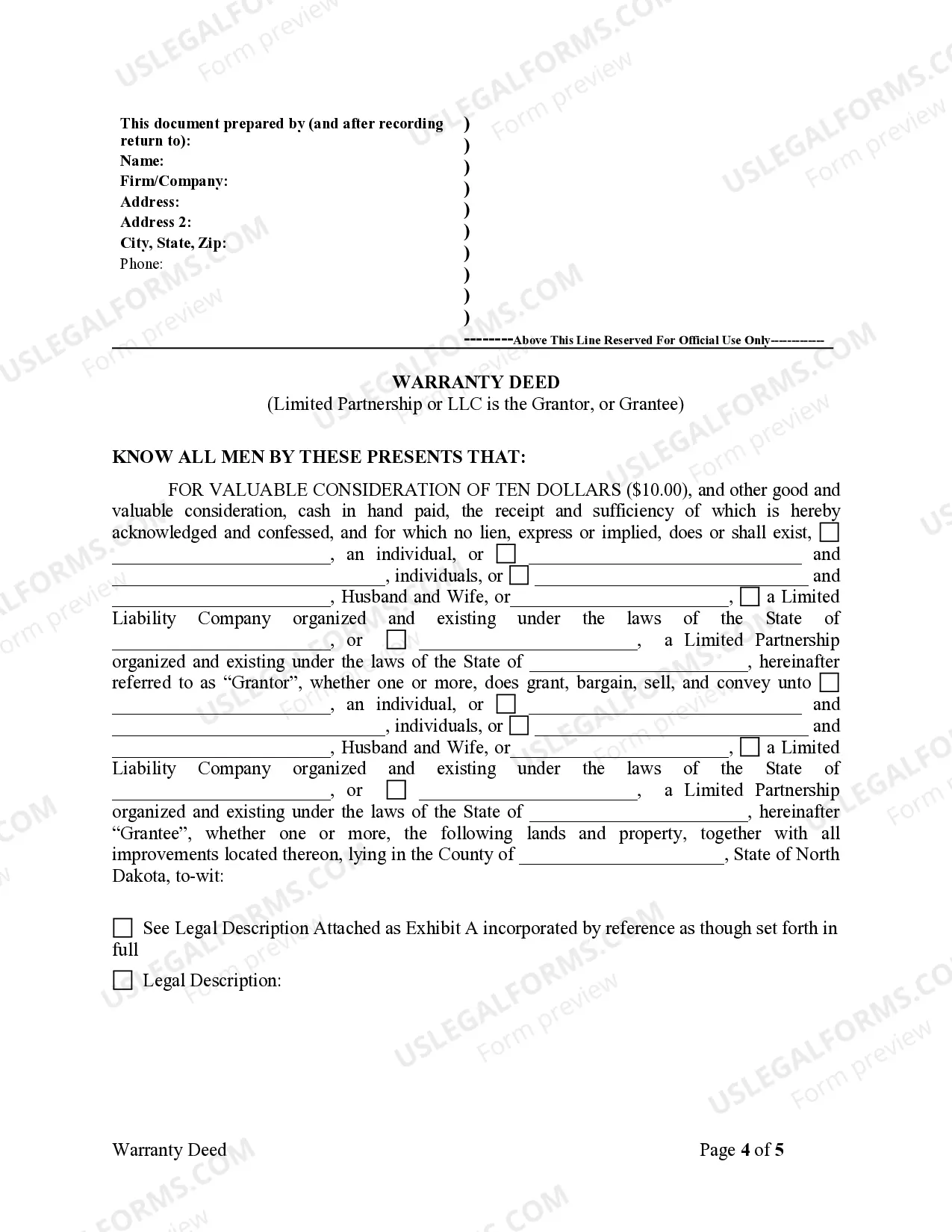
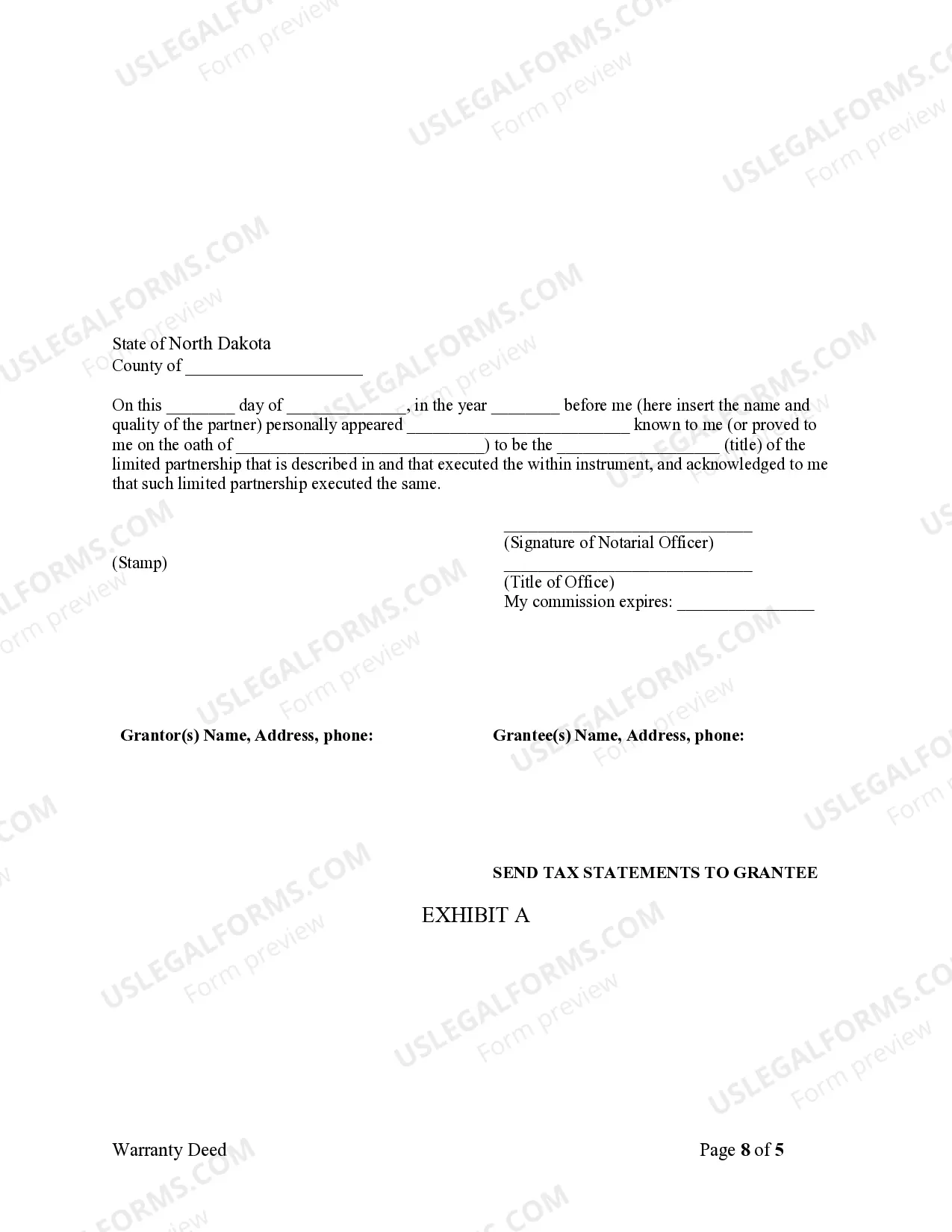
The Warranty Deed from Limited Partnership or LLC is a legal document used to transfer real estate ownership from a limited partnership or limited liability company (LLC) to another party, known as the grantee. This form guarantees that the grantor has clear title to the property and that it is free from any encumbrances. It is particularly important as it offers assurances beyond what a quitclaim deed provides, by ensuring the legitimacy of the ownership being conveyed.
Key components of this form
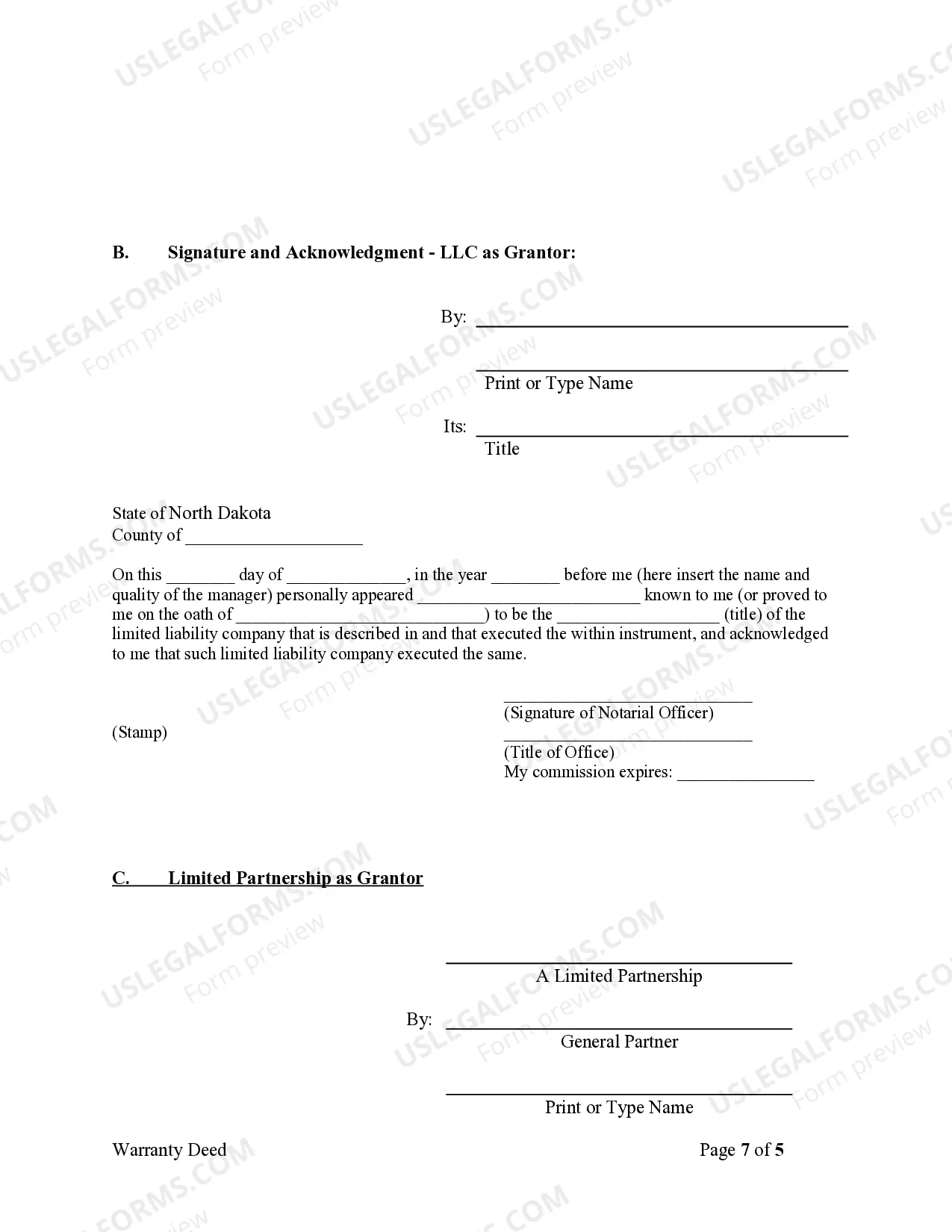
- Identification of the grantor (limited partnership or LLC) and grantee.
- Legal description of the property being transferred.
- Clauses asserting that the property is free from encumbrances.
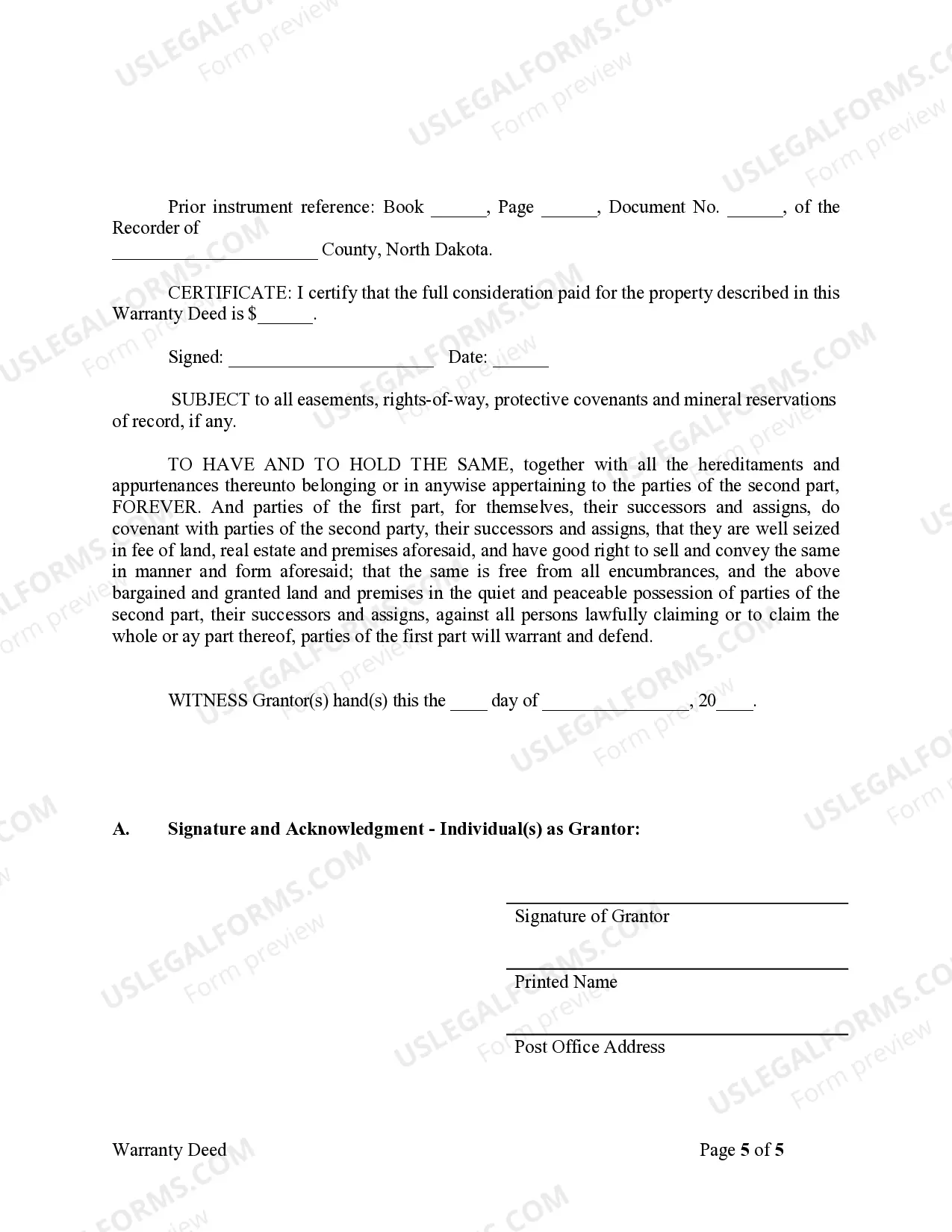
- Warranties regarding the grantor's authority to transfer the property.
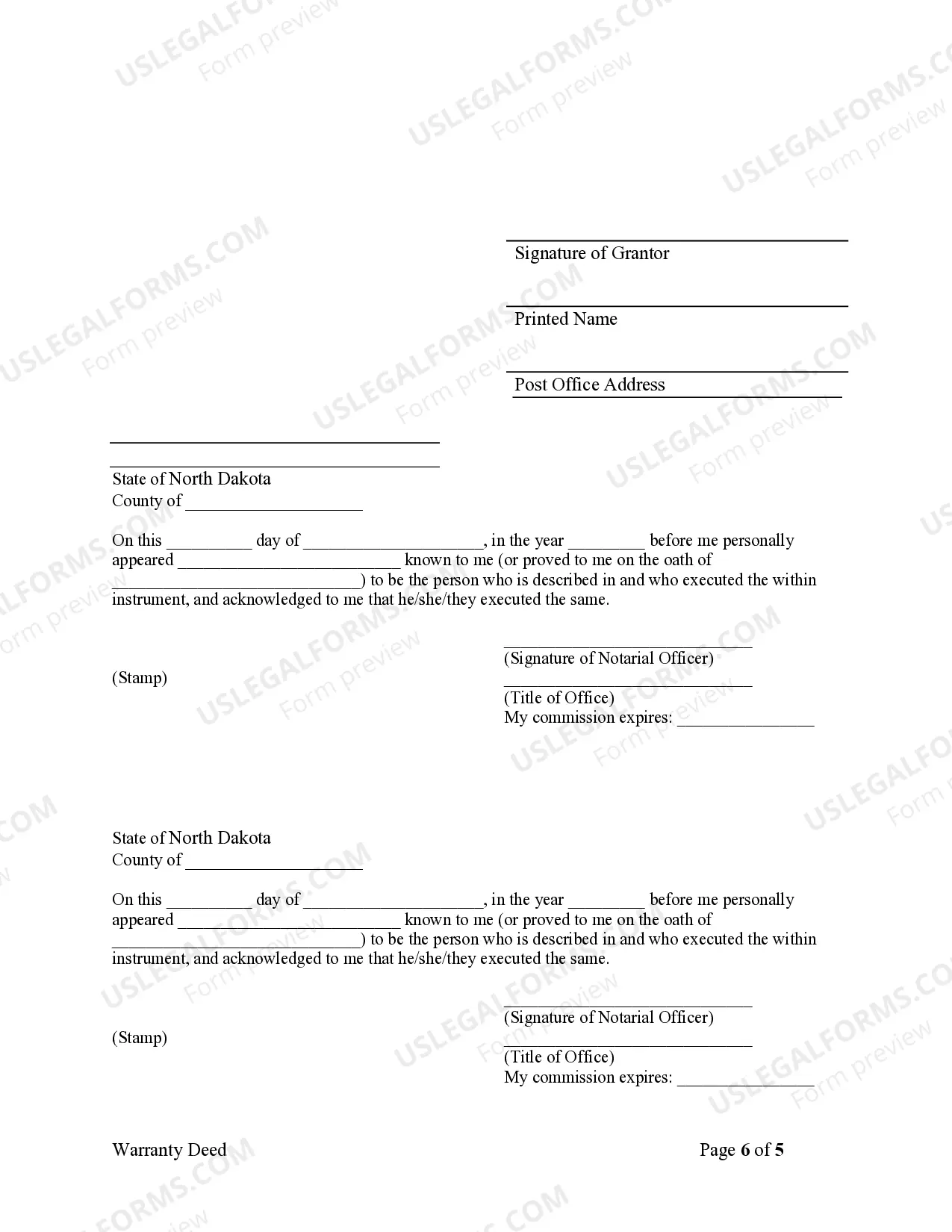
- Signature line for the grantor, requiring acknowledgment before a notary.





Common use cases
This form is typically used when a limited partnership or LLC is selling or transferring property ownership to another individual, business, or entity. It is appropriate for conveying residential, commercial, or industrial real estate, ensuring that the new owner has rightful title with guaranteed protections against future claims. Use this deed when a formalized and legally binding transfer of property is required.
Who should use this form
- Limited partnerships or LLCs acting as grantors wishing to convey property.
- Individuals or entities receiving property as grantees from a limited partnership or LLC.
- Real estate professionals who need to facilitate property transfers involving entities.
- Attorneys or legal representatives managing property transactions for clients.
Completing this form step by step
- Identify the parties involved (grantor and grantee) and enter their details in the designated fields.
- Provide a full legal description of the property, ensuring accuracy for clarity and legal compliance.
- Specify any easements, rights-of-way, or covenants affecting the property, if applicable.
- Sign and date the document in the presence of a notary to finalize the execution.
- Ensure all fields are filled accurately and completely before submitting the deed to the appropriate local office for recording.
Is notarization required?
This form needs to be notarized to ensure legal validity. US Legal Forms provides secure online notarization powered by Notarize, allowing you to complete the process through a verified video call, available anytime.
Get your form ready online
Our built-in tools help you complete, sign, share, and store your documents in one place.
Make edits, fill in missing information, and update formatting in US Legal Forms—just like you would in MS Word.
Download a copy, print it, send it by email, or mail it via USPS—whatever works best for your next step.
Sign and collect signatures with our SignNow integration. Send to multiple recipients, set reminders, and more. Go Premium to unlock E-Sign.
If this form requires notarization, complete it online through a secure video call—no need to meet a notary in person or wait for an appointment.
We protect your documents and personal data by following strict security and privacy standards.

Make edits, fill in missing information, and update formatting in US Legal Forms—just like you would in MS Word.

Download a copy, print it, send it by email, or mail it via USPS—whatever works best for your next step.

Sign and collect signatures with our SignNow integration. Send to multiple recipients, set reminders, and more. Go Premium to unlock E-Sign.

If this form requires notarization, complete it online through a secure video call—no need to meet a notary in person or wait for an appointment.

We protect your documents and personal data by following strict security and privacy standards.
Common mistakes
- Failing to provide a complete legal description of the property.
- Not obtaining necessary signatures or acknowledgments before a notary.
- Leaving blank fields which can invalidate the document.
- Not recording the deed with the local government after completion.
- Using outdated or incorrect forms that do not comply with state regulations.
Benefits of completing this form online
- Convenient access from anywhere at any time for immediate downloading.
- Editability of the form fields allows tailored entries without starting from scratch.
- Reliable and legally vetted by licensed attorneys, ensuring compliance with state laws.
- Easy navigation through the form using your computer's features for a smoother completion process.
Looking for another form?

Form popularity
FAQ
Typically, the lender will provide you with a copy of the deed of trust after the closing. The original warranty deeds are often mailed to the grantee after they are recorded. These are your original copies and should be kept in a safe place, such as a fireproof lockbox or a safe deposit box at a financial institution.
Contains the strongest and broadest form of guarantee of title of any type of deed, and provides the greatest protection of any deed to the grantee. In this type of deed, the grantor makes various covenants, or warranties.
The deed must be signed by all grantors, in front of a qualified notary, and notarized by the notary to be complete. Contact the local county recorder's office to find out what type of notaries are allowed to notarize deeds and where the notaries are located.
To make the form legally binding, you must sign it in front of a notary public. You must then file your signed and notarized deed with the county office that's in charge of recording property documents. Once the grantee signs the warranty deed, he/she legally has ownership and claim to the property.
The mortgage company usually prepares this deed as part of the loan package and delivers it to the title company for you to sign at closing. The title company is commonly the trustee to the deed and holds legal title to the property until the loan gets fully repaid.
It's important to note that a warranty deed does not actually prove the grantor has ownership (a title search is the best way to prove that), but it is a promise by the grantor that they are transferring ownership and if it turns out they don't actually own the property, the grantor will be responsible for compensating
Under the Grantor section of the deed, write the name of the person transferring title. Under Grantee, write the name of the person receiving title. Describe the parcel of land. Use the street address and include the North Carolina County where the land is located.
The two parties involved in a warranty deed are the seller or owner, also known as the grantor, and the buyer or the grantee. Either party can be an individual or a business, and are often strangers to each other.
Let's start with the definition of a deed: DEED: A written instrument by which one party, the Grantor, conveys the title of ownership in property to another party, the Grantee. A Warranty Deed contains promises, called covenants, that the Grantor makes to the Grantee.