North Dakota Warning of Default on Commercial Lease
Understanding this form
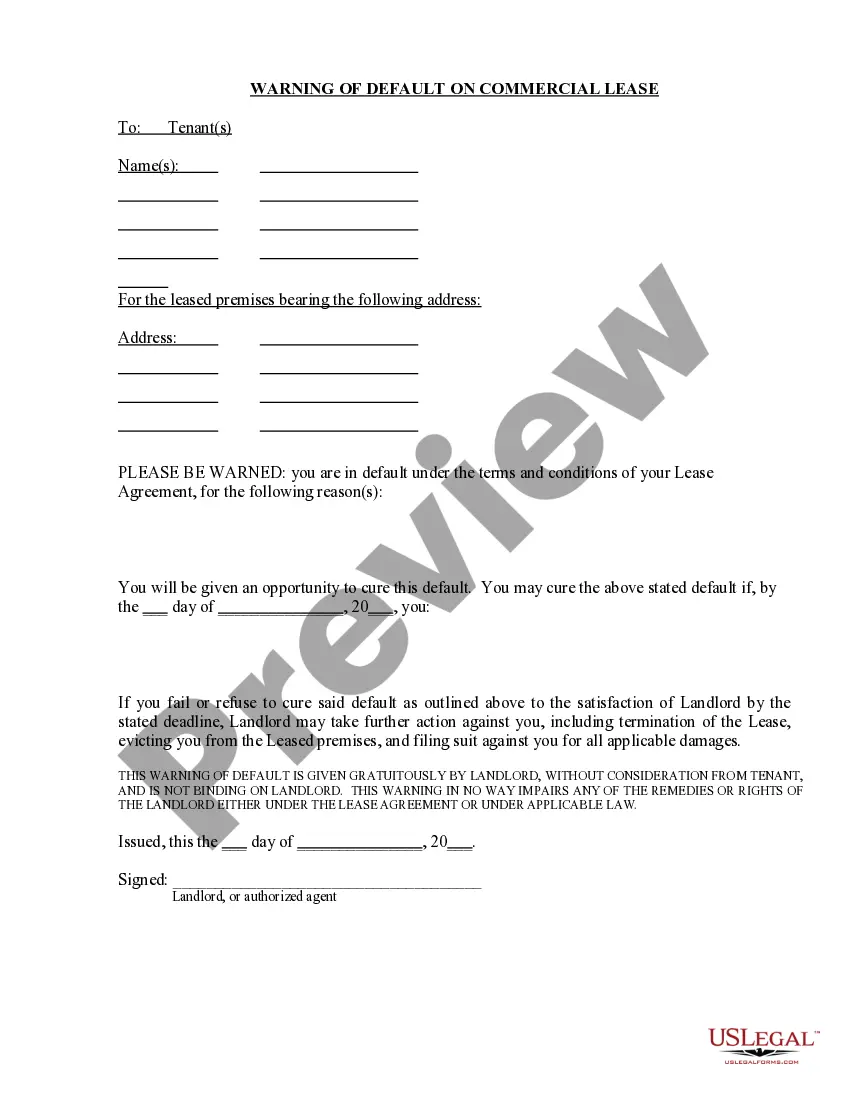
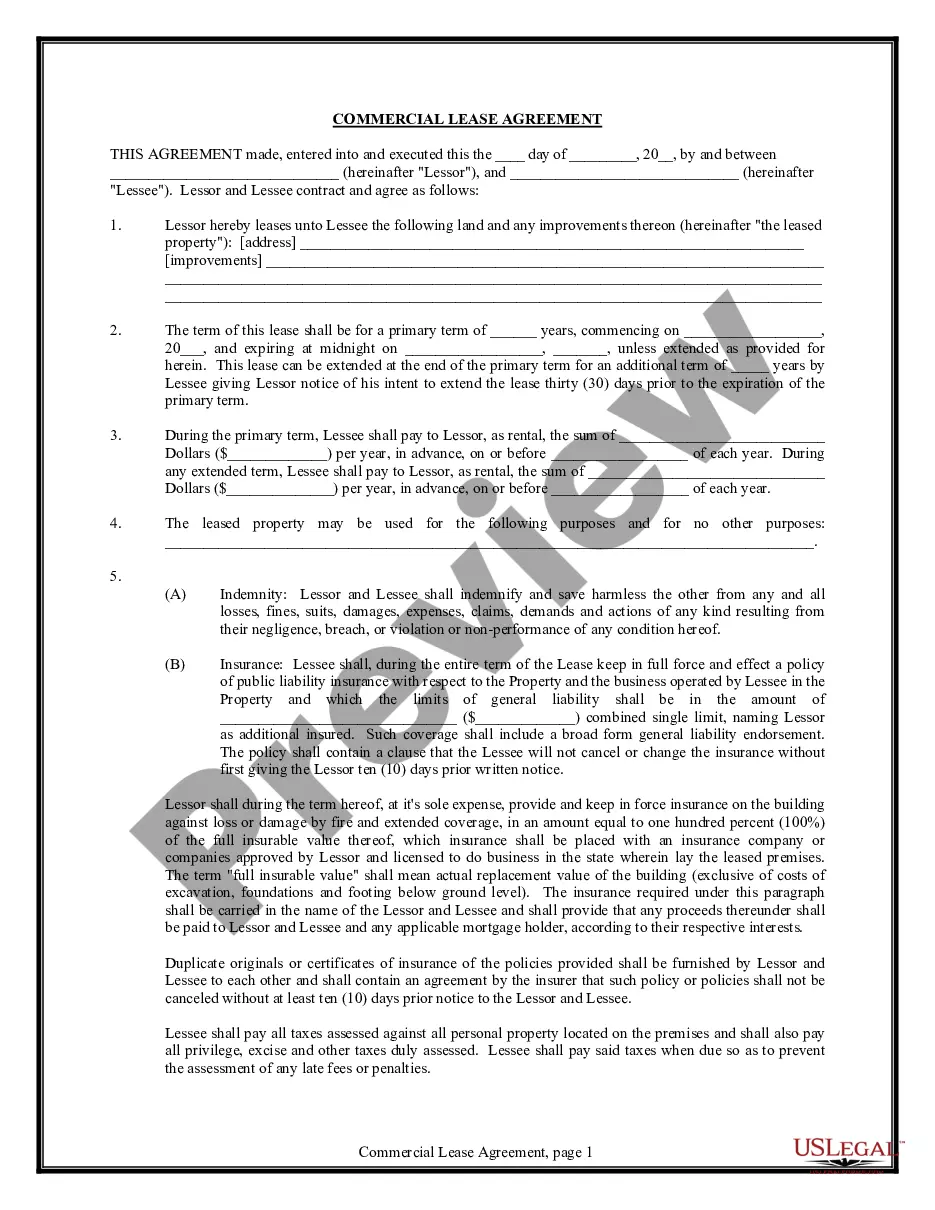
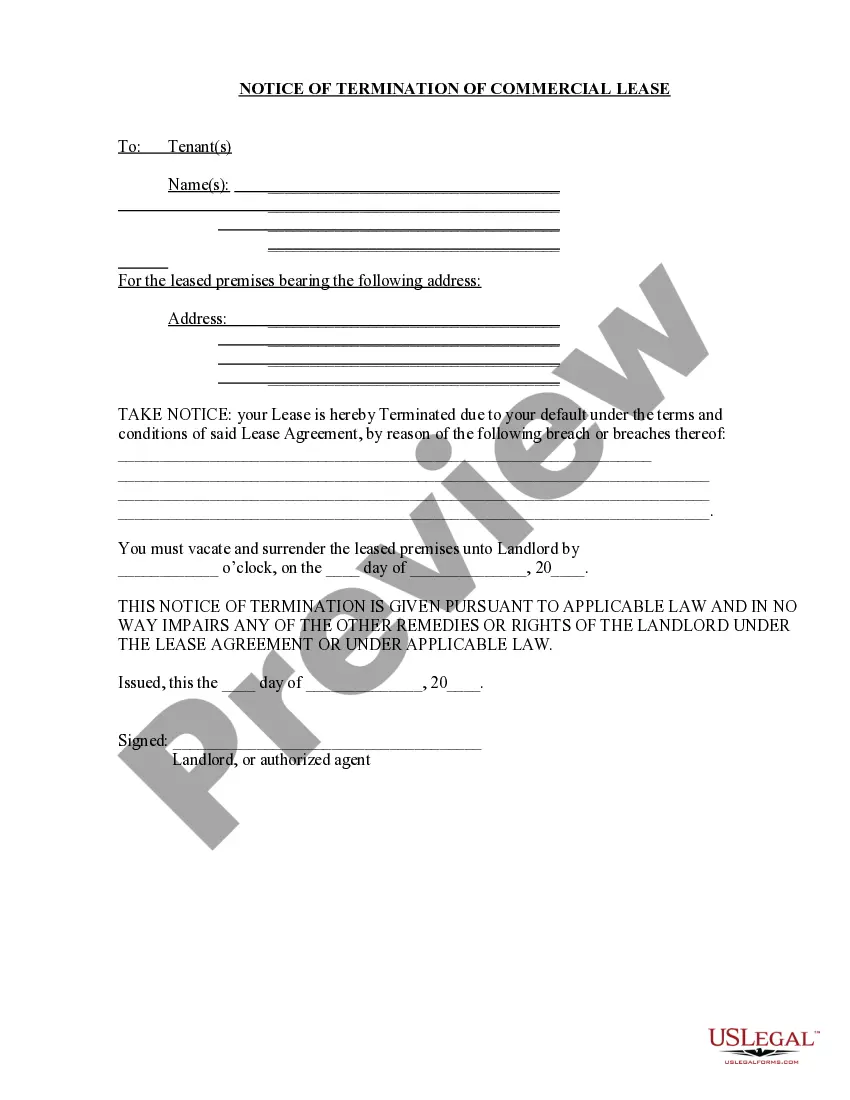
The Warning of Default on Commercial Lease is a notification from a landlord to a tenant indicating a concern regarding the tenant's failure to meet the lease terms, particularly in relation to timely rent payments. This form serves as an important preliminary step, informing the tenant of their potential default to allow them to rectify the issue before any formal eviction process begins. It is distinct from eviction notices as it focuses on the opportunity for the tenant to fix the default before further action is taken.
Form components explained
- Issuance date: The date the notice is completed, establishing a timeline for compliance.
- Landlord's signature: Confirms the authenticity of the notice from the landlord or their authorized agent.
- Definition of default: Describes the circumstances that can classify a tenant as being in default of their lease.
- Non-binding nature: Clarifies that the warning does not impair any of the landlord's rights under the lease or applicable law.
Common use cases
This form should be used when a landlord has concerns about a tenant's failure to meet lease obligations, particularly when rent is overdue. It is beneficial in situations where the landlord wants to address potential defaults before pursuing eviction or other remedies, allowing the tenant an opportunity to rectify the situation. This notification can also assist in documenting the timeline of the landlord's attempts to resolve the issue amicably.
Intended users of this form
- Landlords who manage commercial properties and need to inform tenants of potential lease defaults.
- Property management professionals acting on behalf of landlords.
- Authorized agents who represent landlords in managing lease agreements.
- Tenants seeking to understand their obligations and the potential consequences of defaulting on a lease.
Instructions for completing this form
- Enter the date of issuance at the top of the form.
- Specify the tenant's name and any relevant lease information if required.
- Clearly state the grounds for the warning of default, including overdue rent amounts or other lease violations.
- Have the landlord or authorized agent sign the form to validate the notice.
- Provide the completed form to the tenant according to the requirements in your state.
Notarization guidance
This form does not typically require notarization unless specified by local law. However, having a notary public can add an extra layer of authenticity and serve as further documentation of the communication between landlord and tenant.
Get your form ready online
Our built-in tools help you complete, sign, share, and store your documents in one place.
Make edits, fill in missing information, and update formatting in US Legal Forms—just like you would in MS Word.
Download a copy, print it, send it by email, or mail it via USPS—whatever works best for your next step.
Sign and collect signatures with our SignNow integration. Send to multiple recipients, set reminders, and more. Go Premium to unlock E-Sign.
If this form requires notarization, complete it online through a secure video call—no need to meet a notary in person or wait for an appointment.
We protect your documents and personal data by following strict security and privacy standards.

Make edits, fill in missing information, and update formatting in US Legal Forms—just like you would in MS Word.

Download a copy, print it, send it by email, or mail it via USPS—whatever works best for your next step.

Sign and collect signatures with our SignNow integration. Send to multiple recipients, set reminders, and more. Go Premium to unlock E-Sign.

If this form requires notarization, complete it online through a secure video call—no need to meet a notary in person or wait for an appointment.

We protect your documents and personal data by following strict security and privacy standards.
Common mistakes
- Failing to provide the form within the timeline required by state laws.
- Not clearly stating the reasons for the default, which could lead to confusion.
- Neglecting to sign the form, which invalidates the notice.
- Not issuing the form to the correct tenant or person identified in the lease agreement.
Benefits of completing this form online
- Convenience of downloading and customizing the form to fit specific needs.
- Editable templates that can easily accommodate personalized details.
- Immediate access to legal documentation, helping landlords act promptly.
- Professional drafting ensures compliance with legal standard practices.
Legal use & context
- The Warning of Default serves as a formal notification, giving tenants ample opportunity to address their defaults before facing legal action.
- This document reinforces the landlord's rights under the lease agreement and state law.
- Use of this form helps maintain compliance with legal obligations to notify tenants before eviction.
Summary of main points
- The Warning of Default on Commercial Lease is crucial for communication between landlords and tenants regarding lease obligations.
- This form provides tenants with an opportunity to remedy the situation before eviction procedures begin.
- Using this form helps ensure clear documentation and protects the landlordâs rights under the lease agreement.
Looking for another form?
Form popularity
FAQ
Paying the remainder of the rent still owed on the lease in full; Paying a specified amount of liquidated damages as outlined in the contract terms; Paying an additional amount of punitive damages, dependent on local state laws; and/or.
A lease is automatically void when it is against the law, such as a lease for an illegal purpose. In other circumstances, like fraud or duress, a lease can be declared void at the request of one party but not the other.
If the commercial tenant is a shell corporation and/or does not have any assets of value, the commercial tenant may choose to walk away from its commercial lease obligations.Often the landlord will require guarantees in order to prevent a commercial tenant from walking away from its lease obligations.
Keep the Ticking Clock in Mind. Think Seriously About Going Long Term. Prioritize Your Wish List. Arm Yourself With Knowledge. Negotiate Your Way to Greater Flexibility. Study Tenant Improvements Before You Head to the Table. Double Check the Details. Enlist the Help of a Tenant Rep Broker.
The CARES Act provides no direct relief for such tenants. Several executive orders issued by governors and mayors have purported to impose moratoria on evictions that would extend to commercial tenants.
One option for getting out of your commercial lease early is to approach your landlord and request to surrender the lease. A surrender of lease is when both you and the landlord agree to end the lease.However, if the landlord agrees to surrender your lease, you will often have to pay their legal costs.
In most cases the landlord will ask that you remain secondarily responsible for paying the lease if the new tenant defaults. In both cases, there will likely be some charge by the landlord to cover their time and expense in reviewing and approving the arrangement.
A break-early fee is a lump sum payment. The amount of the break-early fee will vary greatly depending upon the commercial tenant's specific circumstances. In exchange for the break-early fee, the landlord will agree to release the commercial tenant from all of its obligations under the commercial lease.