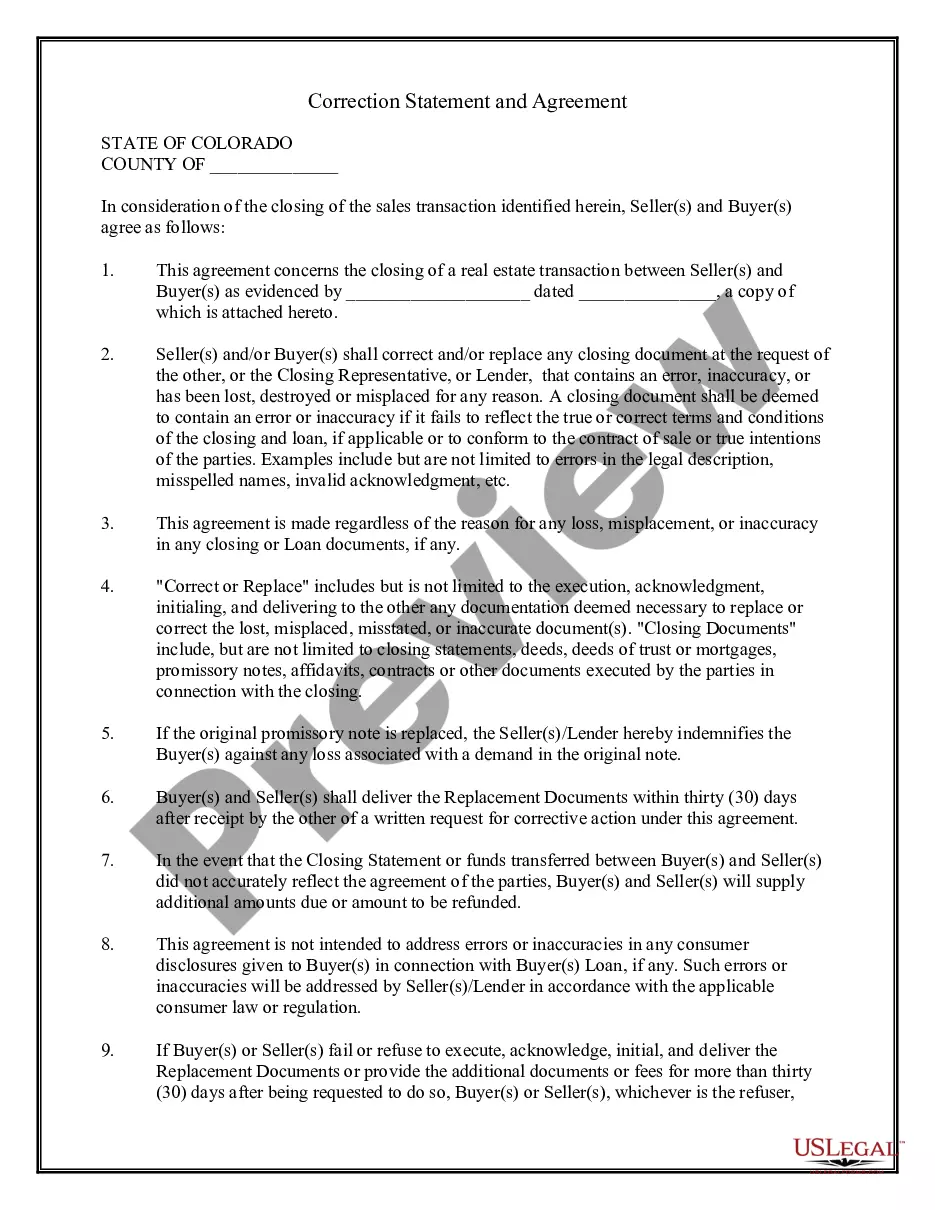
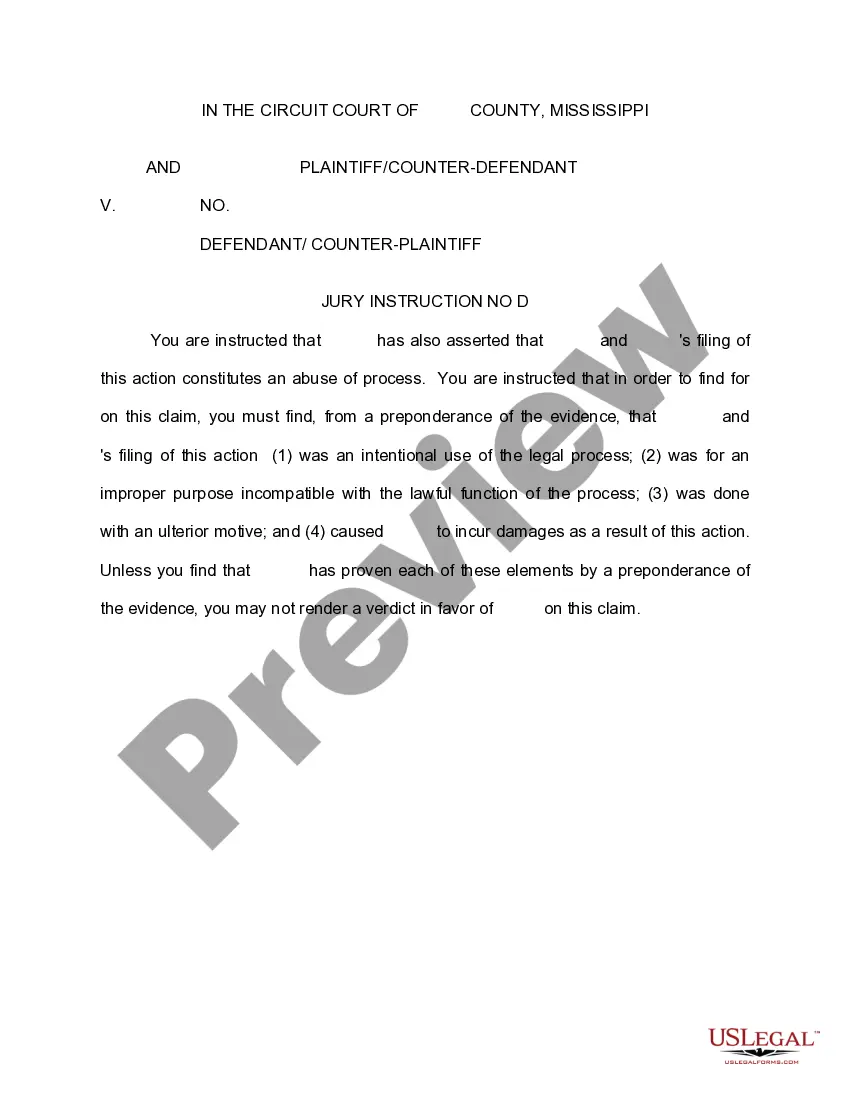
Mississippi Jury Instruction - Abuse of Process
What this document covers
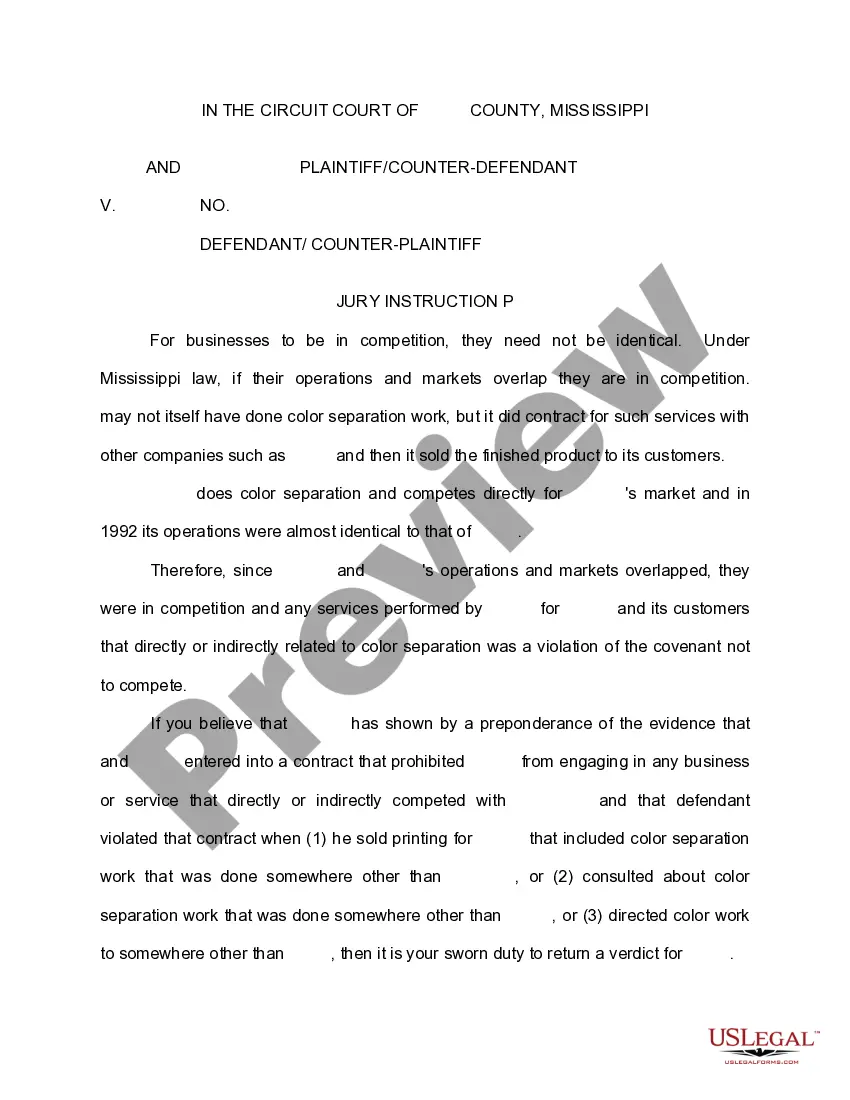
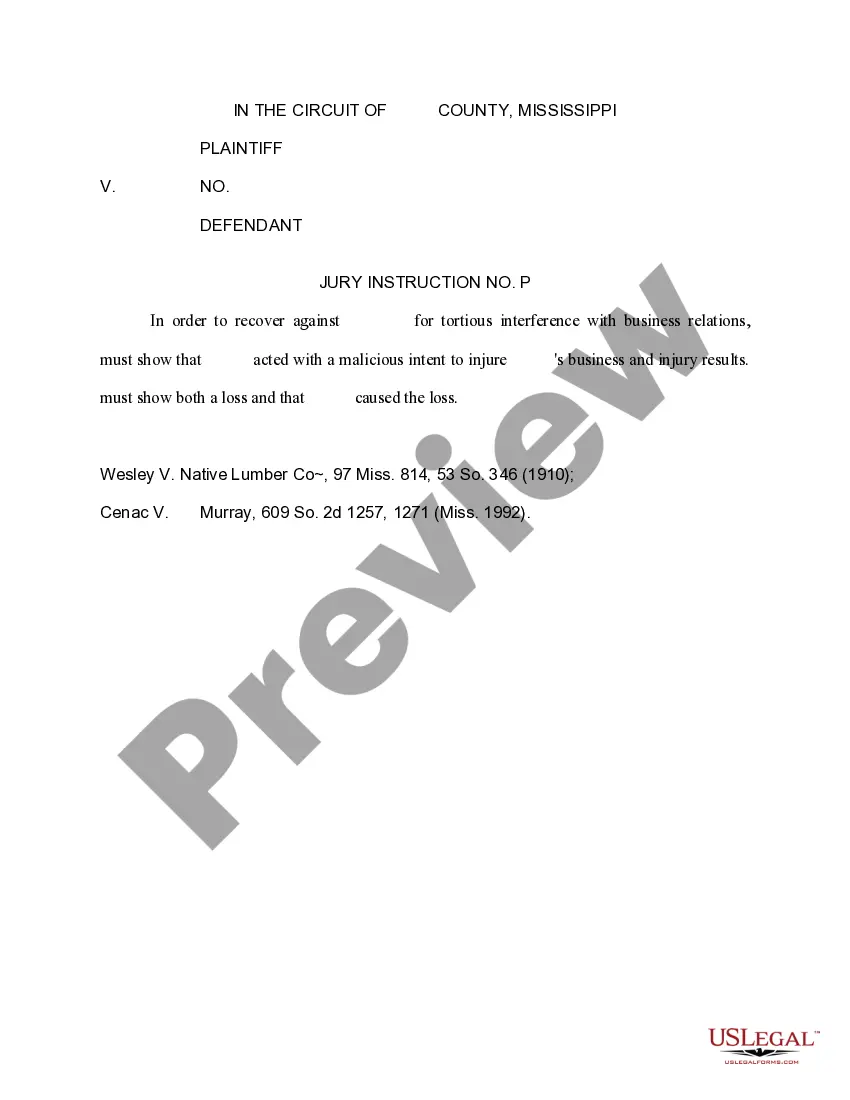
The Jury Instruction for Abuse of Process is a legal document used in Mississippi to guide jurors on how to consider the evidence presented in cases related to misuse of legal processes. This form serves as a sample jury instruction and should be tailored to ensure it complies with Mississippi's current case law. It is distinct from other jury instructions as it specifically addresses the legal framework surrounding abuse of process claims.
Key parts of this document
- Definition of abuse of process and its legal implications.
- Description of the elements that must be proven to establish an abuse of process claim.
- Guidelines on the standard of proof required for jurors.
- Examples illustrating typical situations of abuse of process.
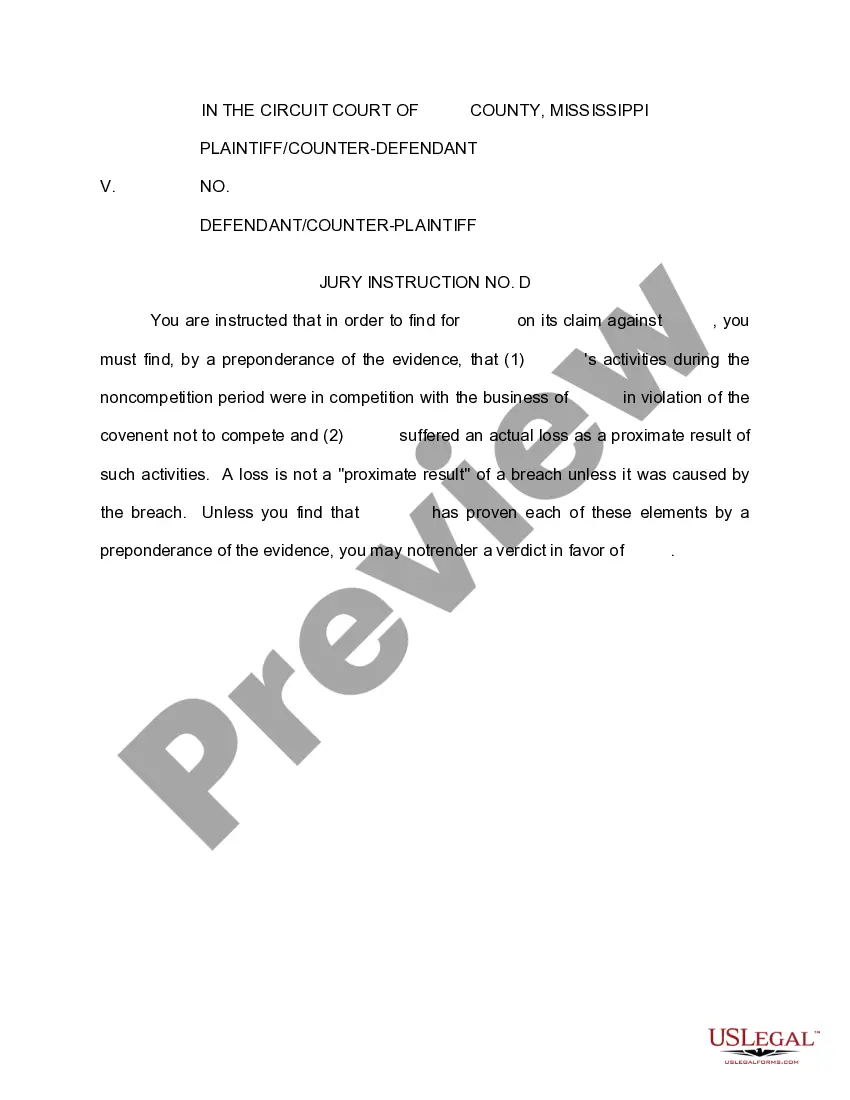
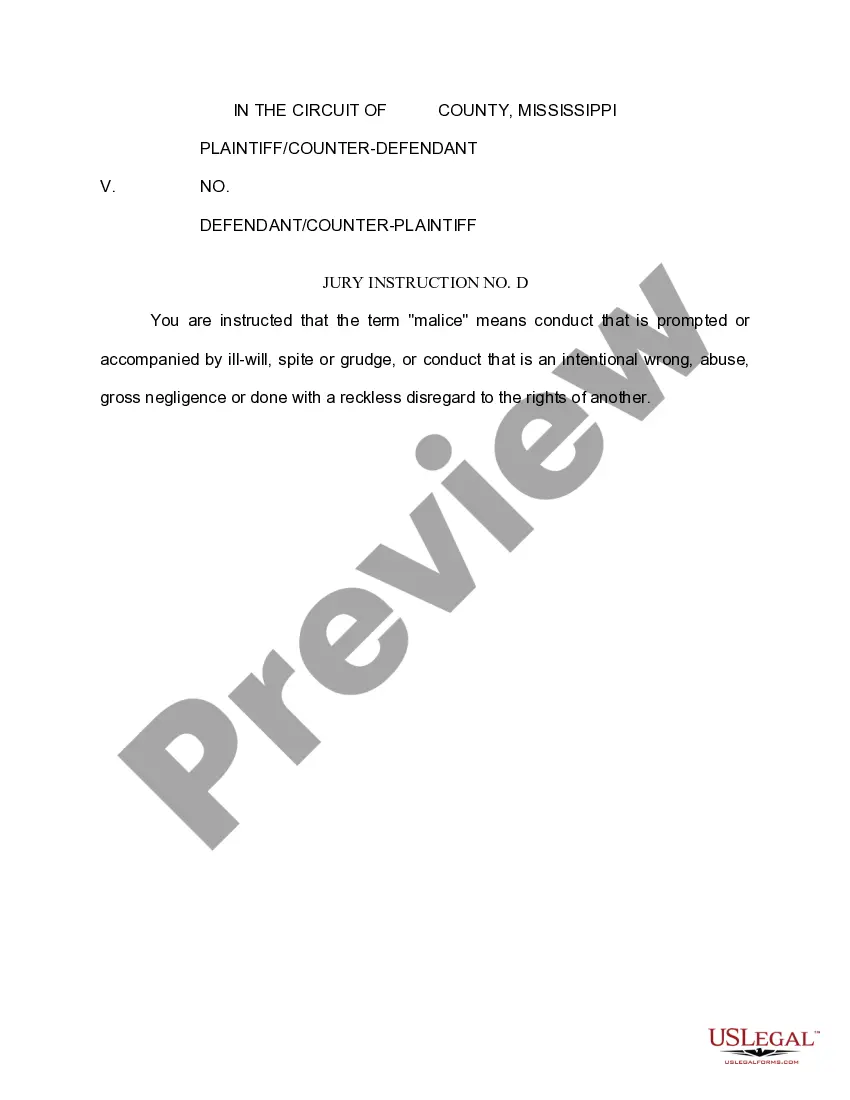
Situations where this form applies
This jury instruction form is used in court cases where a party claims that another party has abused the legal system to achieve an ulterior motive. It is relevant in civil cases involving wrongful use of the courts, such as malicious prosecution or other similar claims. Attorneys may use this form during jury trials to ensure the jurors understand the legal principles of abuse of process.
Who can use this document
Eligible users of this form include:
- Attorneys representing clients in abuse of process claims.
- Legal professionals preparing for a jury trial in Mississippi.
- Court officials who require guidance on jury instructions related to this topic.
How to prepare this document
- Review the definition of abuse of process included in the instruction.
- Identify and outline the legal elements that must be proven in court.
- Provide examples that illustrate abuse of process, ensuring they are relevant to the case.
- Clarify the standard of proof that jurors must apply when considering the evidence.
Does this document require notarization?
This form does not typically require notarization to be legally valid. However, some jurisdictions or document types may still require it. US Legal Forms provides secure online notarization powered by Notarize, available 24/7 for added convenience.
Get your form ready online
Our built-in tools help you complete, sign, share, and store your documents in one place.
Make edits, fill in missing information, and update formatting in US Legal Forms—just like you would in MS Word.
Download a copy, print it, send it by email, or mail it via USPS—whatever works best for your next step.
Sign and collect signatures with our SignNow integration. Send to multiple recipients, set reminders, and more. Go Premium to unlock E-Sign.
If this form requires notarization, complete it online through a secure video call—no need to meet a notary in person or wait for an appointment.
We protect your documents and personal data by following strict security and privacy standards.

Make edits, fill in missing information, and update formatting in US Legal Forms—just like you would in MS Word.

Download a copy, print it, send it by email, or mail it via USPS—whatever works best for your next step.

Sign and collect signatures with our SignNow integration. Send to multiple recipients, set reminders, and more. Go Premium to unlock E-Sign.

If this form requires notarization, complete it online through a secure video call—no need to meet a notary in person or wait for an appointment.

We protect your documents and personal data by following strict security and privacy standards.
Mistakes to watch out for
- Failing to cite current Mississippi case law when drafting.
- Using overly complex language that jurors might not understand.
- Neglecting to provide relatable examples of abuse of process.
Benefits of completing this form online
- Convenient access to legally vetted templates at any time.
- Editable forms that allow for customization to fit specific case needs.
- Reliable sources drafted by licensed attorneys, ensuring legal accuracy.
Looking for another form?
Form popularity
FAQ
The Elements of Abuse of Process However, the typical elements that a plaintiff must prove in an abuse of process lawsuit are: The existence of an ulterior motive or purpose in using the process, and. An act in the use of the process that is not proper in the regular prosecution of the legal proceedings.
To win a suit for malicious prosecution, the plaintiff must prove four elements: (1) that the original case was terminated in favor of the plaintiff, (2) that the defendant played an active role in the original case, (3) that the defendant did not have probable cause or reasonable grounds to support the original case,
Malicious prosecution occurs when one party has knowingly and with malicious intent initiated baseless litigation against another party. This includes both criminal charges and civil claims, for which the cause of action is essentially the same.
Legal Definition of malicious prosecution : the tort of initiating a criminal prosecution or civil suit against another party with malice and without probable cause also : an action for damages based on this tort brought after termination of the proceedings in favor of the party seeking damages.
The judge instructs the jury about the relevant laws that should guide its deliberations. (In some jurisdictions, the court may instruct the jury at any time after the close of evidence.The judge reads the instructions to the jury. This is commonly referred to as the judge's charge to the jury.
A plaintiff can sue for malicious prosecution when a defendant "maliciously" prosecutes a criminal case or uses a civil proceeding against the plaintiff when the defendant knows he or she doesn't have a case.
It is a claim made by the respondent or defendant that the other party is misusing or perverting regularly issued court process (civil or criminal) not justified by the underlying legal action. In common law it is classified as an intentional tort.
Abuse of process is an intentional tort that arises when a person deliberately misuses a court process that is not justified by the underlying civil or criminal legal action. As with most torts, the elements that a plaintiff must prove in order to win his or her case will vary from state to state.
Prosecution by the defendant. Absence of reasonable and probable cause. Defendant acted maliciously. Termination of proceedings in the favour of the plaintiff. Plaintiff suffered damage as a result of the prosecution.