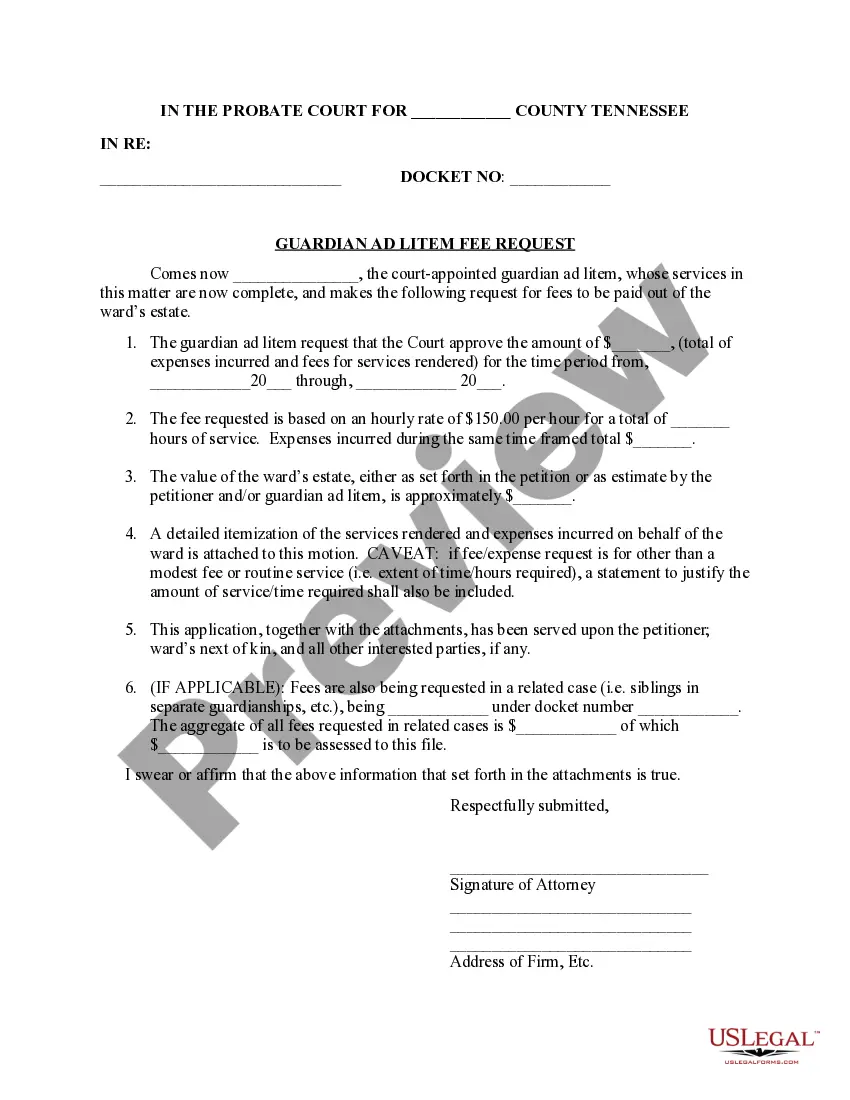
Mississippi Jury Instruction - Business Competition
What this document covers
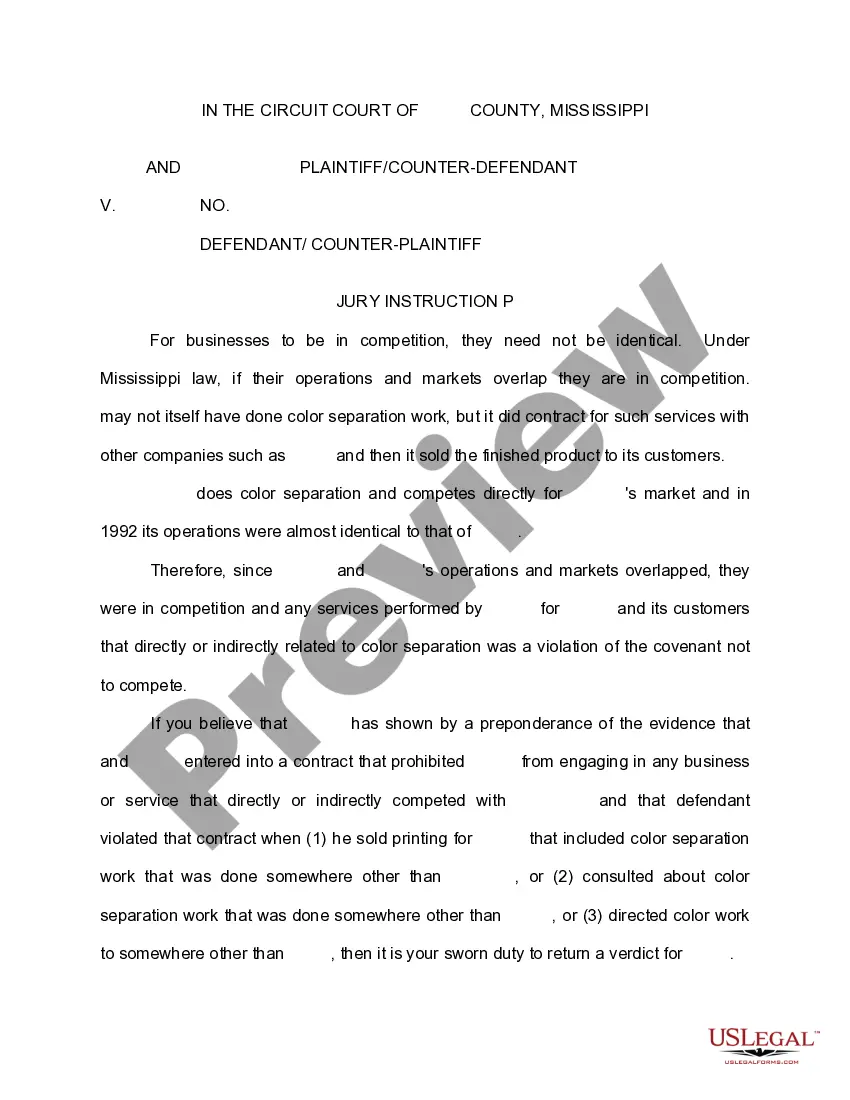
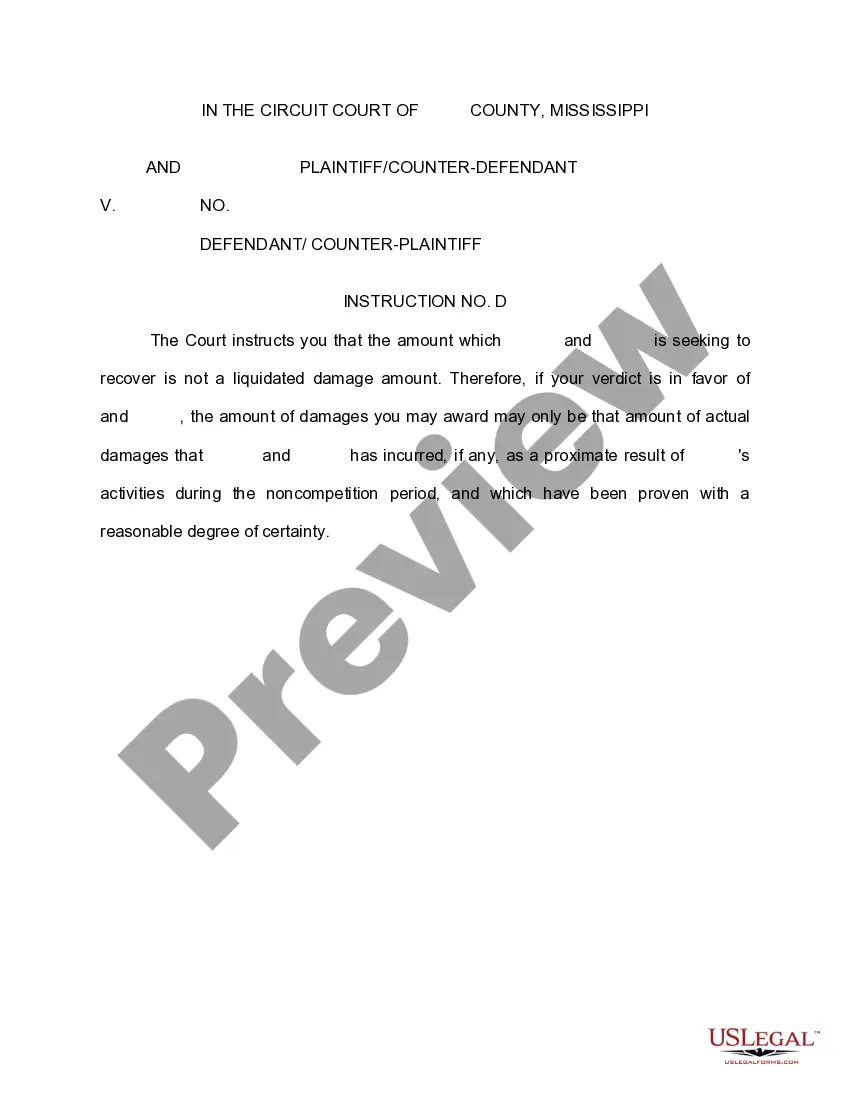
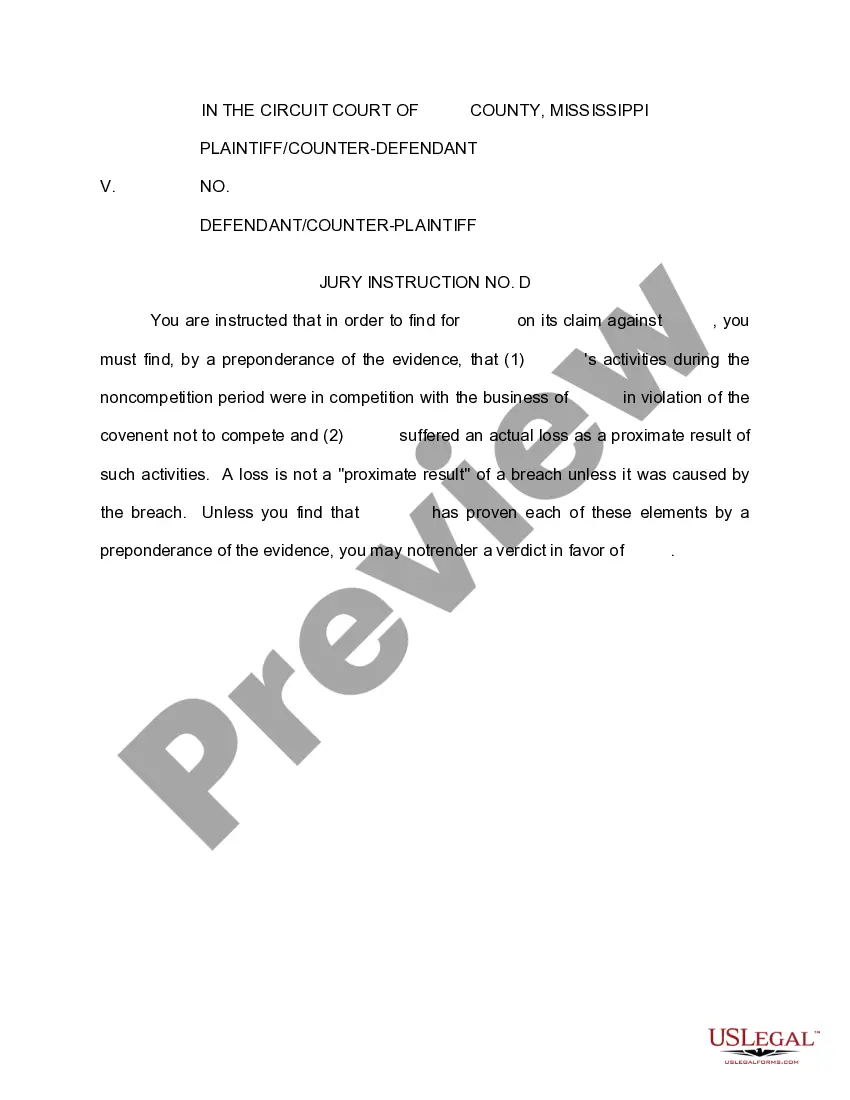
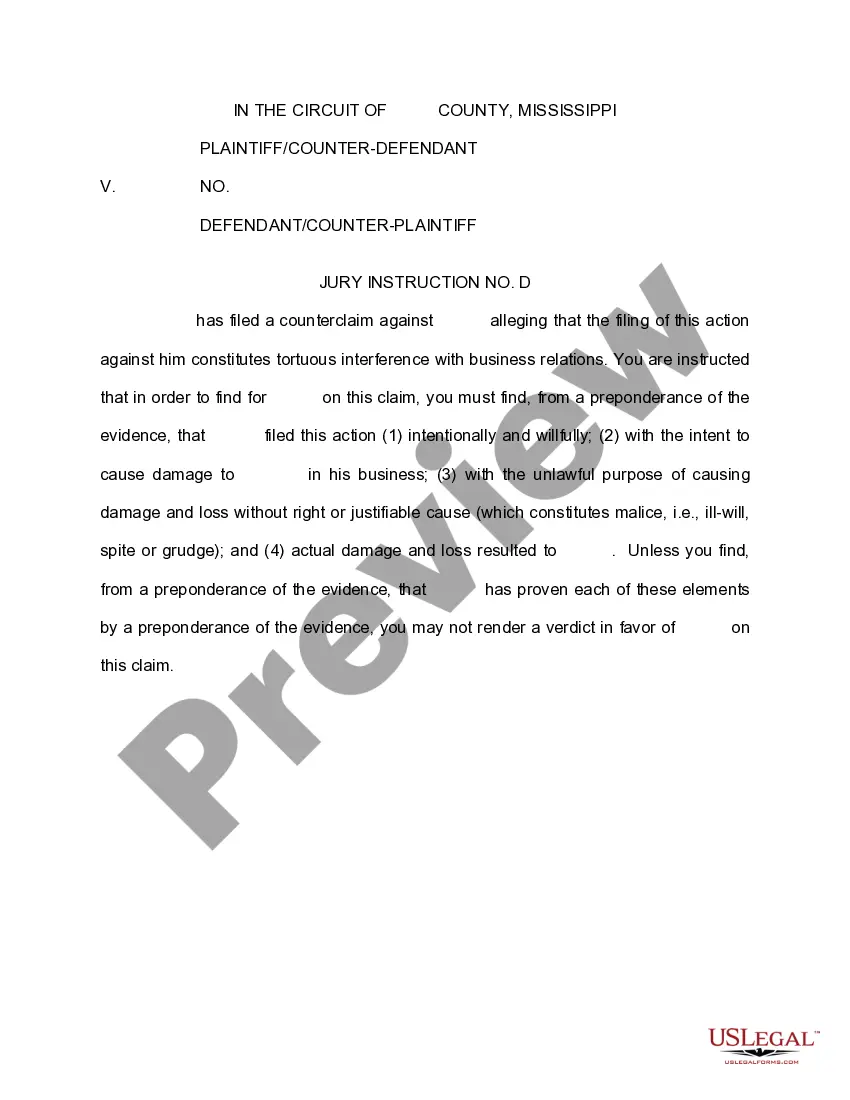
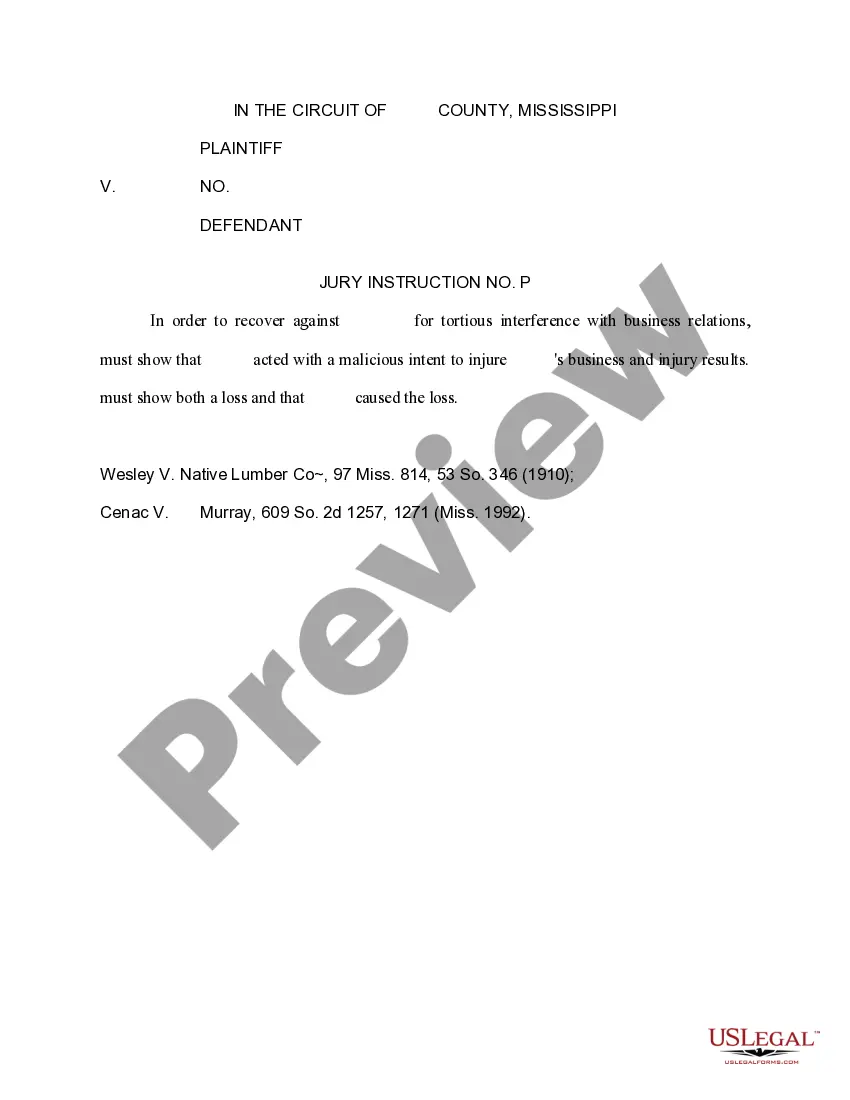
This Jury Instruction - Business Competition form provides sample language for jury instructions related to business competition cases in Mississippi. It serves as a guide for legal professionals to inform jurors about relevant legal concepts and considerations they should assess during deliberation. This form is specifically tailored to ensure compliance with Mississippi law but is meant to be adapted based on the latest legal precedents.
Main sections of this form
- Introduction to business competition laws.
- Definitions of key terms relevant to the case.
- Specific legal standards jurors must consider.
- Guidance on how to evaluate evidence presented during the trial.
- Instruction on the legal consequences of their findings.

When this form is needed
This form is used in situations where a court case involves disputes regarding business competition, such as claims of unfair practices, deceptive advertising, or breaches of competition laws. Legal professionals can use this form to prepare jury instructions, ensuring that jurors have a clear understanding of their roles and the applicable legal standards.
Who can use this document
- Attorneys representing parties in business competition lawsuits.
- Judges preparing jury instructions for relevant trials.
- Legal practitioners seeking to ensure comprehensiveness and compliance in jury directives.
How to complete this form
- Review the sample language to ensure it fits the specific details of your case.
- Customize the definitions and legal standards to reflect the facts of the case.
- Ensure all sections are clear and applicable to the jury's understanding.
- Consult with legal counsel to confirm compliance with Mississippi jury instruction requirements.
- Submit the final draft for judicial approval before the trial.
Notarization requirements for this form
Notarization is generally not required for this form. However, certain states or situations might demand it. You can complete notarization online through US Legal Forms, powered by Notarize, using a verified video call available anytime.
Get your form ready online
Our built-in tools help you complete, sign, share, and store your documents in one place.
Make edits, fill in missing information, and update formatting in US Legal Forms—just like you would in MS Word.
Download a copy, print it, send it by email, or mail it via USPS—whatever works best for your next step.
Sign and collect signatures with our SignNow integration. Send to multiple recipients, set reminders, and more. Go Premium to unlock E-Sign.
If this form requires notarization, complete it online through a secure video call—no need to meet a notary in person or wait for an appointment.
We protect your documents and personal data by following strict security and privacy standards.

Make edits, fill in missing information, and update formatting in US Legal Forms—just like you would in MS Word.

Download a copy, print it, send it by email, or mail it via USPS—whatever works best for your next step.

Sign and collect signatures with our SignNow integration. Send to multiple recipients, set reminders, and more. Go Premium to unlock E-Sign.

If this form requires notarization, complete it online through a secure video call—no need to meet a notary in person or wait for an appointment.

We protect your documents and personal data by following strict security and privacy standards.
Typical mistakes to avoid
- Using outdated legal language that does not reflect current laws.
- Failing to customize instructions based on the specifics of the case.
- Omitting critical definitions that could confuse jurors.
Benefits of completing this form online
- Easy access to professionally drafted legal language.
- Editable format allows for quick customization based on case needs.
- Reliable source ensures compliance with applicable laws.
Legal use & context
- This form serves to clarify the jury's understanding of business competition laws.
- Adhering to these instructions helps ensure a fair legal process.
- Misalignment with current law can lead to reversible errors in judgment.
Looking for another form?



Form popularity
FAQ
Key Takeaways. There are four types of competition in a free market system: perfect competition, monopolistic competition, oligopoly, and monopoly. Under monopolistic competition, many sellers offer differentiated productsproducts that differ slightly but serve similar purposes.
The market for wheat is often taken as an example of a competitive market, because there are many producers, and no individual producer can affect the market price by increasing or decreasing his output.Finally the buyers can costlessly observe prices and can buy at the lowest price.
Competition is the rivalry between businesses to increase sales and acquire more customers by regularly adjusting to market needs and demands. The more the consumers, the higher the market share; the more the sales the higher the chances of making more profit.
Coke vs. Pepsi. Coke vs. Pepsi. Ford vs. GM. Ford vs. GM. Thomas Edison vs. Nikola Tesla. Thomas Edison vs. Nikola Tesla. AT&T vs. MCI. AT&T vs. MCI. Nike vs. Reebok. Nike vs. Reebok. Bill Gates vs. Steve Jobs. Bill Gates vs. Steve Jobs. Venice vs. Genoa. Venice vs. Genoa. HP vs. IBM. HP vs. IBM.
The Types of Competitors Direct competitors are the businesses that sell a similar product or service in the same category as you. (These are the competitors you most often think about.) Example: McDonald's and Burger King.Example: McDonald's and Subway.
Competitive Business means any business which competes, directly or indirectly, with the Business in the Market.
Perfect Competition with Infinite Buyers and Sellers. Monopoly with One Producer. Oligopoly with a Handful of Producers. Monopolistic Competition with Numerous Competitors. Monopsony with One Buyer.
Competition in biology is a term that describes how living organisms directly or indirectly seek resources. Competition can occur within a species or between different species. The many types of competition include everything from dogs fighting over a bone to rutting stags locking horns in a fight to the death.
When firms compete with each other, consumers get the best possible prices, quantity, and quality of goods and services.One important benefit of competition is a boost to innovation. Competition among companies can spur the invention of new or better products, or more efficient processes.