North Dakota Letter from Landlord to Tenant that Sublease granted - Rent Paid by Subtenant, but Tenant Still Liable for Rent and Damages
What this document covers
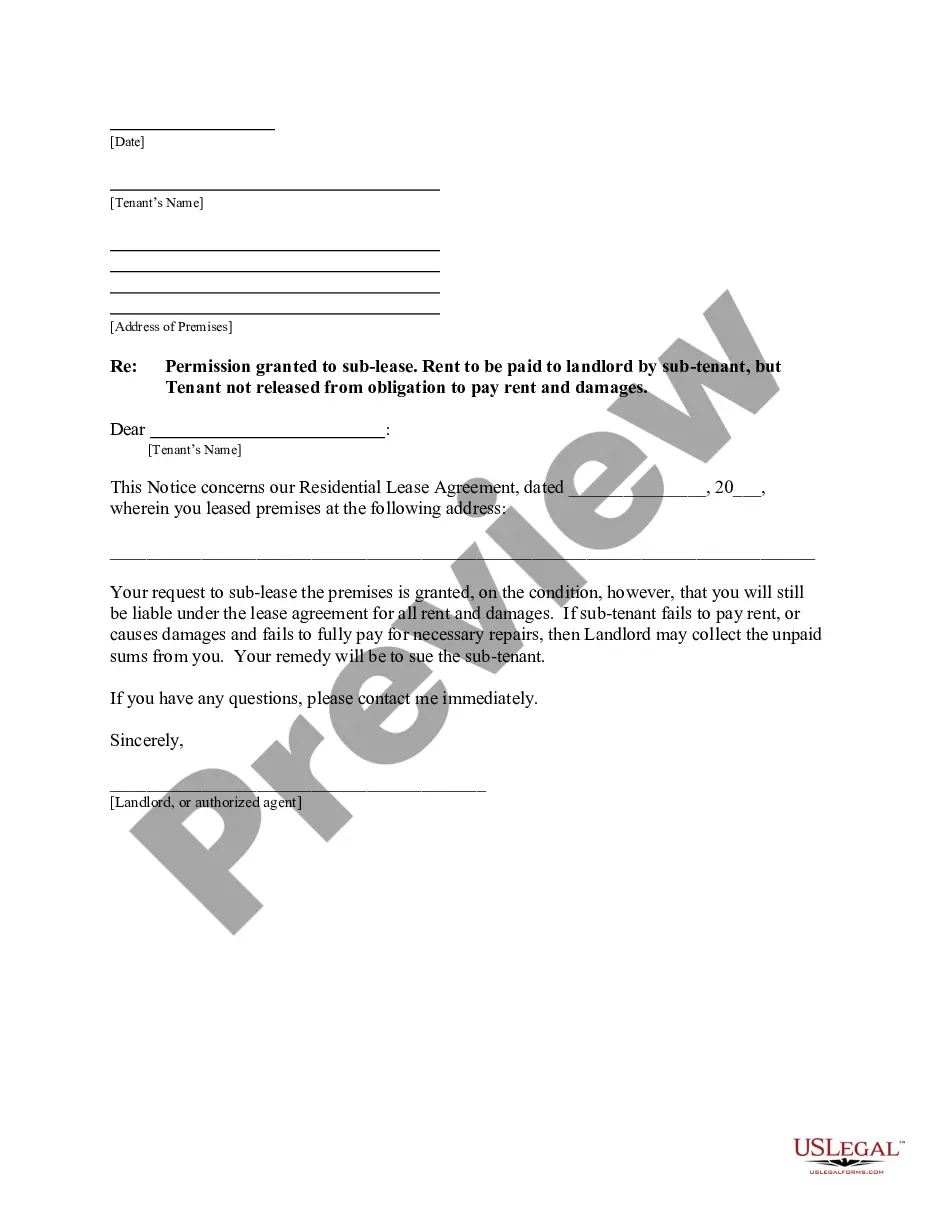
This form is a letter from the landlord to the tenant that confirms the approval of a sublease. It clearly states that while the rent will be paid by the subtenant, the original tenant remains liable for any rent or damages to the property. This letter serves to inform the tenant of their responsibilities even after subleasing and provides legal clarity that differs from simple rental agreements.
Form components explained
- Notification of sublease approval.
- Indication that the tenant remains liable for rent and damages.
- Outline of consequences if the subtenant fails to pay or causes damages.
- Contact information for the landlord or authorized agent.
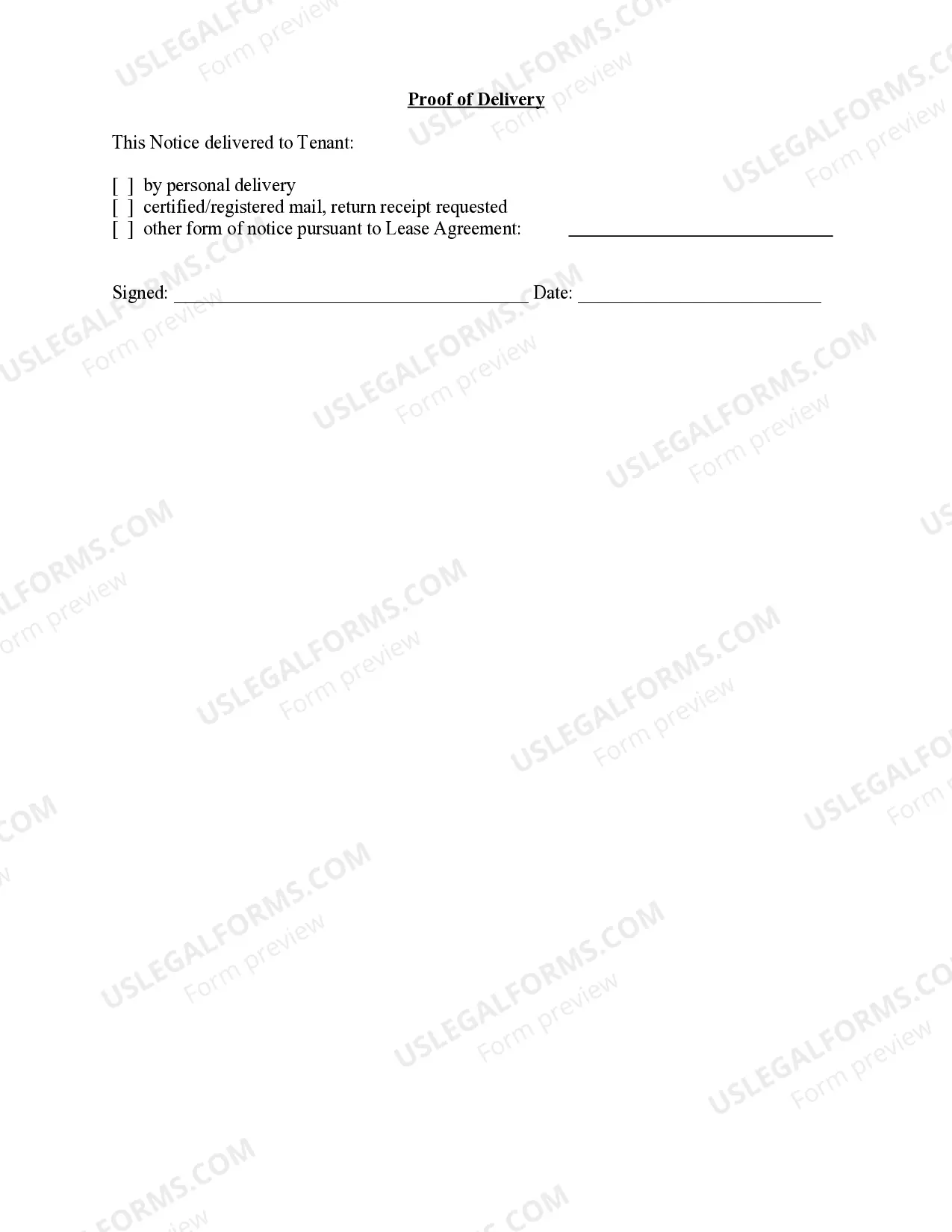
- Proof of delivery options to ensure the tenant receives the letter.

When to use this document
This letter should be used when a tenant has requested permission to sublease their rental premises. It is essential in situations where the landlord approves the request but wants to clarify that the tenant's obligations under the original lease remain in effect. Use this form to formalize the sublease agreement and protect both parties' interests.
Who needs this form
- Landlords wishing to formally notify their tenants about a granted sublease.
- Tenants who have subleased their property and want to maintain a formal understanding of their liabilities.
- Real estate professionals managing rental properties and subleases.
Completing this form step by step
- Identify the parties involved: list the landlord and tenant's names.
- Specify the property address to clearly identify the leased premises.
- Detail the terms of the sublease agreement, including any conditions imposed.
- Indicate the liabilities of the tenant regarding subtenant actions.
- Sign and date the letter to authenticate the message.
Does this form need to be notarized?
Notarization is generally not required for this form. However, certain states or situations might demand it. You can complete notarization online through US Legal Forms, powered by Notarize, using a verified video call available anytime.
Get your form ready online
Our built-in tools help you complete, sign, share, and store your documents in one place.
Make edits, fill in missing information, and update formatting in US Legal Forms—just like you would in MS Word.
Download a copy, print it, send it by email, or mail it via USPS—whatever works best for your next step.
Sign and collect signatures with our SignNow integration. Send to multiple recipients, set reminders, and more. Go Premium to unlock E-Sign.
If this form requires notarization, complete it online through a secure video call—no need to meet a notary in person or wait for an appointment.
We protect your documents and personal data by following strict security and privacy standards.

Make edits, fill in missing information, and update formatting in US Legal Forms—just like you would in MS Word.

Download a copy, print it, send it by email, or mail it via USPS—whatever works best for your next step.

Sign and collect signatures with our SignNow integration. Send to multiple recipients, set reminders, and more. Go Premium to unlock E-Sign.

If this form requires notarization, complete it online through a secure video call—no need to meet a notary in person or wait for an appointment.

We protect your documents and personal data by following strict security and privacy standards.
Typical mistakes to avoid
- Failing to clearly state the tenant's ongoing liabilities after subleasing.
- Not providing proof of delivery to the tenant.
- Omitting important details about the subtenant's obligations.
Benefits of completing this form online
- Convenient access to legal forms that can be downloaded anytime.
- Editability allows for customization based on individual circumstances.
- Reliability ensured by documents drafted by licensed attorneys.
Legal use & context
- This letter serves as official notice and confirmation of the terms agreed upon regarding the sublease.
- Retention of this letter may provide legal protection for both the landlord and the tenant in case of disputes.
Quick recap
- The Letter from Landlord to Tenant confirms the granting of a sublease.
- The original tenant remains responsible for any unpaid rent or damages.
- Clarity on responsibilities helps protect the landlord and ensures tenant accountability.
Looking for another form?
Form popularity
FAQ
If your landlord breaches the warranty of habitability or the warranty of quiet enjoyment, you may be able to sue her to recover monetary damages.In some states, such as California and Arizona, you may be able to seek emotional distress damages if the landlord's actions were particularly egregious.
A tenant has signed a lease or rental agreement with a landlord. A subtenant, on the other hand, is someone who subleases or rents all or part of the rental property from a tenant, and does not sign a lease or rental agreement with the landlord.
If a tenant is subletting without consent, it's likely they will have broken terms in their tenancy agreement. This breach of contract means that the landlord can take action to evict them from their home. Possession proceedings can be started quickly, but it's important to follow the correct legal process.
A sublease is a legally binding contract made between a tenant and a new tenant (also known as a subtenant or a sublessee).Usually, the first tenant must get consent from the landlord before he/she is allowed to sublease the premises.
A subtenant is someone who has the right to use and occupy rental property leased by a tenant from a landlord. A subtenant has responsibilities to both the landlord and the tenant.The tenant still remains responsible for the payment of rent to the landlord and any damages to the property caused by the subtenant.
A sublet, or sublease agreement, adds someone new to an existing lease. Usually the new person (subletter) replaces someone who is moving out (sublessor or sublessee) but it can also happen with any new person being added to a lease.
Know your state's landlord/tenant laws. Read and respond to the court summons. Try to work out a settlement. Consider legal counsel. Show up for court. Look sharp and provide evidence.
The Subtenant or Sublessee is the person who is entering into a lease for some or all of the Landlord's property from the Sublandlord (the original tenant).The Master/Original lease is the lease that the Sublandlord (the original tenant) entered into with the Landlord.
If you're seeking damages for emotional distress caused by a landlord's discrimination, or punitive damages for especially blatant and intentional discrimination, a lawsuit may well be your best bet. Understand what's involved in suing your landlord. You may file a lawsuit in either federal or state court.