North Carolina Last Will and Testament for Married Person with Adult and Minor Children from Prior Marriage
What this document covers
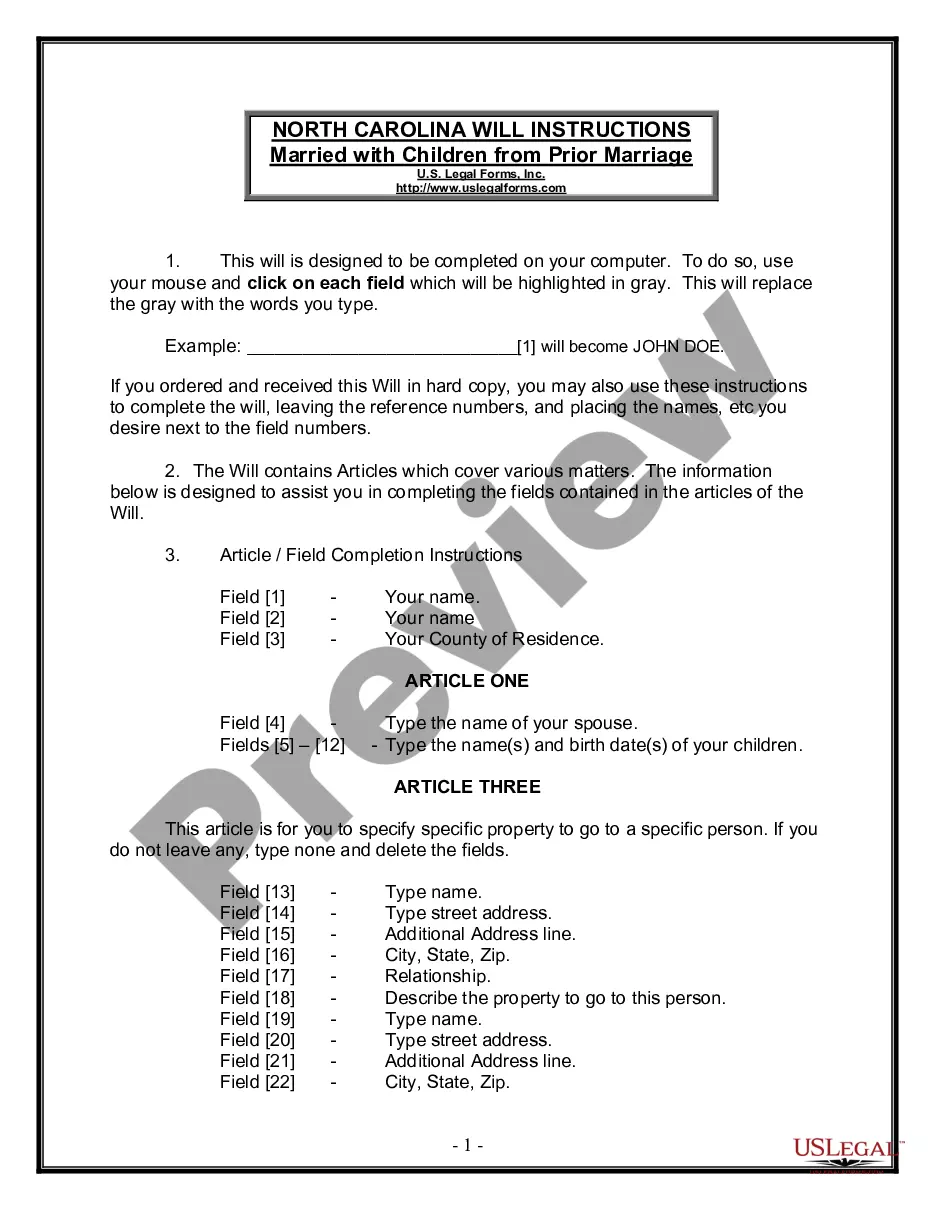
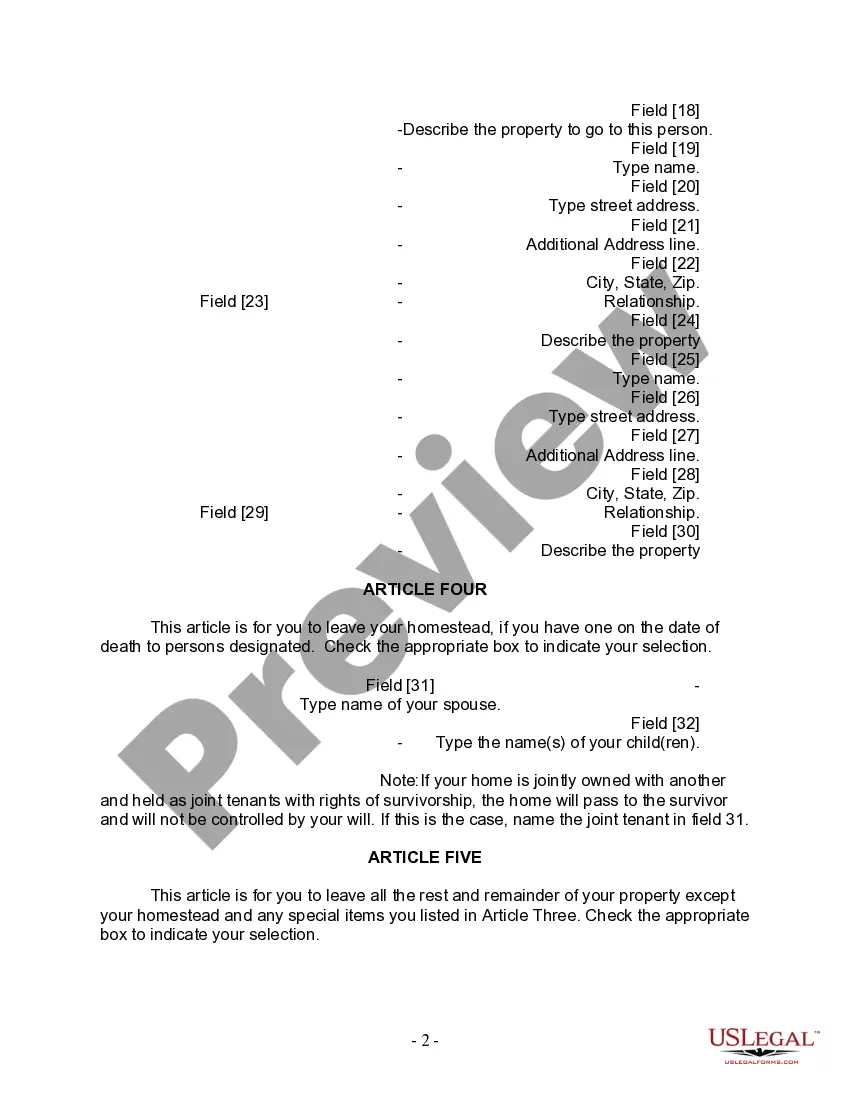
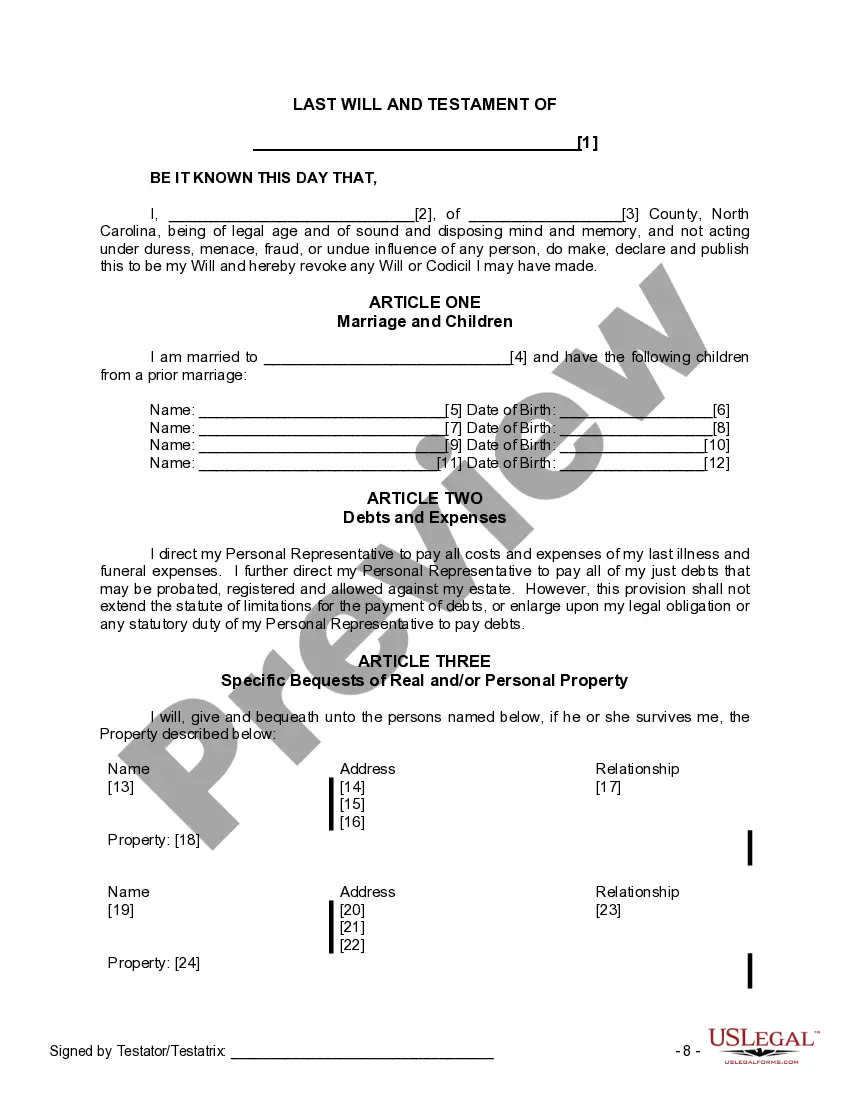
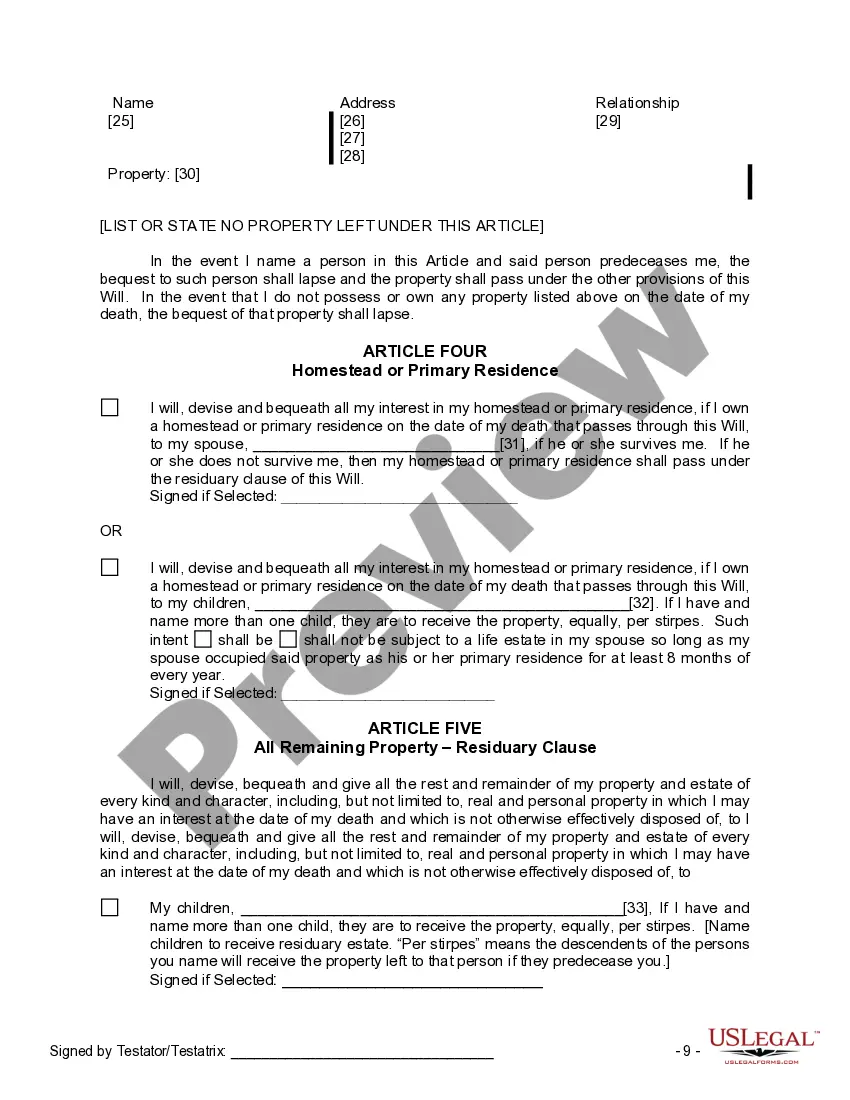
This form is a Last Will and Testament specifically designed for a married person who has adult and minor children from a prior marriage. It facilitates the distribution of assets after death, designates a personal representative, and includes provisions for appointing a trustee for any assets intended for minor children. This will is essential for ensuring that your wishes regarding property and guardian appointments are legally documented and recognized.
Main sections of this form
- Personal details including your name, county, and marital status.
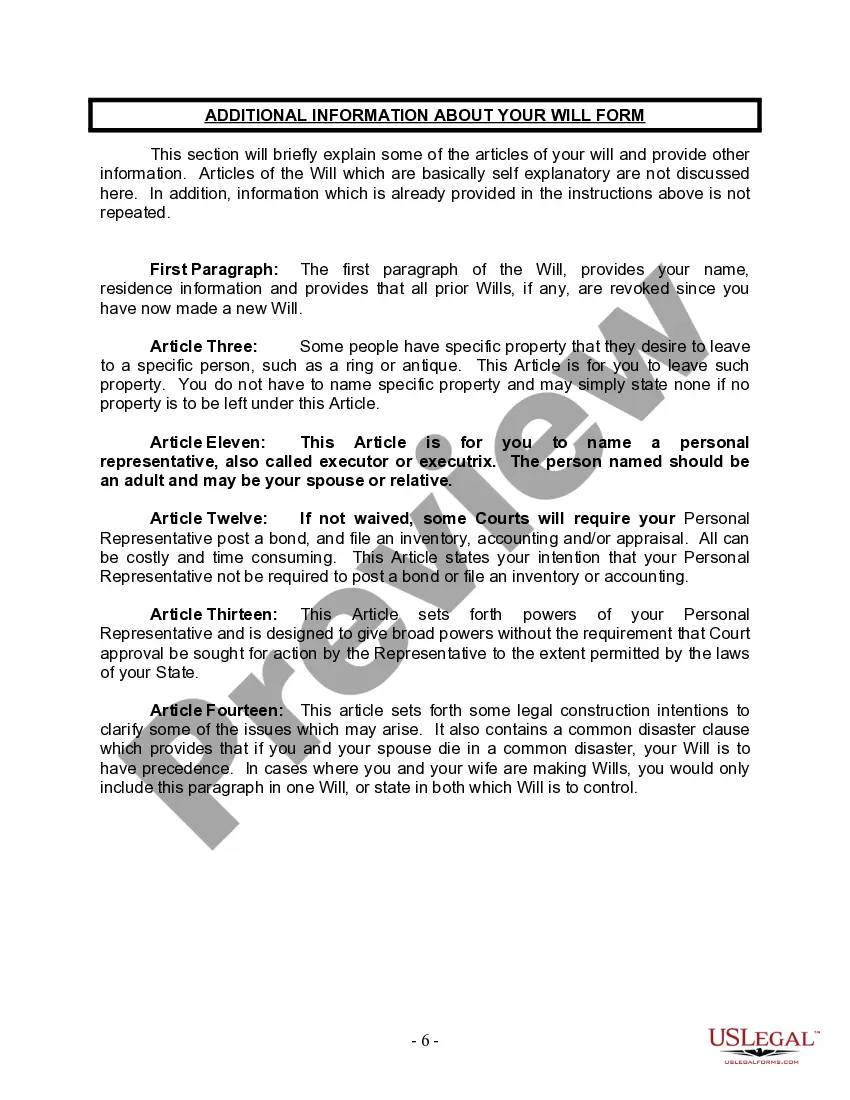
- Appointment of a personal representative to handle your estate.
- Designation of beneficiaries for specific properties.
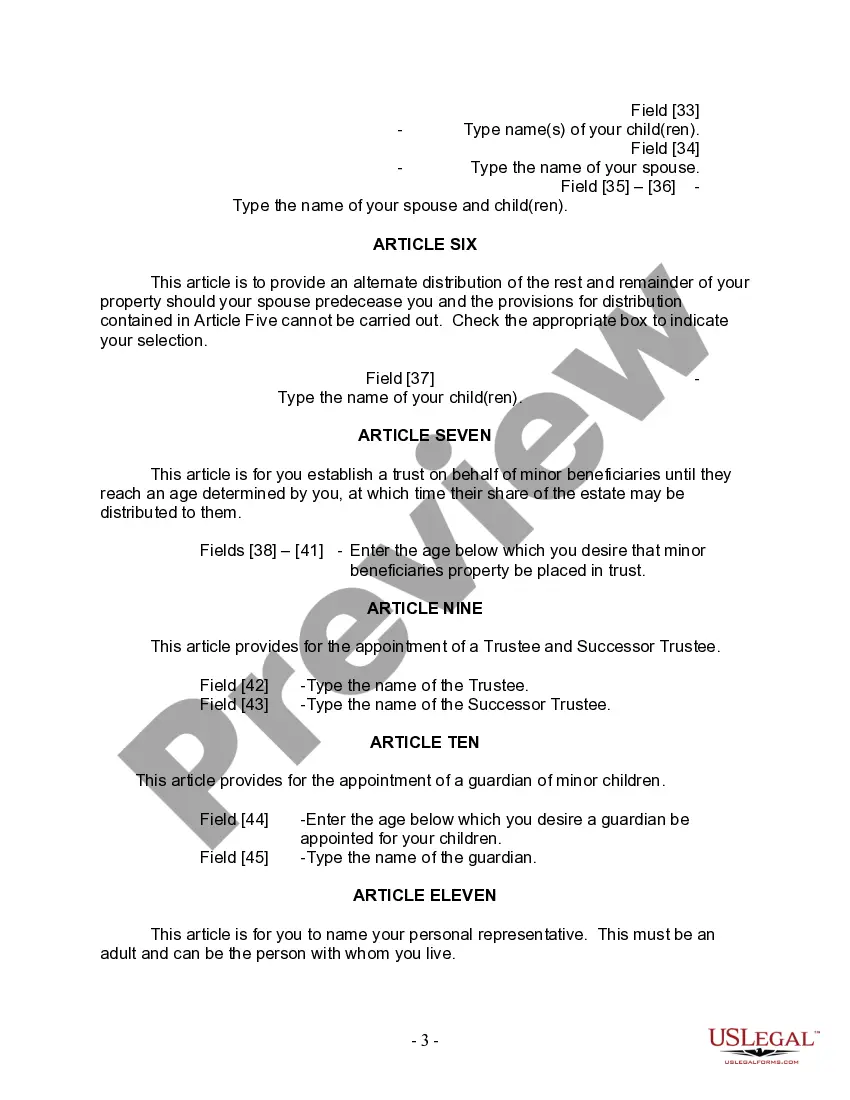
- Provisions for minor children's guardianship and trust management.
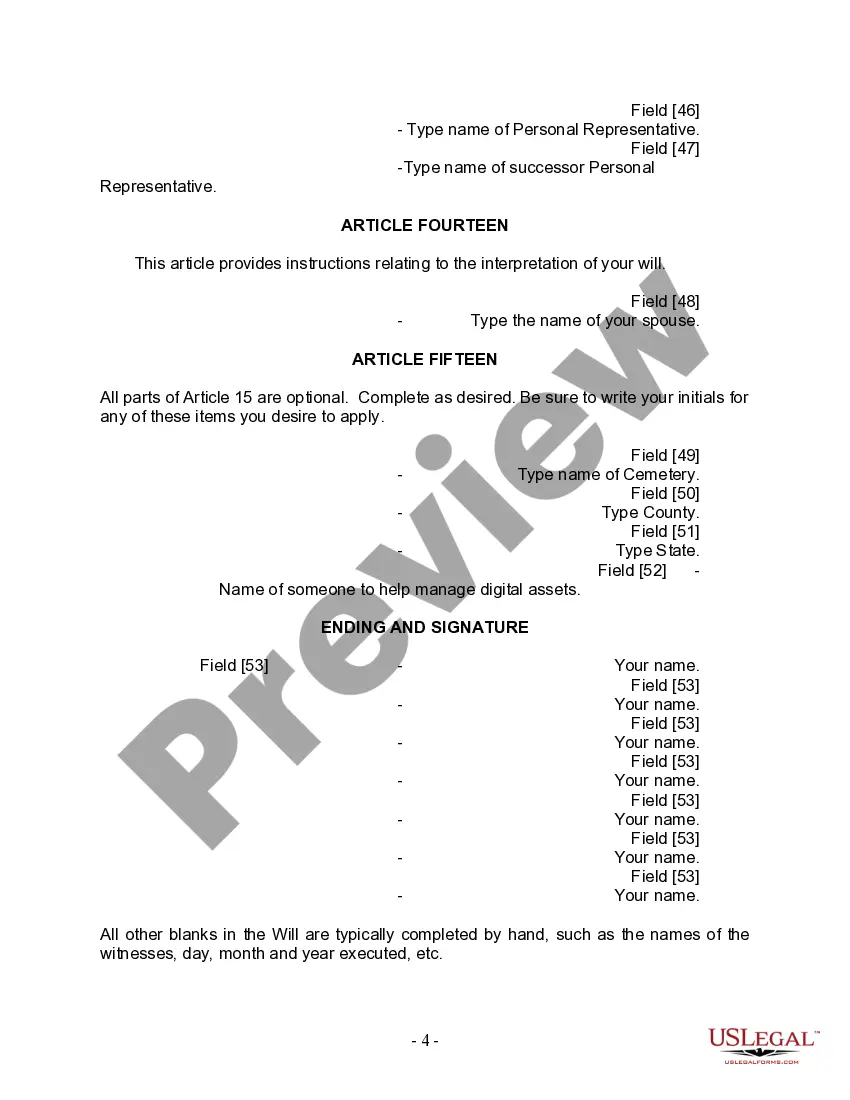
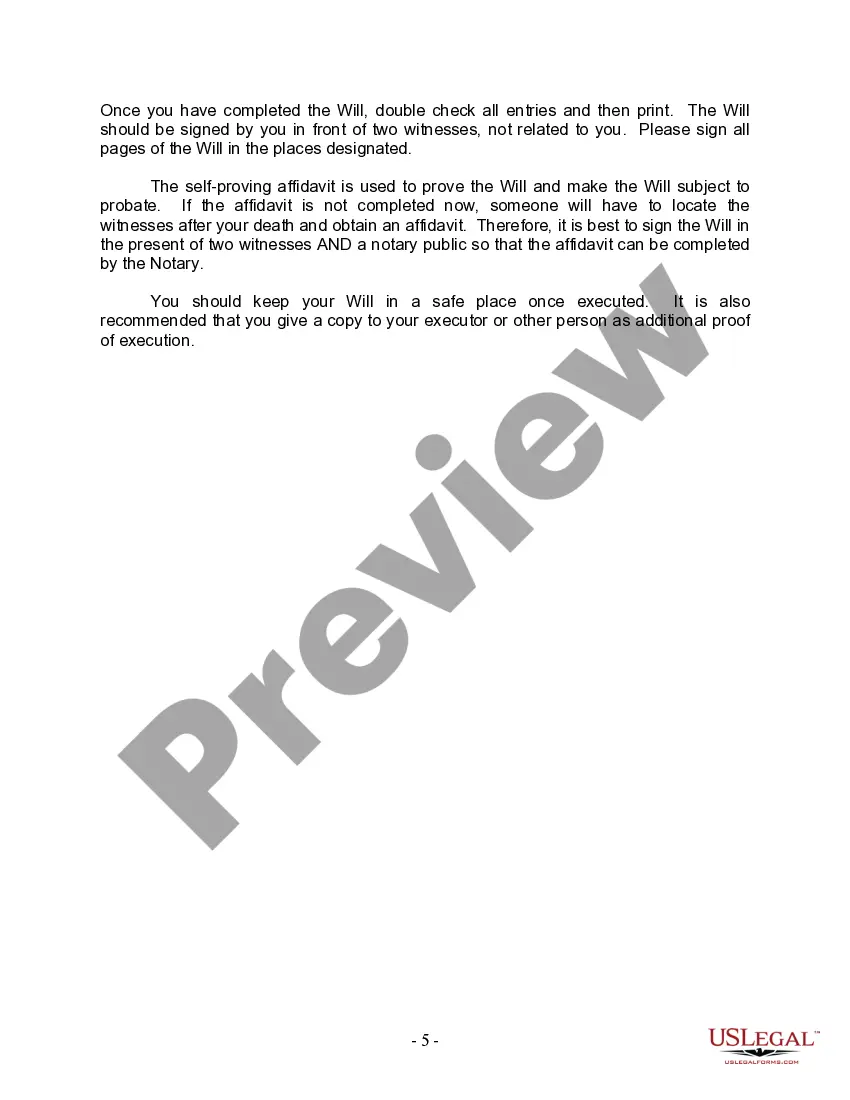
- Detailed instructions for signing and witnessing the document.




When to use this document
This form should be used when a married individual with children from a previous marriage wishes to outline the distribution of their estate after death. It is particularly important if you want to address the division of property between a current spouse and children from a prior marriage, ensuring that your minor children are financially protected through trust arrangements until they reach adulthood.
Intended users of this form
- Married individuals with adult and minor children from a previous marriage.
- Those wanting to specify how their assets should be distributed posthumously.
- Individuals seeking to appoint guardians and trustees for their minor children.
- Anyone wanting to ensure their last wishes are clearly documented and legally binding.
Steps to complete this form
- Enter your personal details, including your name and county of residence.
- Identify your spouse and list your children, including their names and dates of birth.
- Specify how you would like to distribute your specific properties and to whom.
- Designate your personal representative and any alternate representatives.
- Sign the form in front of two witnesses and a notary public if required, ensuring all parties complete the necessary sections.
Is notarization required?
Yes, this form must be notarized to be legally valid if it contains a self-proving affidavit. This ensures the will can be admitted to probate without further evidence of its execution. US Legal Forms offers integrated online notarization services, allowing you to complete this process securely through a video call, eliminating the need for in-person visits.
Get your form ready online
Our built-in tools help you complete, sign, share, and store your documents in one place.
Make edits, fill in missing information, and update formatting in US Legal Forms—just like you would in MS Word.
Download a copy, print it, send it by email, or mail it via USPS—whatever works best for your next step.
Sign and collect signatures with our SignNow integration. Send to multiple recipients, set reminders, and more. Go Premium to unlock E-Sign.
If this form requires notarization, complete it online through a secure video call—no need to meet a notary in person or wait for an appointment.
We protect your documents and personal data by following strict security and privacy standards.

Make edits, fill in missing information, and update formatting in US Legal Forms—just like you would in MS Word.

Download a copy, print it, send it by email, or mail it via USPS—whatever works best for your next step.

Sign and collect signatures with our SignNow integration. Send to multiple recipients, set reminders, and more. Go Premium to unlock E-Sign.

If this form requires notarization, complete it online through a secure video call—no need to meet a notary in person or wait for an appointment.

We protect your documents and personal data by following strict security and privacy standards.
Common mistakes
- Not having the will signed in front of the required number of witnesses.
- Failing to adequately identify all beneficiaries and properties.
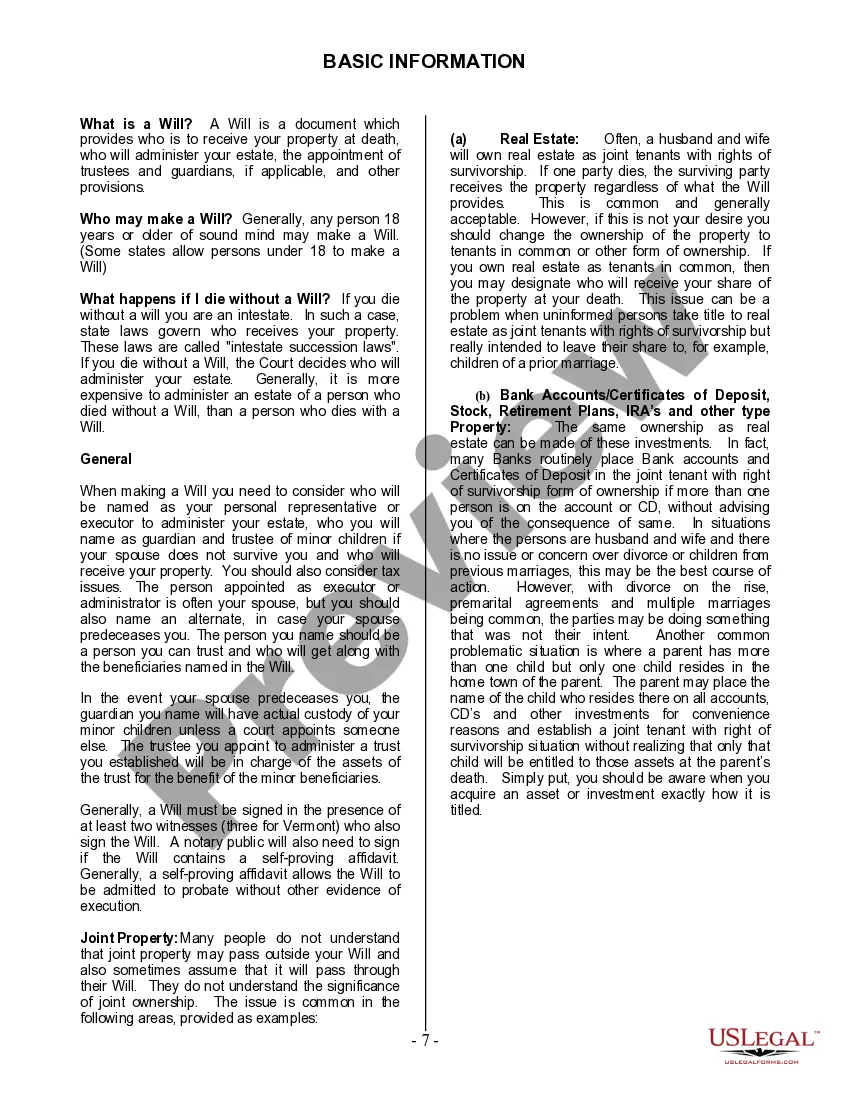
- Neglecting to consider the implications of joint property ownership.
- Not updating the will after significant life changes such as divorce or remarriage.
Why complete this form online
- You can easily customize the document to fit your specific needs.
- The form is available for immediate download and completion.
- Guidance is provided throughout to help you understand the process.
- Access to resources about legal requirements and best practices is available.
Key takeaways
- This form addresses the complexities of estate planning for individuals with blended families.
- It allows for the appointment of guardians for minor children and personal representatives for estate management.
- Careful completion and proper witnessing of the Will are essential for its validity.
- Consider notarizing the Will to maximize its effectiveness during probate.
Looking for another form?



Form popularity
FAQ
North Carolina Intestate Succession Laws Under the North Carolina statutes, if you are survived by: 1. No spouse or children, with parent(s) living: Your entire estate will pass to and be divided equally among your parents. If only one parent is still living, then everything will pass to the living parent.
Many married couples own most of their assets jointly with the right of survivorship. When one spouse dies, the surviving spouse automatically receives complete ownership of the property. This distribution cannot be changed by Will.
North Carolina law does not require a formal reading of the will. How may I get a copy of a will after my loved one has died? After someone has died, the will may be filed with a clerk of court. A decedent's will becomes a public record when it is filed, after the decedent's death, with the clerk of court.
Spouses in North Carolina Inheritance Law Descendants include children, grandchildren, and great-grandchildren. If you have no living parents or descendants, your spouse will inherit all of your intestate property.
Form a Last Will in North Carolina Signature: The will must be signed by the testator with the intent to sign or by another person under his direction and in his presence. Witnesses: At least two witnesses must sign a North Carolina last will and testament in order for it to be valid.
The surviving spouse has the right to Family Exempt Property.The surviving spouse has the right to receive Letters of Administration, which means that ahead of all other family members, he/she has the right to serve as the Administrator when someone dies intestate.
A joint will is a legal document executed by two (or more) people, which merges their individual wills into a single, combined last will and testament. Like most wills, a joint will lets the will-makers name who will get their property and assets after they die. Joint wills are usually created by married couples.
In North Carolina, you cannot disinherit your spouse.Even if your Will or your Trust specifically excludes your spouse, your spouse will still have the legal right to share in your estate under the law.
North Carolina recognizes hand written Wills known as Holographic Wills in certain circumstances. A holographic will is handwritten, not typed, and must be entirely in the handwriting of the person making the Will (known as the Testator or Testatrix).