North Carolina General Warranty Deed from Husband and Wife to an Individual
What this document covers
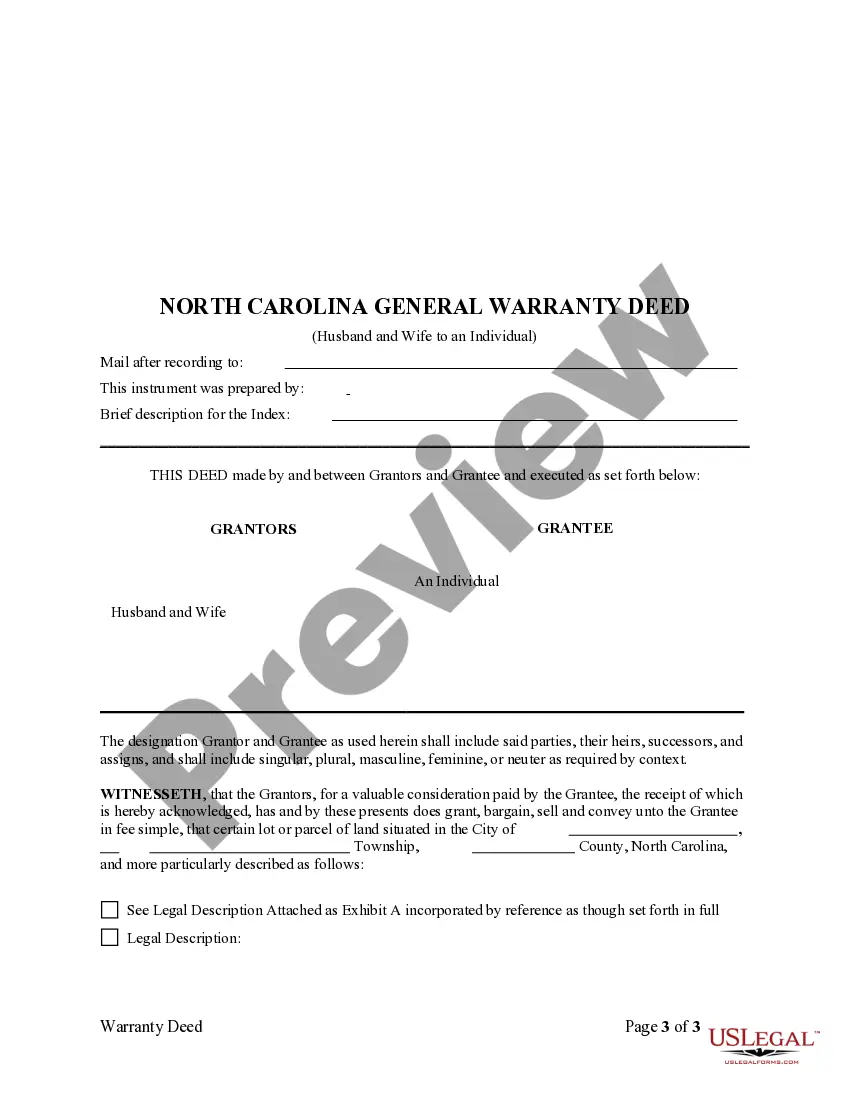
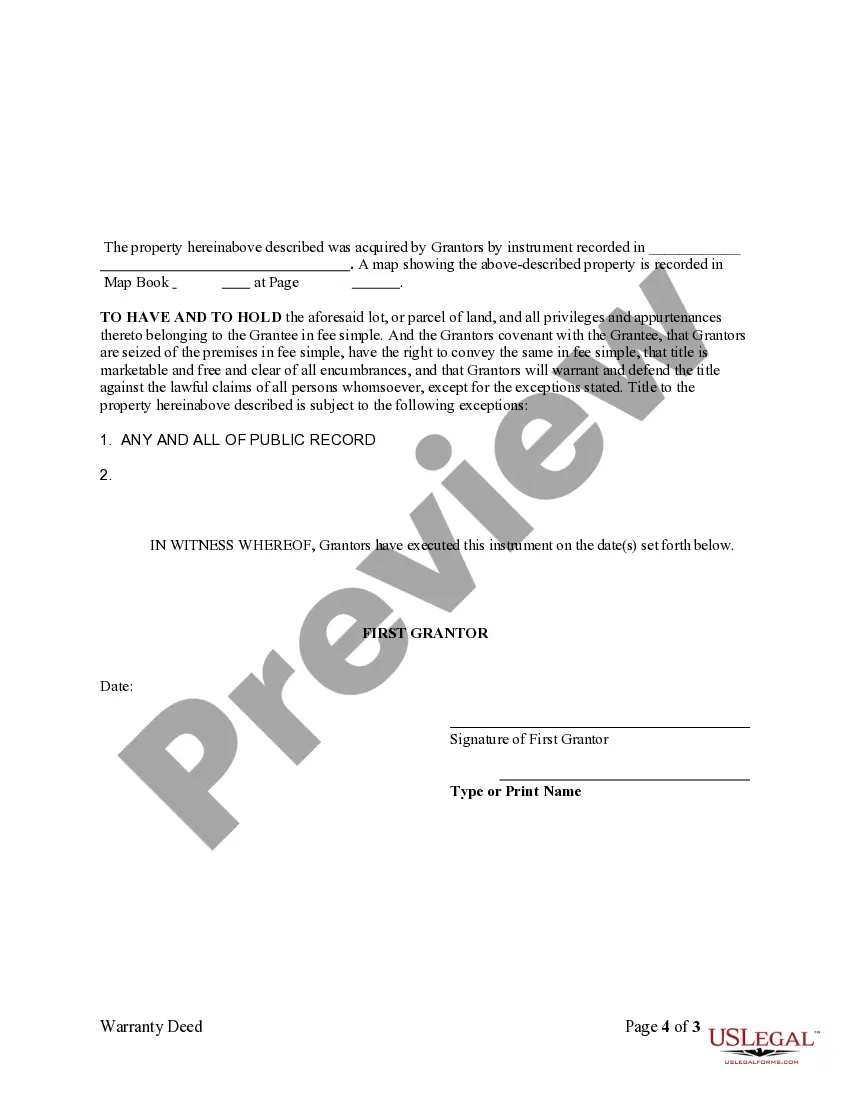
The General Warranty Deed from Husband and Wife to an Individual is a legal document used to transfer ownership of real property from a married couple (the grantors) to a single individual (the grantee). This warranty deed guarantees that the grantors hold clear title to the property and have the right to convey it, ensuring no encumbrances or claims exist on the property, except for any reserves related to oil, gas, and minerals. This form is vital for establishing ownership and protecting the rights of the buyer in a property transaction.
Key parts of this document
- Identification of the grantors (husband and wife).
- Identification of the grantee (individual receiving the property).
- Description of the property being conveyed.
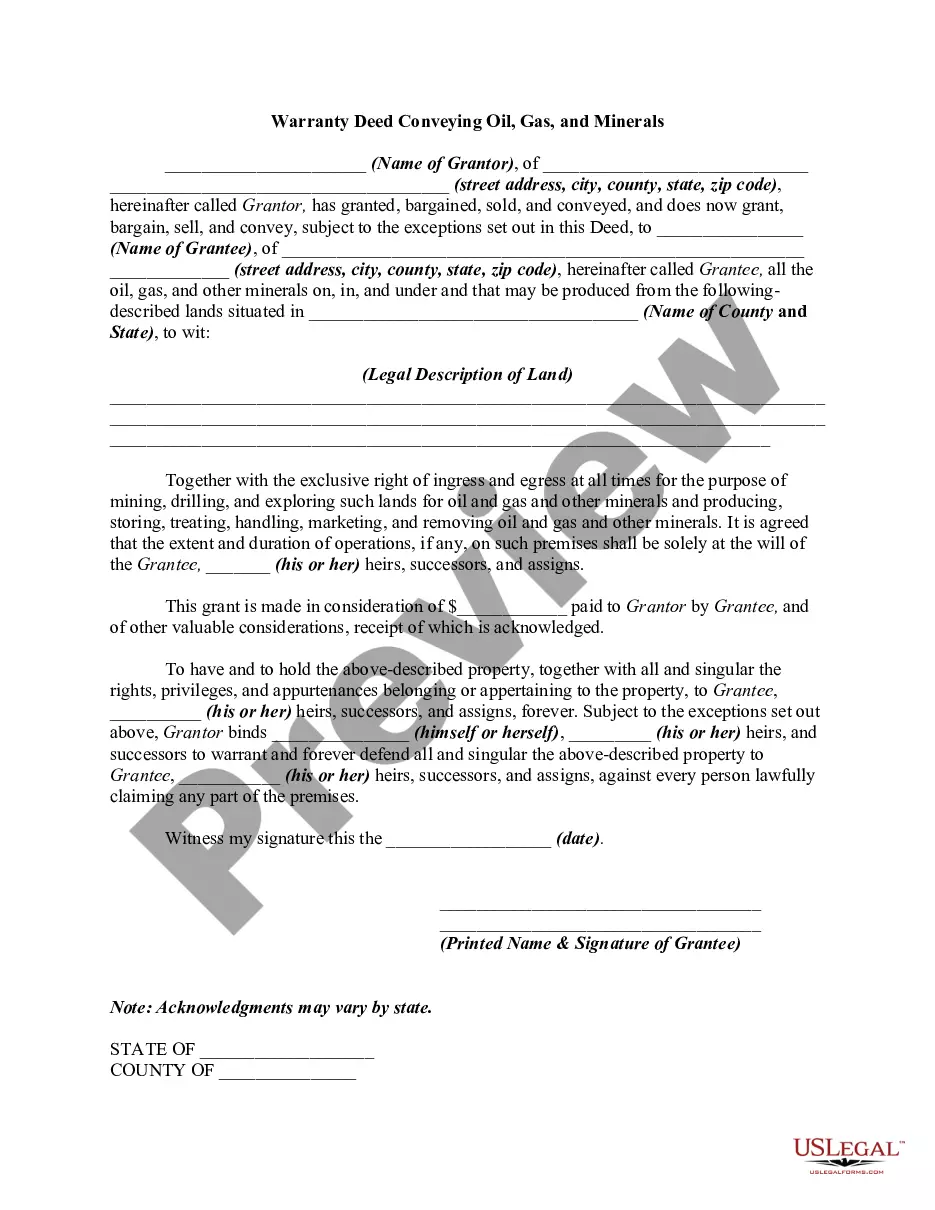
- Reservation clause for oil, gas, and minerals, if applicable.
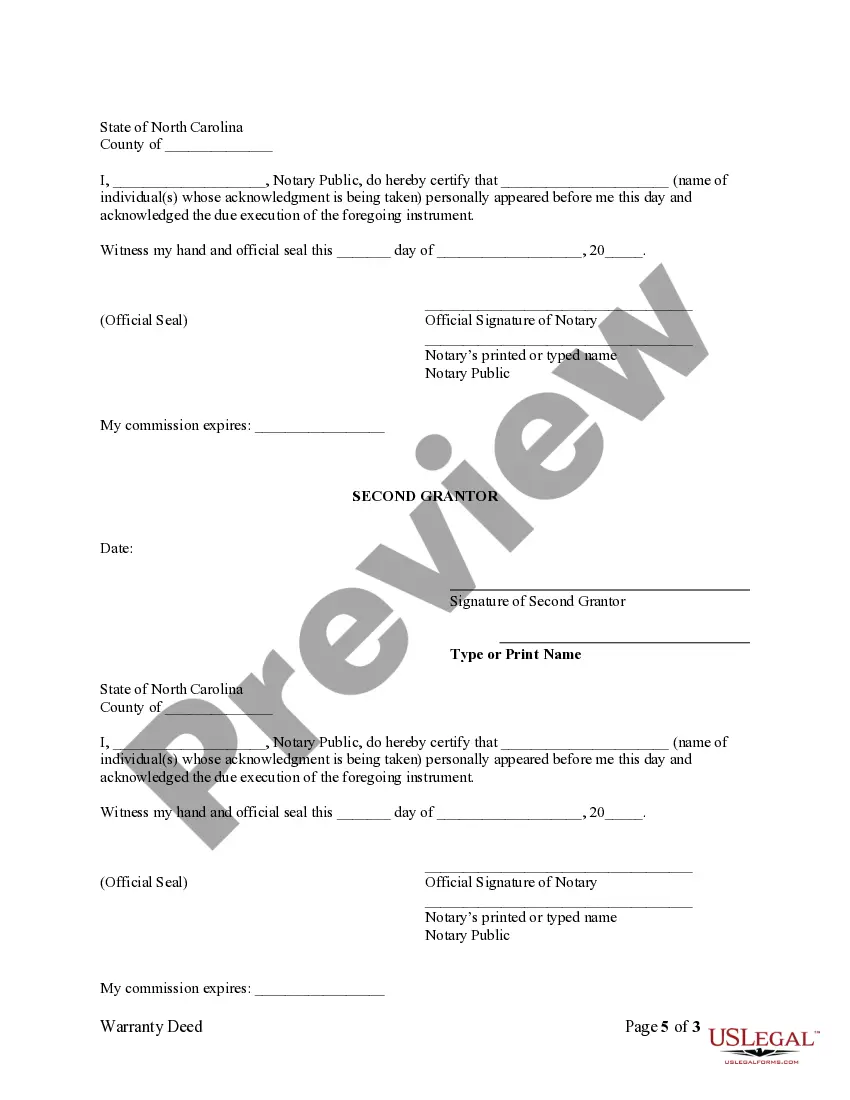
- Signatures of both grantors, validating the transfer.
- Notarization requirements, ensuring the document's legal enforceability.





When this form is needed
This form should be used when a husband and wife wish to convey property they own to a single individual. Common scenarios include selling a home to a relative, transferring property to a friend, or gifting real estate. It is essential to use this form to formalize the transfer and protect the rights of both parties involved.
Who needs this form
This form is intended for:
- Married couples who own property and are transferring it to an individual.
- Individuals acting on behalf of a married couple (e.g., during estate planning).
- Real estate professionals handling transactions involving married owners.
Completing this form step by step
- Identify the grantors by entering both names as they appear on the title.
- Enter the name of the grantee who will receive the property.
- Provide a legal description of the property, including any relevant tax parcel numbers or addresses.
- Insert the reservation clause for any oil, gas, and minerals that remain with the grantors.
- Ensure both grantors sign the deed in the presence of a notary.
Is notarization required?
To make this form legally binding, it must be notarized. Our online notarization service, powered by Notarize, lets you verify and sign documents remotely through an encrypted video session.
Get your form ready online
Our built-in tools help you complete, sign, share, and store your documents in one place.
Make edits, fill in missing information, and update formatting in US Legal Forms—just like you would in MS Word.
Download a copy, print it, send it by email, or mail it via USPS—whatever works best for your next step.
Sign and collect signatures with our SignNow integration. Send to multiple recipients, set reminders, and more. Go Premium to unlock E-Sign.
If this form requires notarization, complete it online through a secure video call—no need to meet a notary in person or wait for an appointment.
We protect your documents and personal data by following strict security and privacy standards.

Make edits, fill in missing information, and update formatting in US Legal Forms—just like you would in MS Word.

Download a copy, print it, send it by email, or mail it via USPS—whatever works best for your next step.

Sign and collect signatures with our SignNow integration. Send to multiple recipients, set reminders, and more. Go Premium to unlock E-Sign.

If this form requires notarization, complete it online through a secure video call—no need to meet a notary in person or wait for an appointment.

We protect your documents and personal data by following strict security and privacy standards.
Avoid these common issues
- Failing to provide a complete legal description of the property.
- Not including the necessary signatures from both grantors.
- Omitting the reservation clause, if applicable.
Benefits of completing this form online
- Convenience of downloading and completing the form at your pace.
- Editability allows for easy input of specific information.
- Reliability, knowing the form meets current legal standards.
Looking for another form?

Form popularity
FAQ
To make the form legally binding, you must sign it in front of a notary public. You must then file your signed and notarized deed with the county office that's in charge of recording property documents. Once the grantee signs the warranty deed, he/she legally has ownership and claim to the property.
Under the Grantor section of the deed, write the name of the person transferring title. Under Grantee, write the name of the person receiving title. Describe the parcel of land. Use the street address and include the North Carolina County where the land is located.
If you've recently married and already own a home or other real estate, you may want to add your new spouse to the deed for your property so the two of you own it jointly. To add a spouse to a deed, all you have to do is literally fill out, sign and record a new deed in your county recorder's office.
Contrary to normal expectations, the Deed DOES NOT have to be recorded to be effective or to show delivery, and because of that, the Deed DOES NOT have to be signed in front of a Notary Public. However, if you plan to record it, then it does have to be notarized as that is a County Recorder requirement.
A warranty deed, also known as a general warranty deed, is a legal real estate document between the seller (grantor) and the buyer (grantee). The deed protects the buyer by pledging that the seller holds clear title to the property and there are no encumbrances, outstanding liens, or mortgages against it.
Adding someone to your house deed requires the filing of a legal form known as a quitclaim deed. When executed and notarized, the quitclaim deed legally overrides the current deed to your home. By filing the quitclaim deed, you can add someone to the title of your home, in effect transferring a share of ownership.
The name and address of the seller (called the grantor) The name and address of the buyer (called the grantee) A legal description of the property (found on the previous deed) A statement that the grantor is transferring the property to the grantee.
The answer is yes. Parties to a transaction are always free to prepare their own deeds. If you do so, be sure your deed measures up to your state's legal regulations, to help avert any legal challenge to the deed later.
To transfer ownership of land in North Carolina, the owner must execute and file a new deed with the register of deeds for the North Carolina county where the property is located.