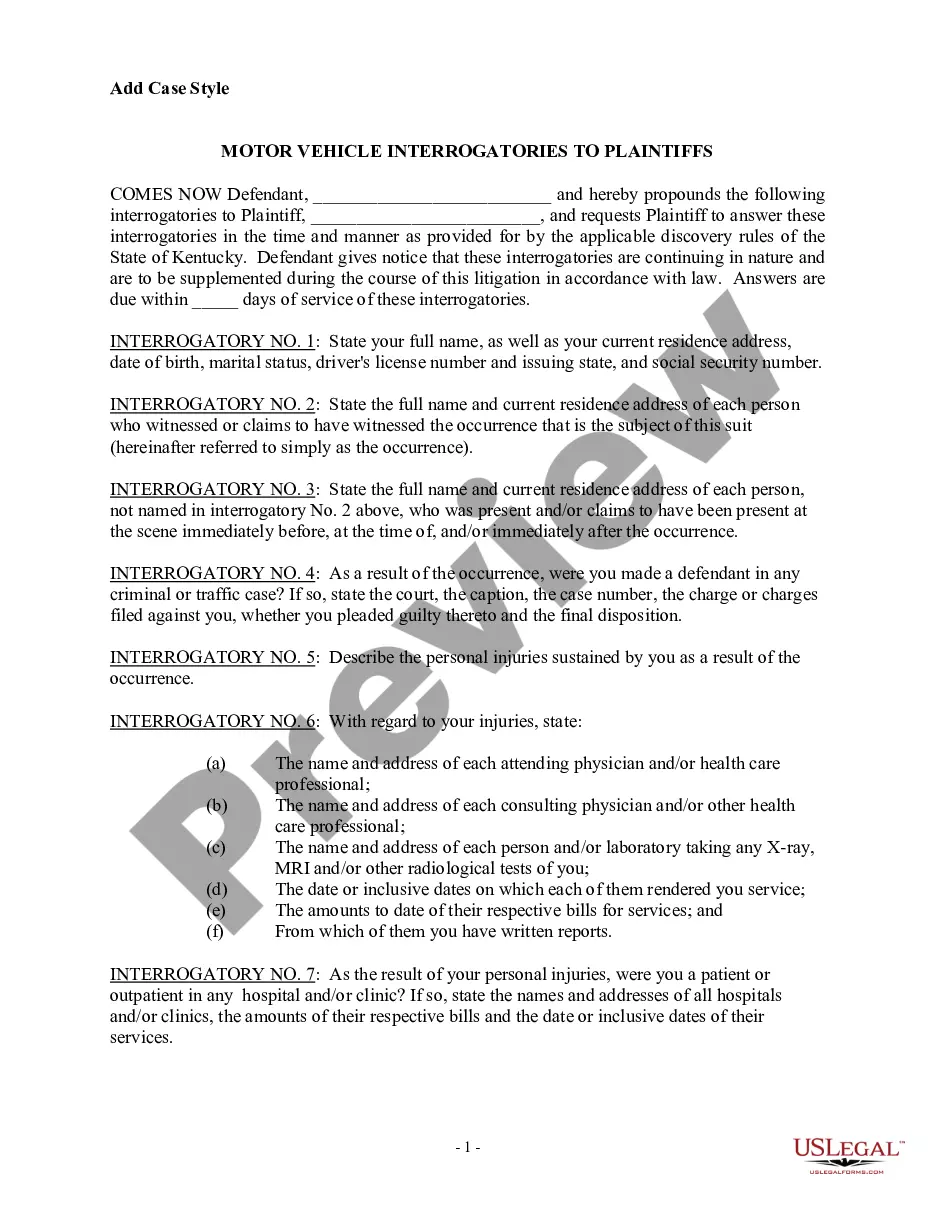
Montana Last Will and Testament for Single Person with No Children

What this document covers
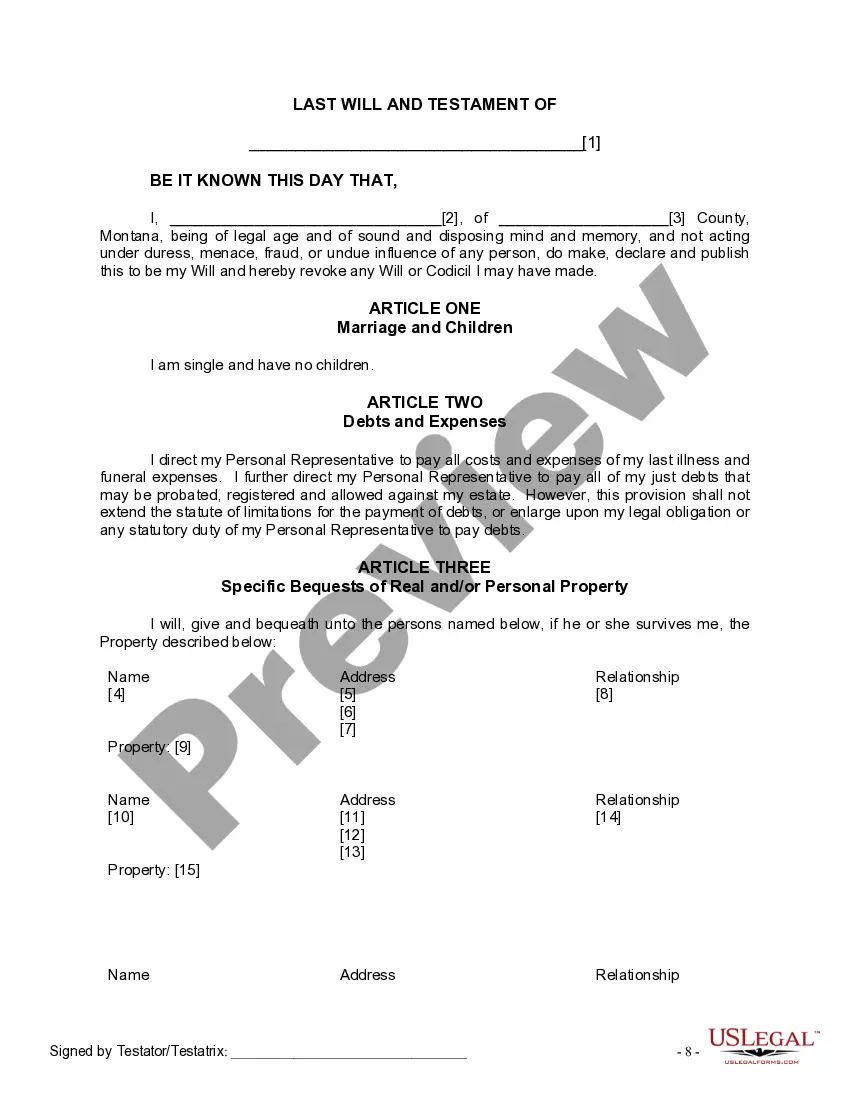
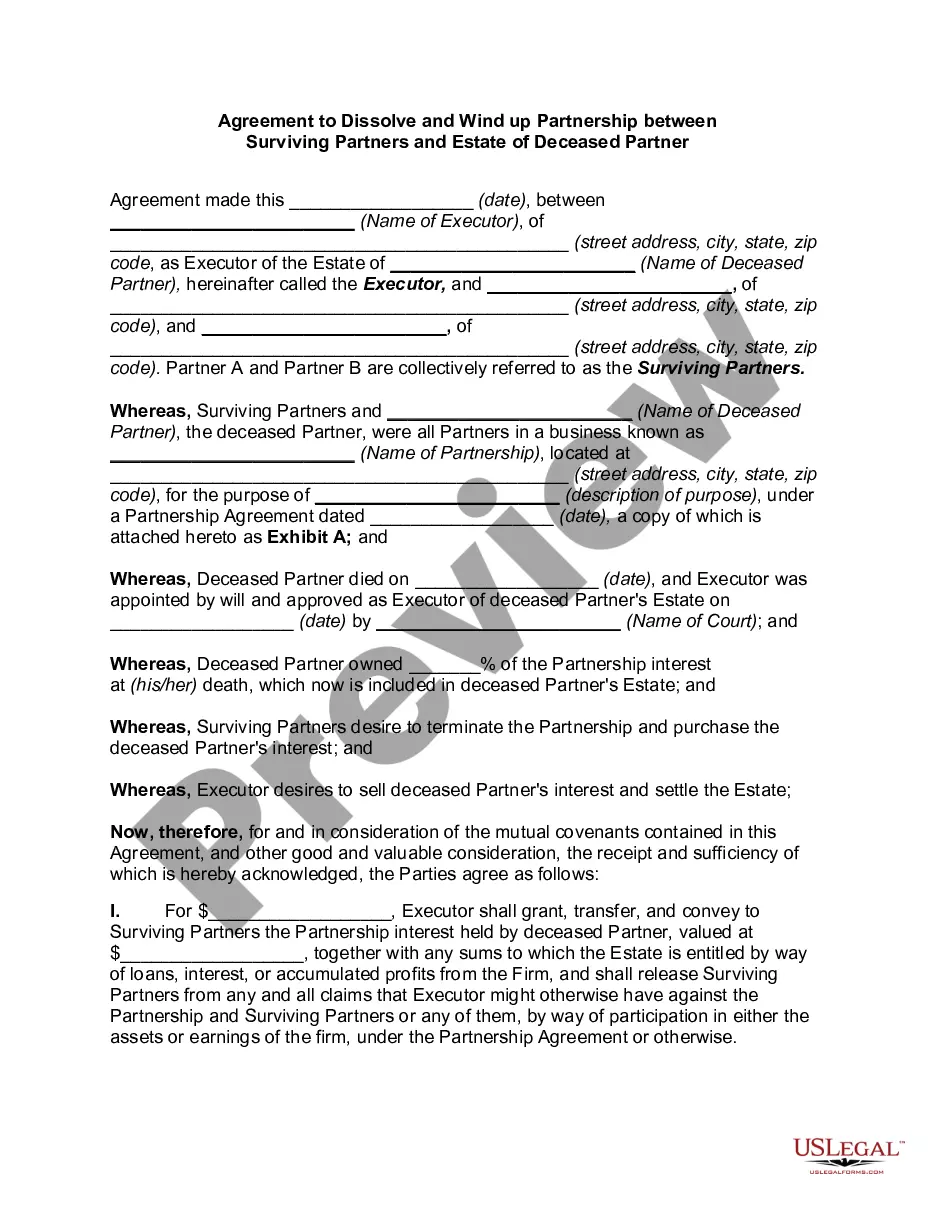
The Last Will and Testament for Single Person with No Children is a legal document that outlines how your assets will be distributed upon your death. This will is specifically designed for individuals who are single and do not have children, allowing you to designate beneficiaries for your property, appoint an executor, and specify other important provisions. Unlike other wills, this form focuses on the needs of individuals without dependents, ensuring a straightforward process for inheriting assets.
Form components explained
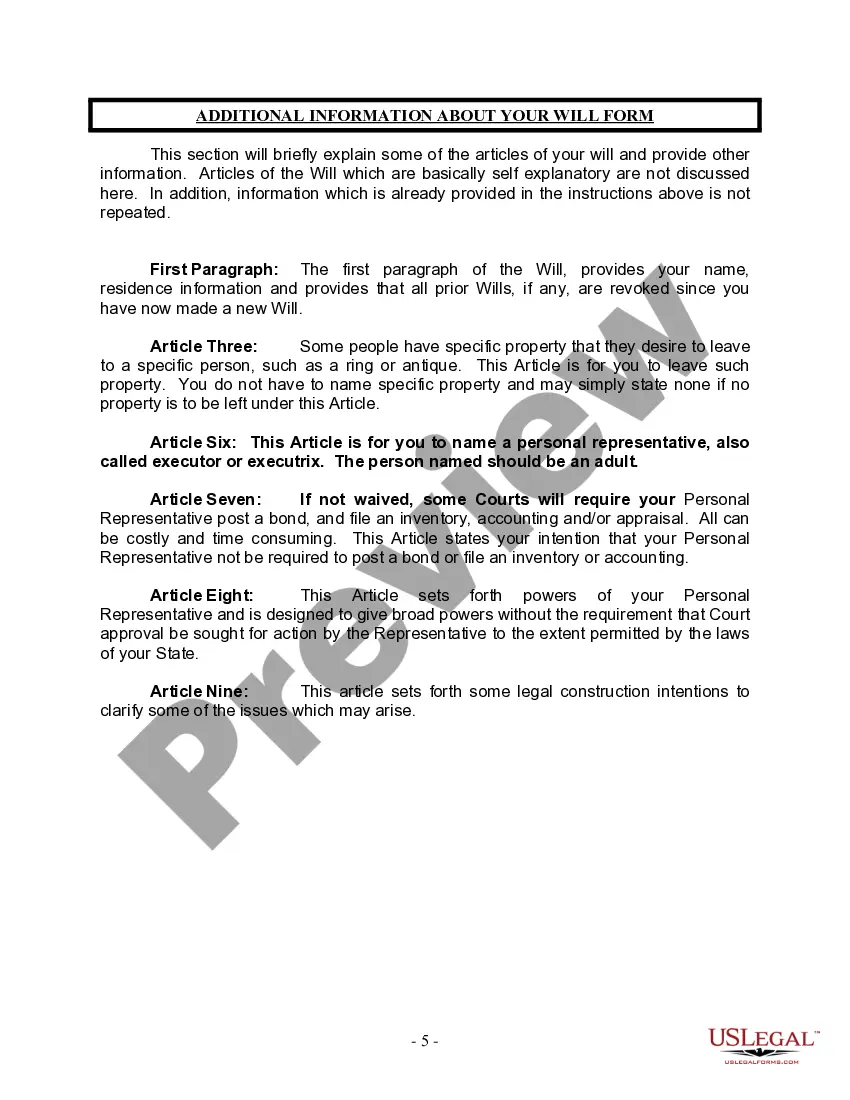
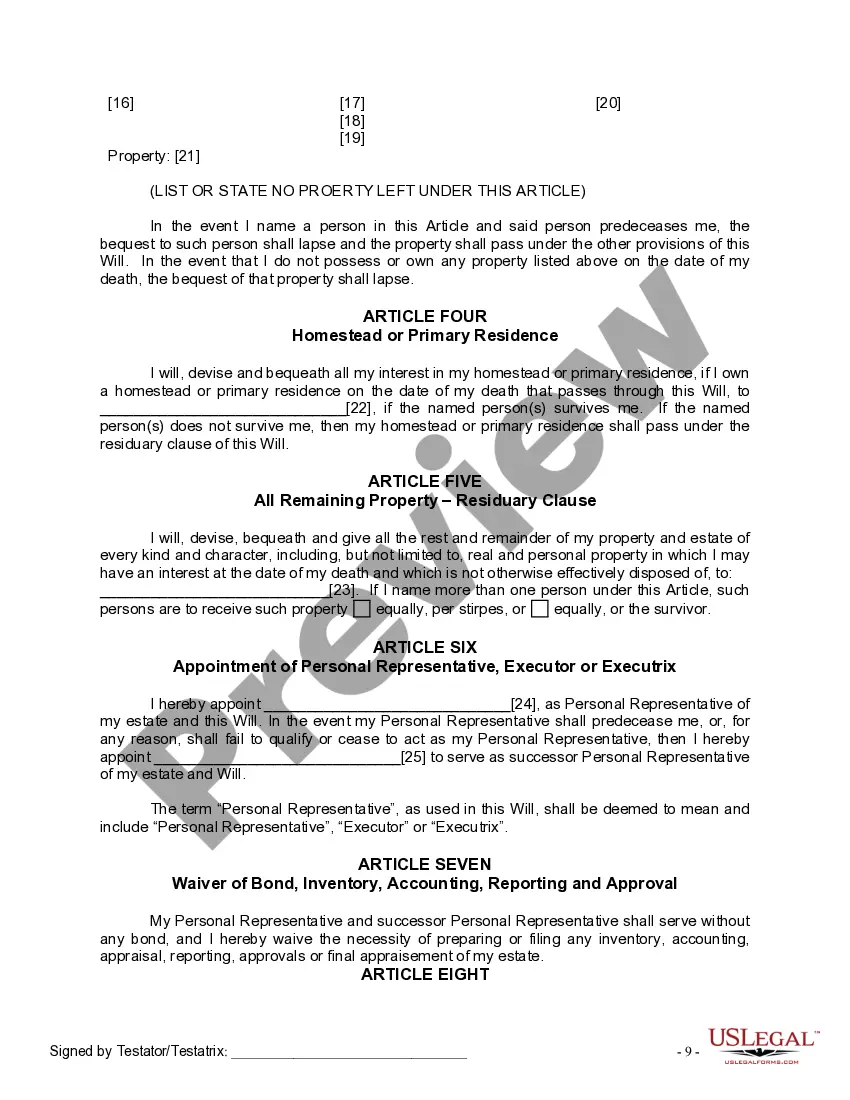
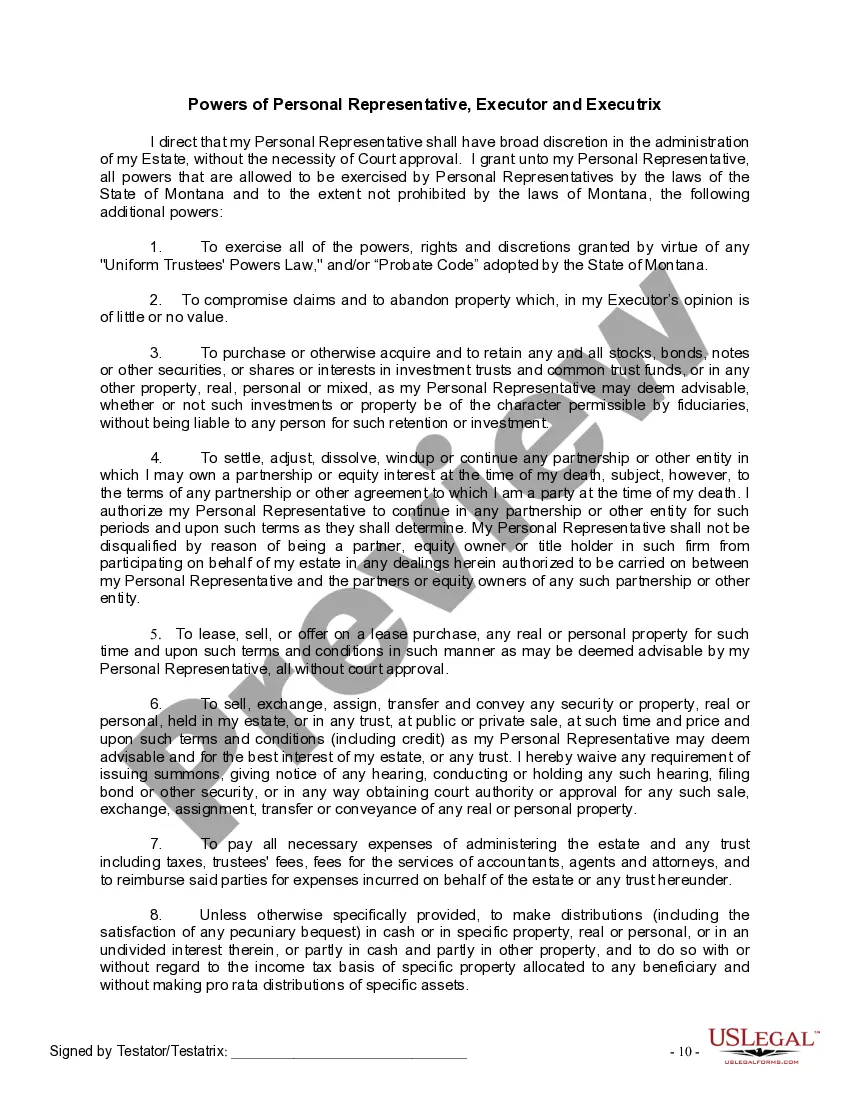
- Appointment of a personal representative to manage your estate.
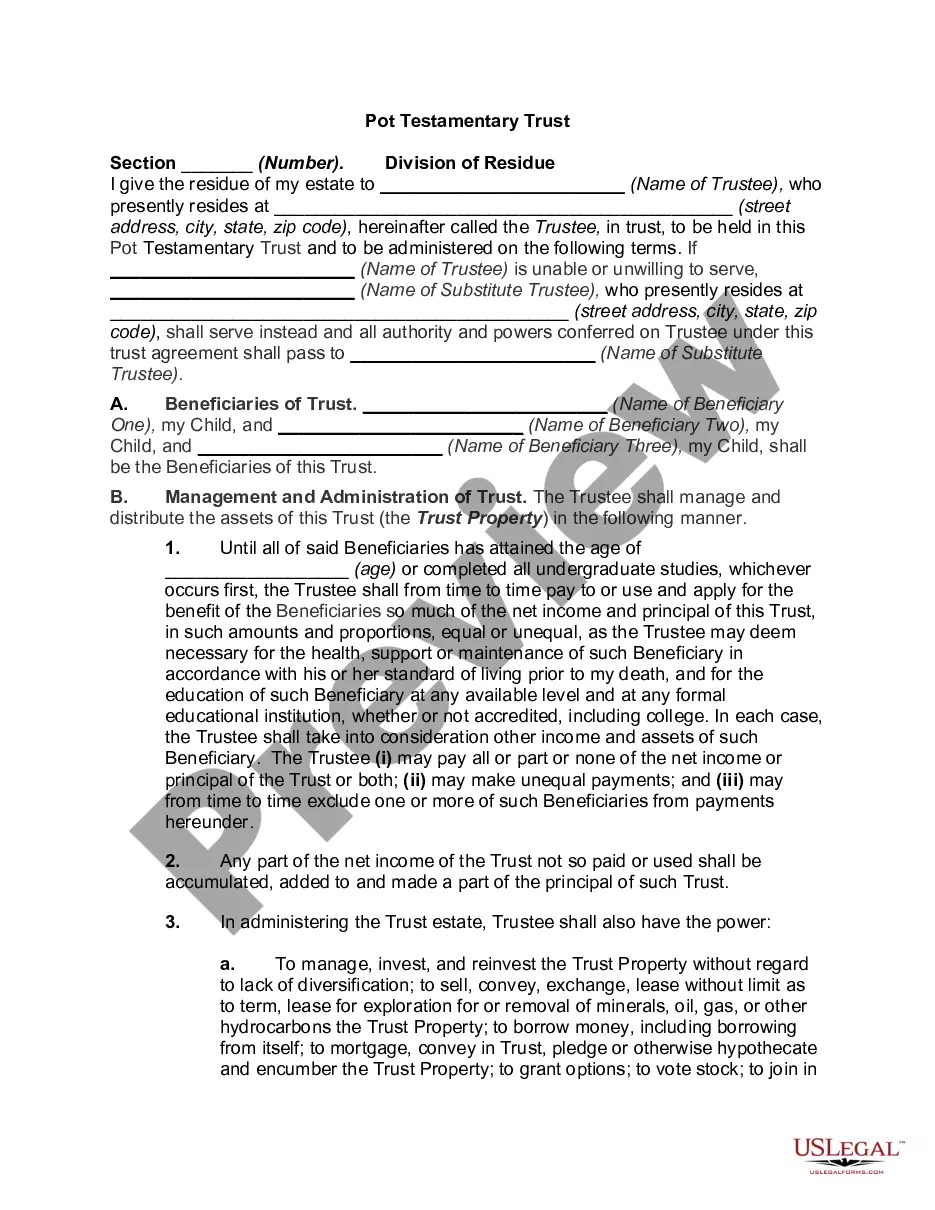
- Specification of beneficiaries who will inherit your property.
- Provisions for a homestead or primary residence, if applicable.
- Declaring your debts and funeral expenses to be settled by your executor.
- Options to waive bond requirements for your personal representative.



When to use this document
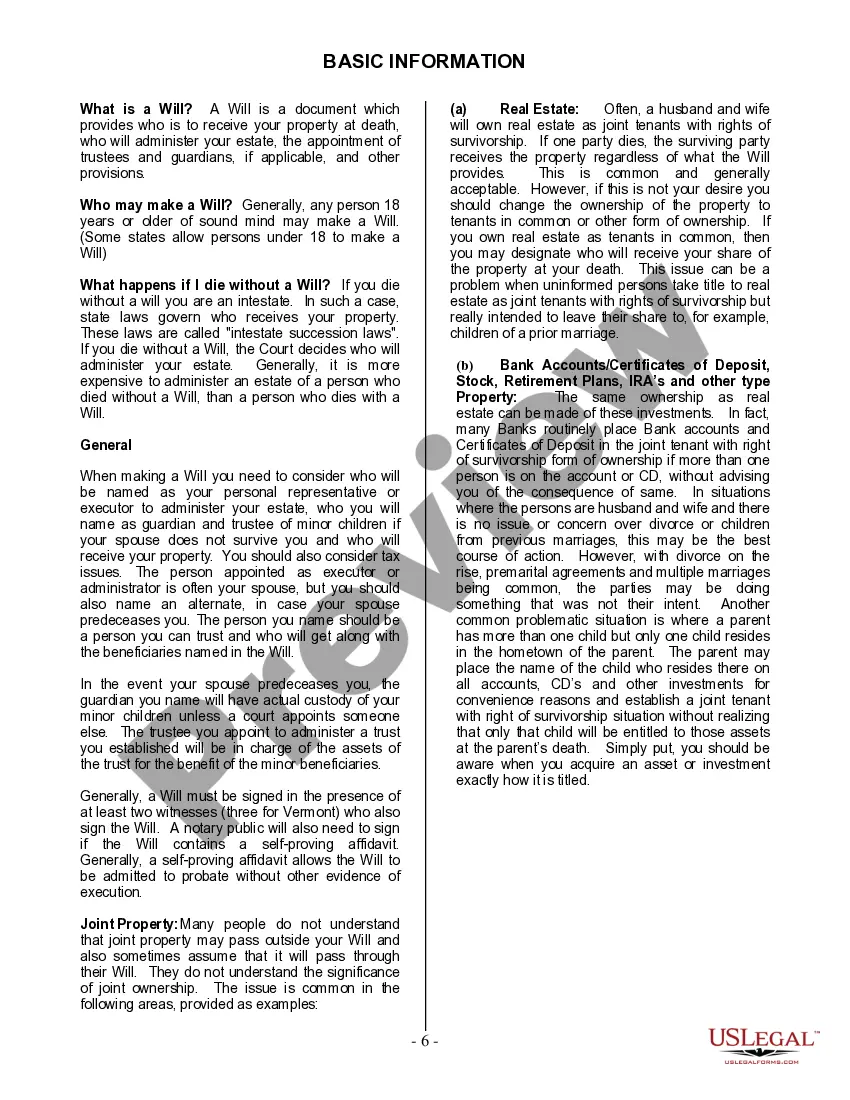
This form should be used when you are a single person without children and want to ensure your assets are distributed according to your wishes after your death. It is especially relevant if you have specific property you wish to bequeath to friends or relatives, or if you want to avoid the complexities of intestacy laws, which govern the distribution of assets when one dies without a will.
Who can use this document
- Individuals who are single and do not have children.
- Anyone seeking to specify the distribution of their property after death.
- People who want to appoint someone they trust as their personal representative.
- Those who wish to ensure their funeral arrangements and debts are handled according to their wishes.
How to prepare this document
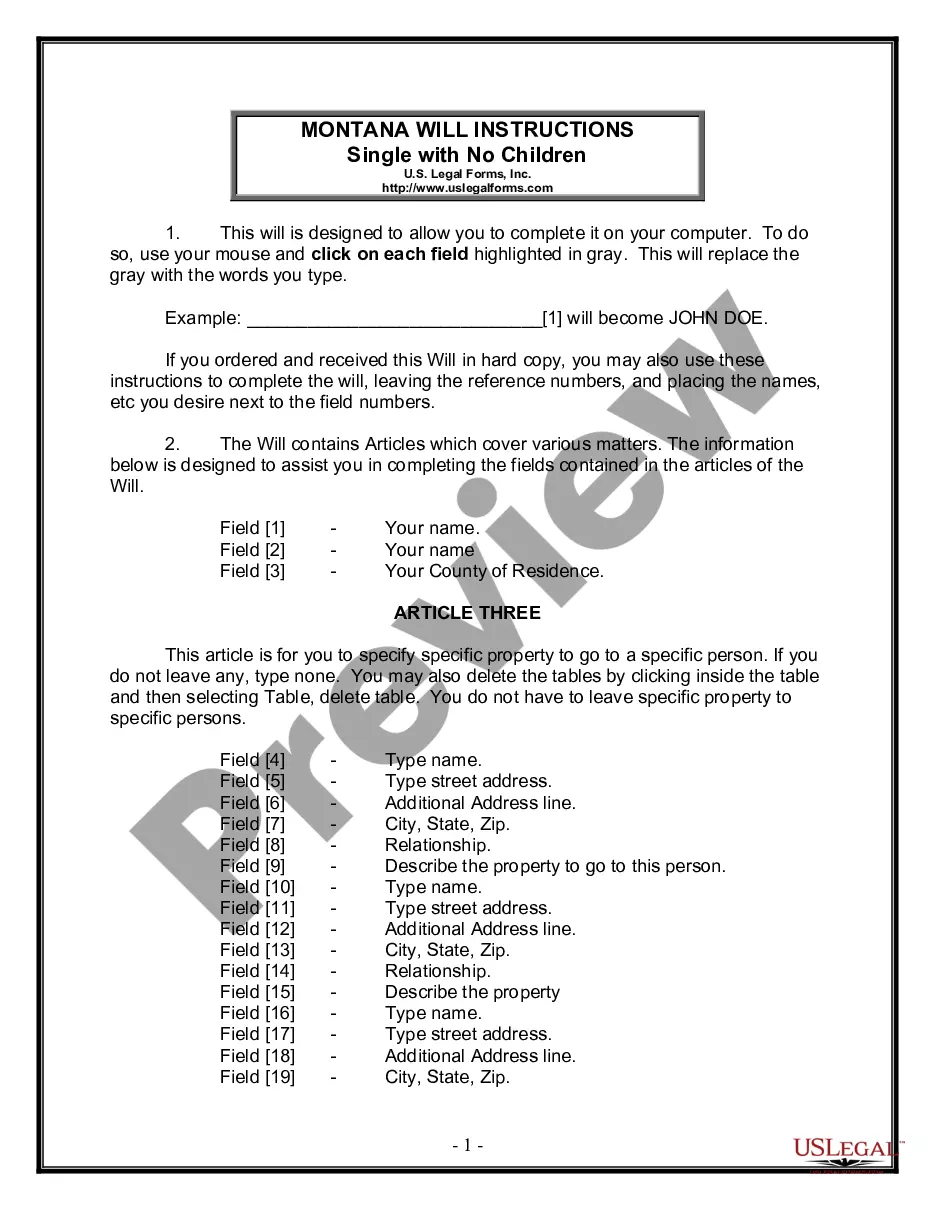
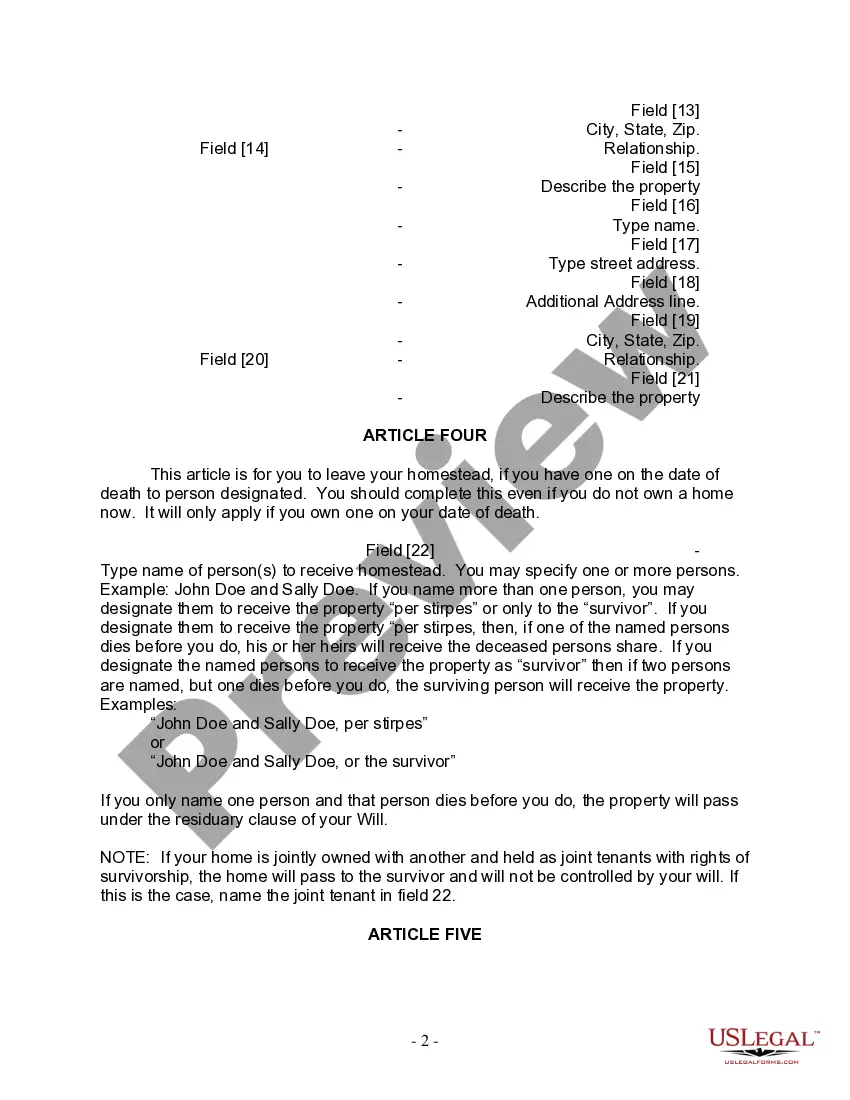
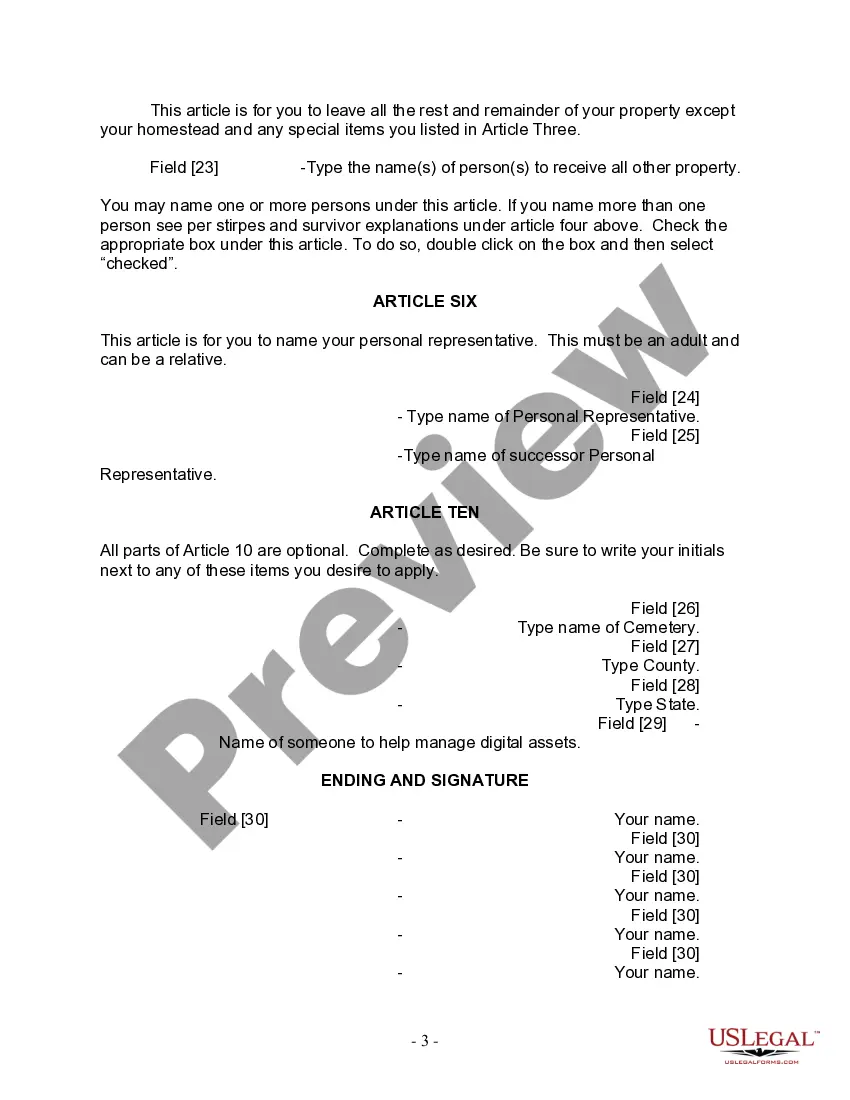
- Enter your full name and county of residence at the beginning of the form.
- Specify your beneficiaries and provide details on any specific property you wish to bequeath.
- Designate who will receive your homestead or primary residence if applicable.
- Appoint a trusted personal representative to manage the distribution of your assets.
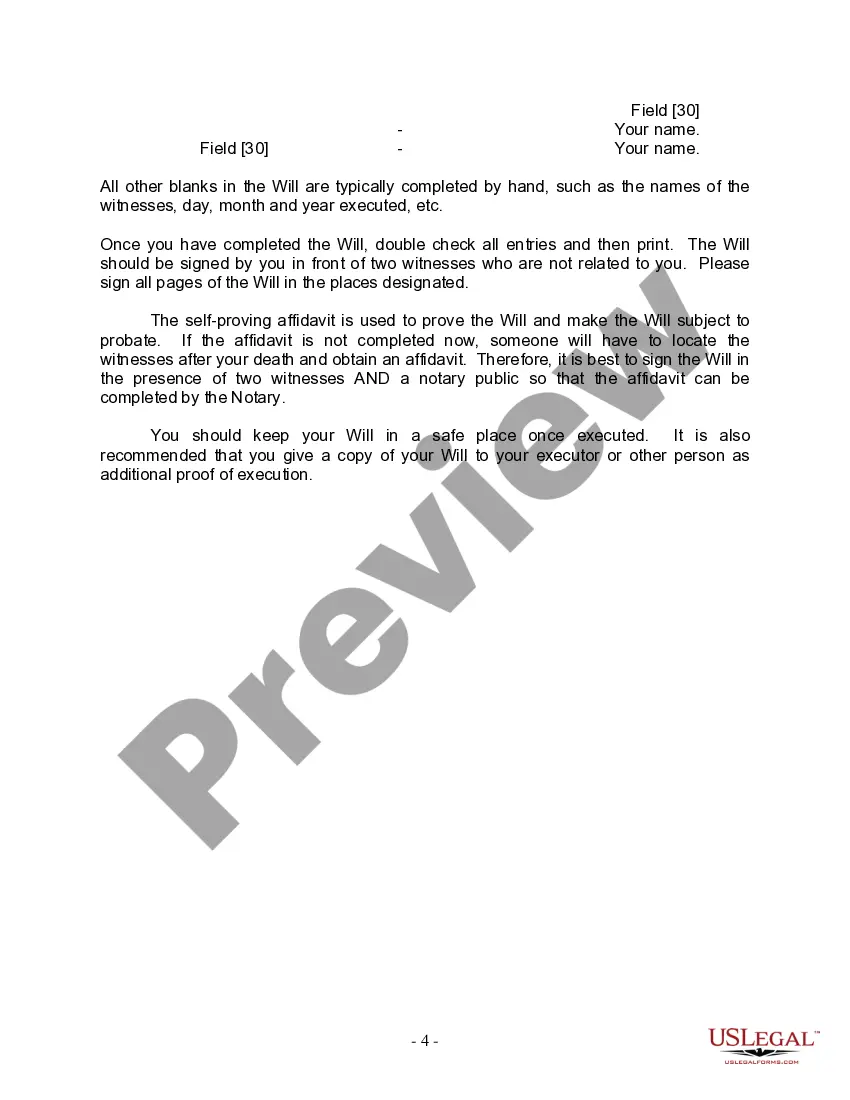
- Sign the document in the presence of two witnesses who are not related to you.
Notarization guidance
This form must be notarized to be legally valid. US Legal Forms provides secure online notarization powered by Notarize, allowing you to complete the process through a verified video call.
Get your form ready online
Our built-in tools help you complete, sign, share, and store your documents in one place.
Make edits, fill in missing information, and update formatting in US Legal Forms—just like you would in MS Word.
Download a copy, print it, send it by email, or mail it via USPS—whatever works best for your next step.
Sign and collect signatures with our SignNow integration. Send to multiple recipients, set reminders, and more. Go Premium to unlock E-Sign.
If this form requires notarization, complete it online through a secure video call—no need to meet a notary in person or wait for an appointment.
We protect your documents and personal data by following strict security and privacy standards.

Make edits, fill in missing information, and update formatting in US Legal Forms—just like you would in MS Word.

Download a copy, print it, send it by email, or mail it via USPS—whatever works best for your next step.

Sign and collect signatures with our SignNow integration. Send to multiple recipients, set reminders, and more. Go Premium to unlock E-Sign.

If this form requires notarization, complete it online through a secure video call—no need to meet a notary in person or wait for an appointment.

We protect your documents and personal data by following strict security and privacy standards.
Common mistakes to avoid
- Failing to have the will signed in front of the required number of witnesses.
- Not updating the will after significant life events, such as marriage or acquiring new assets.
- Leaving out important details regarding specific bequests or property distribution.
- Overlooking the need for a self-proving affidavit if required by state law.
Benefits of completing this form online
- Convenient access to legally vetted forms that can be tailored to your needs.
- The ability to fill out the form digitally, reducing the risk of errors.
- Easy editing allows for adjustments to be made whenever necessary.
- Secure storage options help keep your will safe and accessible when needed.
Main things to remember
- The will is crucial for ensuring your wishes are respected regarding asset distribution after death.
- It is specifically designed for single individuals without children, simplifying the process.
- Completing and notarizing the form ensures compliance with legal requirements in your state.
Looking for another form?

Form popularity
FAQ
Contrary to popular belief, you do not need to have an attorney draft a will for you. Anyone can write this document on their own, and as long as it meets all of the legal requirements of the state, courts will recognize one you wrote yourself.
Find an online template or service. Make a list of your assets. Be specific about who gets what. If you have minor children, choose a guardian. Give instructions for your pet. Choose an executor. Name a 'residuary beneficiary' List your funeral preferences.
Create the initial document. Start by titling the document Last Will and Testament" and including your full legal name and address. Designate an executor. Appoint a guardian. Name the beneficiaries. Designate the assets. Ask witnesses to sign your will. Store your will in a safe place.
Create the initial document. Start by titling the document Last Will and Testament" and including your full legal name and address. Designate an executor. Appoint a guardian. Name the beneficiaries. Designate the assets. Ask witnesses to sign your will. Store your will in a safe place.
Include personal identifying information. Include a statement about your age and mental status. Designate an executor. Decide who will take care of your children. Choose your beneficiaries. List your funeral details. Sign and date your Last Will and Testament.
Property in a living trust. One of the ways to avoid probate is to set up a living trust. Retirement plan proceeds, including money from a pension, IRA, or 401(k) Stocks and bonds held in beneficiary. Proceeds from a payable-on-death bank account.
Witnesses. As a protection against fraud, almost every state requires that witnesses (as well as the will-maker) sign the will. If the witnessing requirements were not met, the probate court judge will decide whether or not to admit the will to probate.
You can legally prepare your own will, it can even be handwritten. This type of will is known as a "holographic will." In Montana, your handwritten will must be signed by you. Your signature must also be located on any material provisions, and no witnesses will need to be present for the signing of your will.
A will typically must be properly witnessed to be valid. Unlike other legal documents, a will generally isn't valid unless two adult witnesses watch the will-maker sign it. The witnesses must know that the document is intended to be that person's will, and they must also sign the document themselves.