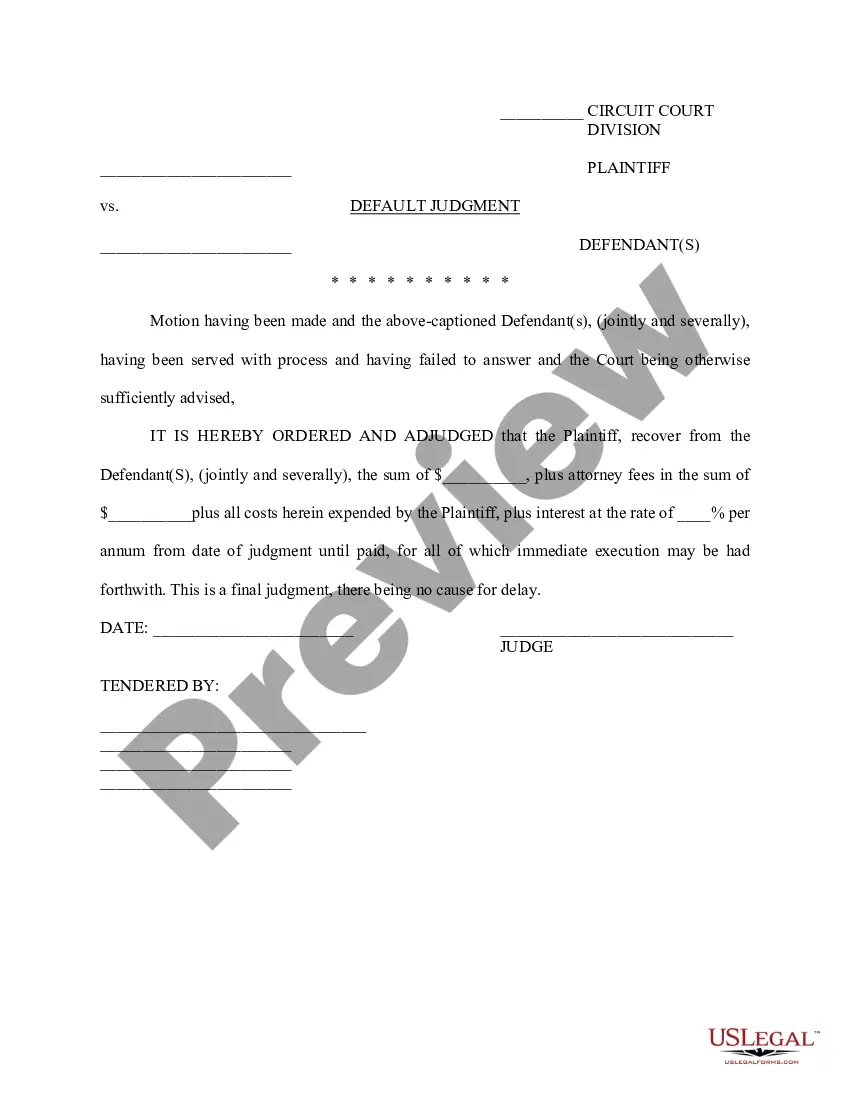
Kentucky Default Judgment
About this form
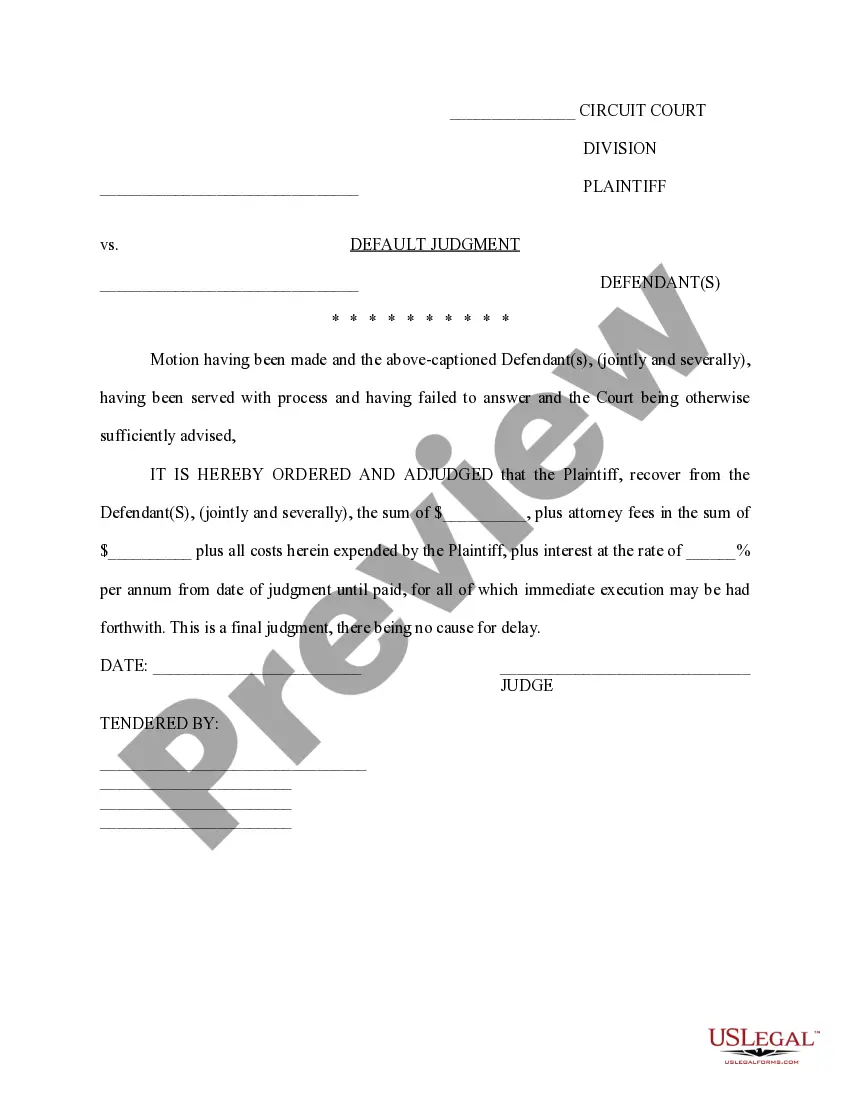
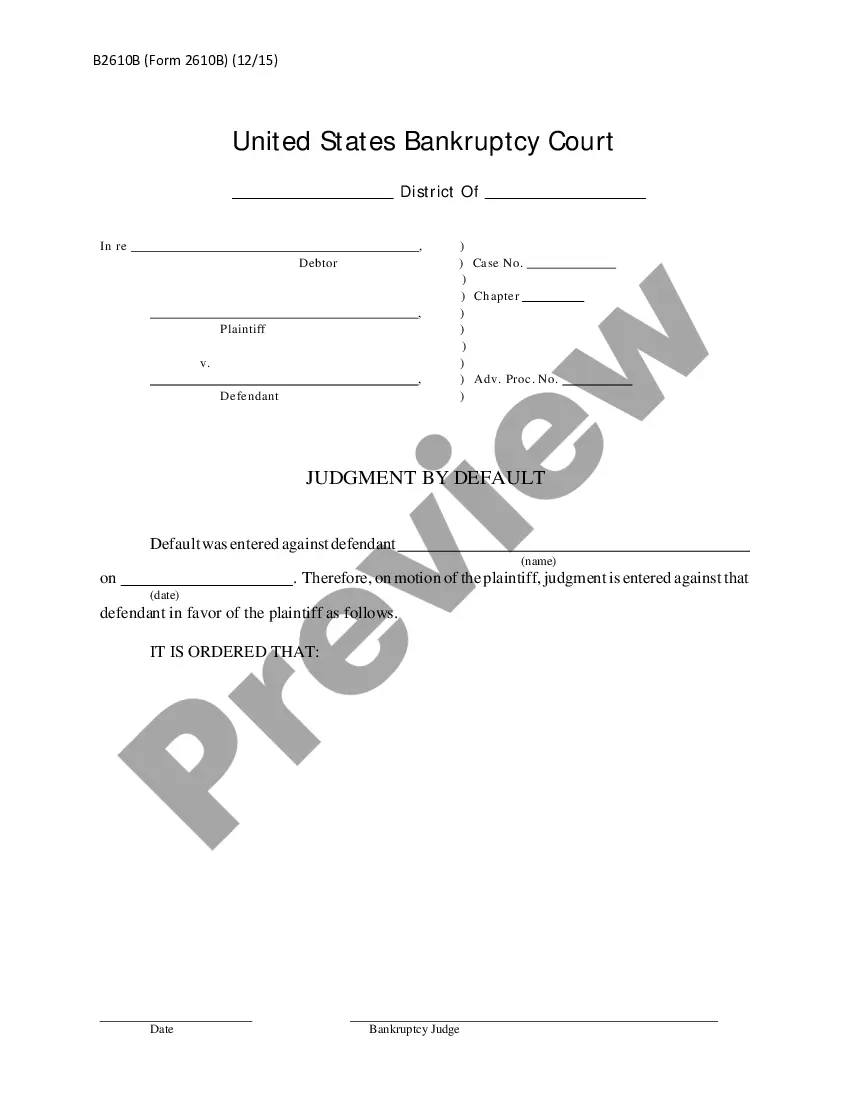
The default judgment form is a legal document that allows a plaintiff to obtain a judgment against a defendant who has been served but failed to respond to a court filing. This form is essential as it formalizes a court's decision in favor of the plaintiff when the defendant does not participate in the legal process. It differs from other judgment forms by specifically addressing cases where the defendant is absent after being properly notified of the proceedings.
Key parts of this document
- Header indicating the court and division.
- Identification of the plaintiff and defendant(s).
- Statement of the court's findings regarding service of process and the defendantâs failure to respond.
- Amount awarded to the plaintiff, including principal, attorney fees, and costs.
- Interest rate to be applied from the date of judgment until paid.
- Signature lines for the judge and the attorney.
When to use this document
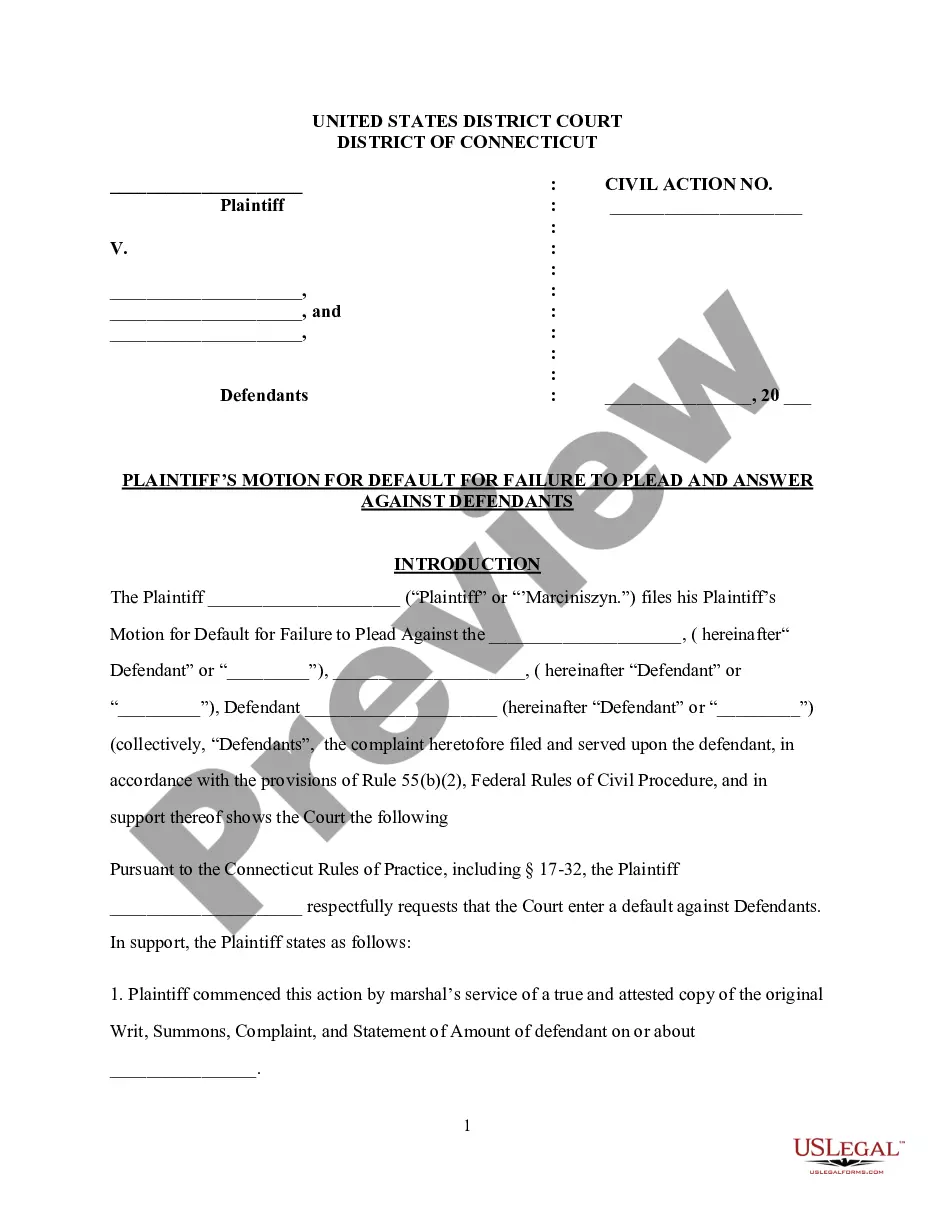
This form should be used when a defendant has been served with legal documents about a claim but fails to provide a response. Situations may include debt collection cases, eviction proceedings, or other civil matters where a timely defense is not presented. Filing this form allows the plaintiff to secure a judgment without the defendantâs participation.
Who this form is for
- Plaintiffs seeking to enforce a claim against a defendant who has not responded.
- Individuals or businesses involved in civil litigation related to monetary claims.
- Legal representatives acting on behalf of a plaintiff in court proceedings.
How to prepare this document
- Enter the name of the court and division at the top of the form.
- List the names of the plaintiff and defendant(s) in the designated sections.
- Fill in the monetary amount the plaintiff is claiming, including attorney fees and costs.
- Specify the interest rate to be applied to the judgment.
- Sign and date the form where indicated by the judge and the attorney.
Notarization requirements for this form
This form does not typically require notarization unless specified by local law. It's advisable to check the regulations in your jurisdiction to confirm notarization requirements.
Get your form ready online
Our built-in tools help you complete, sign, share, and store your documents in one place.
Make edits, fill in missing information, and update formatting in US Legal Forms—just like you would in MS Word.
Download a copy, print it, send it by email, or mail it via USPS—whatever works best for your next step.
Sign and collect signatures with our SignNow integration. Send to multiple recipients, set reminders, and more. Go Premium to unlock E-Sign.
If this form requires notarization, complete it online through a secure video call—no need to meet a notary in person or wait for an appointment.
We protect your documents and personal data by following strict security and privacy standards.

Make edits, fill in missing information, and update formatting in US Legal Forms—just like you would in MS Word.

Download a copy, print it, send it by email, or mail it via USPS—whatever works best for your next step.

Sign and collect signatures with our SignNow integration. Send to multiple recipients, set reminders, and more. Go Premium to unlock E-Sign.

If this form requires notarization, complete it online through a secure video call—no need to meet a notary in person or wait for an appointment.

We protect your documents and personal data by following strict security and privacy standards.
Common mistakes to avoid
- Failing to correctly identify the parties involved.
- Not entering the correct amount due, including all applicable fees.
- Skipping the interest rate if required by local law.
- Omitting signatures from the necessary parties.
Why complete this form online
- Convenient access to legal documentation from any location.
- Easy editability to tailor the form to specific circumstances.
- Reliable templates that conform to legal standards, reducing the risk of errors.
Looking for another form?

Form popularity
FAQ
A judgment is a formal decision made by a court in favor of one party against another, often following a trial or hearing. A default, however, occurs when one party fails to respond to a legal claim, leading the court to rule in favor of the other party without any contest. Understanding the distinction is vital when dealing with legal matters, especially with Kentucky Default Judgment scenarios, as it impacts your rights and responsibilities.
To remove an expired judgment lien in Kentucky, you must file a motion in the court where the judgment was entered. This involves providing proof that the judgment is expired and is no longer enforceable. The court will review your request and, if granted, will issue an order to remove the lien. Utilizing platforms like uslegalforms can guide you through this process to ensure that you complete it correctly.
After 5 years of a Kentucky Default Judgment, the creditor may still enforce the judgment, but it is essential to note that the judgment must be renewed to remain valid. If the creditor does not take action to renew, the judgment may become unenforceable. This renewal keeps the judgment active and valid for an additional period. Always monitor your debts and ensure that your creditors take the necessary steps if you face a Kentucky Default Judgment.