Montana Pre-Incorporation Agreement, Shareholders Agreement and Confidentiality Agreement
What is this form?
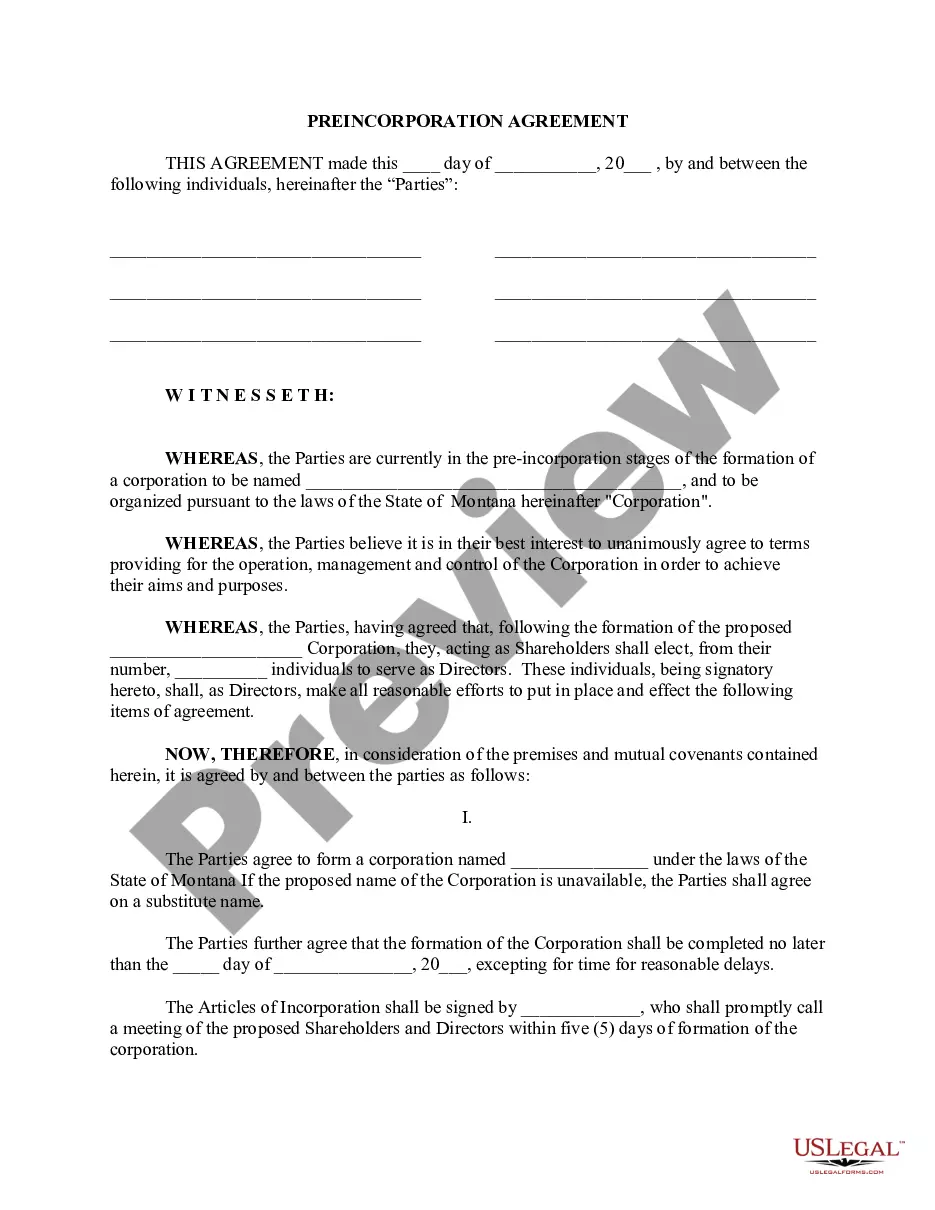
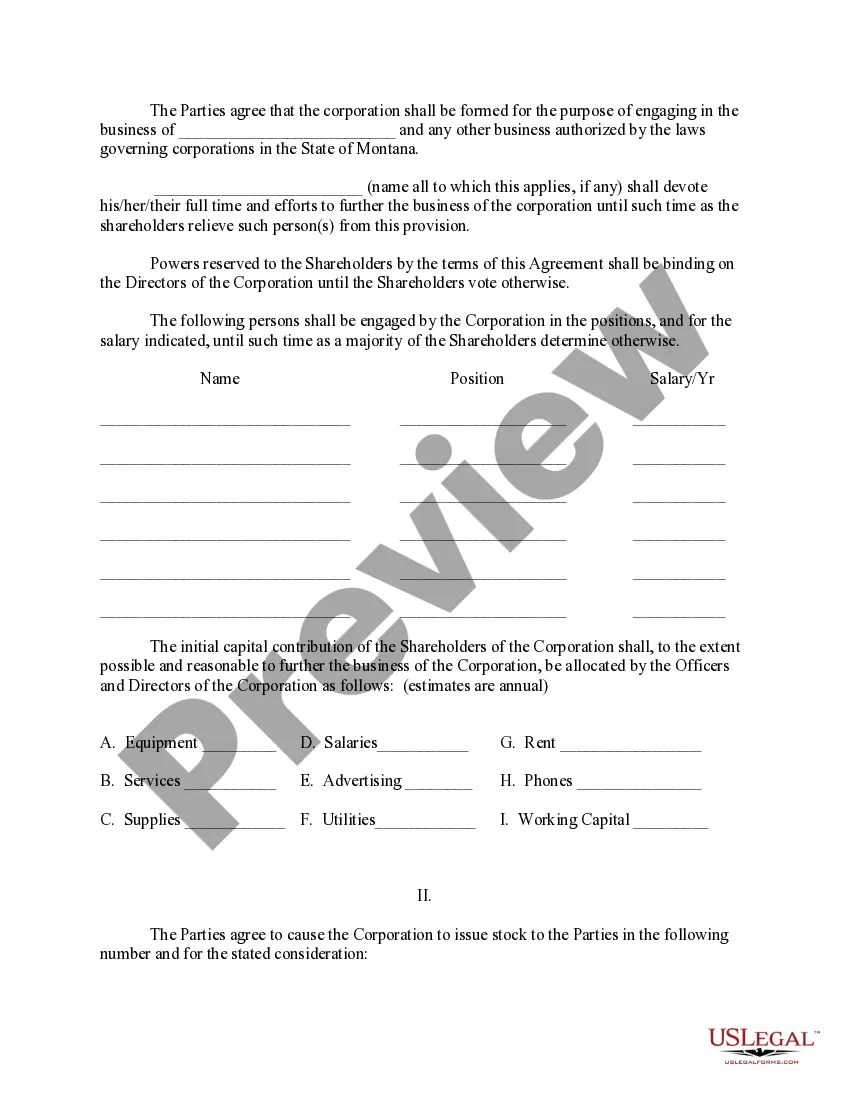
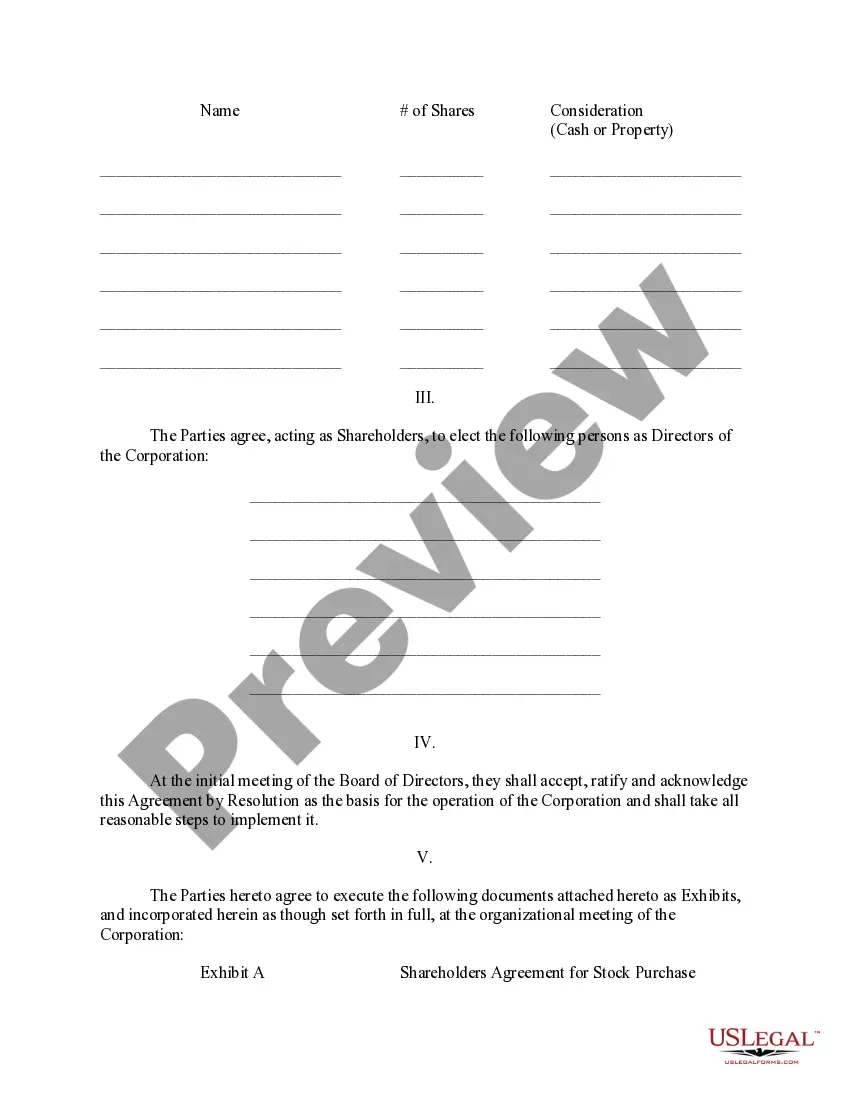
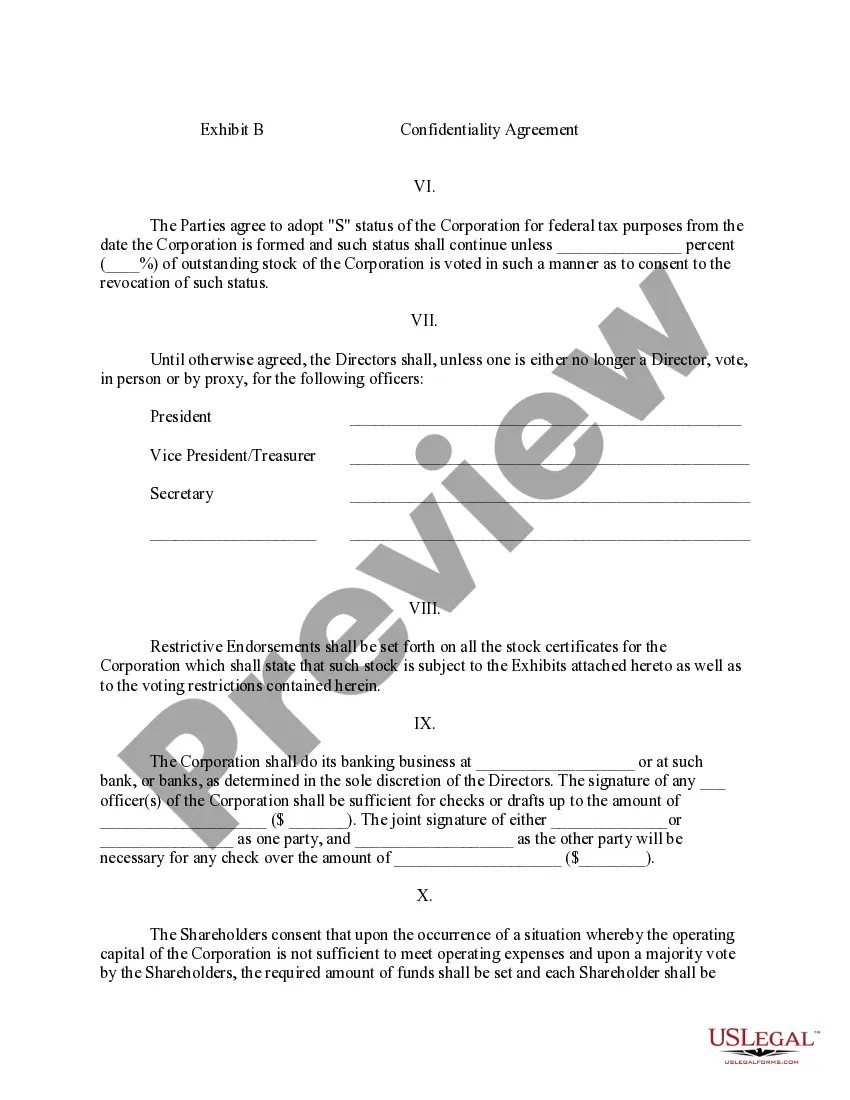
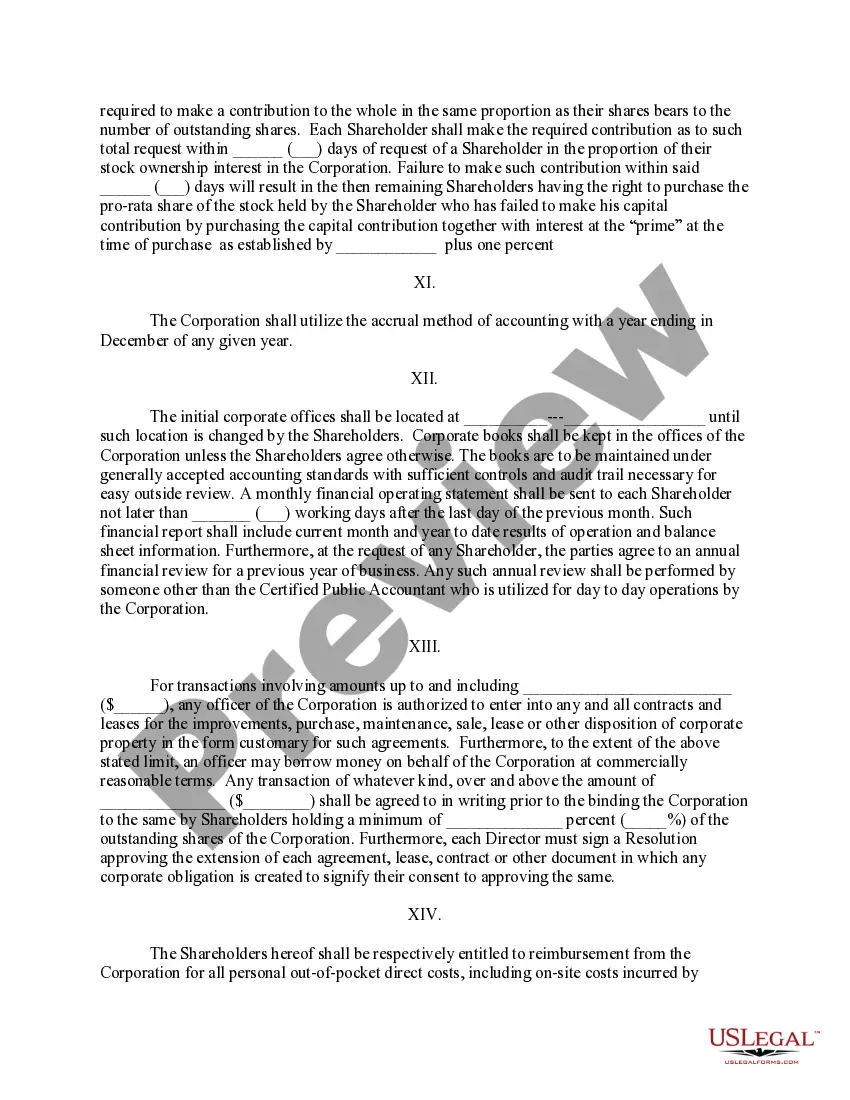
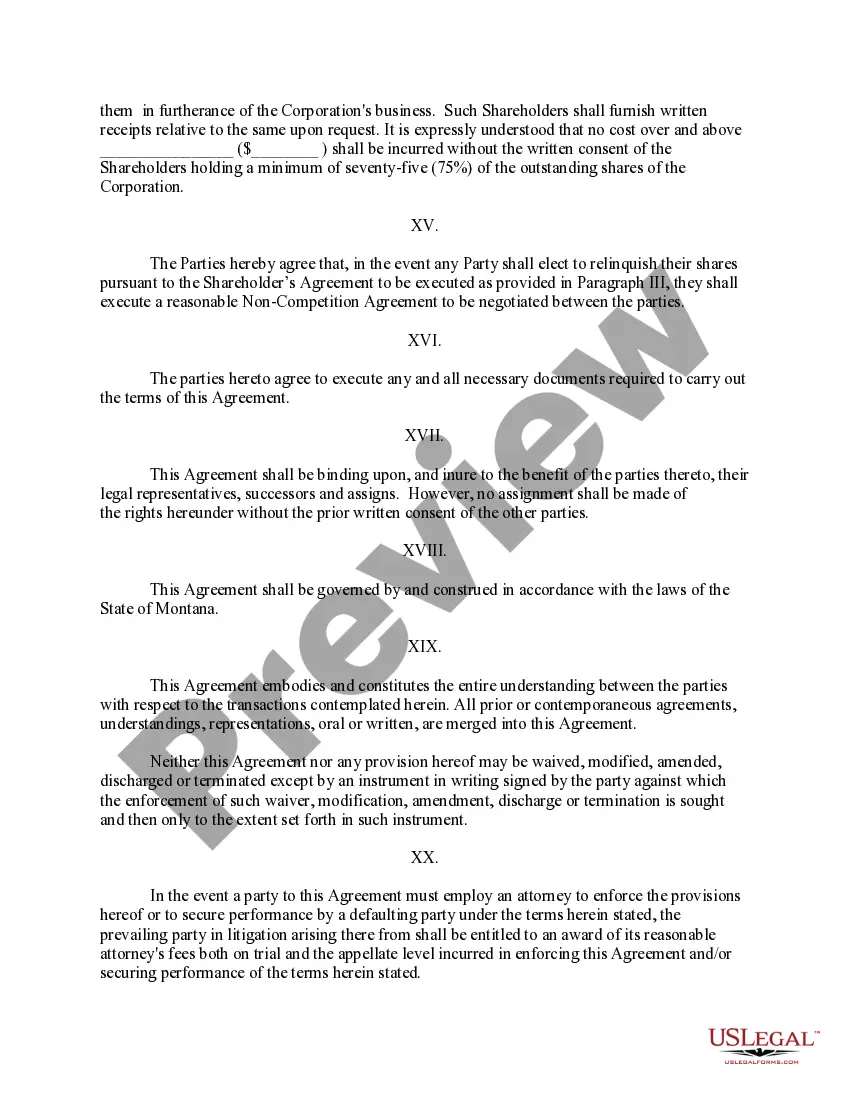
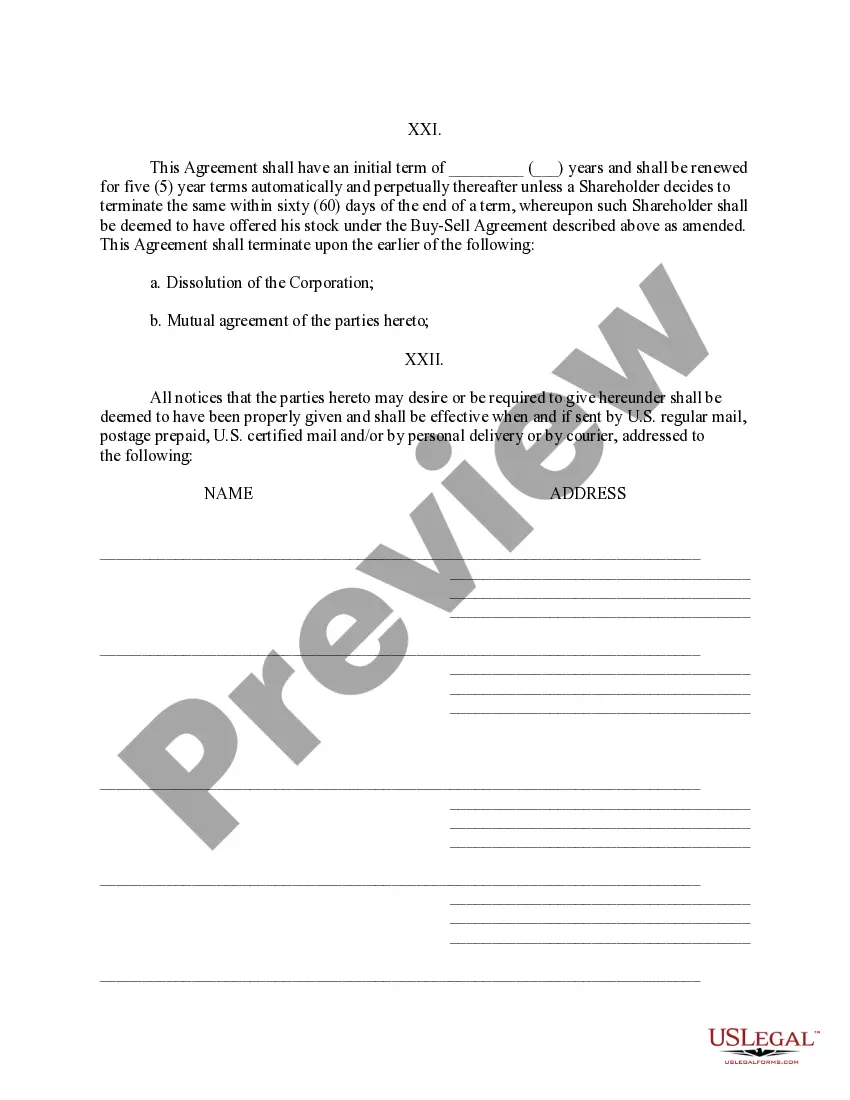
The Montana Pre-Incorporation Agreement, Shareholders Agreement, and Confidentiality Agreement is a comprehensive package designed for individuals or groups planning to establish a corporation in Montana. This package includes three key agreements that address the governance and operation of the corporation, the arrangement for share ownership, and the confidentiality of corporate information. By using this form, founders can ensure clear guidelines on how their corporation will operate, how shares will be managed, and how sensitive information will be treated.
Main sections of this form
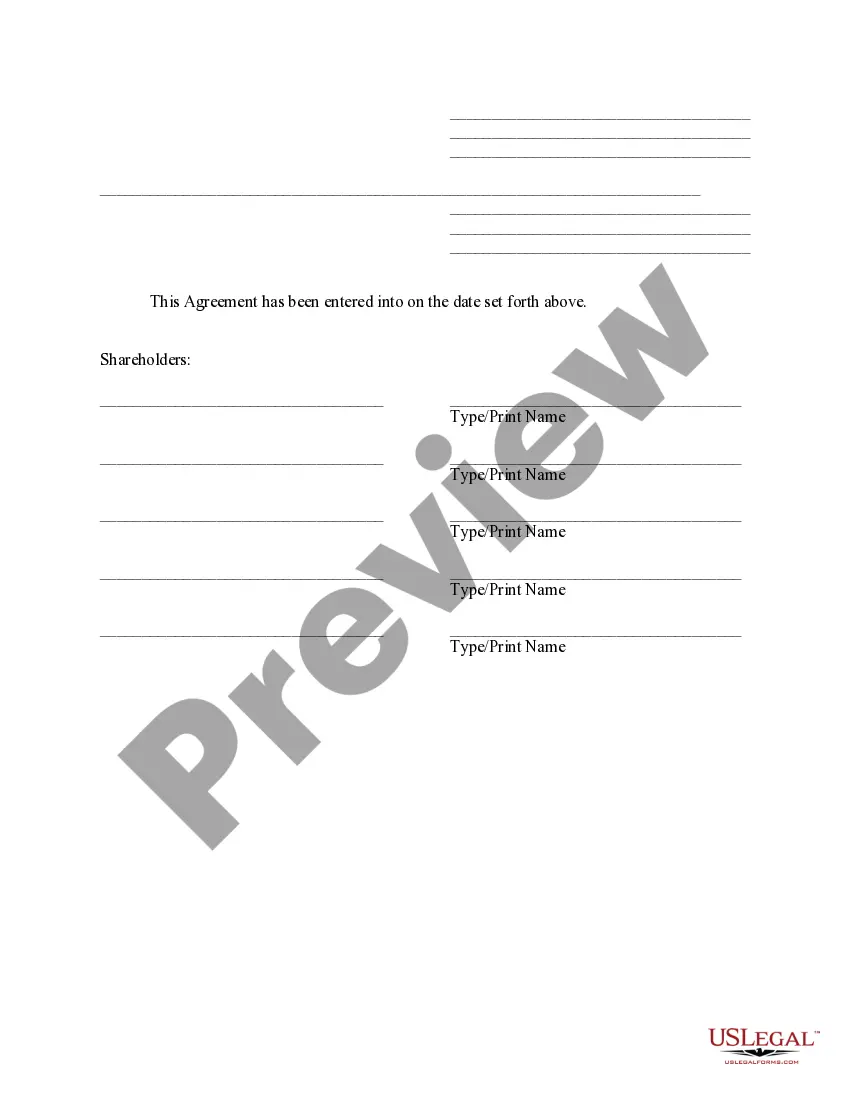
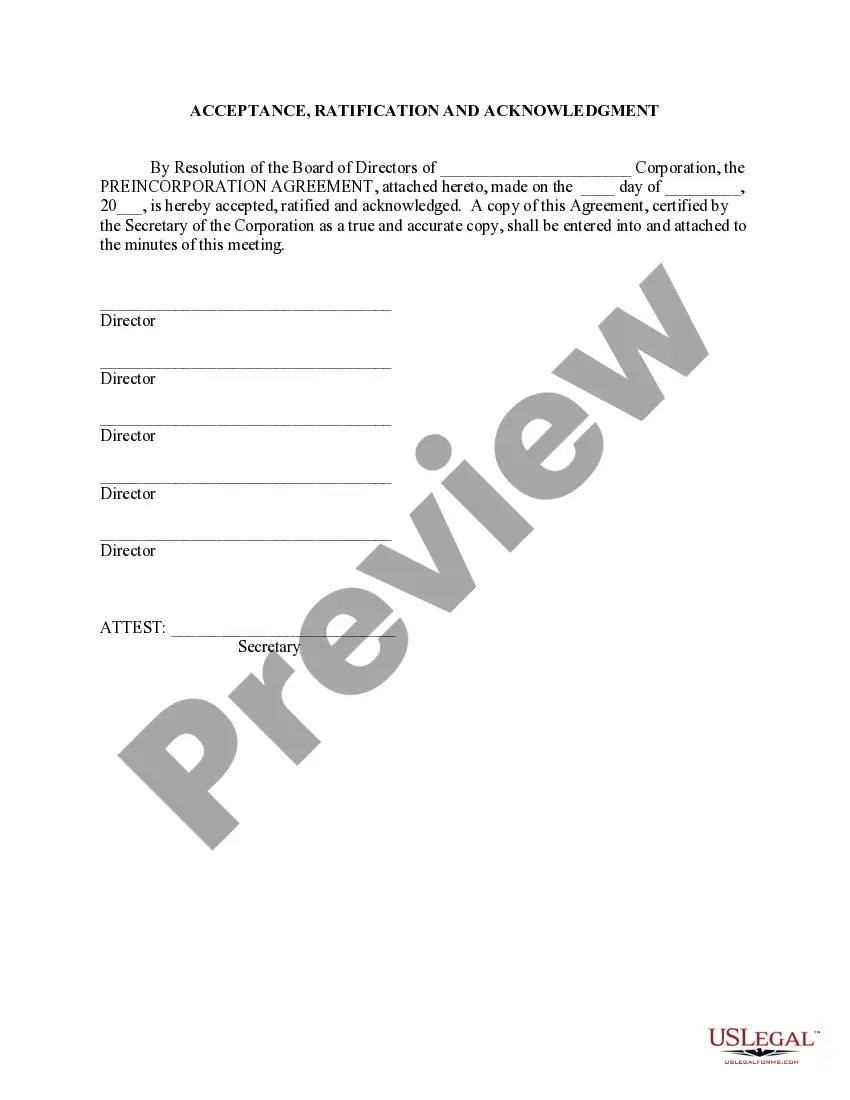
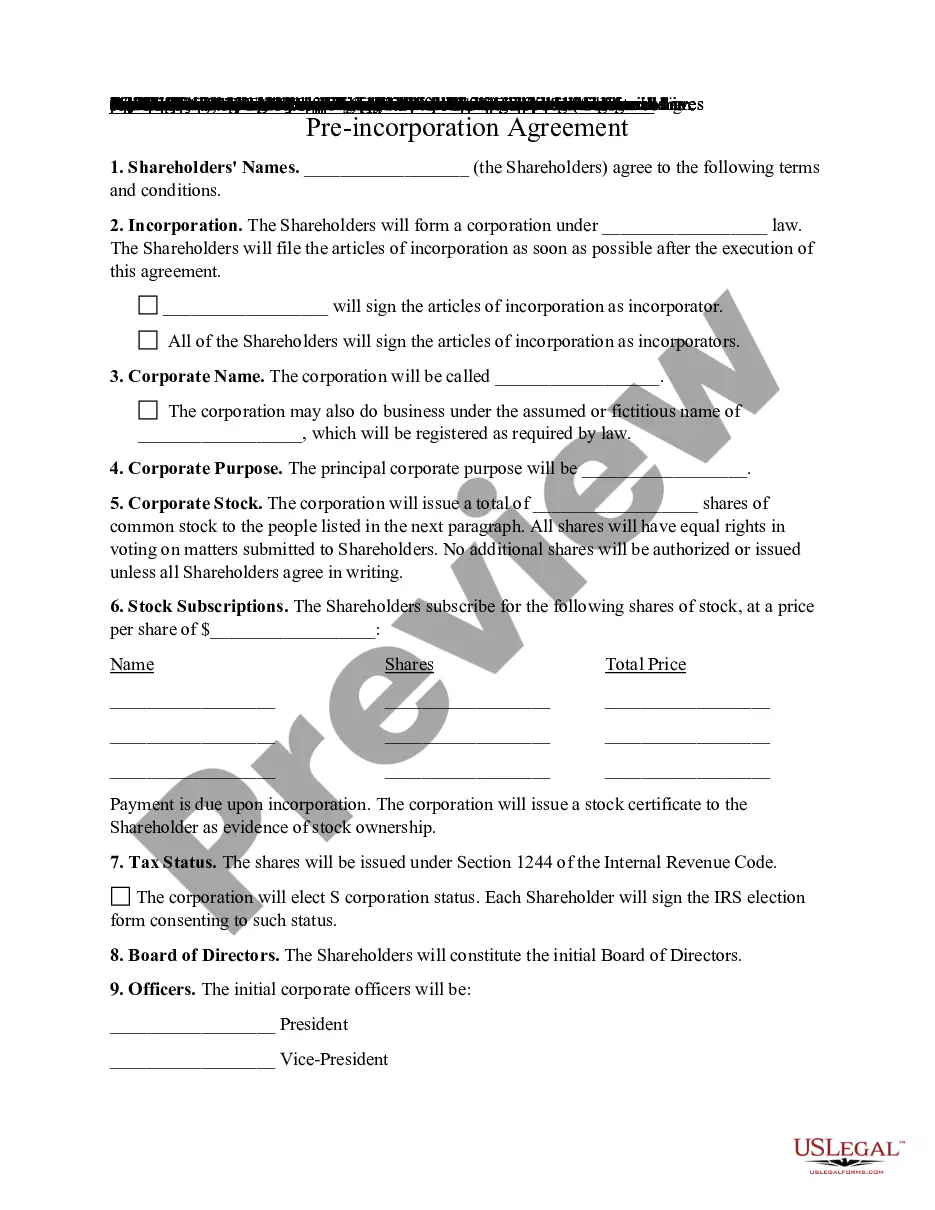
- Pre-Incorporation Agreement: Outlines the operational structure and management of the corporation prior to its official formation.
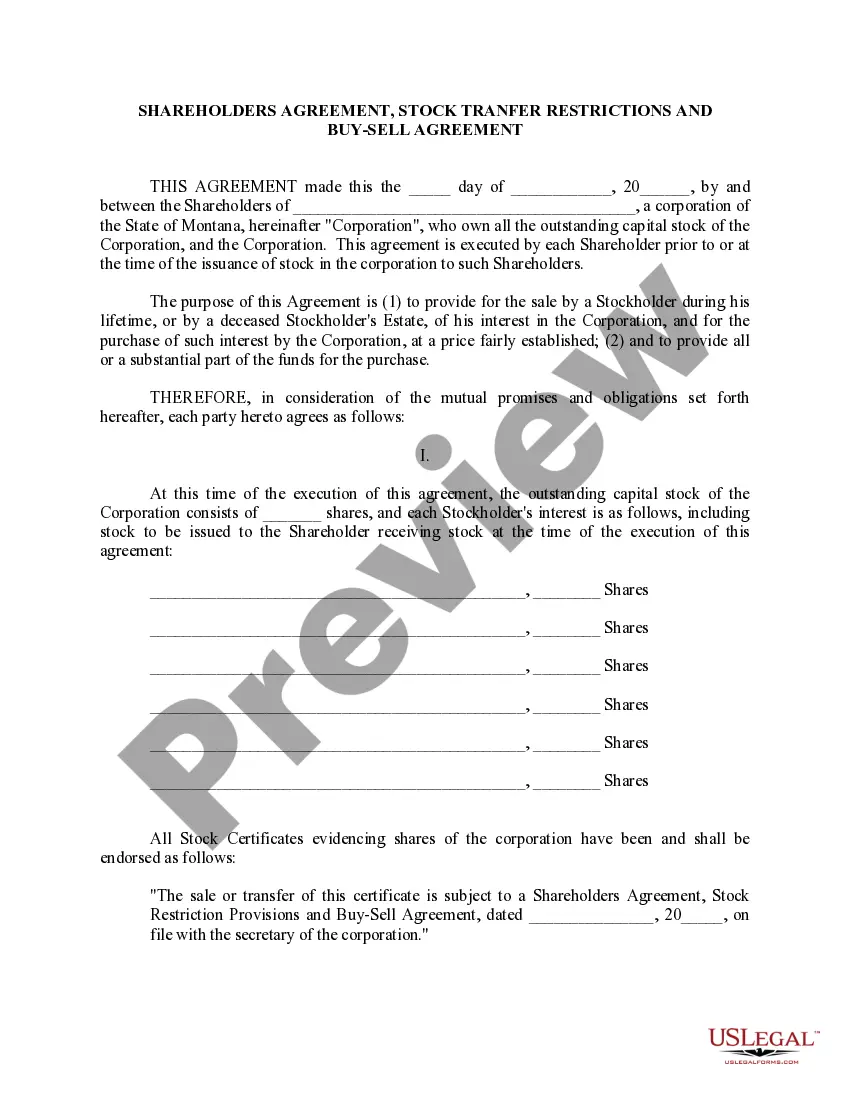
- Shareholders Agreement: Specifies how shares will be dealt with in the event of a shareholder's death or desire to sell their stock.
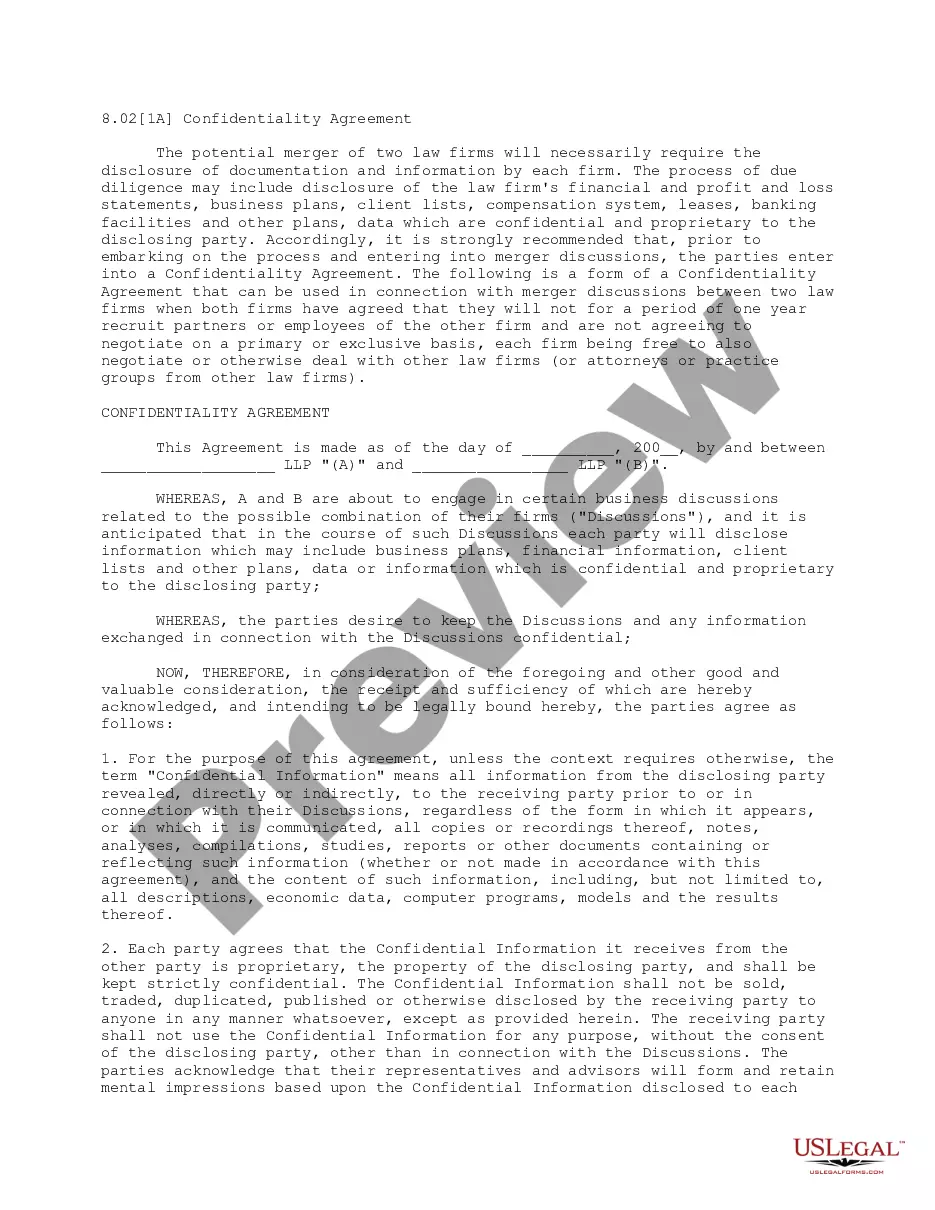
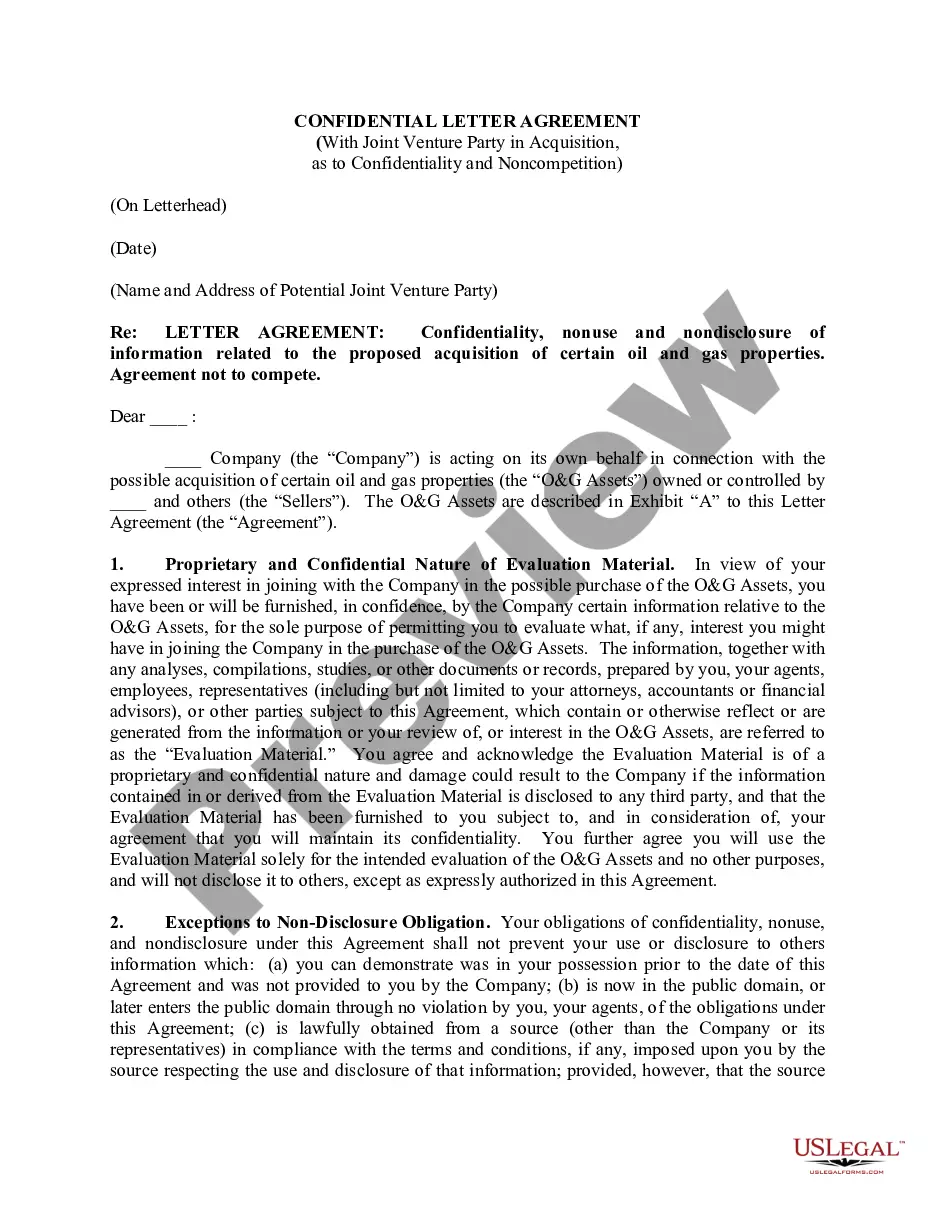
- Confidentiality Agreement: Establishes the obligation of shareholders to maintain confidentiality regarding corporate information.

When this form is needed
This form package should be used when a group of individuals is in the initial stages of forming a corporation in Montana. It is particularly relevant when there are multiple stakeholders involved, as it helps in setting ground rules for management, ownership transitions, and protecting sensitive information within the corporation.
Intended users of this form
This agreement is suitable for:
- Individuals planning to form a new corporation in Montana.
- Shareholders wishing to establish clear terms about share transfers and corporate governance.
- Business partners who need to outline management roles and confidentiality protocols.
Completing this form step by step
To complete this form package, follow these steps:
- Identify and list all parties involved in the corporation.
- Decide on the proposed name for the corporation and ensure it complies with Montana naming regulations.
- Outline the roles and responsibilities for each shareholder and director in the Pre-Incorporation Agreement.
- Specify share distribution details, including any conditions under which shares may be bought back or sold.
- Complete and sign the Confidentiality Agreement to protect sensitive information shared among shareholders.
Does this document require notarization?
This form does not typically require notarization unless specified by local law. However, consulting with a legal professional is advisable to determine if notarization is necessary for specific circumstances in Montana.
Get your form ready online
Our built-in tools help you complete, sign, share, and store your documents in one place.
Make edits, fill in missing information, and update formatting in US Legal Forms—just like you would in MS Word.
Download a copy, print it, send it by email, or mail it via USPS—whatever works best for your next step.
Sign and collect signatures with our SignNow integration. Send to multiple recipients, set reminders, and more. Go Premium to unlock E-Sign.
If this form requires notarization, complete it online through a secure video call—no need to meet a notary in person or wait for an appointment.
We protect your documents and personal data by following strict security and privacy standards.

Make edits, fill in missing information, and update formatting in US Legal Forms—just like you would in MS Word.

Download a copy, print it, send it by email, or mail it via USPS—whatever works best for your next step.

Sign and collect signatures with our SignNow integration. Send to multiple recipients, set reminders, and more. Go Premium to unlock E-Sign.

If this form requires notarization, complete it online through a secure video call—no need to meet a notary in person or wait for an appointment.

We protect your documents and personal data by following strict security and privacy standards.
Common mistakes
- Failing to properly identify all parties involved in the agreement.
- Not ensuring that the corporate name is available and compliant with state regulations.
- Omitting critical terms in the Shareholders Agreement regarding the transfer and sale of shares.
- Forgetting to clarify the duration or specific conditions of the Confidentiality Agreement.
Advantages of online completion
- Convenience: Access and complete the form package online, saving time and effort.
- Editability: Easily modify the documents as your corporationâs needs change.
- Reliability: Professionally drafted by licensed attorneys, ensuring compliance with legal standards.
- This agreement ensures clear terms for managing a corporation and handling share transfers.
- Enforceability of these agreements enhances corporate governance and shareholder relationships.
- Careful completion and compliance with state laws are crucial for legal validity.
Quick recap
- The form package is essential for setting up the foundational agreements for a new corporation in Montana.
- It includes critical components that protect shareholders' interests and maintain confidentiality.
- Using this package ensures that all parties are aware of their rights and obligations from the outset.
- Shareholders Agreement: A legal contract detailing the rights and responsibilities of shareholders in a corporation.
- Confidentiality Agreement: An agreement that requires parties to keep certain information private.
- Pre-Incorporation Agreement: A document establishing the terms of a corporation before it is legally formed.
Looking for another form?
Form popularity
FAQ
A definition of confidential information. Who is involved. Why the recipient knows the information. Exclusions or limits on confidential information. Receiving party's obligations. Time frame or term. Discloser to the recipient.
Depending on the complexity of what you need protected and the number of parties involved, the cost of having an NDA drafted can vary significantly. When you hire a lawyer in the Priori network, drafting an NDA typically costs anywhere from $175-$1,500.
Get it in writing. Keep it simple. Deal with the right person. Identify each party correctly. Spell out all of the details. Specify payment obligations. Agree on circumstances that terminate the contract. Agree on a way to resolve disputes.
It is a contract through which the parties agree not to disclose information covered by the agreement. An NDA creates a confidential relationship between the parties, typically to protect any type of confidential and proprietary information or trade secrets. As such, an NDA protects non-public business information.
A confidentiality agreement (also called a nondisclosure agreement or NDA) is a legally binding contract in which a person or business promises to treat specific information as a trade secret and promises not to disclose the secret to others without proper authorization.
The party to be charged must have signed the contract. Since the NDAs benefit you, so long as the other party has signed, that ishould be sufficient.
While an employer has the right to demand its employees sign a NDA when those employees have access to valuable company data (e.g. product formulas, private customer lists, financial reports, etc.), the employer should not ask an employee to sign a confidentiality agreement if the purpose is to protect information that
An employee can be required to sign an NDA or NDA-like agreement with an employer, protecting trade secrets. In fact, some employment agreements include a clause restricting employees' use and dissemination of company-owned confidential information.
Set the date of the agreement. Describe the two parties, sometimes called the Disclosing Party and the Receiving Party.7feff Include names and identification, so there can be no misunderstanding about who signed the agreement.