Mississippi Brief in Support of Motion to Remand
About this form
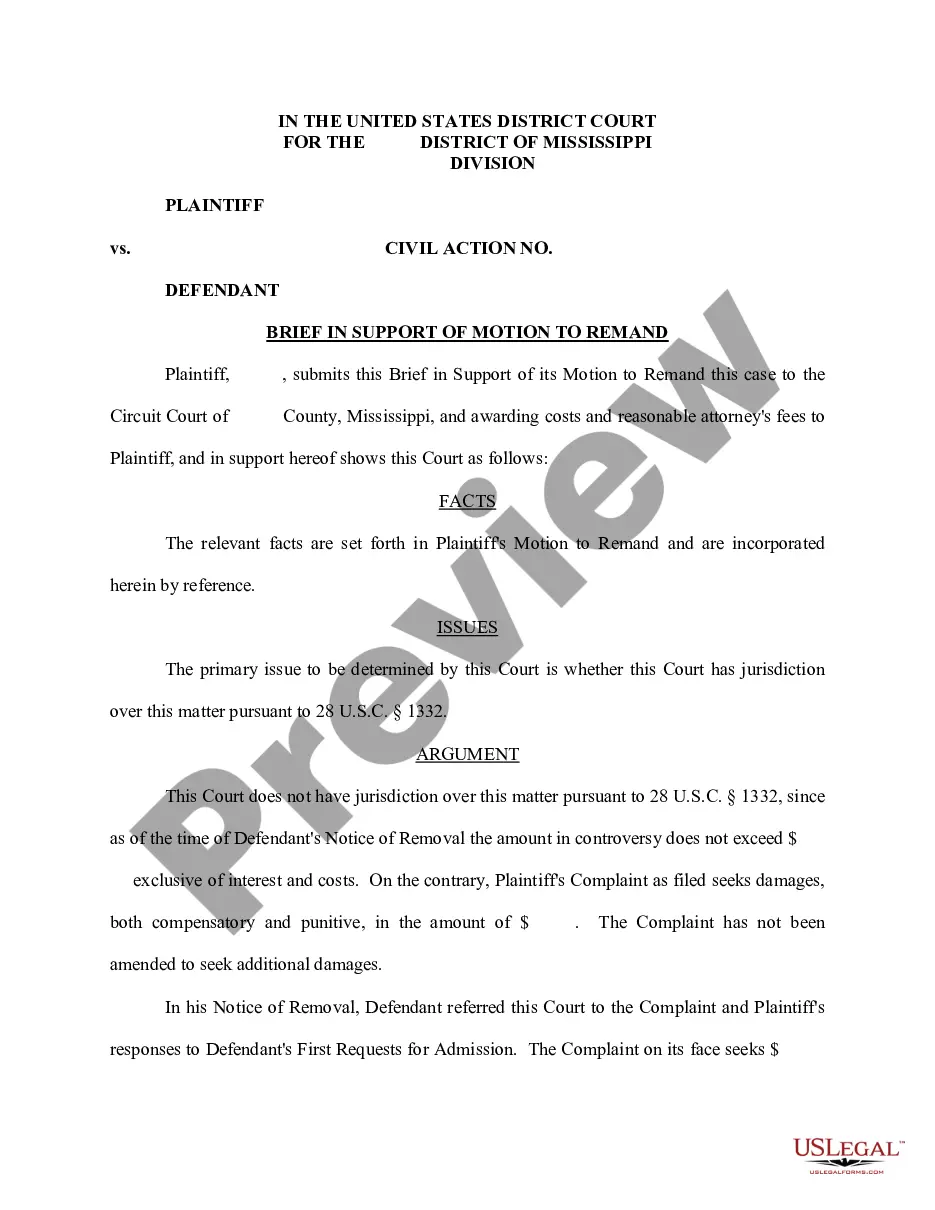
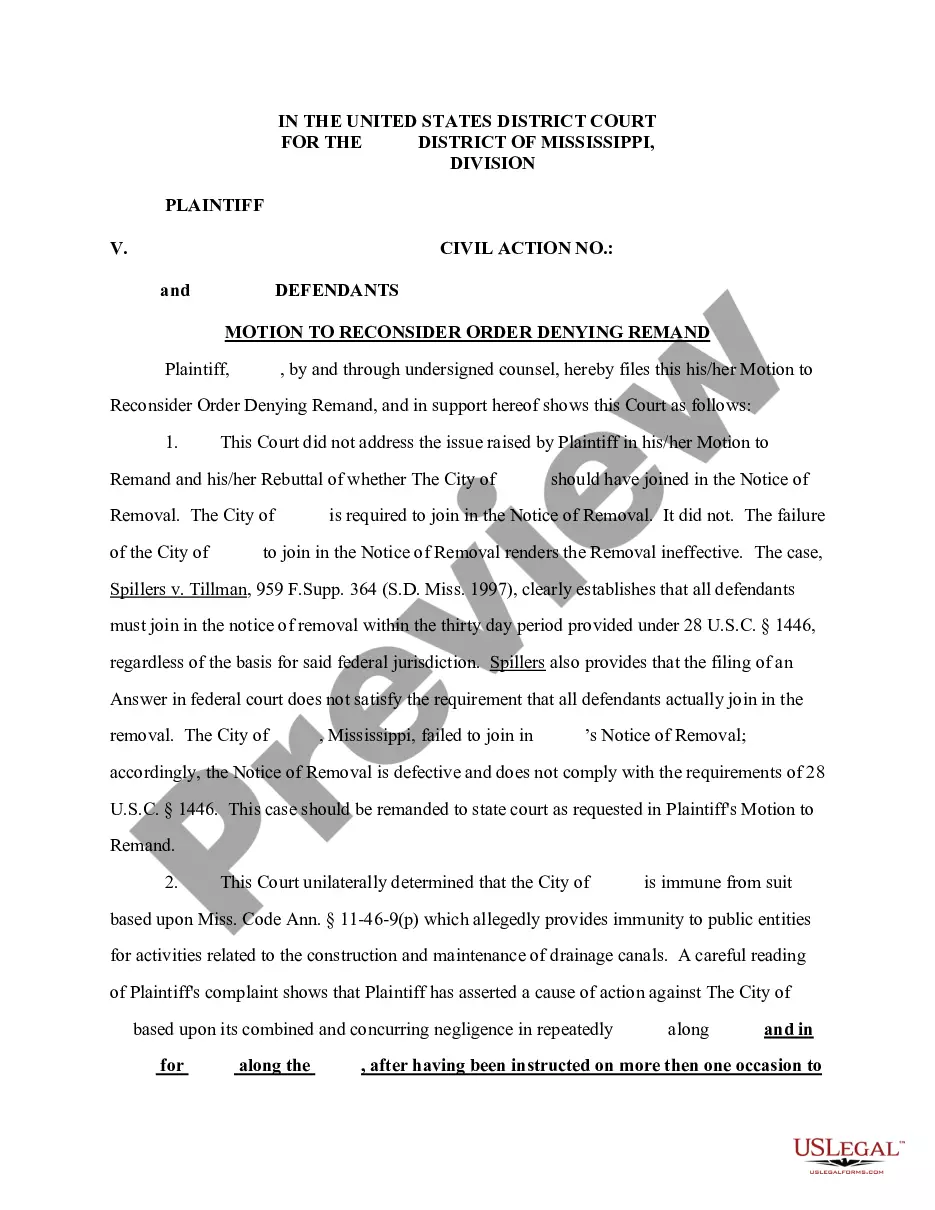
The Brief in Support of Motion to Remand is a legal document used to request the return of a case to state court after it has been removed to federal court. This form emphasizes issues related to jurisdiction, primarily under 28 U.S.C. 1332, distinguishing it from other motions by focusing specifically on remand rather than general requests.
Key components of this form
- Facts: Incorporates relevant facts from the Plaintiff's Motion to Remand.
- Issues: Addresses whether the court has jurisdiction over the case.
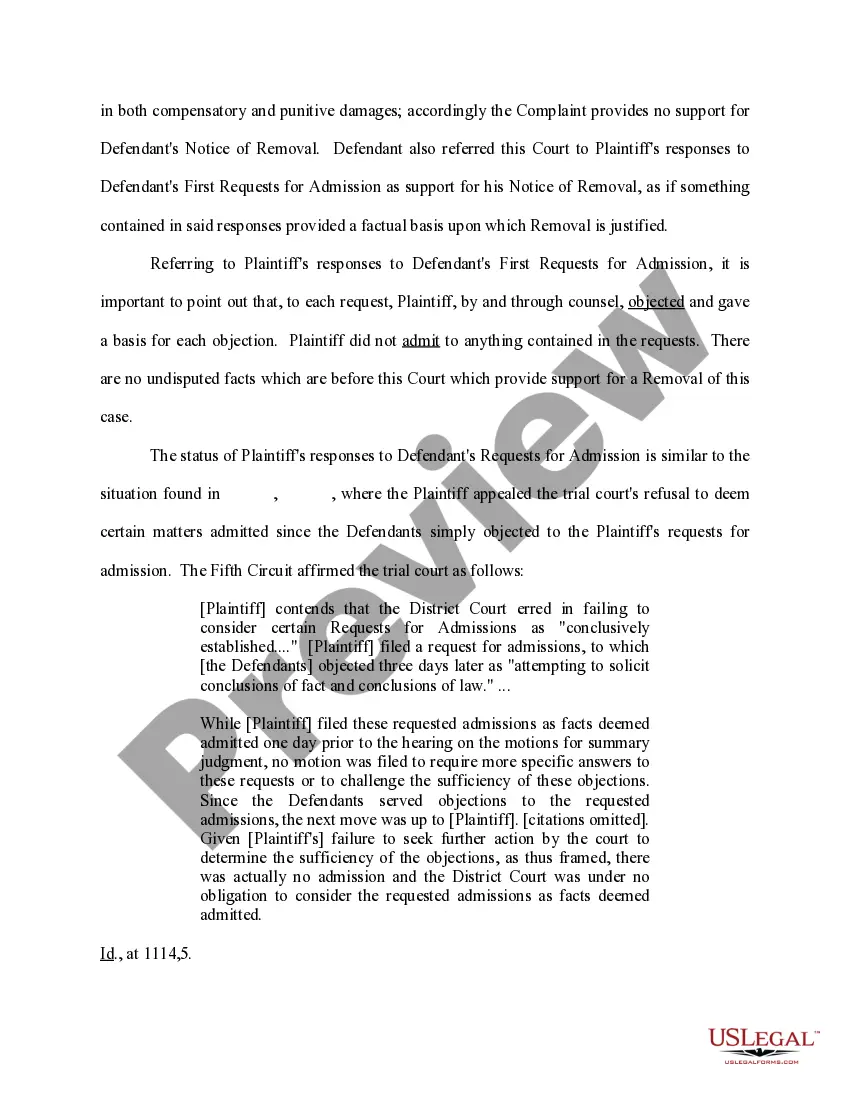
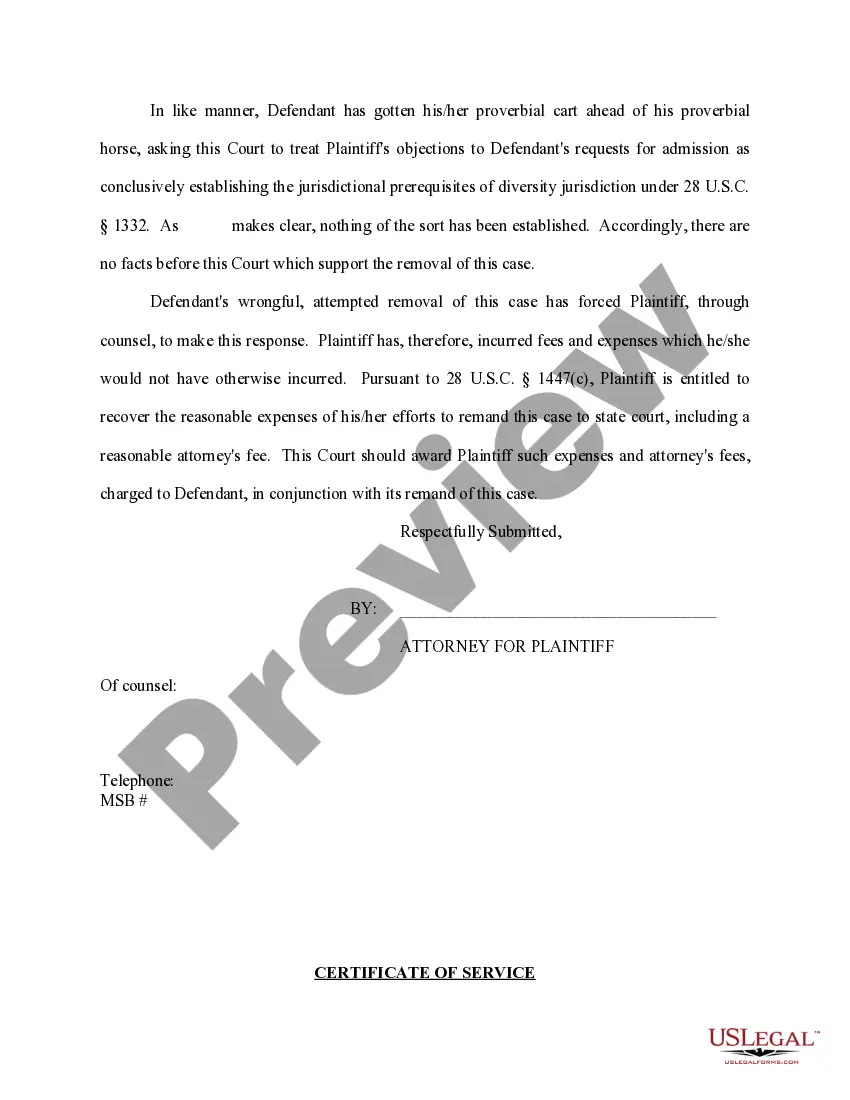
- Argument: Outlines the legal reasoning and objections related to requests for admission.
- Conclusion: A respectful submission to the court for consideration of the remand request.
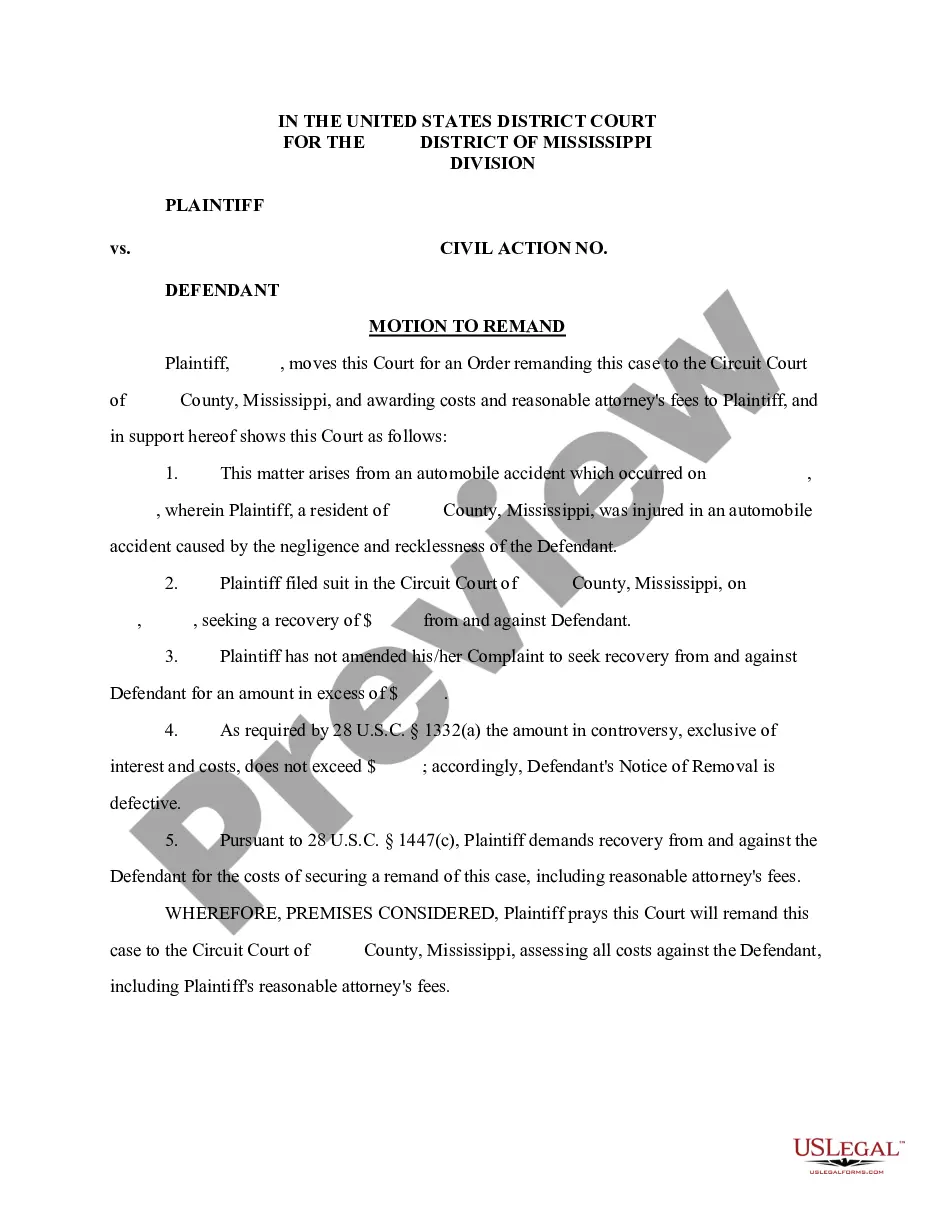
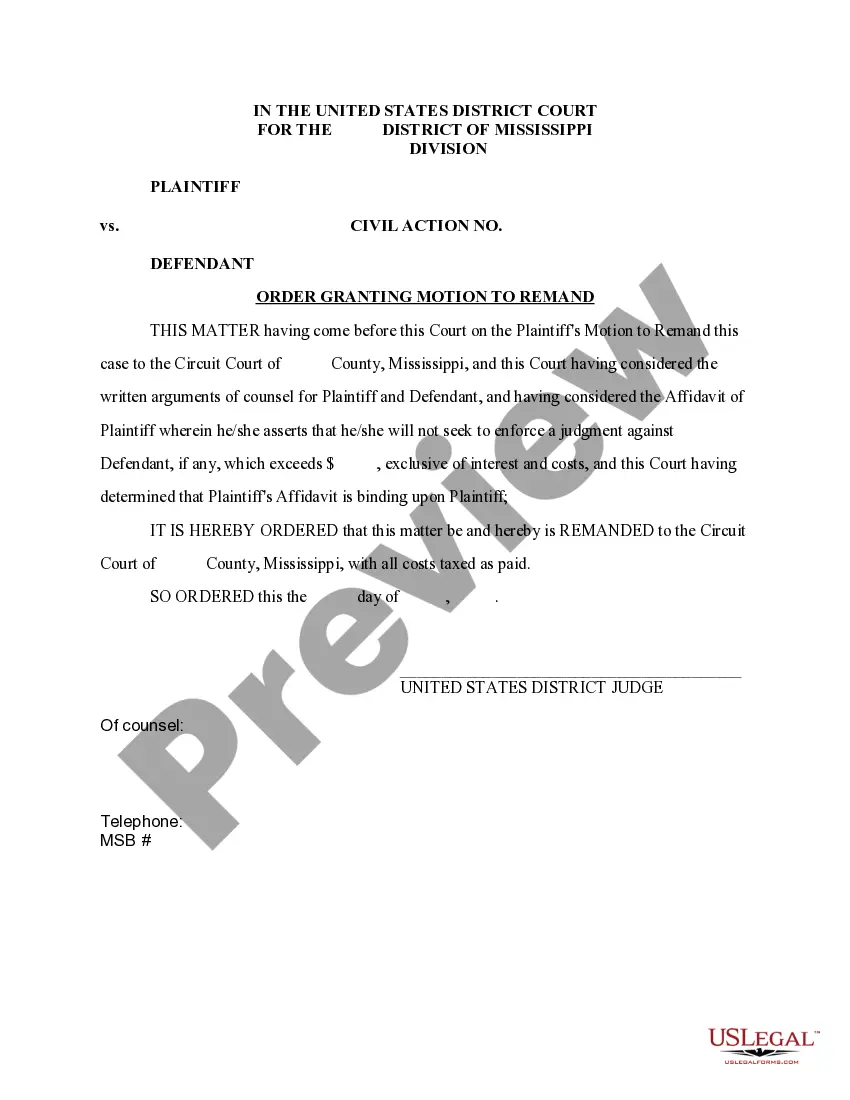
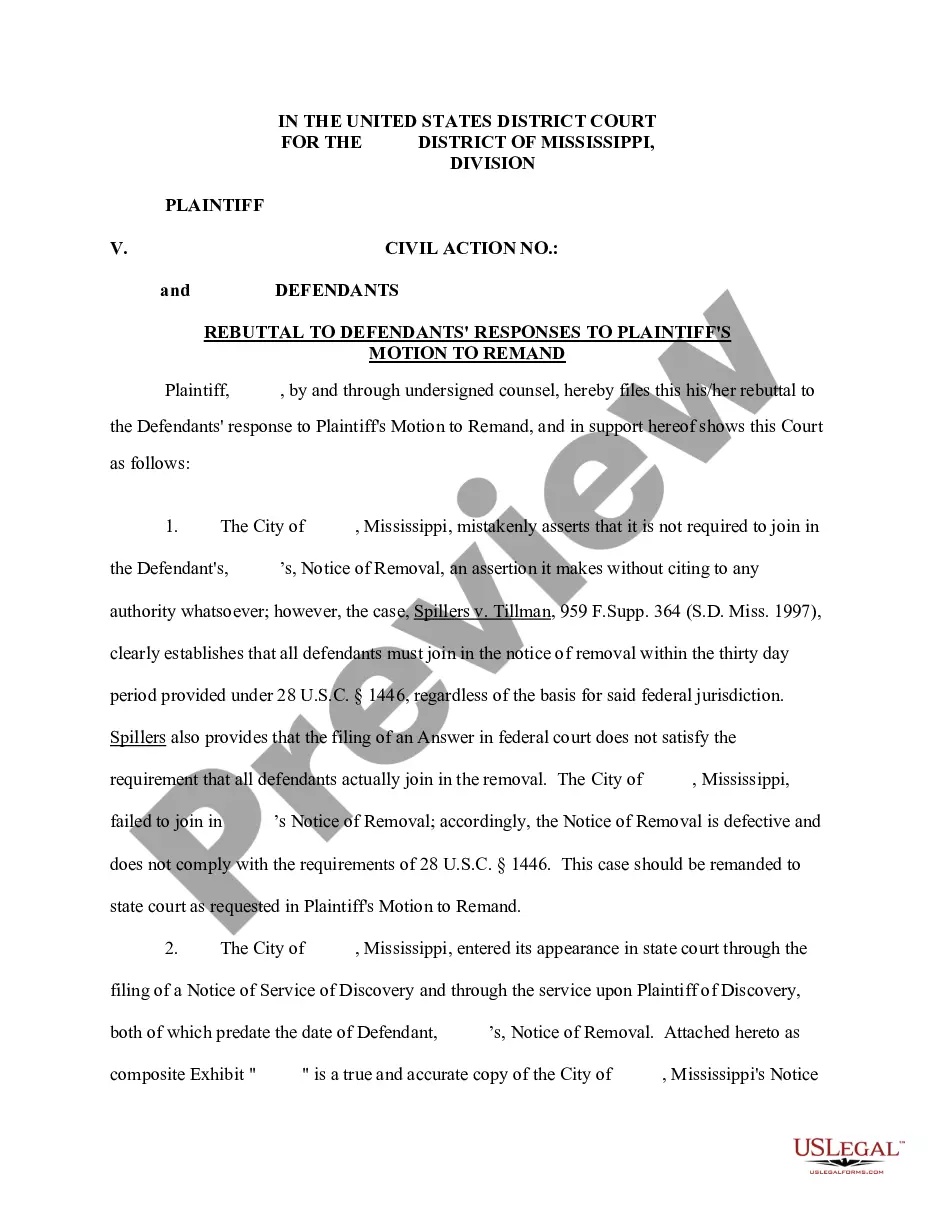
Situations where this form applies
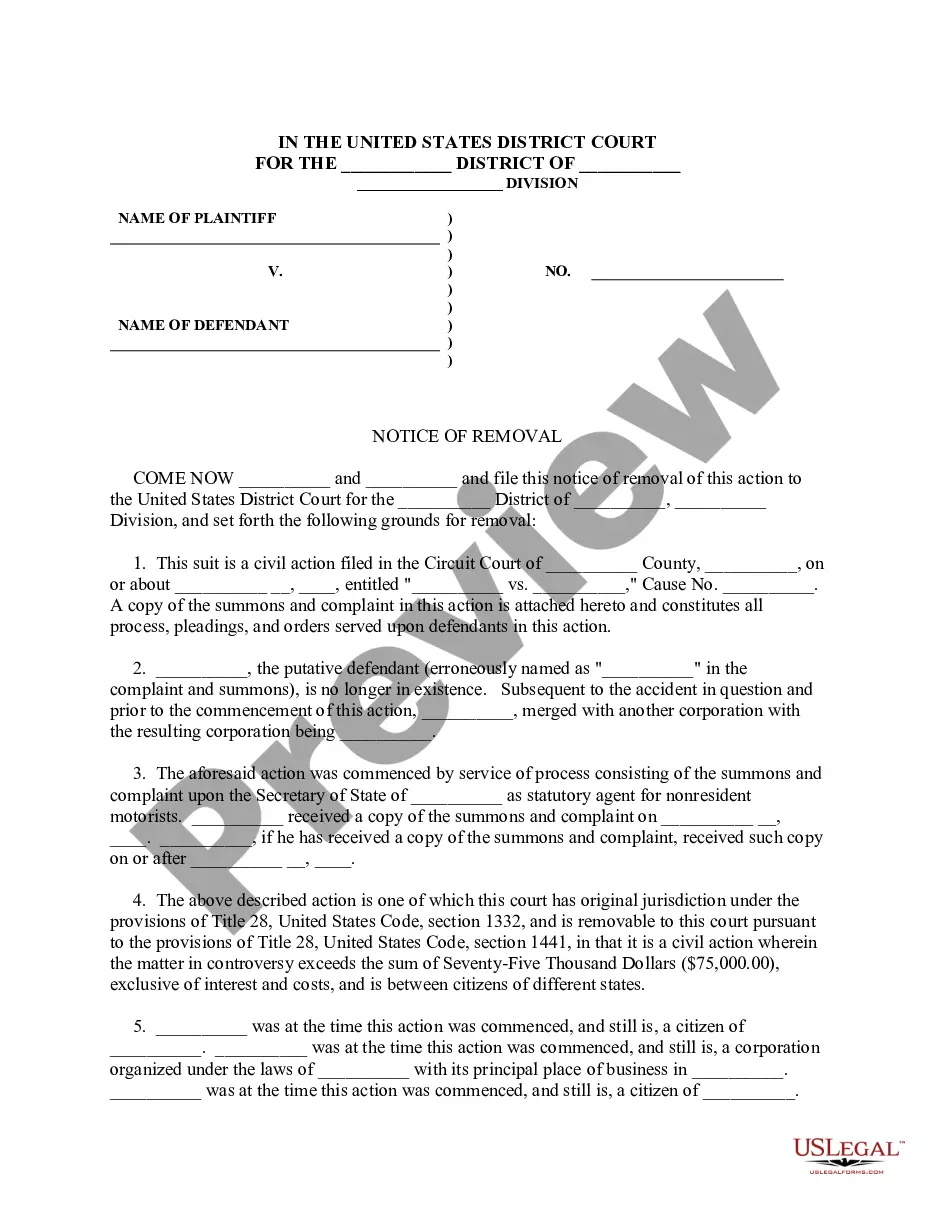
This form should be used when a party has had a case removed from state court to federal court and believes that jurisdiction is lacking. It is essential for parties who wish to return the case to state jurisdiction, particularly when there are no substantial federal questions involved or when the case does not meet the requirements for federal jurisdiction.
Who can use this document
- Plaintiffs seeking to remand their case back to state court.
- Attorneys representing clients involved in jurisdictional disputes.
- Parties who believe that the federal court lacks jurisdiction over their case.
How to complete this form
- Gather facts relevant to your case that support the motion for remand.
- Identify and articulate the jurisdictional issues that justify remanding to state court.
- Clearly outline your legal arguments and refer to any relevant evidence or objections.
- Include a respectful conclusion requesting the court to remand the case.
- Sign and date the document before filing with the appropriate court.
Does this document require notarization?
Notarization is not commonly needed for this form. However, certain documents or local rules may make it necessary. Our notarization service, powered by Notarize, allows you to finalize it securely online anytime, day or night.
Get your form ready online
Our built-in tools help you complete, sign, share, and store your documents in one place.
Make edits, fill in missing information, and update formatting in US Legal Forms—just like you would in MS Word.
Download a copy, print it, send it by email, or mail it via USPS—whatever works best for your next step.
Sign and collect signatures with our SignNow integration. Send to multiple recipients, set reminders, and more. Go Premium to unlock E-Sign.
If this form requires notarization, complete it online through a secure video call—no need to meet a notary in person or wait for an appointment.
We protect your documents and personal data by following strict security and privacy standards.

Make edits, fill in missing information, and update formatting in US Legal Forms—just like you would in MS Word.

Download a copy, print it, send it by email, or mail it via USPS—whatever works best for your next step.

Sign and collect signatures with our SignNow integration. Send to multiple recipients, set reminders, and more. Go Premium to unlock E-Sign.

If this form requires notarization, complete it online through a secure video call—no need to meet a notary in person or wait for an appointment.

We protect your documents and personal data by following strict security and privacy standards.
Avoid these common issues
- Failing to properly cite jurisdictional statutes, which can weaken the motion.
- Not including all relevant facts, leading to an incomplete picture of the case.
- Missing deadlines for filing the motion, which can lead to dismissal.
- Overlooking local court rules that may affect the format or submission process.
Benefits of using this form online
- Convenience: Download and complete the form at your own pace.
- Editability: Customize the details to fit your specific case requirements.
- Reliability: Access legally vetted templates created by licensed attorneys.
Looking for another form?
Form popularity
FAQ
The motion must include a separate "Notice of Motion" which includes a brief summary of the nature of the motion, the deadline for filing a response, and if there is a hearing, the date, time, and location of the hearing.
A document that cites (refers to) legal authorities such as statutes and court cases, and explains how those authorities support the position advocated by the party who wrote the memorandum. Often written to support a motion.
A "memorandum of law" or a "memorandum of points and authorities" "briefs" the court, i.e., explains to the court the legal authority, consisting of both decisional and statutory law, which supports the moving party's request.
N. a formal request made to a judge for an order or judgment.Most motions require a written petition, a written brief of legal reasons for granting the motion (often called "points and authorities"), written notice to the attorney for the opposing party and a hearing before a judge.
A legal brief is a document that makes an argument as to why the person filing the brief should win the case or otherwise see his motion granted. This document contains the issues in dispute, the facts of the matter, and arguments in support of the party's position.
Motions are not pleadings but are requests for the judge to make a legal ruling. Some of the most common pre-trial motions include: Motion to Discover. A motion by which one party seeks to gain information from the adverse party.
A case brief is a dissection of a judicial opinion -- it contains a written summary of the basic components of that decision.Persuasive briefs (trial and appellate) are the formal documents a lawyer files with a court in support of his or her client's position.
An informal record, in the form of a brief written note or outline, of a particular legal transaction or document for the purpose of aiding the parties in remembering particular points or for future reference. A memorandum may be used in court to prove that a particular contract was made.