Mississippi Warranty Deed from Individual to LLC
Overview of this form
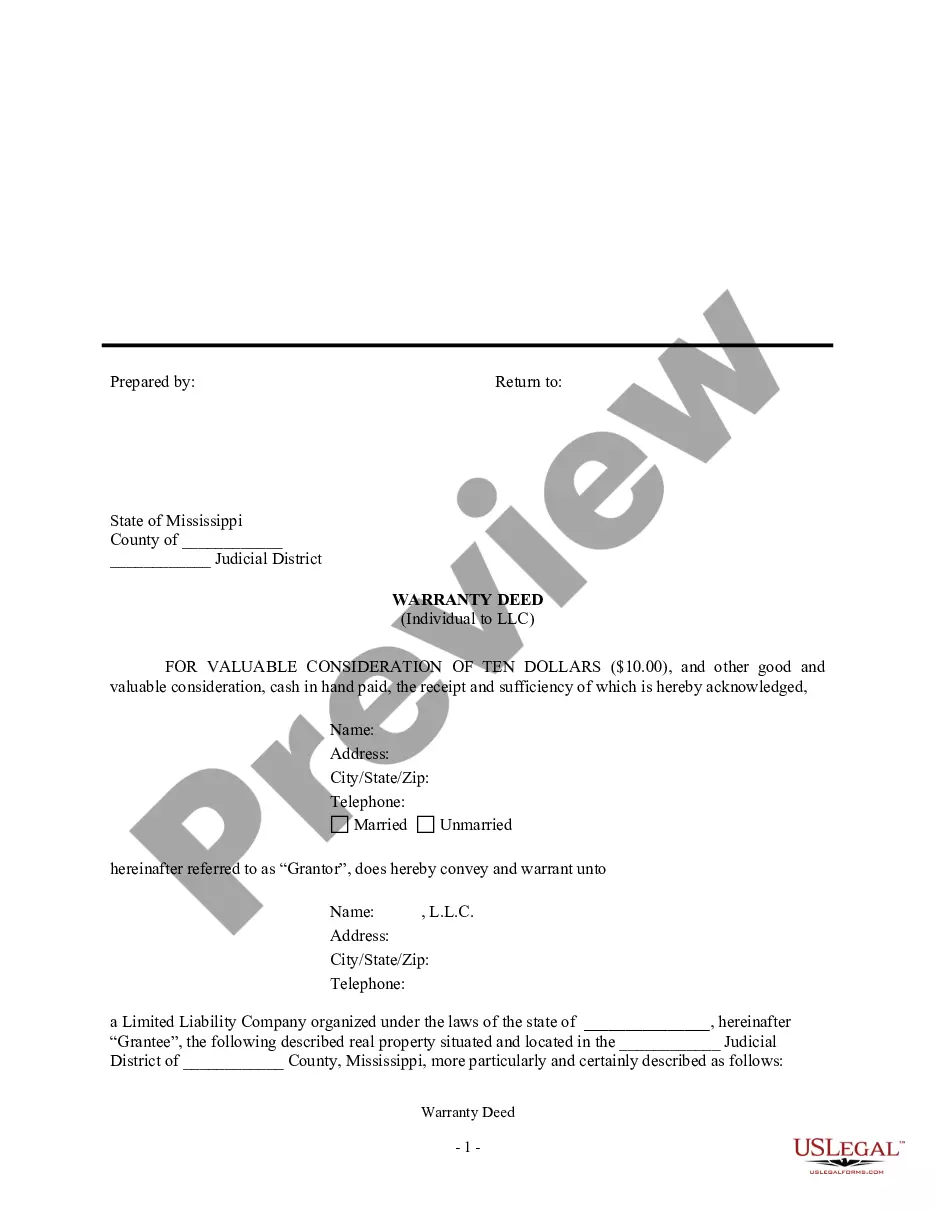
The Warranty Deed from Individual to LLC is a legal document that facilitates the transfer of real estate from an individual (the grantor) to a limited liability company (the grantee). This form serves to establish ownership and provide certain guarantees about the property being conveyed, while excluding mineral rights under the property. It is specifically different from other types of deeds, such as quitclaim deeds, which do not guarantee clear title. This form is essential for individuals looking to formalize the transfer of property into an LLC structure, offering liability protection and operational benefits.
Key components of this form
- Identification of the grantor and the grantee
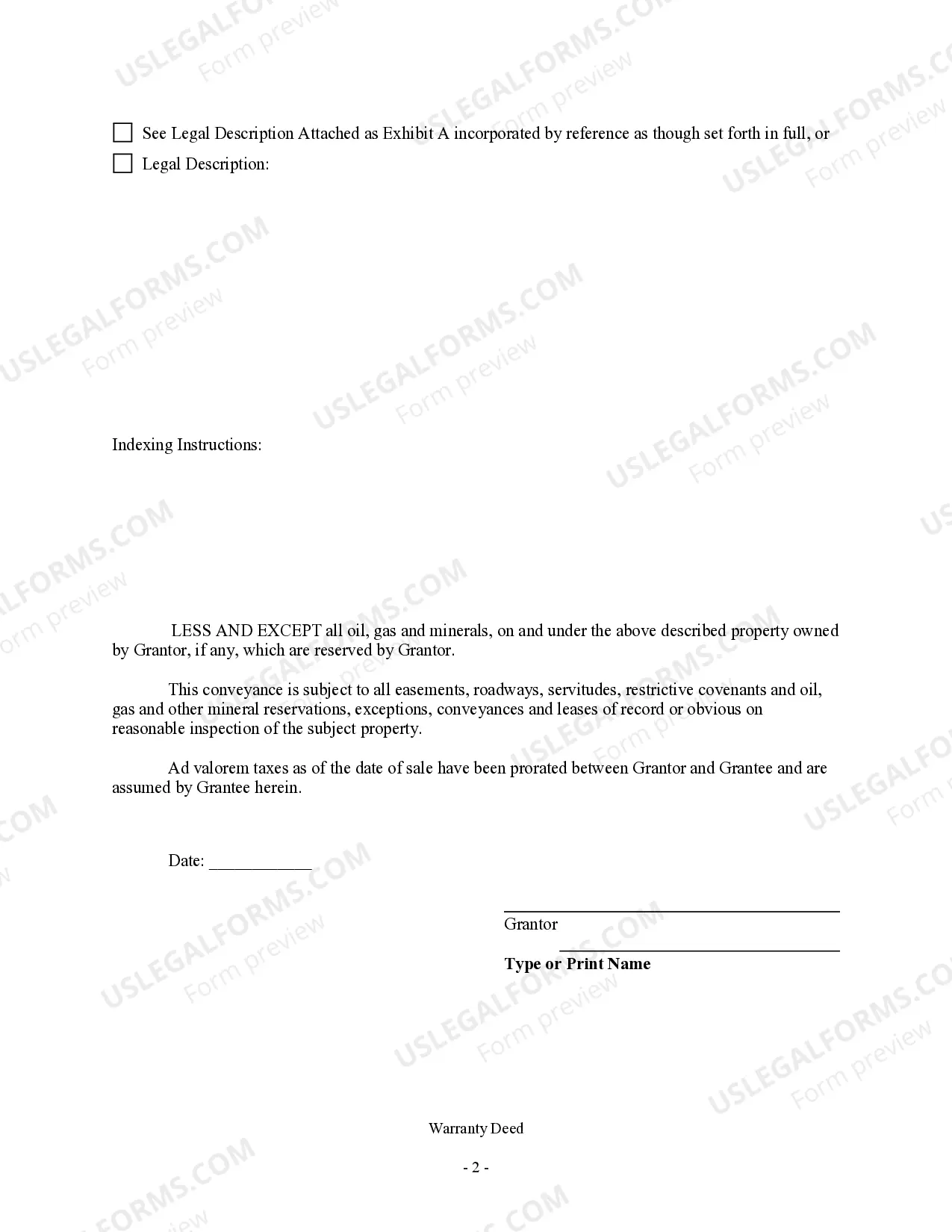
- Legal property description, usually attached as an exhibit
- Consideration amount, typically stating a nominal value
- Warranties provided by the grantor regarding the property title
- Reservation of rights to oil, gas, and minerals, if applicable





When to use this form
This form should be used when an individual wants to transfer ownership of real property to a limited liability company. Scenarios include when a property owner wants to limit personal liability, simplify property management under an LLC framework, or prepare for business-related real estate transactions. It can also be relevant in estate planning and asset protection contexts.
Who can use this document
- Property owners looking to transfer their assets to an LLC
- Entrepreneurs setting up an LLC for real estate investments
- Individuals seeking liability protection for their real estate assets
- Real estate professionals assisting clients with property transfers
How to prepare this document
- Identify the parties involved: the grantor (individual) and the grantee (LLC).
- Provide the legal description of the property being transferred, attaching it as an exhibit if necessary.
- State the consideration amount, which is often a nominal value for legal purposes.
- Include any reservations regarding oil, gas, and mineral rights, if applicable.
- Obtain the grantor's signature to finalize the transfer.
Is notarization required?
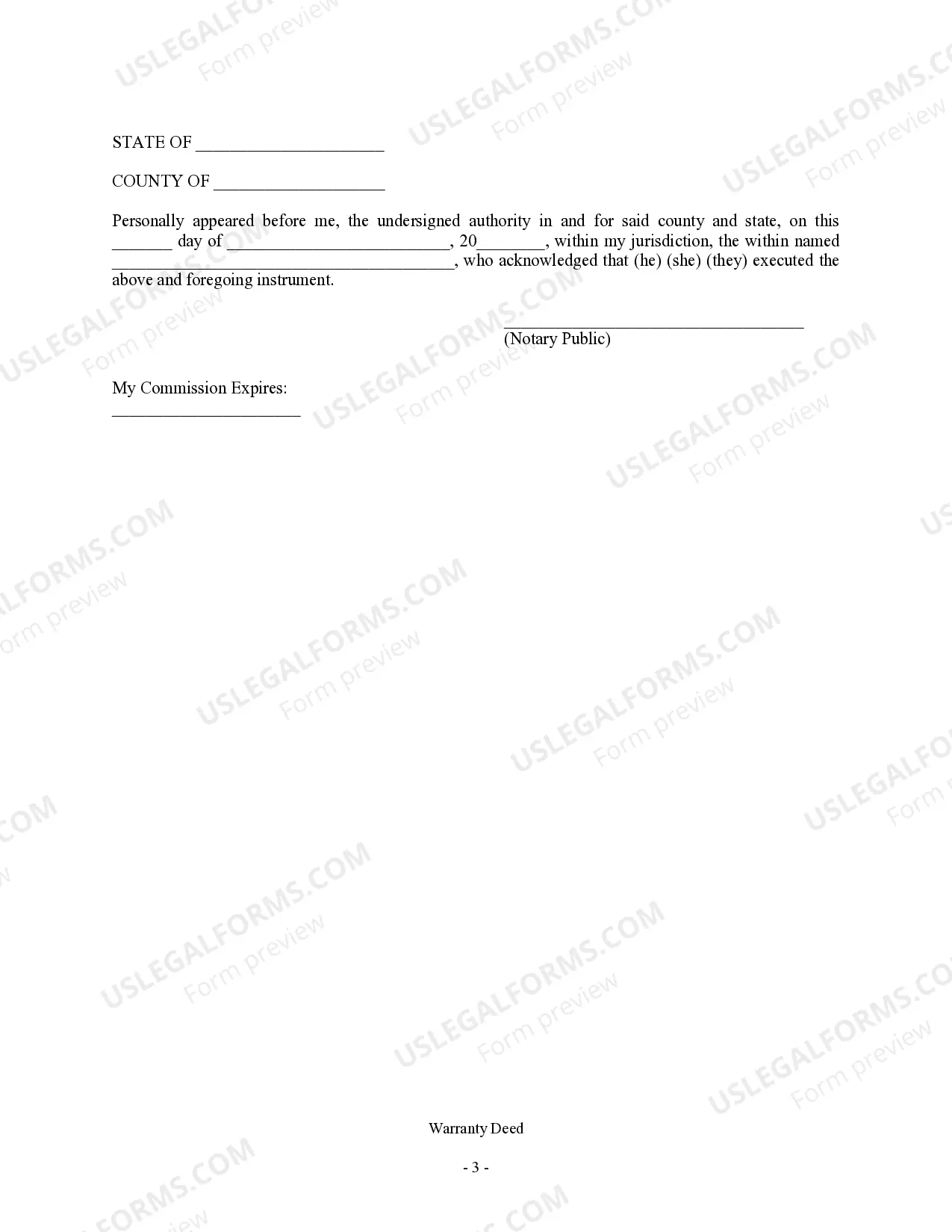
To make this form legally binding, it must be notarized. Our online notarization service, powered by Notarize, lets you verify and sign documents remotely through an encrypted video session.
Get your form ready online
Our built-in tools help you complete, sign, share, and store your documents in one place.
Make edits, fill in missing information, and update formatting in US Legal Forms—just like you would in MS Word.
Download a copy, print it, send it by email, or mail it via USPS—whatever works best for your next step.
Sign and collect signatures with our SignNow integration. Send to multiple recipients, set reminders, and more. Go Premium to unlock E-Sign.
If this form requires notarization, complete it online through a secure video call—no need to meet a notary in person or wait for an appointment.
We protect your documents and personal data by following strict security and privacy standards.

Make edits, fill in missing information, and update formatting in US Legal Forms—just like you would in MS Word.

Download a copy, print it, send it by email, or mail it via USPS—whatever works best for your next step.

Sign and collect signatures with our SignNow integration. Send to multiple recipients, set reminders, and more. Go Premium to unlock E-Sign.

If this form requires notarization, complete it online through a secure video call—no need to meet a notary in person or wait for an appointment.

We protect your documents and personal data by following strict security and privacy standards.
Typical mistakes to avoid
- Failing to provide a complete and accurate legal description of the property.
- Not confirming the LLC's name and legal status before the transfer.
- Overlooking signatures or not including required witnesses.
- Neglecting to consider local laws that may affect the deed's validity.
Why use this form online
- Instant access to a legally vetted template, ensuring accuracy and reliability.
- Easy to modify and tailor to meet specific needs and circumstances.
- Time-saving process, avoiding the complexities of in-person legal consultations.
- Convenient storage options for your legal documents, all in one place.
Looking for another form?

Form popularity
FAQ
Retrieve your original deed. Get the appropriate deed form. Draft the deed. Sign the deed before a notary. Record the deed with the county recorder. Obtain the new original deed.
Generally, someone else cannot remove you from title without your consent and/or knowledge. You should speak to a local real estate attorney to see how to return your name to title and how it was removed in the first place.
The original deed is returned to the owner of the property from the office of the recorder after proper entry. The office of the Recorder of Deeds maintains a set of indexes about each deed recorded, for an easy search. Almost all states have a grantor-grantee index including a reference to all documents recorded.
Contrary to normal expectations, the Deed DOES NOT have to be recorded to be effective or to show delivery, and because of that, the Deed DOES NOT have to be signed in front of a Notary Public. However, if you plan to record it, then it does have to be notarized as that is a County Recorder requirement.
Typically, the lender will provide you with a copy of the deed of trust after the closing. The original warranty deeds are often mailed to the grantee after they are recorded. These are your original copies and should be kept in a safe place, such as a fireproof lockbox or a safe deposit box at a financial institution.
Once signed and notarized, a Mississippi deed must be recorded. The deed must be presented to the Recorder of Deeds in the county where the property is located. The transfer takes effect when signed and accepted by the grantee. However, recording provides notice to the public that the property was transferred.
The Mississippi general warranty deed is used to transfer real property in Mississippi with a guarantee from the seller or grantor that the property is free from hidden claims against the title and that the grantor has the legal authority to sell the property.
Before a quitclaim deed can be recorded with a county recorder in Mississippi, the grantor must sign and acknowledge it. The names, addresses, and telephone numbers of the grantors and grantees to the quit claim deed, along with a legal description of the real property should be provided on the first page (89-5-24).
Once signed and notarized, a Mississippi deed must be recorded. The deed must be presented to the Recorder of Deeds in the county where the property is located. The transfer takes effect when signed and accepted by the grantee. However, recording provides notice to the public that the property was transferred.