Mississippi Assignment of Contract for Deed by Seller
What is this form?
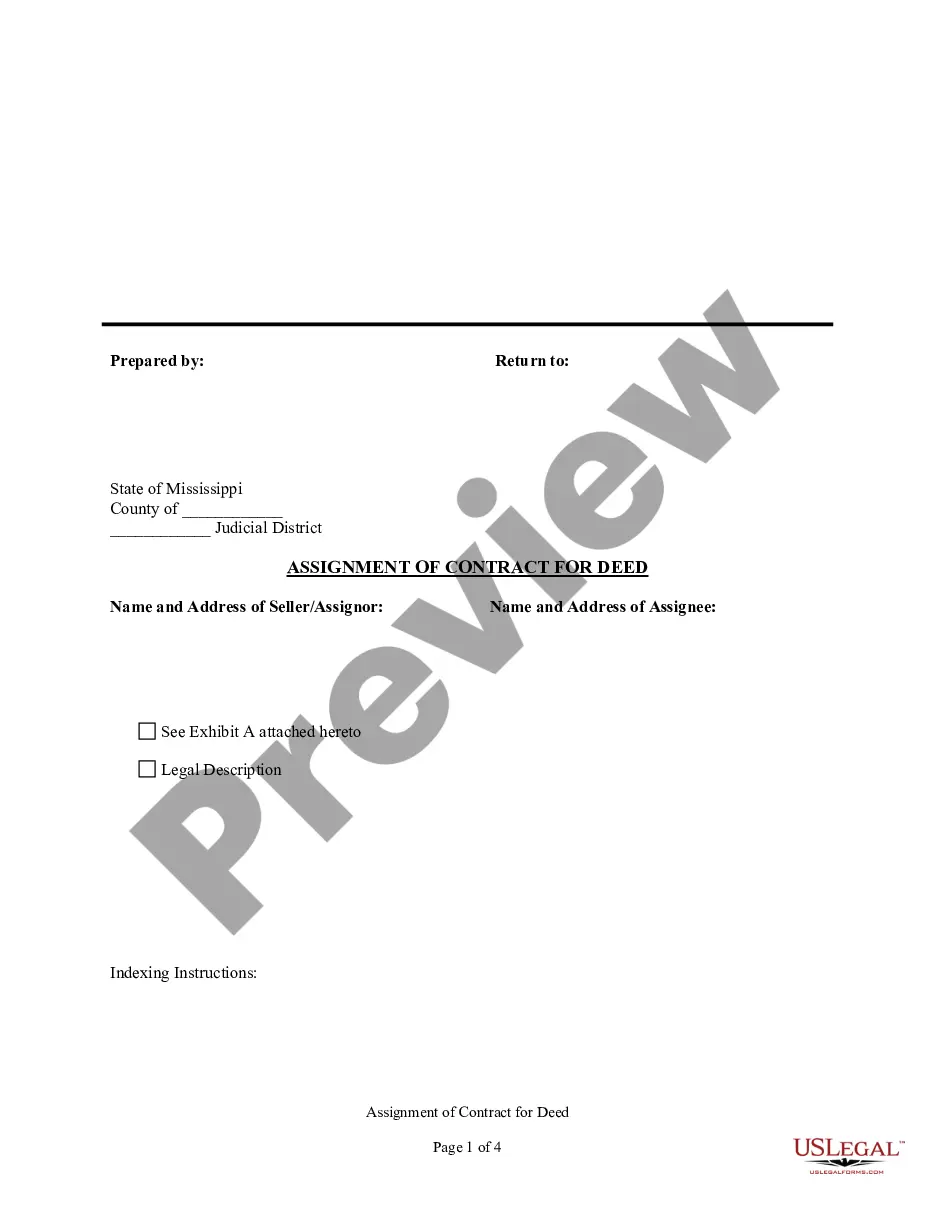
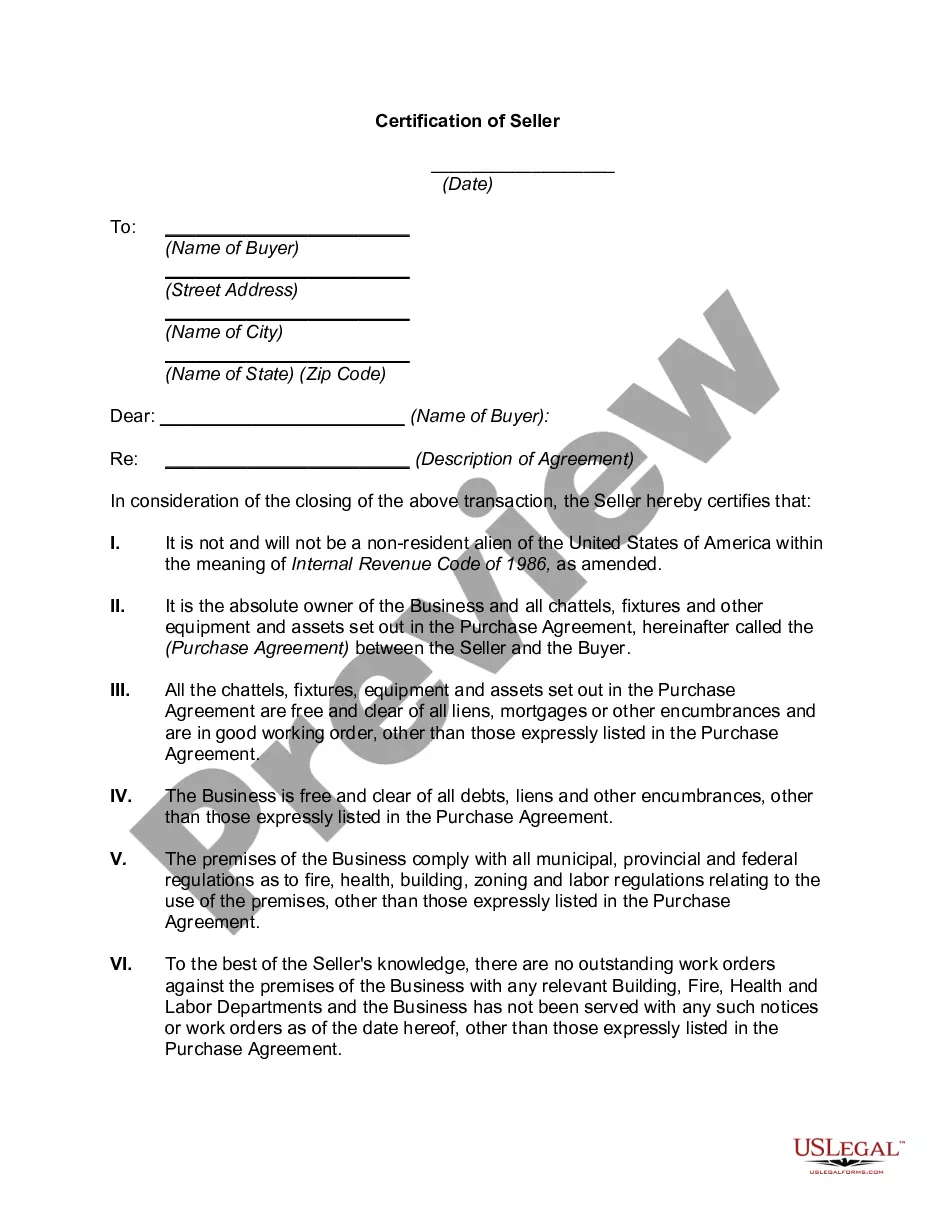
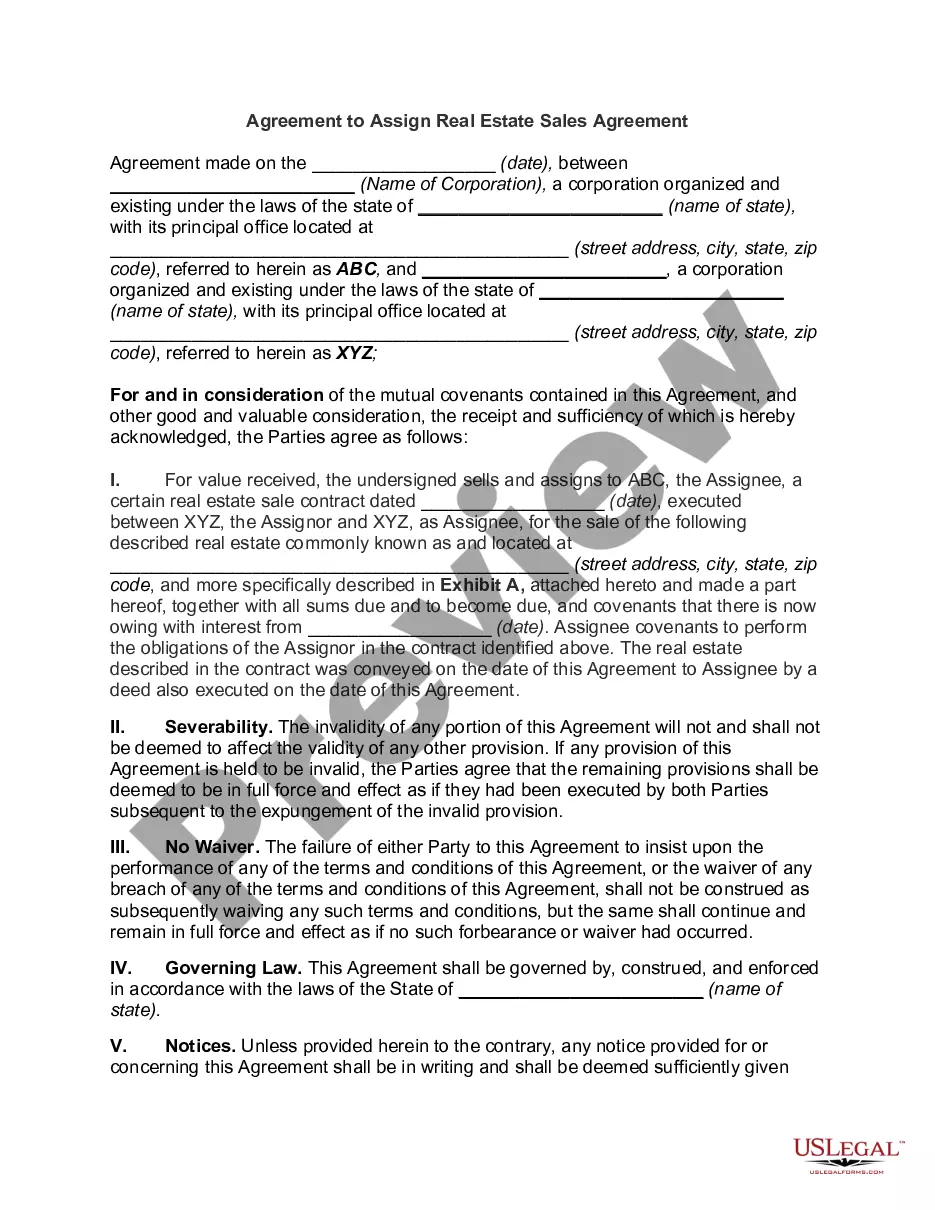
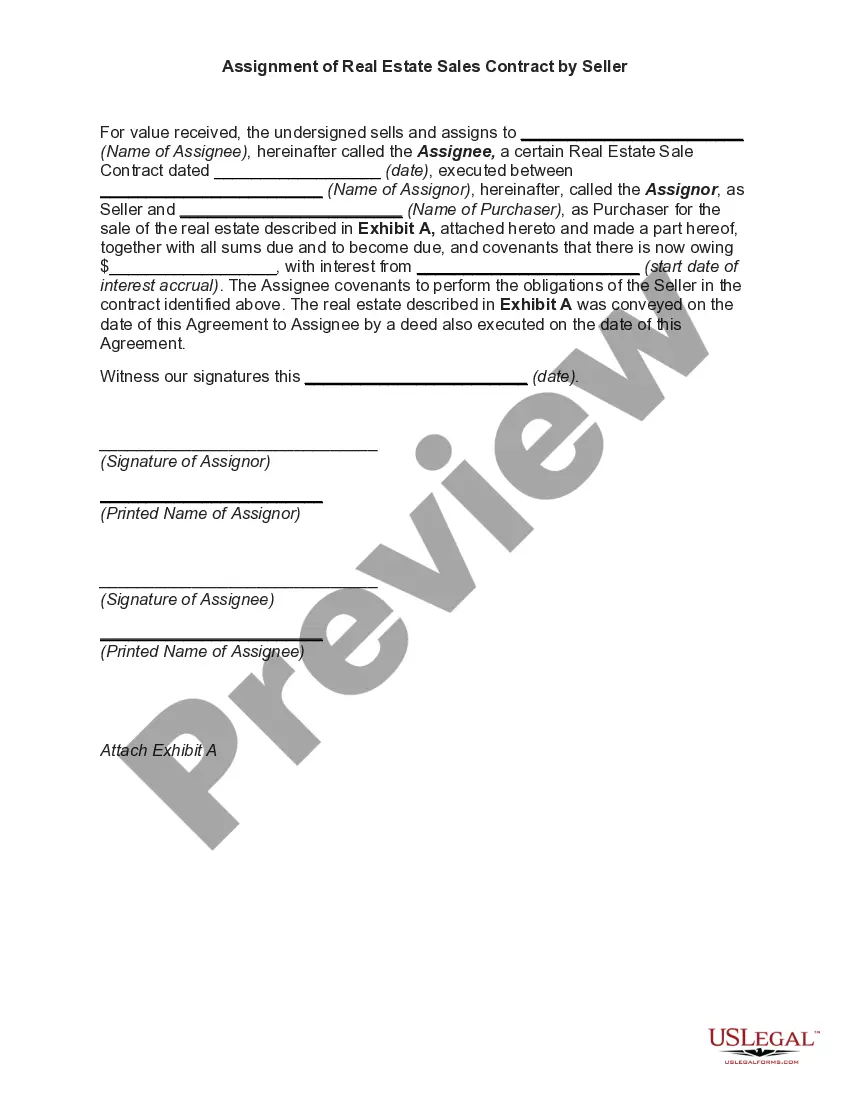
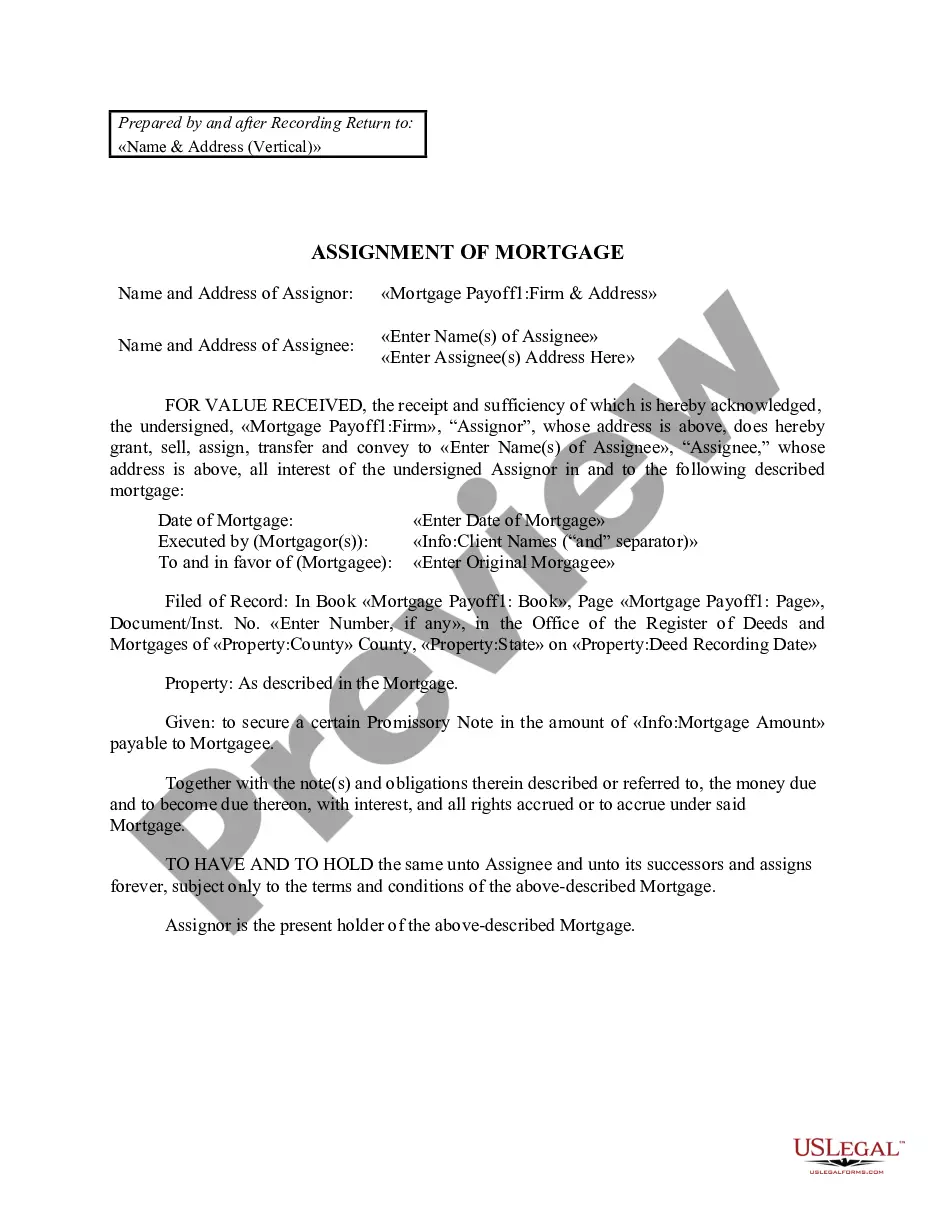
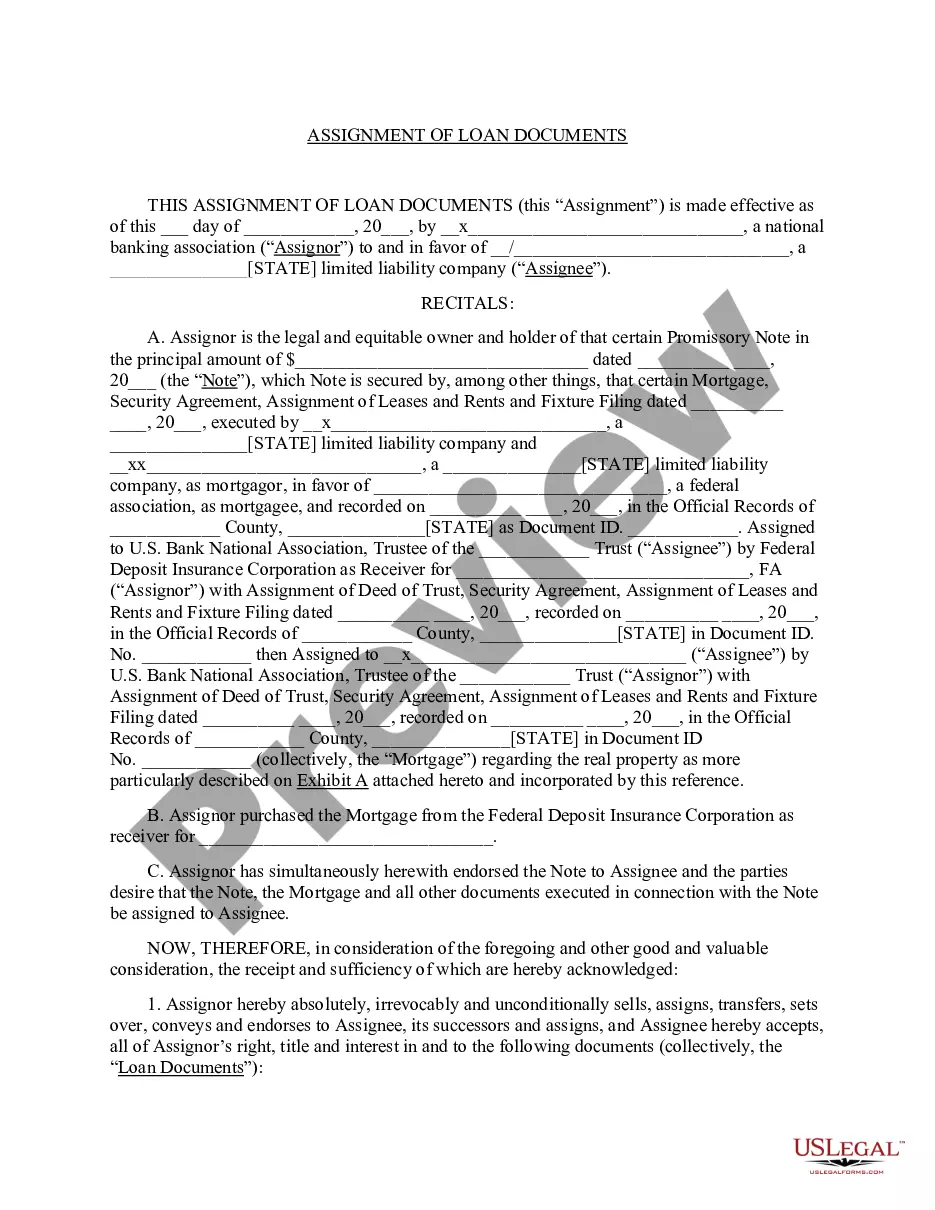
The Assignment of Contract for Deed by Seller is a legal document that allows a Seller to transfer their rights and obligations under a contract for deed to a third party. This form differs from other agreements as it enables the assignee to assume the Seller's position, effectively stepping into their shoes and receiving future payments from the Purchaser. It is typically used when a Seller wishes to receive a discounted cash value for the contract rather than continuing its enforcement.
Key components of this form
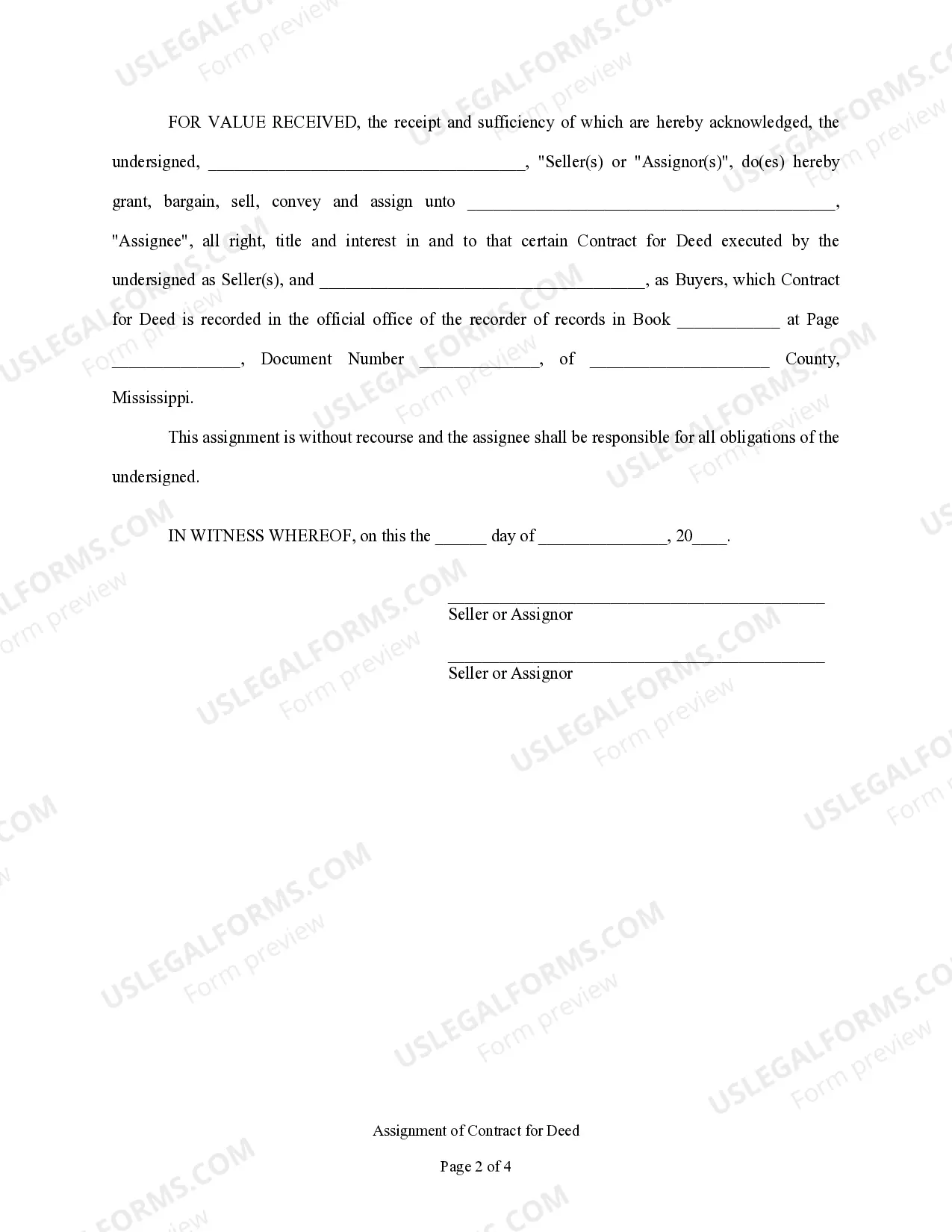
- Assignment clause which outlines the transfer of rights from Seller to Assignee.
- Statement of responsibilities, specifying that the Assignee assumes the Seller's obligations.
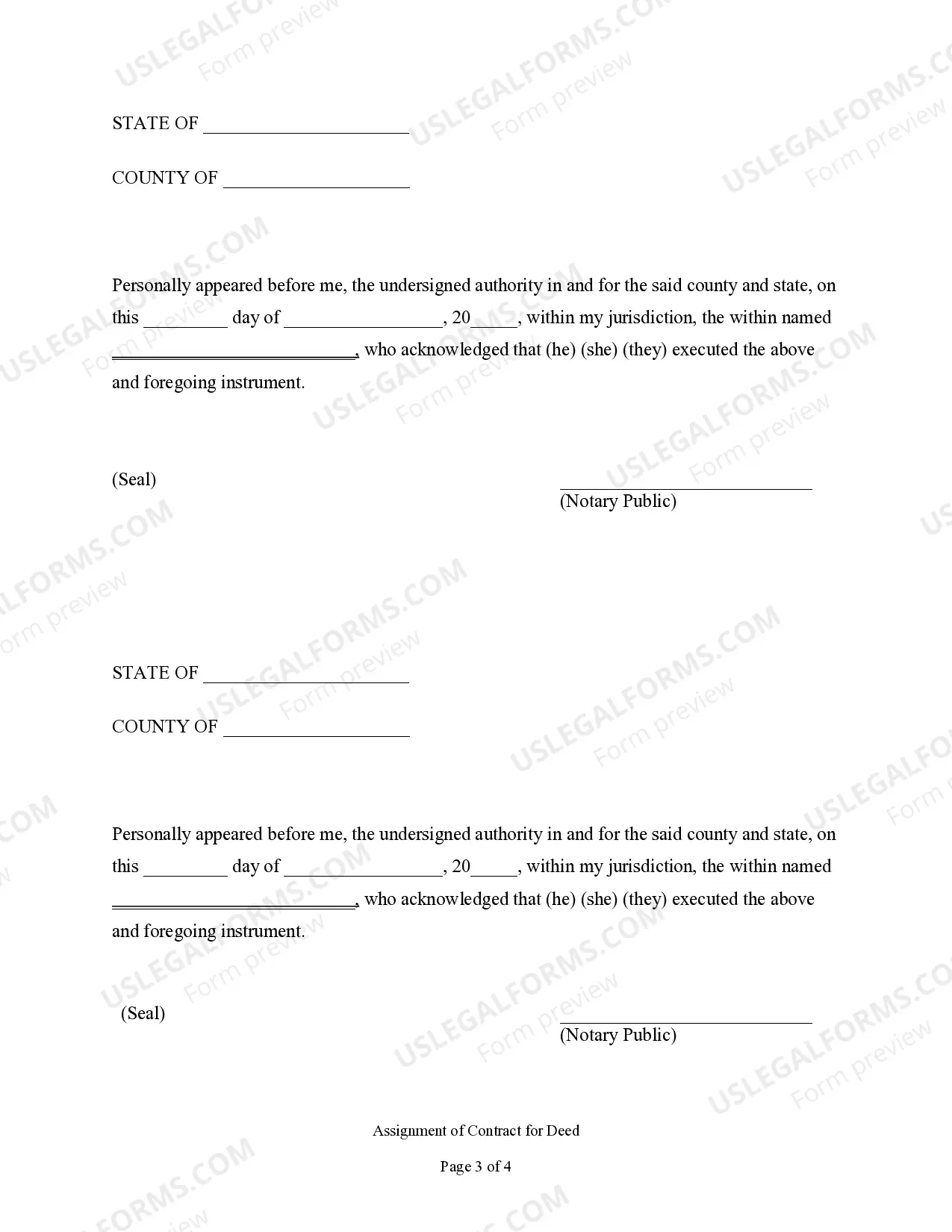
- Notary section where the signature of a notary public is required for validation.
- Date fields for recording when the assignment takes place.
- Signature blocks for both the Seller and the Assignee to confirm the transfer.

Common use cases
This form is useful in scenarios where a Seller has entered a contract for deed but now wishes to transfer that contract to another party. This might occur when the Seller needs immediate cash, or if they are unable to fulfill their obligations under the original contract and want to pass the responsibilities to someone else. Additionally, if the Seller prefers to convey ownership of the property to the Assignee upon request, this document is essential.
Who needs this form
This form is intended for:
- Individuals who have previously signed a contract for deed as Sellers.
- Third parties who are willing to assume the Seller's contract and future payment obligations.
- Anyone looking to simplify the transfer of obligations without the need for lengthy negotiations.
Completing this form step by step
- Identify the parties involved: the Seller and the Assignee.
- Specify the details of the contract for deed being assigned.
- Enter the date of the assignment.
- Ensure both the Seller and the Assignee sign the document.
- Have the signature of a notary public to authenticate the transaction.
Notarization guidance
To make this form legally binding, it must be notarized. Our online notarization service, powered by Notarize, lets you verify and sign documents remotely through an encrypted video session.
Get your form ready online
Our built-in tools help you complete, sign, share, and store your documents in one place.
Make edits, fill in missing information, and update formatting in US Legal Forms—just like you would in MS Word.
Download a copy, print it, send it by email, or mail it via USPS—whatever works best for your next step.
Sign and collect signatures with our SignNow integration. Send to multiple recipients, set reminders, and more. Go Premium to unlock E-Sign.
If this form requires notarization, complete it online through a secure video call—no need to meet a notary in person or wait for an appointment.
We protect your documents and personal data by following strict security and privacy standards.

Make edits, fill in missing information, and update formatting in US Legal Forms—just like you would in MS Word.

Download a copy, print it, send it by email, or mail it via USPS—whatever works best for your next step.

Sign and collect signatures with our SignNow integration. Send to multiple recipients, set reminders, and more. Go Premium to unlock E-Sign.

If this form requires notarization, complete it online through a secure video call—no need to meet a notary in person or wait for an appointment.

We protect your documents and personal data by following strict security and privacy standards.
Typical mistakes to avoid
- Failing to have the form notarized when required.
- Not fully identifying all parties involved in the assignment.
- Neglecting to clearly specify the contract details that are being assigned.
- Rushing the process without understanding the implications of the assignment.
Advantages of online completion
- Convenience of downloading and completing the form at your own pace.
- Editable templates ensure you can customize the document to suit your needs.
- Access to reliable legal forms drafted by licensed attorneys.
Key takeaways
- The Assignment of Contract for Deed by Seller allows the transfer of a seller's rights to a third party.
- This form is crucial for sellers seeking to assign contracts without relinquishing their potential obligations to execute a deed.
- Ensure all parties provide accurate information and signatures for validity.
- Notarization is typically necessary in Mississippi to confirm the legal standing of the assignment.
Looking for another form?







Form popularity
FAQ
Generally, contract for deed sellers use IRS Form 6252 to report installment sales in the year in which they take place. You also use Form 6252 during each year you receive income from your contract for deed.
In the first instance, if your deed is not recorded, there is nothing in the public record to stop the seller from conveying the property to another person.The second situation could happen if your seller fails to pay his or her debts and the seller's creditors file liens or judgments against your property.
Find a motivated seller. First, let's understand what a motivated seller is. Get the contract. Submit contract to title. Assign the contract to the buyer. Get paid!
Purchase price. Down payment. Interest rate. Number of monthly installments. Responsibilities of the buyer and seller. Legal remedies for the seller if the buyer does not make payments.
Once signed and notarized, a Mississippi deed must be recorded. The deed must be presented to the Recorder of Deeds in the county where the property is located. The transfer takes effect when signed and accepted by the grantee. However, recording provides notice to the public that the property was transferred.
Find the right property. Acquire a real estate contract template. Submit the contract. Assign the contract. Collect the fee.
Once signed and notarized, a Mississippi deed must be recorded. The deed must be presented to the Recorder of Deeds in the county where the property is located. The transfer takes effect when signed and accepted by the grantee. However, recording provides notice to the public that the property was transferred.
The buyer should record the contract for deed with the county recorder where the land is located and does so normally within four months after the contract is signed, though the time may vary depending on state law.
The buyer must record the contract for deed with the county recorder where the land is located within four months after the contract is signed. Contracts for deed must provide the legal name of the buyer and the buyer's address.