Missouri Last Will and Testament for a Married Person with No Children
What this document covers
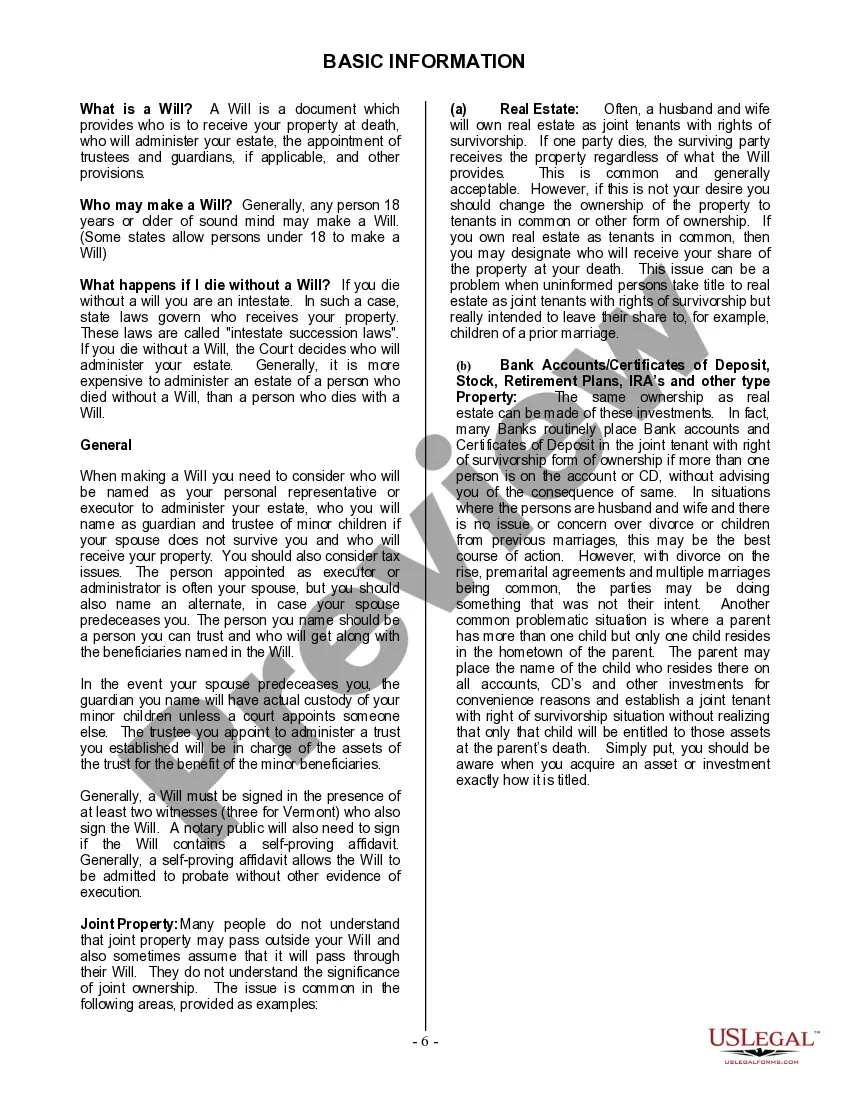
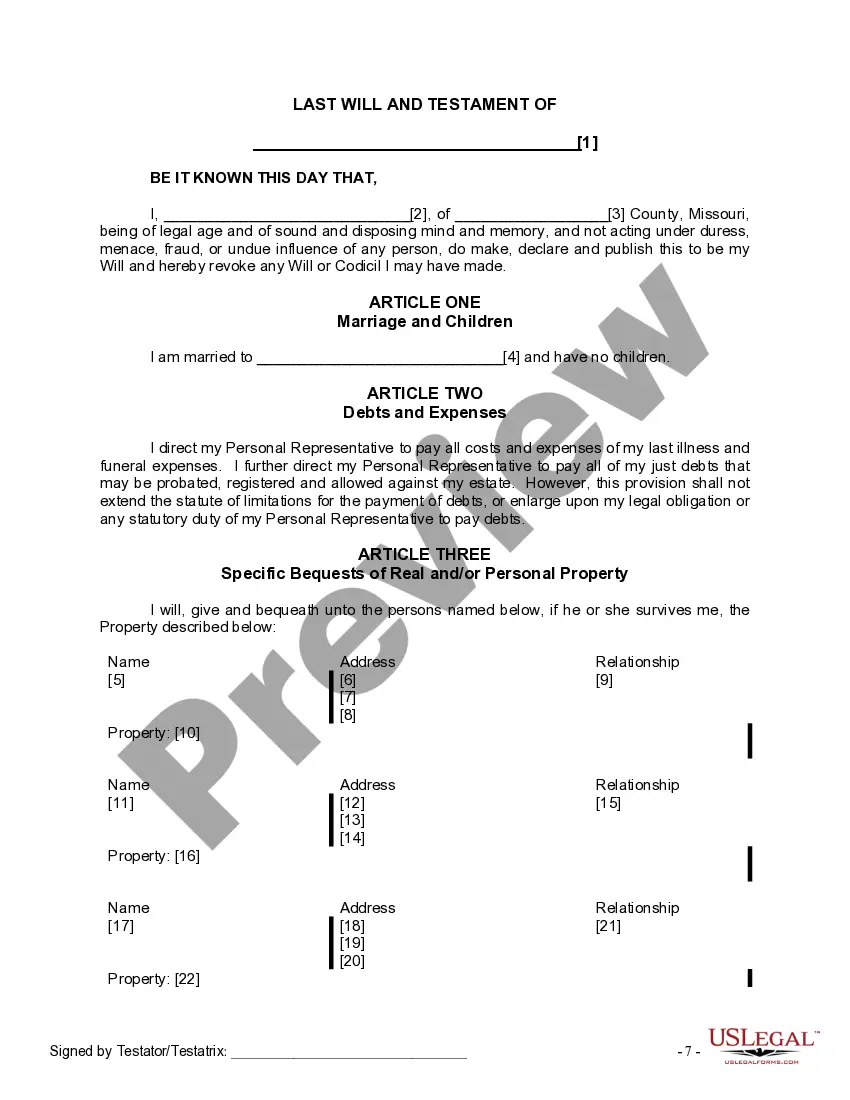
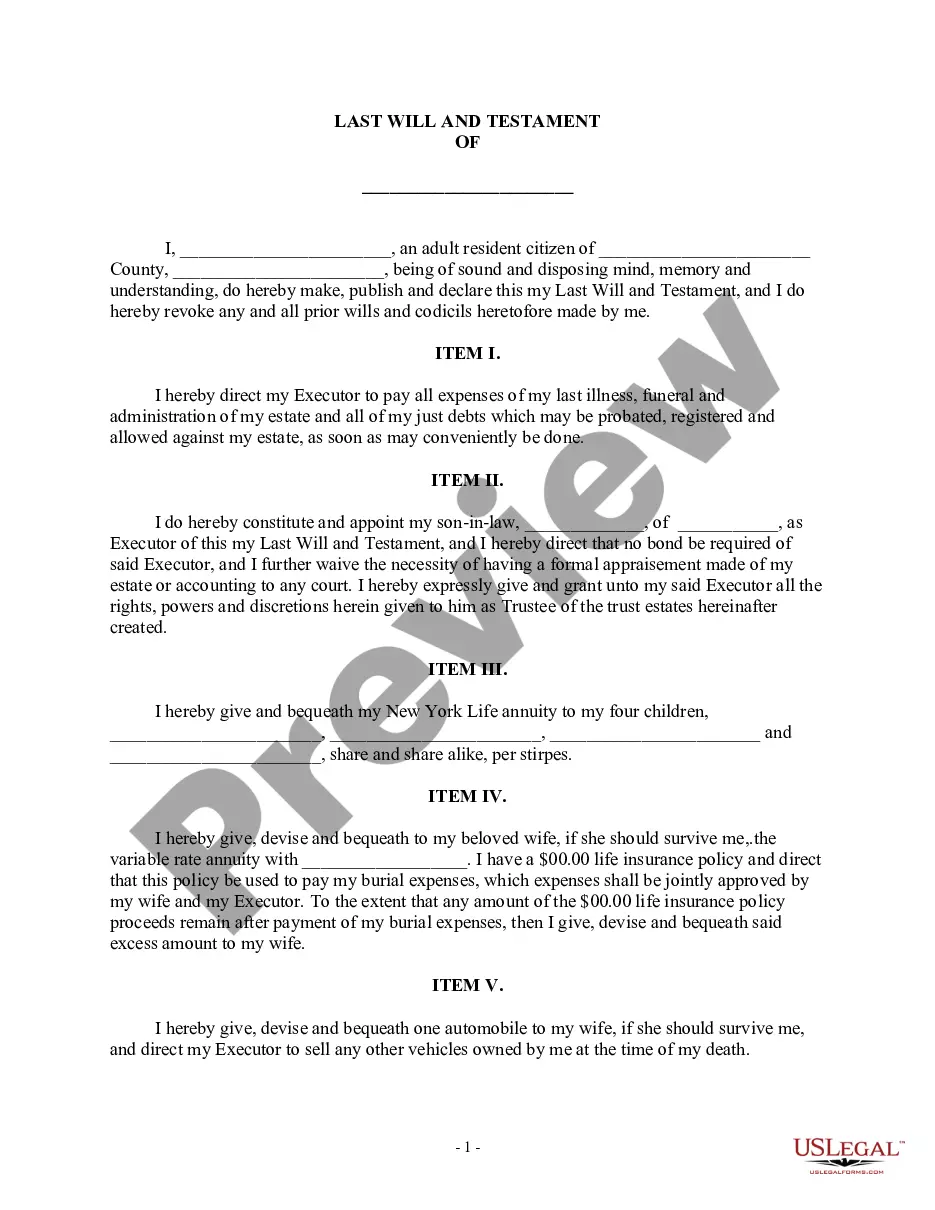
This Last Will and Testament for a Married Person with No Children is a legal document that outlines how your assets will be distributed after your death. Unlike a standard will that may include provisions for children, this form is specifically tailored for married couples without children, allowing for a straightforward transfer of property. It includes instructions and sections designed to clarify your wishes clearly and efficiently.
What’s included in this form
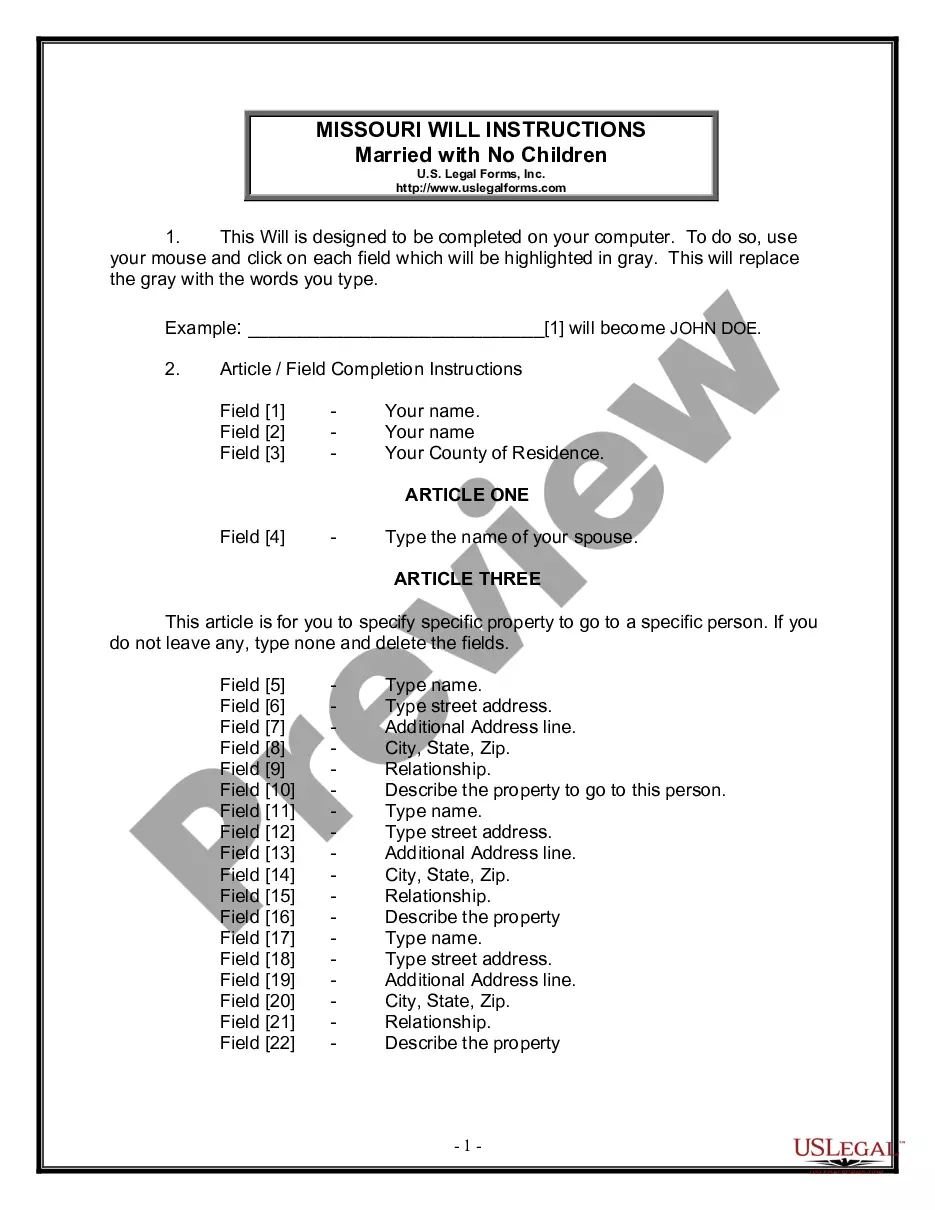
- Introduction: Revokes any previous wills and identifies the testator.
- Marriage and children declaration: States your marriage and absence of children.
- Debt and expenses: Directs the payment of debts and funeral costs.
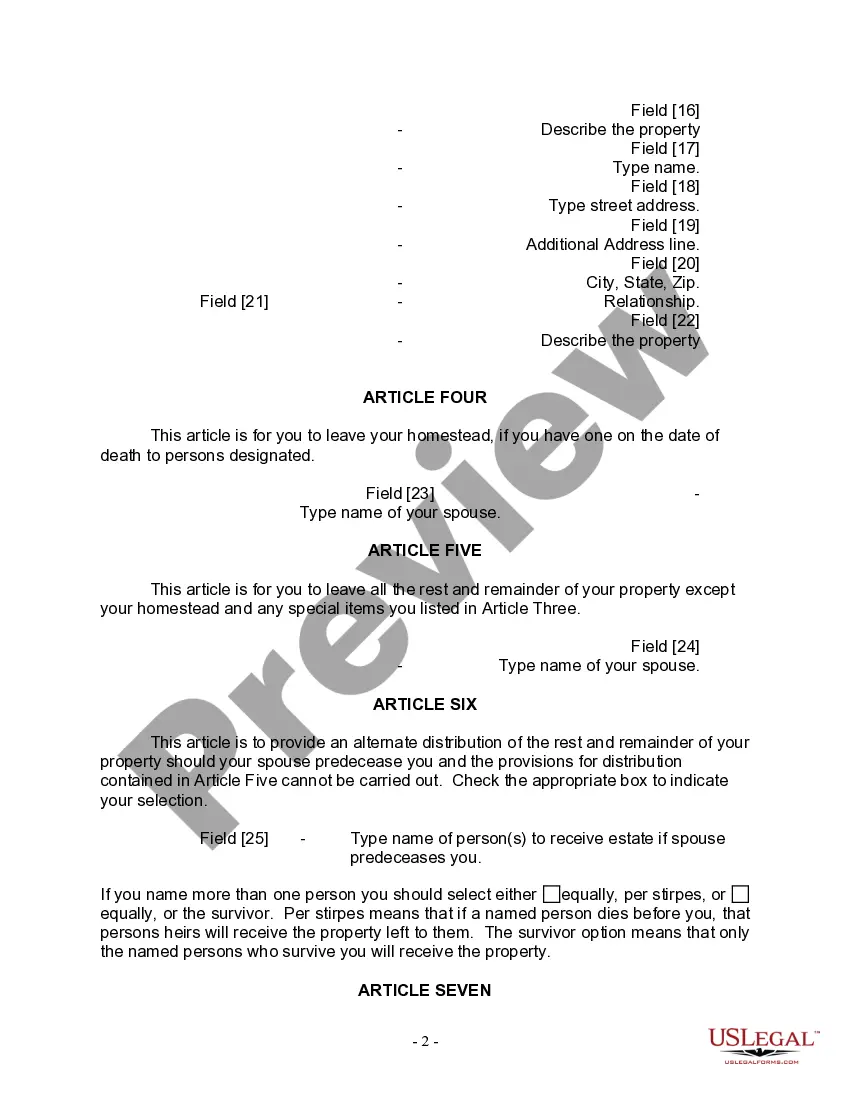
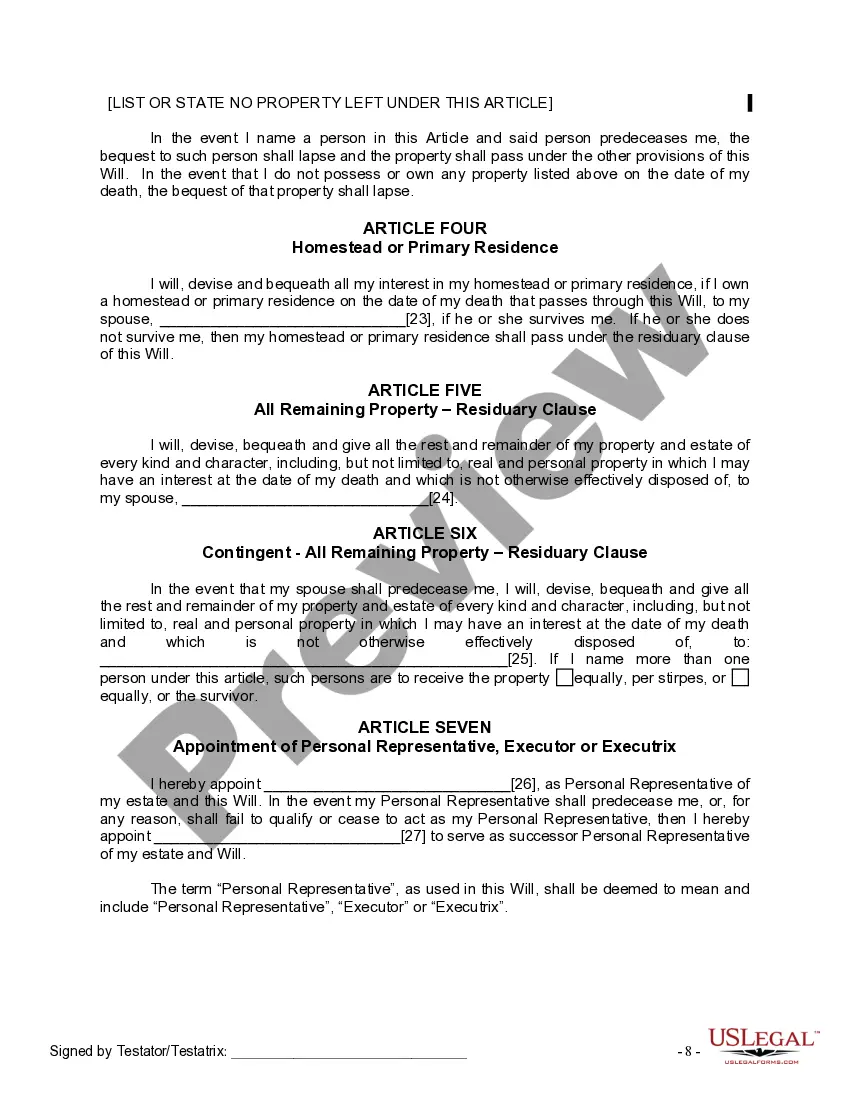
- Specific bequests: Allows you to leave specific assets to identified individuals.
- Homestead designation: Outlines provisions for your primary residence.
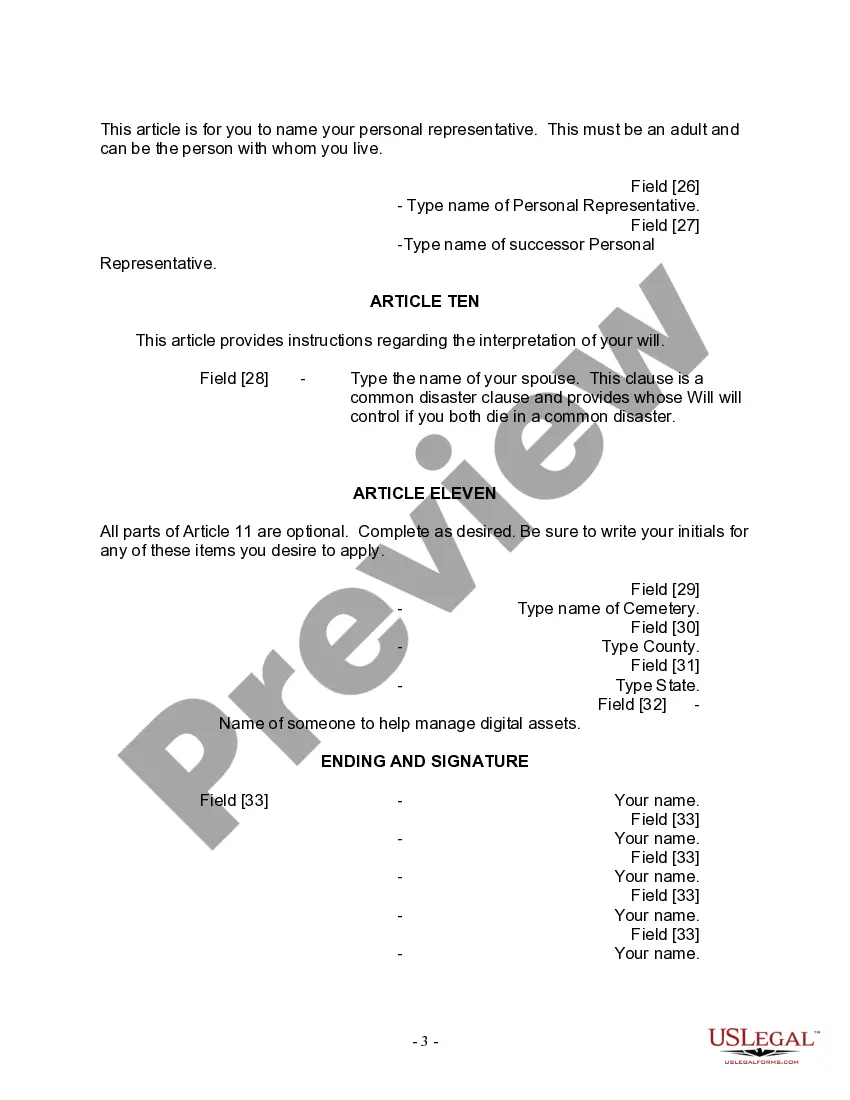
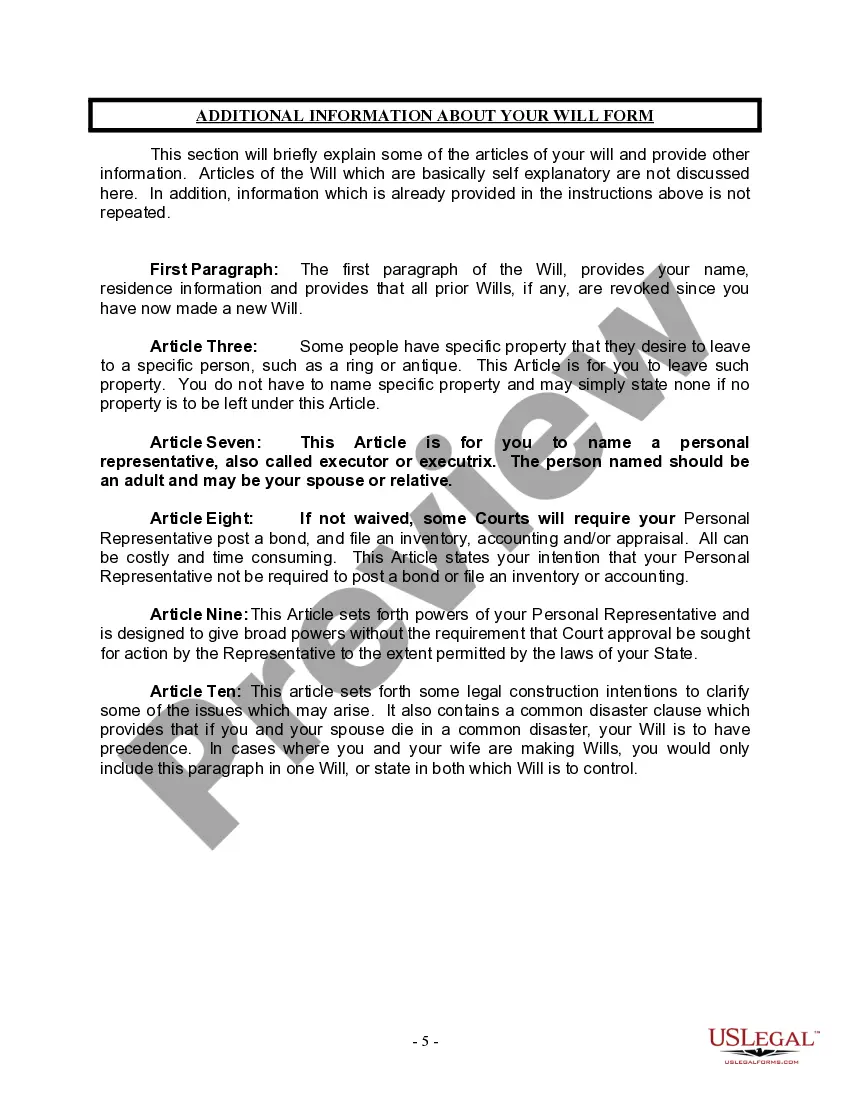
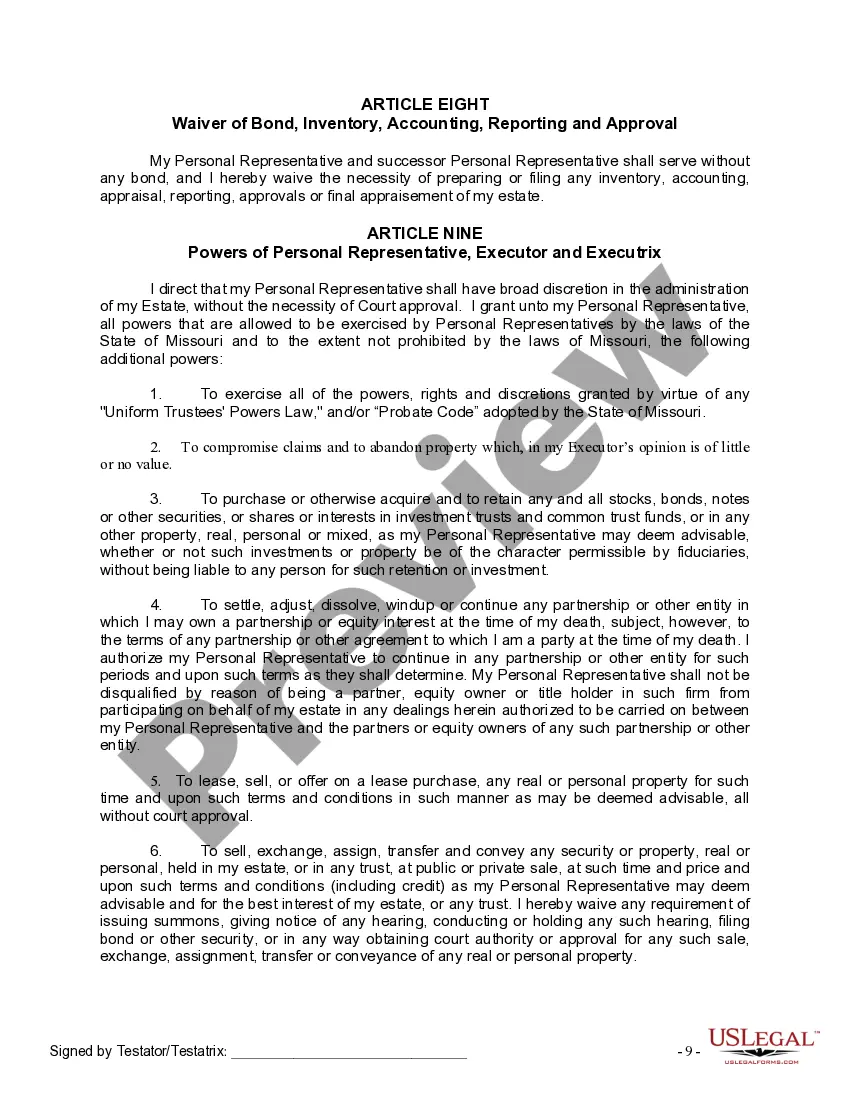
- Personal representative appointment: Names the person responsible for administering your estate.




Situations where this form applies
This Last Will and Testament is essential for married individuals with no children who wish to ensure their assets are distributed according to their preferences. Situations may include preparing for estate planning, addressing changes in financial status, or simply wanting peace of mind about your estate's future. It's particularly useful after significant life events, such as acquiring new assets or experiencing changes in marital status.
Who needs this form
- Married individuals without children.
- Couples wishing to clearly outline their estate distribution without including children in their will.
- Individuals wanting to ensure that their spouse is the primary beneficiary without complications.
Steps to complete this form
- Start by entering your name and county of residence at the designated fields.
- Clearly state your spouse's name in the appropriate sections.
- Specify any assets you wish to bequeath in the section for specific bequests.
- Designate your homestead if applicable and include your personal representative's details.
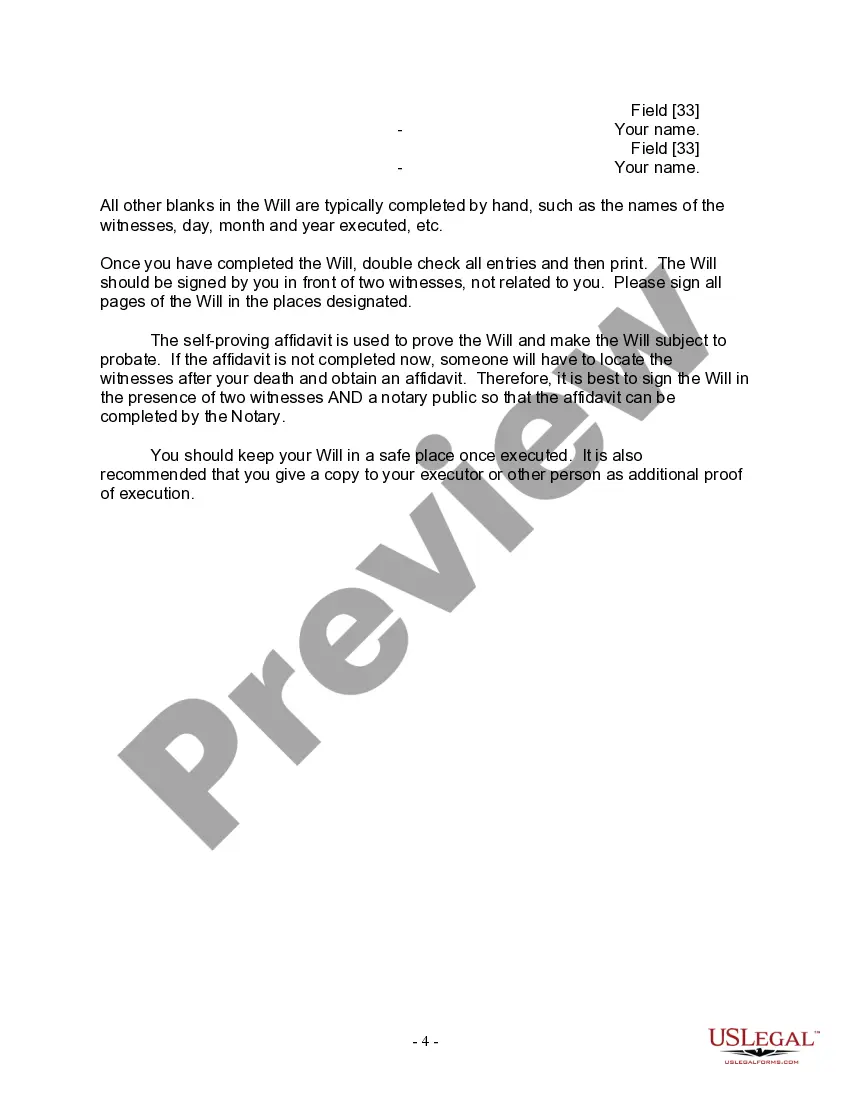
- Review the document for accuracy, then sign in front of two witnesses and, if desired, a notary public.
Notarization requirements for this form
Notarization is required for this form to take effect. Our online notarization service, powered by Notarize, lets you verify and sign documents remotely through an encrypted video session, available 24/7.
Get your form ready online
Our built-in tools help you complete, sign, share, and store your documents in one place.
Make edits, fill in missing information, and update formatting in US Legal Forms—just like you would in MS Word.
Download a copy, print it, send it by email, or mail it via USPS—whatever works best for your next step.
Sign and collect signatures with our SignNow integration. Send to multiple recipients, set reminders, and more. Go Premium to unlock E-Sign.
If this form requires notarization, complete it online through a secure video call—no need to meet a notary in person or wait for an appointment.
We protect your documents and personal data by following strict security and privacy standards.

Make edits, fill in missing information, and update formatting in US Legal Forms—just like you would in MS Word.

Download a copy, print it, send it by email, or mail it via USPS—whatever works best for your next step.

Sign and collect signatures with our SignNow integration. Send to multiple recipients, set reminders, and more. Go Premium to unlock E-Sign.

If this form requires notarization, complete it online through a secure video call—no need to meet a notary in person or wait for an appointment.

We protect your documents and personal data by following strict security and privacy standards.
Avoid these common issues
- Failing to include a personal representative, which can complicate the execution of the will.
- Not signing the will in front of required witnesses, leading to potential invalidation.
- Overlooking specific bequests, resulting in unintended distributions of property.
Benefits of completing this form online
- Convenience of completing the form from home without needing to meet with an attorney.
- Editability allows you to adjust your will easily if your circumstances change.
- Access to attorney-reviewed templates ensures reliability and legal compliance.
Summary of main points
- A Last Will and Testament is critical for directing how your assets should be handled after your death.
- This form is specifically tailored for married individuals without children.
- Proper completion and signing with witnesses are essential for the will to be legally binding.
Looking for another form?

Form popularity
FAQ
If there is no surviving spouse and no descendants, then the intestacy law usually dictates that the property is to be distributed to the closest living relative, based upon the Table of Consanguinity.When a person dies intestate and without heirs, then the property could escheat to the state.
If the natural parents die intestatewithout a willthe court appoints a guardian.Alternatively, a third party, such as a family friend, can petition the court to be appointed guardian. If the child has no surviving family members, they could become a ward of the state and enter the foster care system.
Bank accounts. Brokerage or investment accounts. Retirement accounts and pension plans. A life insurance policy.
Property in a living trust. One of the ways to avoid probate is to set up a living trust. Retirement plan proceeds, including money from a pension, IRA, or 401(k) Stocks and bonds held in beneficiary. Proceeds from a payable-on-death bank account.
Most single people should have a will. A will can help you determine who will get your property (including your home, business, pets, and digital assets), name guardians for your children, and name an executor. A will also puts your wishes in writing so there's no confusion about your intentions.