Missouri Final Notice of Forfeiture and Request to Vacate Property under Contract for Deed
What is this form?
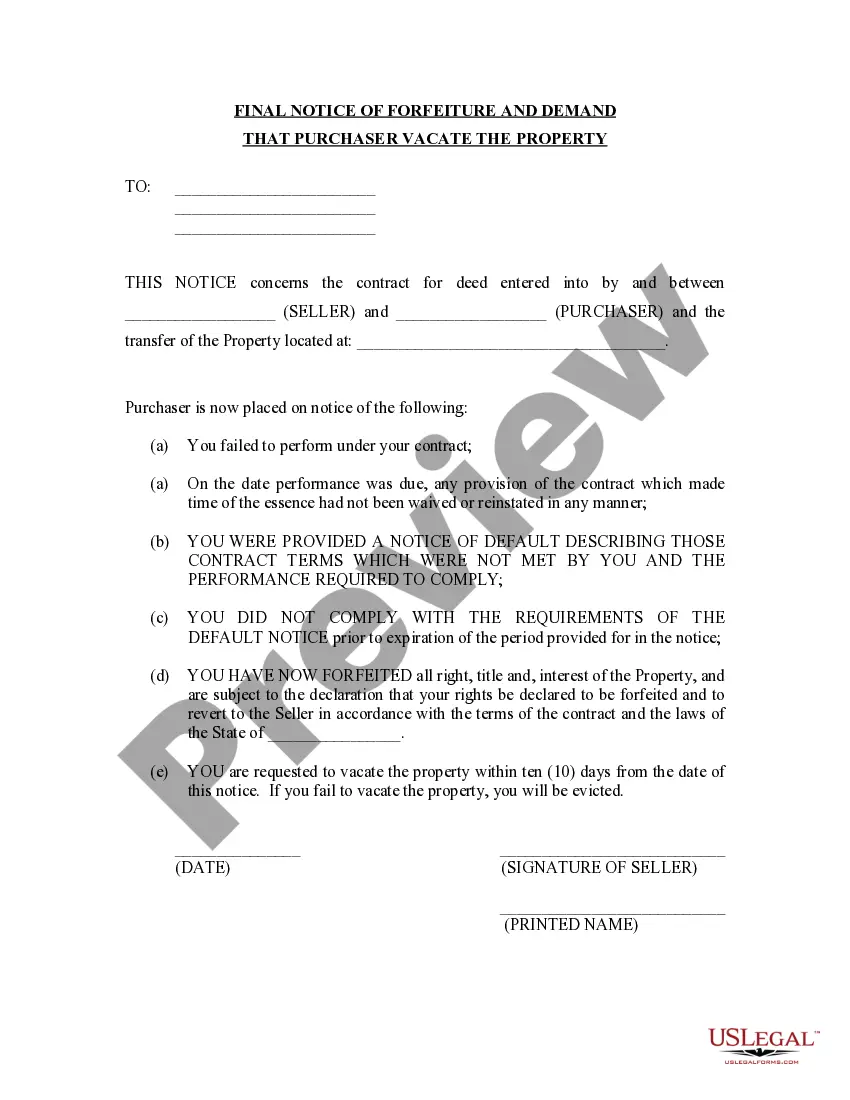
The Final Notice of Forfeiture and Request to Vacate Property under Contract for Deed is a legal document used by sellers to notify buyers that their contract for deed has been cancelled due to a breach of terms. This form is critical for formally informing the purchaser that all prior notices of breach have expired and any rights to the property have been forfeited. Unlike other notices, this form serves as the final step before potential court action regarding the buyer's eviction.
What’s included in this form
- Identification of the seller and purchaser involved in the contract.
- Reference to previous notices of default and breach of contract.
- Statement confirming the cancellation of the contract for deed.
- Notification that all past payments are forfeited.
- Instructions for the buyer to vacate the property.
- Potential court action implications for future occupancy.

When to use this document
This form is used when a seller has notified a buyer multiple times about defaults on a contract for deed, and the specified time for the buyer to remedy the default has passed without compliance. It is essential when the seller intends to reclaim the property and officially request the buyer to vacate.
Who needs this form
- Sellers who have entered into a contract for deed with a purchaser.
- Real estate professionals managing contracts on behalf of sellers.
- Buyers who have received notices of default and require clarity on their legal standing.
How to prepare this document
- Identify and enter the names of the seller and the purchaser.
- Reference any previous notices sent and their dates.
- Clearly state the reasons for the cancellation of the contract.
- Indicate that all past payments have been forfeited.
- Provide instructions for the buyer to vacate the property, including a deadline if applicable.
Is notarization required?
Notarization is required for this form to take effect. Our online notarization service, powered by Notarize, lets you verify and sign documents remotely through an encrypted video session, available 24/7.
Get your form ready online
Our built-in tools help you complete, sign, share, and store your documents in one place.
Make edits, fill in missing information, and update formatting in US Legal Forms—just like you would in MS Word.
Download a copy, print it, send it by email, or mail it via USPS—whatever works best for your next step.
Sign and collect signatures with our SignNow integration. Send to multiple recipients, set reminders, and more. Go Premium to unlock E-Sign.
If this form requires notarization, complete it online through a secure video call—no need to meet a notary in person or wait for an appointment.
We protect your documents and personal data by following strict security and privacy standards.

Make edits, fill in missing information, and update formatting in US Legal Forms—just like you would in MS Word.

Download a copy, print it, send it by email, or mail it via USPS—whatever works best for your next step.

Sign and collect signatures with our SignNow integration. Send to multiple recipients, set reminders, and more. Go Premium to unlock E-Sign.

If this form requires notarization, complete it online through a secure video call—no need to meet a notary in person or wait for an appointment.

We protect your documents and personal data by following strict security and privacy standards.
Common mistakes
- Failing to clearly identify the parties involved in the contract.
- Not including specific dates of prior notices sent.
- Using vague language regarding the terms of the contract or reasons for cancellation.
- Omitting instructions for vacating the property or deadlines.
Advantages of online completion
- Convenient download options allow for immediate access and use.
- Templates are drafted by licensed attorneys, ensuring legal validity.
- Editable format lets you customize the document according to your situation.
- Instantly keeps you informed about your legal obligations and rights.
Legal use & context
This form is essential for legally terminating a contract for deed and ensuring both parties understand their rights and responsibilities. Proper completion and sending of this form can help prevent future legal disputes.
Summary of main points
- The form serves to inform a buyer of a contract cancellation due to default.
- It is essential for sellers to comply with legal requirements when reclaiming property.
- Clear communication of terms and deadlines is critical for legal enforceability.
Looking for another form?
Form popularity
FAQ
In Michigan, the redemption period for a land contract forfeiture generally lasts for 15 days from the date of the notice of forfeiture. During this time, the buyer can remedy their default and reclaim their rights to the property. If you are facing a Missouri Final Notice of Forfeiture and Request to Vacate Property under Contract for Deed, it is essential to act quickly and understand your rights. Consulting with a knowledgeable attorney can provide the guidance you need.
A land contract forfeiture occurs when a buyer fails to uphold their end of a land contract, resulting in the seller reclaiming the property. This process involves sending a notice of forfeiture, which informs the buyer of their default and the potential loss of property rights. If you are dealing with a Missouri Final Notice of Forfeiture and Request to Vacate Property under Contract for Deed, it's important to understand the legal ramifications and available options. Professional assistance can guide you through this challenging situation.
To properly execute a contract for deed, both the buyer and seller should clearly outline the terms, including payment schedules and property details, in a written agreement. It is essential to have this contract reviewed by a legal professional to ensure it complies with Missouri laws. If you've received a Missouri Final Notice of Forfeiture and Request to Vacate Property under Contract for Deed, understanding these terms becomes even more critical. Utilizing platforms like USLegalForms can simplify the documentation process.
A notice of forfeiture of a land contract is a formal document that informs the buyer that they are in default of the contract's terms. This notice typically outlines the reasons for forfeiture and sets a timeline for the buyer to remedy the situation or vacate the property. If you receive a Missouri Final Notice of Forfeiture and Request to Vacate Property under Contract for Deed, it is vital to respond promptly to protect your rights and avoid losing the property. Seeking legal advice can help you navigate this process.
Yes, you can sell a house on a land contract, which allows the buyer to make payments directly to the seller over time. This arrangement can benefit both parties, as it provides a pathway for buyers who may not qualify for traditional financing. However, if you receive a Missouri Final Notice of Forfeiture and Request to Vacate Property under Contract for Deed, it is crucial to understand how this affects the sale. Consulting with a legal expert can provide clarity on your obligations and rights.
To file a quitclaim deed in Missouri, you need to prepare the deed document, sign it in front of a notary, and then file it with the local county recorder's office. This process is essential for transferring property rights without any warranties. If you're dealing with a Missouri Final Notice of Forfeiture and Request to Vacate Property under Contract for Deed, using a quitclaim deed can help clarify ownership and resolve disputes effectively. Be sure to check local requirements for specific filing fees and procedures.
Forfeiting a contract means that one party has failed to meet the agreed-upon terms, resulting in the loss of rights to the property or benefits under that contract. In the context of a Missouri Final Notice of Forfeiture and Request to Vacate Property under Contract for Deed, this process typically occurs when a buyer defaults on payments. Consequently, the seller may reclaim the property, and the buyer loses their investment. Understanding the implications of forfeiture is essential for both parties involved.
The law on notice to vacate in Missouri mandates that landlords provide a clear and concise written notice to tenants before taking action to evict them. This notice should state the reasons for the request and the time frame within which the tenant must vacate. In the context of a contract for deed, a Missouri Final Notice of Forfeiture and Request to Vacate Property under Contract for Deed is essential for sellers to reclaim their property legally. Familiarity with these laws can prevent unnecessary disputes and ensure a smoother transition.
In Missouri, the notice to vacate law requires landlords to provide tenants with written notice before they can initiate eviction proceedings. This notice typically must include the reason for the request and give tenants a specific timeframe to vacate. For properties under a contract for deed, a Missouri Final Notice of Forfeiture and Request to Vacate Property under Contract for Deed serves as an important legal tool to inform buyers about their default status. Understanding this law can help landlords and sellers protect their rights effectively.
The quickest way to remove someone from your property typically involves issuing a notice to vacate, followed by taking legal action if necessary. For properties under a contract for deed, a Missouri Final Notice of Forfeiture and Request to Vacate Property under Contract for Deed can expedite this process by formally notifying the buyer of their obligations. Utilizing legal forms from platforms like US Legal Forms can streamline this process, ensuring you follow the correct procedures. Always consult with a legal professional to ensure compliance with local laws.