Minnesota Last Will and Testament for a Widow or Widower with Adult and Minor Children
Overview of this form
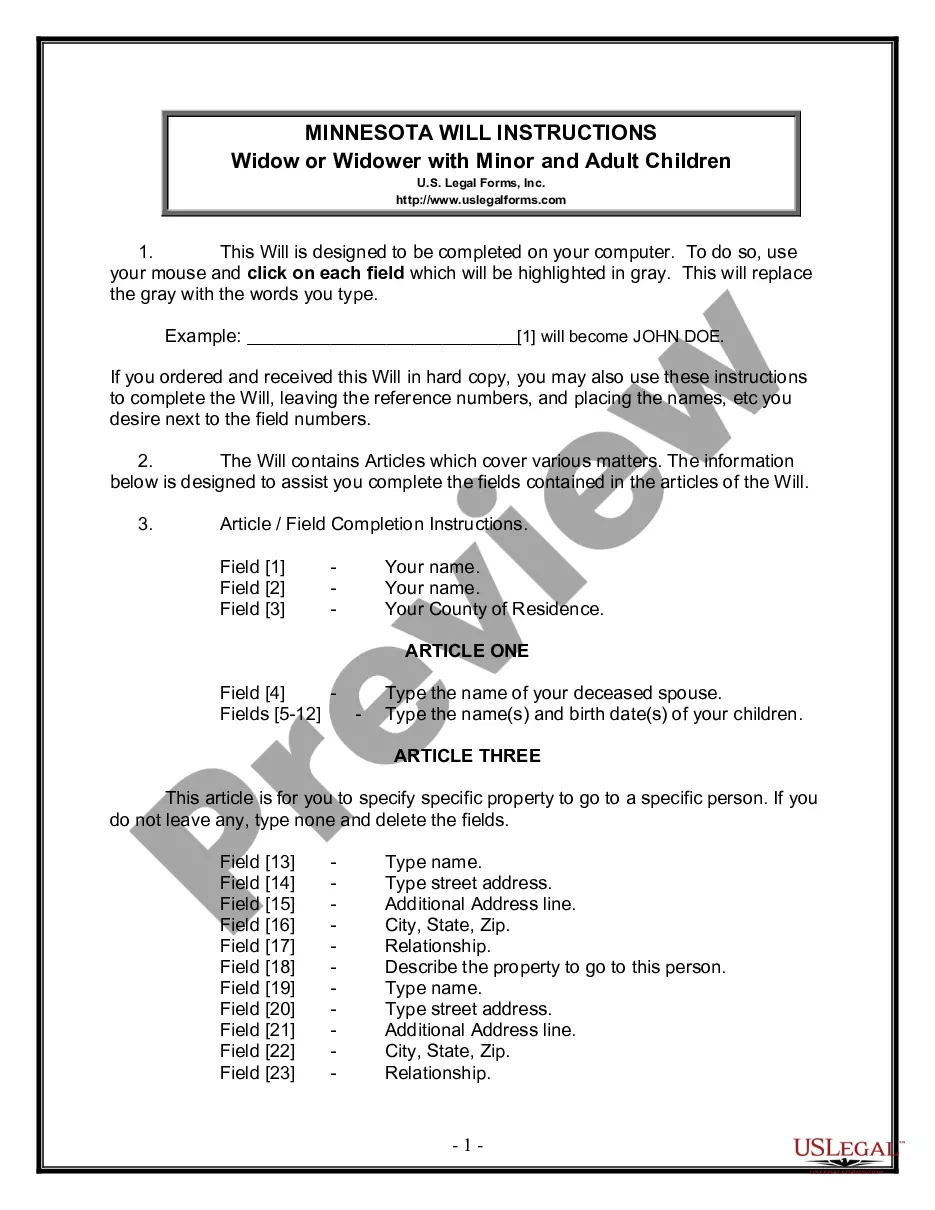
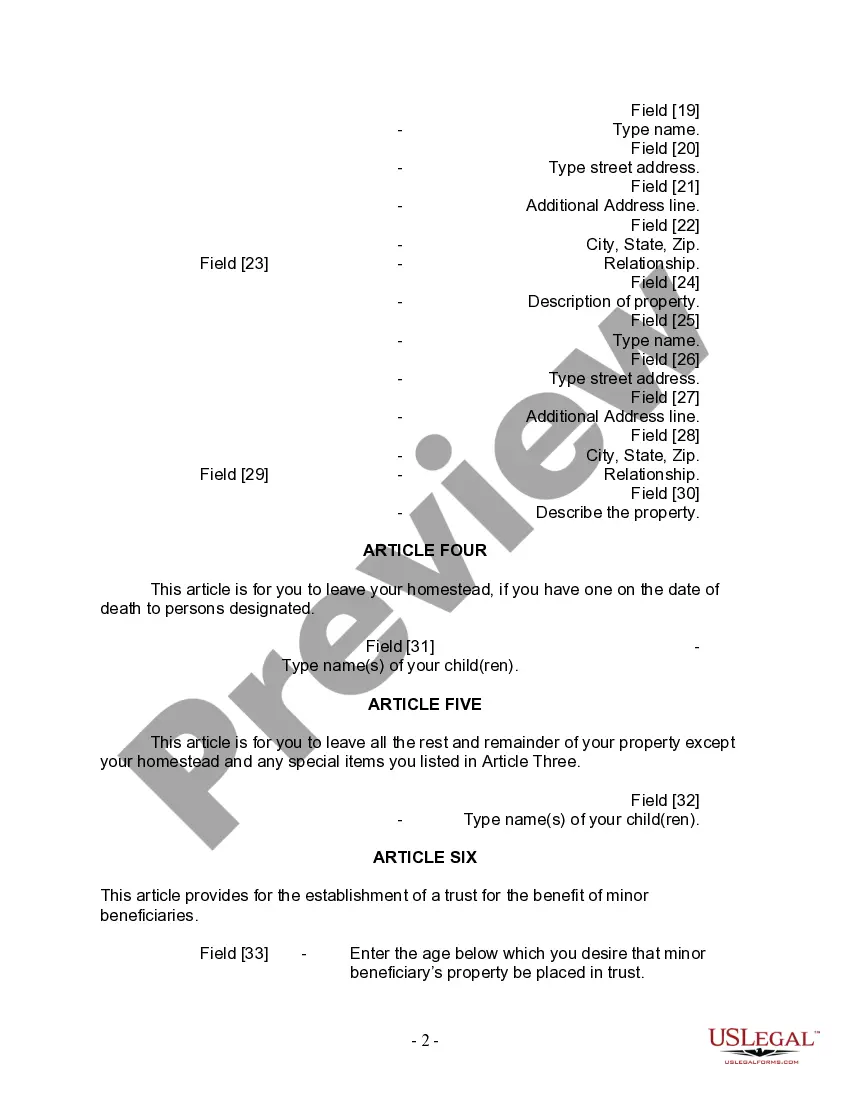
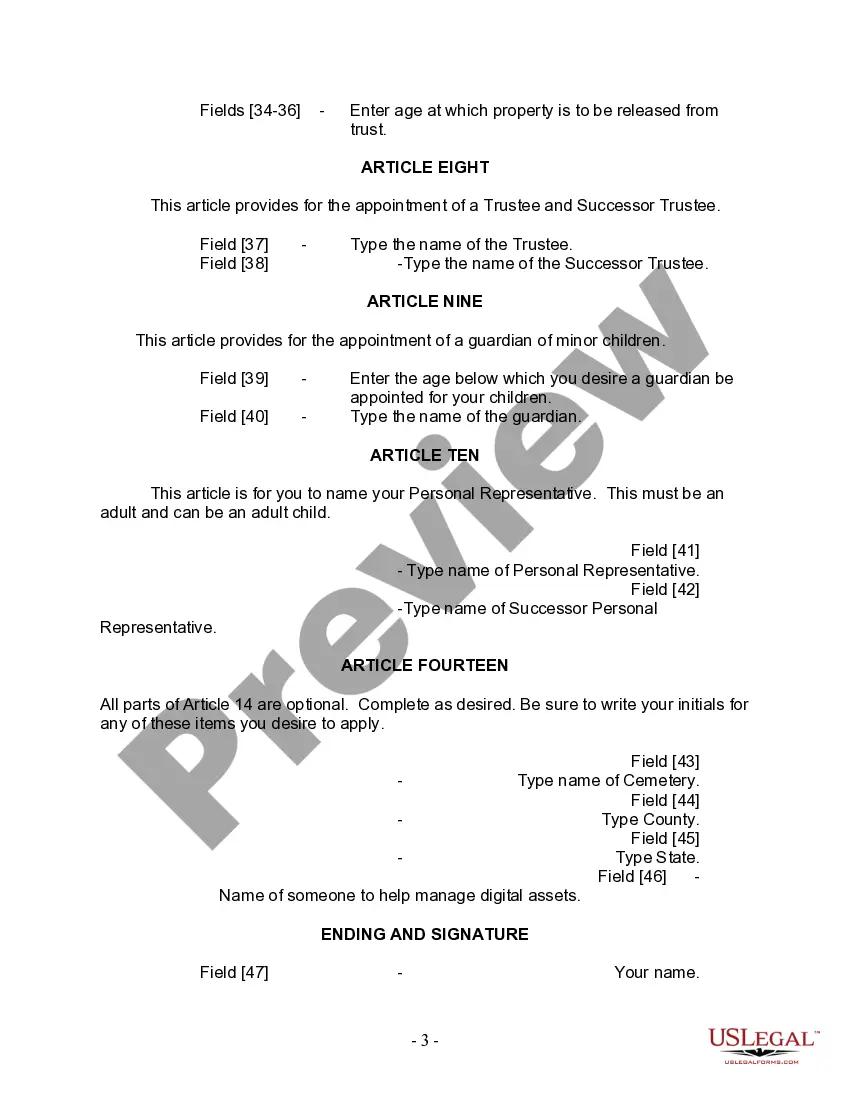
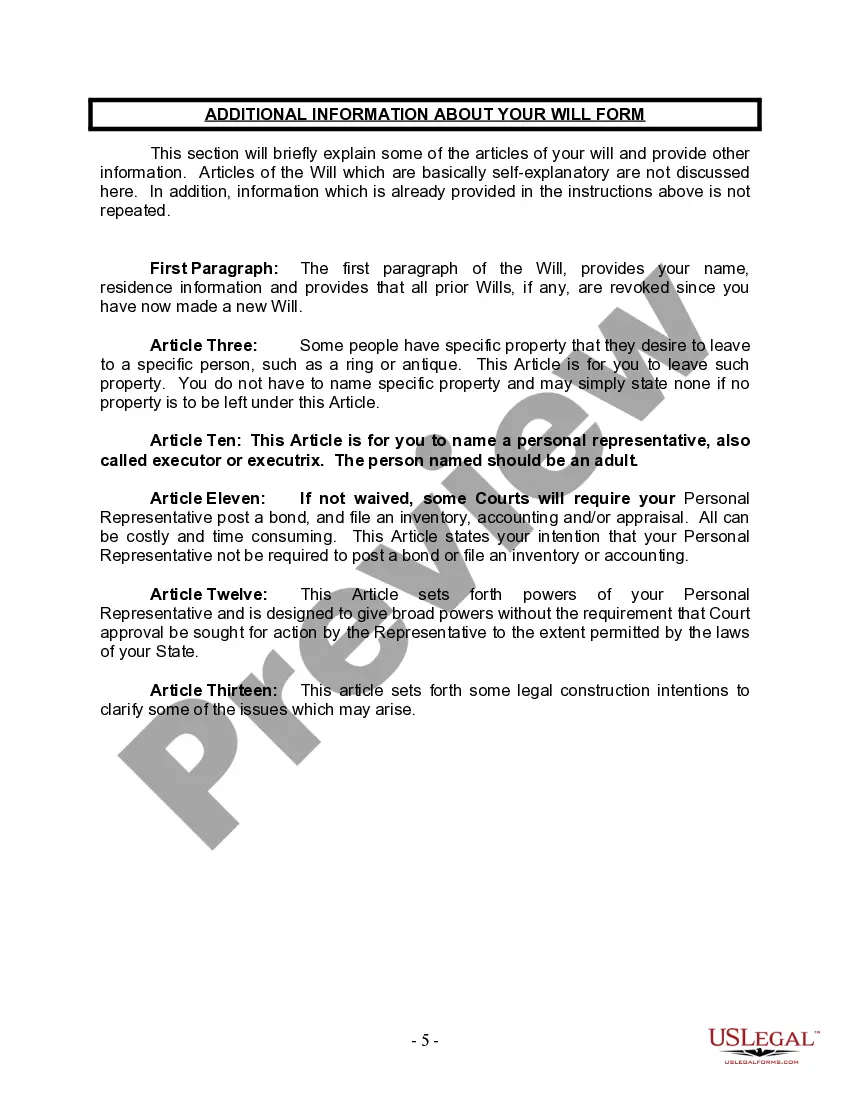
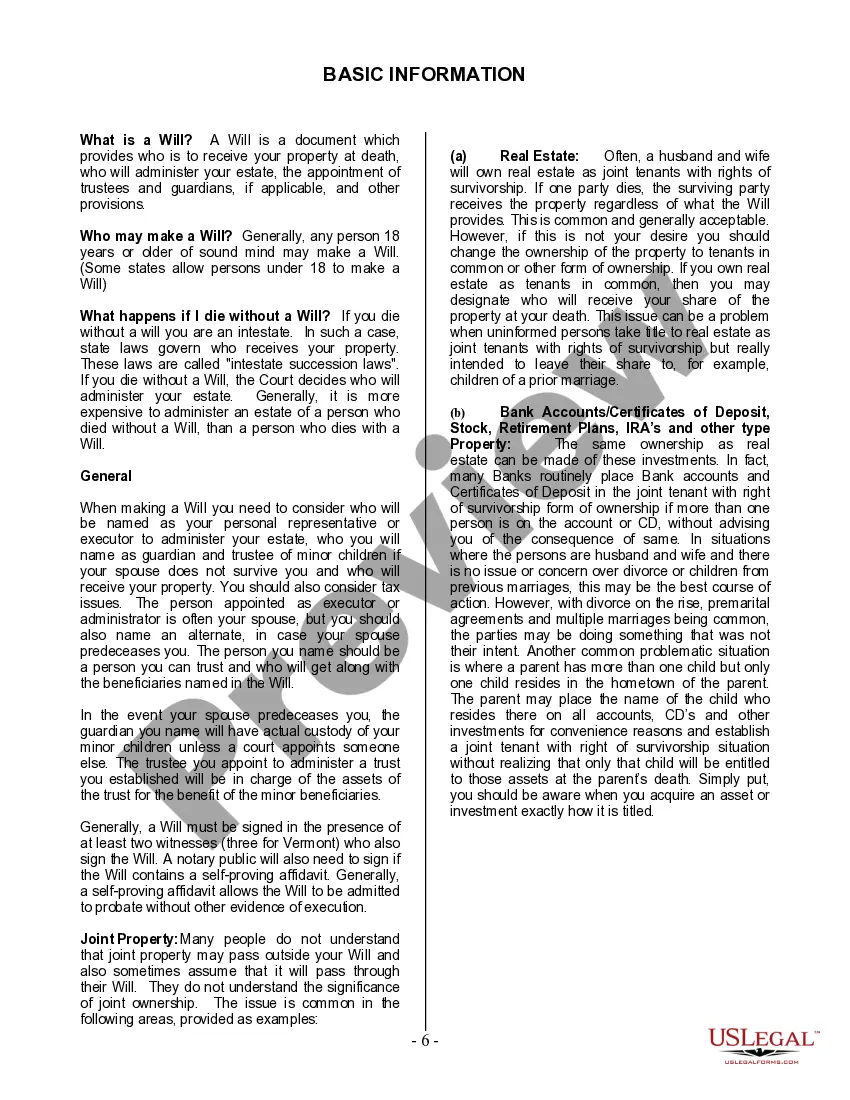
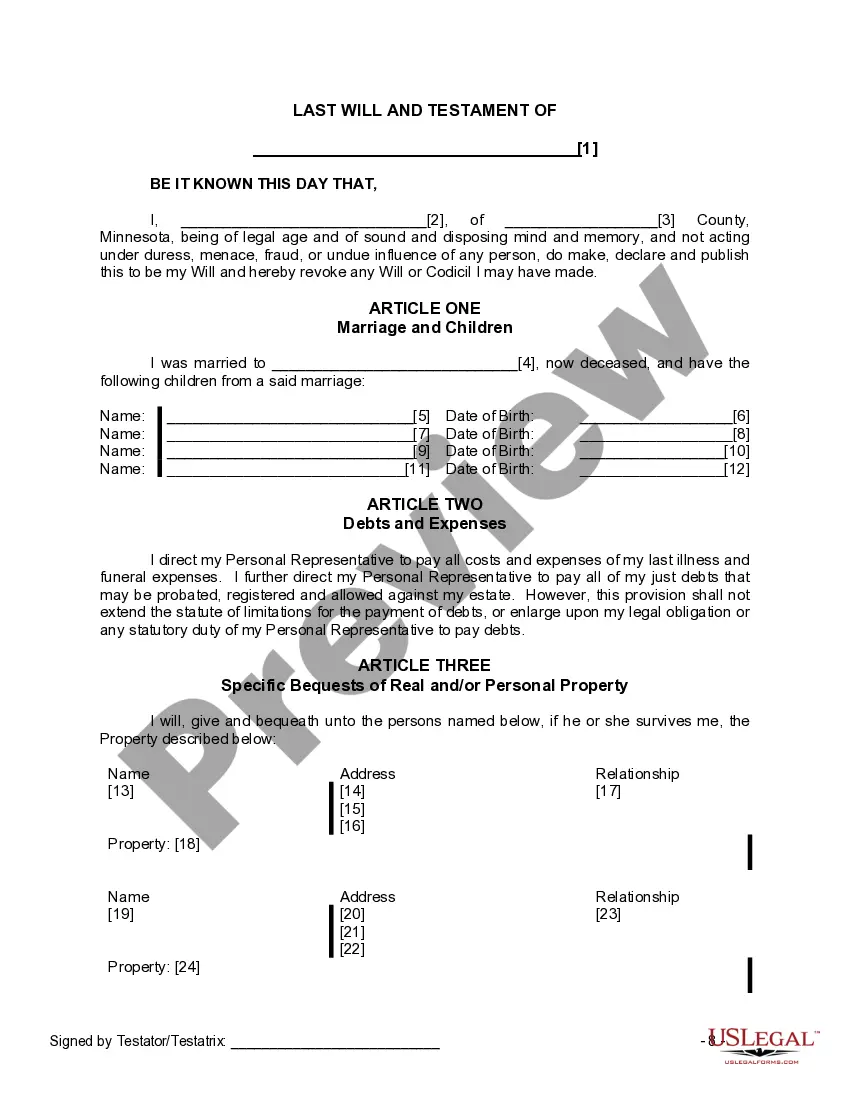
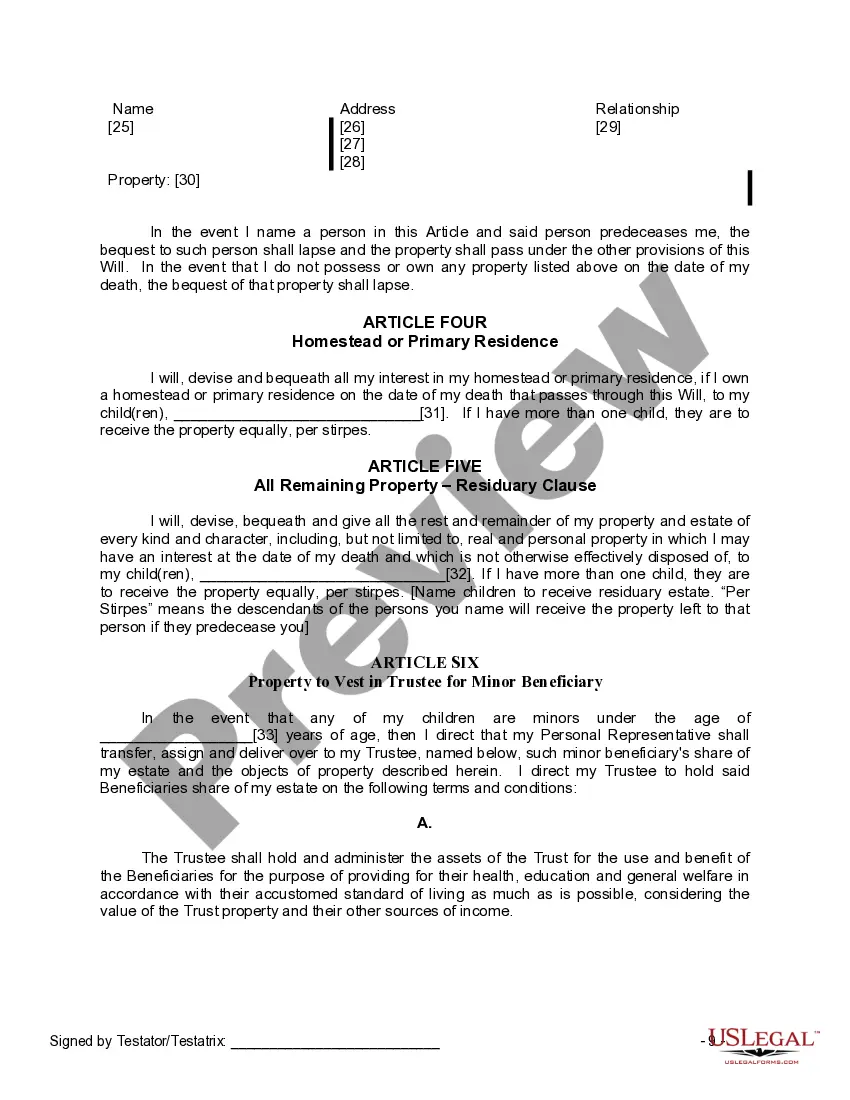
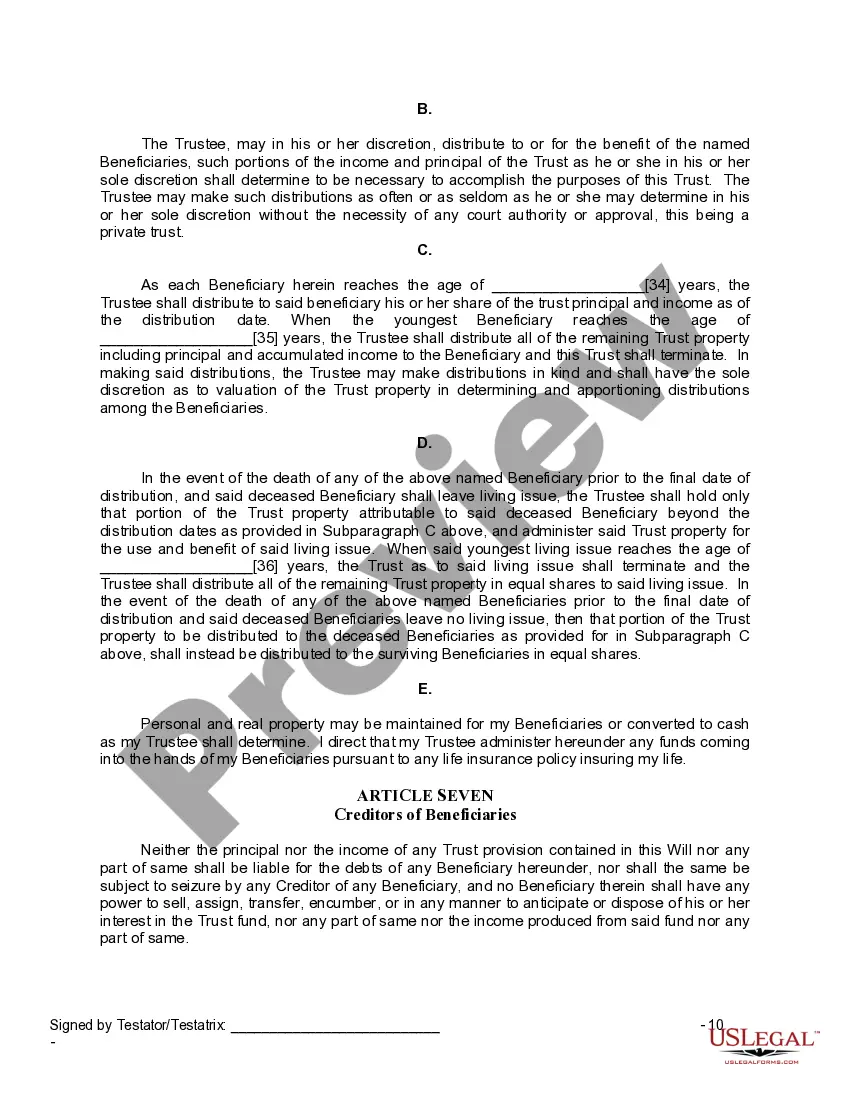
This Last Will and Testament is specifically designed for a widow or widower who has both adult and minor children. It serves to outline how your assets will be distributed upon your death, who will serve as your personal representative, and the guardianship of your minor children. Unlike general will forms, this document includes provisions for minor beneficiaries, ensuring that their inheritance is managed by a trustee until they reach a certain age.
What’s included in this form
- Appointment of a personal representative or executor
- Specification of property distribution among children
- Establishment of a trust for minor children's assets
- Appointment of a guardian for minor children
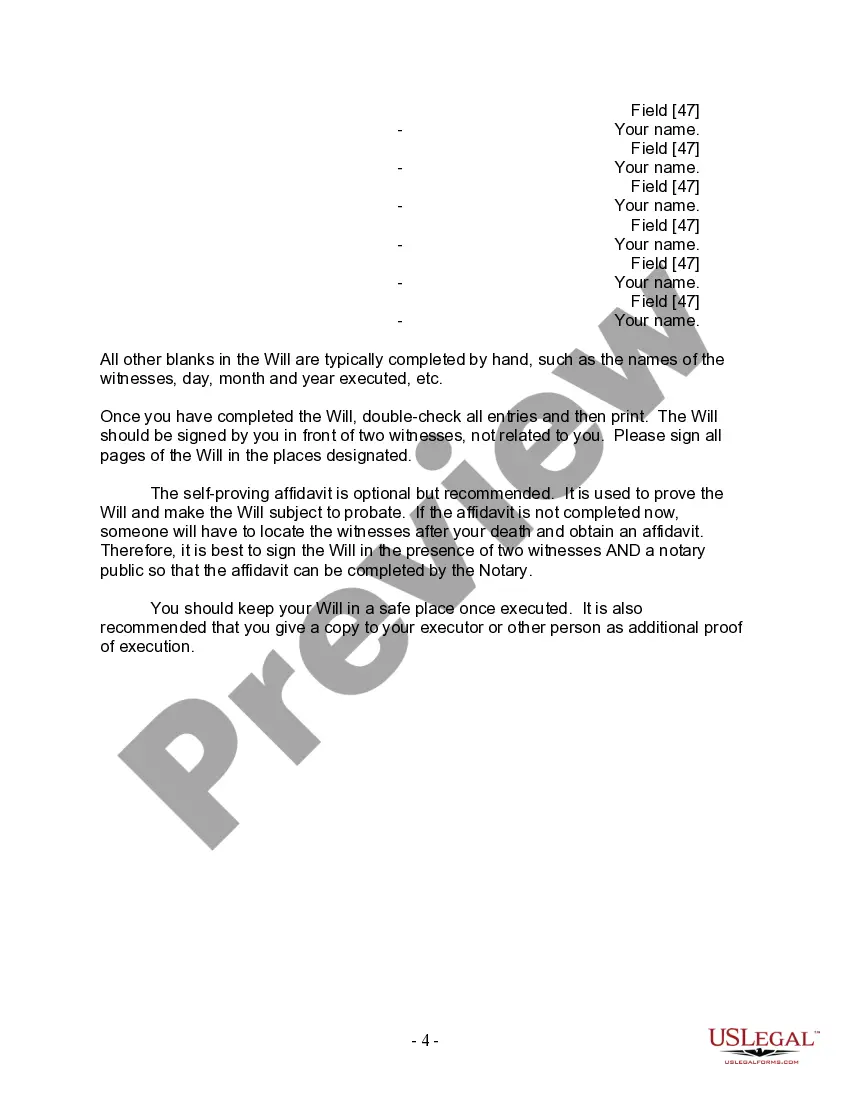
- Instructions for signing and witnessing the Will
- Provisions for a self-proving affidavit, if applicable



When this form is needed
This Last Will and Testament should be used when a widow or widower wants to ensure the careful distribution of their estate, especially if they have both adult and minor children. Situations that may necessitate this form include the passing of a spouse, a change in family dynamics, or simply a desire to formalize inheritance and guardianship wishes.
Who this form is for
- Widows or widowers with children, both adult and minor
- Individuals wishing to specify guardianship for minor children
- Anyone wanting to ensure their estate is distributed according to their wishes
Steps to complete this form
- Identify yourself and your deceased spouse in the introductory sections.
- List the names and birthdates of your children in the designated fields.
- Specify any particular property you wish to bequeath to specific individuals.
- Designate a guardian for your minor children and a trustee for their inherited assets.
- Sign the document in the presence of two witnesses and, if applicable, a notary public.
Does this document require notarization?
To make this form legally binding, it must be notarized. Our online notarization service, powered by Notarize, lets you verify and sign documents remotely through an encrypted video session.
Get your form ready online
Our built-in tools help you complete, sign, share, and store your documents in one place.
Make edits, fill in missing information, and update formatting in US Legal Forms—just like you would in MS Word.
Download a copy, print it, send it by email, or mail it via USPS—whatever works best for your next step.
Sign and collect signatures with our SignNow integration. Send to multiple recipients, set reminders, and more. Go Premium to unlock E-Sign.
If this form requires notarization, complete it online through a secure video call—no need to meet a notary in person or wait for an appointment.
We protect your documents and personal data by following strict security and privacy standards.

Make edits, fill in missing information, and update formatting in US Legal Forms—just like you would in MS Word.

Download a copy, print it, send it by email, or mail it via USPS—whatever works best for your next step.

Sign and collect signatures with our SignNow integration. Send to multiple recipients, set reminders, and more. Go Premium to unlock E-Sign.

If this form requires notarization, complete it online through a secure video call—no need to meet a notary in person or wait for an appointment.

We protect your documents and personal data by following strict security and privacy standards.
Avoid these common issues
- Failing to have the Will signed by two witnesses.
- Not specifying a guardian for minor children.
- Ignoring the need for a self-proving affidavit, which can ease the probate process.
- Not clearly identifying all assets and beneficiaries.
Why complete this form online
- Convenience of filling out the form from home at your own pace.
- Ability to easily edit and update the Will as necessary.
- Access to state-specific legal guidance, ensuring compliance with local laws.
Quick recap
- This form is tailored for widows or widowers with children to outline their estate planning wishes.
- It includes specific provisions for appointing guardians and trustees.
- Ensure it is signed in front of witnesses and notarized for validity.
Looking for another form?
Form popularity
FAQ
In Minnesota, certain assets may be exempt from probate, which can simplify the process of estate administration. For example, life insurance proceeds, retirement accounts, and jointly owned property typically pass directly to beneficiaries without going through probate. Understanding these exemptions can help you when creating a Minnesota Last Will and Testament for a Widow or Widower with Adult and Minor Children, as it allows you to allocate your assets more efficiently and avoid unnecessary delays.
In Minnesota, you do not necessarily need a lawyer to create a valid will. However, for a Minnesota Last Will and Testament for a Widow or Widower with Adult and Minor Children, consulting a legal professional can ensure that your wishes are clearly stated and legally binding. Using platforms like US Legal Forms can also provide you with the necessary templates and guidance to draft your will effectively, making the process simpler and more accessible.
Be in writing; signed by the testator (the person describing how they want their property distributed); and. signed by at least two witnesses over the age of 18.
You can make your own will in Minnesota, using Nolo's do-it-yourself will software or online will programs. However, you may want to consult a lawyer in some situations. For example, if you think that your will might be contested or if you want to disinherit your spouse, you should talk with an attorney.
As long as it was properly signed and witnessed by two adult independent witnesses who are present at the time you sign your will, it should be legally binding.Using the wrong wording could mean that your instructions aren't followed, or even that your will isn't valid.
In fact, handwritten wills can be considered valid in many states, including Minnesota.The signing of the will must be witnessed by at least two people who meet the requirements for witnesses under state probate law.
If you die without a will in Minnesota, your children will receive an intestate share of your property. The size of each child's share depends on how many children you have, whether or not you are married, whether your spouse is also their parent and whether your spouse has children from another relationship.
Create the initial document. Start by titling the document Last Will and Testament" and including your full legal name and address. Designate an executor. Appoint a guardian. Name the beneficiaries. Designate the assets. Ask witnesses to sign your will. Store your will in a safe place.
No, in Minnesota, you do not need to notarize your will to make it legal. However, Minnesota allows you to make your will "self-proving" and you'll need to go to a notary if you want to do that. A self-proving will speeds up probate because the court can accept the will without contacting the witnesses who signed it.
The will must be in writing; The will must be signed by you, by another person at your direction and in your presence, or by your conservator pursuant to a court order; The will must be witnessed by at least two people, both of whom must also sign the will; and. You must intend for the document to operate as a will.