Minnesota Statutory Health Care Directive as Living Will
About this form
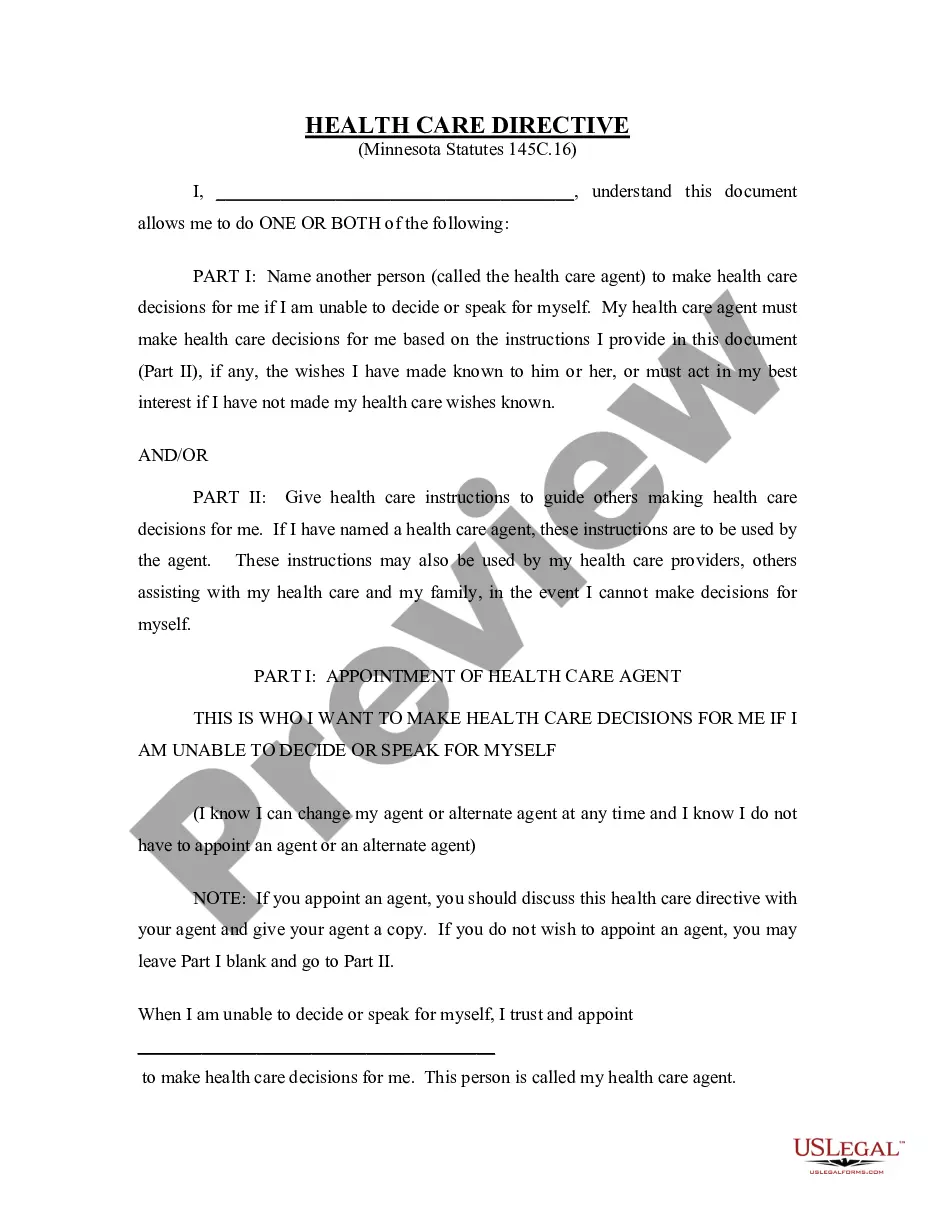
The Statutory Health Care Directive as Living Will is a legal document recognized under Minnesota law. It enables individuals to appoint a health care agent to make medical decisions on their behalf if they become unable to do so. This form outlines both specific health care instructions and the powers granted to the appointed agent, differing from general living wills by emphasizing the selection of an agent and personalized directives.
Key parts of this document
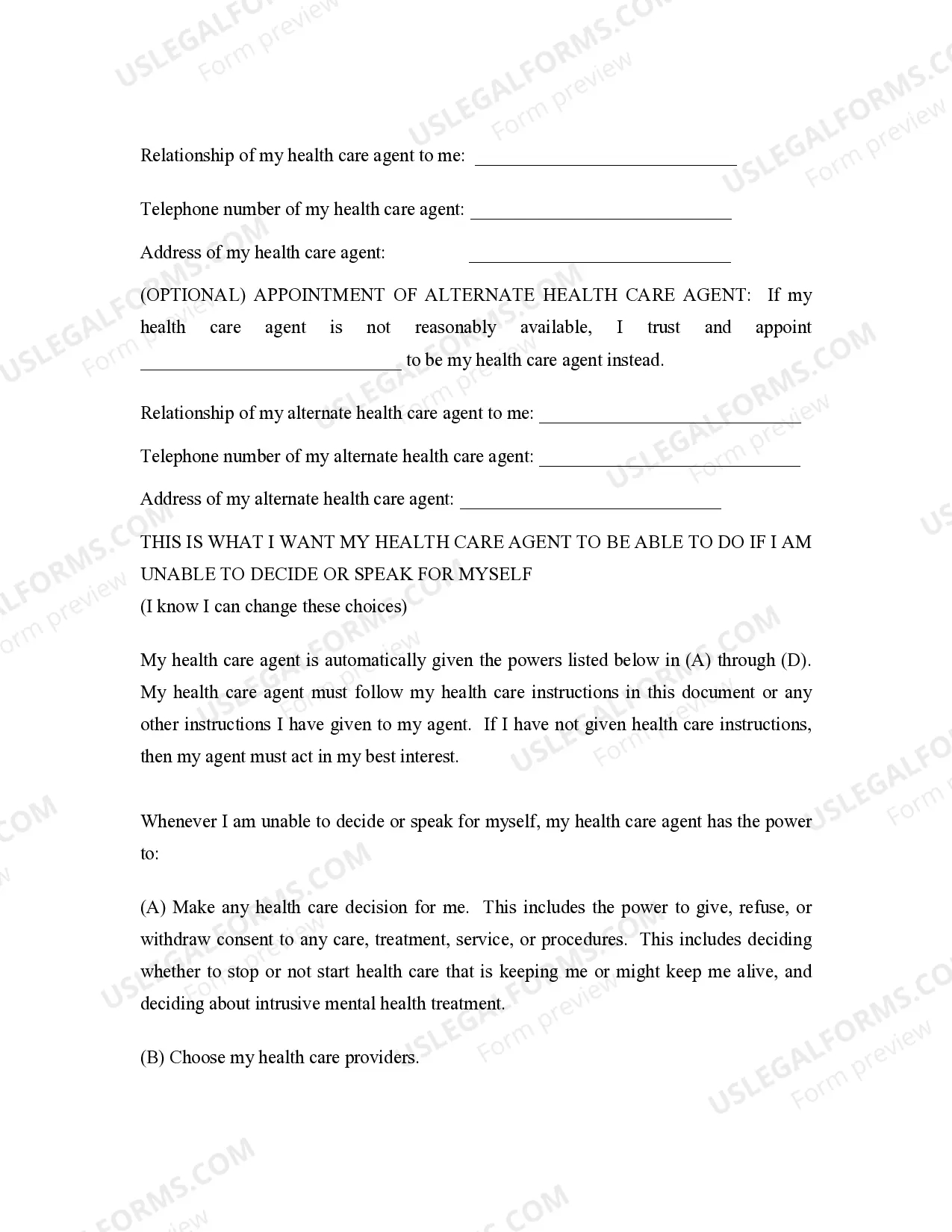
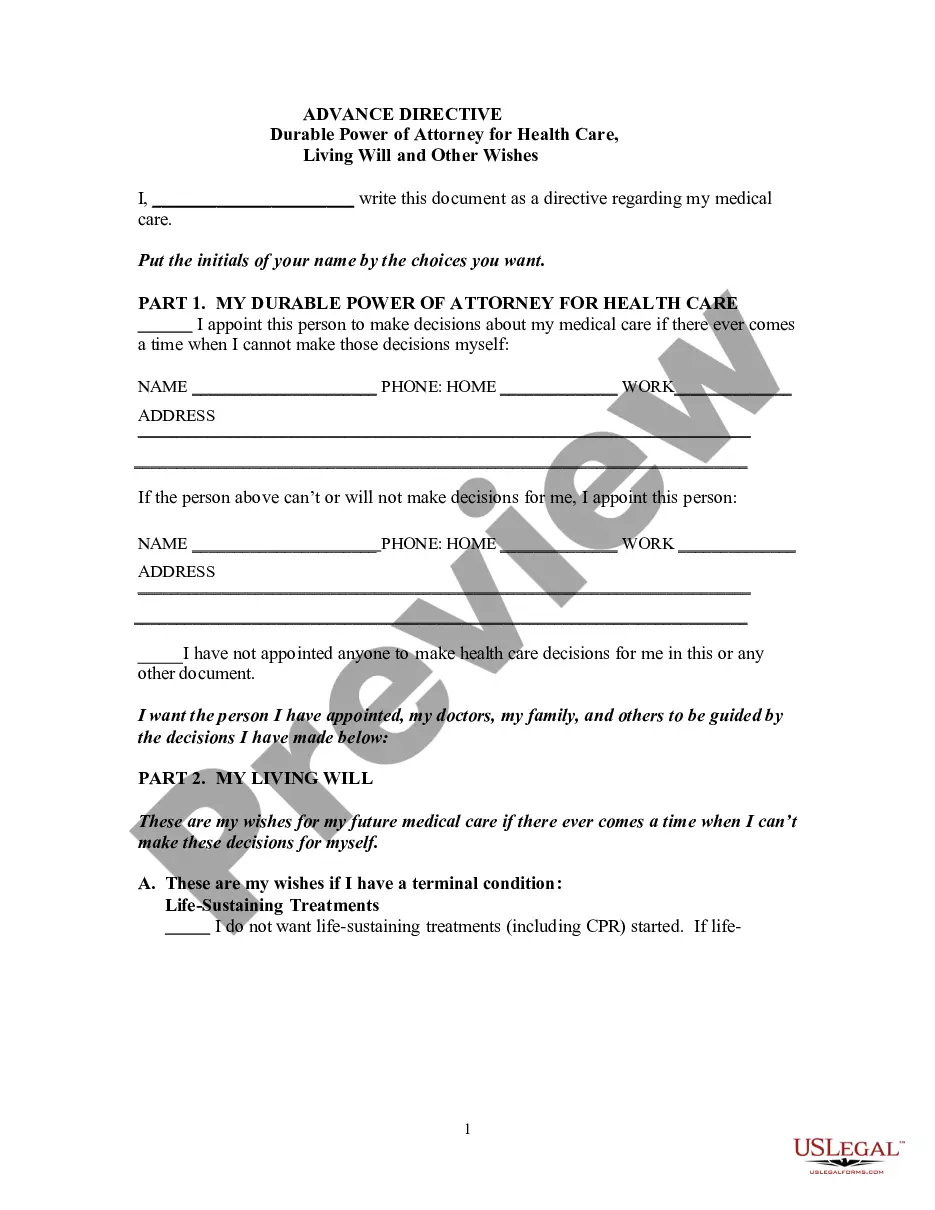
- Appointment of Health Care Agent: Designates a person to make health care decisions if you are incapacitated.
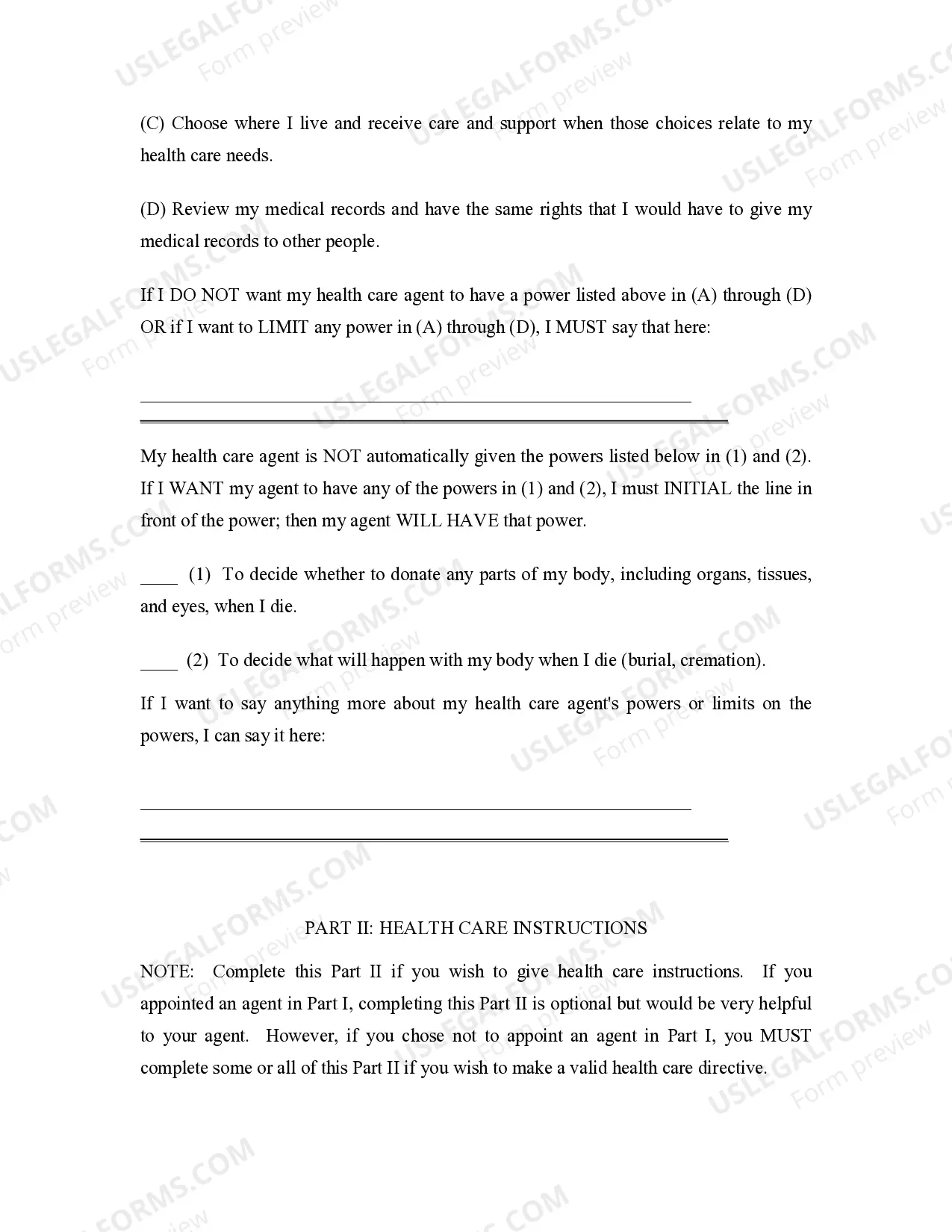
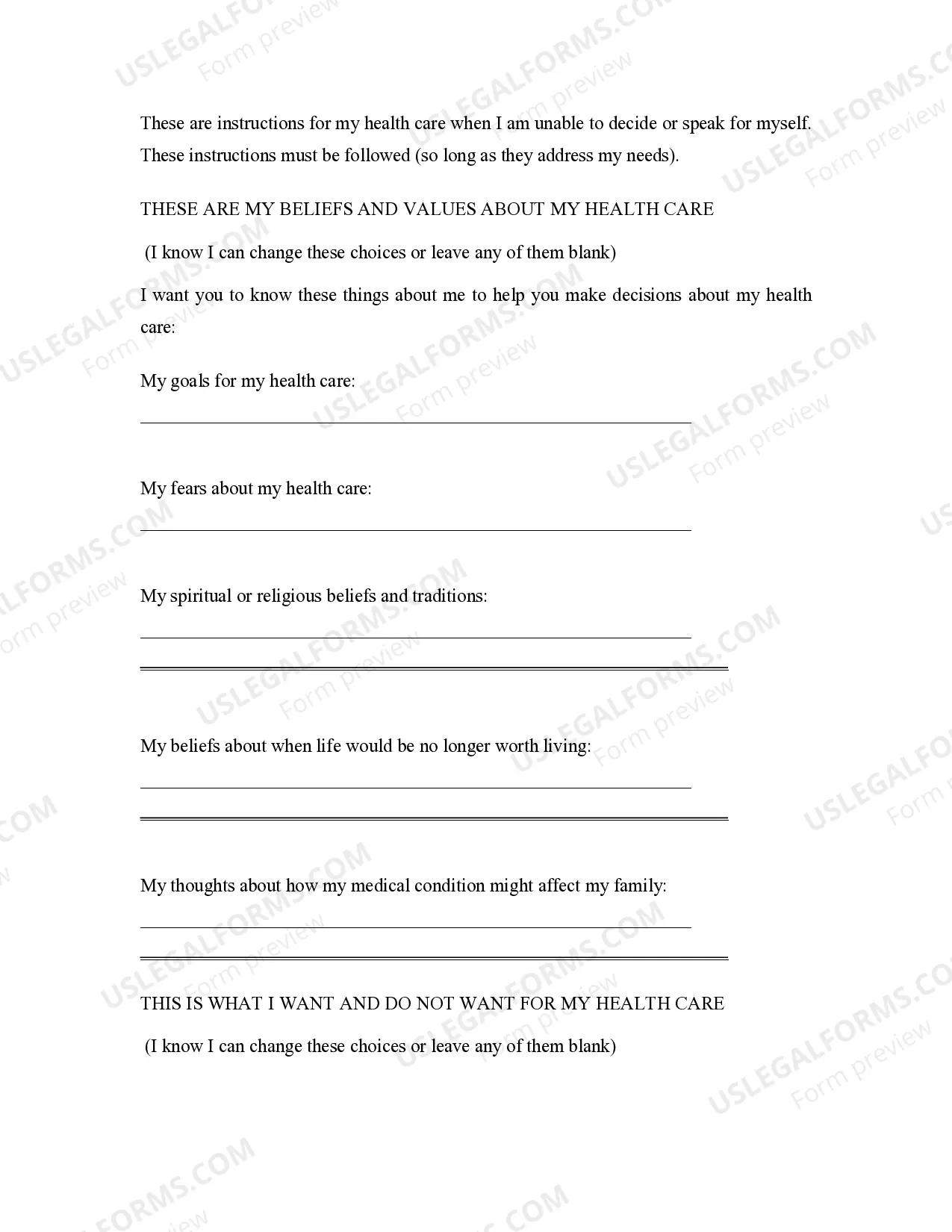
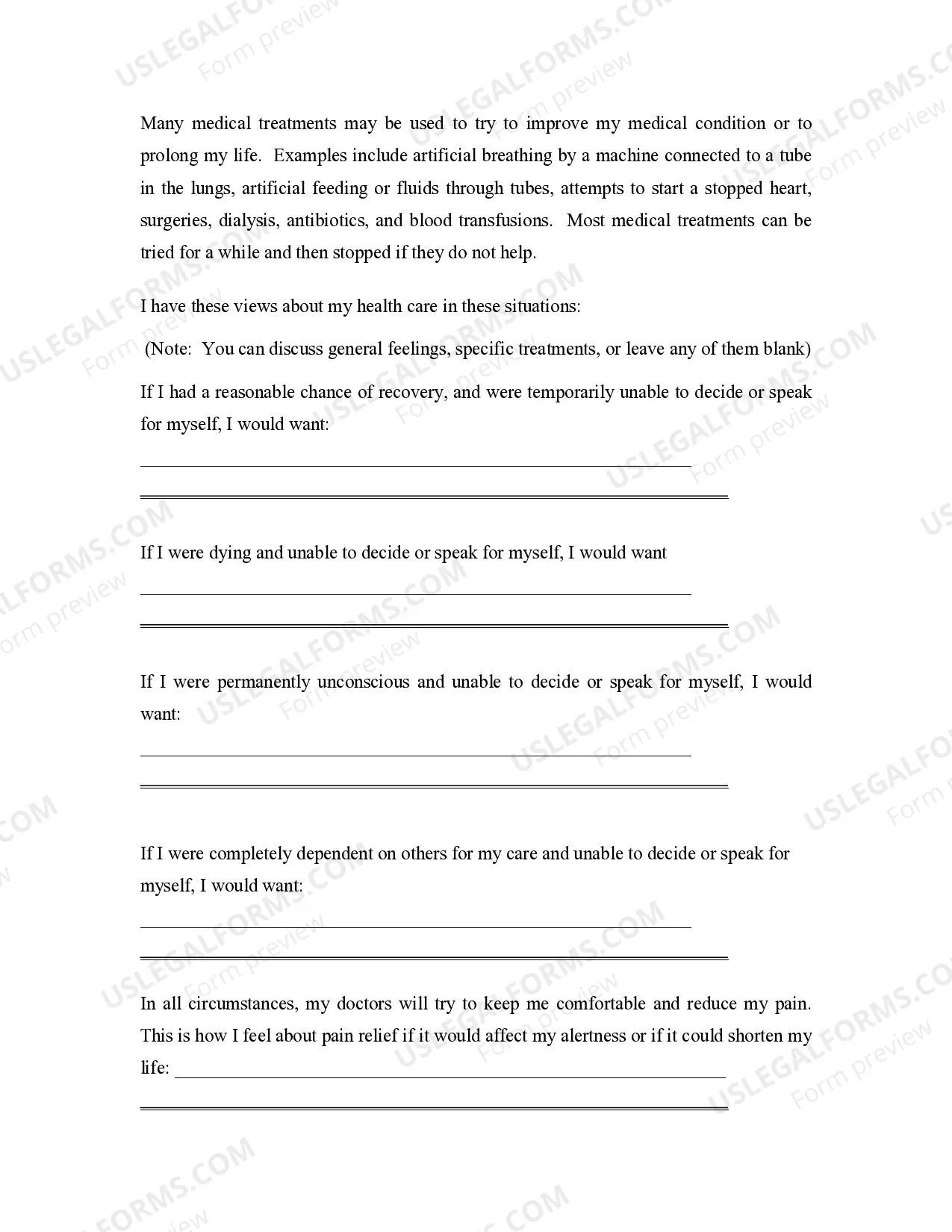
- Health Care Instructions: Provides your preferences and beliefs regarding medical treatment and end-of-life care.
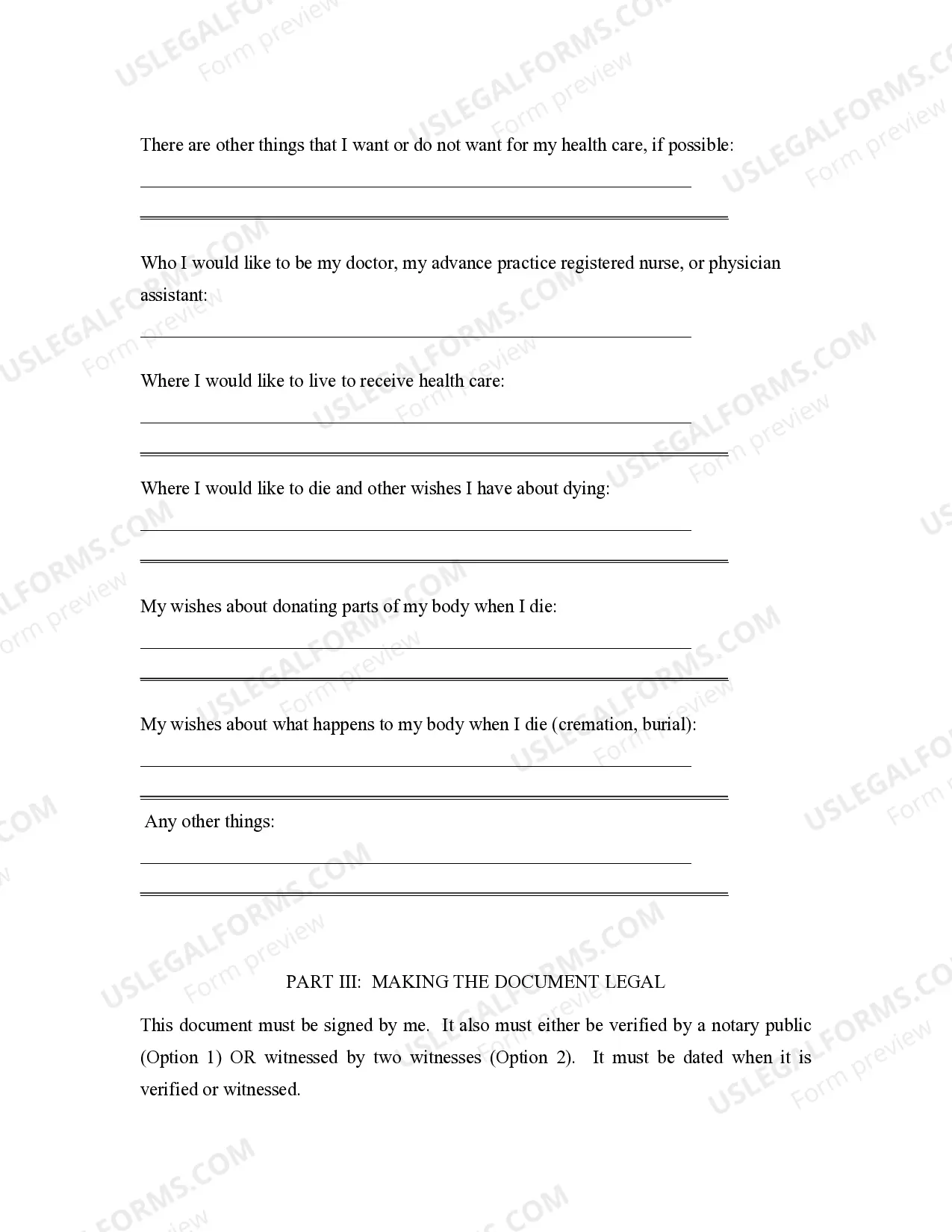
- Powers Granted: Specifies what decisions your health care agent can make, including medical treatments and organ donation.
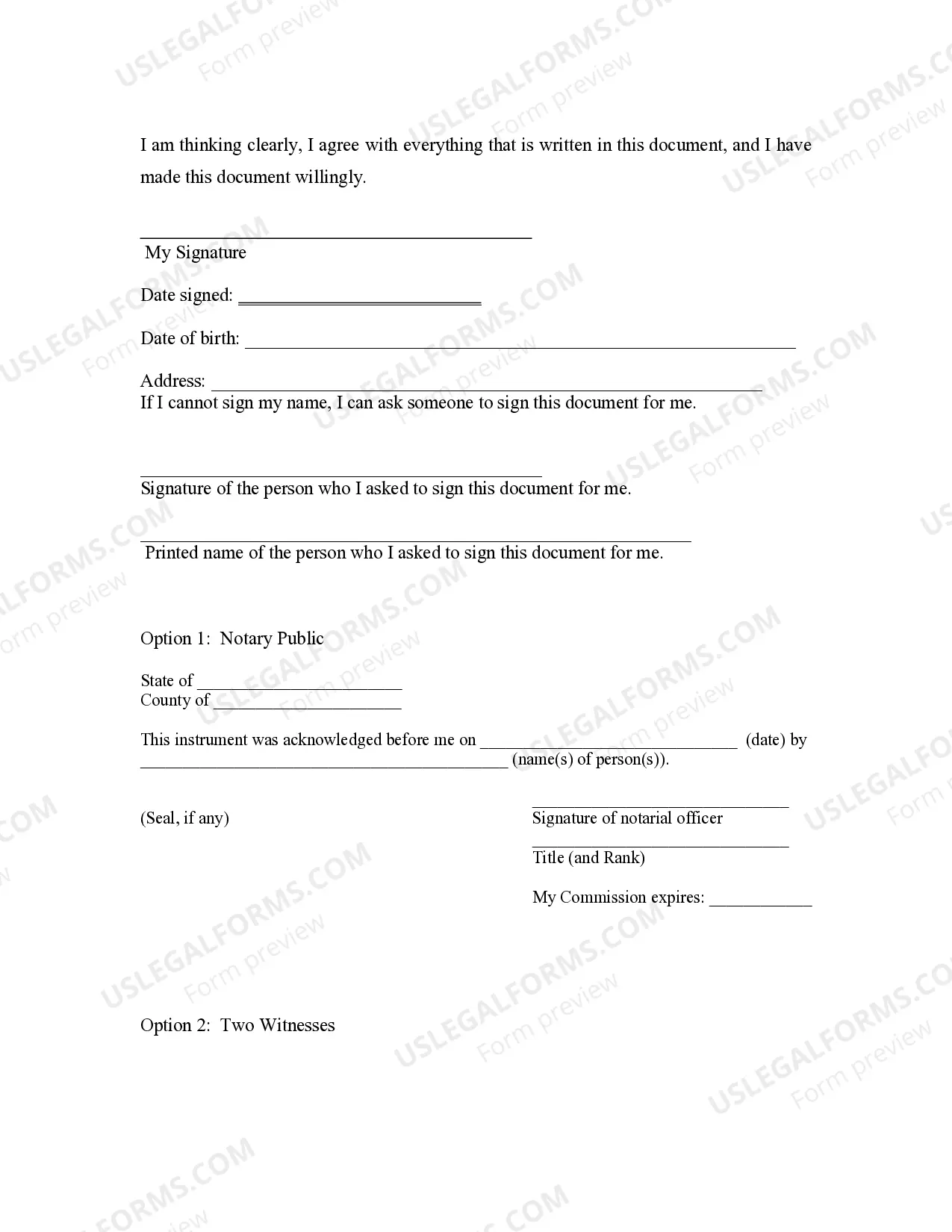
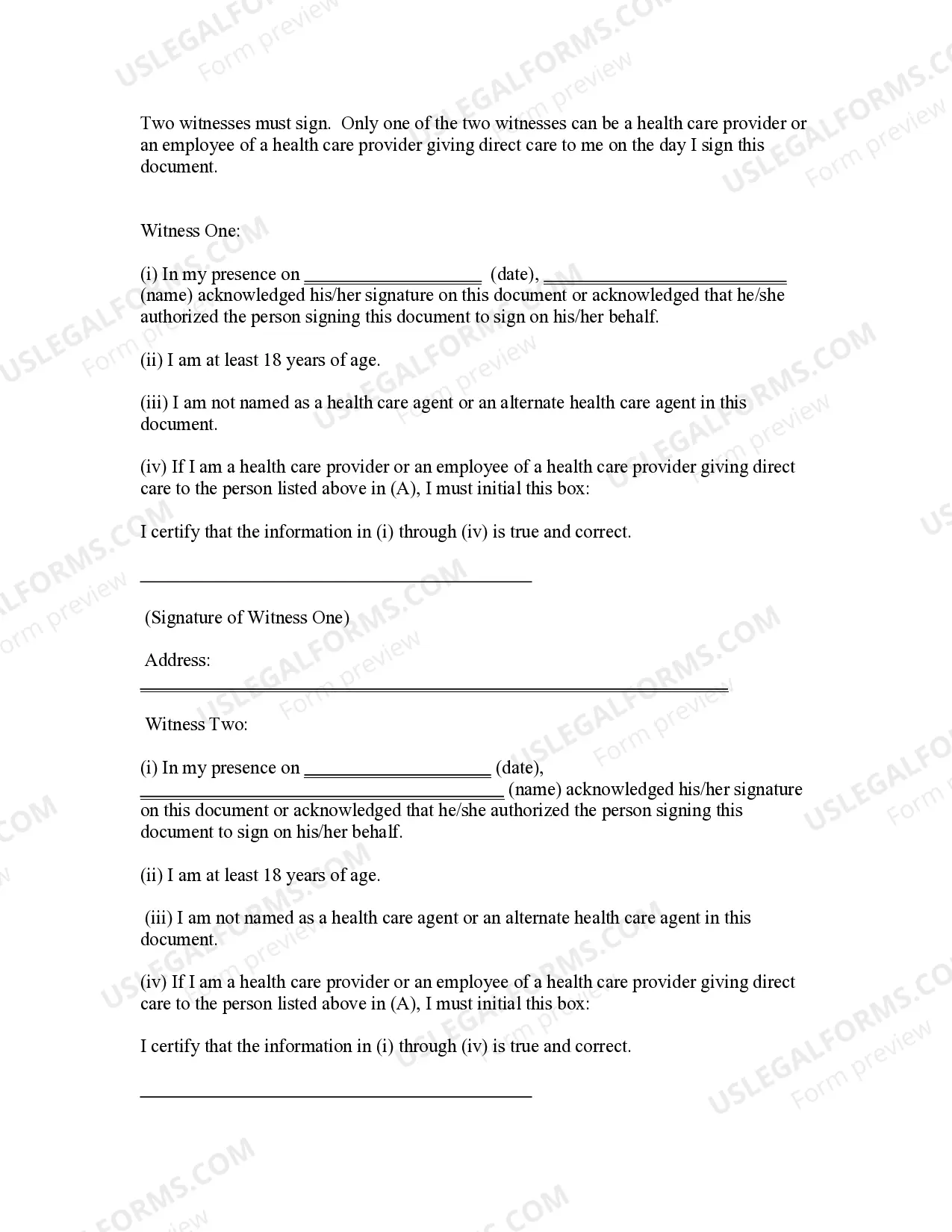
- Notarization or Witnesses: Details the requirement to have the document signed by a notary public or two witnesses for validity.
- Legal Statements: Confirms the signer's understanding and voluntary agreement to the document.
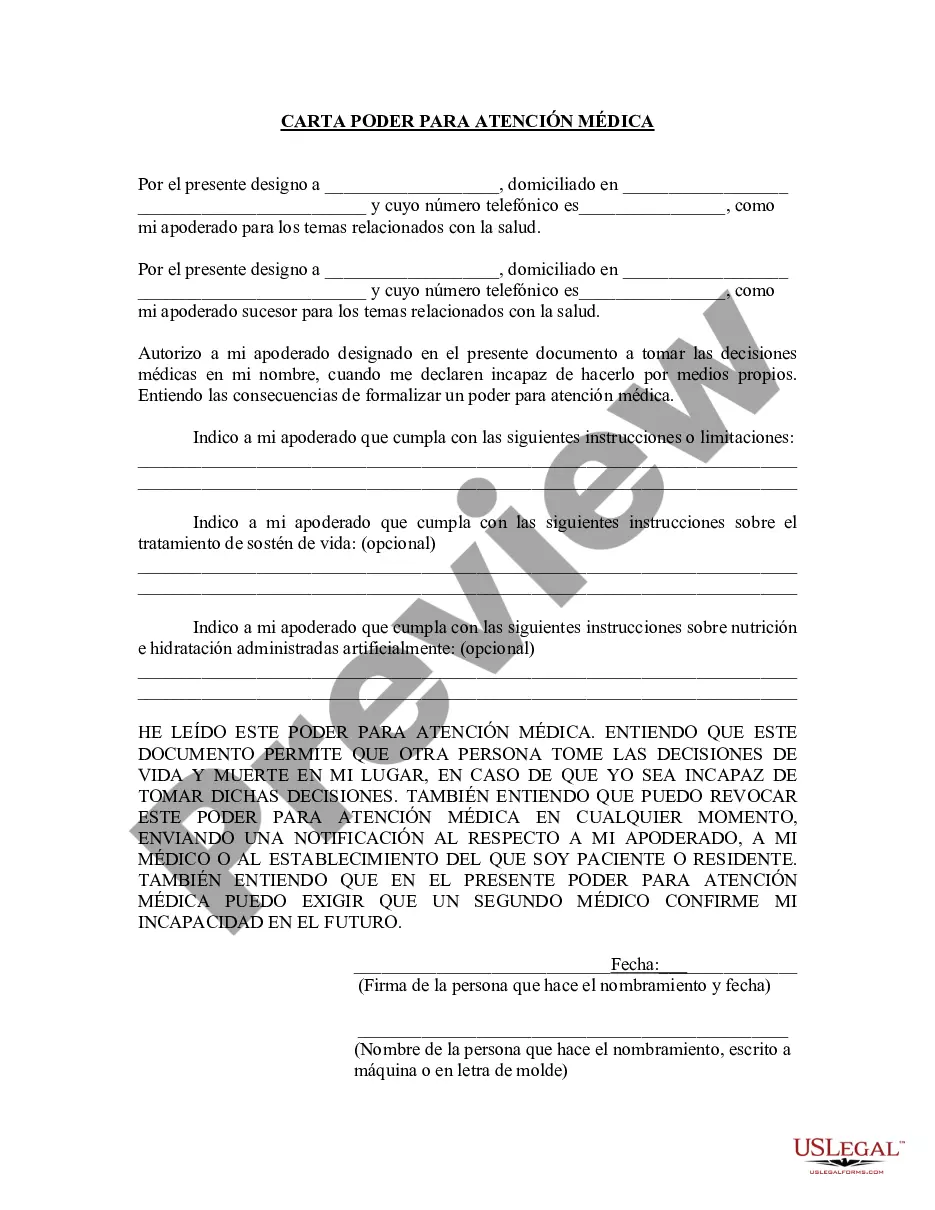
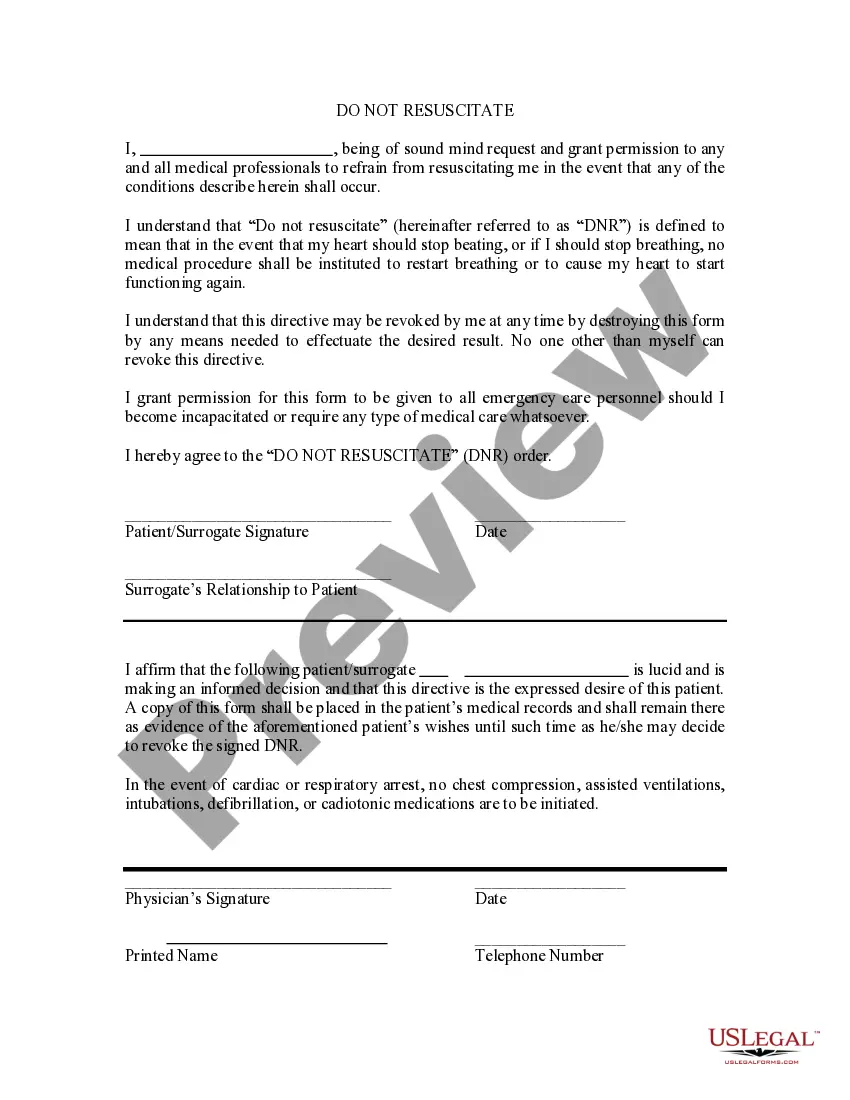
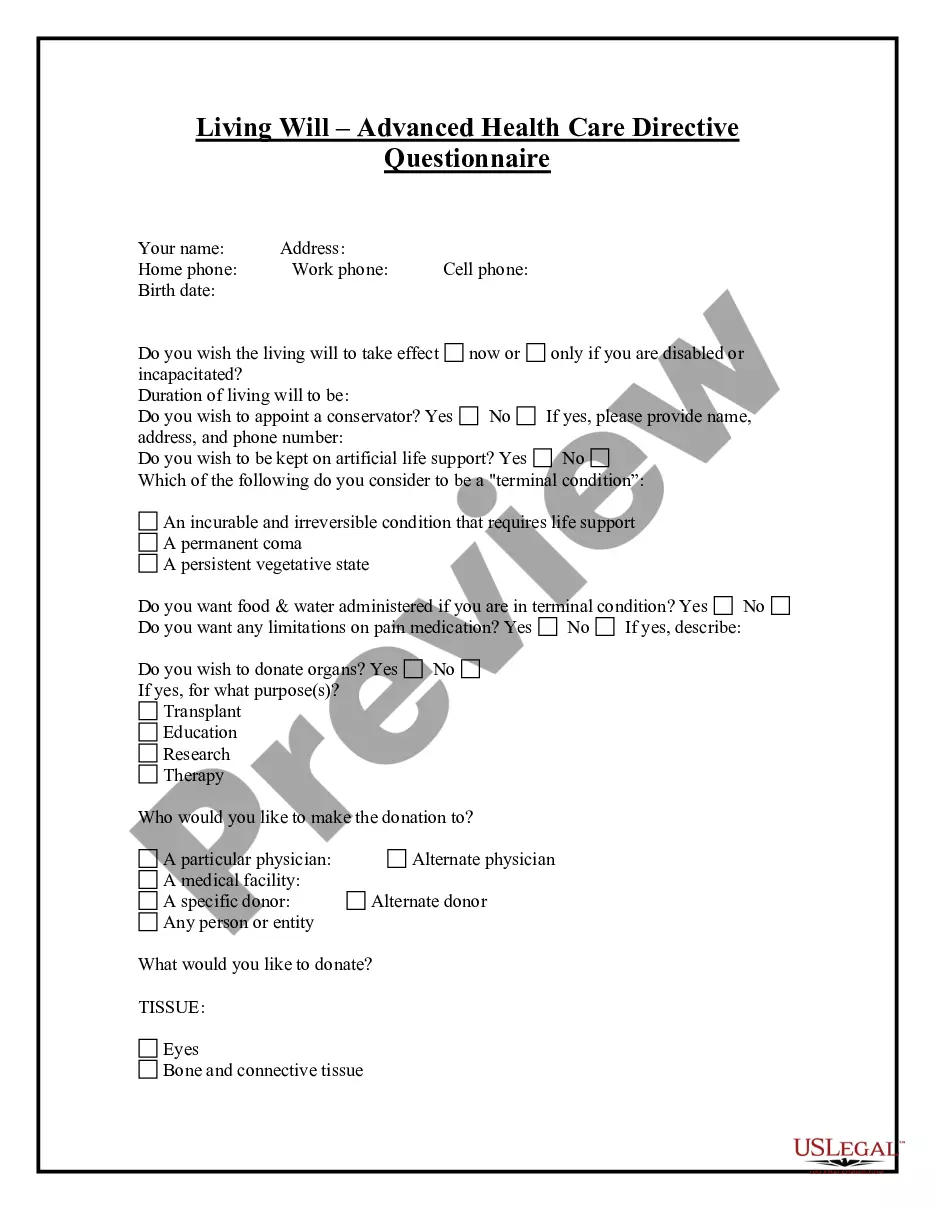
Situations where this form applies
You should use the Statutory Health Care Directive as Living Will when you want to ensure that your health care preferences are respected in situations where you are unable to communicate. This includes scenarios such as serious illness, accidents, or advanced age where decision-making capacity may decline. It is also useful for individuals who want to clarify their wishes regarding organ donation and end-of-life care options.
Who needs this form
- Anyone living in Minnesota who wants to designate a health care agent.
- Individuals seeking to articulate personal health care wishes and values.
- Patients with serious health conditions who want to ensure their treatment preferences are followed.
- People planning for future health care needs as they age.
Instructions for completing this form
- Identify your health care agent by entering their name, relationship, and contact information.
- Decide if you want to appoint an alternate health care agent and fill out their details if desired.
- Specify the powers you grant to your health care agent, including optional powers like organ donation and disposition of your body after death.
- Complete the health care instructions section to detail your medical treatment preferences and personal values regarding health care.
- Sign and date the form, then have it witnessed or notarized to ensure its legal validity.
Notarization guidance
This form must be notarized to be legally valid. US Legal Forms provides secure online notarization powered by Notarize, allowing you to complete the process through a verified video call.
Get your form ready online
Our built-in tools help you complete, sign, share, and store your documents in one place.
Make edits, fill in missing information, and update formatting in US Legal Forms—just like you would in MS Word.
Download a copy, print it, send it by email, or mail it via USPS—whatever works best for your next step.
Sign and collect signatures with our SignNow integration. Send to multiple recipients, set reminders, and more. Go Premium to unlock E-Sign.
If this form requires notarization, complete it online through a secure video call—no need to meet a notary in person or wait for an appointment.
We protect your documents and personal data by following strict security and privacy standards.

Make edits, fill in missing information, and update formatting in US Legal Forms—just like you would in MS Word.

Download a copy, print it, send it by email, or mail it via USPS—whatever works best for your next step.

Sign and collect signatures with our SignNow integration. Send to multiple recipients, set reminders, and more. Go Premium to unlock E-Sign.

If this form requires notarization, complete it online through a secure video call—no need to meet a notary in person or wait for an appointment.

We protect your documents and personal data by following strict security and privacy standards.
Typical mistakes to avoid
- Failing to discuss the directive with the appointed health care agent.
- Not signing the document or omitting the date of signing.
- Choosing witnesses that are not eligible (e.g., health care providers involved in your care).
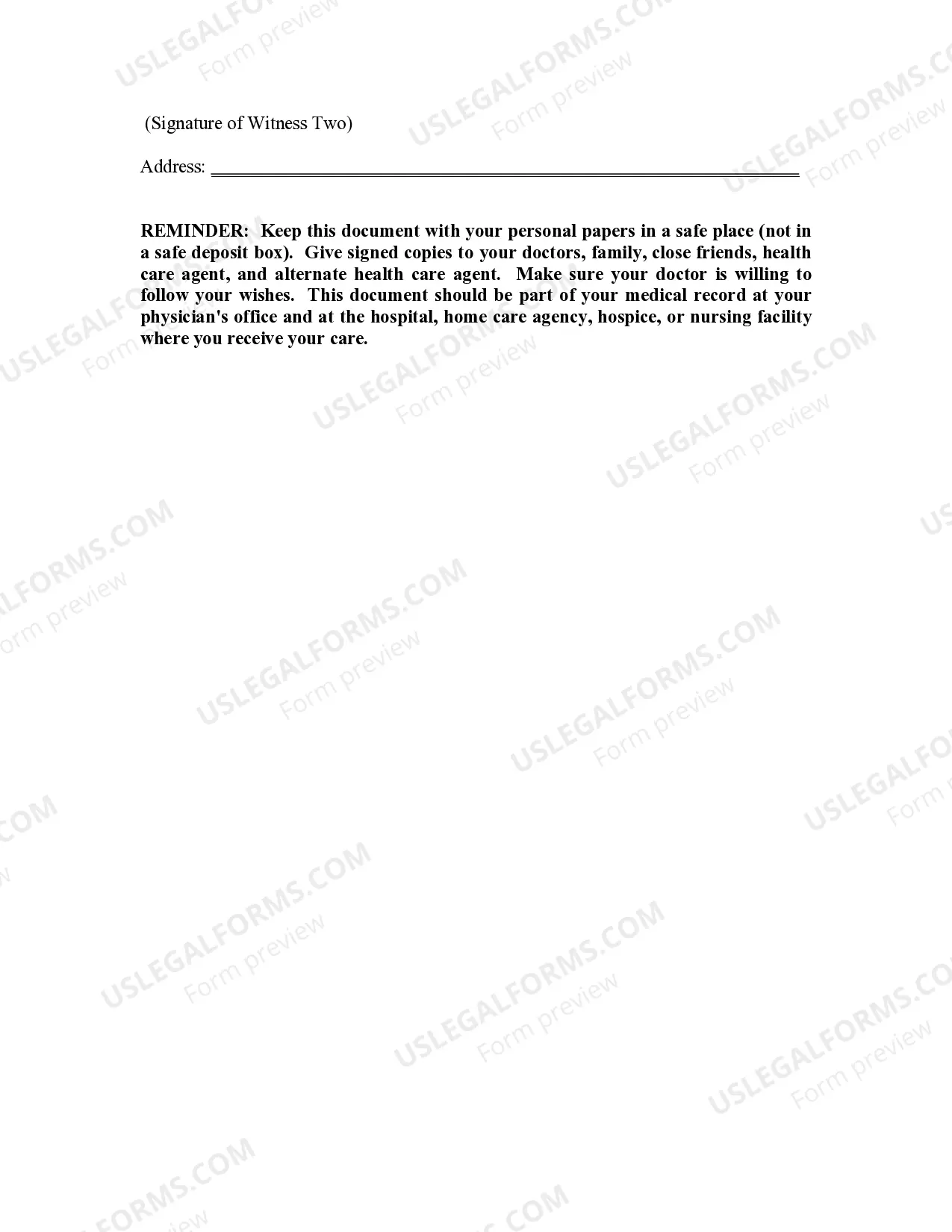
- Not providing copies of the directive to your health care agent and family.
Benefits of using this form online
- Convenient access to legal templates without needing to visit an attorney.
- Editability to customize the document according to your personal wishes.
- Faster completion and ability to save and retrieve your directive easily.
- Access to integrated resources to ensure proper notarization when needed.
What to keep in mind
- The Statutory Health Care Directive as Living Will allows you to specify your health care preferences and appoint someone to make decisions for you.
- It is crucial for ensuring your wishes are followed when you are unable to communicate them yourself.
- Proper completion and witnessing of the form are essential for it to be legally binding in Minnesota.
Looking for another form?
Form popularity
FAQ
In Minnesota, a healthcare directive does not need to be notarized to be valid. However, it must be signed by you and witnessed by two adults who are not named as your healthcare agents. The Minnesota Statutory Health Care Directive as Living Will is designed to be accessible, so this witnessing requirement makes it easy for you to create a legally binding document. Ensuring that your directive is properly signed and witnessed helps protect your healthcare wishes.
Creating a healthcare directive in Minnesota is a straightforward process. First, you can access the Minnesota Statutory Health Care Directive as Living Will template through platforms like USLegalForms, which provides easy-to-use resources. After filling out the form with your preferences and appointing a healthcare agent if desired, you should sign the document in front of a witness. This ensures that your healthcare wishes are legally recognized and respected.
Yes, in Minnesota, a living will is considered a type of healthcare directive. The Minnesota Statutory Health Care Directive as Living Will allows individuals to express their preferences for medical treatment in specific situations. It is important to note that this document also provides the option to appoint a healthcare agent to make decisions on your behalf if you are unable to do so. Therefore, a living will is an integral part of a comprehensive healthcare directive.
A living will is a specific type of healthcare directive that outlines your wishes regarding medical treatment in case you become unable to communicate. While both documents serve to express your healthcare preferences, the Minnesota Statutory Health Care Directive as Living Will encompasses a broader range of decisions, including appointing a healthcare agent. This means that with a healthcare directive, you can specify who will make medical decisions on your behalf. Understanding these differences empowers you to choose the right document for your needs.
Choose an online legal services provider or locate a will template. Carefully consider your distribution wishes. Identify a personal representative/executor. Understand the requirements to make your will legal. Make sure someone else knows about your will. Consult a lawyer if you have a more complicated estate.
Two witnesses or a notary required for a living will advance directive. Two witnesses required for a living will. Durable power of attorney for health care decisions requires a notary if you are granting your agent power to direct your burial or cremation, if not then you only need two witnesses.
Step 1 Download Your Living Will. Download in Adobe PDF, Microsoft Word (. Step 2 Health Care Directive. Step 3 Life Support. Step 4 Life-Sustaining Treatment. Step 5 End of Life Wishes. Step 6 Medical Power of Attorney. Step 7 Witness Acknowledgment. Step 8 Notary Acknowledgment.
Find an online template or service. Make a list of your assets. Be specific about who gets what. If you have minor children, choose a guardian. Give instructions for your pet. Choose an executor. Name a 'residuary beneficiary' List your funeral preferences.
Living will. A living will is a written, legal document that spells out medical treatments you would and would not want to be used to keep you alive, as well as your preferences for other medical decisions, such as pain management or organ donation. In determining your wishes, think about your values.