Minnesota Letter from Landlord to Tenant about Tenant engaging in illegal activity in premises as documented by law enforcement and if repeated, lease terminates
Overview of this form
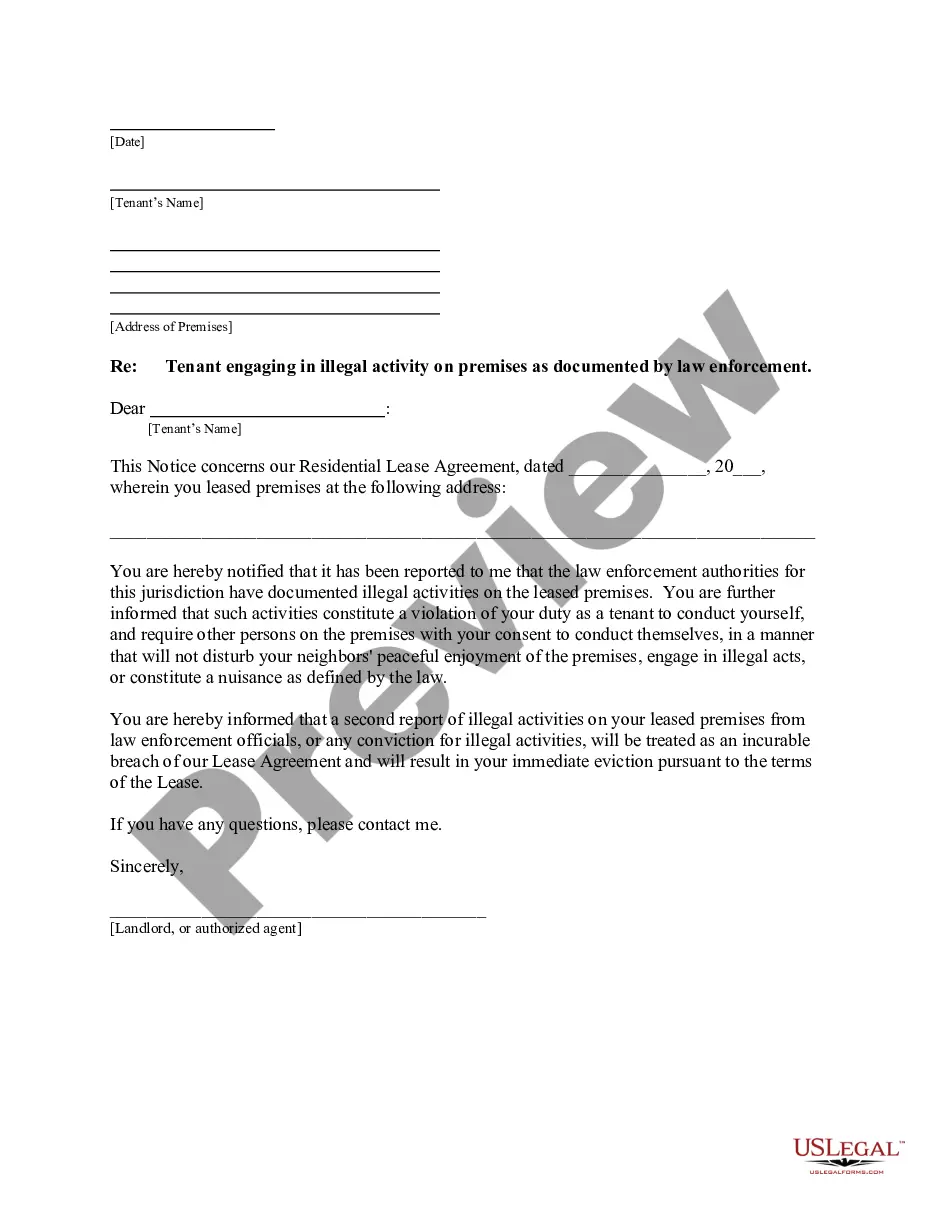
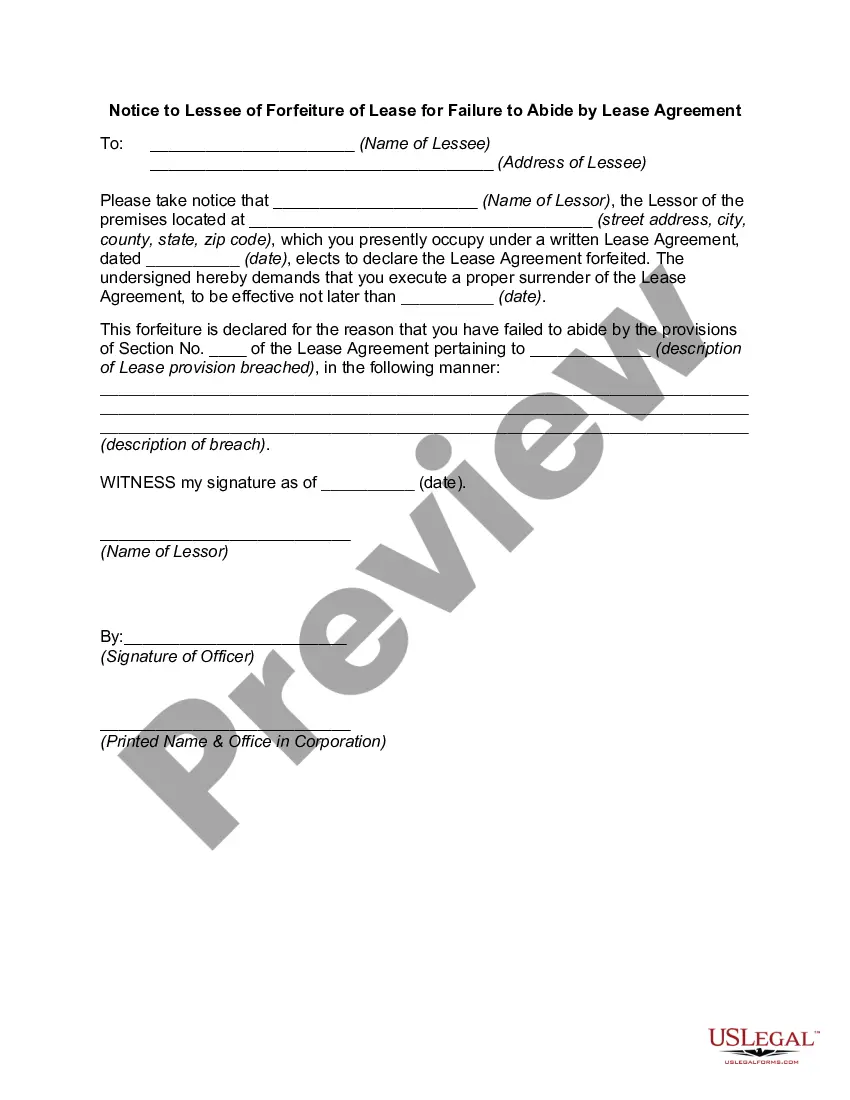
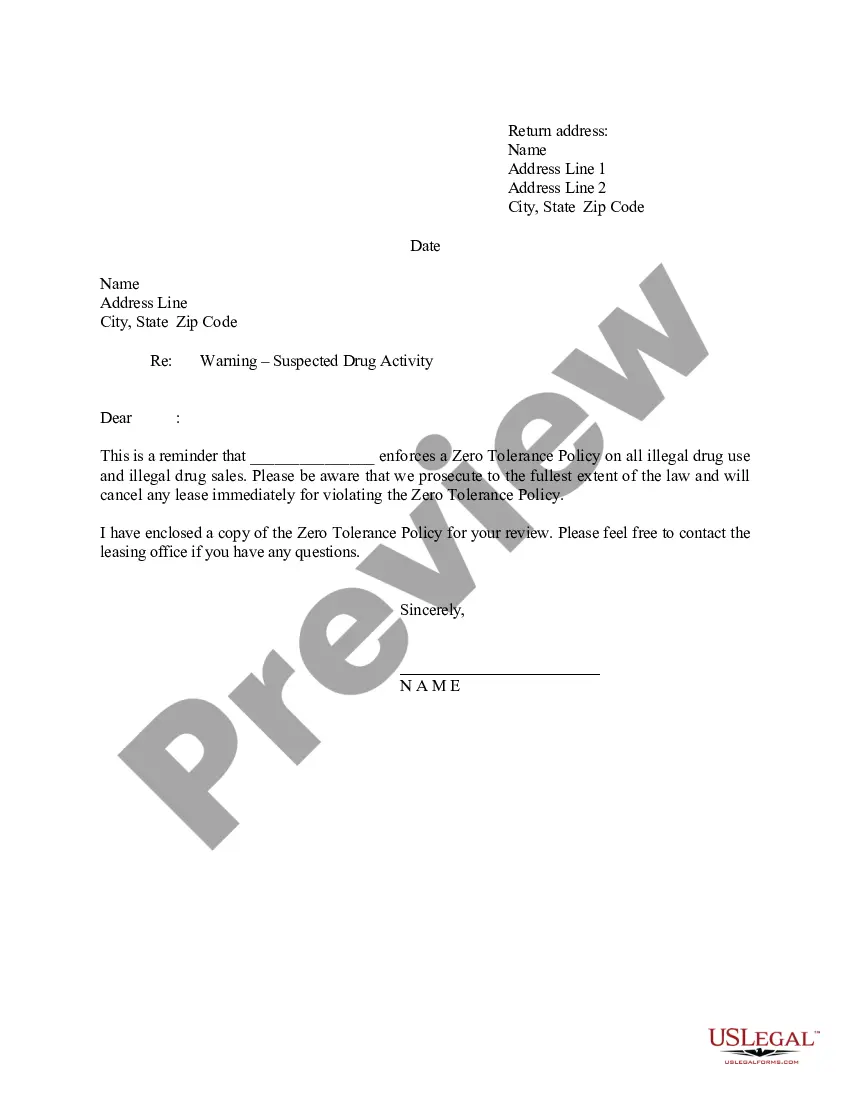
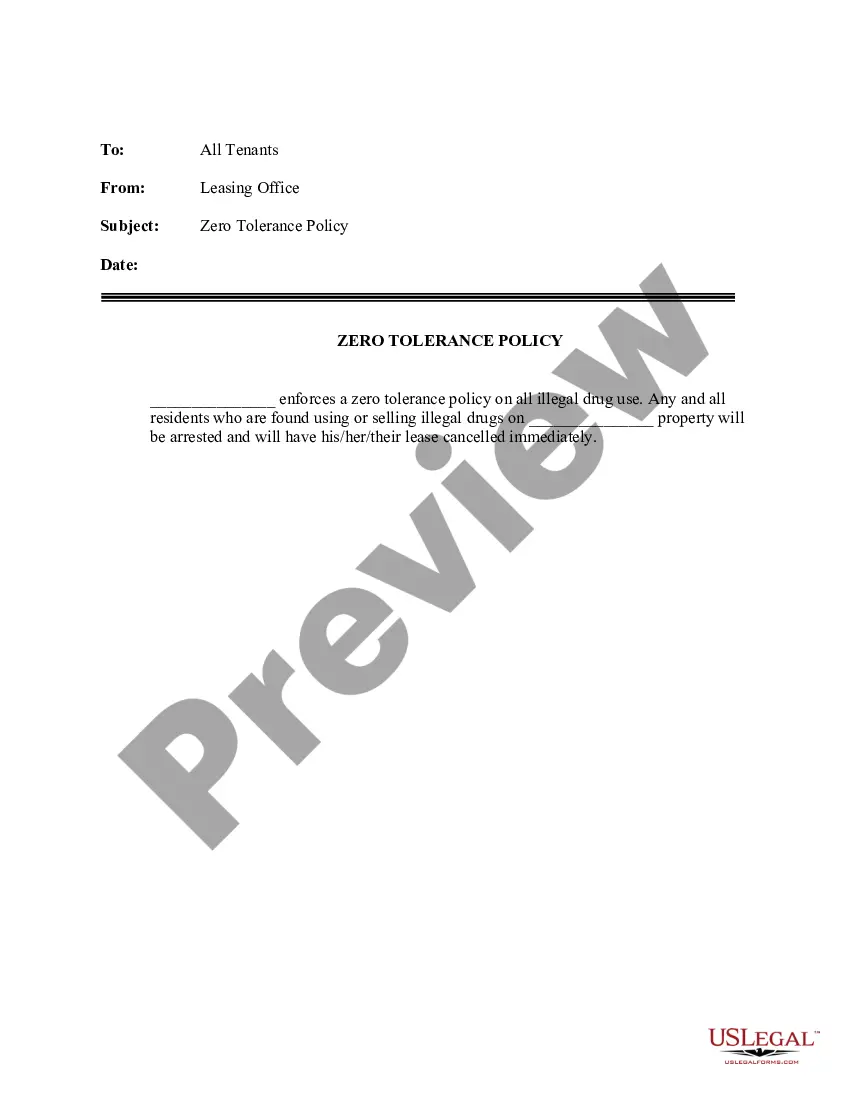
This Letter from Landlord to Tenant addresses situations where a tenant is reported to be engaging in illegal activities within the leased premises. The purpose of this letter is to formally notify the tenant of these violations and establish the consequences for continued illegal activity. This form is essential for landlords to communicate serious issues while adhering to legal guidelines, which distinguishes it from more generic notices or warnings.
Key components of this form
- Notification of reported illegal activities by law enforcement.
- Explanation of how such activities violate the lease agreement.
- Warning about potential eviction after a second offense or conviction.
- Contact information for the landlord for any questions.
- Signature line for the landlord to acknowledge the communication.

When to use this form
This form should be used when a landlord learns about illegal activities occurring on their property, which have been documented by law enforcement. It is a necessary step to formally address these issues with the tenant and to outline the potential consequences of continued illegal actions. Use this letter to reinforce the terms of the lease and to act proactively in maintaining a safe and lawful living environment for all tenants.
Who should use this form
- Landlords or property managers in charge of rental properties.
- Anyone with tenants who have been reported for illegal activities.
- Individuals seeking to ensure compliance with lease agreements and local laws.
Completing this form step by step
- Clearly state the date of the letter.
- Provide your name and contact information as the landlord.
- Identify the tenant's name and the rented property address.
- Insert details of the illegal activities reported by law enforcement.
- Specify the consequences if the illegal activity continues.
- Sign the letter to confirm it has been sent.
Is notarization required?
This form usually doesn’t need to be notarized. However, local laws or specific transactions may require it. Our online notarization service, powered by Notarize, lets you complete it remotely through a secure video session, available 24/7.
Get your form ready online
Our built-in tools help you complete, sign, share, and store your documents in one place.
Make edits, fill in missing information, and update formatting in US Legal Forms—just like you would in MS Word.
Download a copy, print it, send it by email, or mail it via USPS—whatever works best for your next step.
Sign and collect signatures with our SignNow integration. Send to multiple recipients, set reminders, and more. Go Premium to unlock E-Sign.
If this form requires notarization, complete it online through a secure video call—no need to meet a notary in person or wait for an appointment.
We protect your documents and personal data by following strict security and privacy standards.

Make edits, fill in missing information, and update formatting in US Legal Forms—just like you would in MS Word.

Download a copy, print it, send it by email, or mail it via USPS—whatever works best for your next step.

Sign and collect signatures with our SignNow integration. Send to multiple recipients, set reminders, and more. Go Premium to unlock E-Sign.

If this form requires notarization, complete it online through a secure video call—no need to meet a notary in person or wait for an appointment.

We protect your documents and personal data by following strict security and privacy standards.
Mistakes to watch out for
- Failing to include specific details about the illegal activity.
- Not signing the letter, which can make it less formal and effective.
- Using vague language that does not clearly outline consequences.
- Not checking local laws to ensure compliance with notice requirements.
Advantages of online completion
- Convenience of completing the form at your own pace.
- Editability allows for customization to fit your situation.
- Reliability ensures you have a professionally drafted document.
- Instant downloads save time compared to traditional methods.
Legal use & context
- This letter serves as a formal warning, which can be critical in legal disputes.
- An effective notice can strengthen the landlord's position in eviction proceedings.
- Ensure compliance with state-specific laws governing landlord-tenant interactions.
Quick recap
- Formally address illegal activities by tenants with clear consequences.
- Protect your rights as a landlord and maintain a lawful environment.
- Be aware of the specific legal landscape in your state when using this form.
Looking for another form?

Form popularity
FAQ
When a landlord violates a lease agreement, tenants have several options to address the situation. Tenants may seek remedies such as repairing damages themselves and deducting costs from rent, or they could pursue legal action. In cases involving a Minnesota Letter from Landlord to Tenant about Tenant engaging in illegal activity in premises as documented by law enforcement and if repeated, lease terminates, it’s essential to ensure that the landlord is acting within legal boundaries. Utilizing resources from uslegalforms can guide tenants through their rights and available actions.
A retaliatory eviction occurs when a landlord seeks to evict a tenant in response to the tenant exercising their legal rights. This might include reporting housing code violations or participating in tenant organizing. If a landlord sends a Minnesota Letter from Landlord to Tenant about Tenant engaging in illegal activity in premises as documented by law enforcement and if repeated, lease terminates, it could be seen as retaliatory if the tenant had previously engaged in protected activities. Understanding your rights can help prevent such unfair evictions.
Minnesota's statute 504b addresses several key issues related to landlord-tenant relationships. It applies to the termination of a lease, eviction procedures, maintenance responsibilities, and tenant rights. Specifically, it allows landlords to issue a Minnesota Letter from Landlord to Tenant about Tenant engaging in illegal activity in premises as documented by law enforcement and if repeated, lease terminates. It's crucial for both landlords and tenants to understand these aspects to ensure compliance and protect their rights.
When writing a letter to a tenant, start with a polite greeting and clearly outline the purpose of the letter. Whether addressing a concern or providing information, make sure to reference any relevant documents, such as the Minnesota Letter from Landlord to Tenant about Tenant engaging in illegal activity in premises as documented by law enforcement. Keep the tone respectful and professional, and conclude with an invitation for the tenant to reach out with any questions or concerns they may have.
To write a violation notice, begin with a clear heading that identifies the document as a violation notice. Include essential details such as the tenant's name, the property address, and the specific violation, relating it to the Minnesota Letter from Landlord to Tenant about Tenant engaging in illegal activity in premises as documented by law enforcement. Provide a deadline for the tenant to address the violation and state the potential consequences for non-compliance, ensuring that the message is straightforward and professional.
In Minnesota, landlords cannot retaliate against tenants for exercising their legal rights, such as reporting illegal activity. Additionally, they cannot lock out tenants without proper legal procedures or discriminate against tenants based on race, gender, or other protected characteristics. Understanding these restrictions is crucial to maintaining a lawful relationship with tenants, particularly when issuing a Minnesota Letter from Landlord to Tenant about Tenant engaging in illegal activity in premises as documented by law enforcement.
Writing a violation letter to a tenant starts with a formal greeting, followed by a concise explanation of the violation. Reference the Minnesota Letter from Landlord to Tenant about Tenant engaging in illegal activity in premises as documented by law enforcement, ensuring that the tenant understands the severity of the situation. Clearly state what actions are required to remedy the violation and the timeline for compliance, emphasizing the possible outcome of lease termination.
Notifying a tenant of a lease violation requires a clear and direct approach. Begin by specifying the lease terms that have been violated, and relate this to the Minnesota Letter from Landlord to Tenant about Tenant engaging in illegal activity in premises as documented by law enforcement. It is essential to provide a timeline for the tenant to rectify the issue, along with the consequences of failing to do so. Always keep a record of this notification for future reference.
To write a warning letter to a tenant, start by clearly stating the purpose of the letter. Include specific details about the illegal activity, referencing the Minnesota Letter from Landlord to Tenant about Tenant engaging in illegal activity in premises as documented by law enforcement. Make sure to mention the potential consequences if the behavior continues, such as lease termination. Close the letter by inviting the tenant to discuss the matter further.
If you suspect that your landlord is engaging in illegal activity, you can report them to the local authorities or law enforcement. Document any evidence you have, such as photographs or communications, as this will support your claim. Additionally, you can review your lease agreement and state laws regarding landlord obligations. For assistance, consider using a Minnesota Letter from Landlord to Tenant about Tenant engaging in illegal activity in premises as documented by law enforcement and if repeated, lease terminates, which can guide you through the proper steps.