Minnesota Warranty Deed from Individual to a Trust
Understanding this form
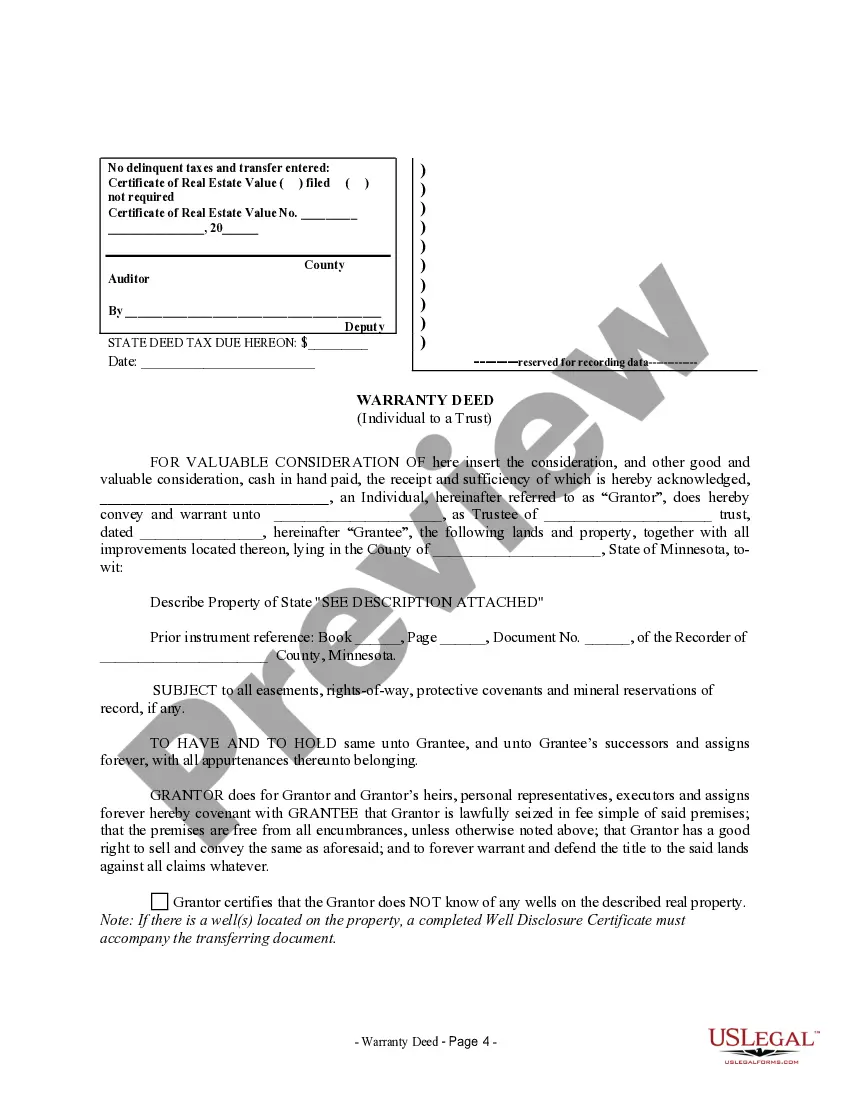
The Warranty Deed from Individual to a Trust is a legal document that facilitates the transfer of property ownership from an individual (grantor) to a trust (grantee). This form ensures that the property is conveyed with a guarantee of clear title, meaning the grantor warrants that they have the right to transfer the property and that it is free from encumbrances, except for any specifically noted exceptions. Unlike other types of deeds, this warranty deed offers additional protection to the grantee regarding the property's title.
Main sections of this form
- Grantor and Grantee Information: Identifies the individual transferring the property and the trust receiving it.
- Property Description: Details the property being transferred, including its location and any improvements on it.
- Consideration Clause: States the payment or value exchanged for the property transfer.
- Covenant of Warranty: Affirms that the grantor legally owns the property and guarantees against any claims against the title.
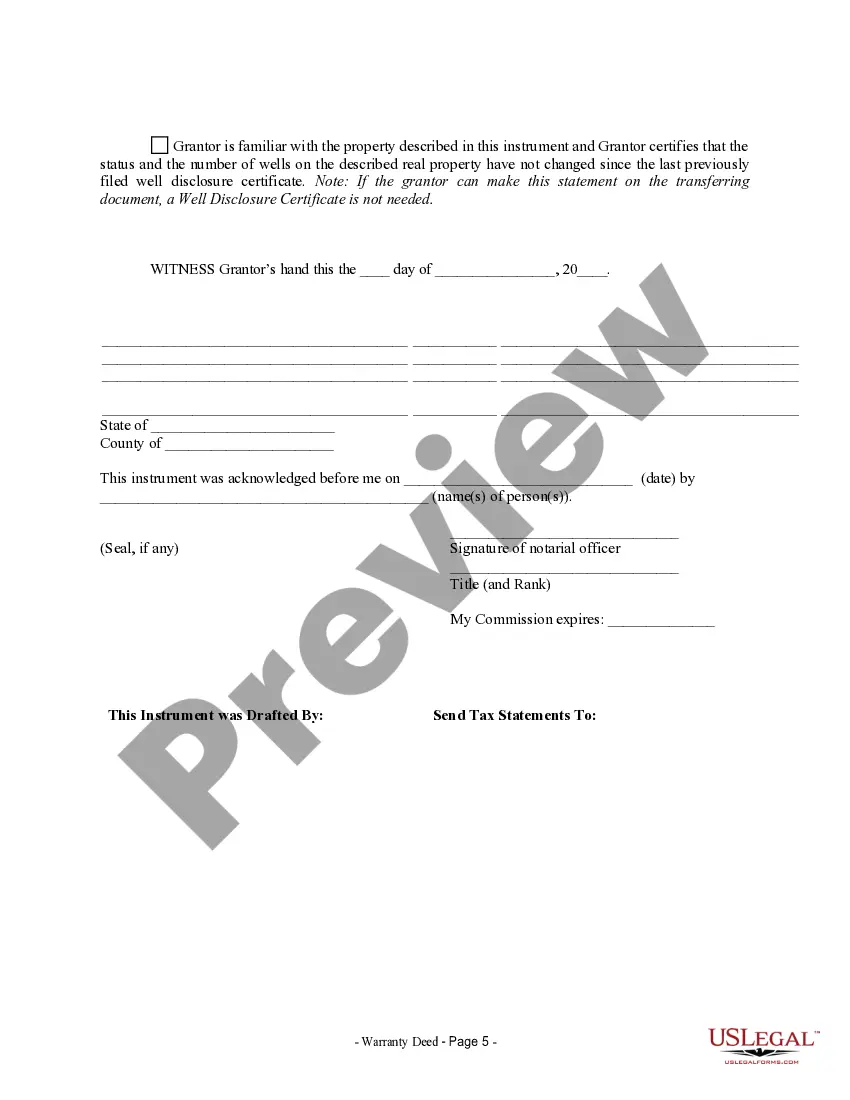
- Notary Acknowledgment: Confirms the identities of the parties involved and validates the document.



When this form is needed
This form is necessary when an individual wishes to transfer ownership of real property to a trust for purposes such as estate planning, asset protection, or simplifying future property management. It can also be used when the grantor wants to ensure that the property's title is protected from future claims.
Who needs this form
- Individuals transferring real estate into a trust for personal or family estate planning.
- Trustees looking to formalize property acquisitions for the benefit of the trust's beneficiaries.
- Anyone seeking to ensure that property ownership is legally documented and safeguarded against title disputes.
Steps to complete this form
- Identify the parties involved: the grantor (individual) and the grantee (trust).
- Provide a detailed description of the property being transferred.
- Insert the consideration amount being exchanged for the property.
- Sign the document in the presence of a notary public.
- Ensure that the acknowledgment section is properly filled out by the notary.
Is notarization required?
This form needs to be notarized to ensure legal validity. US Legal Forms provides secure online notarization powered by Notarize, allowing you to complete the process through a verified video call, available anytime.
Get your form ready online
Our built-in tools help you complete, sign, share, and store your documents in one place.
Make edits, fill in missing information, and update formatting in US Legal Forms—just like you would in MS Word.
Download a copy, print it, send it by email, or mail it via USPS—whatever works best for your next step.
Sign and collect signatures with our SignNow integration. Send to multiple recipients, set reminders, and more. Go Premium to unlock E-Sign.
If this form requires notarization, complete it online through a secure video call—no need to meet a notary in person or wait for an appointment.
We protect your documents and personal data by following strict security and privacy standards.

Make edits, fill in missing information, and update formatting in US Legal Forms—just like you would in MS Word.

Download a copy, print it, send it by email, or mail it via USPS—whatever works best for your next step.

Sign and collect signatures with our SignNow integration. Send to multiple recipients, set reminders, and more. Go Premium to unlock E-Sign.

If this form requires notarization, complete it online through a secure video call—no need to meet a notary in person or wait for an appointment.

We protect your documents and personal data by following strict security and privacy standards.
Avoid these common issues
- Failing to provide a complete and accurate property description.
- Not specifying the consideration exchanged for the property.
- Omitting the notary acknowledgment section or failing to sign in front of a notary.
- Forgetting to verify local rules about additional disclosures or requirements related to the transfer.
Why complete this form online
- Convenience of completing the form digitally from anywhere with internet access.
- Editability allows you to enter information accurately before printing.
- Access to templates drafted by licensed attorneys for accuracy and compliance with state law.
Looking for another form?






Form popularity
FAQ
Yes, you can complete a warranty deed without an attorney, but it is essential to ensure you follow the legal requirements correctly. By using a Minnesota Warranty Deed from Individual to a Trust, you can handle the transfer independently if you have a clear understanding of the process. However, consider using platforms like uslegalforms to access templates and guidance, which can help you avoid potential mistakes and ensure compliance with state laws.
Filling out a warranty deed form involves several straightforward steps. First, you need to identify the grantor, the person transferring the property, and the grantee, which is the trust. Then, clearly describe the property being transferred. When using a Minnesota Warranty Deed from Individual to a Trust, be sure to include the legal description of the property and any necessary signatures. You can simplify this process by utilizing the resources available on the uslegalforms platform.
A warranty deed can be deemed invalid for several reasons, such as lack of proper signatures, failure to comply with state laws, or if the grantor does not have legal ownership of the property. Additionally, if the deed is not recorded correctly, it may not hold up in court. To avoid these issues when transferring a Minnesota Warranty Deed from Individual to a Trust, make sure all legal requirements are met and consider using resources like US Legal Forms to guide you.
Yes, you can transfer a warranty deed, including a Minnesota Warranty Deed from Individual to a Trust. This type of deed guarantees that the grantor has clear title to the property and the right to transfer it. To ensure a smooth transfer, you should follow the required legal procedures and consider using a reliable platform like US Legal Forms to access the necessary documents.
The choice between a quitclaim deed and a trust depends on your specific needs. A quitclaim deed transfers ownership without warranties, while a trust can provide more security and control over your assets, especially when using a Minnesota Warranty Deed from Individual to a Trust. If you want to protect your assets and provide for beneficiaries, a trust may be the better option.
In New Jersey, you are not required to have a lawyer to transfer a deed. However, considering the complexities involved, especially with documents like a Minnesota Warranty Deed from Individual to a Trust, seeking legal advice could be beneficial. A lawyer can help you navigate the nuances of state law and ensure that the transfer is executed properly.
You do not necessarily need a lawyer to transfer a deed, including a Minnesota Warranty Deed from Individual to a Trust. However, involving a lawyer can help ensure that the process is completed correctly and that all legal requirements are met. If you are unsure about the steps or the implications of the transfer, consulting with a legal professional can provide peace of mind.
No, a warranty deed and a deed of trust are not the same. A warranty deed transfers ownership of the property while providing guarantees about the title, whereas a deed of trust is a security instrument used in real estate financing, often involving a borrower, lender, and trustee. If you are working with a Minnesota Warranty Deed from Individual to a Trust, it’s important to focus on the ownership transfer and not confuse it with financing agreements.
A warranty deed can be issued by any property owner who wishes to transfer their interest in the property to another party. This includes individuals, corporations, and trustees acting on behalf of a trust. When transferring a Minnesota Warranty Deed from Individual to a Trust, ensure that the issuing party has clear ownership and the right to transfer the property.
A warranty deed provides guarantees from the seller to the buyer regarding the title of the property, offering greater protection. A trustee's deed, however, simply transfers property from a trust without such guarantees. Understanding these differences is important when executing a Minnesota Warranty Deed from Individual to a Trust, as it affects the rights and protections available to the parties involved.