Michigan Last Will and Testament for Married person with Minor Children
What is this form?
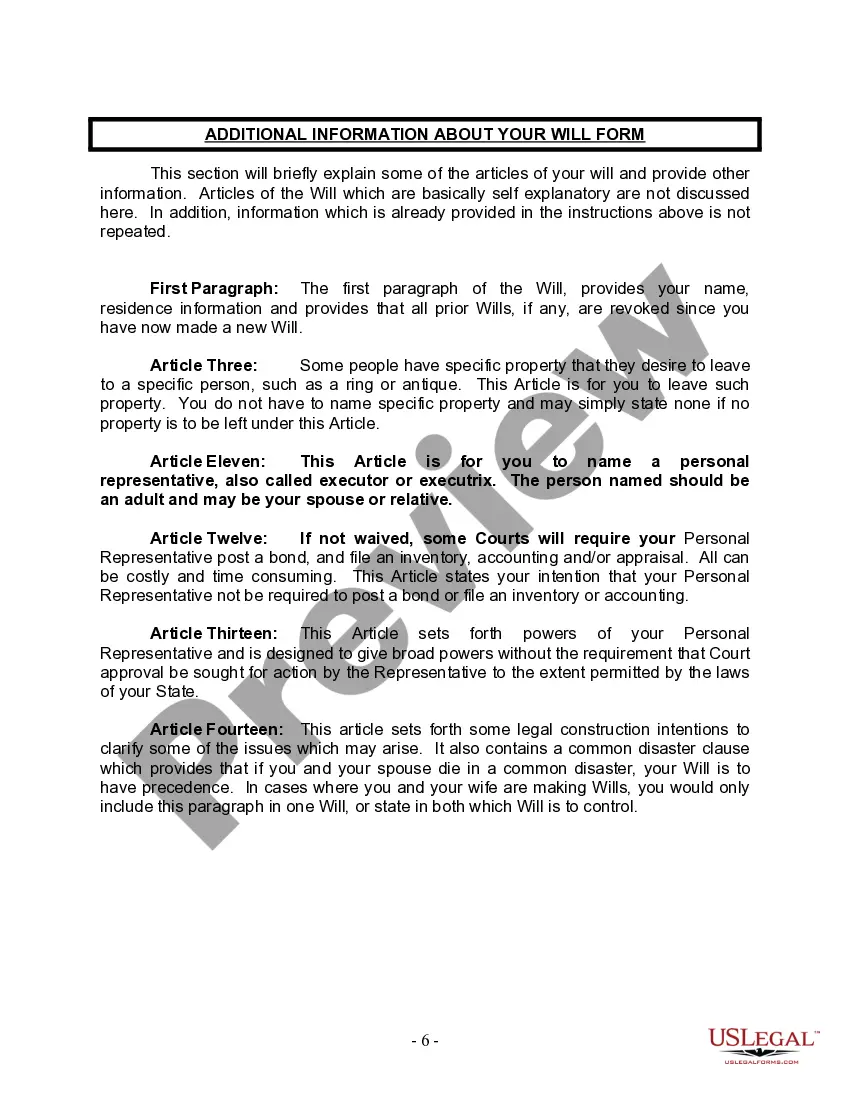
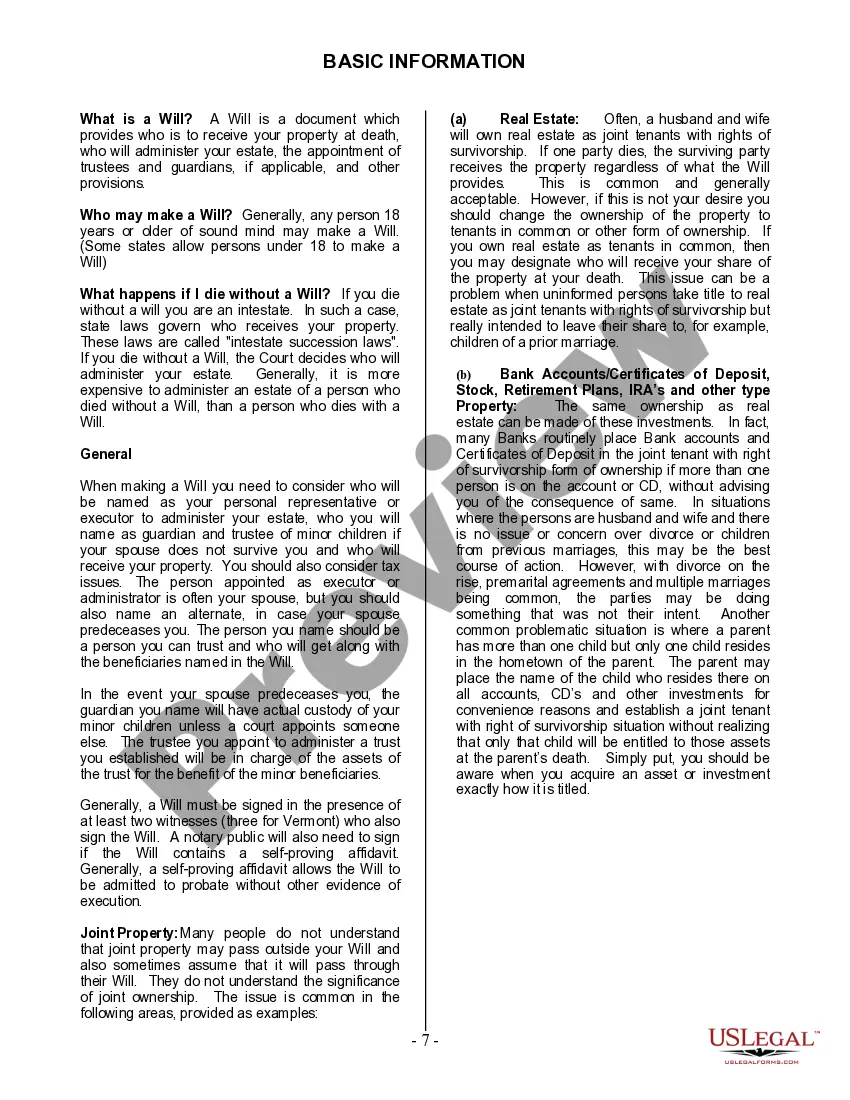
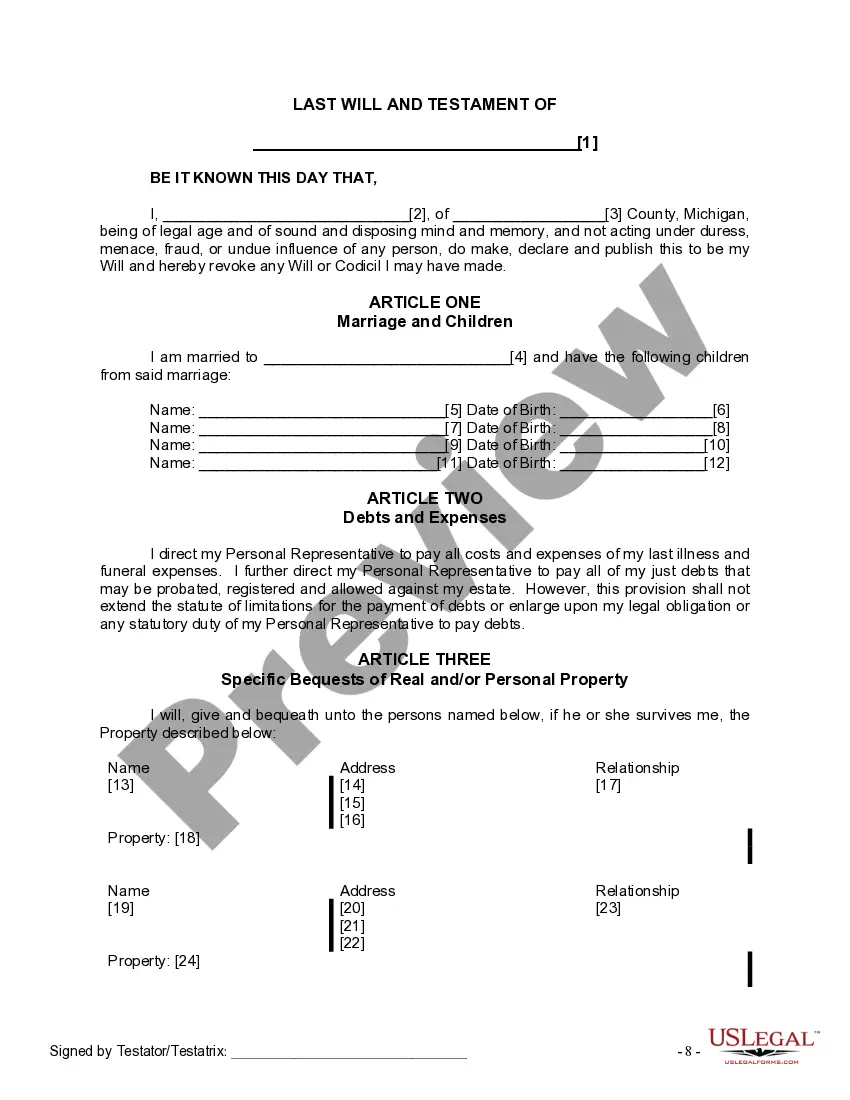
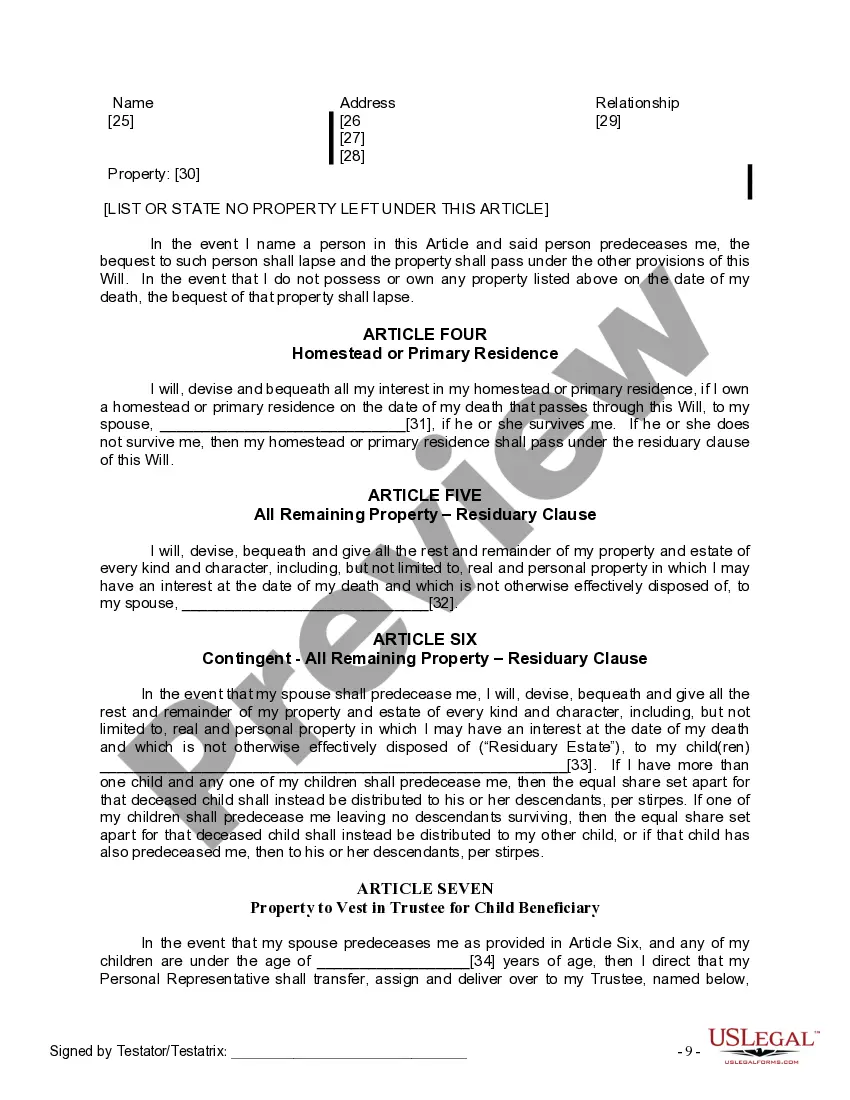
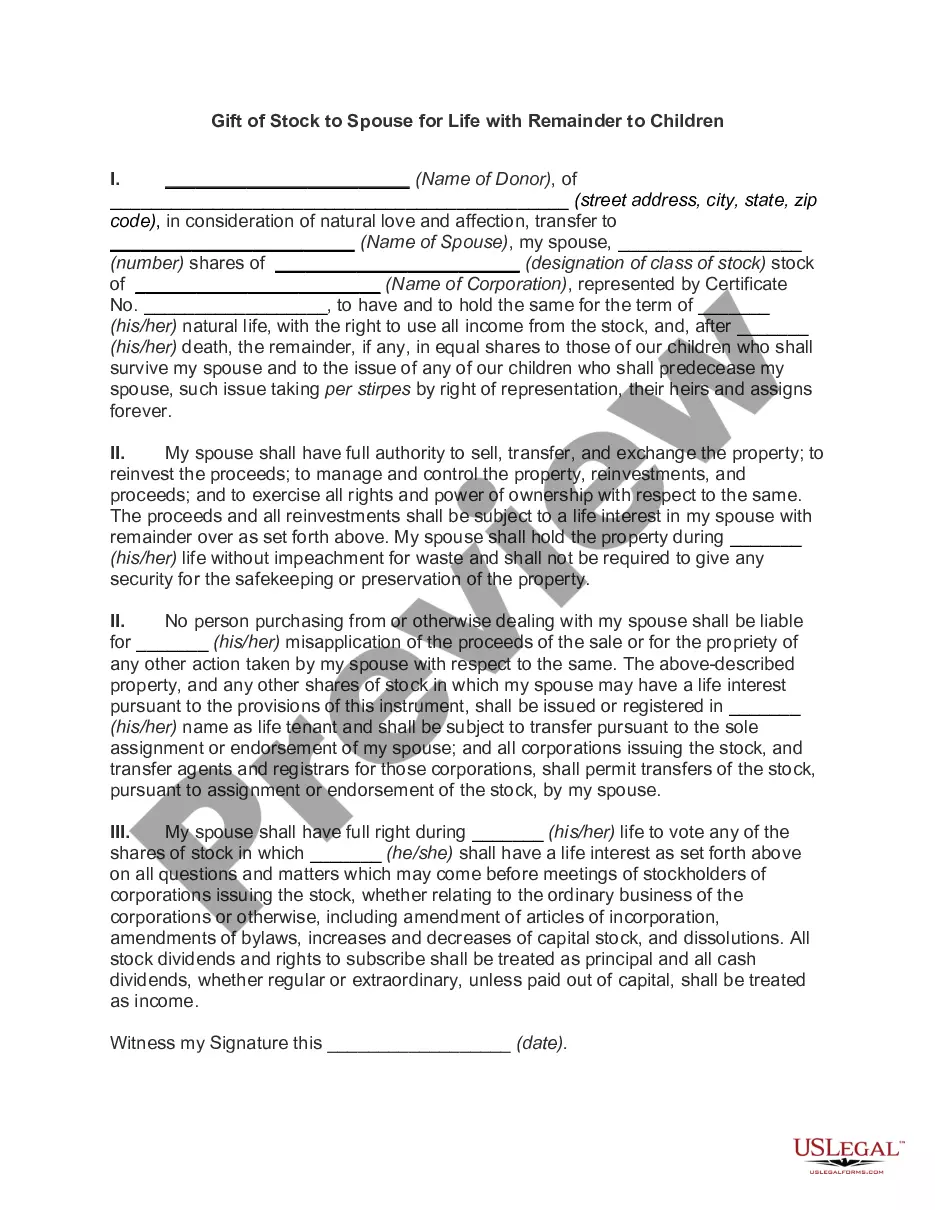
This Last Will and Testament is specifically designed for a married person with minor children. It outlines the distribution of your assets, appoints a personal representative, and makes provisions for your spouse and children. This form provides a clear legal framework to express your wishes regarding your estate after your passing, ensuring peace of mind for you and your family. Unlike general wills, this document tailors your instructions to accommodate the specific needs of a married person with dependent children.
Key components of this form
- Personal Information: Includes your name, residence, and family details.
- Appointment of Executor: Designates an executor to manage your estate.
- Specific Bequests: Allows you to detail items or assets you want to bequeath to specific individuals.
- Residuary Clause: Distributes any remaining assets to your spouse or children.
- Guardianship Provisions: Appoints a guardian for minor children in the event of both parents' deaths.







When to use this form
This form is essential when you want to ensure that your assets are carefully allocated to your spouse and children after your death. Use this will if you are married and have minor children, wish to establish clear guardianship for them, and want to specify how your estate will be managed and distributed. It's also necessary for updating prior wills or creating a will for the first time to reflect your current family situation.
Who needs this form
- Married individuals with minor children.
- Individuals who want to ensure their spouse and children are financially protected after their passing.
- Those updating or creating a will to include specific family provisions.
- Individuals looking to designate guardianship for their minor children.
Steps to complete this form
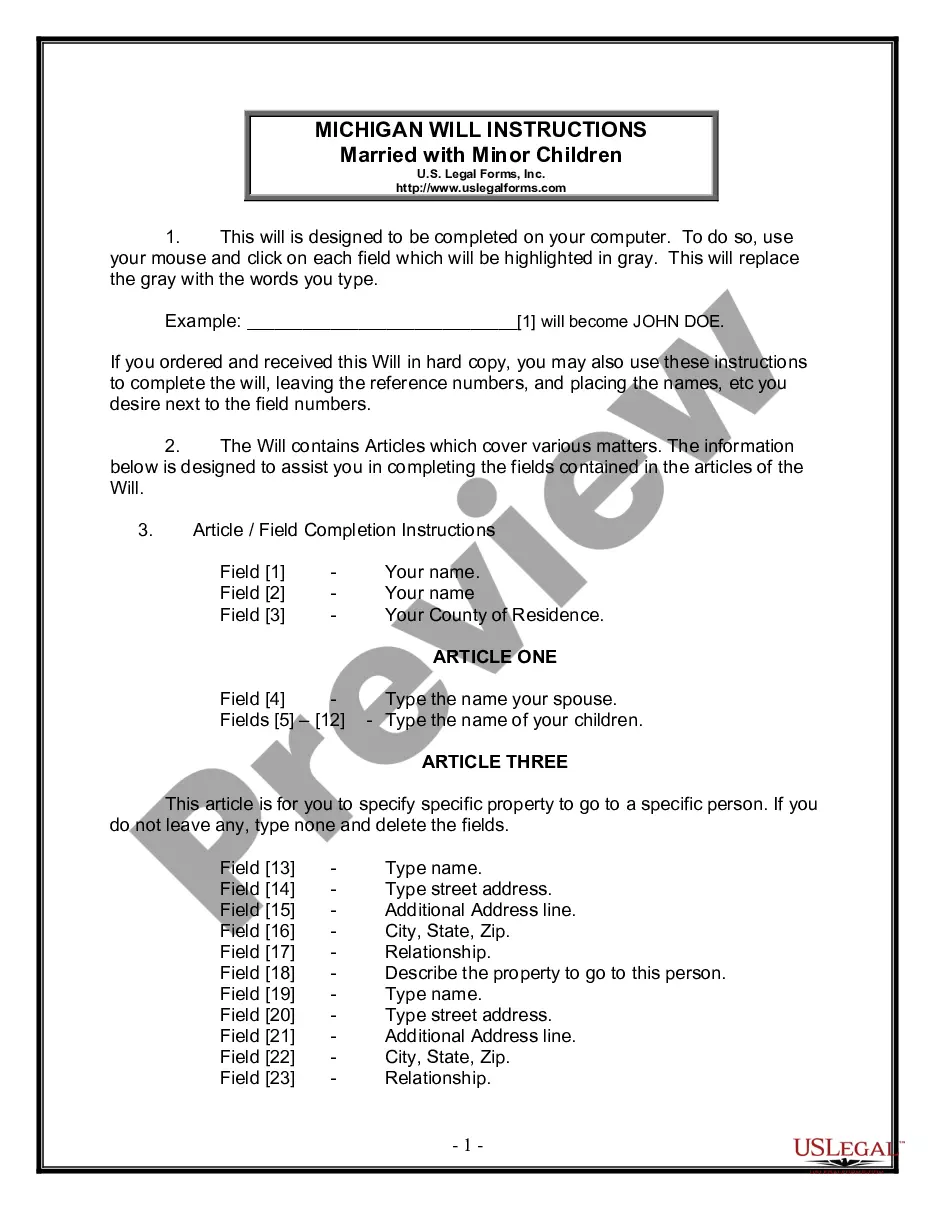
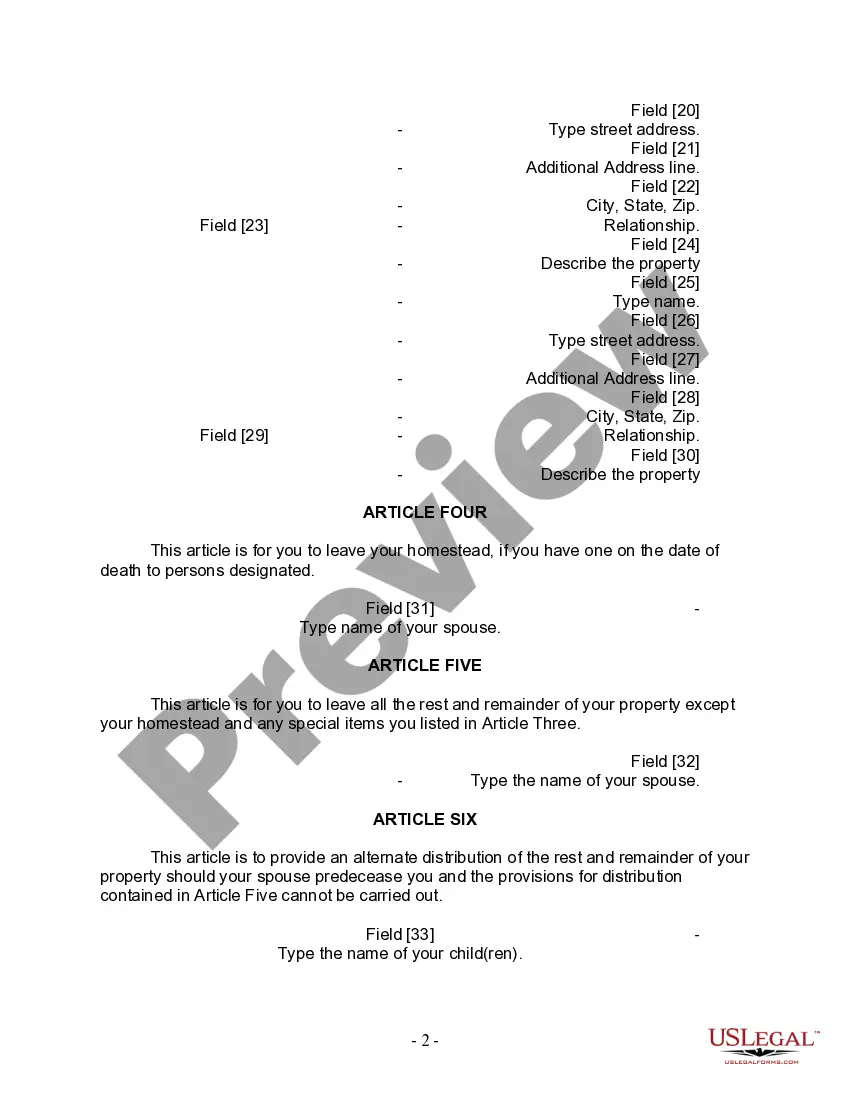
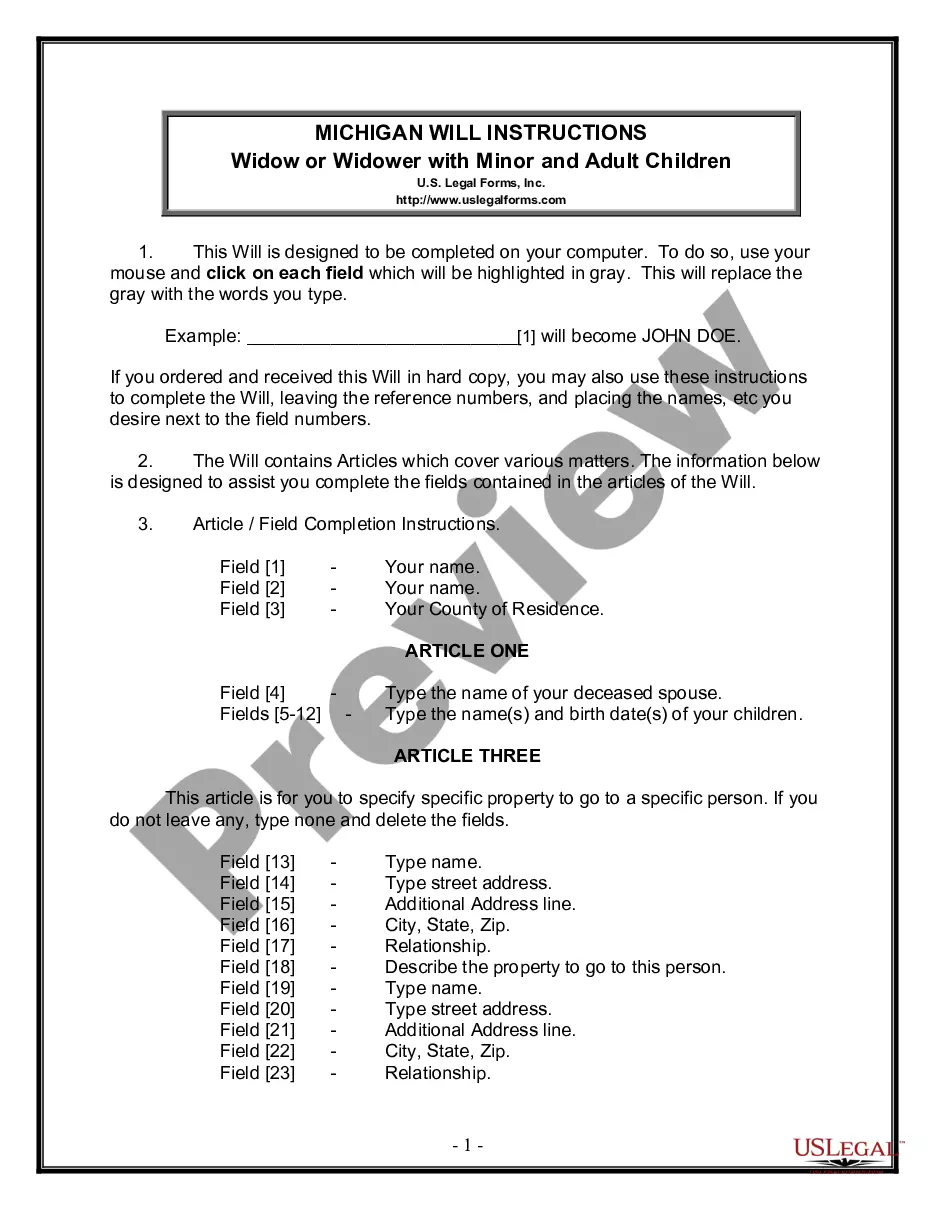
- Identify the parties: Enter your full name, spouse's name, and the names of your minor children.
- Specify specific property: If applicable, list specific items or properties you wish to bequeath to certain individuals.
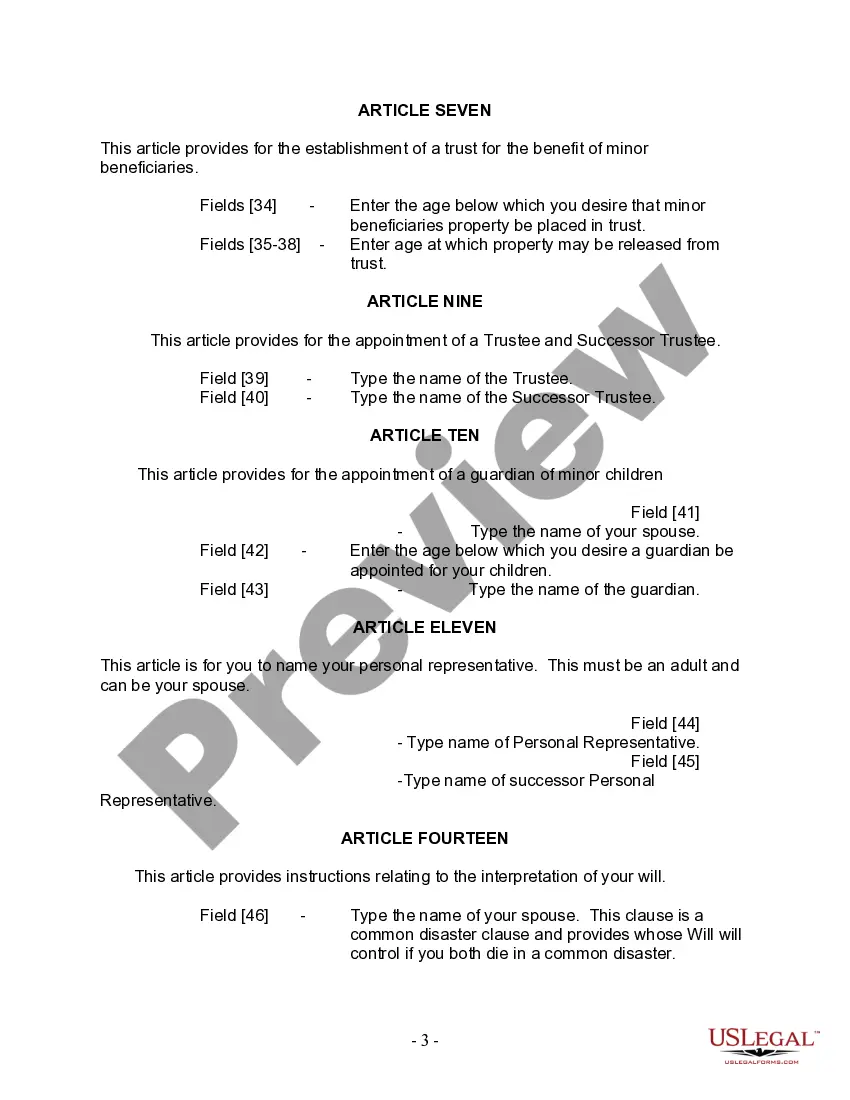
- Appoint guardianship: Designate a guardian for your children in case both parents are deceased.
- Choose your executor: Identify your personal representative who will manage your estate.
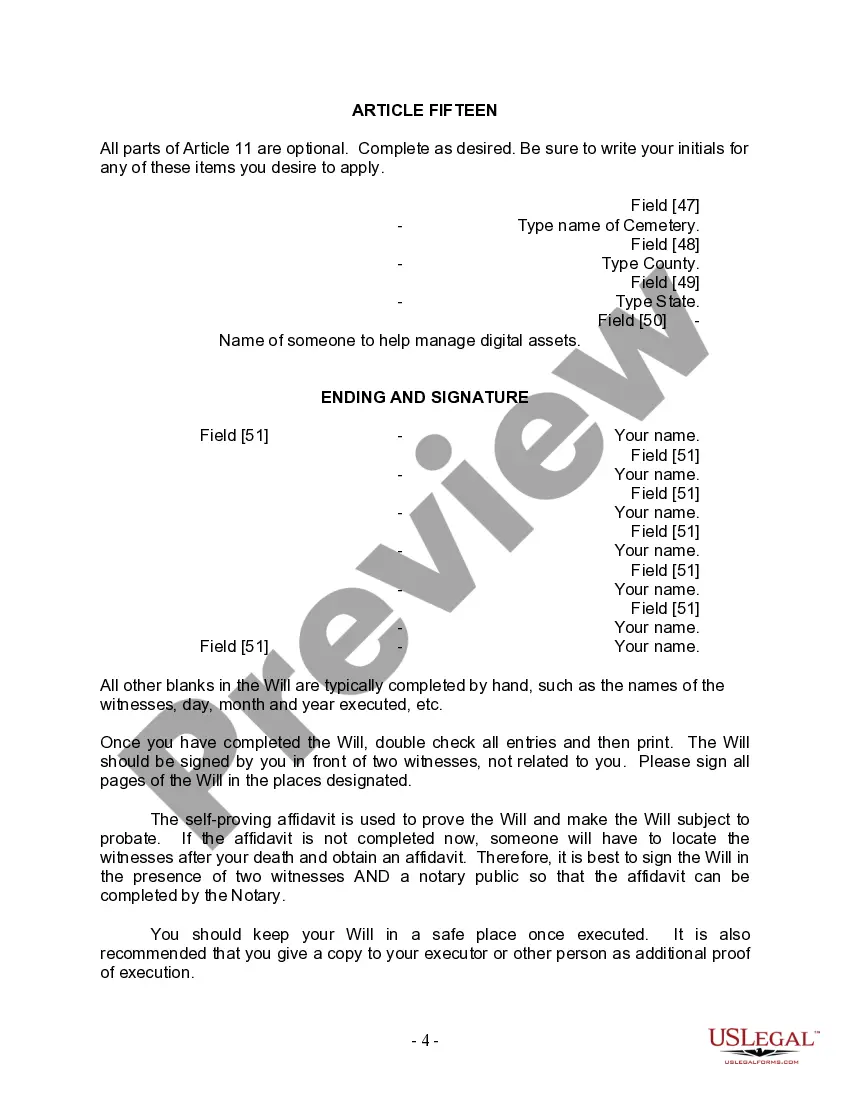
- Finalize and sign: Ensure the will is signed in the presence of two witnesses and, if applicable, notarized.
Does this form need to be notarized?
Yes, this form must be notarized to be legally valid in many states, particularly if the self-proving affidavit is included. Notarization can simplify the probate process. US Legal Forms provides integrated online notarization services, making it easy to complete this step securely and efficiently without needing to travel.
Get your form ready online
Our built-in tools help you complete, sign, share, and store your documents in one place.
Make edits, fill in missing information, and update formatting in US Legal Forms—just like you would in MS Word.
Download a copy, print it, send it by email, or mail it via USPS—whatever works best for your next step.
Sign and collect signatures with our SignNow integration. Send to multiple recipients, set reminders, and more. Go Premium to unlock E-Sign.
If this form requires notarization, complete it online through a secure video call—no need to meet a notary in person or wait for an appointment.
We protect your documents and personal data by following strict security and privacy standards.

Make edits, fill in missing information, and update formatting in US Legal Forms—just like you would in MS Word.

Download a copy, print it, send it by email, or mail it via USPS—whatever works best for your next step.

Sign and collect signatures with our SignNow integration. Send to multiple recipients, set reminders, and more. Go Premium to unlock E-Sign.

If this form requires notarization, complete it online through a secure video call—no need to meet a notary in person or wait for an appointment.

We protect your documents and personal data by following strict security and privacy standards.
Avoid these common issues
- Failing to have the will signed by two qualifying witnesses.
- Not updating the will after significant life events (e.g., divorce, the birth of additional children).
- Not clearly specifying guardianship or custodial wishes for minor children.
Benefits of completing this form online
- Convenient: Complete the form from anywhere at your own pace.
- Editability: Easily modify the form as your circumstances change.
- Reliability: Legal forms are drafted by licensed attorneys, ensuring they meet state laws and requirements.
Key takeaways
- Complete this will to ensure your wishes are documented regarding asset distribution.
- Appoint a guardian for your minor children to secure their future.
- Remember to have your will notarized along with the signatures of witnesses.
- Review and update your will frequently to reflect changes in your life situation.
Looking for another form?


Form popularity
FAQ
Excluding a child from your will involves clearly articulating your decision in your Michigan Last Will and Testament for Married person with Minor Children. You should specify that the child is not receiving any inheritance and provide a reason if you feel comfortable doing so. Consulting with a legal professional ensures that your wishes are expressed appropriately and legally.
To exclude children from your will, you need to explicitly state your intentions in your Michigan Last Will and Testament for Married person with Minor Children. Clearly documenting your reasons can help prevent potential disputes. It's wise to seek legal guidance to ensure your wishes are properly conveyed and legally binding.
In Michigan, marriage does not automatically override a will, but it can impact how your assets are distributed. If you marry after creating your will, your spouse may have certain rights to your estate. Updating your Michigan Last Will and Testament for Married person with Minor Children after marriage is essential to reflect your current circumstances and intentions.
Disinheriting a child in Michigan can be challenging, but it is possible with the right approach. You must explicitly state your intention in your Michigan Last Will and Testament for Married person with Minor Children to avoid misunderstandings. It is advisable to work with a legal expert to ensure that your will reflects your wishes and complies with state laws.
When writing a Michigan Last Will and Testament for Married person with Minor Children, it is crucial to include guardianship provisions for your minor child. You should clearly name a guardian who will care for your child in case both parents pass away. Additionally, outline how you want your assets to be managed for your child's benefit until they reach adulthood.
In Michigan, the order of inheritance typically follows a specific hierarchy. If a person dies without a will, their spouse and children generally inherit first. If there are no children, the spouse receives the entire estate, while if there are children, they split the estate with the spouse. Understanding this order can help you make informed decisions when drafting your Michigan Last Will and Testament for Married person with Minor Children.
Yes, you can exclude an adult child from your Michigan Last Will and Testament for Married person with Minor Children. However, it is important to clearly state your intentions in the will to avoid confusion or legal disputes later. Consulting with a legal professional can help ensure that your wishes are properly documented.
In Michigan, a spouse does not automatically inherit everything if there are minor children involved. Instead, the estate is divided among the surviving spouse and the children according to state law. This is particularly important to consider when drafting a Michigan Last Will and Testament for Married person with Minor Children. Utilizing US Legal Forms can help you create a clear will that reflects your wishes and secures your family’s future.
In Michigan, a last will and testament does not need to be notarized to be valid. However, having it notarized can help streamline the probate process. Notarization adds an extra layer of authenticity, which can be beneficial, especially for a Michigan Last Will and Testament for Married person with Minor Children. If you choose to use a platform like US Legal Forms, you can find templates that guide you through the process and ensure compliance with Michigan laws.