Michigan Revocation of Do Not Resuscitate Order
About this form
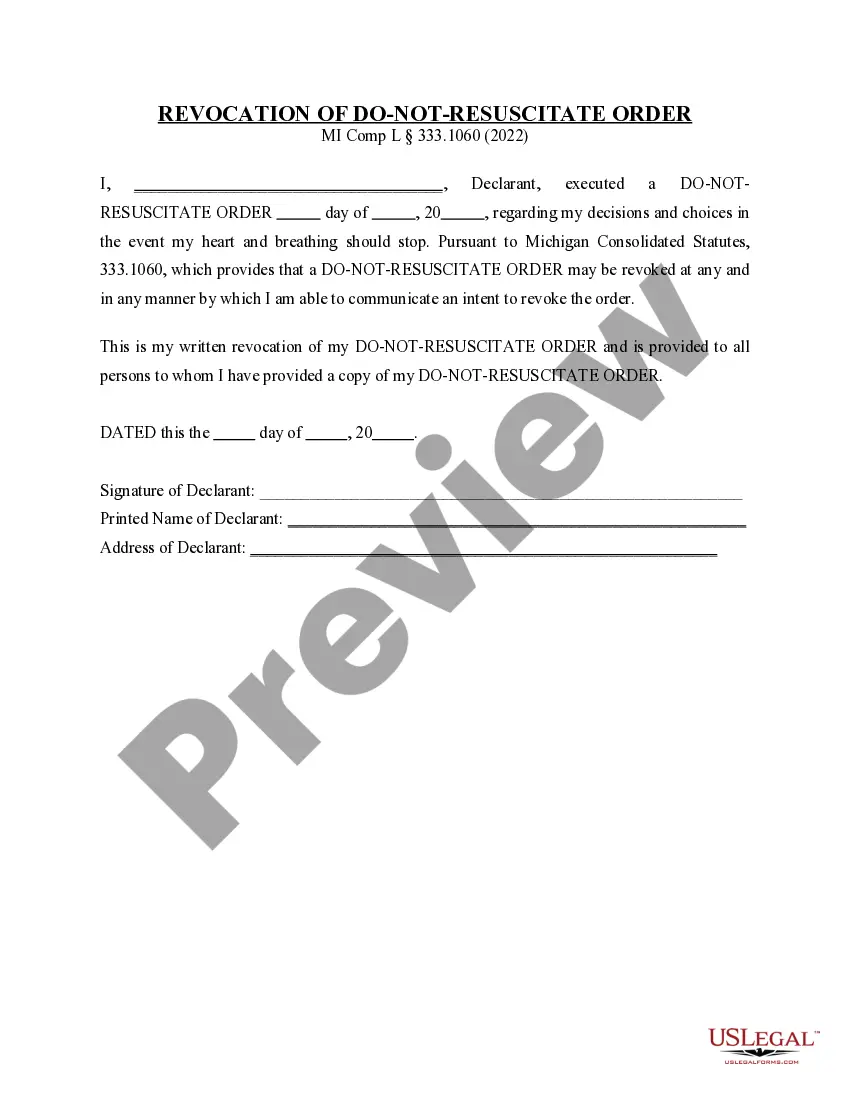
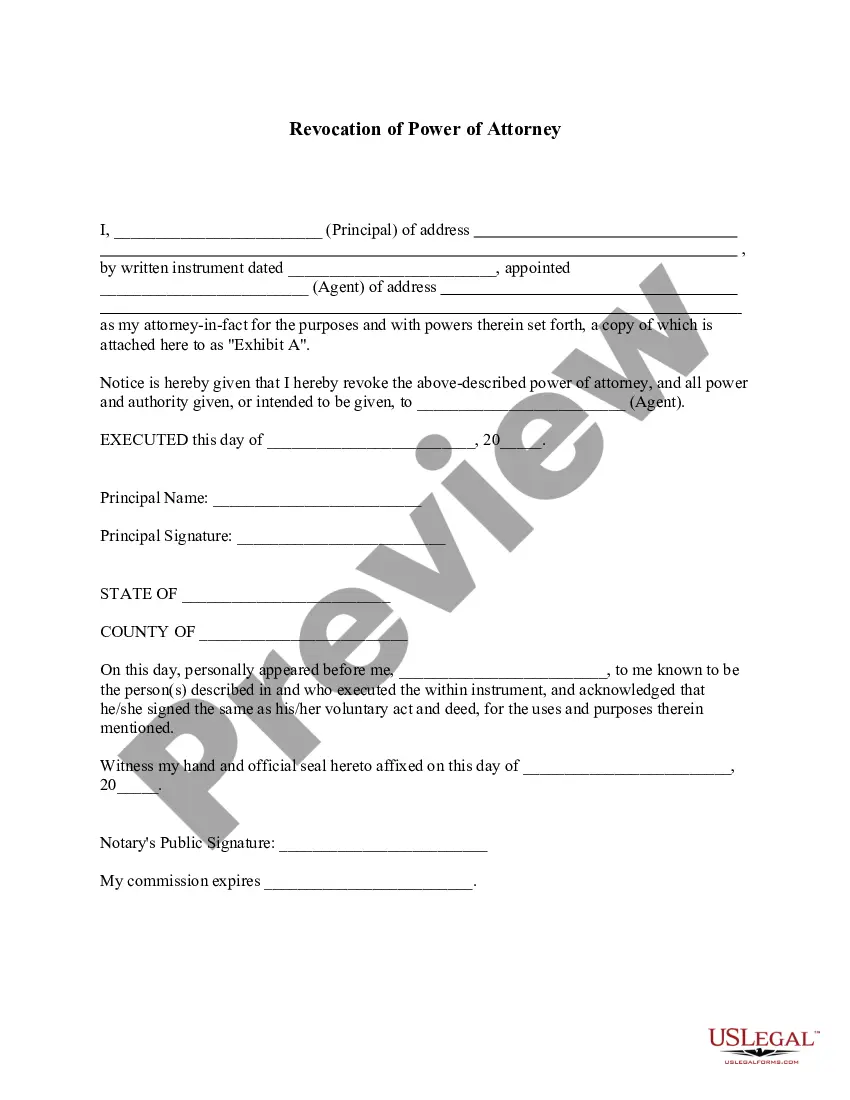
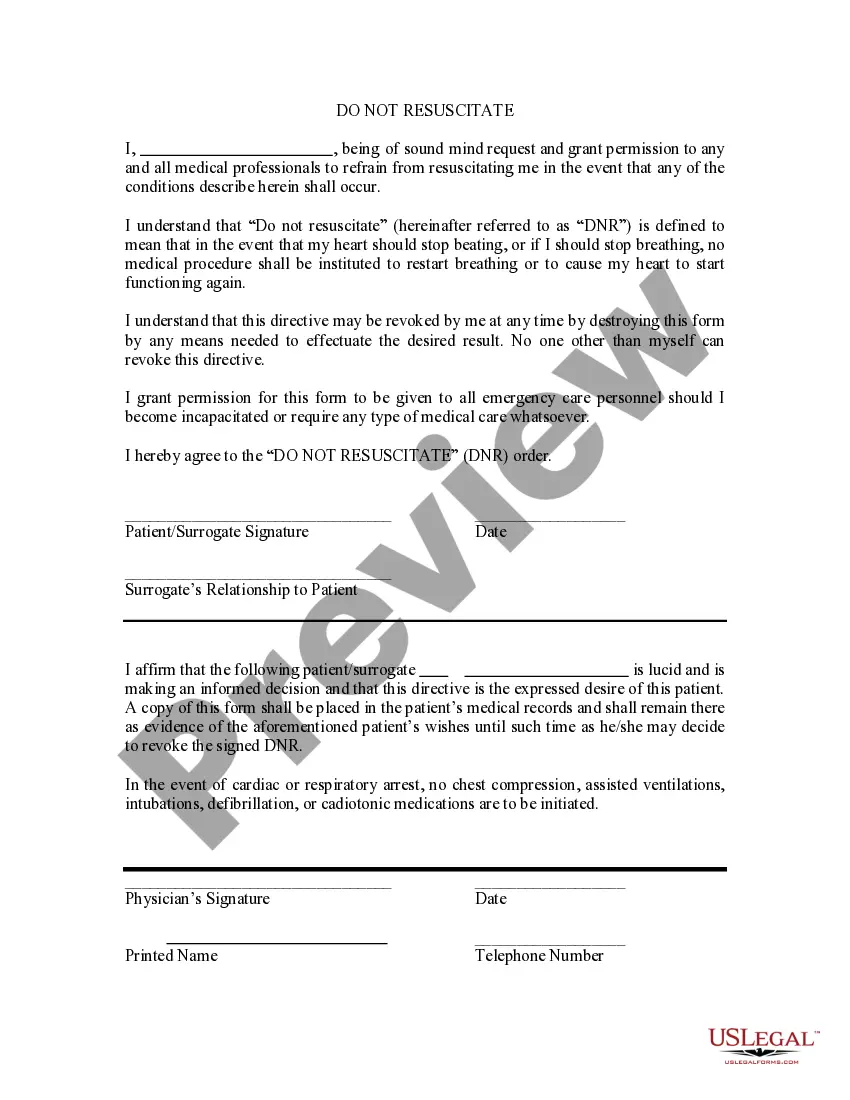
The Revocation of Do Not Resuscitate Order is a legal document that allows individuals to cancel a previously established Do Not Resuscitate (DNR) order. This form explicitly states the individual's desire to revoke the directives concerning their medical treatment in case of cardiac arrest or cessation of breathing. Unlike a DNR order, which instructs medical personnel not to perform resuscitation, this revocation form ensures that any previous decisions about withholding resuscitation efforts are no longer in effect.
What’s included in this form
- Personal details of the individual revoking the DNR order, including name and contact information.
- Clear statement of revocation indicating the specific DNR order being revoked.
- Instructions for delivering copies of the revocation to relevant parties.
- Signature and date, confirming the intention to revoke the DNR order.
Common use cases
This form is essential when an individual who has previously established a Do Not Resuscitate Order changes their mind about their medical treatment preferences. Scenarios may include recovery from a health condition or a change in personal circumstances, where the individual now wishes to receive life-saving measures should their heart stop or they cease to breathe. It ensures that healthcare providers are aware of the individual's current wishes.
Who should use this form
- Individuals who have previously executed a Do Not Resuscitate Order.
- Patients who wish to revoke their DNR due to a change in health status or personal preferences.
- Family members or health care proxies who need to communicate the revocation to healthcare providers.
Completing this form step by step
- Enter your personal information, including your name and contact details.
- Clearly indicate your intention to revoke the existing Do Not Resuscitate Order.
- Sign and date the document to validate your decision to revoke the order.
- Distribute copies of the revocation to any healthcare providers, family members, or proxies who previously received the DNR order.
Notarization guidance
This form does not typically require notarization unless specified by local law. However, it is advisable to check with local regulations to confirm any requirements for legal acknowledgment.
Get your form ready online
Our built-in tools help you complete, sign, share, and store your documents in one place.
Make edits, fill in missing information, and update formatting in US Legal Forms—just like you would in MS Word.
Download a copy, print it, send it by email, or mail it via USPS—whatever works best for your next step.
Sign and collect signatures with our SignNow integration. Send to multiple recipients, set reminders, and more. Go Premium to unlock E-Sign.
If this form requires notarization, complete it online through a secure video call—no need to meet a notary in person or wait for an appointment.
We protect your documents and personal data by following strict security and privacy standards.

Make edits, fill in missing information, and update formatting in US Legal Forms—just like you would in MS Word.

Download a copy, print it, send it by email, or mail it via USPS—whatever works best for your next step.

Sign and collect signatures with our SignNow integration. Send to multiple recipients, set reminders, and more. Go Premium to unlock E-Sign.

If this form requires notarization, complete it online through a secure video call—no need to meet a notary in person or wait for an appointment.

We protect your documents and personal data by following strict security and privacy standards.
Common mistakes
- Failing to provide copies of the revocation to all relevant parties.
- Not signing and dating the form, which may render it invalid.
- Leaving out important personal details, which can lead to confusion.
Why use this form online
- Convenience of accessing and downloading the form at any time.
- Easy editing capabilities to ensure all personal information is accurate.
- Reliable format drafted by licensed attorneys to ensure legal validity.
Legal use & context
- The revocation must be clear and unequivocal to be legally enforceable.
- Healthcare providers are required to honor the wishes stated in the revocation.
- Changes in health status or personal beliefs may necessitate the use of this form.
Summary of main points
- The Revocation of Do Not Resuscitate Order cancels a previous directive.
- It is important to ensure healthcare providers are informed of the revocation.
- Complete the form accurately to avoid legal issues.
Looking for another form?

Form popularity
FAQ
Filling out a DNR form in Michigan requires you to provide specific information about your medical preferences. You can find a user-friendly DNR form on the uslegalforms platform. Ensure you include your name, the date, and your signature, along with any necessary witness signatures. After completing the form, make sure to distribute copies to your healthcare providers and store the original in an accessible location.
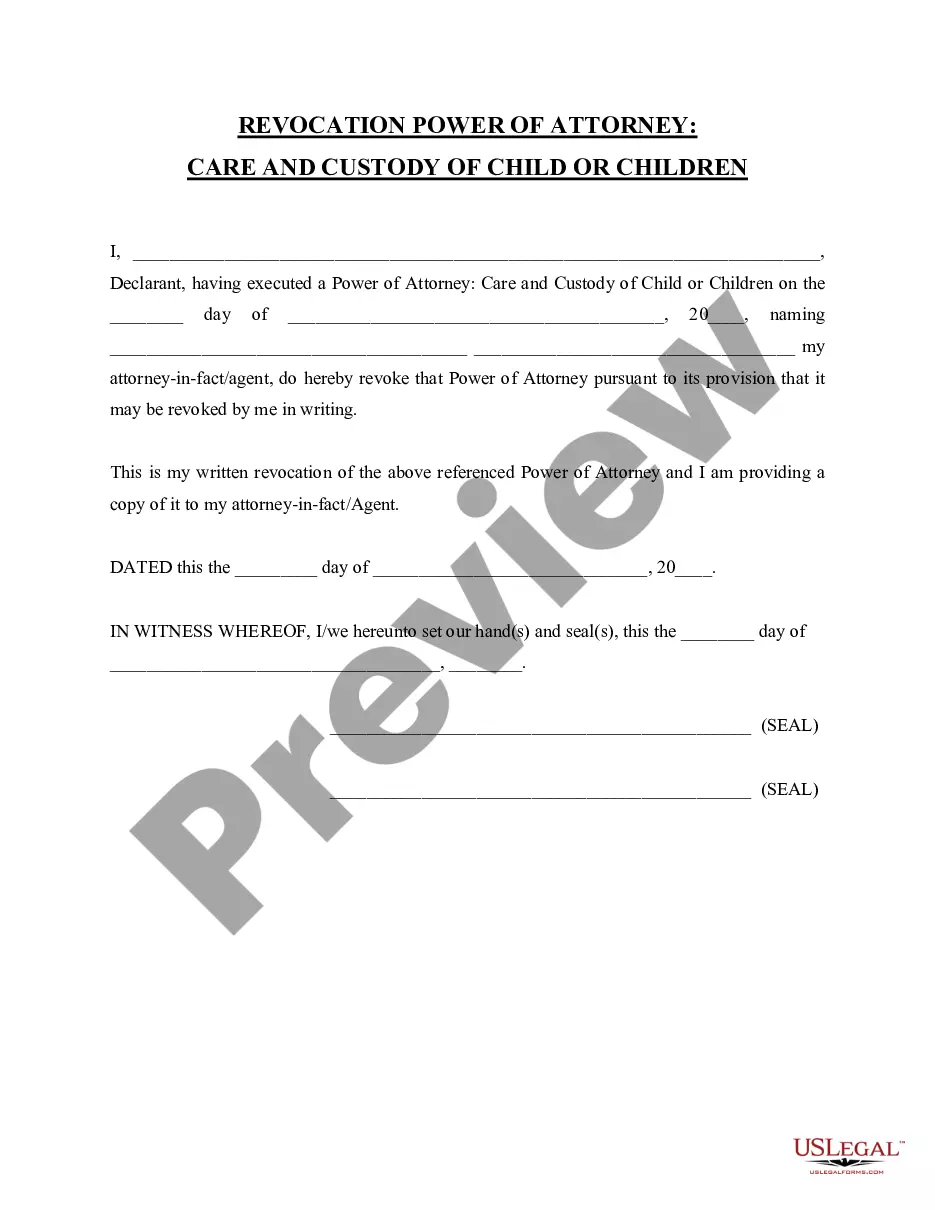
To revoke a do not resuscitate order in Michigan, you should provide a clear written statement indicating your desire to revoke the order. You can use forms available through uslegalforms, which guide you through the revocation process. Once completed, share this document with your healthcare provider and any relevant family members to ensure everyone is aware of your updated wishes.
Yes, you can reverse a do not resuscitate order in Michigan. To initiate the Michigan Revocation of Do Not Resuscitate Order process, you must clearly express your intent to revoke it. This can be done verbally or in writing, ensuring that healthcare providers are informed. It's essential to keep a copy of the revocation for your records and inform family members of your decision.
Until an attorney-in-fact's powers are properly revoked, they can continue to legally act for the principal. To cancel a Power of Attorney, the principal can create a document called a Revocation of Power of Attorney or create a new Power of Attorney that indicates the previous Power of Attorney is revoked.
You can revoke a Medical Power of Attorney even if you cannot make your own medical decisions. To cancel it, you can: Tell the agent, in person or in writing,Sign a new Medical Power of Attorney.
A medical power of attorney is a legal document that names one person the health care agent of another person. The agent has the ability to make health care decisions and the responsibility to make sure doctors and other medical personnel provide necessary and appropriate care according to the patient's wishes.
You can cancel (revoke) your durable power of attorney, but only when you are able (competent). You must sign a written document that says the durable power of attorney is revoked. You should sign the document in front of a notary public or two witnesses, but that is not required.
Unless the power of attorney states otherwise, and they usually don't, a revocation of a POA must be made in writing. A verbal revocation may not be enough.A revocation will reference the existing POA and the current attorney-in-fact and revoke the document and the powers granted.
The principal can always override a power of attorney, although it's possible for others to stop an agent from abusing their responsibilities.Medical POA A healthcare or medical power of attorney grants the Agent you appoint the authority to make decisions about your care if you are unable to do so.
A principal can revoke the power of attorney while he or she is still mentally competent. A principal can complete a formal written document requesting the revocation of a power of attorney at any time, for any reason, while he or she is still competent. The principal must sign and notarize the revocation request.