Michigan Letter from Tenant to Landlord containing Notice that heater is broken, unsafe or inadequate and demand for immediate remedy
What this document covers
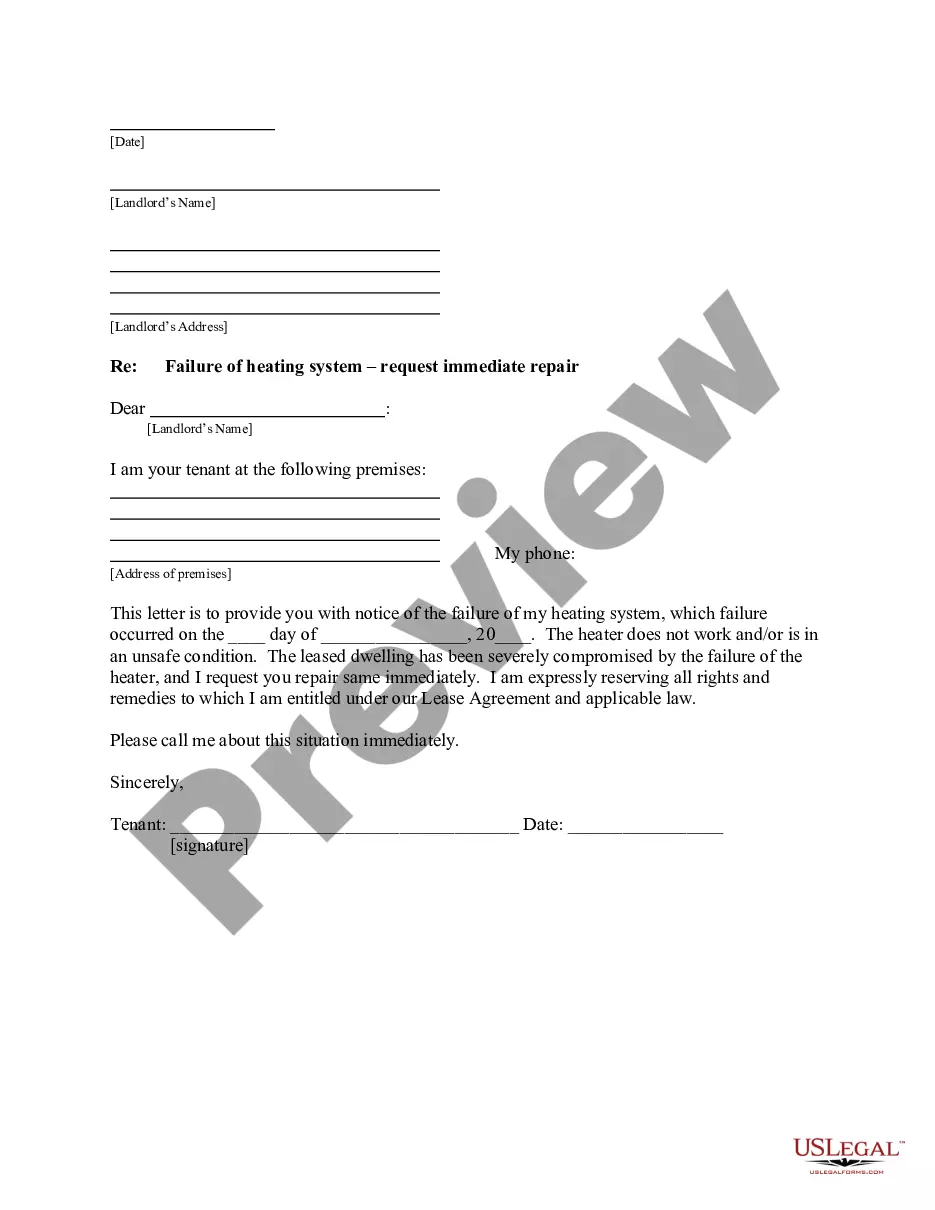
This form is a Letter from Tenant to Landlord containing notice that the heater is broken, unsafe, or inadequate. It serves to inform the landlord of heating system issues within the rental property and notifies them of their legal duty to maintain a safe living environment. By utilizing this form, tenants can formally demand immediate repairs, ensuring their rights are protected and facilitating necessary action from the landlord.
Key parts of this document
- Tenant's contact information for clear communication.
- Details of the heating issue, specifying the problem's urgency.
- A request for immediate repair to ensure a safe living condition.
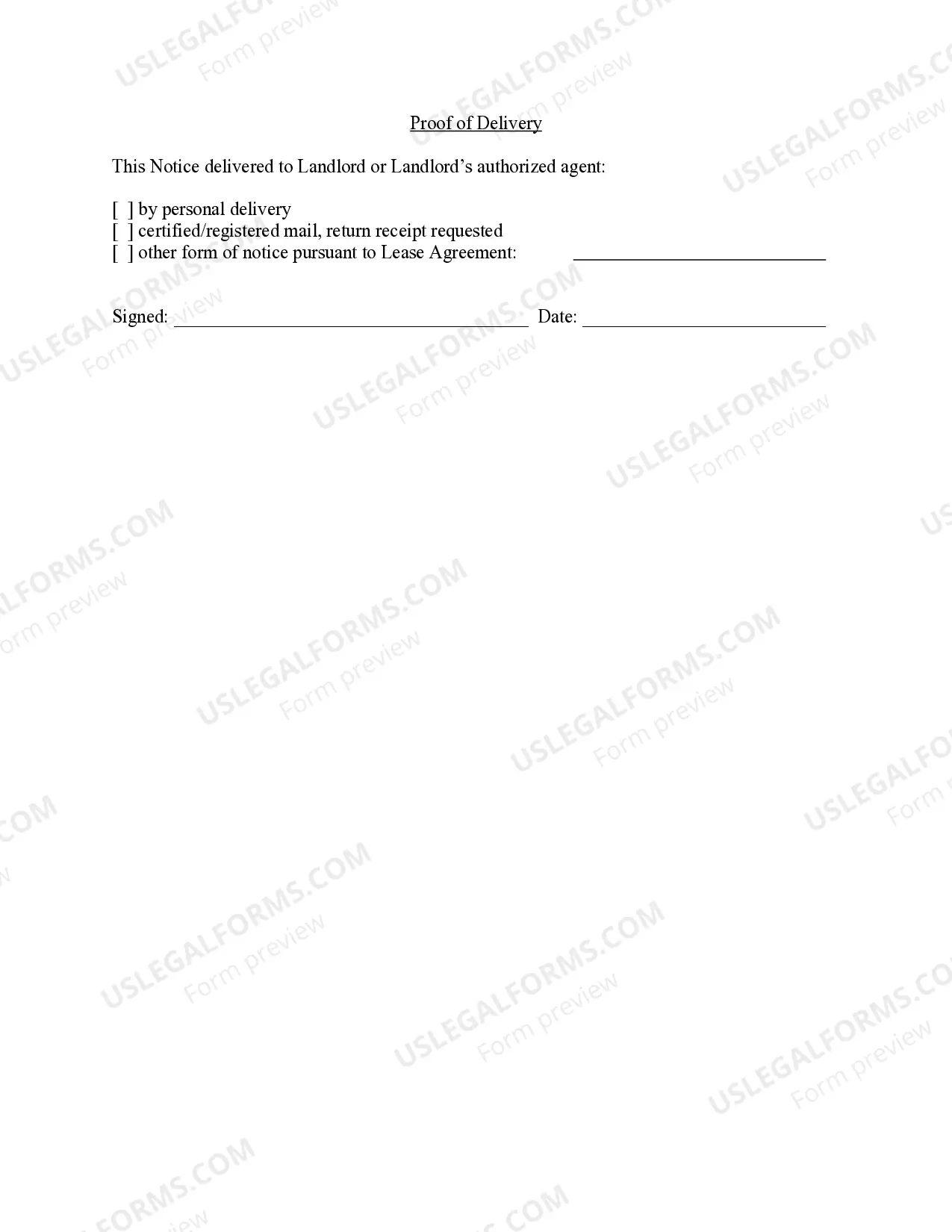
- Proof of delivery options to confirm that the landlord received the notice.
- Signature and date to validate the form.


Common use cases
This form should be used when a tenant experiences problems with a heater that is broken, unsafe, or inadequate. It is essential in situations where the landlord has not fulfilled their obligation to provide a livable and safe environment, particularly during cold weather conditions. Using this letter can prompt the landlord to take necessary action swiftly.
Who this form is for
This form is intended for:
- Tenants experiencing heating issues in their rental unit.
- Individuals who wish to formally notify their landlord of necessary repairs.
- Those seeking to document their communication regarding property maintenance problems.
Instructions for completing this form
Steps to Complete the Form:
- Identify yourself as the tenant by providing your name and contact details.
- Clearly describe the heating issue, including when it started and any safety concerns.
- Make a clear demand for immediate repairs to address the heating problem.
- Choose a method for proving delivery to the landlord, such as personal delivery or certified mail.
- Sign and date the letter to complete it officially.
Notarization requirements for this form
This form does not typically require notarization unless specified by local law, making it easy to complete and submit without additional steps.
Get your form ready online
Our built-in tools help you complete, sign, share, and store your documents in one place.
Make edits, fill in missing information, and update formatting in US Legal Forms—just like you would in MS Word.
Download a copy, print it, send it by email, or mail it via USPS—whatever works best for your next step.
Sign and collect signatures with our SignNow integration. Send to multiple recipients, set reminders, and more. Go Premium to unlock E-Sign.
If this form requires notarization, complete it online through a secure video call—no need to meet a notary in person or wait for an appointment.
We protect your documents and personal data by following strict security and privacy standards.

Make edits, fill in missing information, and update formatting in US Legal Forms—just like you would in MS Word.

Download a copy, print it, send it by email, or mail it via USPS—whatever works best for your next step.

Sign and collect signatures with our SignNow integration. Send to multiple recipients, set reminders, and more. Go Premium to unlock E-Sign.

If this form requires notarization, complete it online through a secure video call—no need to meet a notary in person or wait for an appointment.

We protect your documents and personal data by following strict security and privacy standards.
Avoid these common issues
- Failing to provide specific details about the heating issue.
- Not including a way to prove delivery to the landlord.
- Leaving the form unsigned or undated, which can invalidate the notice.
- Using vague language rather than clear, definitive demands for repairs.
Benefits of completing this form online
- Convenient downloading and editing of the form to meet individual needs.
- Assured compliance with legal standards through forms drafted by licensed attorneys.
- Quick and easy to use, speeding up the process of notifying landlords.
This letter is legally significant as it establishes a documented request for repairs and the landlord's obligation to address safety issues. The formal notice serves as a protective measure for tenants, especially if further legal actions become necessary later.
Main things to remember
- The form is essential for tenants experiencing heating system issues.
- Immediate communication with the landlord is crucial for ensuring a safe living environment.
- Proper completion and delivery of the form are necessary for legal protection.
Looking for another form?
Form popularity
FAQ
In Michigan, the landlord must give the tenant at least 7 days' notice before filing to evict for non-payment of rent, for causing damage to the home, or for creating a health hazard.
In the state of Michigan, if tenants hold over, or stay in the rental unit after the rental term has expired, then the landlord may be required to give tenants notice before evicting them. This can include tenants without a written lease and week-to-week and month-to-month tenants.
A notice to quit is the notice often referred to as "eviction", given by a landlord to a tenant to leave the premises either by a certain date (usually 30 days) or to pay overdue rent or correct some other default ( pets, damage to premises, too many roommates, using the property for illegal purposes, etc.)
A landlord starts an eviction case by filing a summons and complaint with your local district court. A copy of your lease, a copy of the demand for possession that the landlord served on you, and a certificate of service stating how the landlord served you must be attached to the summons and complaint.
When the landlord serves an eviction notice in this situation, you simply have three days to move out. A tenant can never cancel this type of eviction notice. However, the landlord can. You would have to negotiate with the landlord and meet whatever terms he requires for giving you permission so stay.
Putting all this together, you can see that even if the tenant does not show up to contest the eviction hearing, it will take an absolute minimum of four weeks to get an eviction in Michigan. In reality, an official eviction is likely to take longer, in the region of six to eight weeks.
Once a notice to quit expires, there is no longer a landlord and tenancy relationship. By law, even though he is no longer regarded as a tenant to the landlord, the tenant is still expected to pay the rent he owes to the landlord whether he has been given a notice to quit or not.
Putting all this together, you can see that even if the tenant does not show up to contest the eviction hearing, it will take an absolute minimum of four weeks to get an eviction in Michigan. In reality, an official eviction is likely to take longer, in the region of six to eight weeks.
Michigan has an expedited legal process for eviction called summary proceedings. It enables eviction hearings to be scheduled very quickly after the landlord first makes the filing in court. Landlords cannot evict a tenant in Michigan without a court order.
Eviction is the legal process of making a tenant move out of a rental home. In Michigan, the law allows for faster access to court and a quicker resolution in an eviction case than a lawsuit would usually take. It's illegal for a landlord to evict you without going to court and getting an eviction order first.