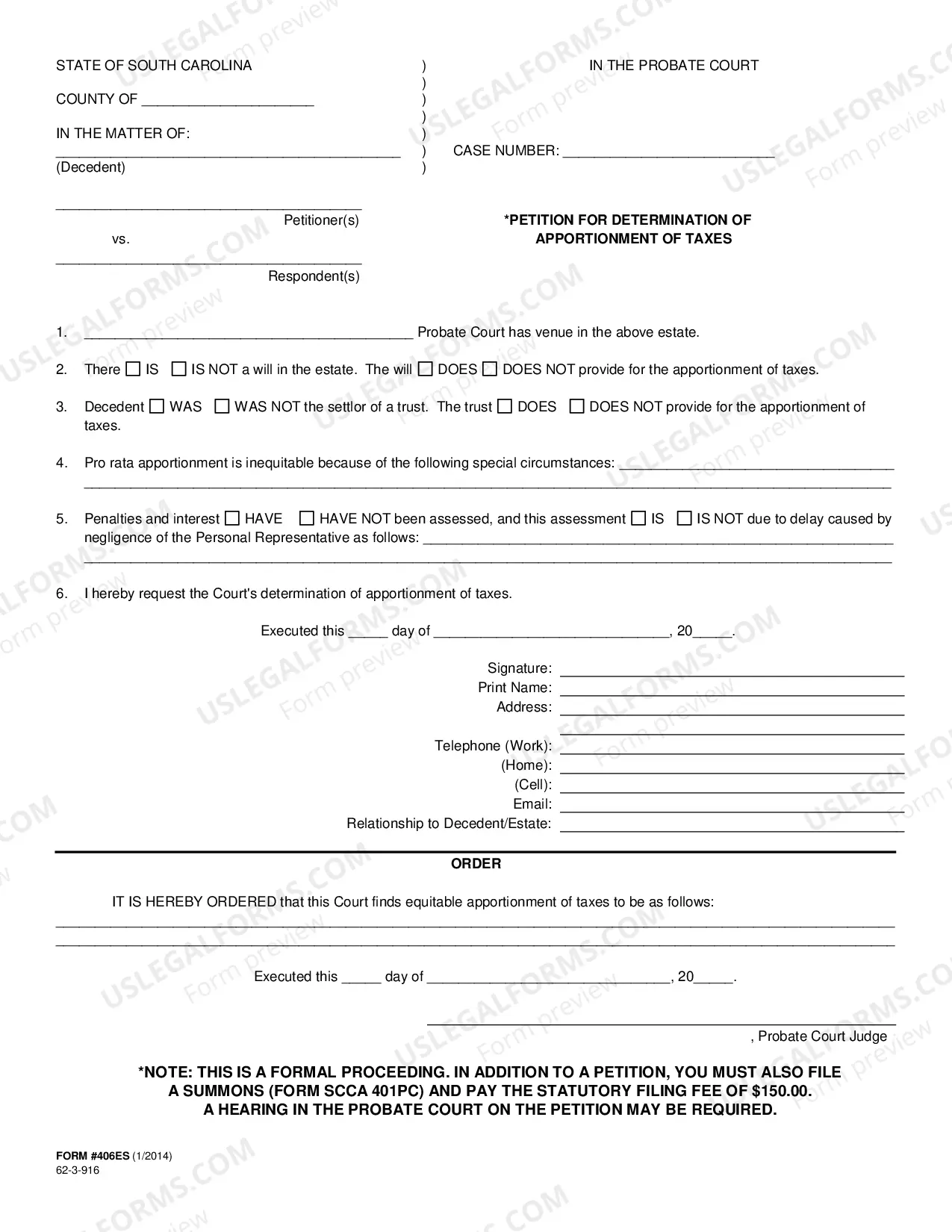
Maine Last Will and Testament for Married Person with Adult Children from Prior Marriage
What is this form?
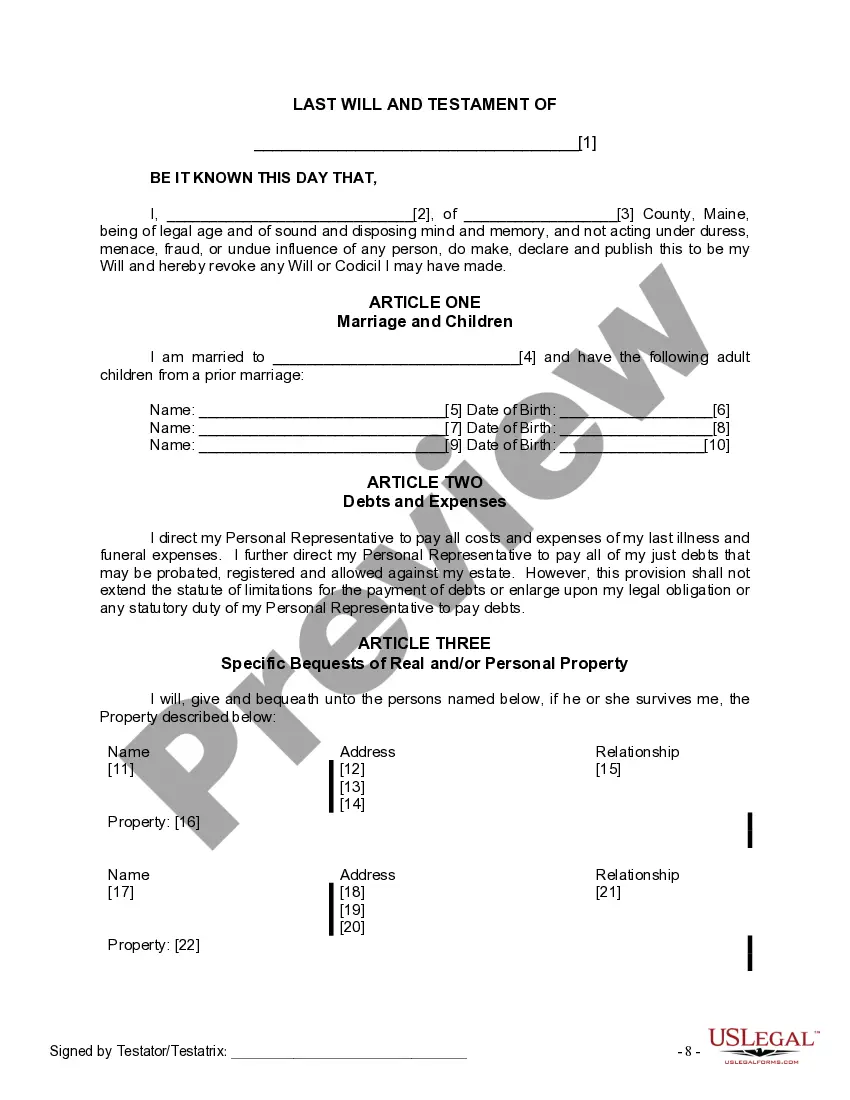
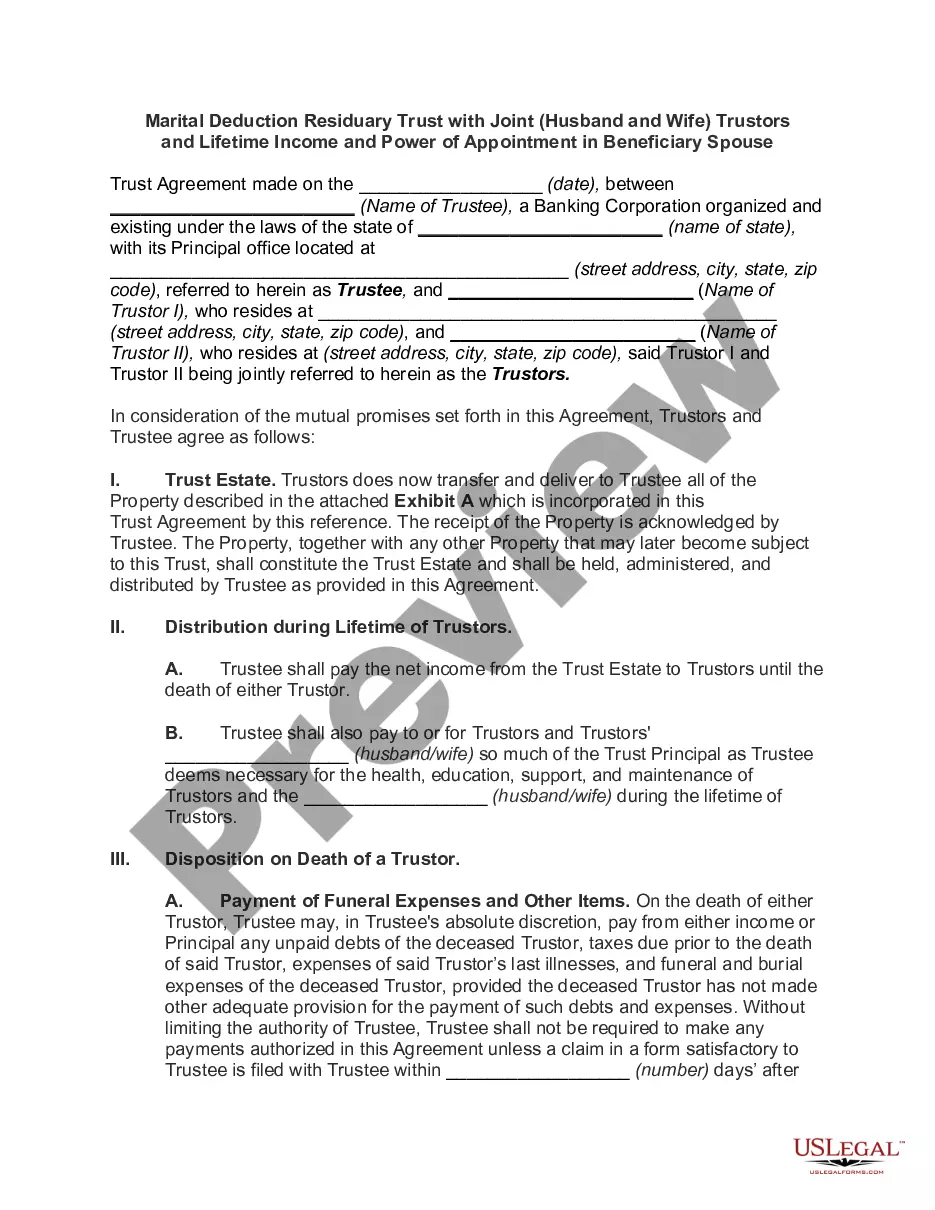
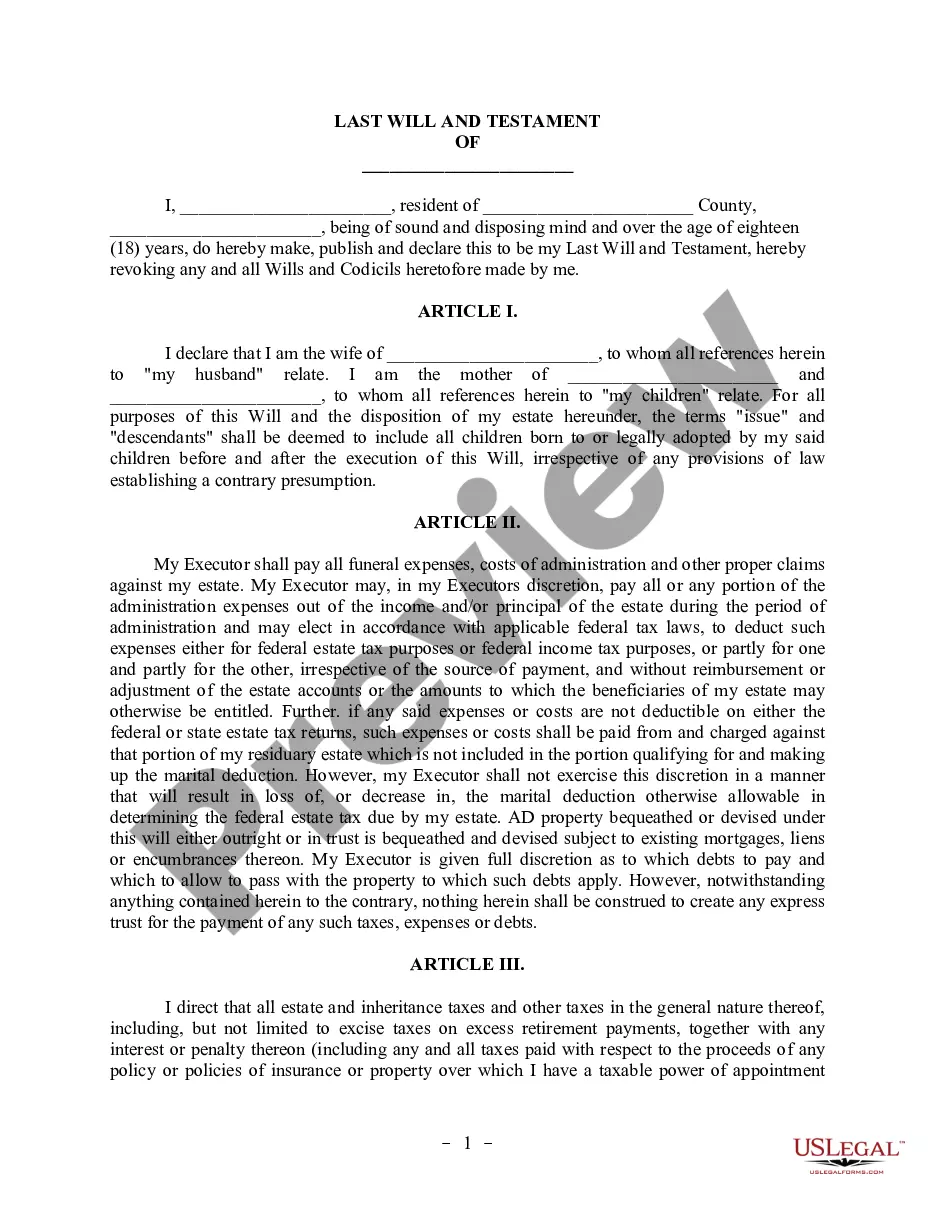
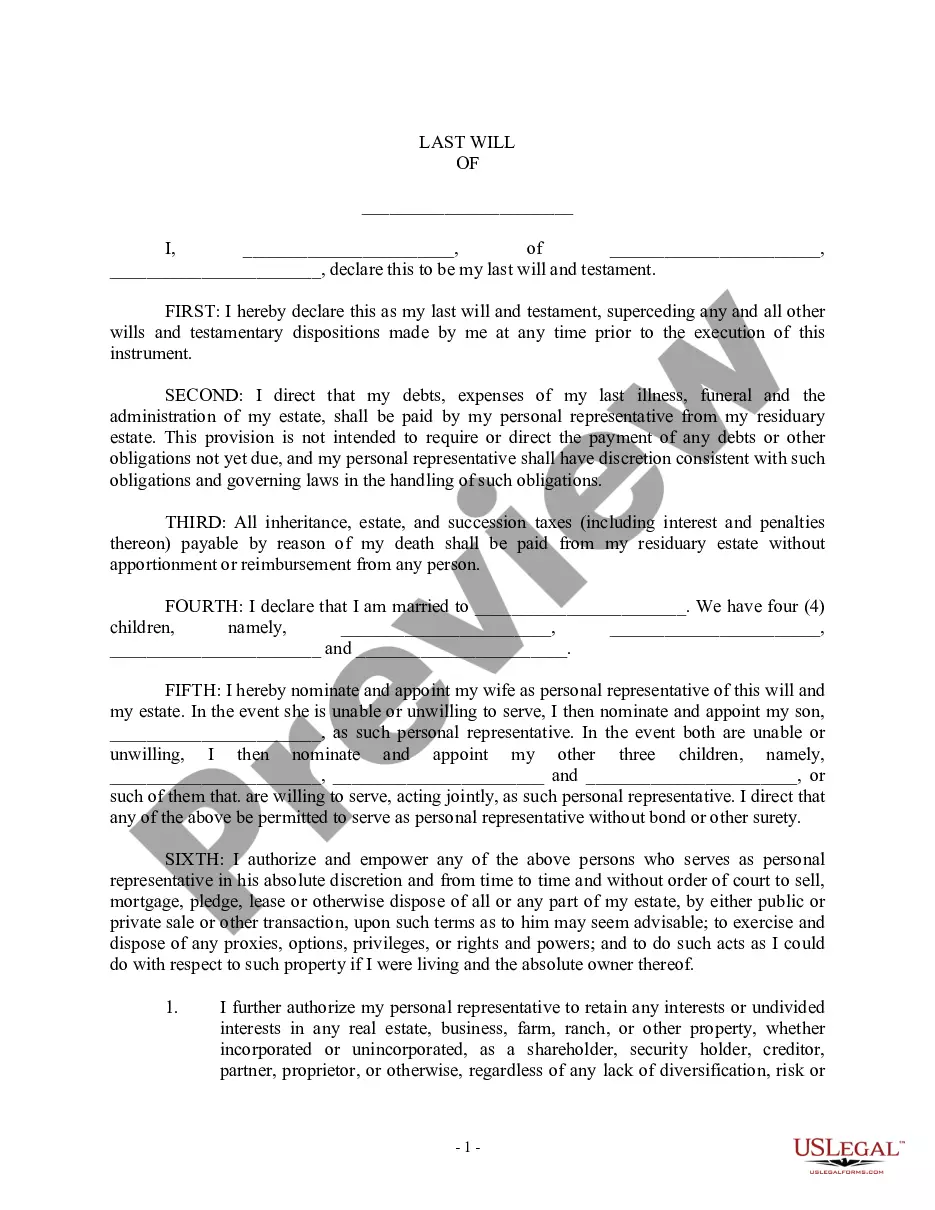
The Last Will and Testament for Married Person with Adult Children from Prior Marriage is a legal document that outlines how a married individual wishes to distribute their assets upon death, explicitly considering adult children from a previous marriage. This form allows you to appoint a personal representative, specify beneficiaries, and include special provisions for your children, ensuring your wishes are clearly defined and legally binding.
Key components of this form
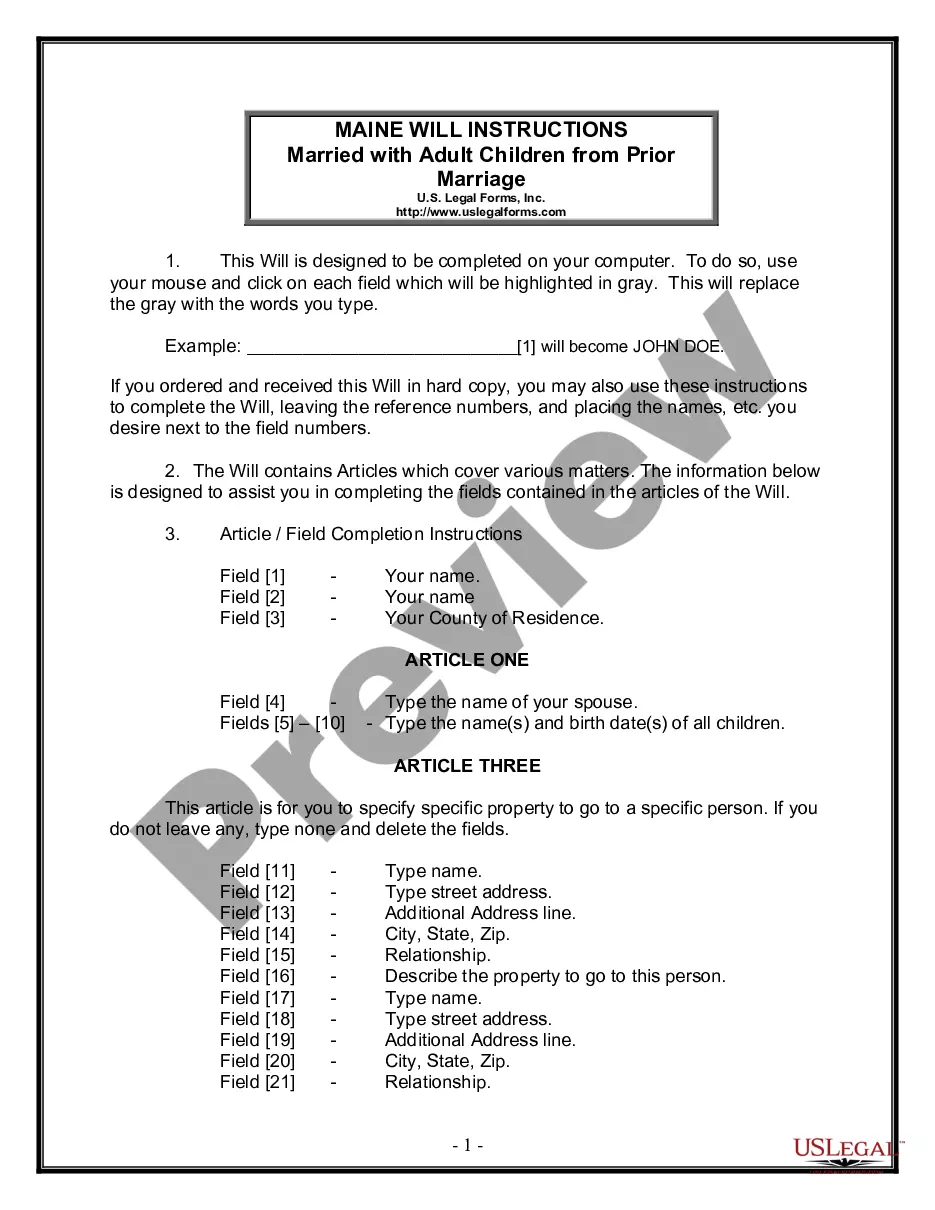
- Article One: Identification of the testator, spouse, and adult children from a previous marriage.
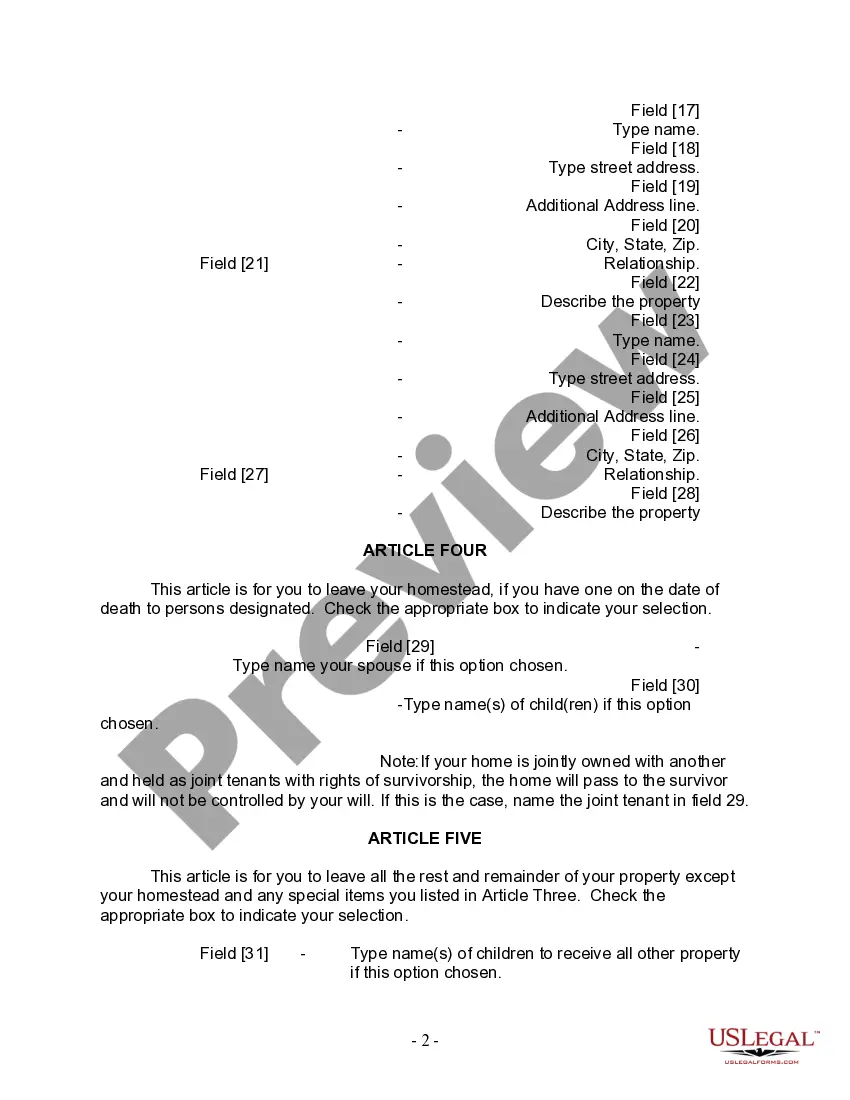
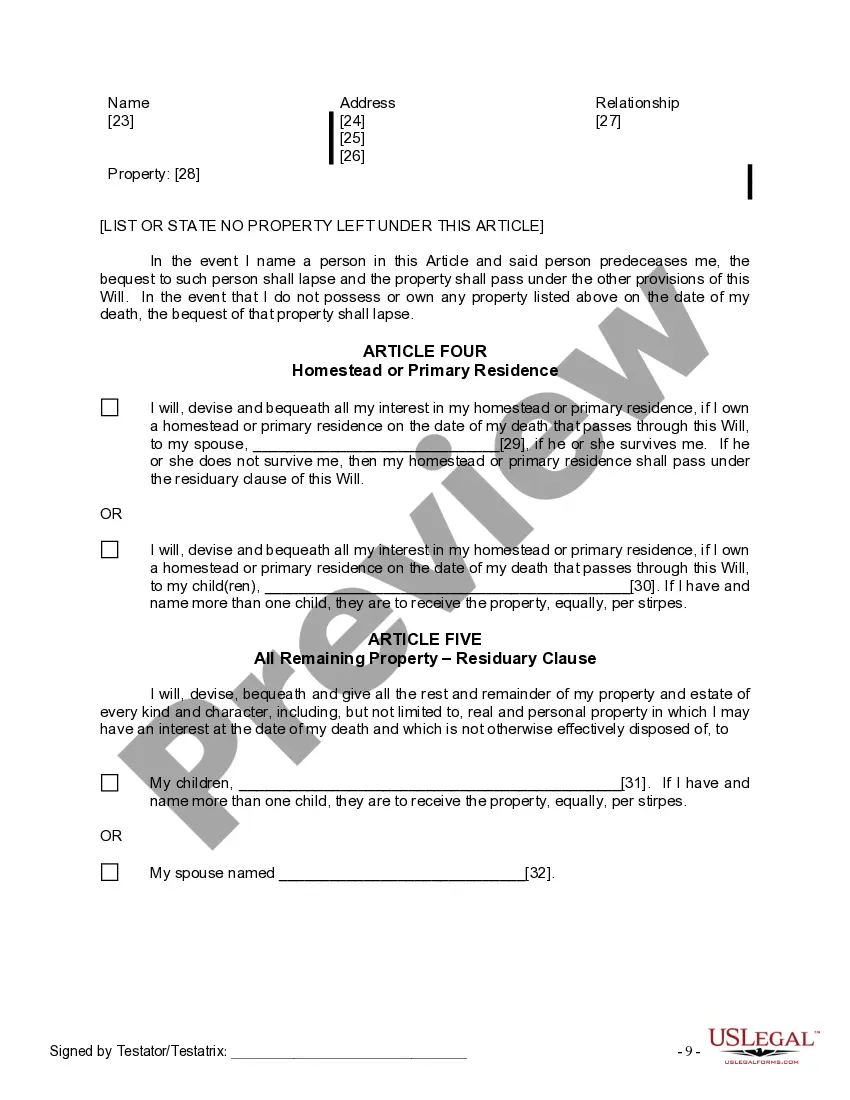
- Article Three: Specifications for bequests of specific property to named individuals.
- Article Four: Provisions regarding the distribution of the homestead or primary residence.
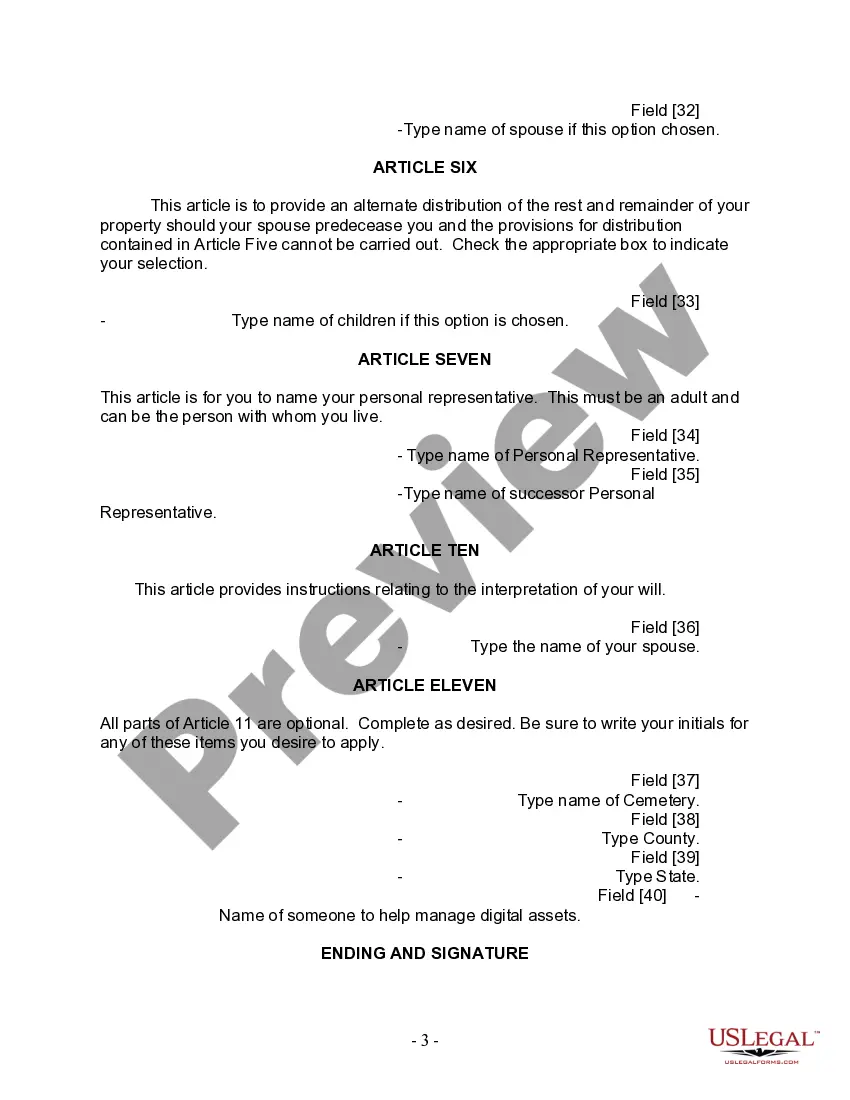
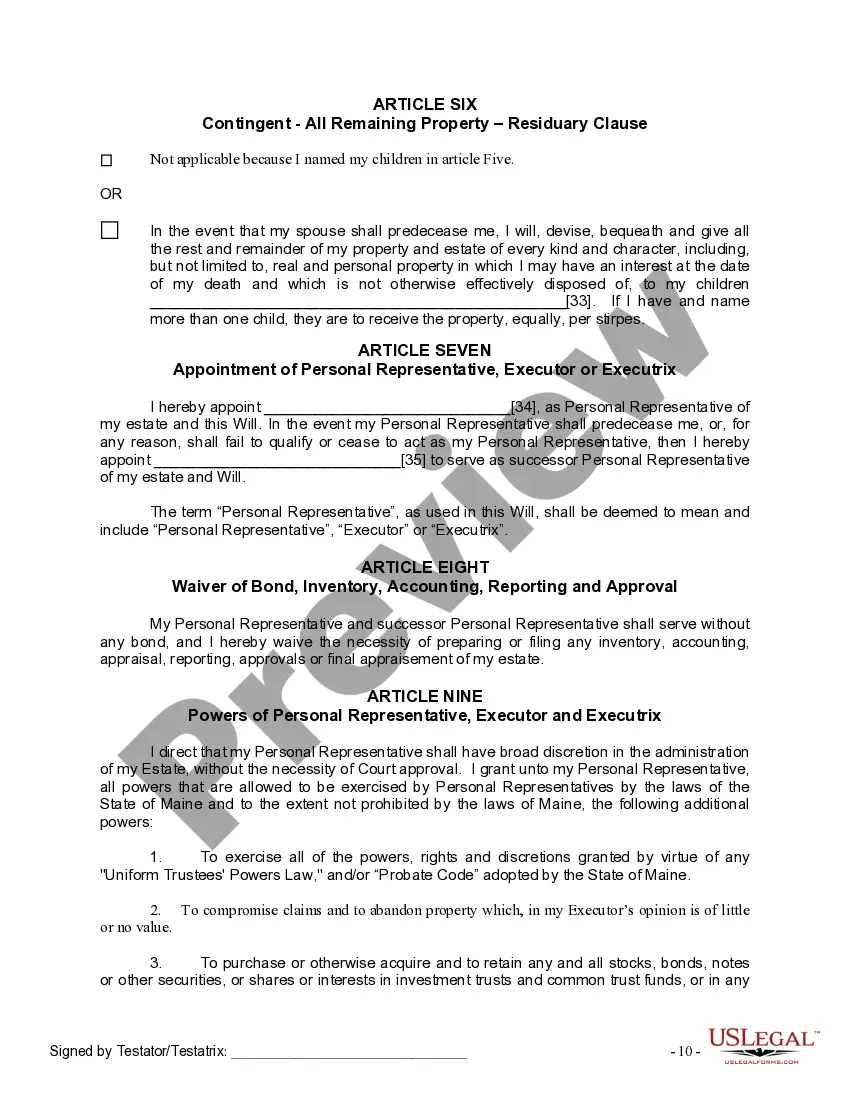
- Article Five: A residuary clause detailing the distribution of all remaining property.
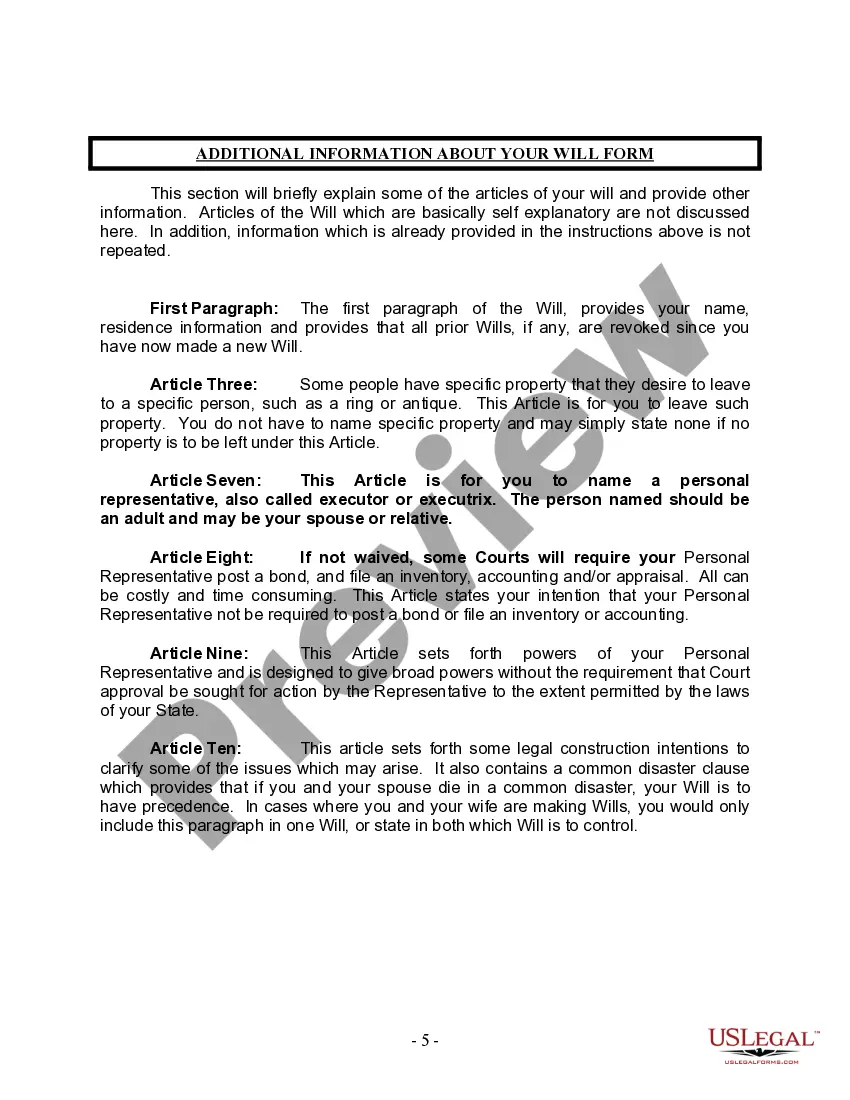
- Article Seven: Appointment of a personal representative to handle the estate.


When this form is needed
This form is ideal for individuals who are married and have adult children from a previous relationship. It should be used when you want to clearly define the distribution of your assets, particularly if you want to provide for both your spouse and your children. This creates clarity and helps prevent potential disputes among family members regarding your wishes after your passing.
Intended users of this form
- Married persons with adult children from a prior marriage.
- Individuals seeking to ensure specific distributions of their property.
- Those looking to appoint a trusted personal representative to administer their estate.
- Anyone wanting to prevent disputes among heirs regarding asset distribution.
Instructions for completing this form
- Enter your full name and county of residence at the beginning of the document.
- Clearly identify your spouse and list the names and birthdates of all children from previous marriages.
- Specify specific properties you want to bequeath to individuals, detailing their names and relationship to you.
- Appoint a personal representative to execute your will and detail any alternate representatives as needed.
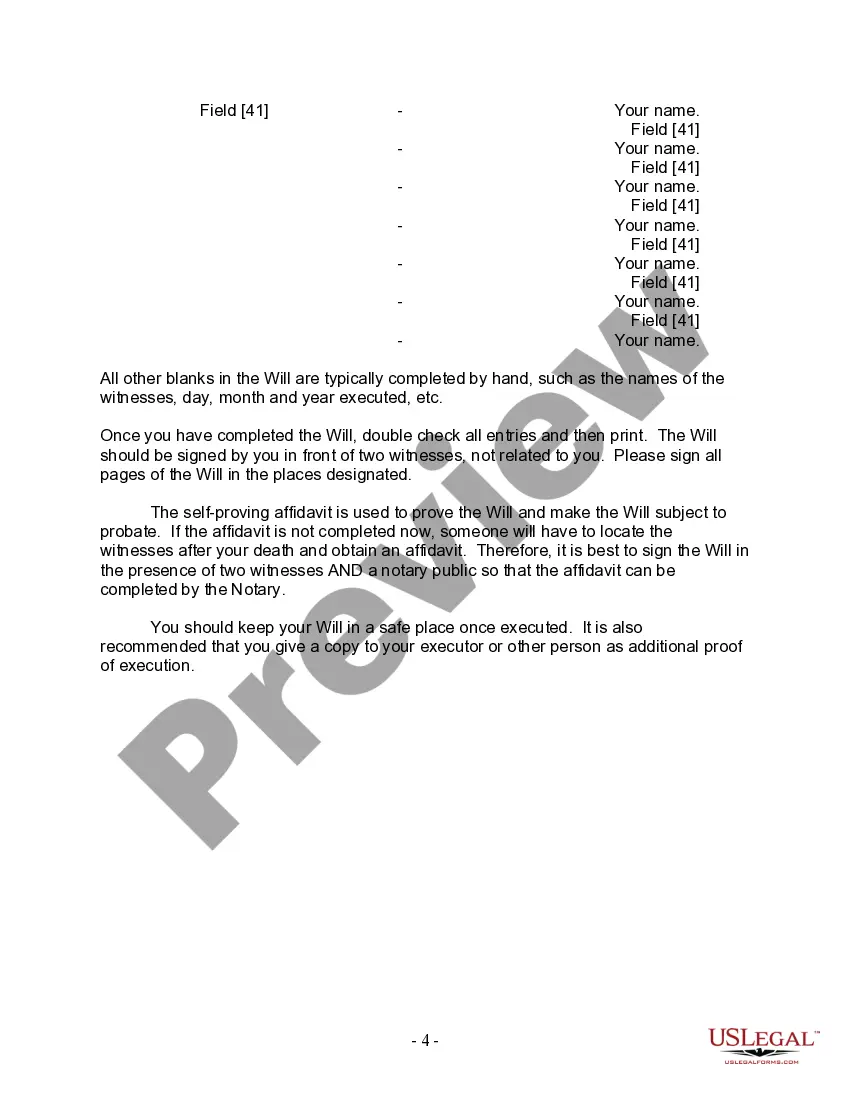
- Sign the document in the presence of two witnesses, ensuring they are not related to you.
Does this document require notarization?
Yes, this form must be notarized to be legally valid. The act of notarization helps verify your identity and ensures the will is executed according to your wishes. US Legal Forms provides integrated online notarization for your convenience, allowing secure video sessions that eliminate the need for travel.
Get your form ready online
Our built-in tools help you complete, sign, share, and store your documents in one place.
Make edits, fill in missing information, and update formatting in US Legal Forms—just like you would in MS Word.
Download a copy, print it, send it by email, or mail it via USPS—whatever works best for your next step.
Sign and collect signatures with our SignNow integration. Send to multiple recipients, set reminders, and more. Go Premium to unlock E-Sign.
If this form requires notarization, complete it online through a secure video call—no need to meet a notary in person or wait for an appointment.
We protect your documents and personal data by following strict security and privacy standards.

Make edits, fill in missing information, and update formatting in US Legal Forms—just like you would in MS Word.

Download a copy, print it, send it by email, or mail it via USPS—whatever works best for your next step.

Sign and collect signatures with our SignNow integration. Send to multiple recipients, set reminders, and more. Go Premium to unlock E-Sign.

If this form requires notarization, complete it online through a secure video call—no need to meet a notary in person or wait for an appointment.

We protect your documents and personal data by following strict security and privacy standards.
Common mistakes
- Failing to sign the will in the presence of required witnesses.
- Not specifying the relationship of beneficiaries, which can lead to confusion.
- Omitting to name an alternate personal representative.
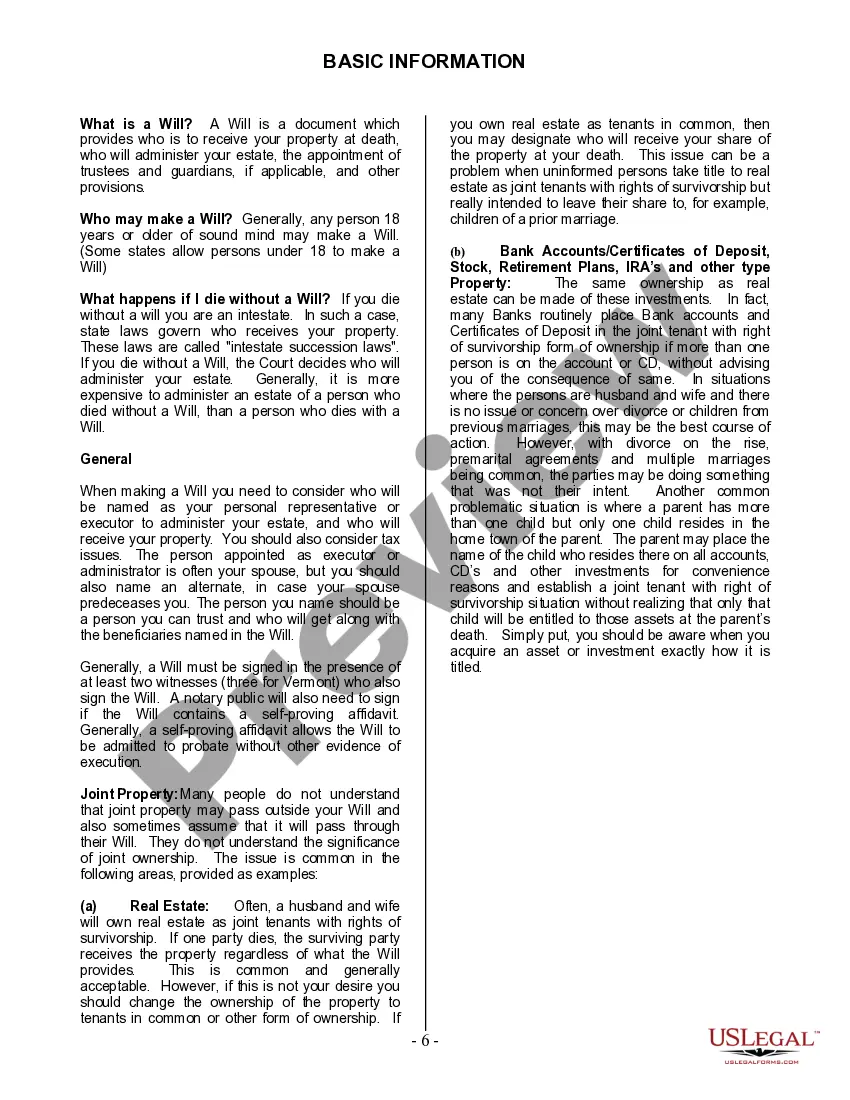
- Assuming that joint property will pass according to the will, when it may not.
Benefits of completing this form online
- Convenience of completing the form from anywhere at your own pace.
- Editable fields allow for tailoring the document to your specific needs.
- Access to templates created by licensed attorneys ensures legal validity.
- Immediate download enables quick execution of your estate planning.
What to keep in mind
- This Last Will and Testament cater specifically to married individuals with adult children from prior marriages.
- Clearly outline asset distribution preferences to avoid disputes among family members.
- Ensure all legal formalities are followed to validate the will, including witnessing and notarization.
Looking for another form?
Form popularity
FAQ
While it may seem logical for the oldest adult child to serve as executor of the parents' wills, it is not always the best decision. The ability to manage an estate effectively requires particular skills, which may not align with familial age or birth order. Instead, consider factors like problem-solving ability and financial literacy when selecting someone for this essential role in your Maine Last Will and Testament for a Married Person with Adult Children from Prior Marriage.
In Maine, anyone aged 18 or older who is of sound mind can make a Will. When you write your Will, you list all your property and who you want to give it to after you die (these people are called your beneficiaries).
There are certain types of property that legally cannot be included in a person's will. Depending on state laws, these may include: Any Property that is Co-Owned with Someone Else Through Joint-Tenancy: Married couples typically own the marital home in joint tenancy.Property being held in a living trust.
As long as it was properly signed and witnessed by two adult independent witnesses who are present at the time you sign your will, it should be legally binding.Using the wrong wording could mean that your instructions aren't followed, or even that your will isn't valid.
In addition, Maine allows a will to be made without witnesses if it is written by hand by the testator and signed at the end. 18-A M.R.S.A. § 2-503. This is called a holographic will.
No, in Maine, you do not need to notarize your will to make it legal. However, Maine allows you to make your will "self-proving" and you'll need to go to a notary if you want to do that. A self-proving will speeds up probate because the court can accept the will without contacting the witnesses who signed it.
To start the probate process, you need to file an Application for Probate in the probate court in the county where the decedent lived. In Maine, each county has its own probate court. If there is a Will, it needs to be submitted to the probate court. The probate judge will decide whether or not the Will is valid.
Fraud or Undue Influence A nonfamily caregiver forcing the testator to leave them an inheritance. A family member getting the testator to sign a will by pretending it is just a general legal document that needs a signature.