Maryland Last Will and Testament for Married Person with Adult and Minor Children from Prior Marriage
What is this form?
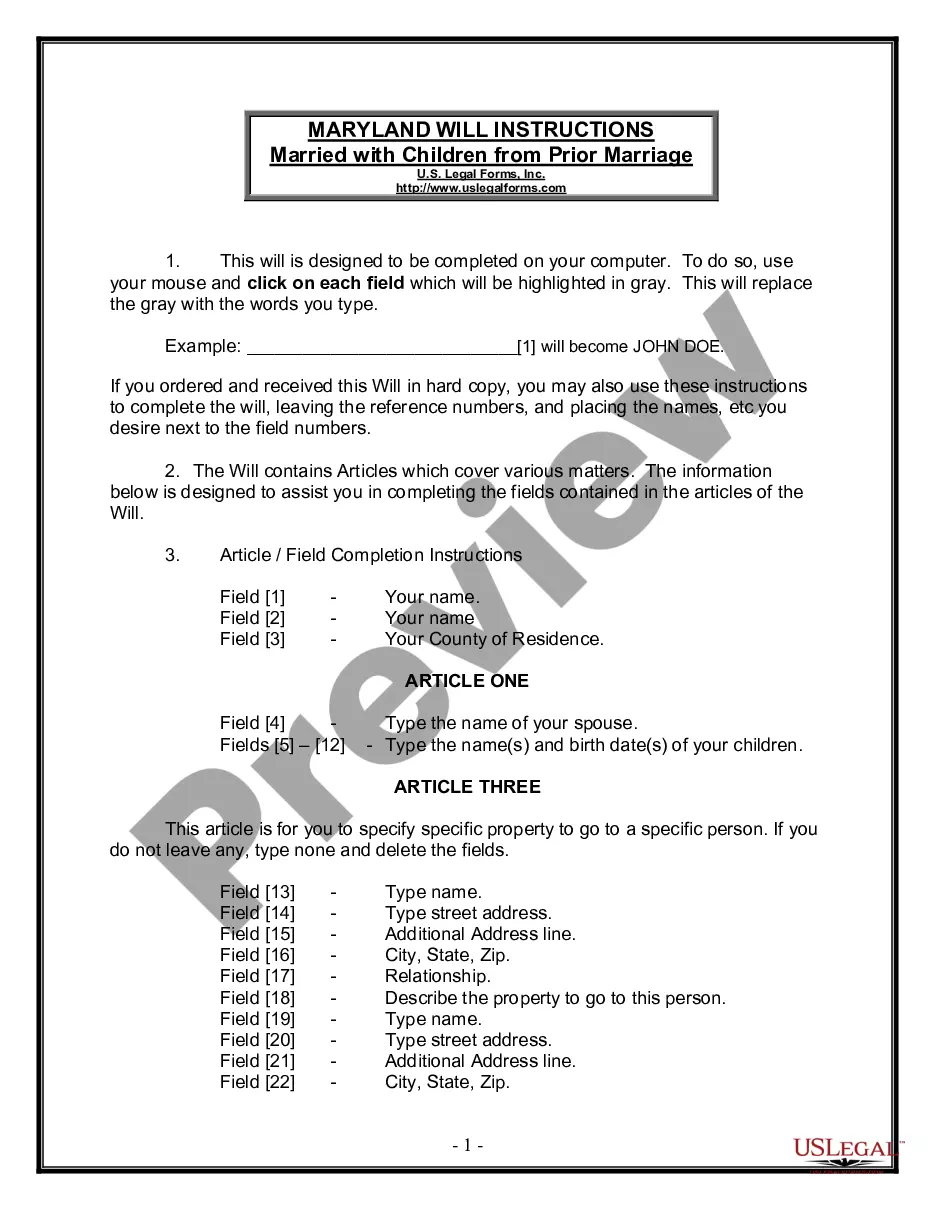
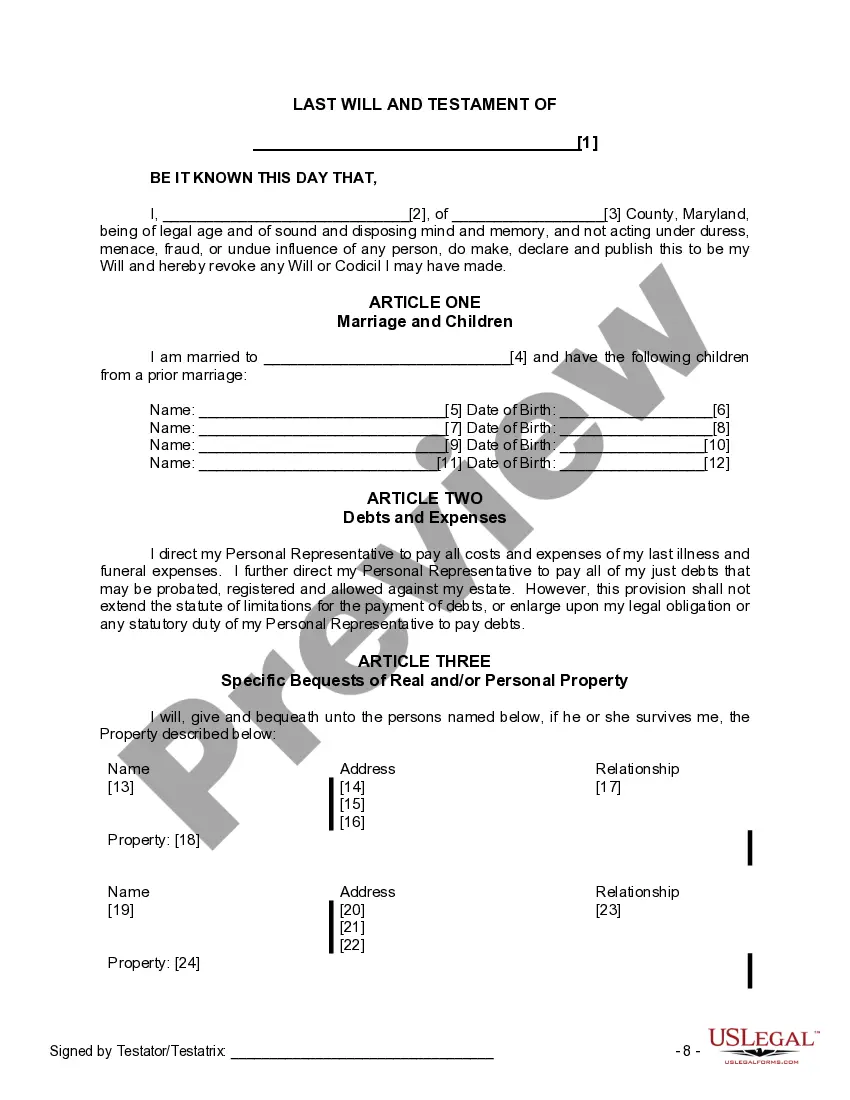
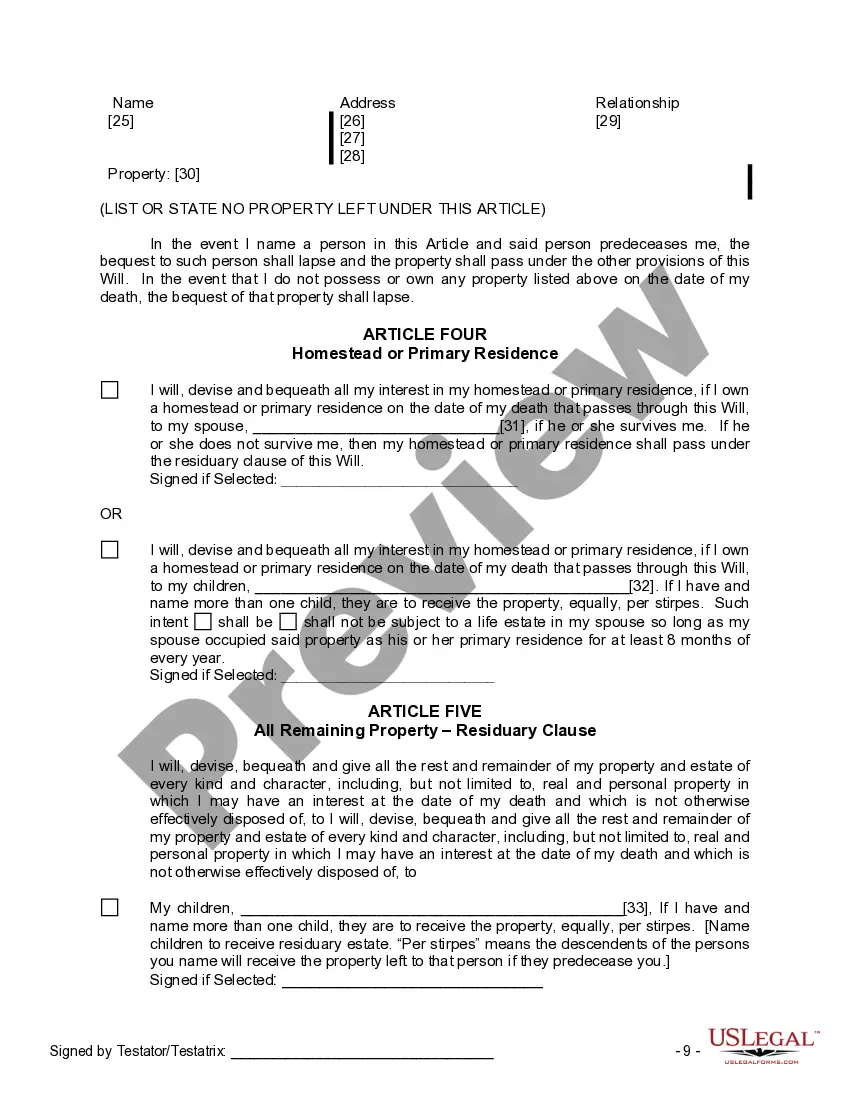
The Last Will and Testament for Married Person with Adult and Minor Children from Prior Marriage is a legal document that outlines how a person wishes to distribute their assets upon death. This specific form caters to individuals who are married and have children from a previous marriage. It details the appointment of an executor, the designation of beneficiaries, and includes special provisions for minor children, ensuring proper management of their inheritance until they reach adulthood.
Main sections of this form
- Identification of the testator (person making the will) and their residence.
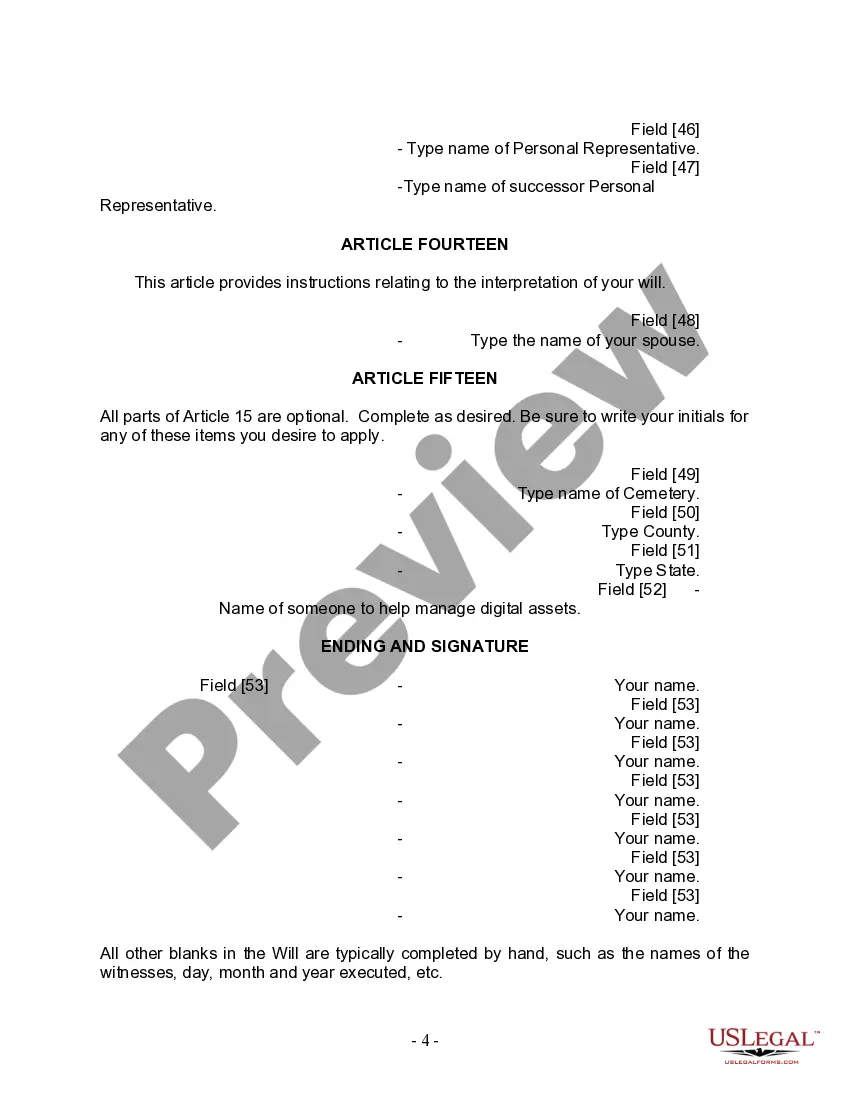
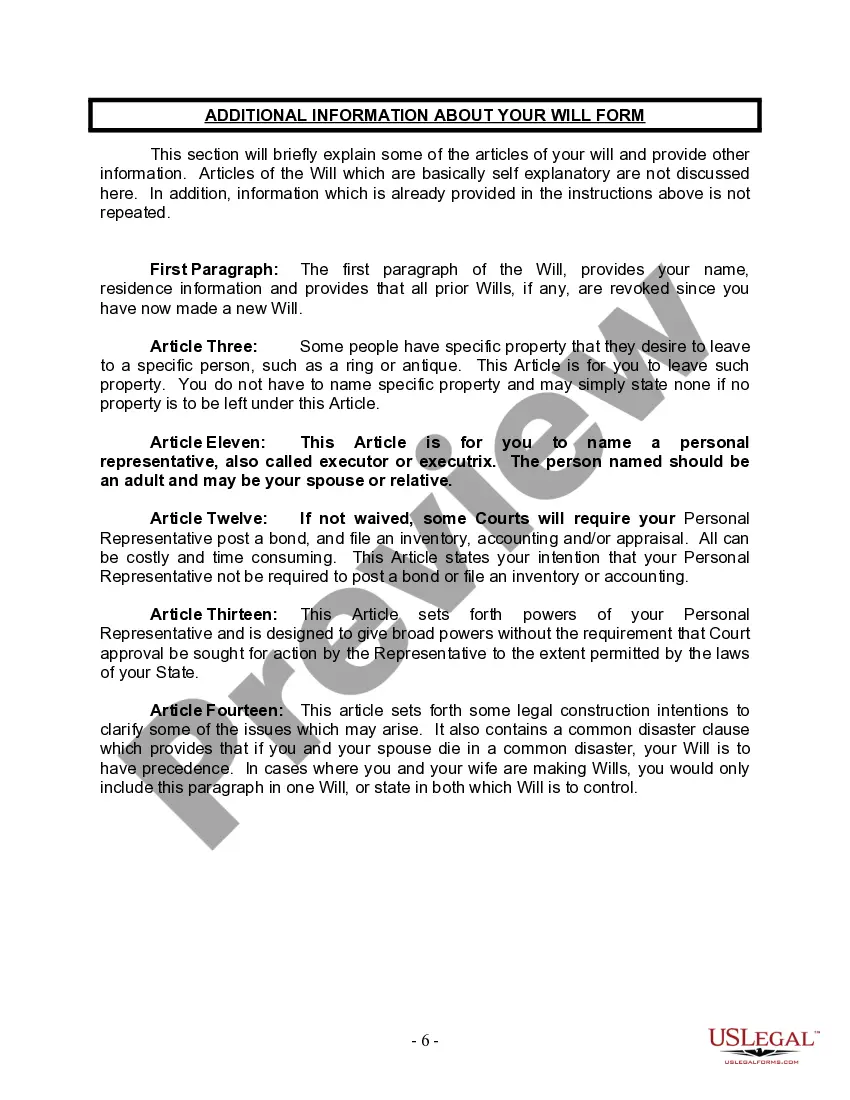
- Appointment of a personal representative to manage the estate.
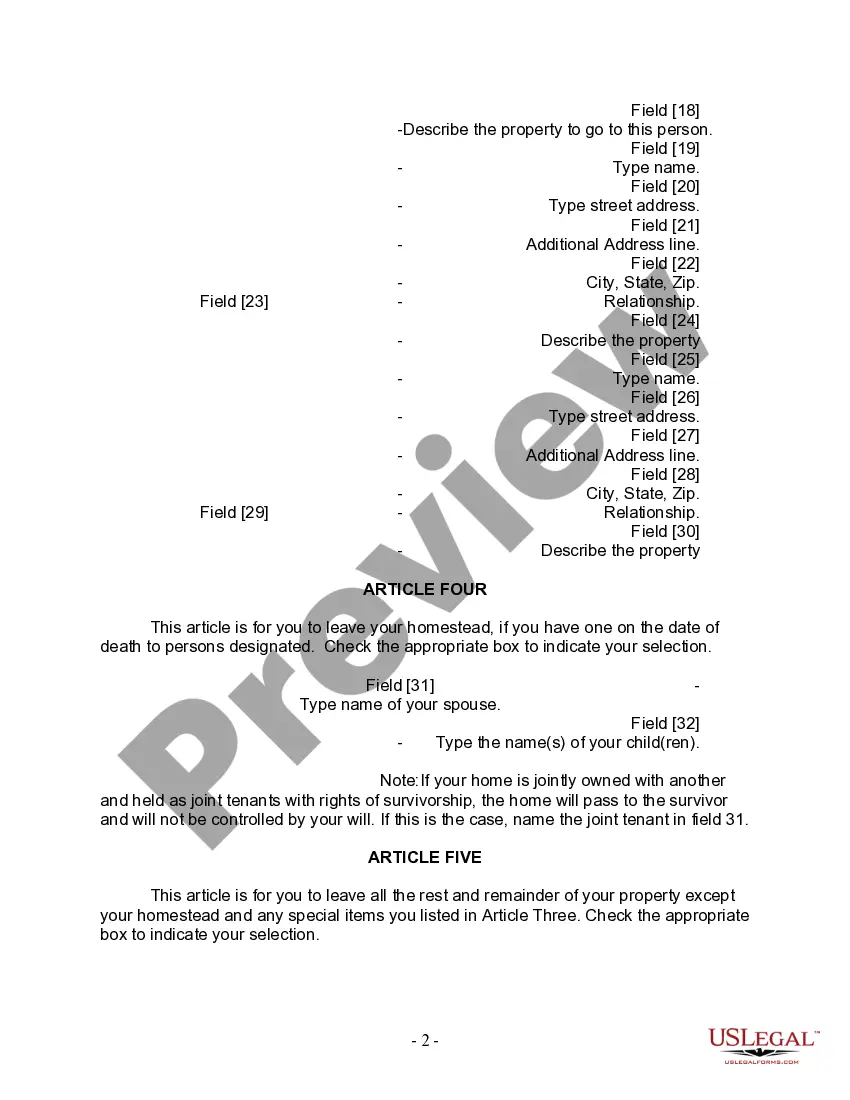
- Specification of how property and assets are to be divided among beneficiaries.
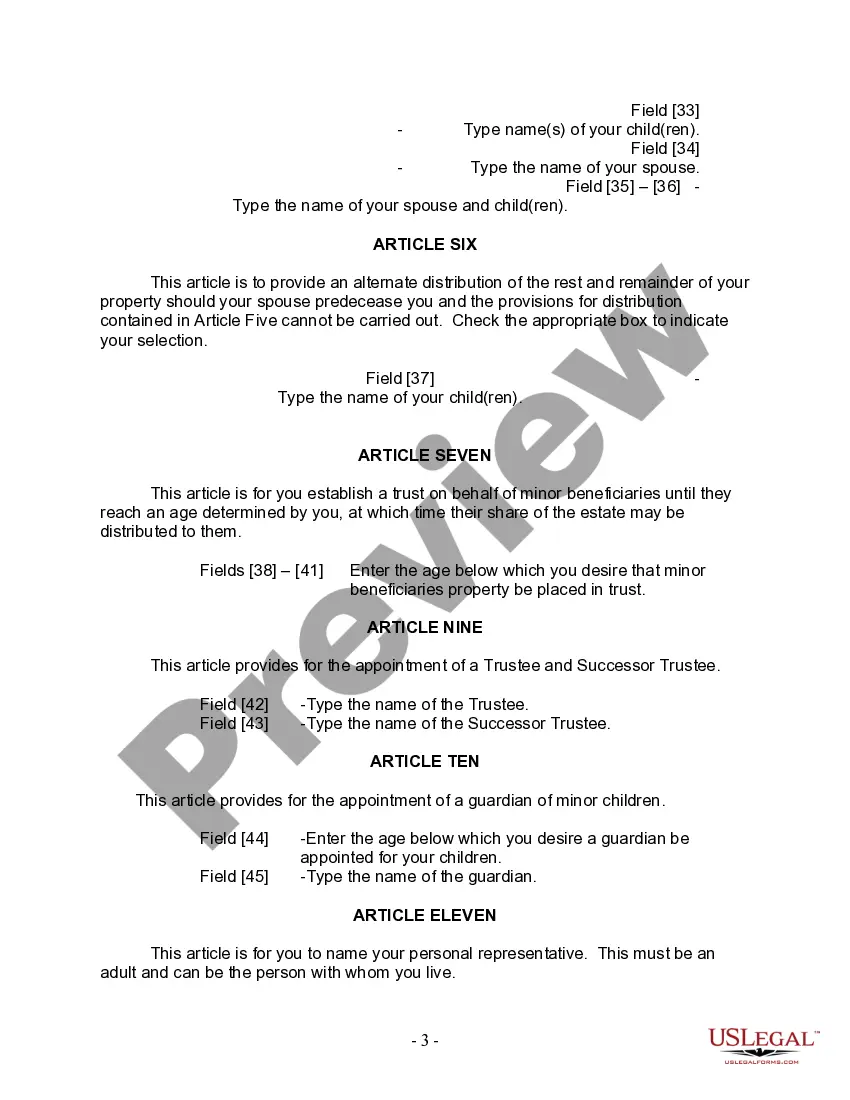
- Provisions for guardianship of minor children and trustees for their inheritance.
- Clauses detailing debts, expenses, and the management of specific bequests.





Common use cases
This form is needed when a person who is married and has children from a prior marriage wants to ensure their assets are distributed according to their wishes after they pass away. It is especially useful in scenarios involving blended families, where specific allocations for both minor and adult children are required. Using this form helps avoid disputes among heirs and simplifies the probate process for the executor.
Who can use this document
- Married individuals with children from previous relationships.
- Parents wanting to protect the interests of their minor children in terms of inheritance.
- Anyone wishing to designate an executor for their estate.
- Individuals seeking clarity in the distribution of their assets to avoid potential family conflicts.
Steps to complete this form
- Identify yourself and enter your county of residence at the top of the form.
- Appoint a personal representative who will manage your estate after your death.
- Clearly list your beneficiaries, including any specific property you wish to leave to them.
- Designate guardians for any minor children and specify trust provisions for their inheritance.
- Review all sections carefully before signing in front of two witnesses.
Is notarization required?
This form does not typically require notarization unless specified by local law. However, it must be signed in the presence of two witnesses who are not related to the testator or designated beneficiaries to be legally valid.
Get your form ready online
Our built-in tools help you complete, sign, share, and store your documents in one place.
Make edits, fill in missing information, and update formatting in US Legal Forms—just like you would in MS Word.
Download a copy, print it, send it by email, or mail it via USPS—whatever works best for your next step.
Sign and collect signatures with our SignNow integration. Send to multiple recipients, set reminders, and more. Go Premium to unlock E-Sign.
If this form requires notarization, complete it online through a secure video call—no need to meet a notary in person or wait for an appointment.
We protect your documents and personal data by following strict security and privacy standards.

Make edits, fill in missing information, and update formatting in US Legal Forms—just like you would in MS Word.

Download a copy, print it, send it by email, or mail it via USPS—whatever works best for your next step.

Sign and collect signatures with our SignNow integration. Send to multiple recipients, set reminders, and more. Go Premium to unlock E-Sign.

If this form requires notarization, complete it online through a secure video call—no need to meet a notary in person or wait for an appointment.

We protect your documents and personal data by following strict security and privacy standards.
Avoid these common issues
- Failing to name an alternate personal representative in case the primary cannot serve.
- Not including specific provisions for minor children or failing to appoint a guardian.
- Overlooking the need for witnesses to validate the will in accordance with state law.
- Not reviewing the document thoroughly for clarity and accuracy before signing.
Benefits of using this form online
- Easy to access and fill out from the comfort of your own home.
- Editable format ensures all necessary information can be accurately captured.
- Instant availability allows for quick updates or changes as personal circumstances change.
- Saves time and effort compared to traditional methods of drafting a will.
Legal use & context
- The Last Will and Testament serves as a formal declaration of your final wishes regarding asset distribution.
- It helps prevent disputes among heirs by clearly outlining your intentions.
- State laws will govern how the will is executed and enforced, so local legal advice may be beneficial.
Key takeaways
- This will is tailored for married individuals with children from previous relationships.
- Properly completing this form can secure your loved onesâ futures and prevent family disputes.
- Consult local laws to ensure compliance with state regulations on wills.
Looking for another form?





Form popularity
FAQ
In a Maryland Last Will and Testament for Married Person with Adult and Minor Children from Prior Marriage, intentionally leaving a child out can lead to significant legal challenges. If you do not wish to include a child, it is best to explicitly state your reasons in the will to minimize potential disputes. Consulting with an attorney or using resources like uslegalforms can provide guidance to protect your intentions.
No. You can make your own will in Maryland, using Nolo's do-it-yourself will software or online will programs. However, you may want to consult a lawyer in some situations. For example, if you think that your will might be contested or if you want to disinherit your spouse, you should talk with an attorney.
Is a holographic (handwritten) Will legal in Maryland ? Yes, if it complies with Maryland Law.
No, in Maryland, you do not need to notarize your will to make it legal. Maryland does allow you to make your will "self-proving," which speeds up probate because the court can accept the will without contacting the witnesses who signed it.
Holographic wills are wills that have been written entirely in the hand of the testator. Although Maryland does recognize holographic wills, they must comply with Maryland law. Unless holographic wills are written properly, there is a chance the courts may not recognize the document as a valid last will and testament.
In most situations, a will template is an easy and inexpensive way to make sure your wishes are known and carried out. Most people can get everything they need by using a will template, with little cost or hassle.
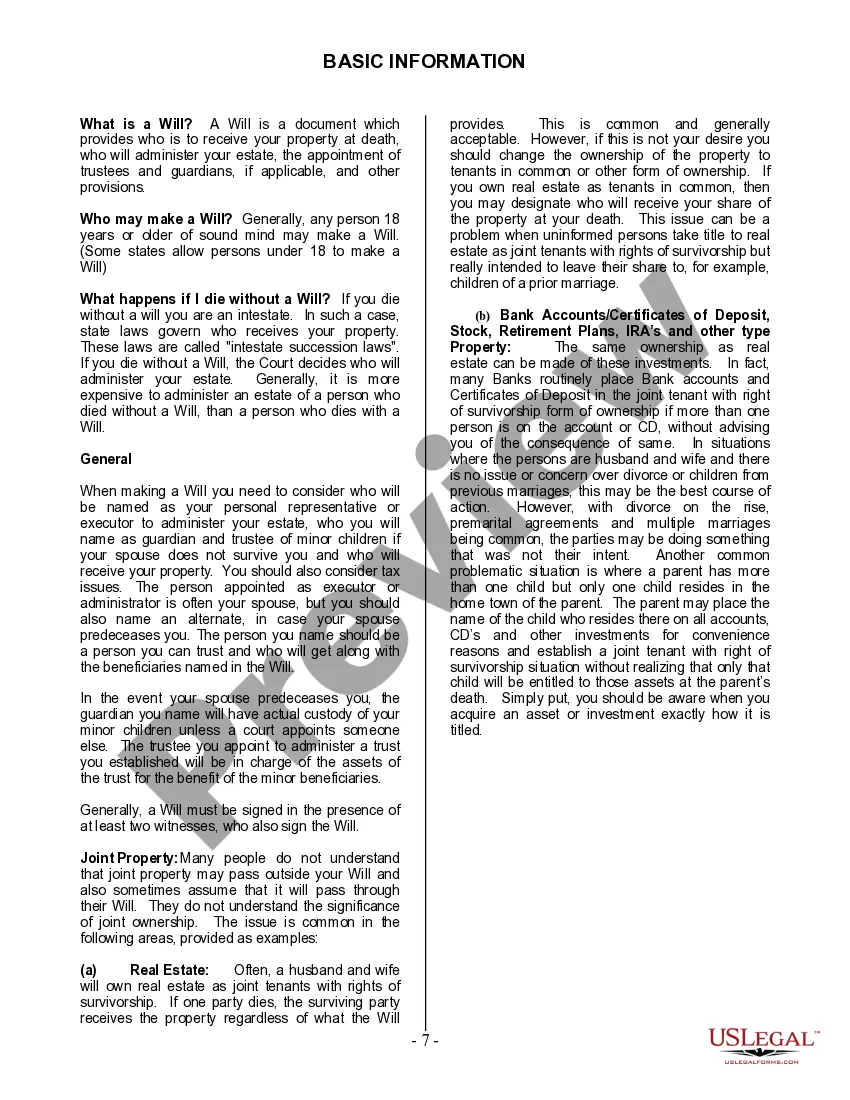
Maryland law requires that your will be in writing, signed by the testator (you) and witnessed by two individuals in the testator's presence. This is called "executing a will." When you are ready to execute your will, you should have at least two witnesses, although three is better.
Maryland Law requires that any one holding an original Will and/or Codicil(s) must file that document with the Register of Wills promptly after a decedent's death even if there are no assets. However, although the Will and/or Codicil are kept on file, no probate proceedings are required to be opened.
Maryland law requires that your will be in writing, signed by the testator (you) and witnessed by two individuals in the testator's presence. This is called "executing a will." When you are ready to execute your will, you should have at least two witnesses, although three is better.