Maryland Last Will and Testament for a Married Person with No Children
About this form
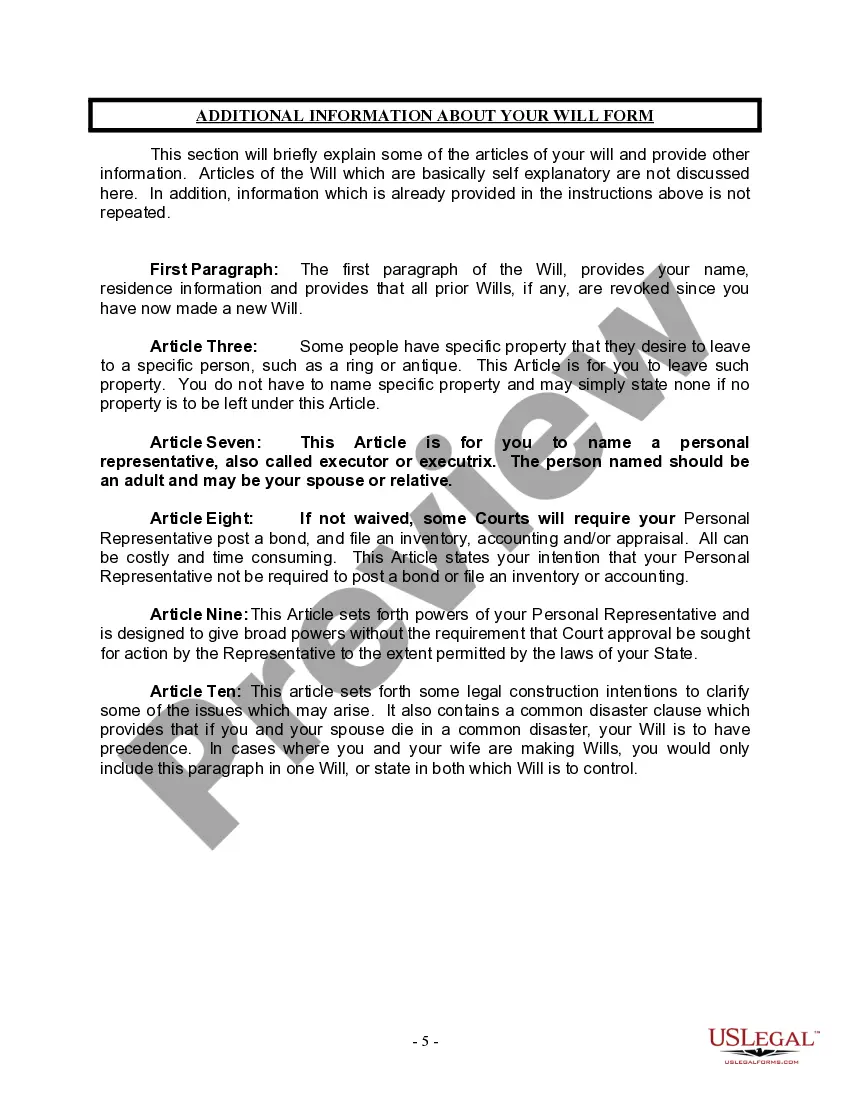
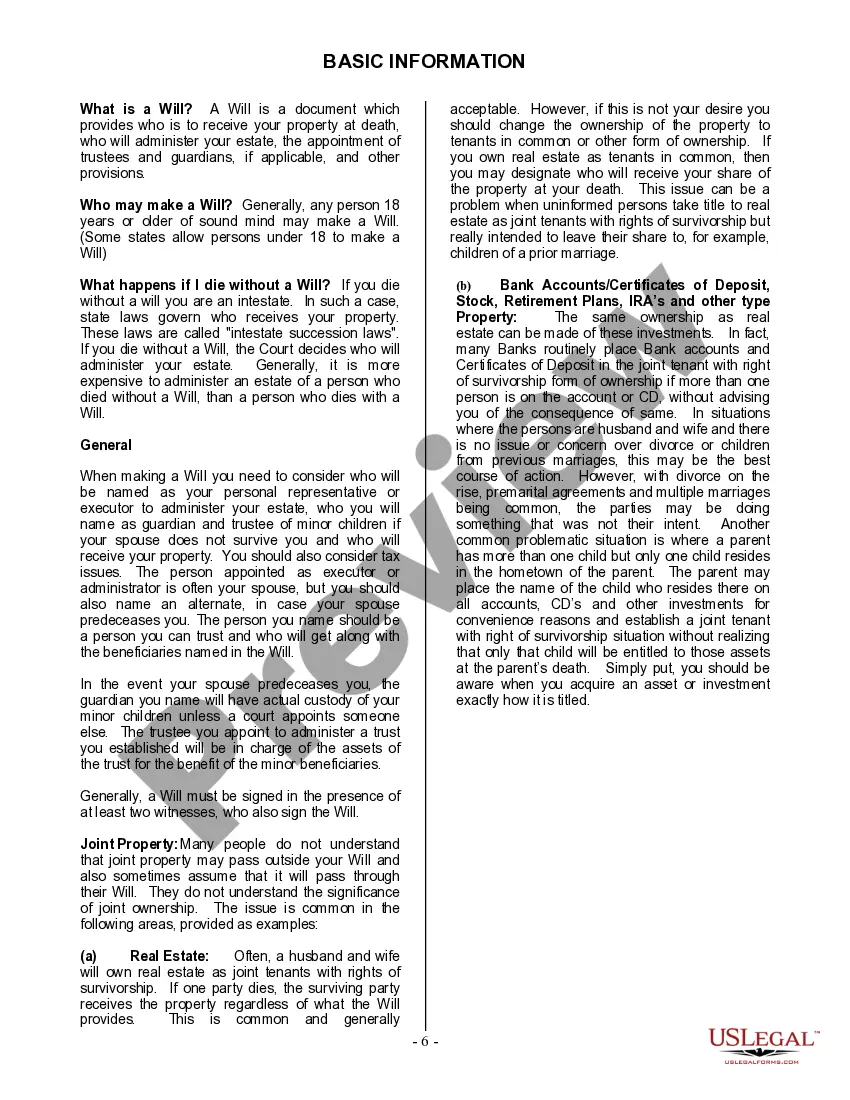
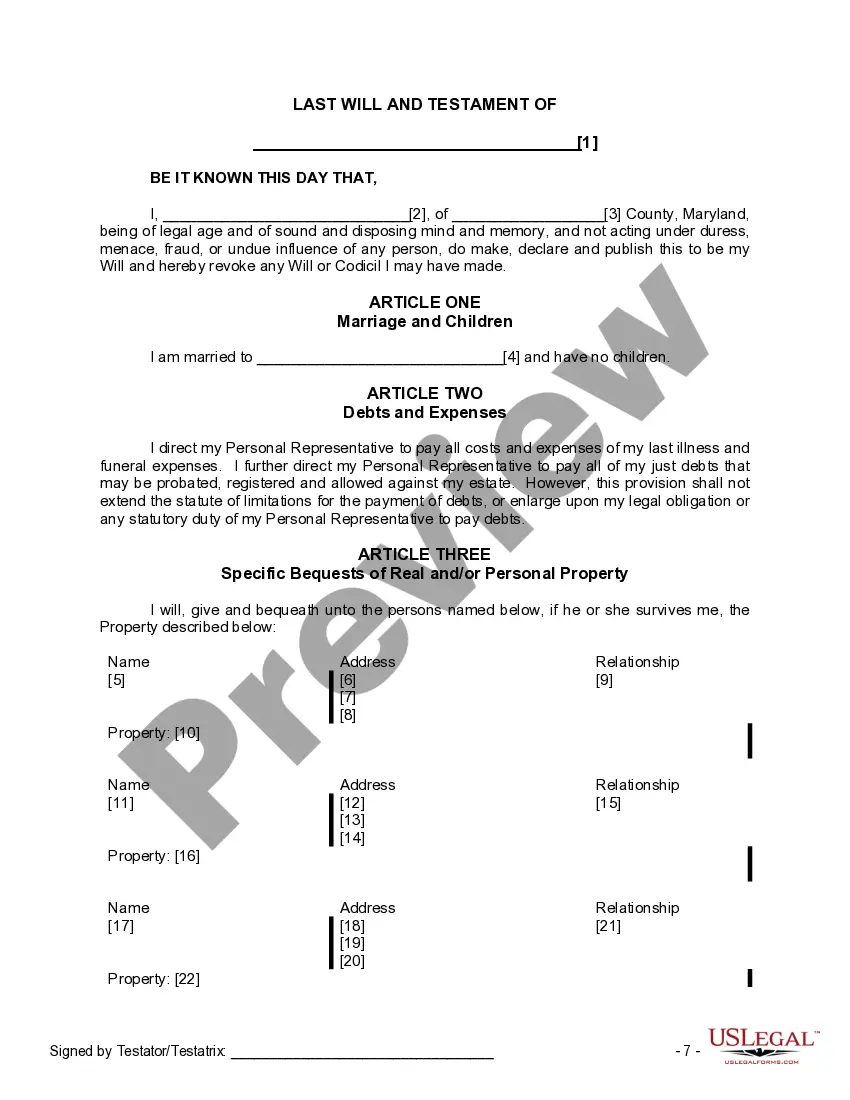
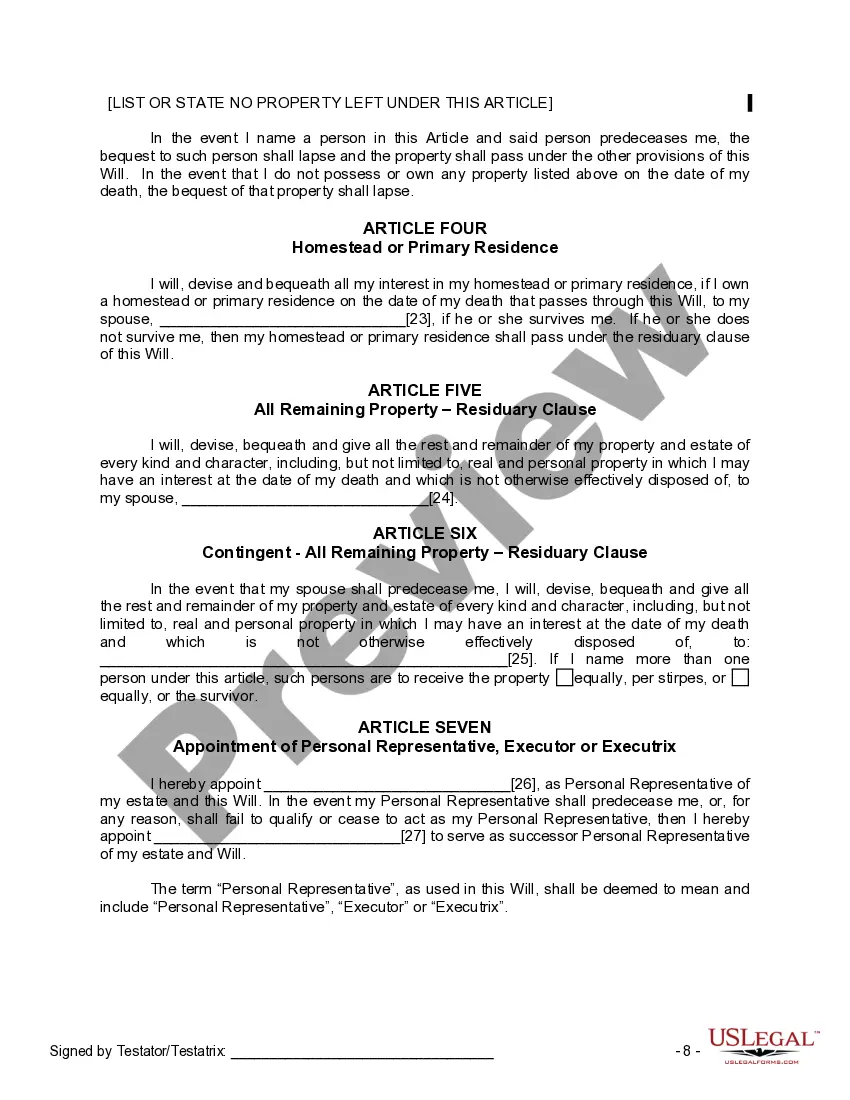
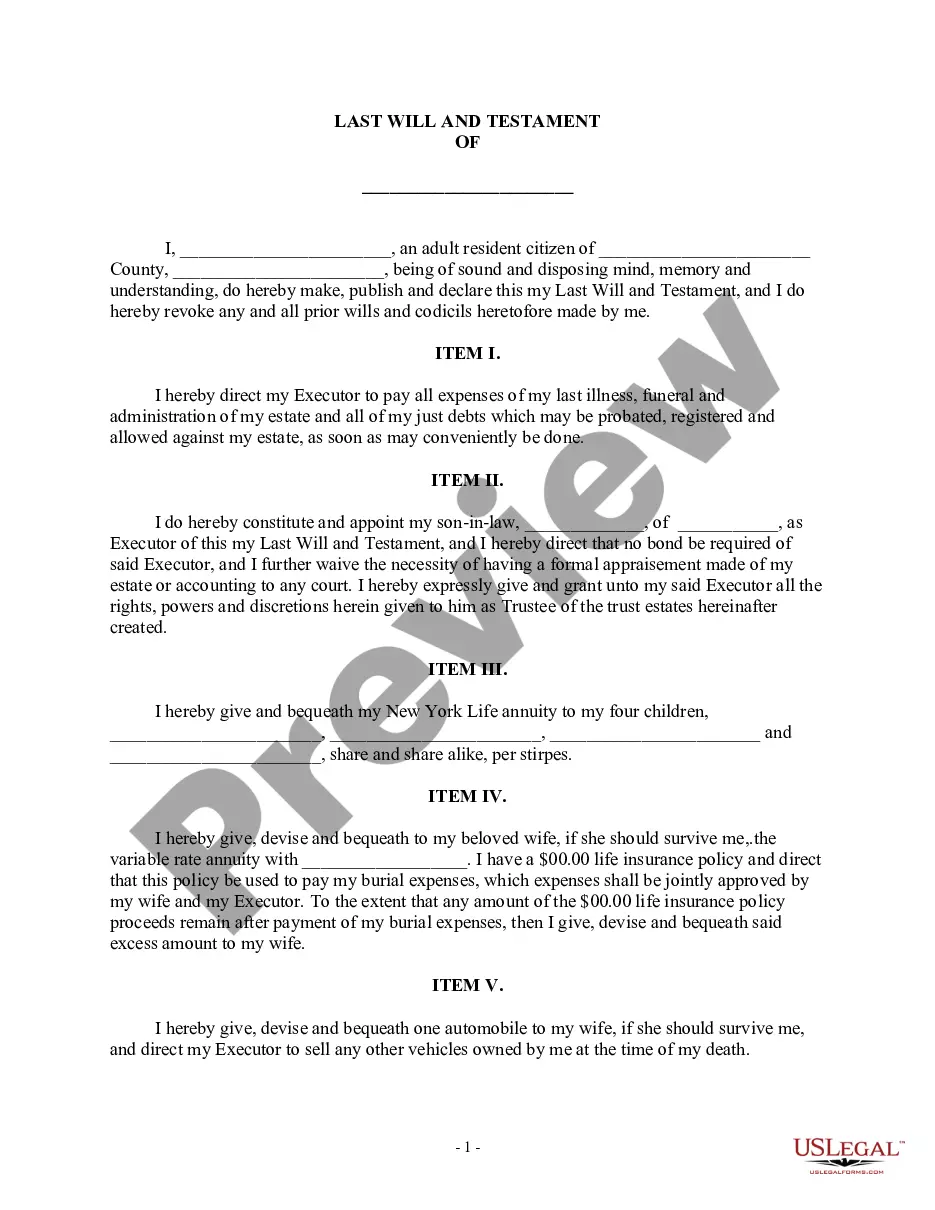
The Last Will and Testament for a Married Person with No Children is a legal document that outlines how your property will be distributed upon your death if you are married and have no children. This form allows you to designate beneficiaries, name a personal representative (executor), and specify detailed instructions for your estate. It is specifically tailored for individuals in a marriage without dependents, distinguishing it from wills meant for parents or those with different family structures.
Main sections of this form
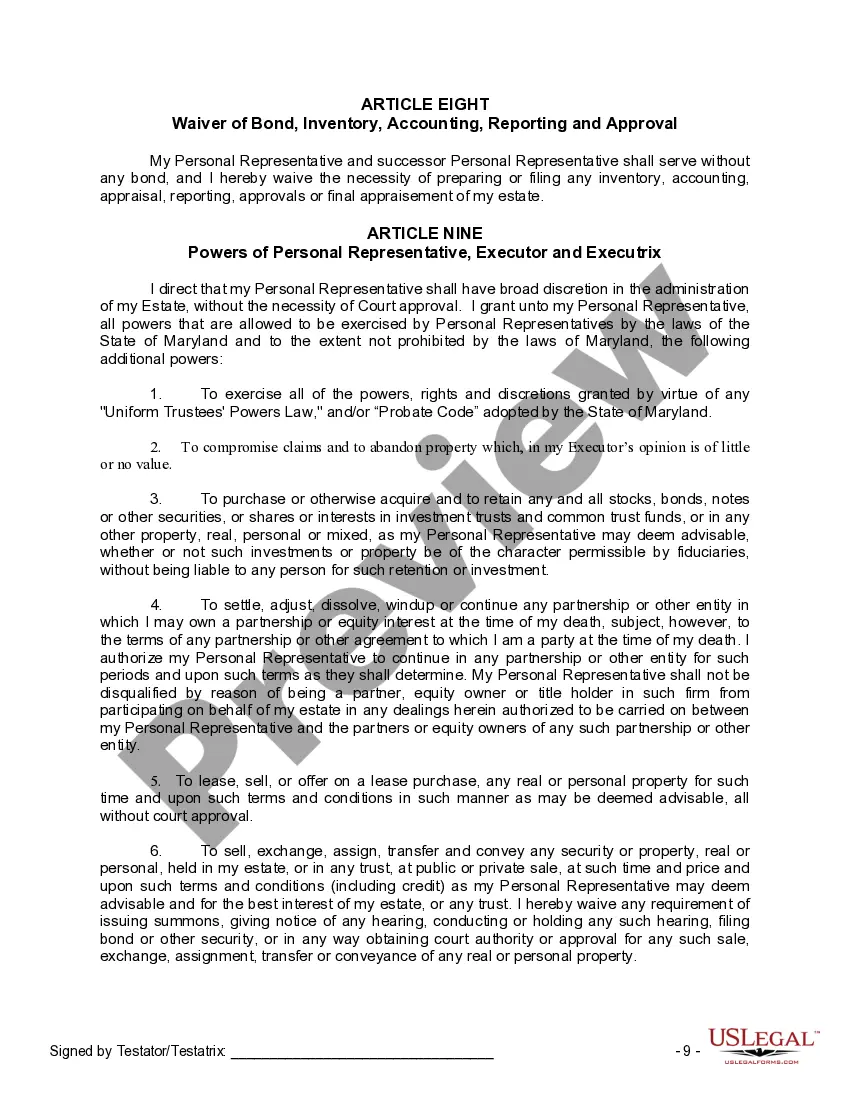
- Personal Representative: Designate someone you trust to manage your estate.
- Spousal Bequests: Specify how your spouse will inherit your property.
- Specific Bequests: Outline any particular items or properties you wish to give to named individuals.
- Residuary Clause: State what happens to any remaining assets not explicitly mentioned in the will.
- Signature Requirement: Must be signed in front of two witnesses who are not beneficiaries.




When to use this document
This form should be used in situations such as: - You are married and want to ensure that your spouse is the primary beneficiary of your estate.- You do not have children and wish to avoid complications in distributing your assets.- You want to specify particular gifts, properties, or accounts for loved ones outside your immediate family.- You need to establish a legal framework for the administration of your estate after your passing.
Who can use this document
This form is intended for:
- Married individuals with no children.
- People looking to formalize their estate plans and ensure a seamless transition of their assets.
- Individuals who want to specify beneficiaries for personal belongings and properties.
- Those who may not need the complexity of a will designed for larger families.
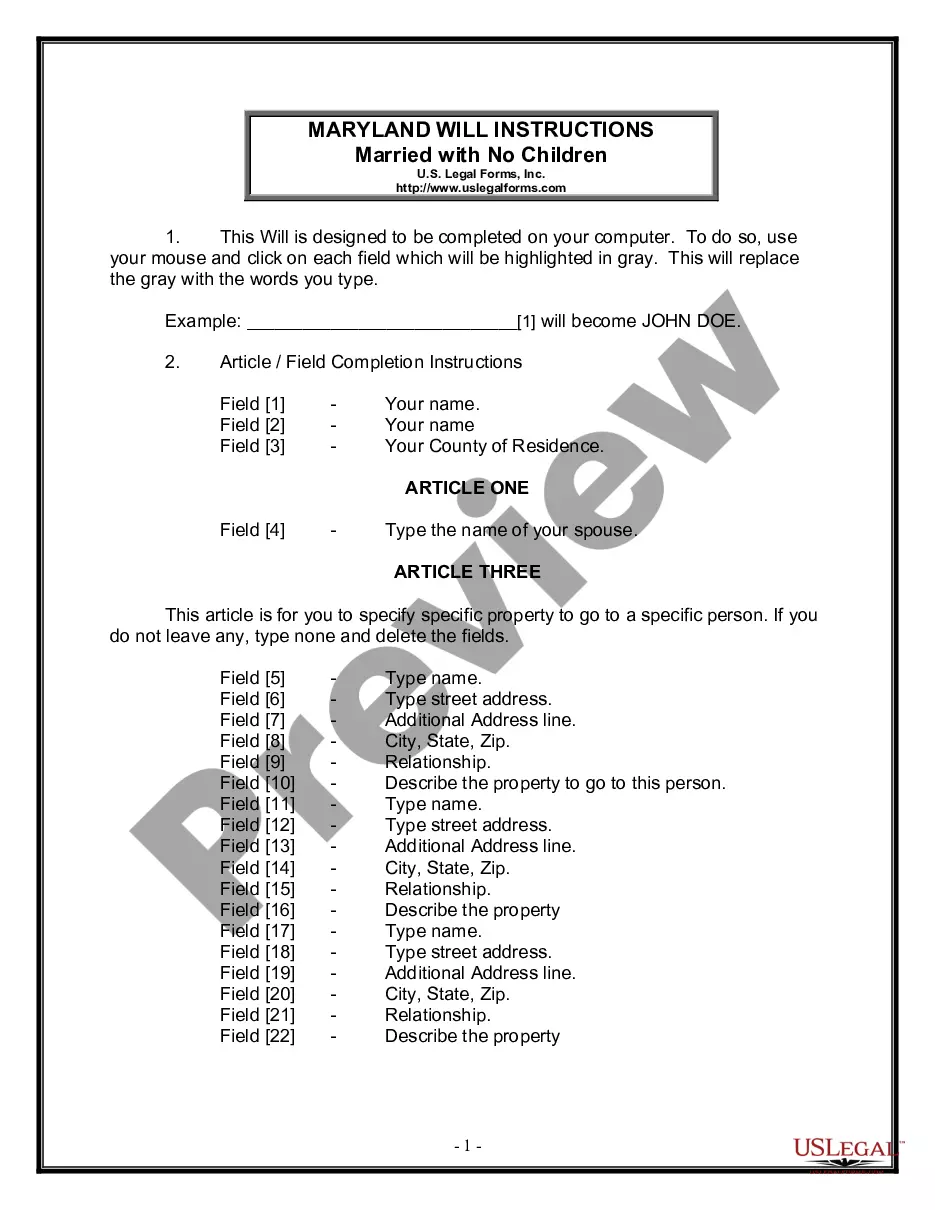
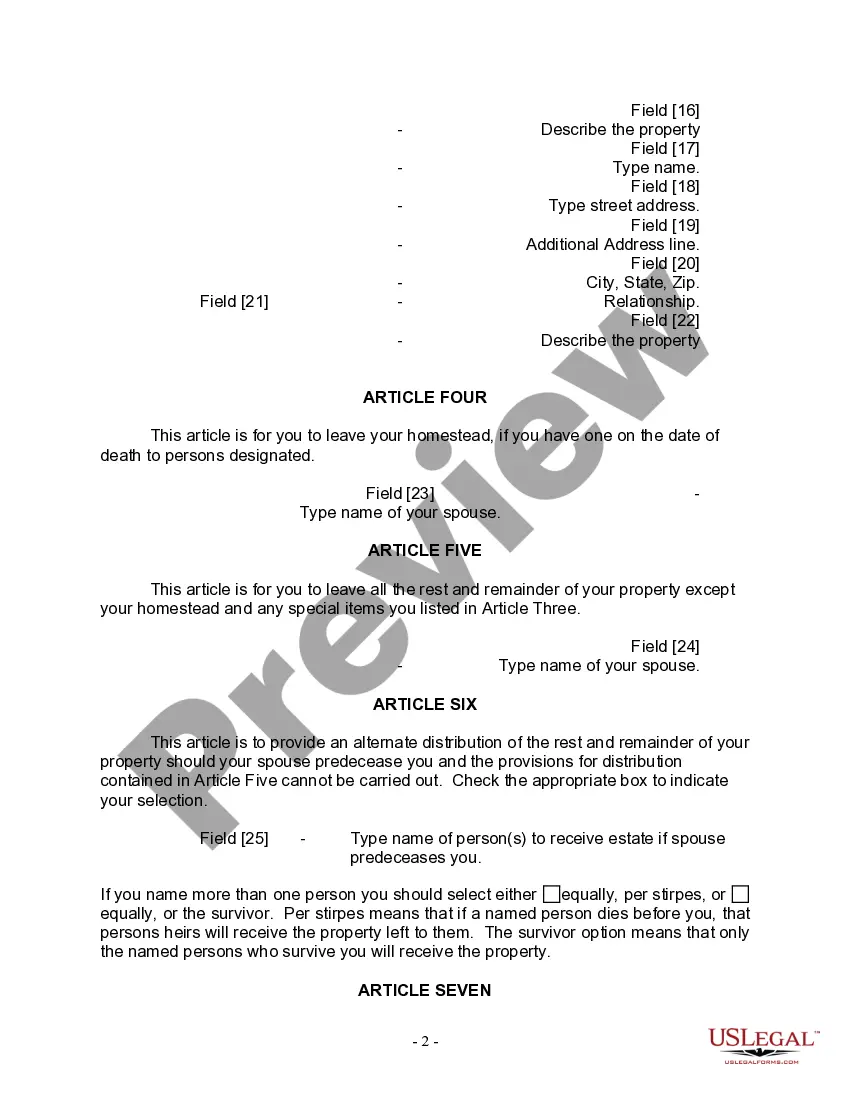
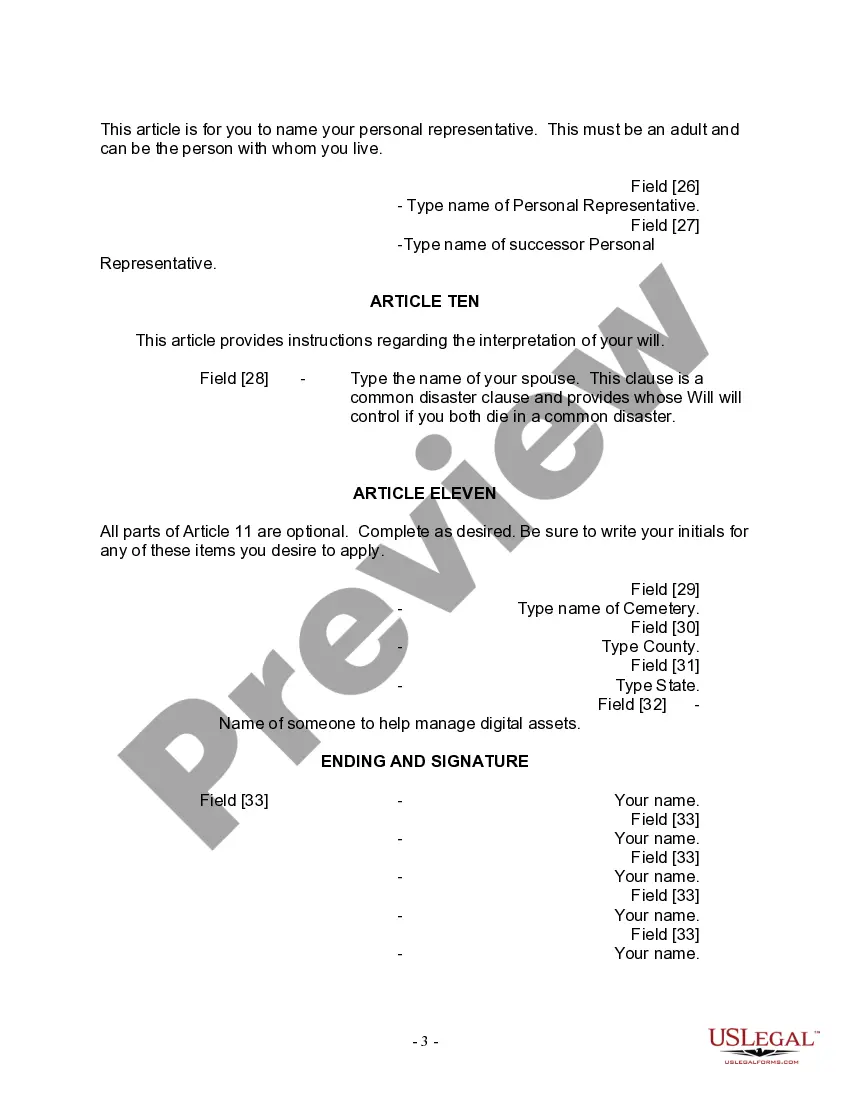
Instructions for completing this form
- Identify the parties: Enter your name and the name of your spouse at the beginning of the document.
- Designate beneficiaries: Specify who will receive your property by filling in their names and relationships in the designated fields.
- Name your personal representative: Appoint someone responsible for administering your estate.
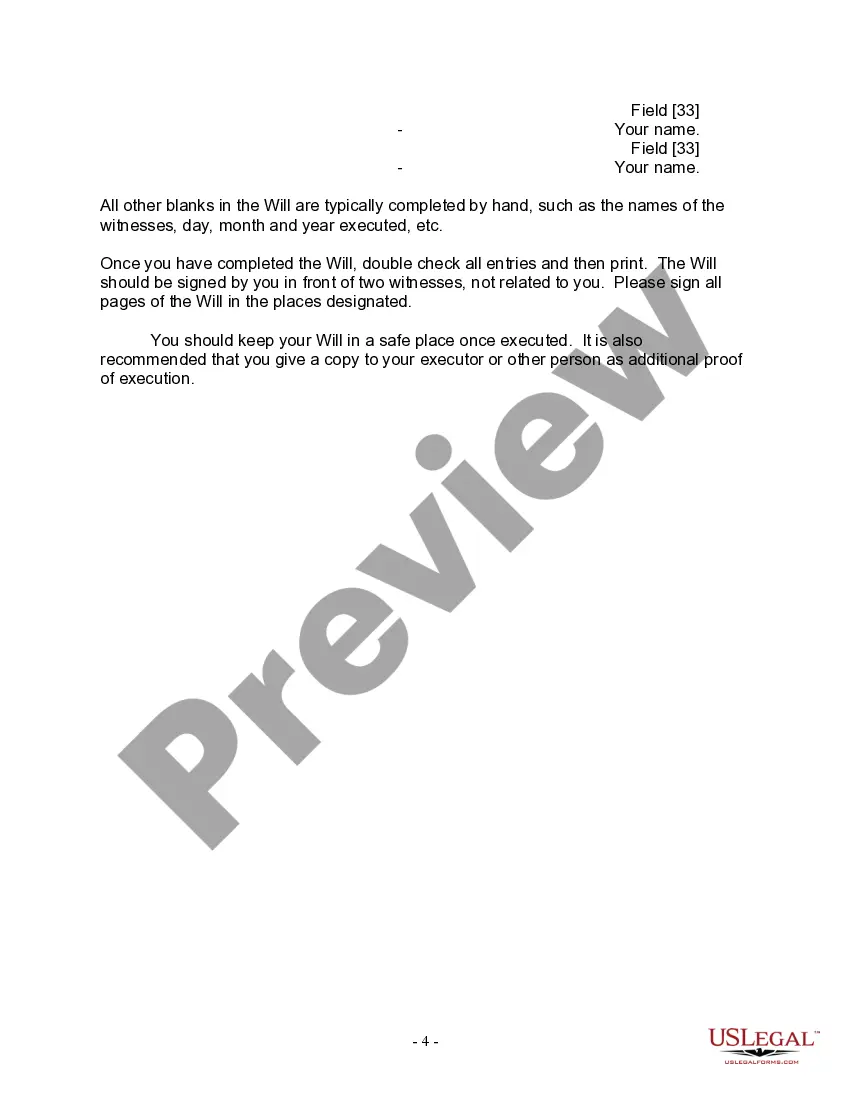
- Complete the signature section: Sign in front of two witnesses who are not beneficiaries of the will.
- Store securely: Keep the signed document in a safe place and consider providing a copy to your personal representative.
Notarization guidance
This form does not typically require notarization unless specified by local law. However, if your state has adopted a self-proving affidavit statute, it will need to be signed by a notary public along with the witnesses to enhance its validity.
Get your form ready online
Our built-in tools help you complete, sign, share, and store your documents in one place.
Make edits, fill in missing information, and update formatting in US Legal Forms—just like you would in MS Word.
Download a copy, print it, send it by email, or mail it via USPS—whatever works best for your next step.
Sign and collect signatures with our SignNow integration. Send to multiple recipients, set reminders, and more. Go Premium to unlock E-Sign.
If this form requires notarization, complete it online through a secure video call—no need to meet a notary in person or wait for an appointment.
We protect your documents and personal data by following strict security and privacy standards.

Make edits, fill in missing information, and update formatting in US Legal Forms—just like you would in MS Word.

Download a copy, print it, send it by email, or mail it via USPS—whatever works best for your next step.

Sign and collect signatures with our SignNow integration. Send to multiple recipients, set reminders, and more. Go Premium to unlock E-Sign.

If this form requires notarization, complete it online through a secure video call—no need to meet a notary in person or wait for an appointment.

We protect your documents and personal data by following strict security and privacy standards.
Common mistakes
- Failing to sign the will in front of the required witnesses.
- Not updating the will after significant life changes, such as divorce or the death of a spouse.
- Omitting specifics about property bequests, leading to confusion about intentions.
- Using vague language that could lead to disputes among beneficiaries.
Why use this form online
- Convenience: Complete the form from your home at any time.
- Editability: Easily make changes to the document as your circumstances change.
- Reliability: Access professionally drafted templates created by licensed attorneys.
Legal use & context
- The Last Will and Testament is enforceable in legal court upon death when properly executed according to state law.
- It ensures that your estate is handled according to your wishes, avoiding disputes among potential heirs.
- If a will is improperly executed or lacks valid witnesses, it may be contested or deemed void.
Quick recap
- This form is specifically designed for married individuals without children.
- It outlines how your assets will be managed and distributed after your death.
- Proper execution, including witness signatures, is crucial for validity.
- Utilizing this form can simplify estate planning and help avoid legal disputes.
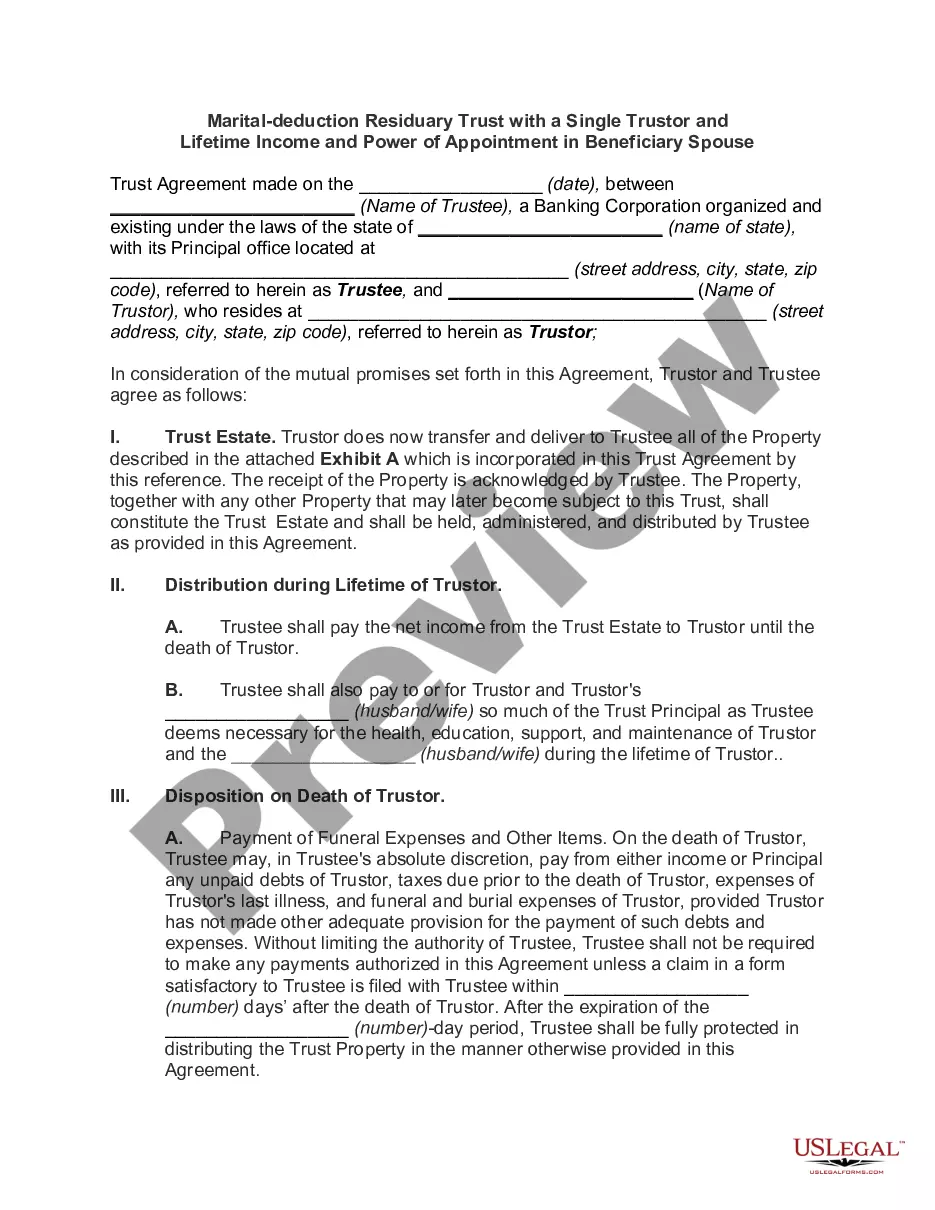
Looking for another form?
Form popularity
FAQ
In Maryland, a will must be signed by the person making the will (testator/testatrix) and Attested and signed by two credible witnesses in the presence of the person making the will.
No, in Maryland, you do not need to notarize your will to make it legal. Maryland does allow you to make your will "self-proving," which speeds up probate because the court can accept the will without contacting the witnesses who signed it.
In Maryland, a Will must be in writing, signed by the testator (or by someone else for him/her in his/her presence with his/her permission), and attested and signed by at least two credible witnesses in the presence of the testator.
A notarized will does not need to be probated.When a person dies leaving behind a will that is not notarized, the law requires that its validity be ascertained by a notary or by a court. Similarly, any non-notarized modification made to a will must be probated, whether the will is notarized or not.
Is a holographic (handwritten) Will legal in Maryland ? Yes, if it complies with Maryland Law.
No. You can make your own will in Maryland, using Nolo's do-it-yourself will software or online will programs. However, you may want to consult a lawyer in some situations. For example, if you think that your will might be contested or if you want to disinherit your spouse, you should talk with an attorney.
Maryland law requires that the will be in writing, signed by the testator, and witnessed by two individuals in the testator's presence. This is called "executing a will." When you are ready to execute your will, you should have at least two disinterested witnesses, although three is preferable.
Holographic wills are wills that have been written entirely in the hand of the testator. Although Maryland does recognize holographic wills, they must comply with Maryland law. Unless holographic wills are written properly, there is a chance the courts may not recognize the document as a valid last will and testament.
Maryland law requires that your will be in writing, signed by the testator (you) and witnessed by two individuals in the testator's presence. This is called "executing a will." When you are ready to execute your will, you should have at least two witnesses, although three is better.