Maryland Last Will and Testament for Married person with Minor Children from Prior Marriage
About this form
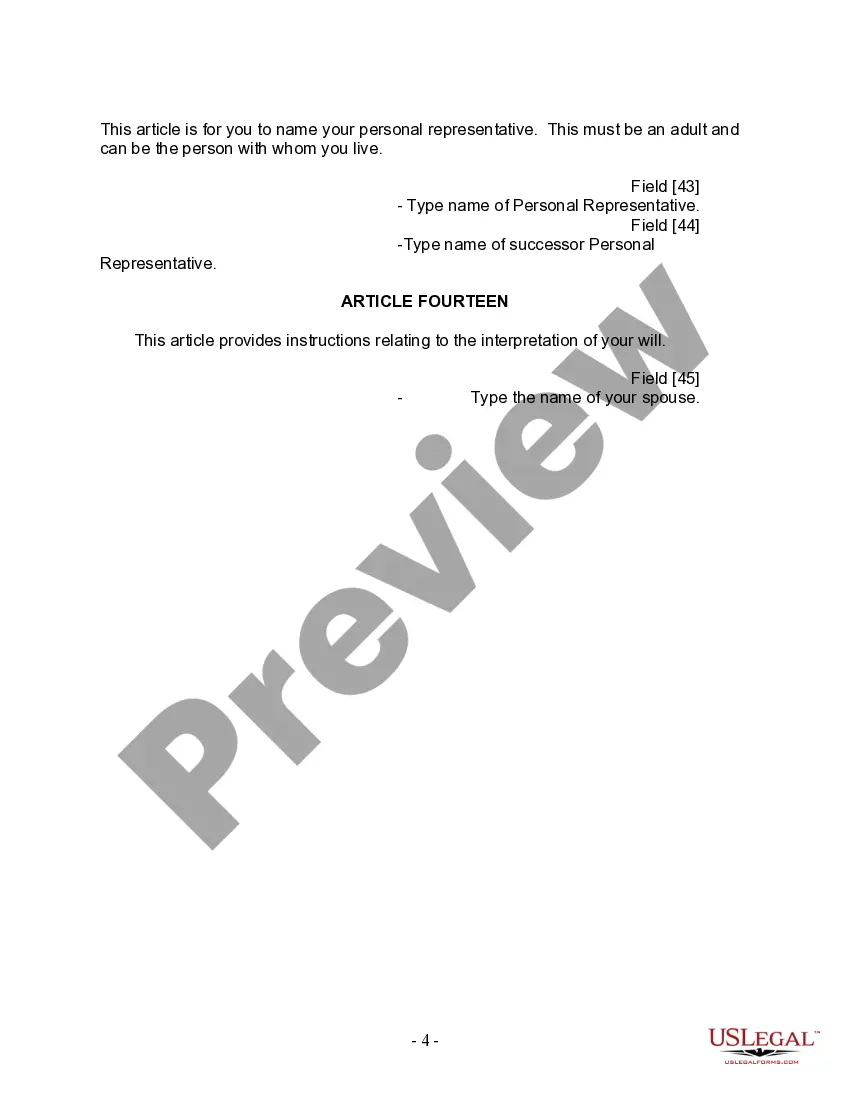
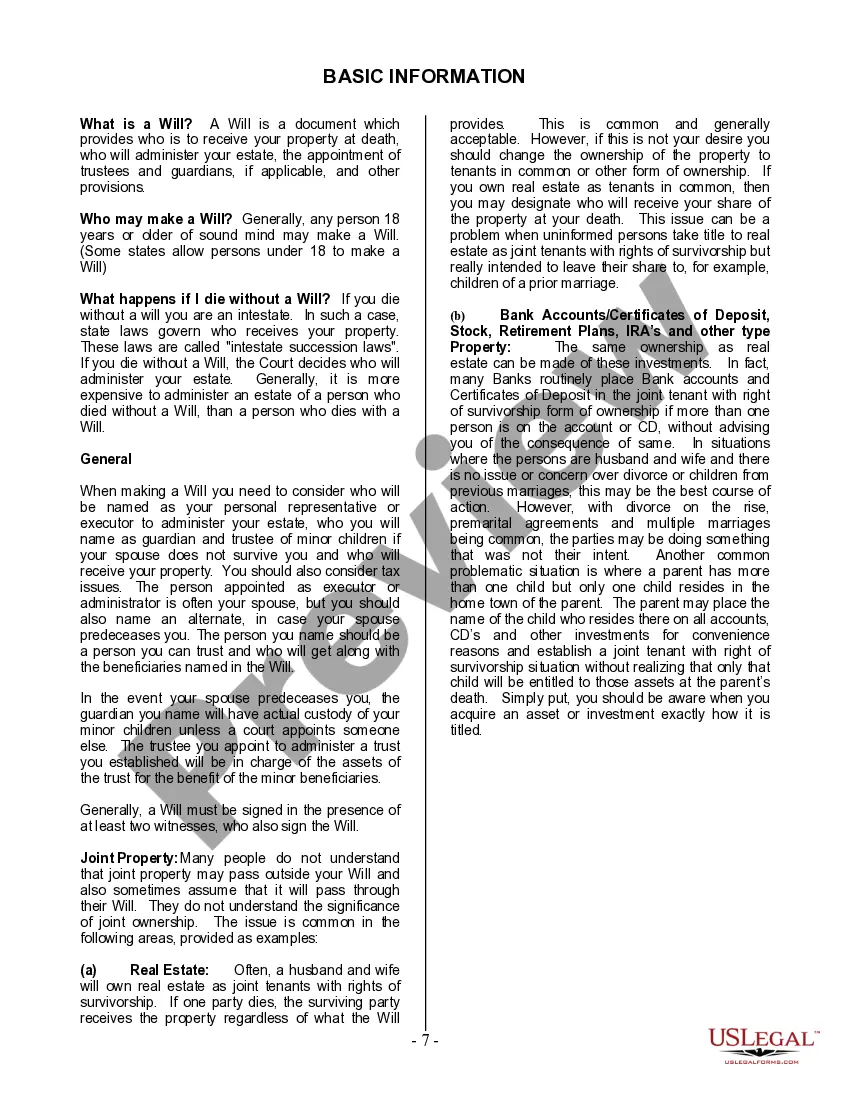
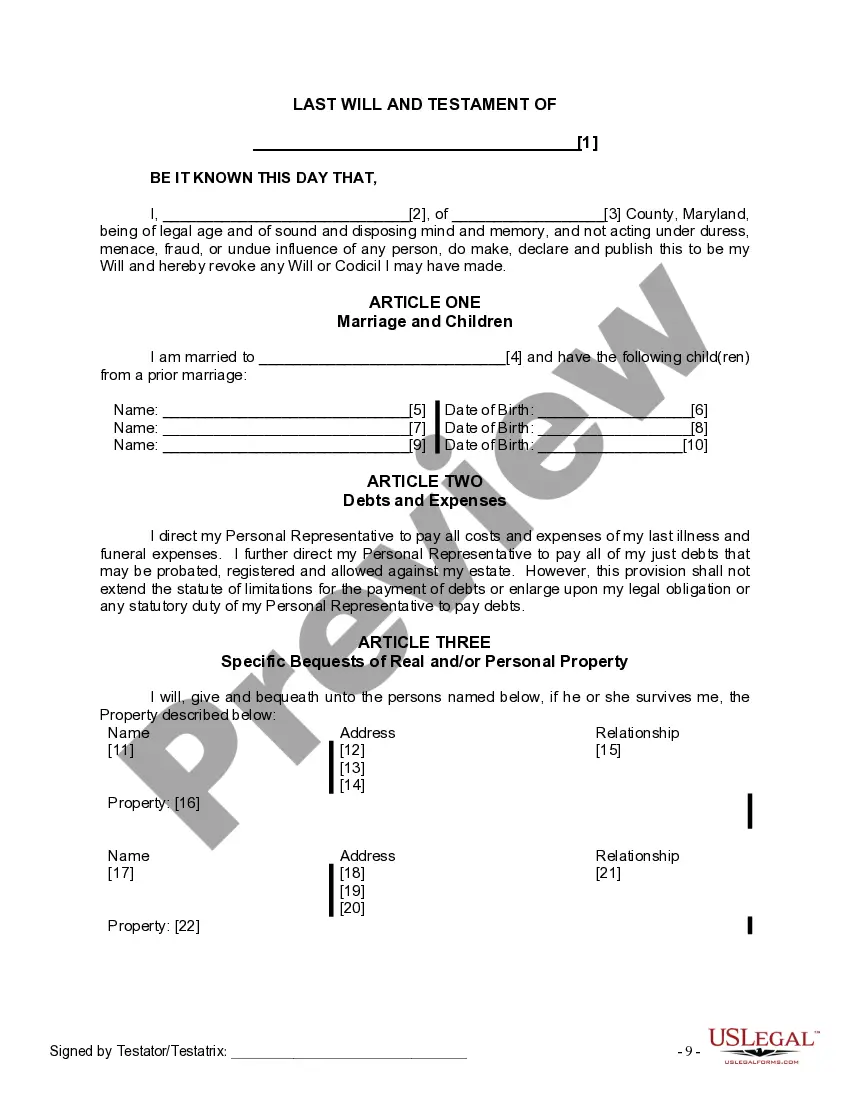
This form is a Last Will and Testament specifically designed for a married person with minor children from a prior marriage. It serves to outline your wishes regarding the distribution of your property, the appointment of a personal representative or executor to administer your estate, and the designation of guardians for your minor children. Unlike general wills, this document includes provisions tailored to ensure that your children from a previous marriage are considered in your estate planning.
Main sections of this form
- Personal representative appointment: Designate an individual to manage your estate after your death.
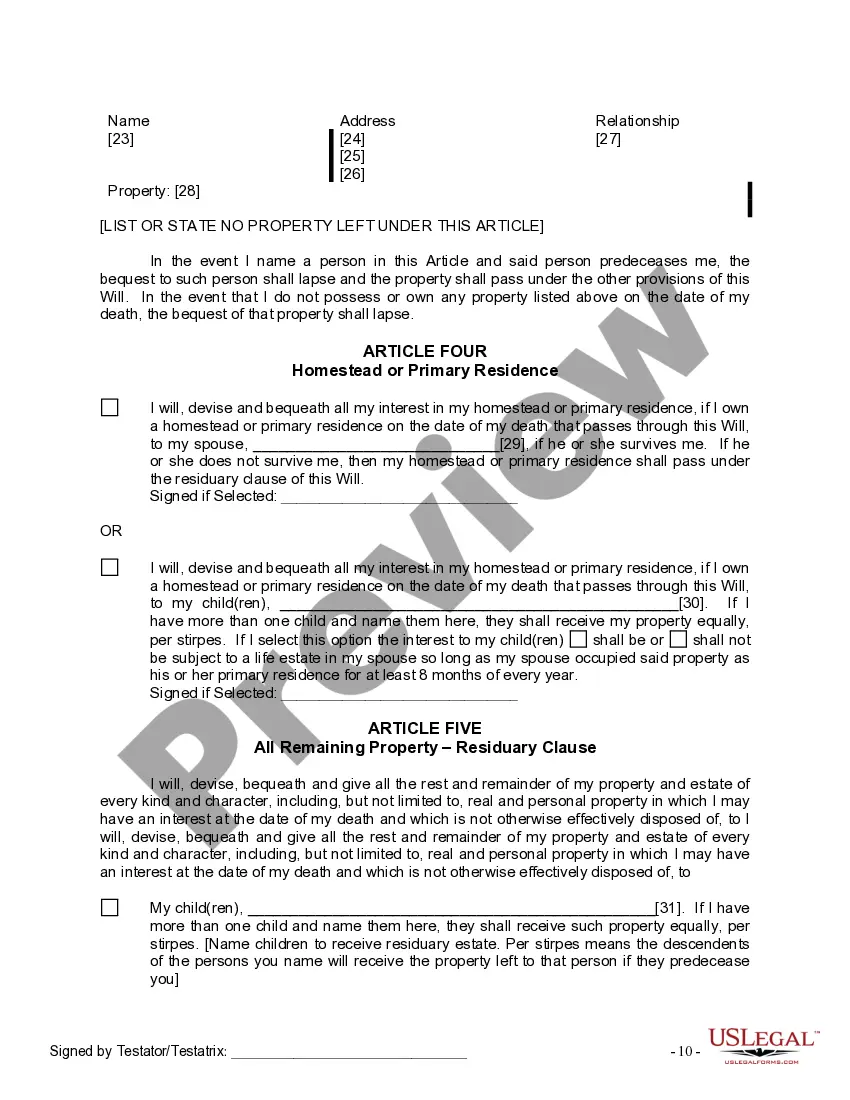
- Property distribution: Clearly state who receives your assets, including specific bequests or general distribution among heirs.
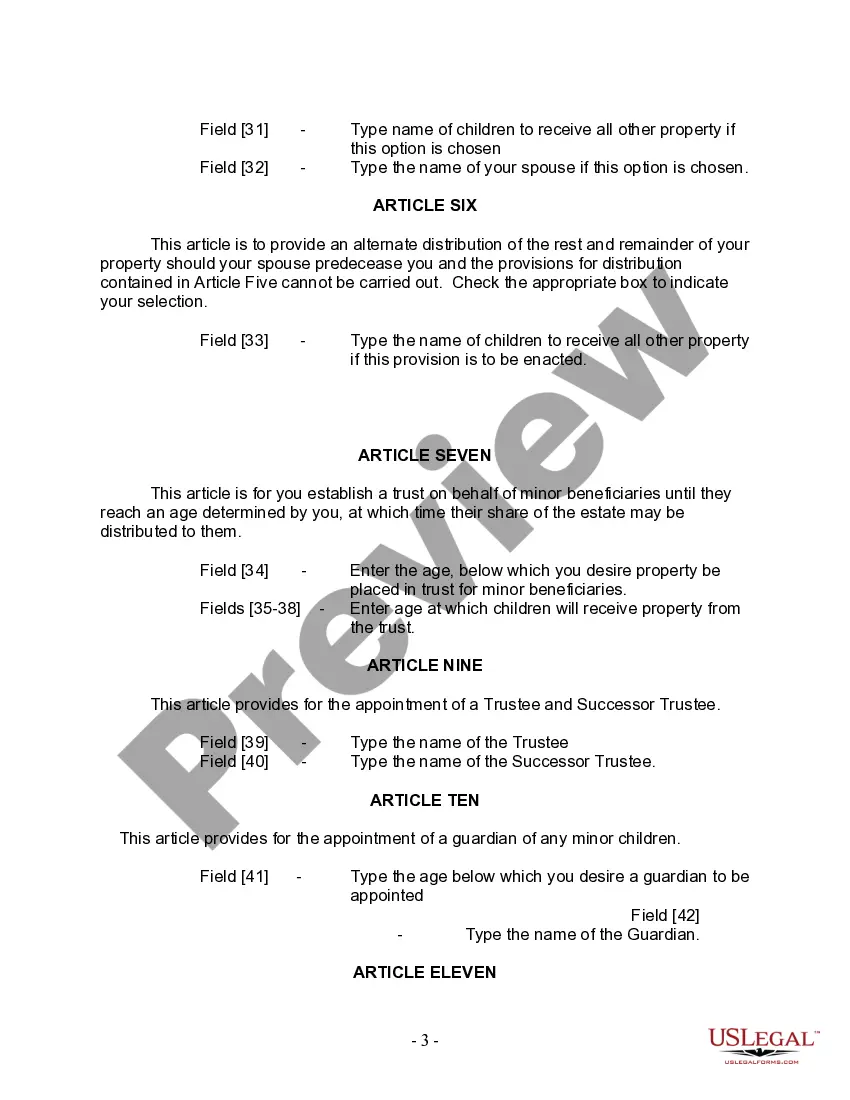
- Trust establishment: Set up provisions for managing assets left to minor children until they reach a specified age.
- Guardian nomination: Identify a guardian for any minor children, ensuring their care in the event of your passing.
- Homestead distribution: Indicate how your primary residence will be handled, either for your spouse or children.
- Alternate provisions: Include contingency plans in case your spouse passes away before you.





Situations where this form applies
Use this form when you are a married individual with minor children from a previous marriage and wish to ensure that your will addresses your unique family structure. This form is crucial if you want to protect the interests of all your children, maintain a clear plan for guardianship, and specify how your assets will be managed and distributed after your passing.
Who this form is for
This form is intended for:
- Married individuals with minor children from prior marriages.
- Parents who want to ensure their children's financial security through trusts.
- Anyone looking to make specific provisions for their property and guardianship arrangements in the event of death.
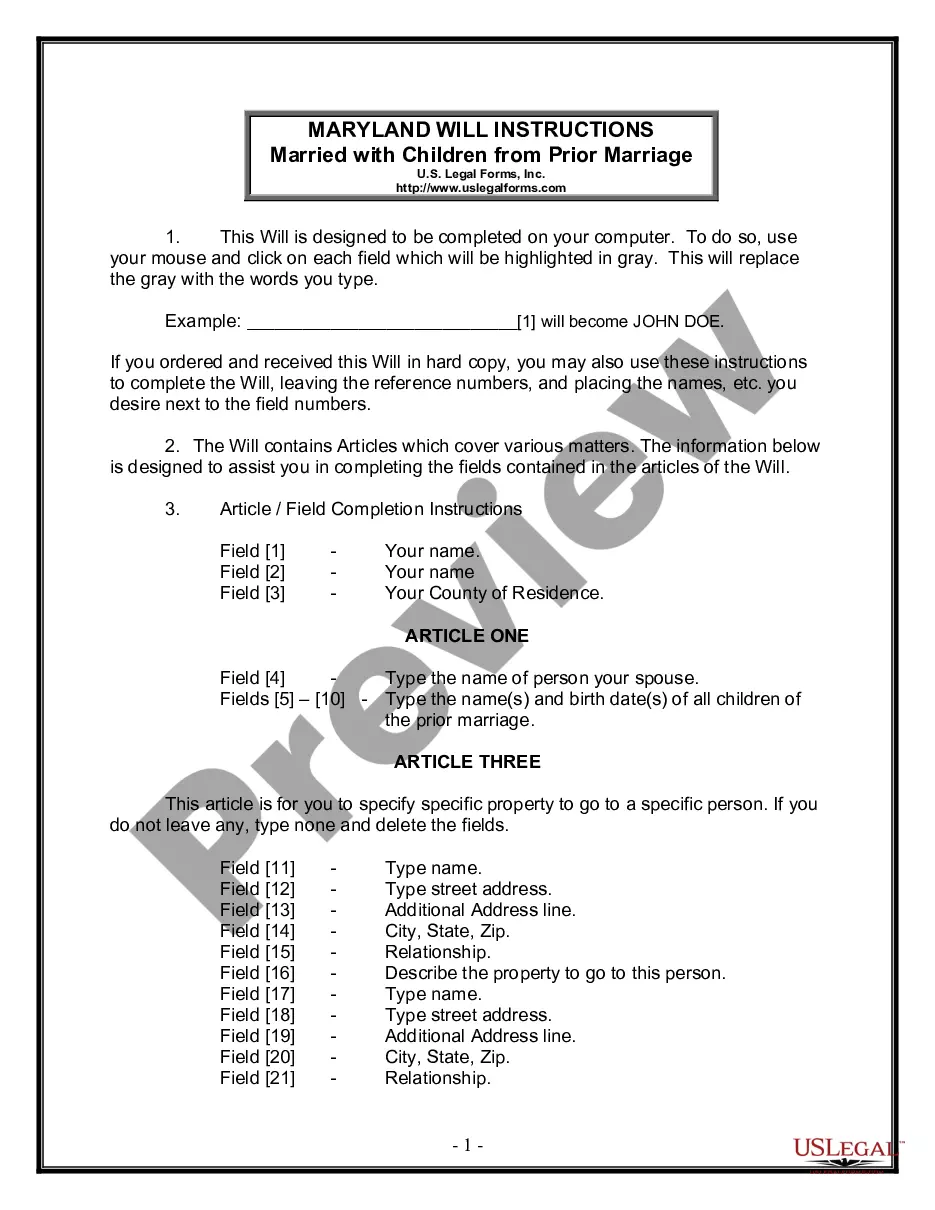
How to complete this form
Steps to complete this form:
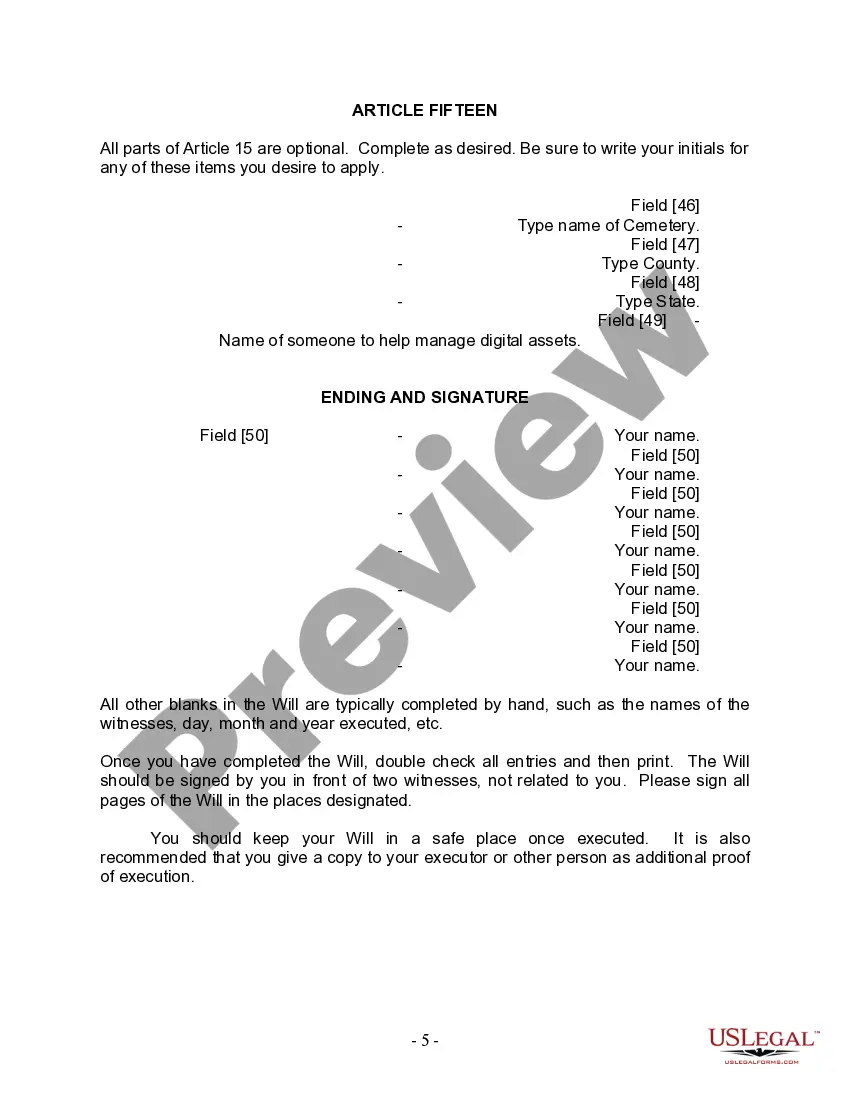
- Identify and enter your name and address in the appropriate fields.
- Specify the name of your spouse and the names and birth dates of your minor children from the prior marriage.
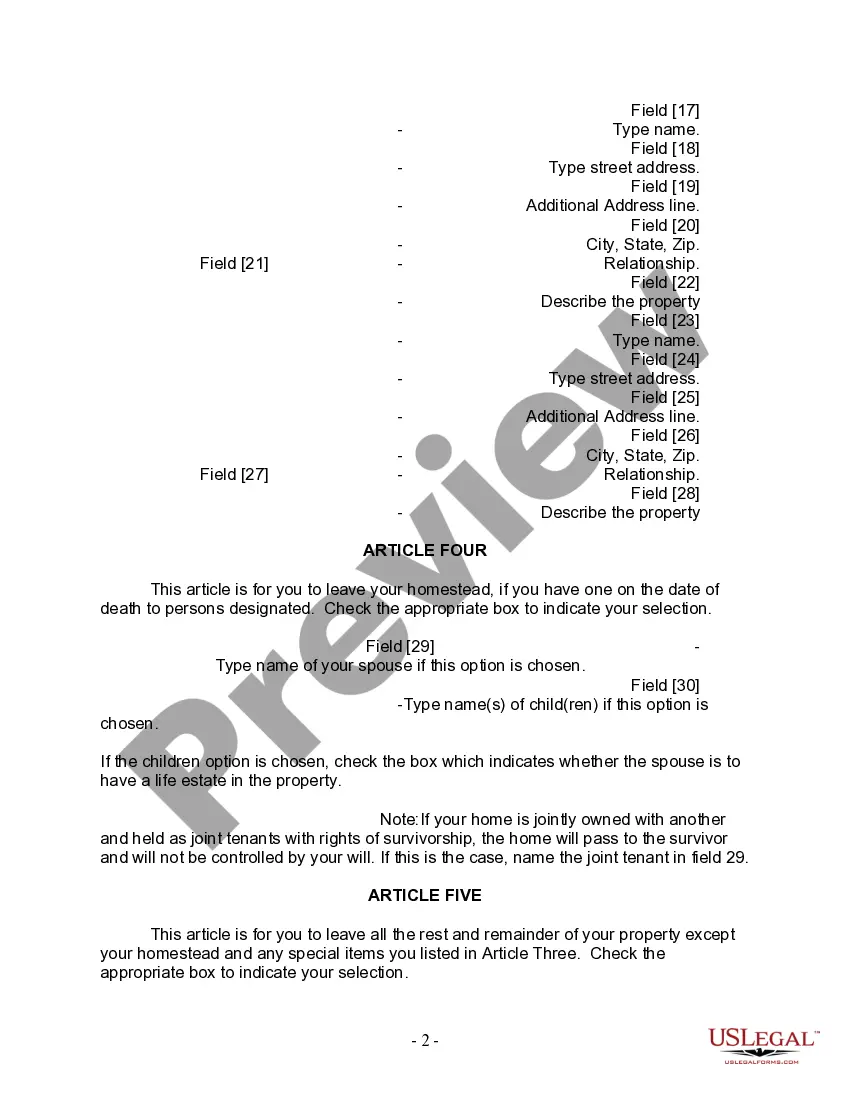
- Detail any specific property bequests to individuals, if applicable.
- Appoint a personal representative and a guardian for your minor children.
- Fill out provisions for the homestead and the distribution of the remainder of your estate.
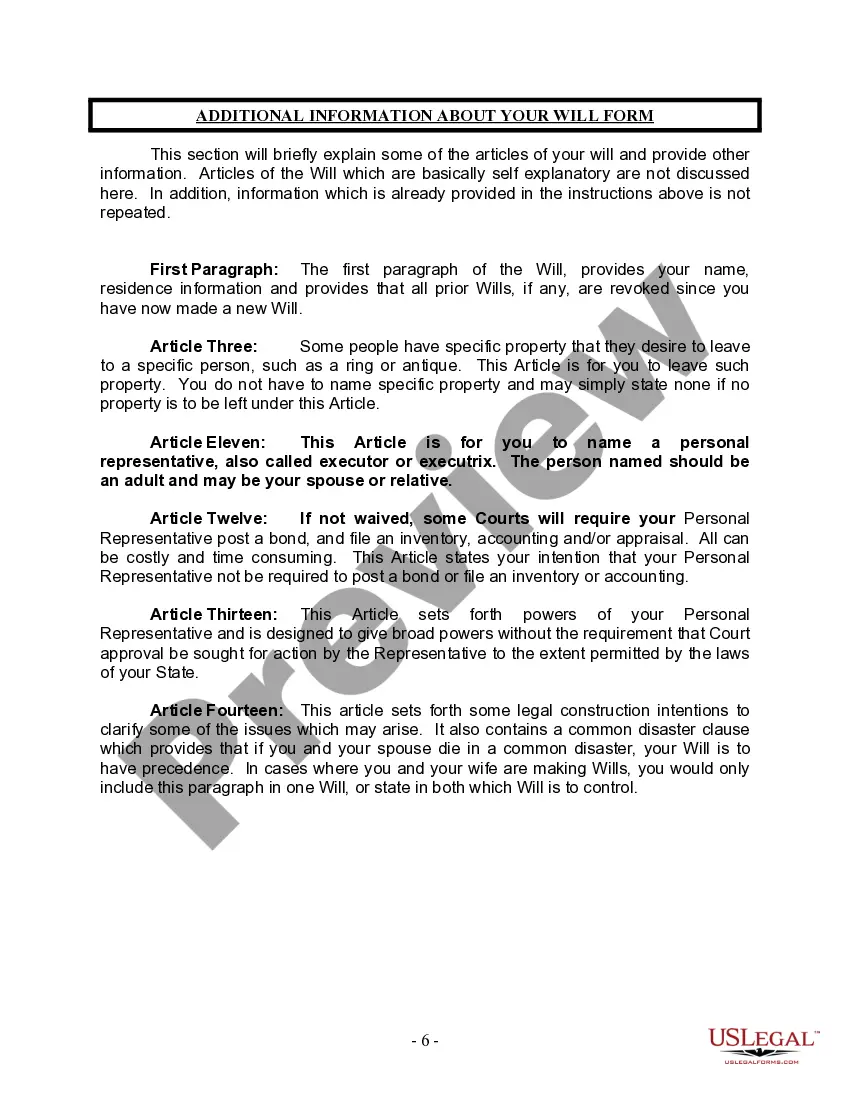
- Sign the completed form in the presence of two witnesses, ensuring they are not related to you or named in your will.
Notarization guidance
Yes, this form must be notarized to be legally valid in most jurisdictions. A notary publicâs signature is required along with the signatures of two witnesses to authenticate the document, ensuring its enforceability.
Get your form ready online
Our built-in tools help you complete, sign, share, and store your documents in one place.
Make edits, fill in missing information, and update formatting in US Legal Forms—just like you would in MS Word.
Download a copy, print it, send it by email, or mail it via USPS—whatever works best for your next step.
Sign and collect signatures with our SignNow integration. Send to multiple recipients, set reminders, and more. Go Premium to unlock E-Sign.
If this form requires notarization, complete it online through a secure video call—no need to meet a notary in person or wait for an appointment.
We protect your documents and personal data by following strict security and privacy standards.

Make edits, fill in missing information, and update formatting in US Legal Forms—just like you would in MS Word.

Download a copy, print it, send it by email, or mail it via USPS—whatever works best for your next step.

Sign and collect signatures with our SignNow integration. Send to multiple recipients, set reminders, and more. Go Premium to unlock E-Sign.

If this form requires notarization, complete it online through a secure video call—no need to meet a notary in person or wait for an appointment.

We protect your documents and personal data by following strict security and privacy standards.
Mistakes to watch out for
Common mistakes to avoid:
- Failing to update the will after significant life changes such as marriage or the birth of children.
- Not having the will properly witnessed, which may render it invalid.
- Overlooking to include provisions for all minor children, which can lead to disputes.
- Neglecting to store the will in a secure and accessible location.
Advantages of online completion
Benefits of using this form online:
- Immediate access: Download the form directly after purchase, saving time.
- Editability: Complete the form on your computer for easy corrections.
- Cost-effective: Avoid attorney fees while still receiving a professionally drafted document.
- Guided completion: Clear instructions help ensure you fill out all necessary sections correctly.
Looking for another form?

Form popularity
FAQ
Children from a previous marriage can inherit under Maryland law, given that the will explicitly states their inheritance rights. The Maryland Last Will and Testament for a married person with minor children from a prior marriage should clearly indicate how you want to distribute your assets. This clarity will help prevent disputes and ensure that all beneficiaries understand their entitlement. For guidance in drafting a will that addresses this issue, uslegalforms can provide valuable resources.
In Maryland, a will must be signed by the person making the will (testator/testatrix) and Attested and signed by two credible witnesses in the presence of the person making the will.
Holographic wills are wills that have been written entirely in the hand of the testator. Although Maryland does recognize holographic wills, they must comply with Maryland law. Unless holographic wills are written properly, there is a chance the courts may not recognize the document as a valid last will and testament.
Self-written wills are typically valid, even when handwritten, as long as they're properly witnessed and notarized, or proven in court. A handwritten will that is not witnessed or notarized is considered a holographic will. Not all states accept holographic wills .
Maryland law requires that your will be in writing, signed by the testator (you) and witnessed by two individuals in the testator's presence. This is called "executing a will." When you are ready to execute your will, you should have at least two witnesses, although three is better.
Is a holographic (handwritten) Will legal in Maryland ? Yes, if it complies with Maryland Law.
No, in Maryland, you do not need to notarize your will to make it legal. Maryland does allow you to make your will "self-proving," which speeds up probate because the court can accept the will without contacting the witnesses who signed it.
No. You can make your own will in Maryland, using Nolo's do-it-yourself will software or online will programs. However, you may want to consult a lawyer in some situations. For example, if you think that your will might be contested or if you want to disinherit your spouse, you should talk with an attorney.
Drafting the will yourself is less costly and may put you out about $150 or less. Depending on your situation, expect to pay anywhere between $300 and $1,000 to hire a lawyer for your will. While do-it-yourself will kits may save you time and money, writing your will with a lawyer ensures it will be error-free.