Louisiana Answers to Interrogatories
What is this form?
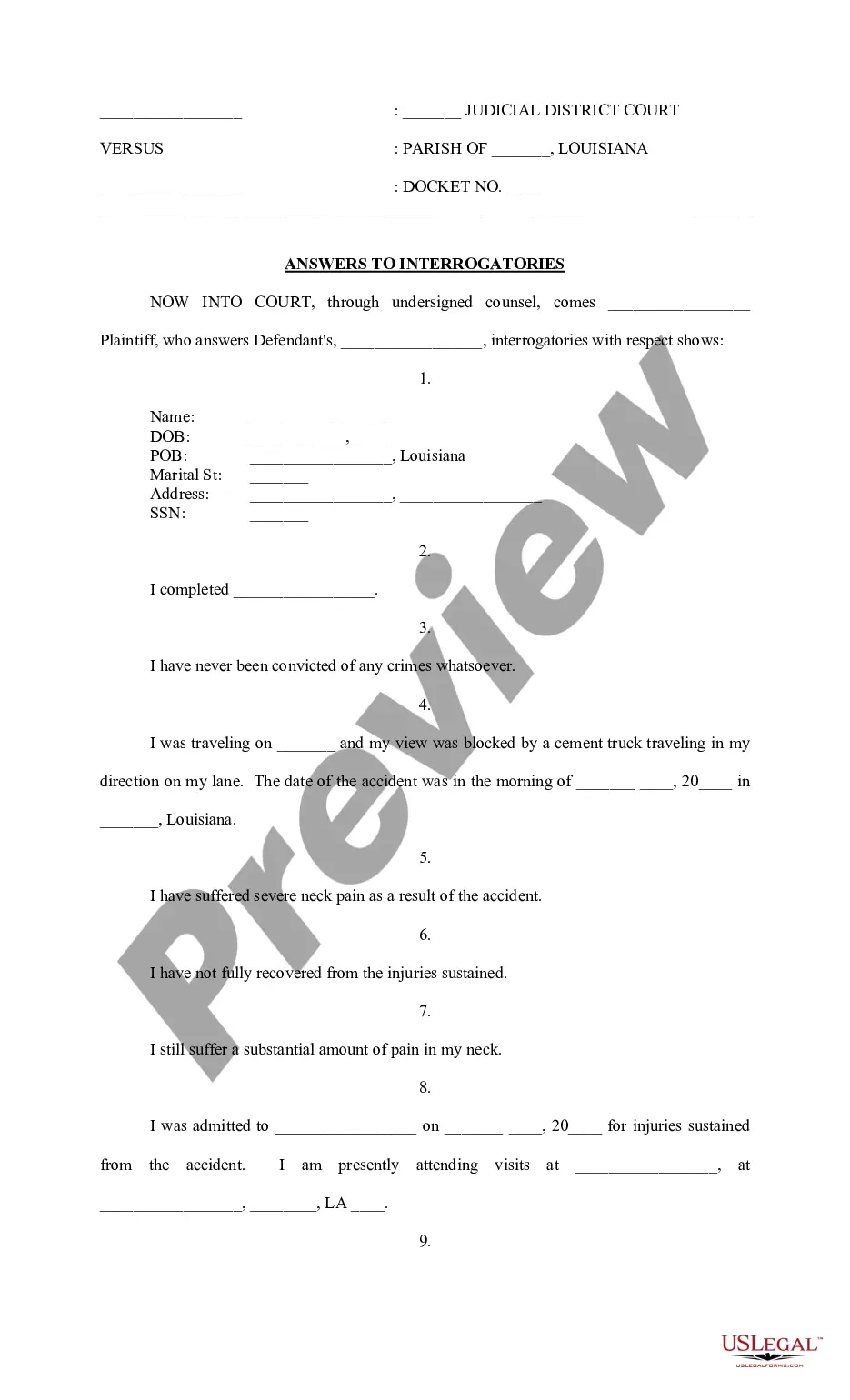
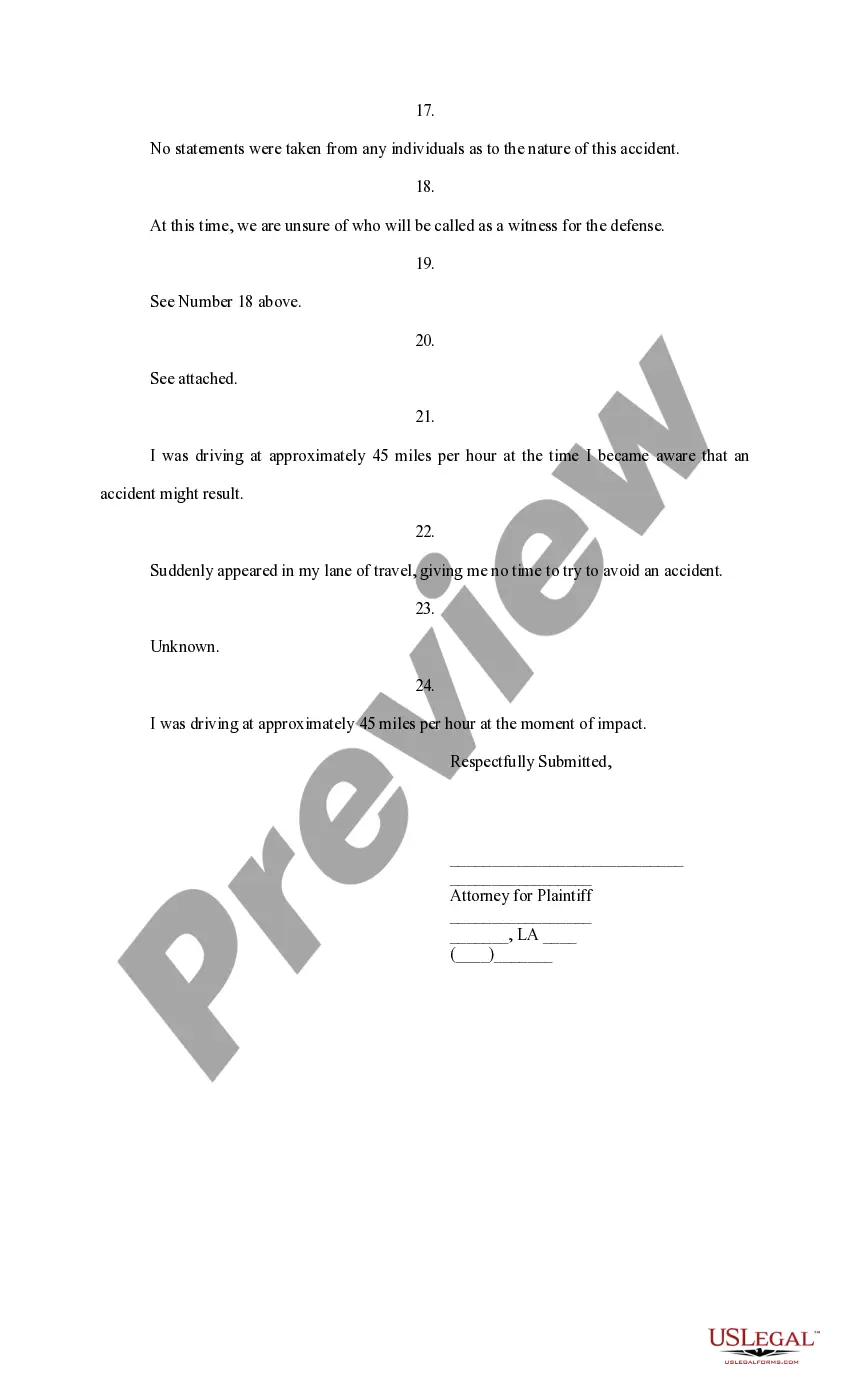
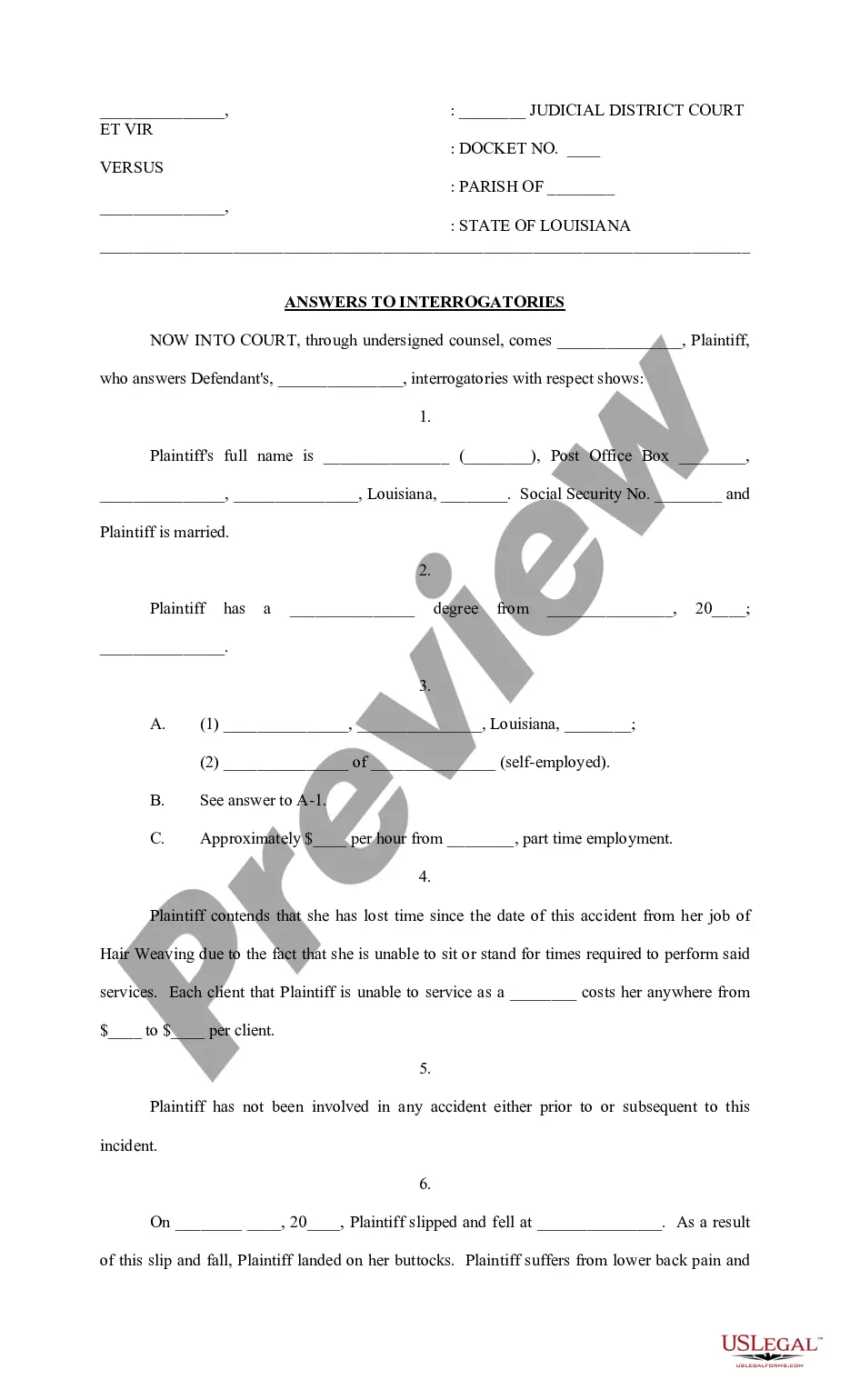
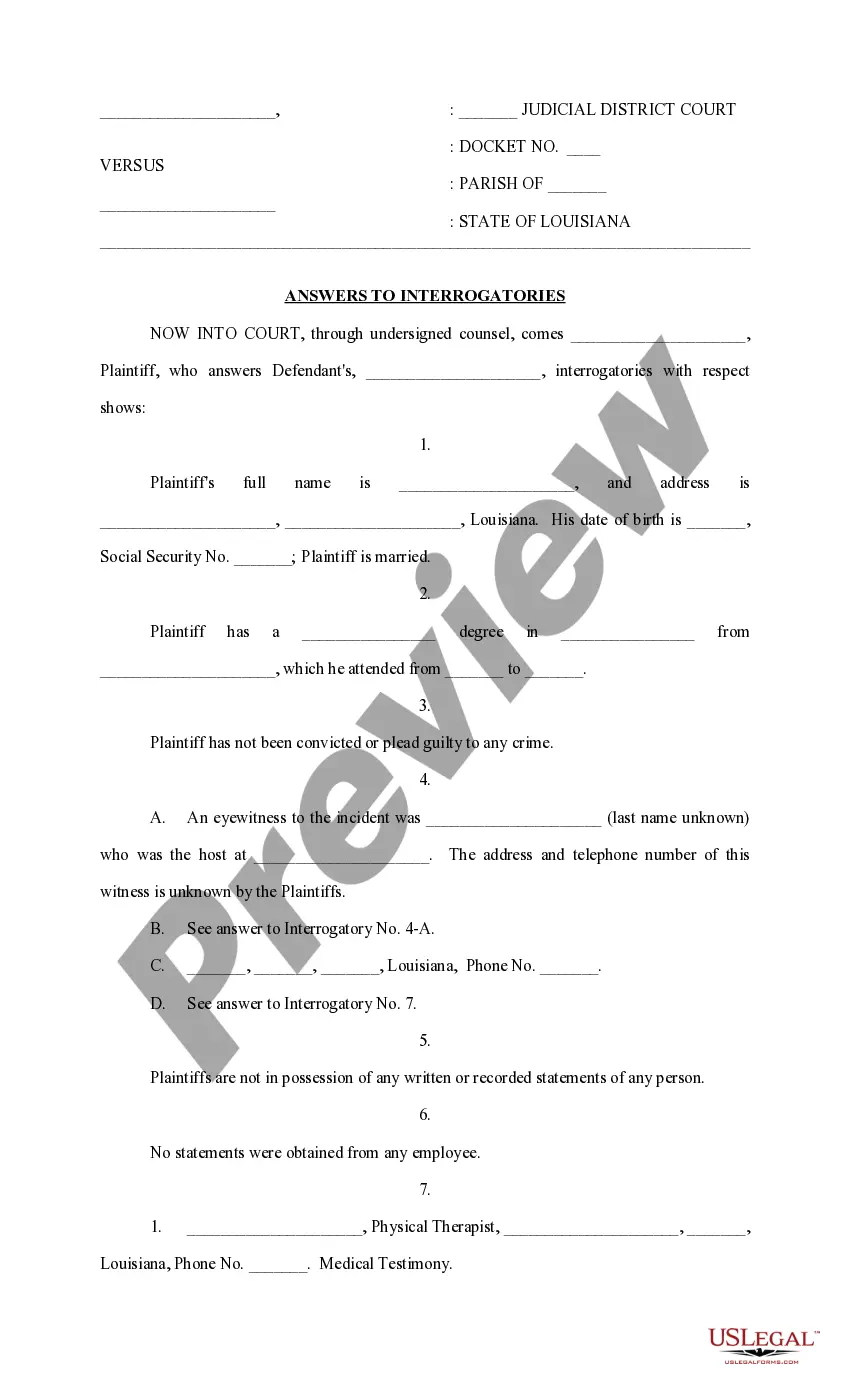
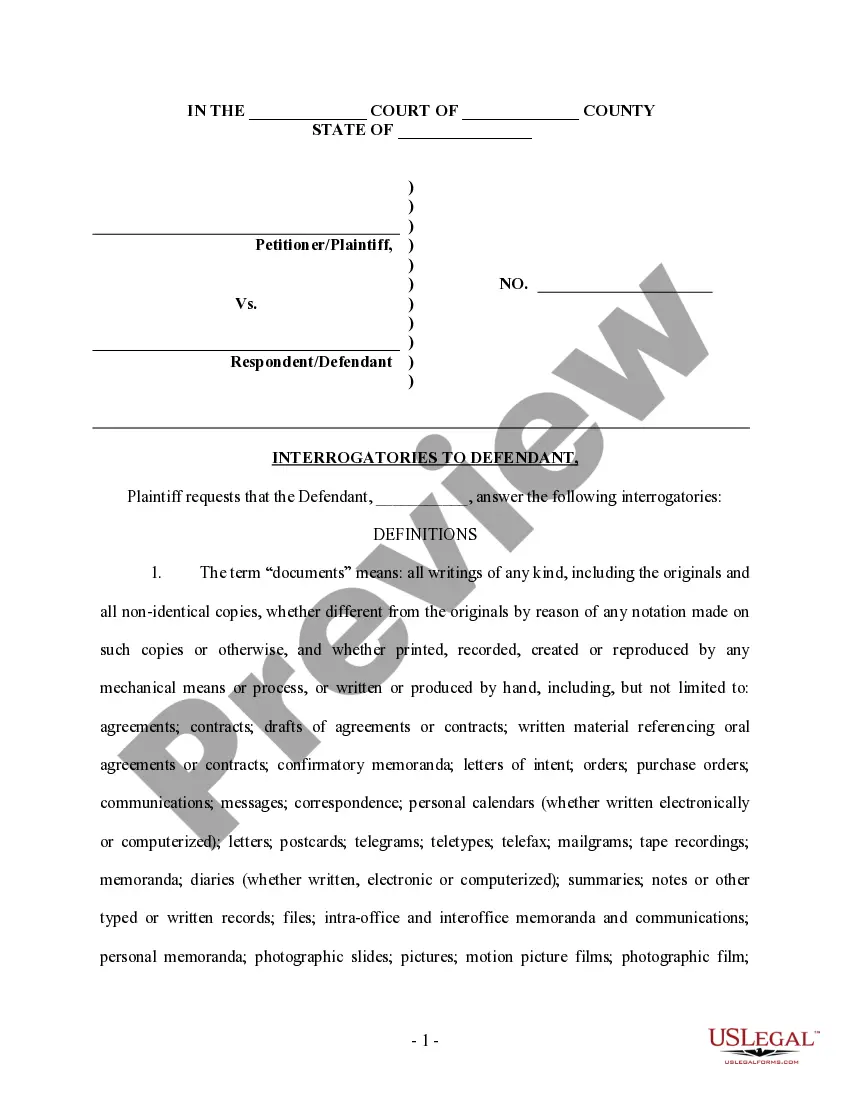
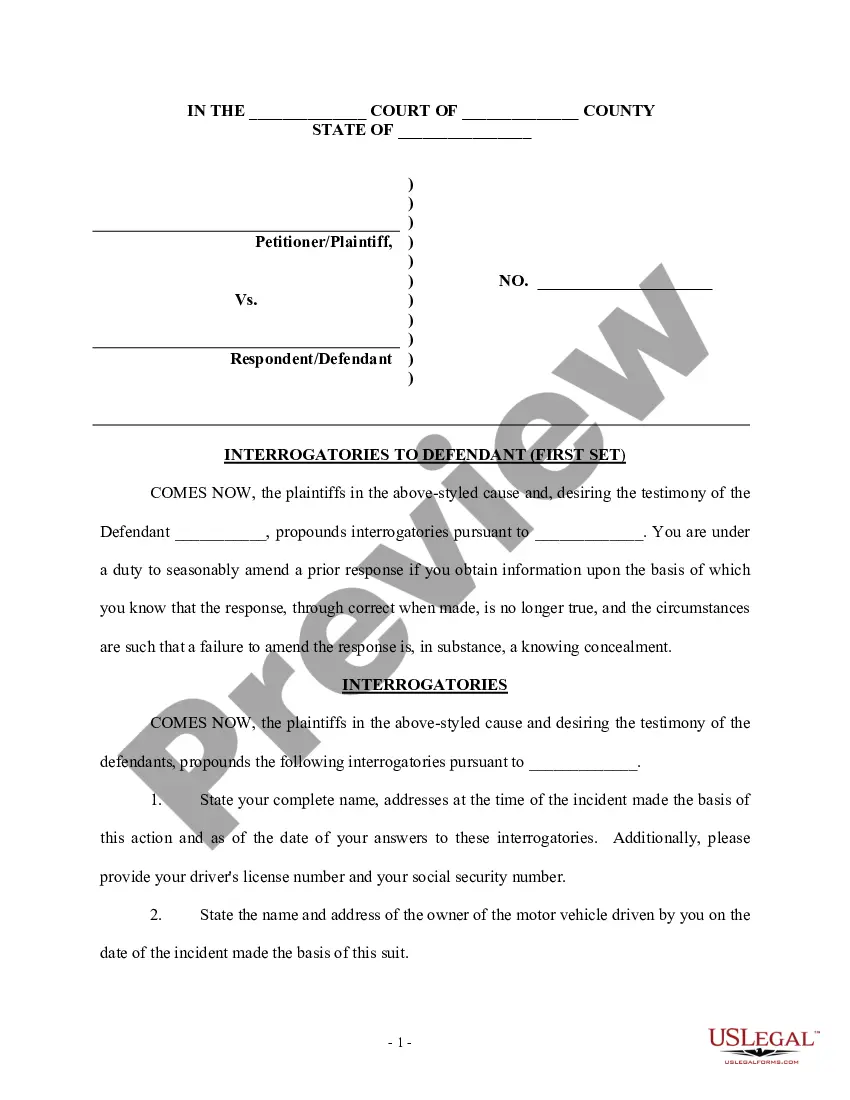
The Answers to Interrogatories is a legal document used in civil cases, particularly in personal injury litigation. It serves as a formal response by the plaintiff to written questions (interrogatories) posed by the defendant. This form is part of the discovery process, allowing parties to gather essential information before trial. Unlike other legal forms that may only summarize information, this document requires detailed, sworn responses addressing specific inquiries related to the case.
Form components explained
- Identification of the parties involved, including names and addresses.
- Background information, such as date of birth and marital status.
- Details of the incident, including the date, location, and circumstances of the accident.
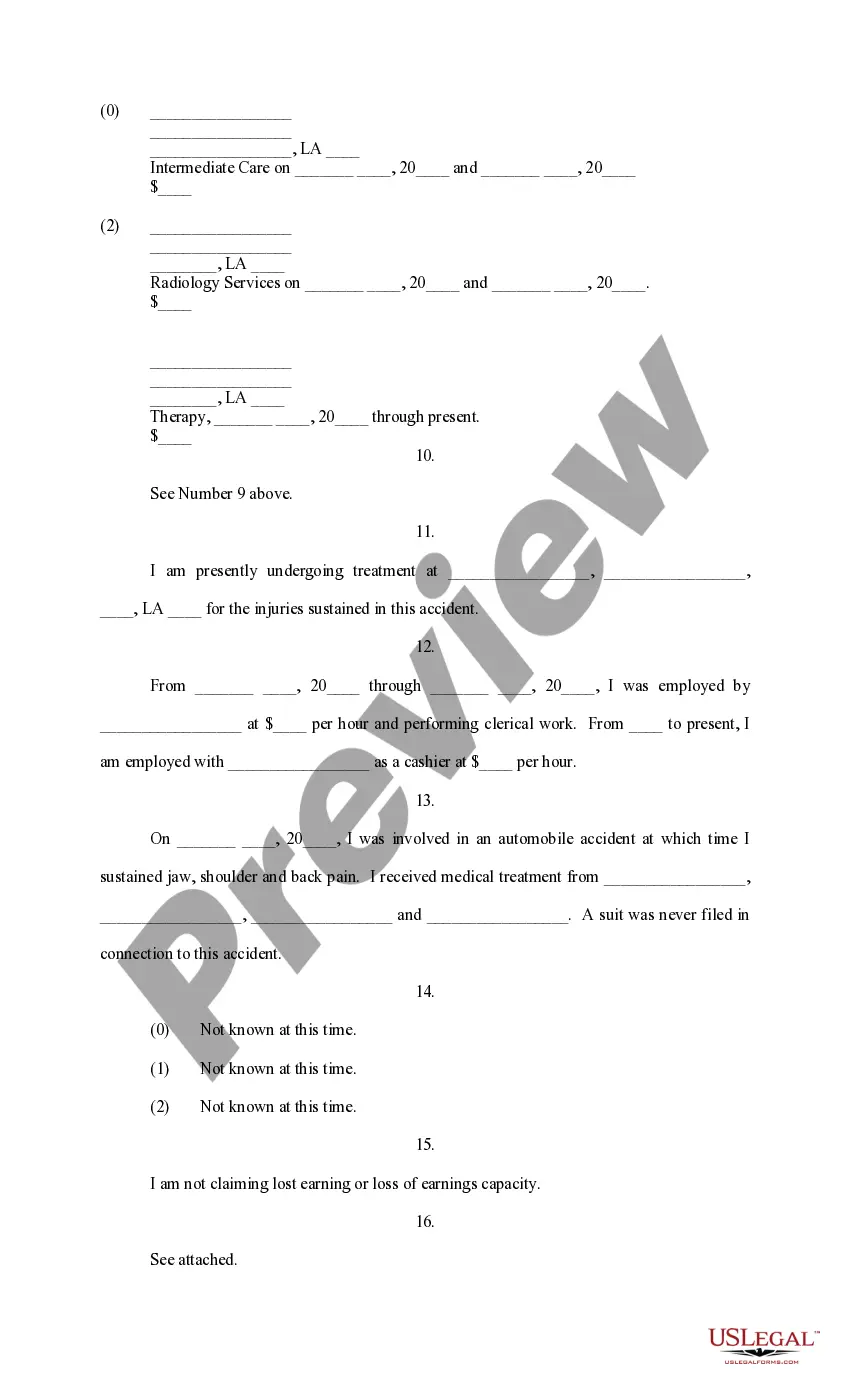
- Medical history related to injuries sustained from the accident.
- Employment details during the relevant time period.
- Witness information and any statements collected.
When to use this form
This form should be used when a plaintiff in a personal injury case is required to respond to the defendant's interrogatories during the discovery phase of the litigation. It is essential in situations where detailed information about the incident, injuries, and any potential witnesses is needed to prepare for trial. Using this form ensures that the plaintiff provides comprehensive and legally binding responses to the defendant's inquiries.
Who should use this form
Eligibility for this form includes:
- Individuals who have filed a civil suit for personal injury.
- Plaintiffs who have received interrogatories from the defendant.
- Persons seeking to accurately document their responses under oath in legal proceedings.
Steps to complete this form
- Identify the parties by providing names, dates of birth, and contact information.
- Detail the incident, including the date, time, and conditions surrounding the accident.
- List all relevant medical treatments received in connection with injuries sustained.
- Include employment history before and after the incident.
- Provide information about any witnesses who may have relevant testimony.
Notarization requirements for this form
This form does not typically require notarization unless specified by local law. However, it must be signed under oath to demonstrate the truthfulness of the responses provided.
Get your form ready online
Our built-in tools help you complete, sign, share, and store your documents in one place.
Make edits, fill in missing information, and update formatting in US Legal Forms—just like you would in MS Word.
Download a copy, print it, send it by email, or mail it via USPS—whatever works best for your next step.
Sign and collect signatures with our SignNow integration. Send to multiple recipients, set reminders, and more. Go Premium to unlock E-Sign.
If this form requires notarization, complete it online through a secure video call—no need to meet a notary in person or wait for an appointment.
We protect your documents and personal data by following strict security and privacy standards.

Make edits, fill in missing information, and update formatting in US Legal Forms—just like you would in MS Word.

Download a copy, print it, send it by email, or mail it via USPS—whatever works best for your next step.

Sign and collect signatures with our SignNow integration. Send to multiple recipients, set reminders, and more. Go Premium to unlock E-Sign.

If this form requires notarization, complete it online through a secure video call—no need to meet a notary in person or wait for an appointment.

We protect your documents and personal data by following strict security and privacy standards.
Typical mistakes to avoid
- Failing to answer all interrogatory questions completely and accurately.
- Omitting important details about medical treatments or previous accidents.
- Providing inconsistent information with prior statements or documents.
- Not adhering to the required deadlines for submitting the answers.
Advantages of online completion
- Convenience: Download and fill out the form from the comfort of your own home.
- Editability: Easily modify responses to ensure accuracy and completeness.
- Reliability: Use templates drafted by licensed attorneys to ensure compliance with legal standards.
Legal use & context
- This form is designed for use in civil litigation as part of the discovery process.
- Providing false information may lead to legal penalties, including claims of perjury.
- The responses must be completed before a specific deadline, as designated by the court.
What to keep in mind
- The Answers to Interrogatories is essential for responding to discovery inquiries in personal injury cases.
- Accurate and complete responses are crucial to uphold legal integrity.
- This form is specifically applicable within Louisiana, following state legal procedures.
Looking for another form?

Form popularity
FAQ
You must answer each interrogatory separately and fully in writing under oath, unless you object to it. You must explain why you object. You must sign your answers and objections.
During an entire proceeding, written interrogatories served in accordance with Paragraph A shall not exceed thirty-five in number, including subparts, without leave of court. Additional interrogatories, not to exceed thirty-five in number including subparts, shall be allowed upon ex parte motion of any party.
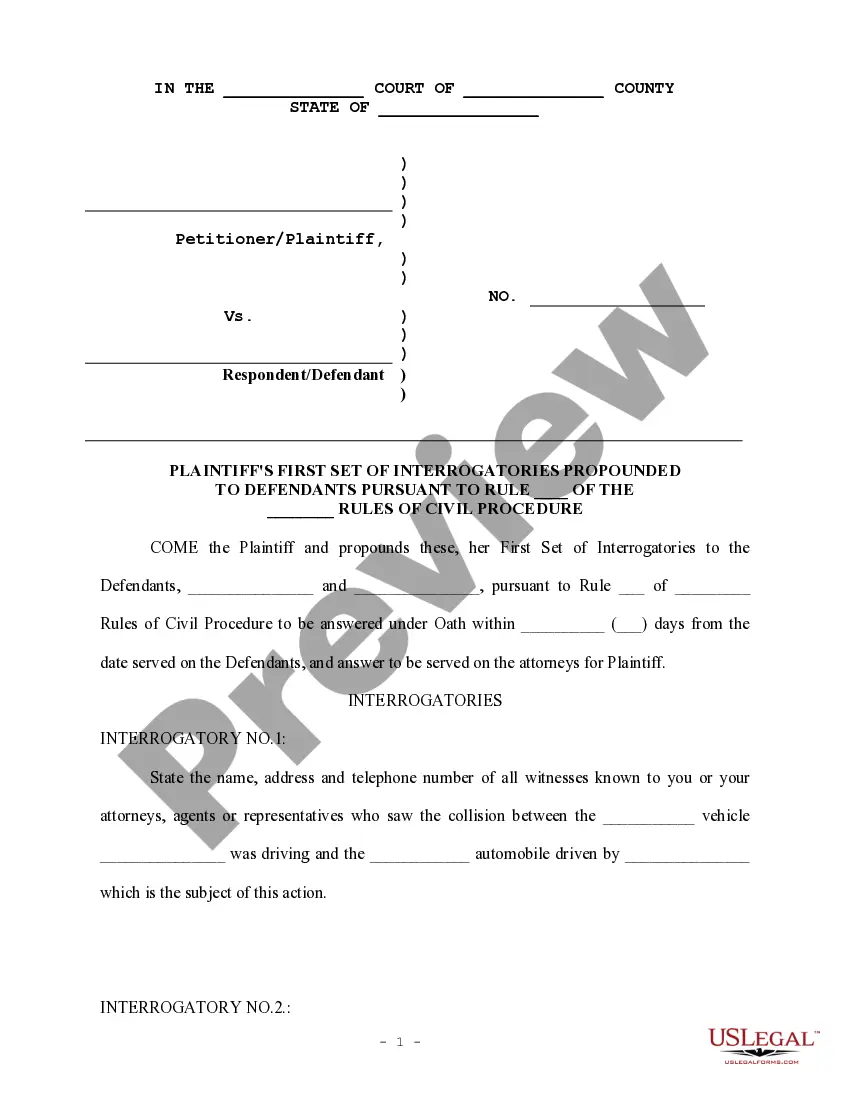
In law, interrogatories (also known as requests for further information) are a formal set of written questions propounded by one litigant and required to be answered by an adversary in order to clarify matters of fact and help to determine in advance what facts will be presented at any trial in the case.
Motions to Compel If a party doesn't respond to interrogatories or requests for production, then the party seeking those answers must file a motion to compel with the court. If the court grants the motion to compel, then the party who objected or failed to answer must then do so.
Responding to Form InterrogatoriesAnswer each question, being careful to answer each subpart, if one exists. Read the question carefully, and answer only what it asks. You may attach exhibits, if necessary. The response must be verified, meaning you must swear that the responses given are true.
Unless you have been a party in a lawsuit before, you probably do not know what interrogatories are.Interrogatories are written questions that you have to respond to in writing, under oath. A California personal injury attorney can guide you through the process of responding to interrogatories.
The purpose of interrogatories is to learn a great deal of general information about a party in a lawsuit. For example, the defendant in a personal injury lawsuit about a car accident might send you interrogatories asking you to disclose things like: Where you live. Where you work.
Written questions submitted to a party from his or her adversary to ascertain answers that are prepared in writing and signed under oath and that have relevance to the issues in a lawsuit.No party can be compelled to answer interrogatories that involve matters beyond the party's control.