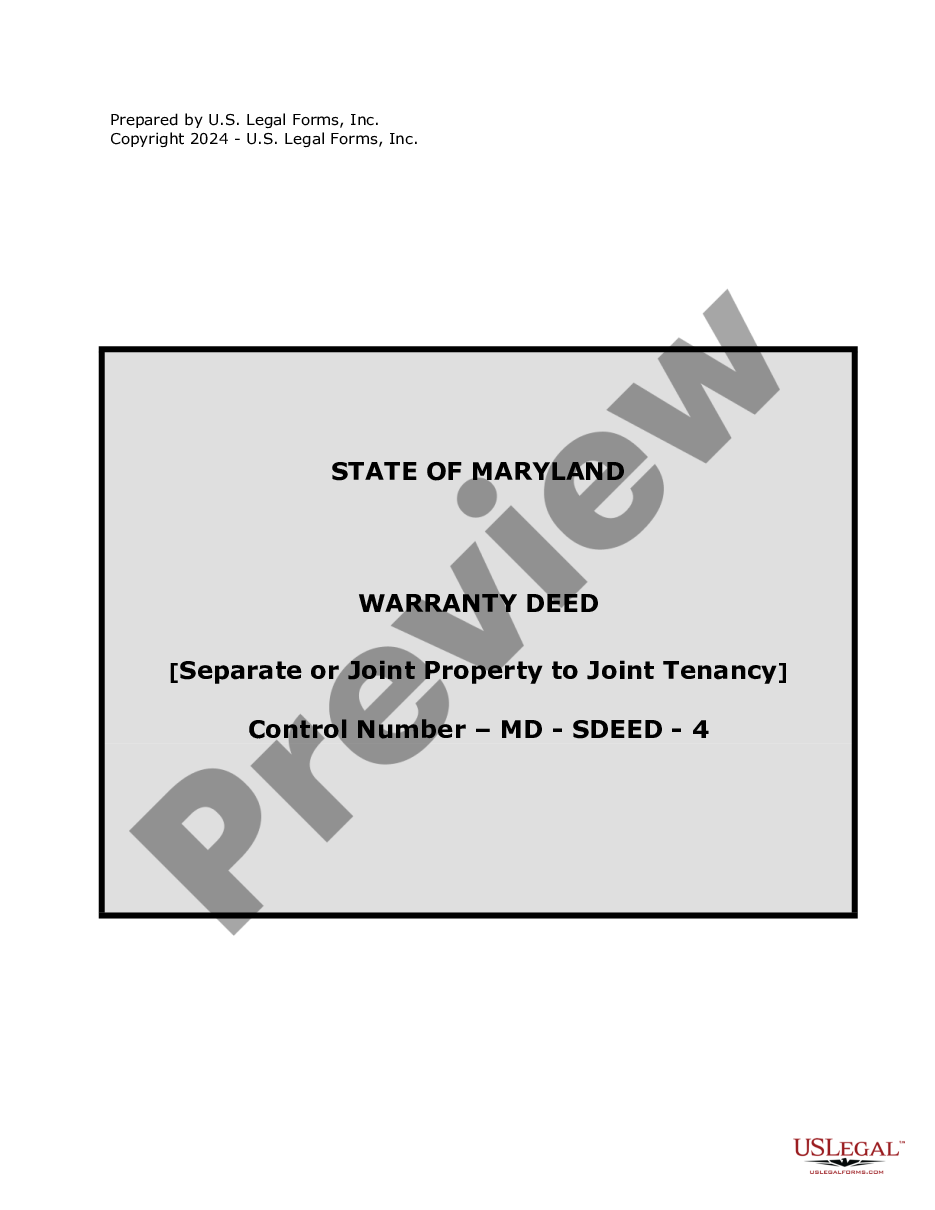
Maryland Warranty Deed for Separate or Joint Property to Joint Tenancy
What this document covers
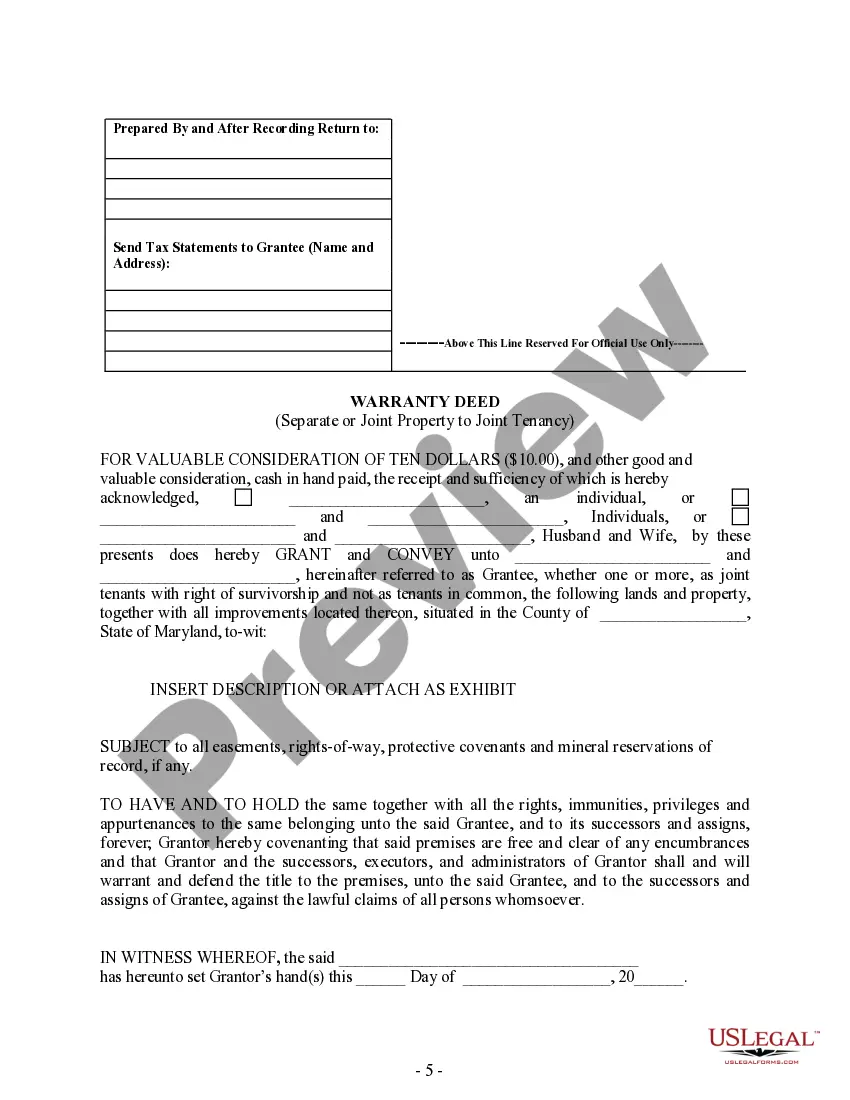
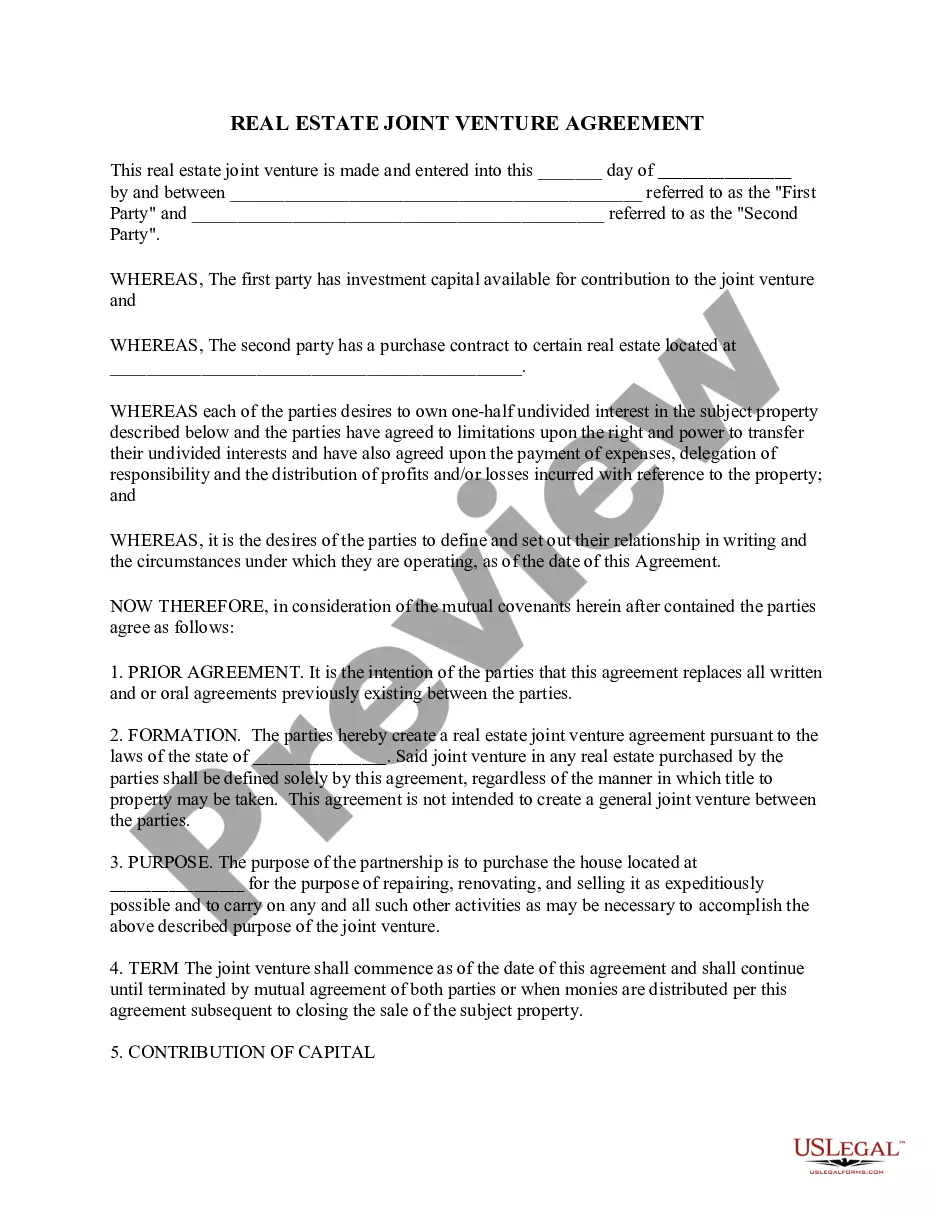
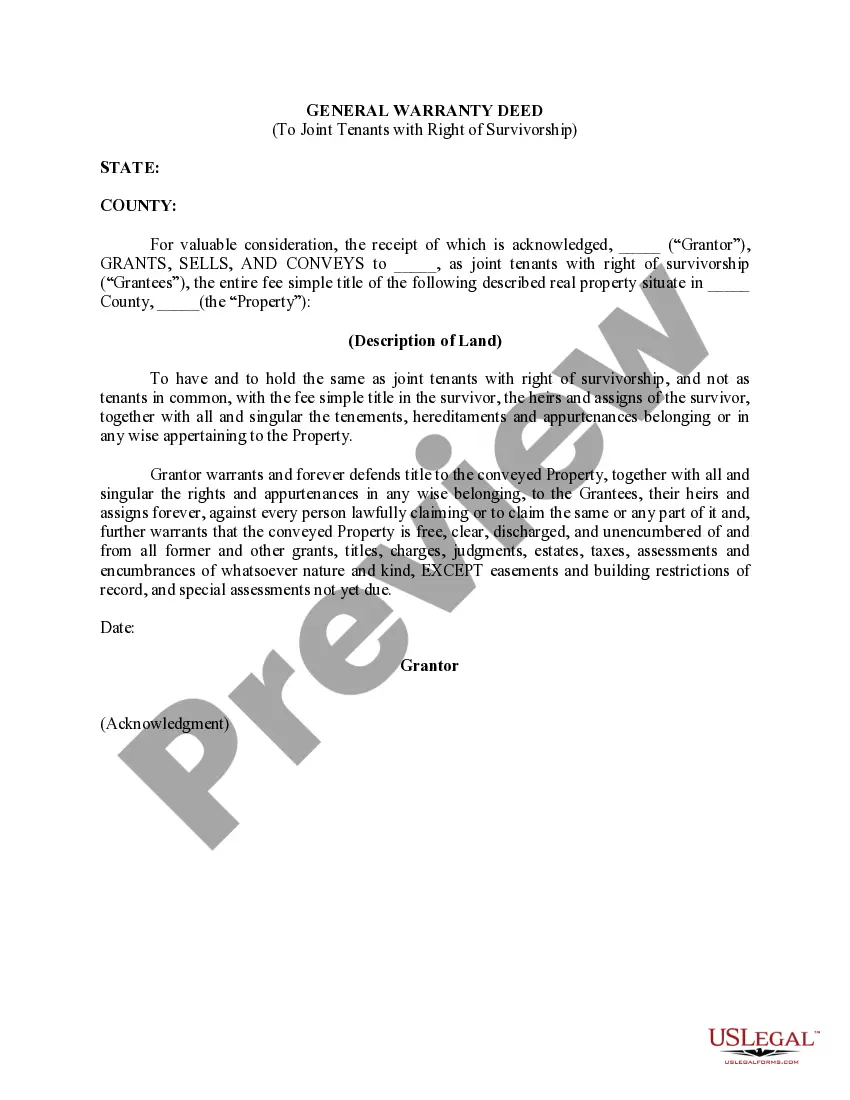
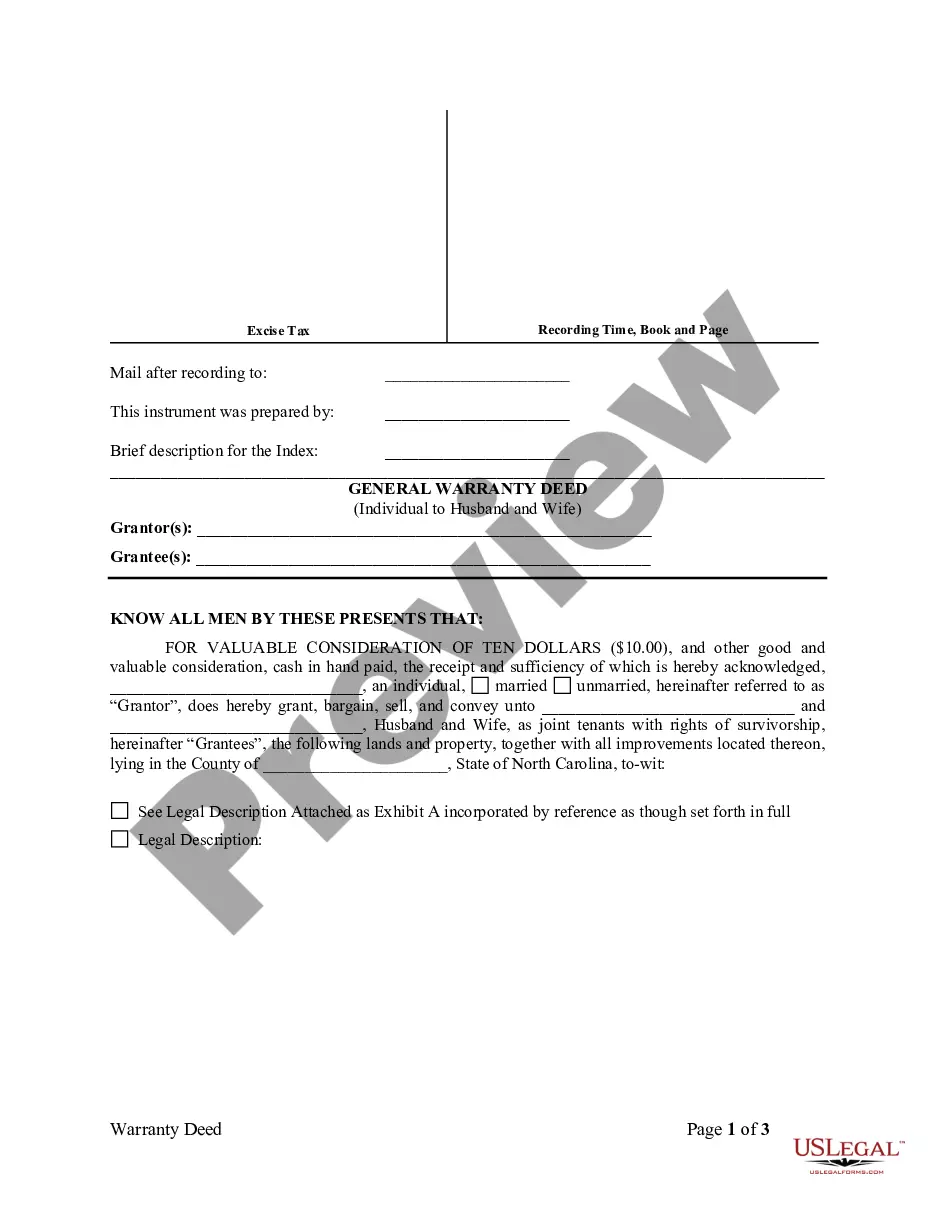
The Warranty Deed for Separate or Joint Property to Joint Tenancy is a legal document used to transfer ownership of real property to two or more individuals as joint tenants. This type of deed ensures that all parties hold equal rights in the property and provides a right of survivorship, meaning that upon the death of one joint tenant, their share automatically transfers to the remaining joint tenants. This form differs from other property transfer documents by specifically addressing joint tenancy, which is not the case in tenants in common arrangements.
Main sections of this form
- Grantor(s) information: Identifies the individual(s) transferring the property.
- Grantee(s) information: Names the individuals receiving ownership of the property.
- Property description: Specifies the address and legal description of the property being transferred.
- Consideration: Acknowledges any monetary or other valuable compensation received in exchange for the deed.
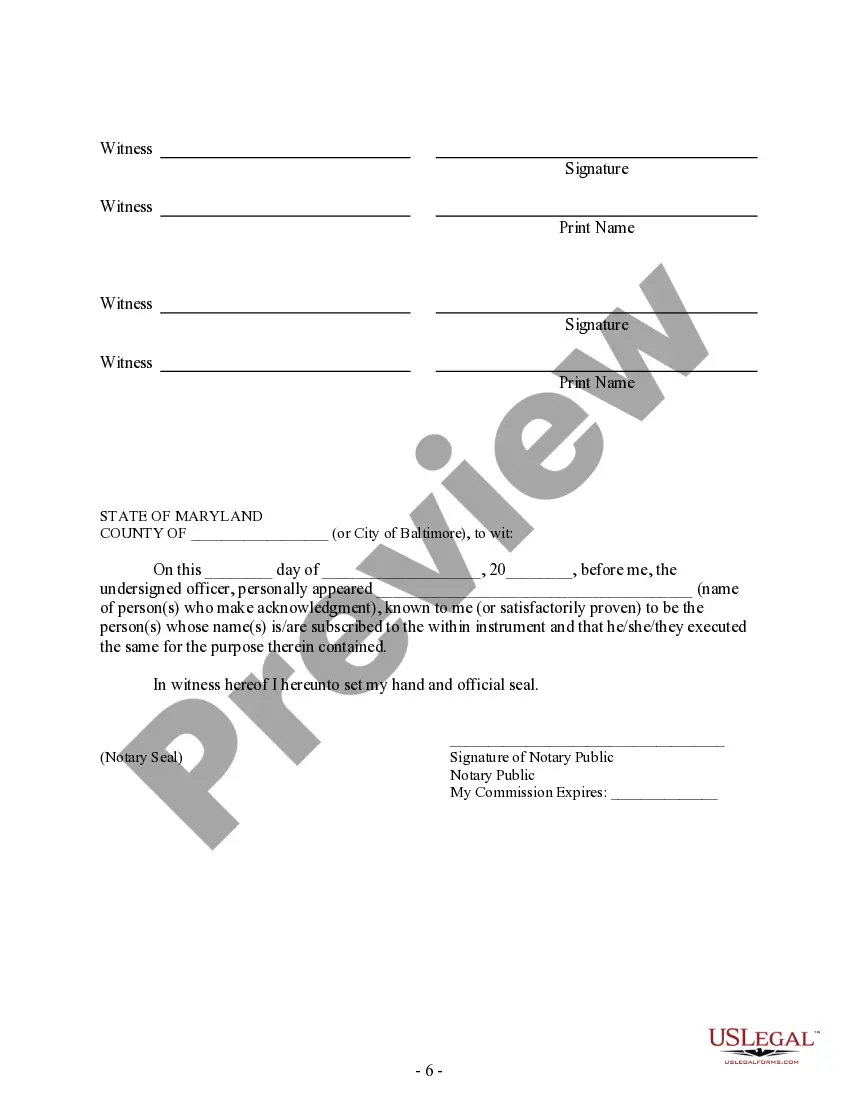
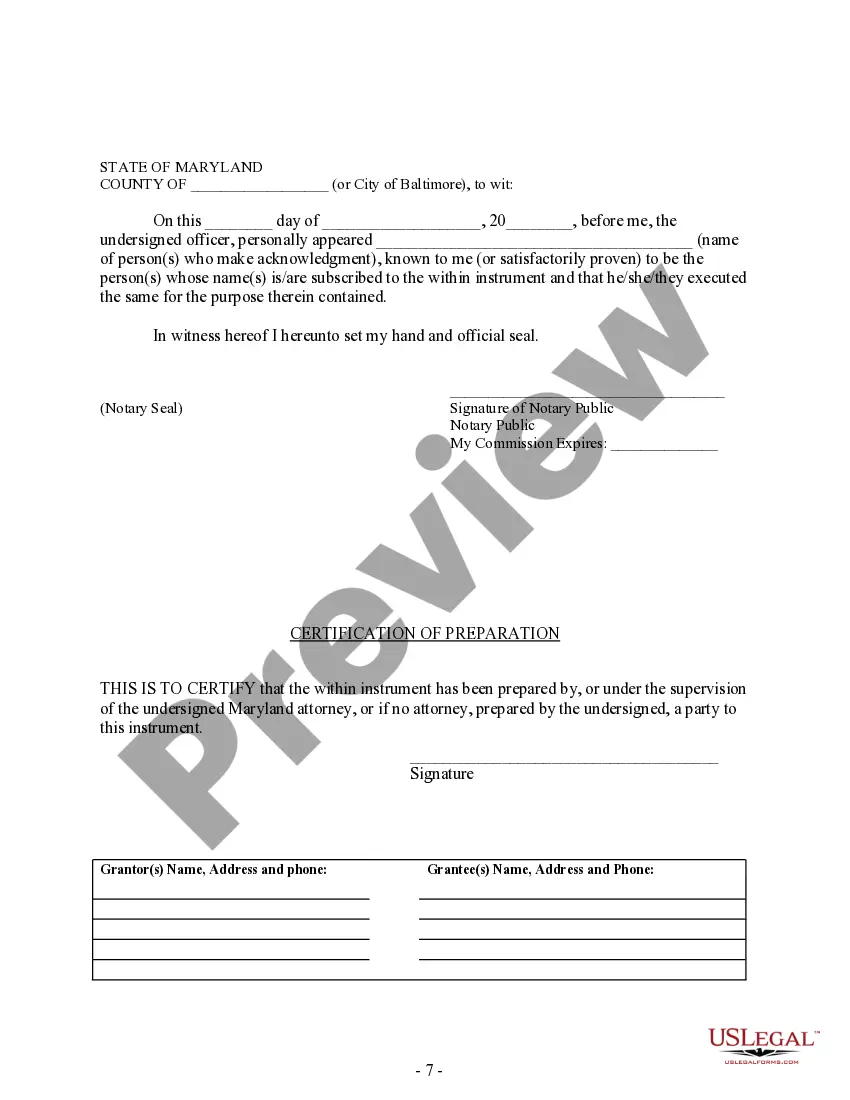
- Notary acknowledgment: Verifies the identity of the grantor(s) and their consent to the transfer.



When to use this document
This form should be used when existing owners of separate or jointly held property wish to convert their ownership into a joint tenancy holding. This is often done among couples or family members who wish to simplify estate planning, as joint tenancy automatically transfers ownership upon death without the need for probate.
Who can use this document
- Couples looking to legally establish joint ownership of property.
- Individuals who wish to consolidate ownership with family or friends.
- Anyone needing to change the form of property ownership from separate or joint to joint tenancy.
- Property owners considering estate planning strategies.
Instructions for completing this form
- Identify the parties involved: Fill in the names of the grantors and grantees.
- Specify the property: Provide a detailed description of the property being transferred, including its legal description.
- State the consideration: Indicate the amount of consideration (e.g., ten dollars) for the transfer.
- Obtain signatures: Ensure all grantors sign the document in the presence of a notary public.
- Complete the notary section: A notary public must acknowledge the signatures for the deed to be valid.
Does this form need to be notarized?
This form needs to be notarized to ensure legal validity. US Legal Forms provides secure online notarization powered by Notarize, allowing you to complete the process through a verified video call, available anytime.
Get your form ready online
Our built-in tools help you complete, sign, share, and store your documents in one place.
Make edits, fill in missing information, and update formatting in US Legal Forms—just like you would in MS Word.
Download a copy, print it, send it by email, or mail it via USPS—whatever works best for your next step.
Sign and collect signatures with our SignNow integration. Send to multiple recipients, set reminders, and more. Go Premium to unlock E-Sign.
If this form requires notarization, complete it online through a secure video call—no need to meet a notary in person or wait for an appointment.
We protect your documents and personal data by following strict security and privacy standards.

Make edits, fill in missing information, and update formatting in US Legal Forms—just like you would in MS Word.

Download a copy, print it, send it by email, or mail it via USPS—whatever works best for your next step.

Sign and collect signatures with our SignNow integration. Send to multiple recipients, set reminders, and more. Go Premium to unlock E-Sign.

If this form requires notarization, complete it online through a secure video call—no need to meet a notary in person or wait for an appointment.

We protect your documents and personal data by following strict security and privacy standards.
Common mistakes
- Failing to provide a complete legal description of the property.
- Not having the document notarized, which can invalidate the transfer.
- Incorrectly identifying the parties involved, leading to potential legal disputes.
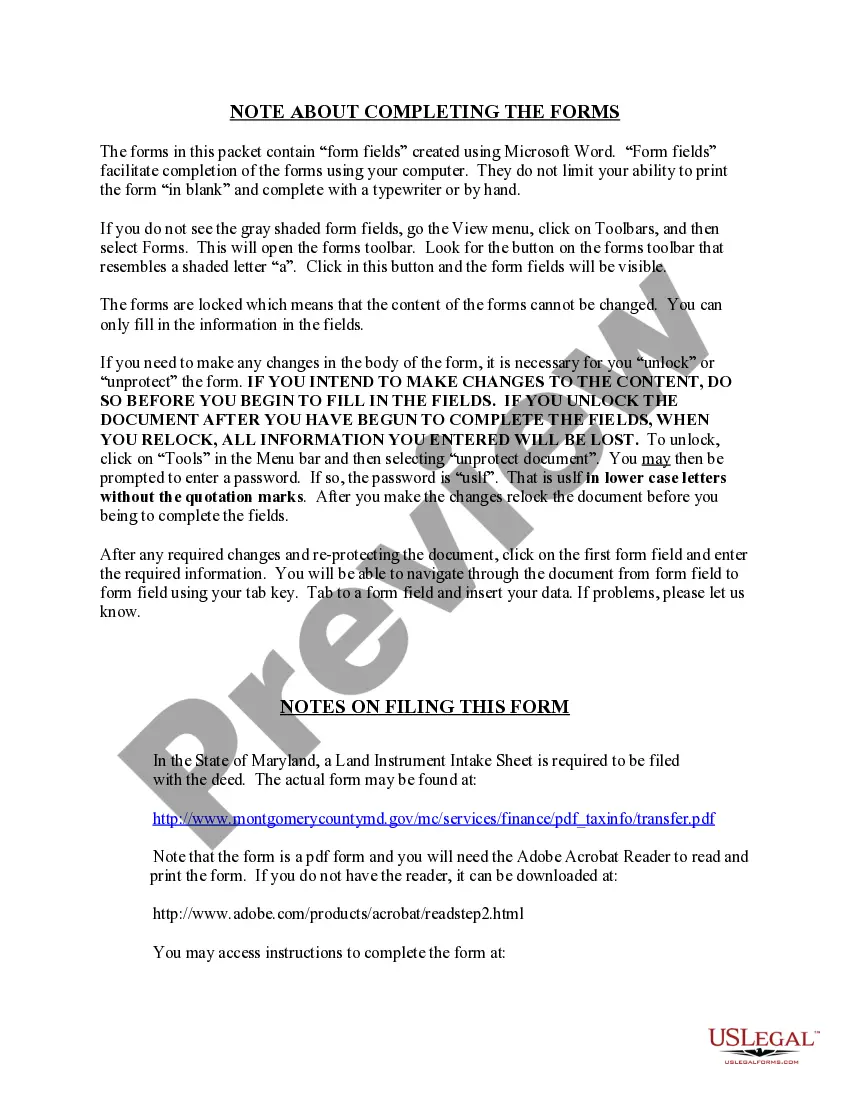
- Omitting the Land Instrument Intake Sheet required for filing in Maryland.
Benefits of completing this form online
- Convenience: Easily access and download the form at your convenience.
- Editability: Fill out the form digitally using software, allowing for quick corrections.
- Reliable templates: Ensure that the document complies with legal requirements as it is drafted by licensed attorneys.
What to keep in mind
- The Warranty Deed for Separate or Joint Property to Joint Tenancy establishes joint ownership with survivorship.
- It is essential for modifying property ownership structures, particularly in familial or marital contexts.
- Ensure compliance with Maryland's specific filing requirements to avoid complications.
Looking for another form?

Form popularity
FAQ
Here are some of the options: Joint Ownership. If mom, daughter, and (perhaps) son-in-law own the house as joint tenants with right of survivorship, when mom passes away the house will go to the other owners without going through probate.
What Is the Difference Between a Warranty Deed & a Survivorship Deed?A warranty deed is the most comprehensive and provides the most guarantees. Survivorship isn't so much a deed as a title. It's a way to co-own property where, upon the death of one owner, ownership automatically passes to the survivor.
With a Survivorship Deed in place, when one of the parties in a joint tenancy dies, the other party (or parties) takes over the deceased party's interest in the property instead of it passing to the deceased's heirs or beneficiaries.
You can assign your tenancy to your husband, wife or civil partner if they live with you. If you don't live with a married or civil partner, you can assign to any of the following family members, but only if the person has lived with you for at least 1 year: an unmarried partner. an adult child or grandchild.
' Spouses typically acquire title as tenants by the entireties, which only applies to spouses. Sometimes you will see a couple who acquired the property before marriage. In some states, a premarital joint tenancy automatically becomes tenants by the entireties upon marriage.
The legal name of a joint tenancy is "joint tenancy with right of survivorship," or JTWROS. Unfortunately, your ownership share in a joint tenancy property can't be willed to your heirs. However, if you own property in a joint tenancy, you and the other owners can receive any deceased owners' shares upon their deaths.
What Is the Difference Between a Warranty Deed & a Survivorship Deed?A warranty deed is the most comprehensive and provides the most guarantees. Survivorship isn't so much a deed as a title. It's a way to co-own property where, upon the death of one owner, ownership automatically passes to the survivor.
Special warranties allow the transfer of property title between seller and buyer. The purchase of title insurance can mitigate the risk of prior claims to the special warranty deed.
In Maryland, each owner, called a joint tenant, must own an equal share. Tenancy by the entirety. This form of joint ownership is like joint tenancy, but it is allowed only for married couples in Maryland.