Maryland Notice of Default in Payment of Rent as Warning Prior to Demand to Pay or Terminate for Nonresidential or Commercial Property
Understanding this form
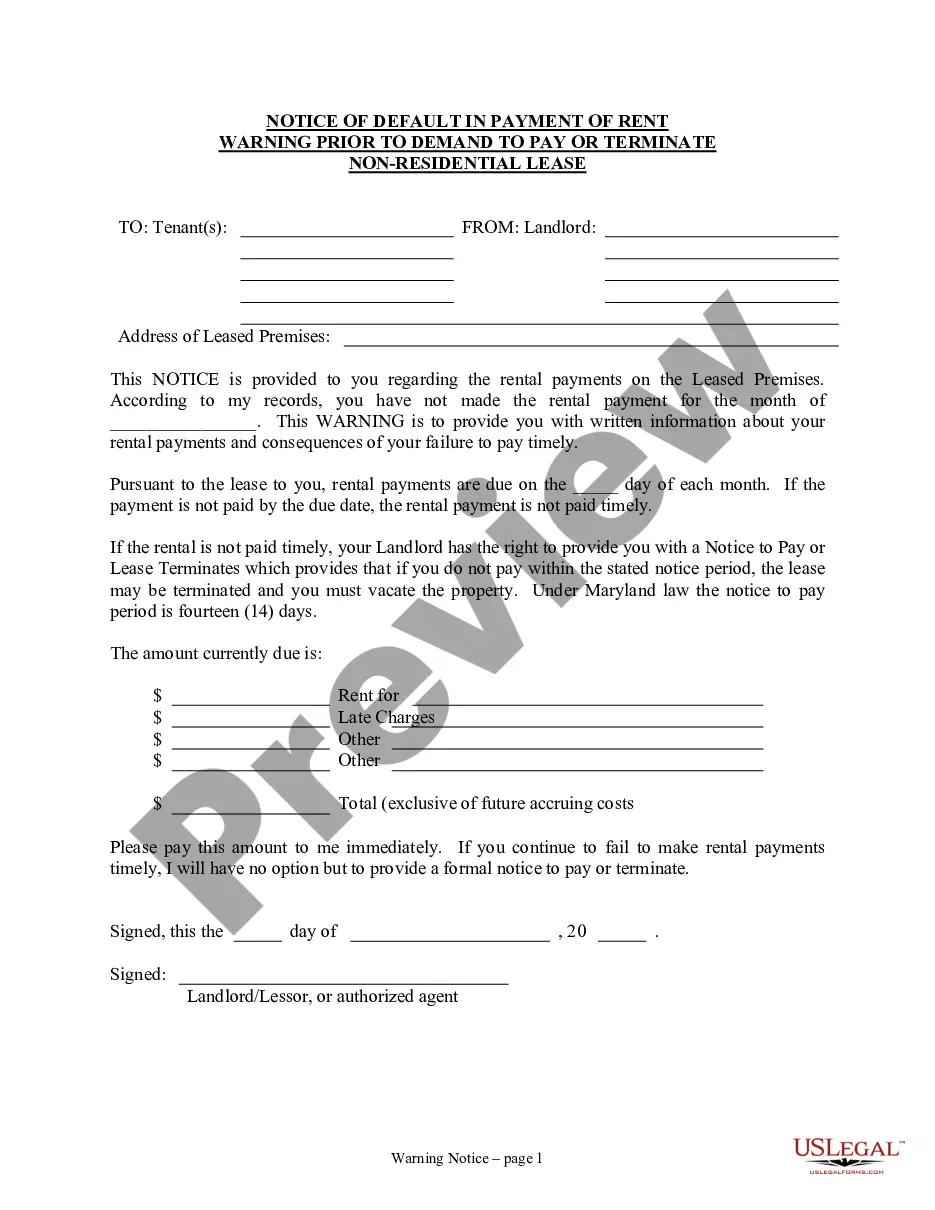
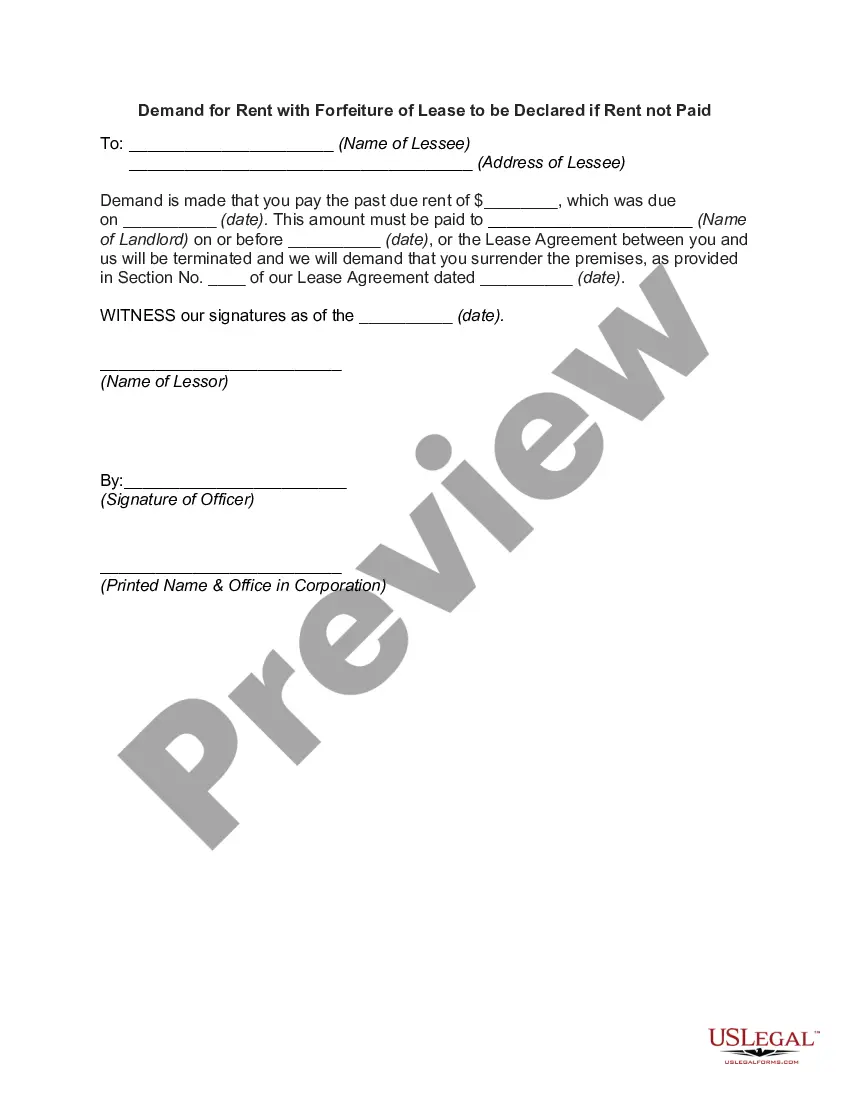
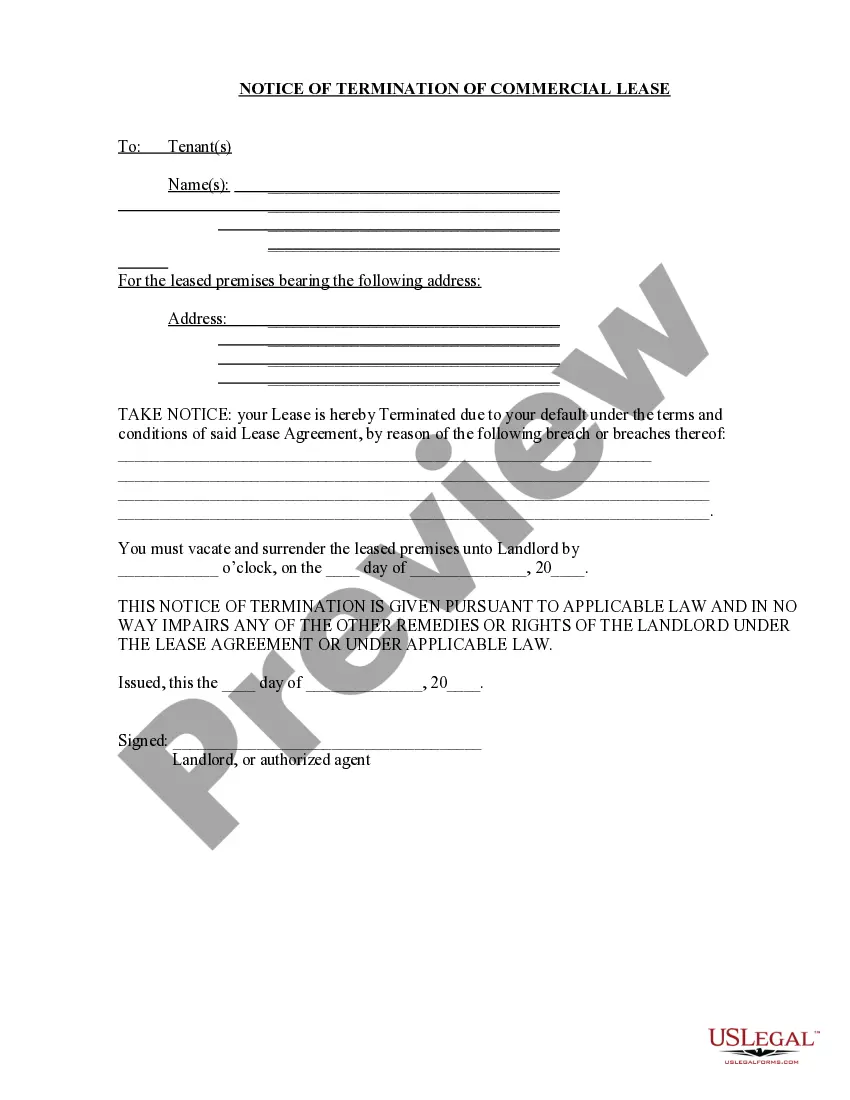
The Notice of Default in Payment of Rent as Warning Prior to Demand to Pay or Terminate for Non-Residential or Commercial Property is a legal document used by landlords to formally notify tenants that they are late in paying rent. This notice serves as a warning before the landlord issues a demand for payment or takes steps to terminate the lease. Unlike other notices, this form emphasizes the consequences of non-payment and acts as a reminder of the rental terms agreed upon in the lease agreement.
Form components explained
- Identification of Tenant and Landlord details.
- Reference to the address of the leased premises.
- Clear statement of the rental payment that is overdue.
- Due date for rent payment and the implications of late payment.
- Notification of the landlord's rights if payment is not received.
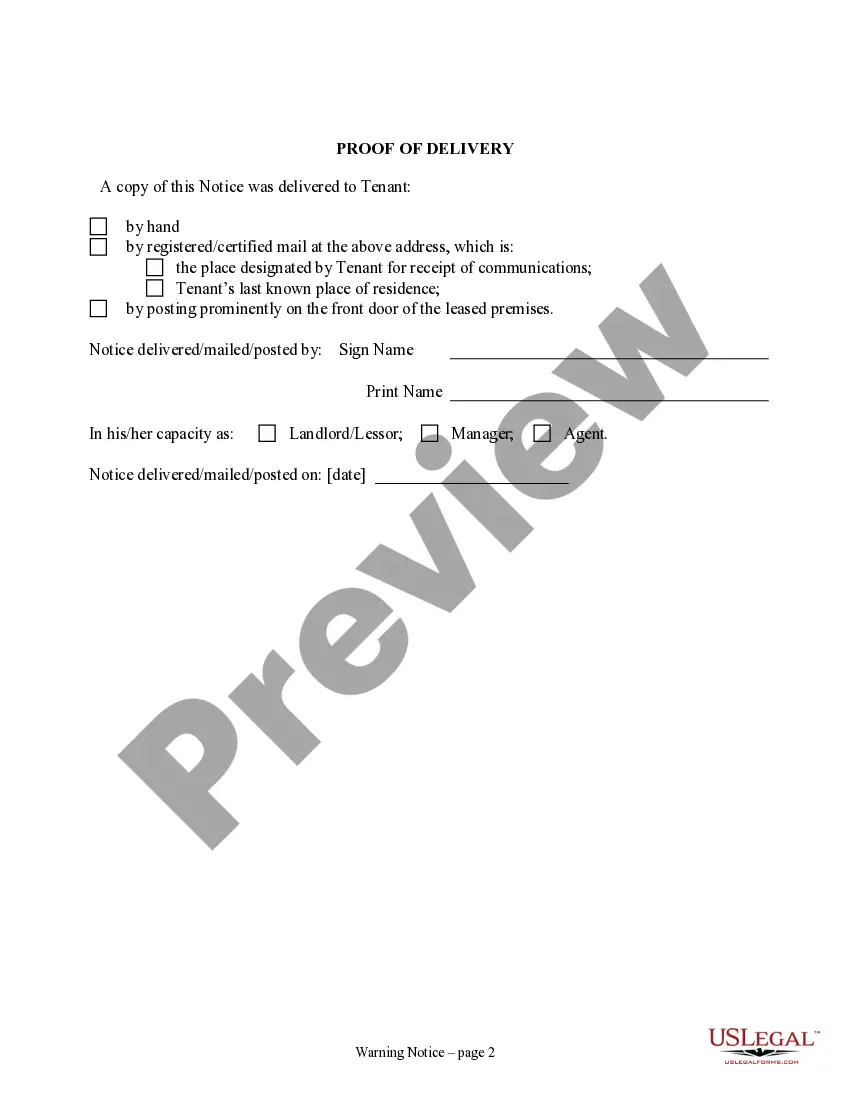
- Proof of delivery options to confirm receipt by the tenant.


When to use this document
This form should be used when a landlord needs to formally notify a tenant of their default in rent payment for non-residential or commercial property. It is appropriate to issue this notice after a tenant has missed a scheduled rent payment and can serve as a final reminder before the landlord takes further action, such as serving a demand to pay or deciding to terminate the lease.
Who can use this document
- Landlords managing non-residential or commercial properties.
- Property managers acting on behalf of landlords.
- Real estate professionals involved in leasing agreements.
- Tenants wishing to understand their obligations under the lease.
How to complete this form
- Identify and enter the full names of the landlord and tenant.
- Specify the address of the leased premises involved.
- Fill in the month for which rent is overdue and the specific due date.
- Calculate and state the total amount due, including any late fees if applicable.
- Sign and date the notice as the landlord or authorized agent.
- Document the method of delivery to the tenant and include the date of delivery.
Is notarization required?
This form does not typically require notarization to be legally valid. However, some jurisdictions or document types may still require it. US Legal Forms provides secure online notarization powered by Notarize, available 24/7 for added convenience.
Get your form ready online
Our built-in tools help you complete, sign, share, and store your documents in one place.
Make edits, fill in missing information, and update formatting in US Legal Forms—just like you would in MS Word.
Download a copy, print it, send it by email, or mail it via USPS—whatever works best for your next step.
Sign and collect signatures with our SignNow integration. Send to multiple recipients, set reminders, and more. Go Premium to unlock E-Sign.
If this form requires notarization, complete it online through a secure video call—no need to meet a notary in person or wait for an appointment.
We protect your documents and personal data by following strict security and privacy standards.

Make edits, fill in missing information, and update formatting in US Legal Forms—just like you would in MS Word.

Download a copy, print it, send it by email, or mail it via USPS—whatever works best for your next step.

Sign and collect signatures with our SignNow integration. Send to multiple recipients, set reminders, and more. Go Premium to unlock E-Sign.

If this form requires notarization, complete it online through a secure video call—no need to meet a notary in person or wait for an appointment.

We protect your documents and personal data by following strict security and privacy standards.
Avoid these common issues
- Failing to provide correct tenant information, which can lead to disputes.
- Not specifying the due date clearly, causing confusion.
- Omitting the total amount due, which can undermine the notice's purpose.
- Not signing the notice, which may render it ineffective.
- Neglecting to keep proof of delivery, which is important for legal proceedings.
Benefits of using this form online
- Convenience of accessing legal forms anytime and anywhere.
- Easy customization to meet specific lease agreements and tenant situations.
- Reliable templates drafted by licensed attorneys ensure legal compliance.
- Quick download for immediate use without the need for physical visits to a lawyer.
Legal use & context
- This notice serves as a preliminary step before taking legal action against the tenant.
- It provides a clear record of the landlord's attempts to collect rent before escalation.
- Ensures compliance with state laws that protect tenant rights while allowing landlords to enforce lease terms.
Main things to remember
- The form is essential for landlords needing to address late rent payments.
- It provides tenants with a clear understanding of their obligations and the potential consequences of non-payment.
- Proper completion and delivery of this notice can protect landlords' rights under lease agreements and state law.
Looking for another form?

Form popularity
FAQ
The minimum eviction notice in Maryland generally starts with the five-day notice for non-payment of rent, which is outlined in the Maryland Notice of Default in Payment of Rent as Warning Prior to Demand to Pay or Terminate for Nonresidential or Commercial Property. This notice gives tenants a brief window to address their rent issues before legal actions proceed. Following this notice, landlords must follow the legal process before evicting tenants, which provides necessary protections. Using platforms like uslegalforms can help you prepare all necessary documents accurately.
In Maryland, the notice period required to terminate a tenancy varies based on the rental agreement. Typically, landlords must provide a Maryland Notice of Default in Payment of Rent as Warning Prior to Demand to Pay or Terminate for Nonresidential or Commercial Property before a formal termination notice. Most agreements stipulate a 30-day notice period, but always consult the specific lease terms to confirm your requirements. Clear communication can help avoid misunderstandings and ensure a smooth transition.
The speed of eviction in Maryland depends on various factors, including the type of notice given. After the Maryland Notice of Default in Payment of Rent as Warning Prior to Demand to Pay or Terminate for Nonresidential or Commercial Property is properly served, a landlord typically must wait for a prescribed period before filing for eviction. This waiting period can vary depending on the specific situation, but urgent cases still require compliance with court procedures. Being informed about these timelines can significantly impact both landlords and tenants.
In Maryland, a landlord cannot evict a tenant without going through the court system. The Maryland Notice of Default in Payment of Rent as Warning Prior to Demand to Pay or Terminate for Nonresidential or Commercial Property serves as a crucial first step for landlords who are seeking to initiate eviction proceedings. This notice must be properly issued before any court action can take place. Understanding this process helps tenants know their rights and prepares landlords for the legal steps ahead.
The Maryland Notice of Default in Payment of Rent as Warning Prior to Demand to Pay or Terminate for Nonresidential or Commercial Property is an essential legal document. It informs tenants of their overdue rent, providing them with a clear deadline to rectify their payment status. This notice aims to encourage timely rent payments and avoid potential eviction processes. By using this notice, landlords can ensure they follow proper legal procedures and maintain a professional relationship with their tenants.
When a tenant defaults on rent, the landlord must follow specific legal procedures outlined in the Maryland Notice of Default in Payment of Rent as Warning Prior to Demand to Pay or Terminate for Nonresidential or Commercial Property. Initially, landlords will issue a notice to inform the tenant of the default and the next steps. Failure to rectify the payment may lead to eviction proceedings, so prompt communication is essential to resolve the issue amicably.
When writing a rent reminder notice, start by clearly stating the tenant's name, the property address, and the amount due. Include the phrase 'Maryland Notice of Default in Payment of Rent as Warning Prior to Demand to Pay or Terminate for Nonresidential or Commercial Property' to emphasize the seriousness of the situation. It’s important to keep the tone professional, polite, and to encourage swift action.
In Maryland, tenants can face eviction for being just one month behind on rent payments. However, under the Maryland Notice of Default in Payment of Rent as Warning Prior to Demand to Pay or Terminate for Nonresidential or Commercial Property, landlords must provide a formal notice before initiating an eviction process. Acting promptly is crucial, so maintaining open communication with landlords is vital.
In Maryland, the minimum time for an eviction notice can vary based on the type of lease you have. Generally, a landlord must provide a 30-day notice for nonpayment of rent, but this aligns with the Maryland Notice of Default in Payment of Rent as Warning Prior to Demand to Pay or Terminate for Nonresidential or Commercial Property. For specific lease agreements, it is important to review the terms stated in the contract.