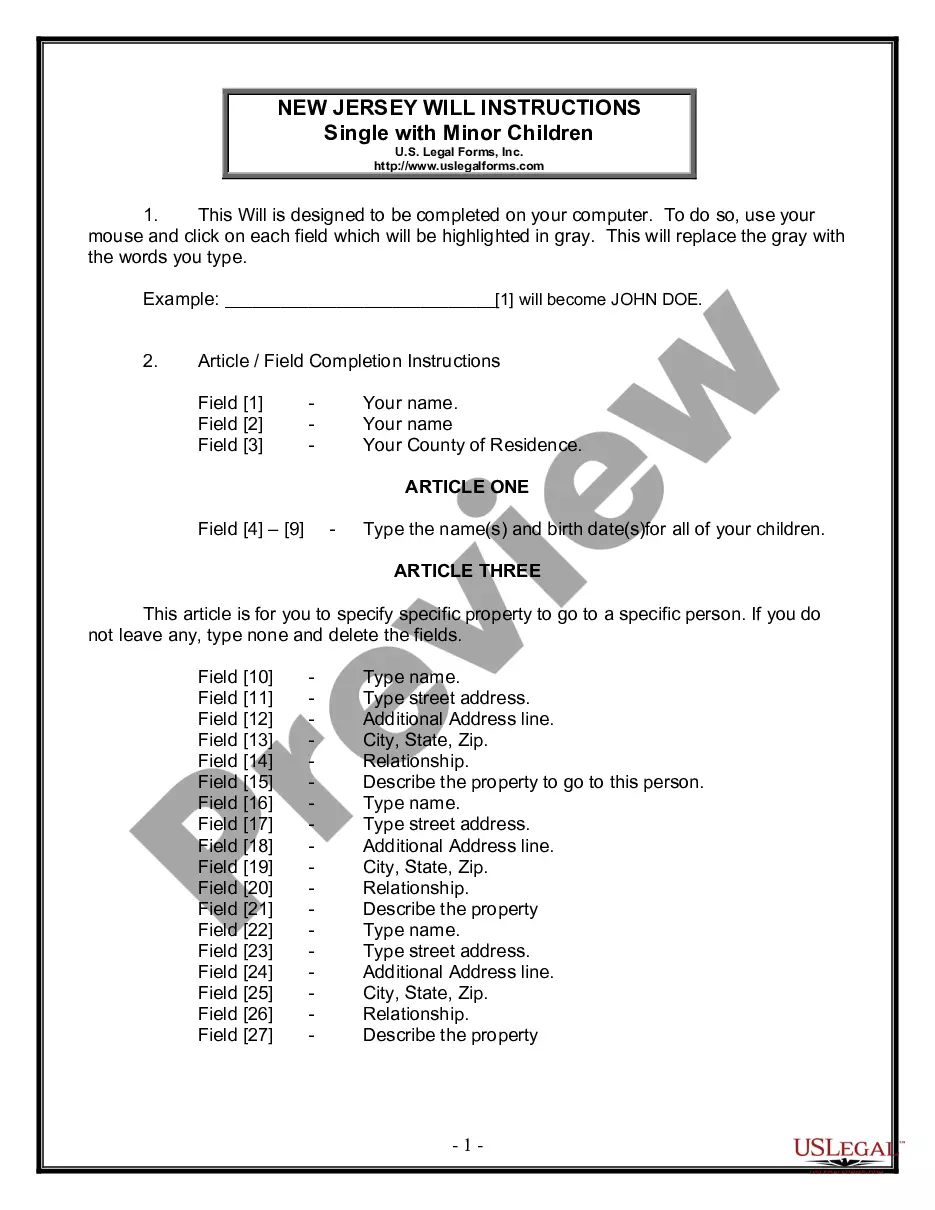
Maryland Renunciation and Disclaimer of Property received by Intestate Succession
Understanding this form
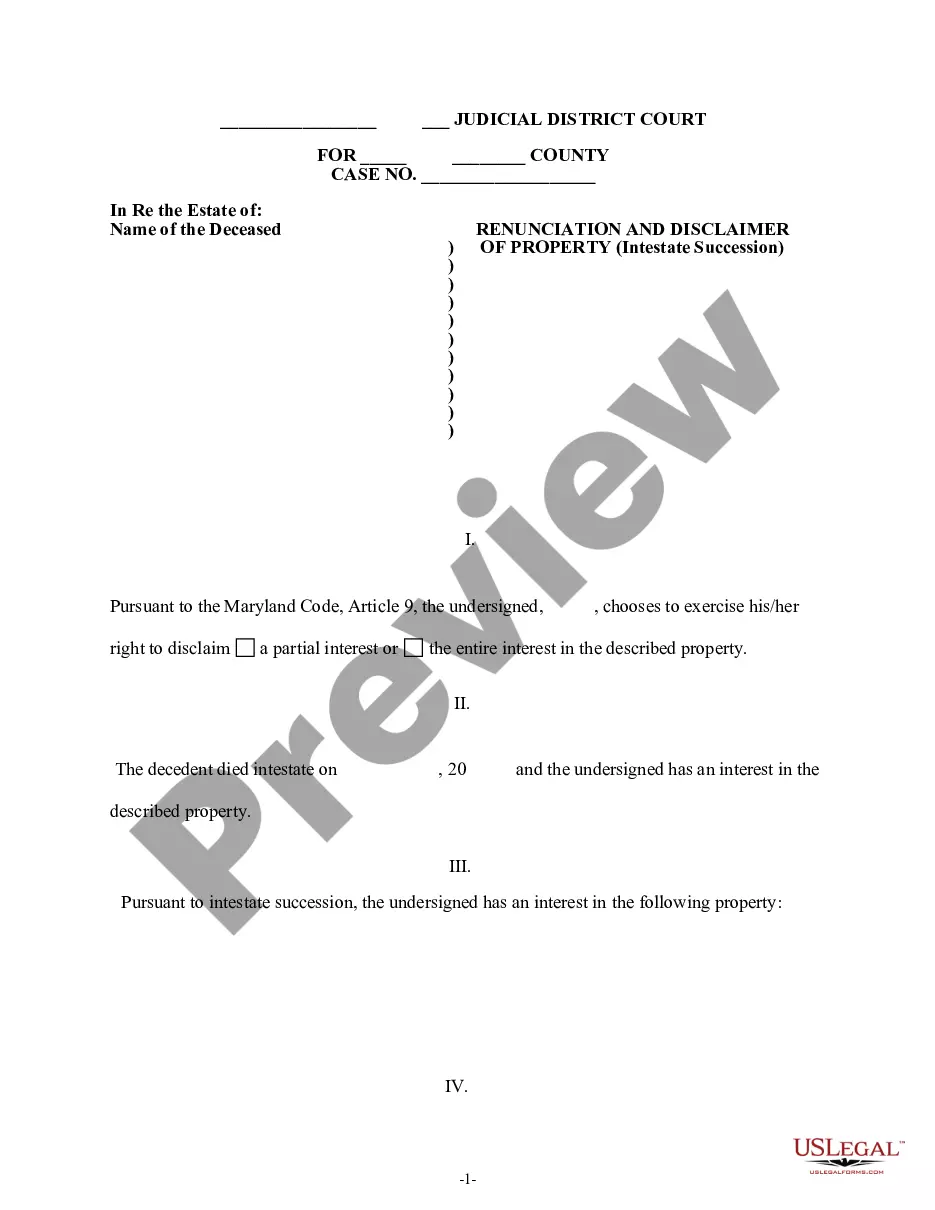
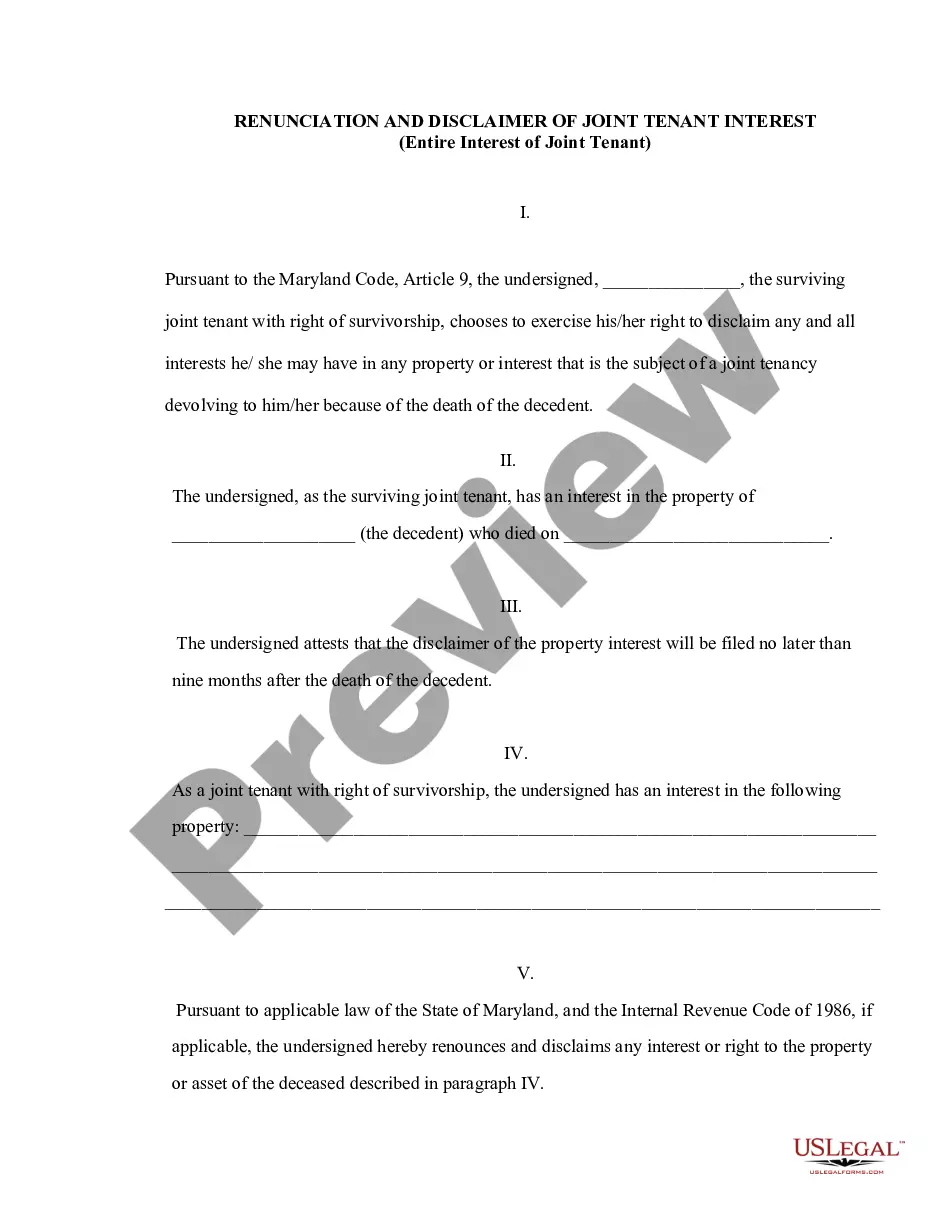
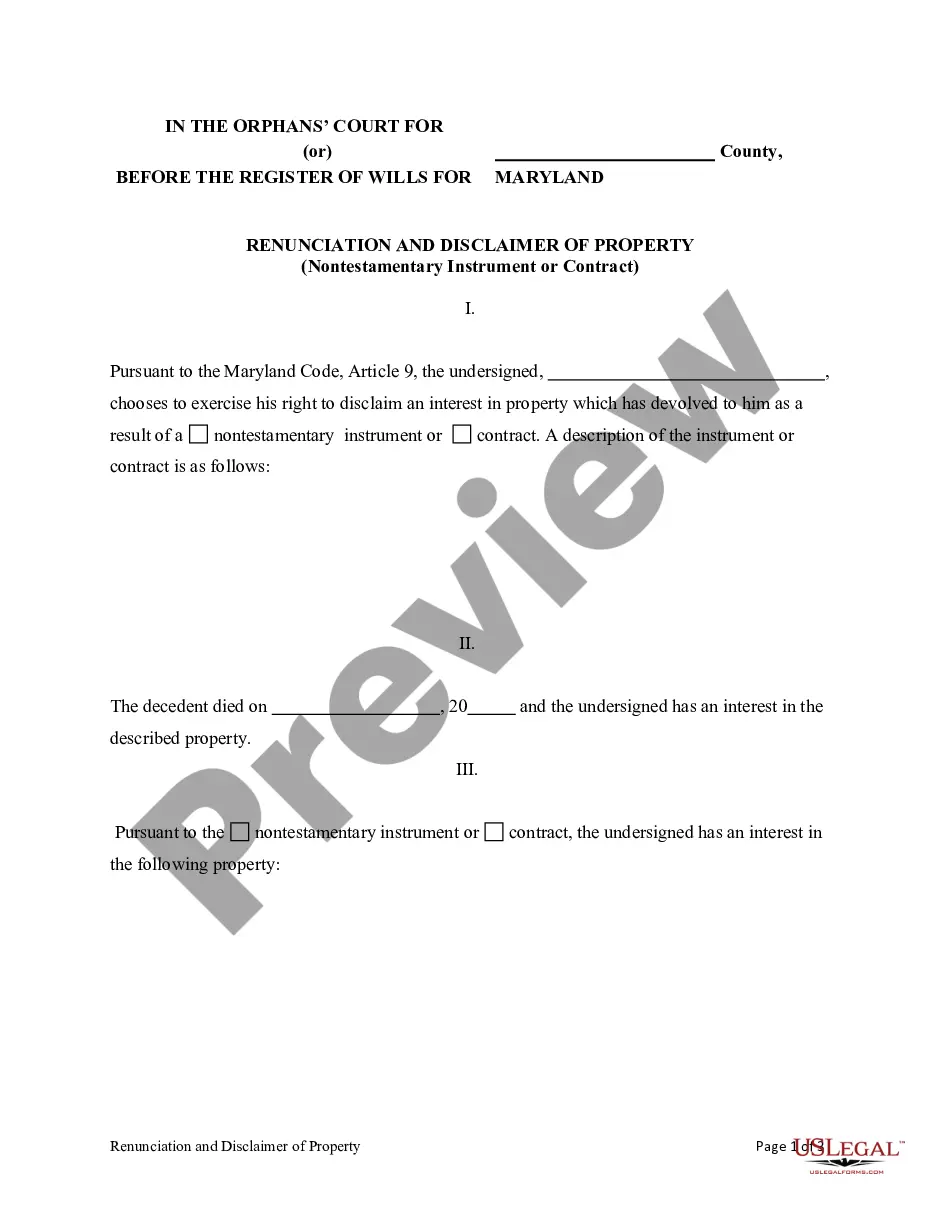
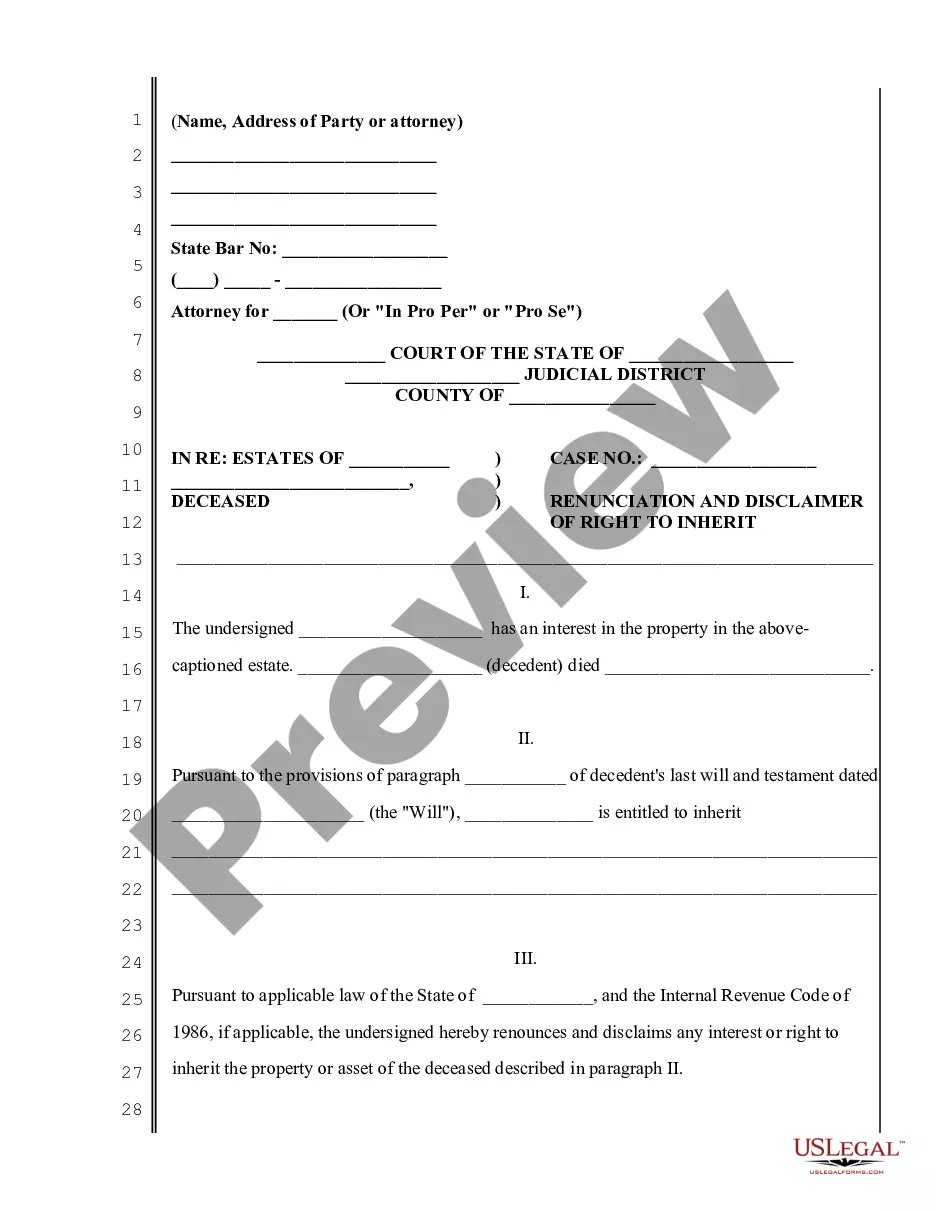
The Maryland Renunciation and Disclaimer of Property received by Intestate Succession is a legal document that allows a beneficiary to renounce or decline their interest in property they inherited from a decedent who died without a will. This form is specifically designed for situations where a beneficiary wishes to disclaim all or part of their inherited property, thereby allowing that property to pass on to other heirs according to Maryland's intestate succession laws. It is distinct from other estate planning forms, such as wills, as it addresses the relinquishment of property rights rather than the allocation of those rights.
Key components of this form
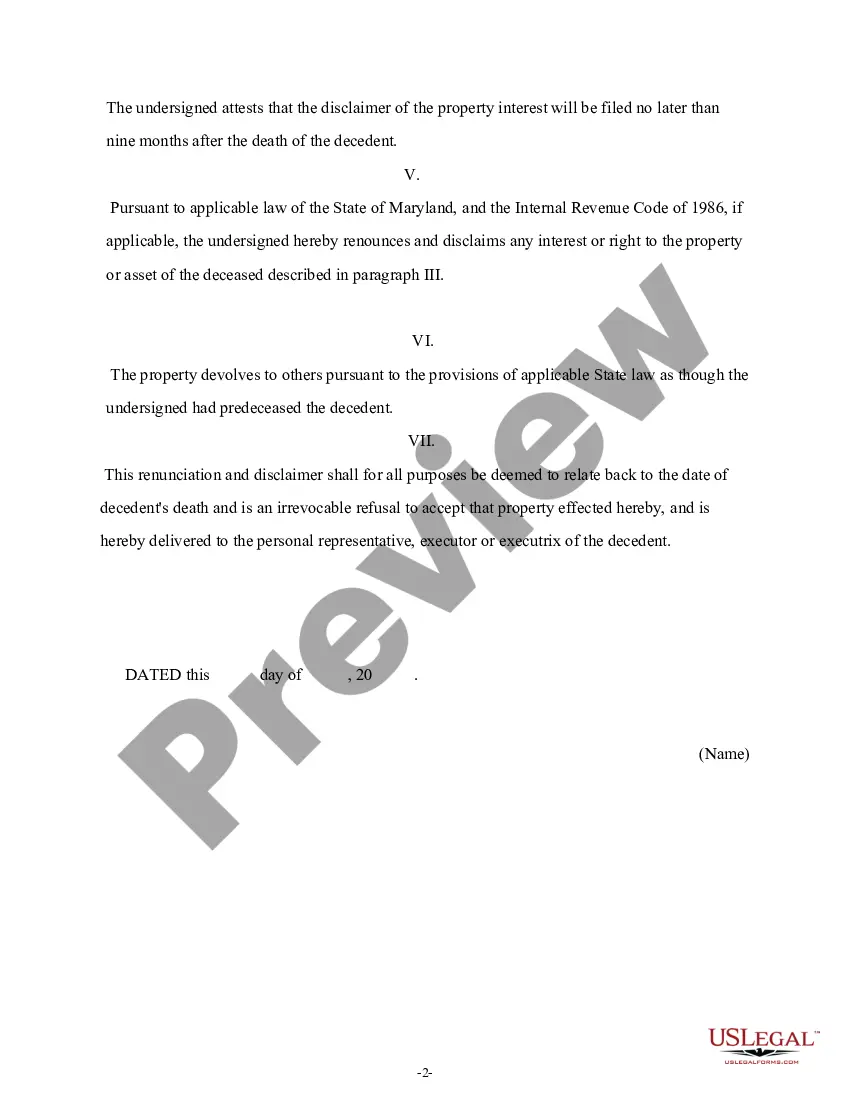
- Identification of the property or assets being disclaimed.
- Statement of the beneficiary's intent to renounce their interest.
- Legal acknowledgment that the property will pass to other heirs as if the beneficiary predeceased the decedent.
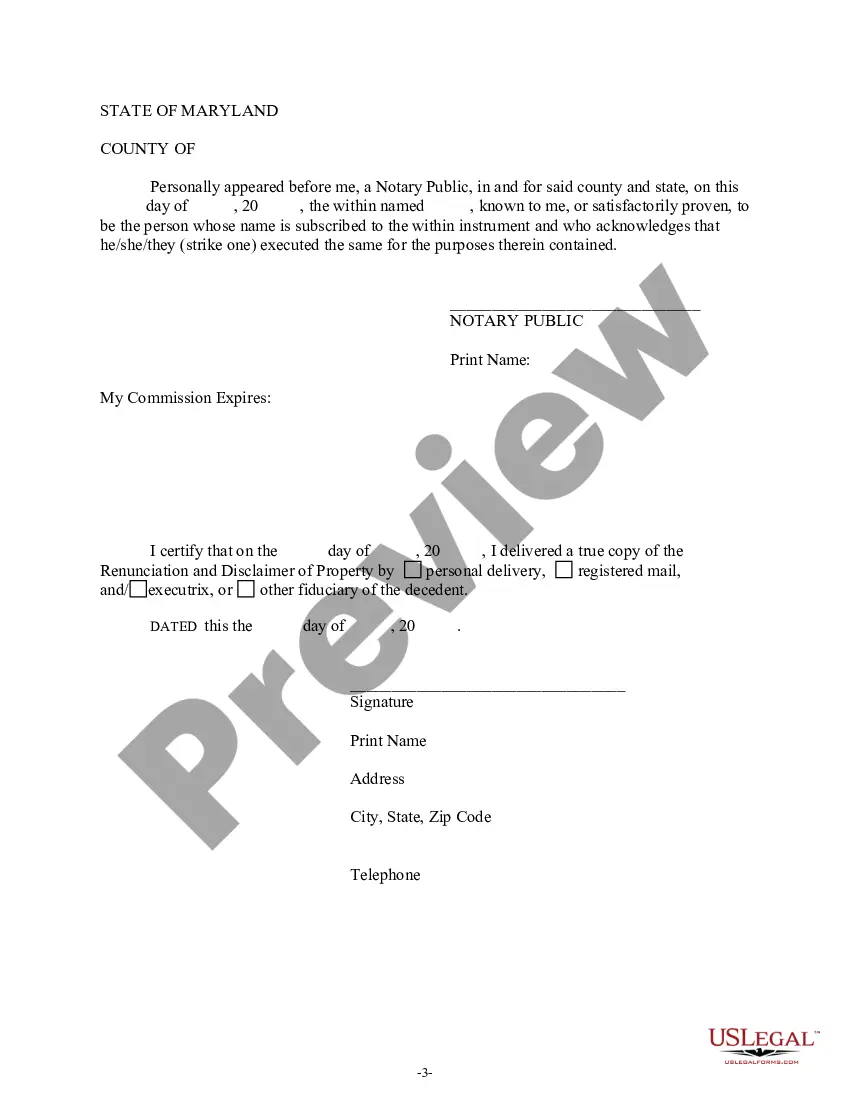
- Certification of delivery of the disclaimer to relevant parties.
- Deadline for filing the disclaimer, typically within nine months of the decedent's passing.
When to use this document
This form should be used when an individual entitled to inherit property under Maryland intestate succession laws wishes to formally decline that inheritance. Situations may include when the beneficiary does not want the property due to financial or tax implications, or if there are other heirs who are more suited to manage or benefit from the property. Using this form ensures compliance with state laws while allowing the property to be passed on to other legitimate heirs.
Who can use this document
- Individuals who have inherited property from a relative who died intestate.
- Beneficiaries who wish to relinquish their rights to an inheritance.
- Those seeking to establish a clear legal record of their decision to disclaim property.
- Heirs who wish to ensure that property passes to other beneficiaries according to Maryland law.
Completing this form step by step
- Identify the parties involved, including the beneficiary and the decedent.
- Specify the property being disclaimed by describing it clearly.
- Clearly state the intention to renounce the property interest.
- Sign and date the form, ensuring all signatures are in place.
- File the disclaimer with the appropriate estate administration authorities within the nine-month deadline.
Is notarization required?
Notarization is generally not required for this form. However, certain states or situations might demand it. You can complete notarization online through US Legal Forms, powered by Notarize, using a verified video call available anytime.
Get your form ready online
Our built-in tools help you complete, sign, share, and store your documents in one place.
Make edits, fill in missing information, and update formatting in US Legal Forms—just like you would in MS Word.
Download a copy, print it, send it by email, or mail it via USPS—whatever works best for your next step.
Sign and collect signatures with our SignNow integration. Send to multiple recipients, set reminders, and more. Go Premium to unlock E-Sign.
If this form requires notarization, complete it online through a secure video call—no need to meet a notary in person or wait for an appointment.
We protect your documents and personal data by following strict security and privacy standards.

Make edits, fill in missing information, and update formatting in US Legal Forms—just like you would in MS Word.

Download a copy, print it, send it by email, or mail it via USPS—whatever works best for your next step.

Sign and collect signatures with our SignNow integration. Send to multiple recipients, set reminders, and more. Go Premium to unlock E-Sign.

If this form requires notarization, complete it online through a secure video call—no need to meet a notary in person or wait for an appointment.

We protect your documents and personal data by following strict security and privacy standards.
Common mistakes to avoid
- Failing to file the disclaimer within the specified nine-month timeframe.
- Not providing a clear description of the property being disclaimed.
- Overlooking to notify relevant parties about the disclaimer.
- Not signing the document, which can invalidate the disclaimer.
Benefits of completing this form online
- Convenience of completing the form from home without the need for in-person visits.
- The ability to edit the document as needed before final submission.
- Access to reliable legal resources and templates drafted by licensed attorneys.
- Time-saving, as forms can be downloaded and completed quickly.
Legal use & context
- Renouncing property can help avoid potential tax liabilities or disputes among heirs.
- The disclaimer must comply with Maryland state law to be enforceable.
- It is important to understand that once the property is disclaimed, it cannot be reclaimed.
Summary of main points
- The form allows a beneficiary to legally renounce their inheritance.
- Filing must be done within nine months of the decedent's death.
- The property will pass to other heirs as if the renouncing party had died first.
Looking for another form?


Form popularity
FAQ
The answer is yes. The technical term is "disclaiming" it. If you are considering disclaiming an inheritance, you need to understand the effect of your refusalknown as the "disclaimer"and the procedure you must follow to ensure that it is considered qualified under federal and state law.
A beneficiary is always free to refuse to accept benefits under a trust or a will.The beneficiary may be willing to sign a disclaimer as she does not wish to accept the bequest. The disclaimer would protect you as Trustee from a breach of a fiduciary duty by distributing the assets to a different beneficiary.
Put the disclaimer in writing. Deliver the disclaimer to the person in control of the estate usually the executor or trustee. Complete the disclaimer within nine months of the death of the person leaving the property. Do not accept any benefit from the property you're disclaiming.
Specifically, the IRS requires that: You make your disclaimer in writing.You disclaim the assets within nine months of the death of the person you inherited them from. (Note: There's an exception for minor beneficiaries; they have until nine months after they reach the age of majority to disclaim.)
A beneficiary of a trust may wish to disclaim their interest in the trust for:Any disclaimer of an interest in a trust by a trust beneficiary must be made to the trustee of that trust. For a disclaimer to be valid, it must be supported by some evidence that the beneficiary is disclaiming their interest.
In your disclaimer, cover any and all liabilities for the product or service that you provide. You should warn consumers of any dangers or hazards posed by your product. You should list specific risks while at the same time acknowledging that the list is not exhaustive. For example, you could write, NOTICE OF RISK.
Generally speaking, beneficiaries have a right to see trust documents which set out the terms of the trusts, the identity of the trustees and the assets within the trust as well as the trust deed, any deeds of appointment/retirement and trust accounts.
The disclaimer must be in writing: A signed letter by the person doing the disclaiming, identifying the decedent, describing the asset to be disclaimed, and the extent and amount, percentage or dollar amount, to be disclaimed, must be delivered to the person in control of the estate or asset, such as an executor,
Usually, a trust prohibits beneficiaries from assigning their interest in the trust before distribution. The anti-assignment provision protects undistributed trust assets from claims by a beneficiary's creditors.