Massachusetts Mutual Wills containing Last Will and Testaments for Man and Woman living together not Married with No Children
What this document covers
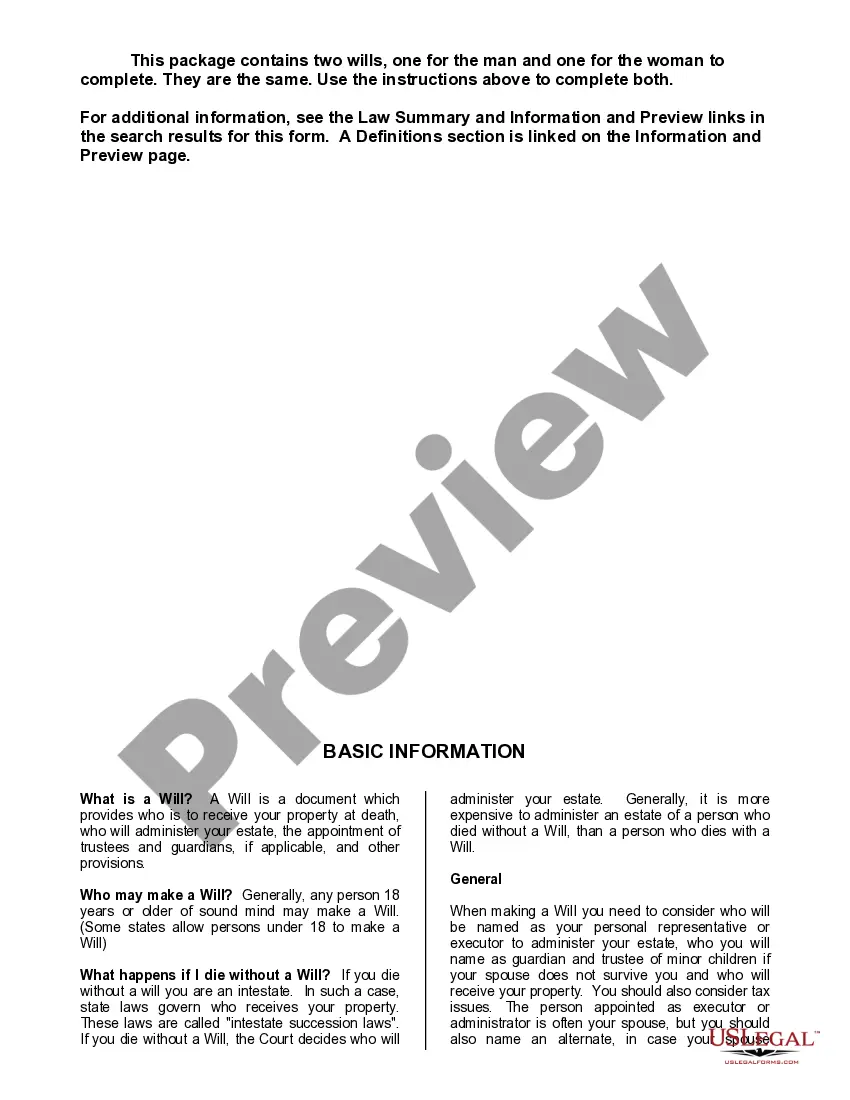
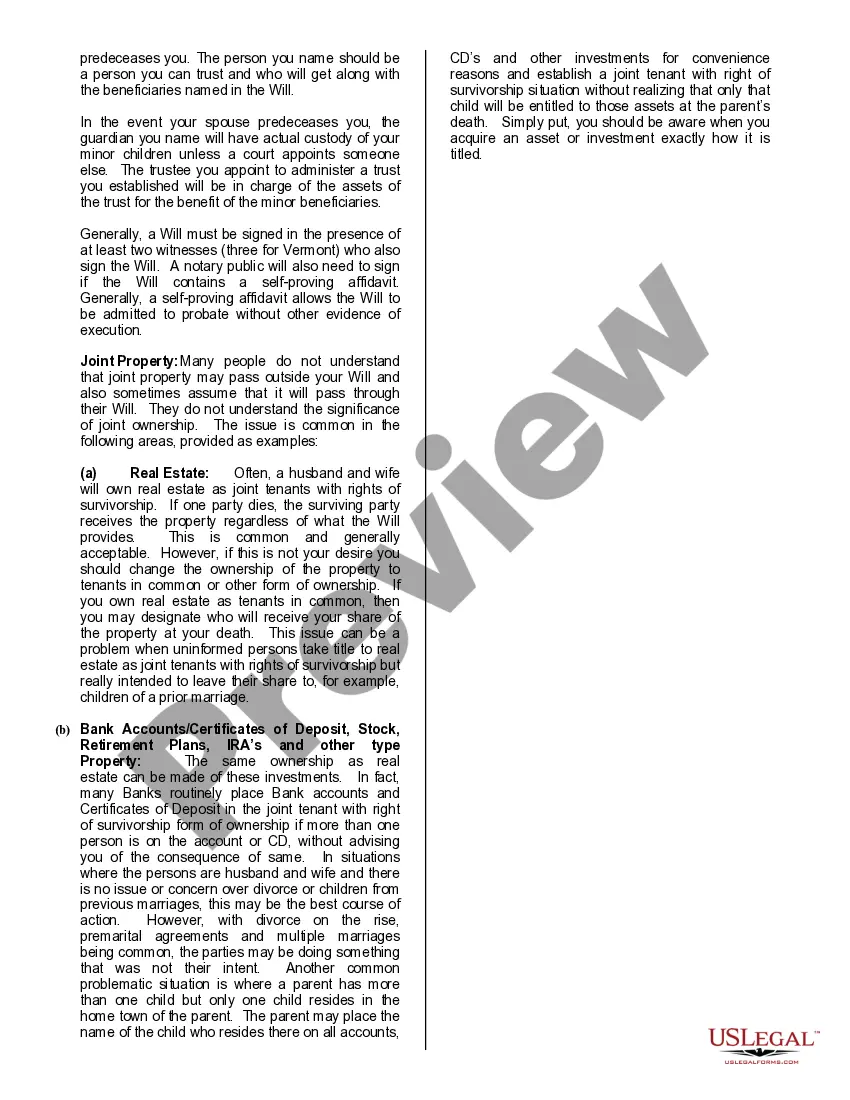
This form is a package of mutual wills containing Last Will and Testaments specifically designed for a man and woman living together who are not married and have no children. It enables couples to designate how their property will be distributed upon their death, ensuring that each partner can leave assets to the other. This form differs from typical wills as it is specifically tailored for those in cohabiting relationships and includes provisions for mutual obligations and property bequests.
Key parts of this document
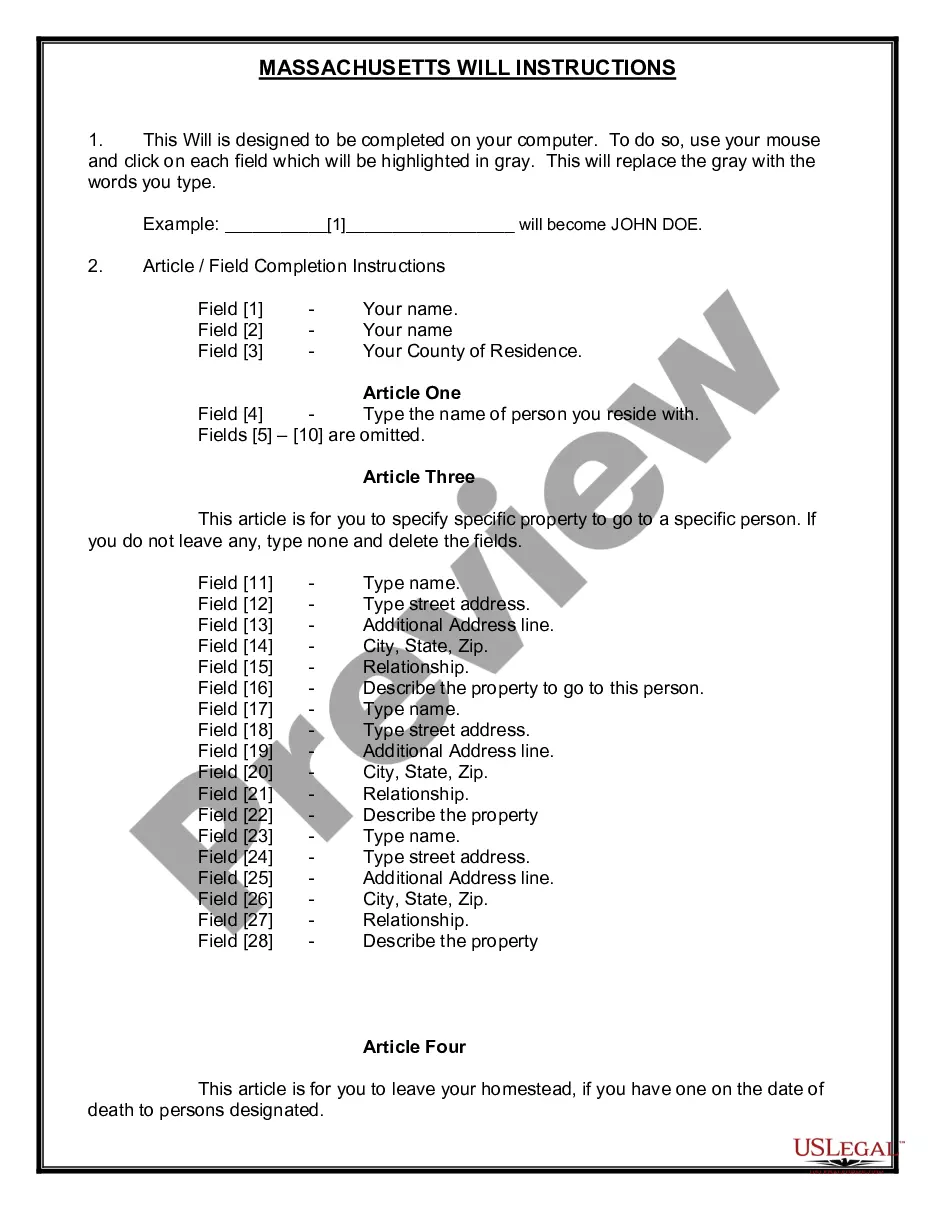
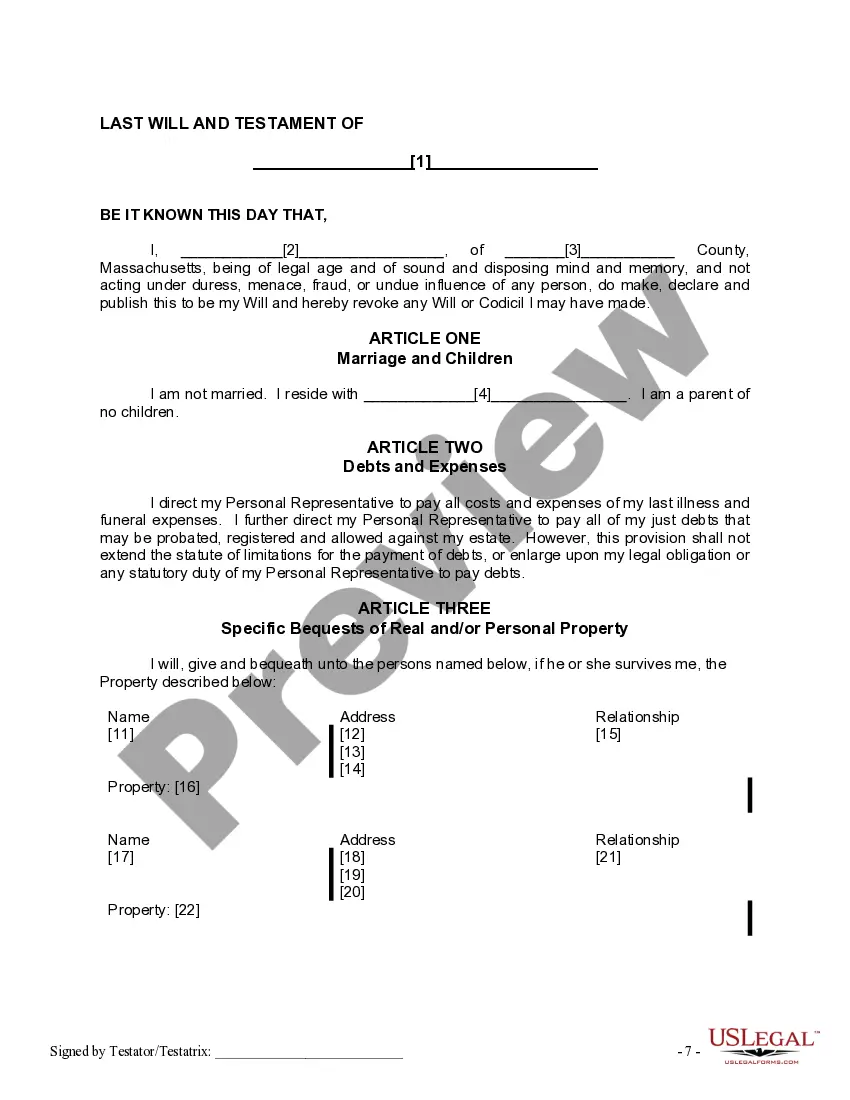
- Article One: States the current relationship status and existence of children.
- Article Two: Details instructions for paying debts and funeral expenses.
- Article Three: Allows for specific bequests of property to named individuals.
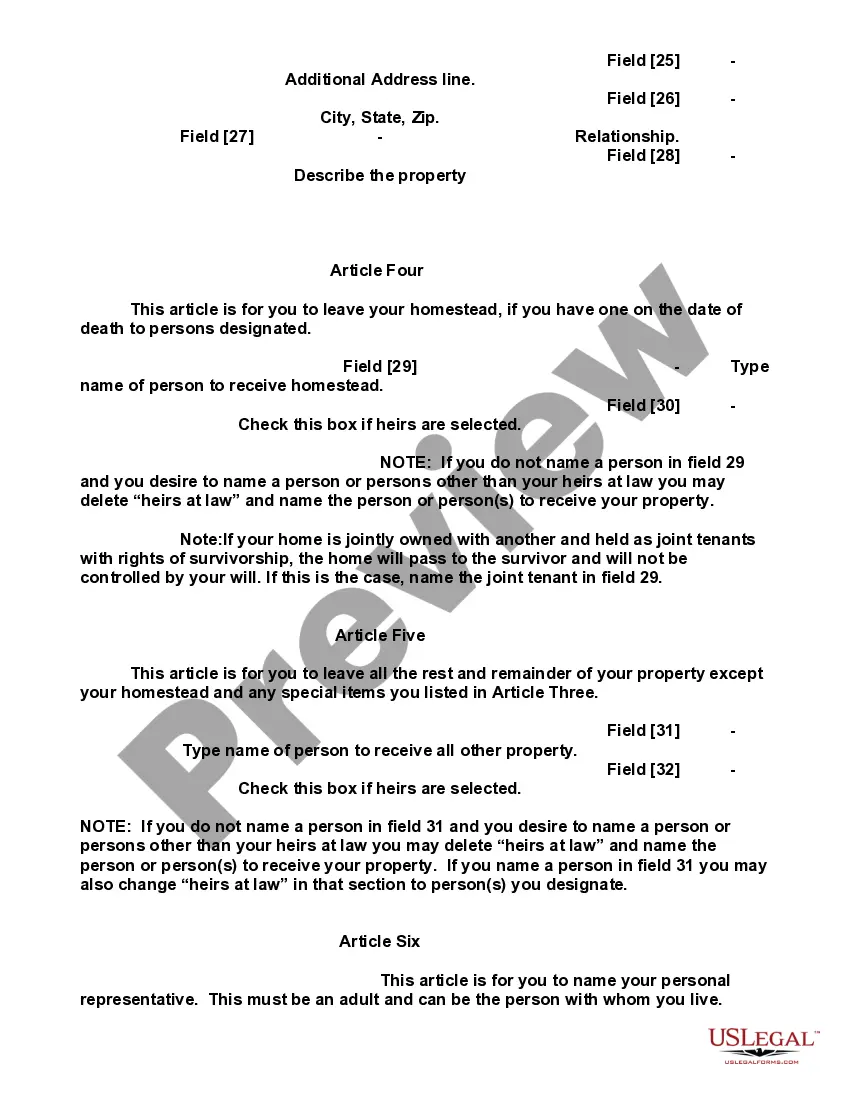
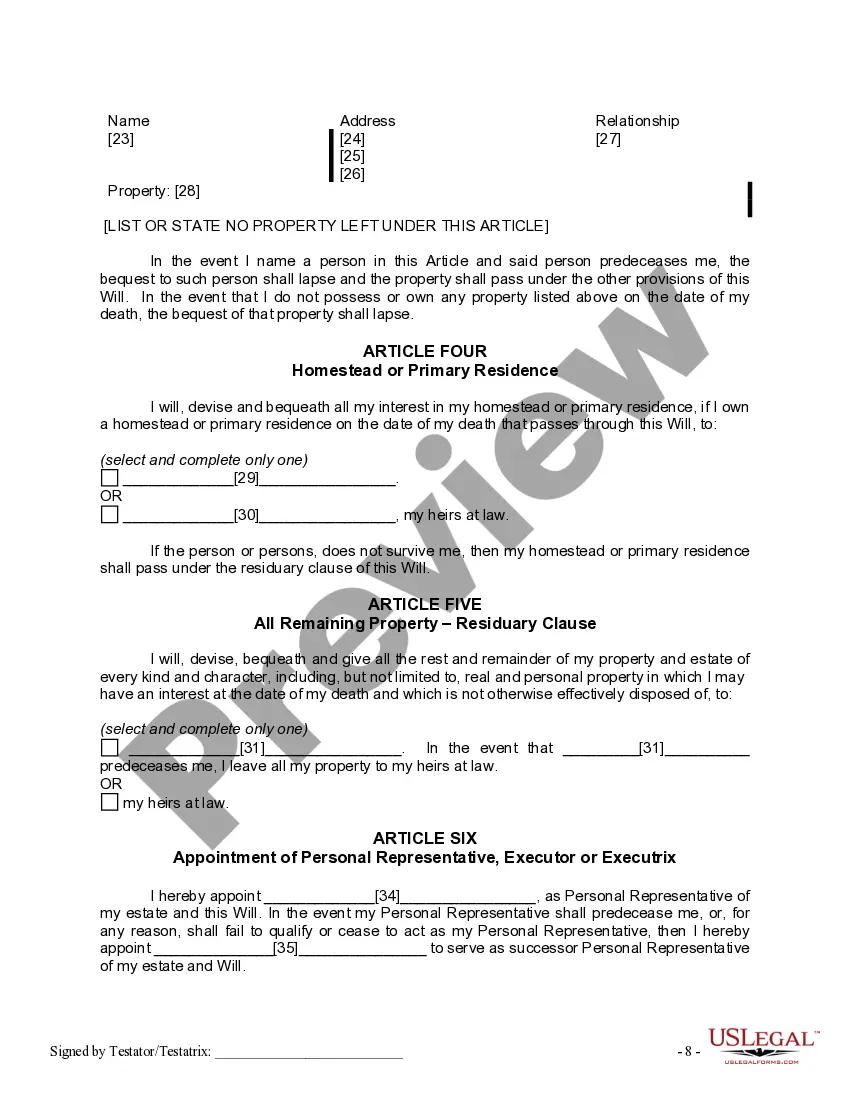
- Article Four: Addresses the distribution of the homestead or primary residence.
- Article Five: Specifies the residuary clause for distributing remaining property.
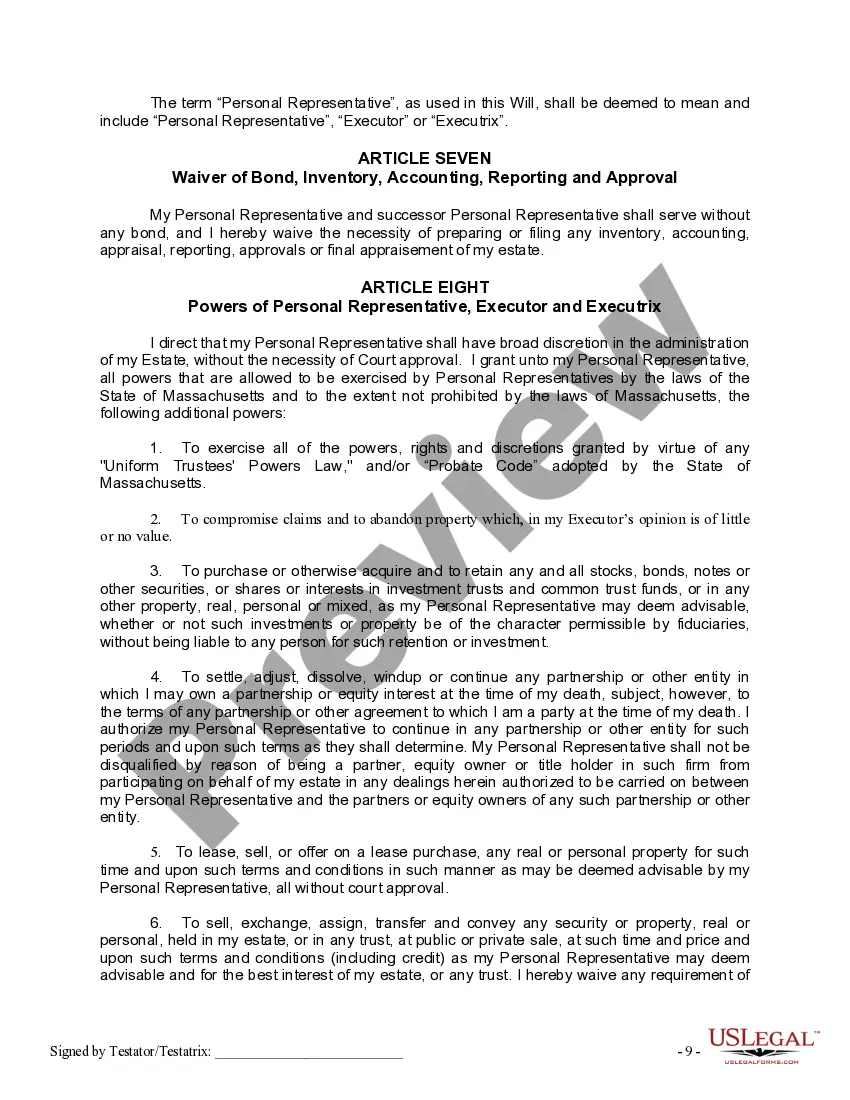
- Article Six: Designates a personal representative to manage the estate.



Situations where this form applies
This form should be used when a couple, who are living together but not legally married, wishes to ensure that their assets are passed on to each other upon death. It is particularly useful for couples without children who want to clearly outline their wishes regarding property distribution, protect their partner financially, and avoid complications with intestacy laws.
Who needs this form
- Couples living together in a non-marital relationship.
- Individuals who want to secure their partnerâs inheritance rights.
- Partners without children who wish to distribute their assets specifically to each other.
- Any individual wishing to clarify their estate plans and avoid probate complications.
How to complete this form
- Identify the parties involved, including your own name and the name of your partner.
- Fill in your county of residence and any specific bequests you wish to make in Article Three.
- Designate who will receive your homestead or primary residence in Article Four.
- Appoint a personal representative who will manage your estate in Article Six.
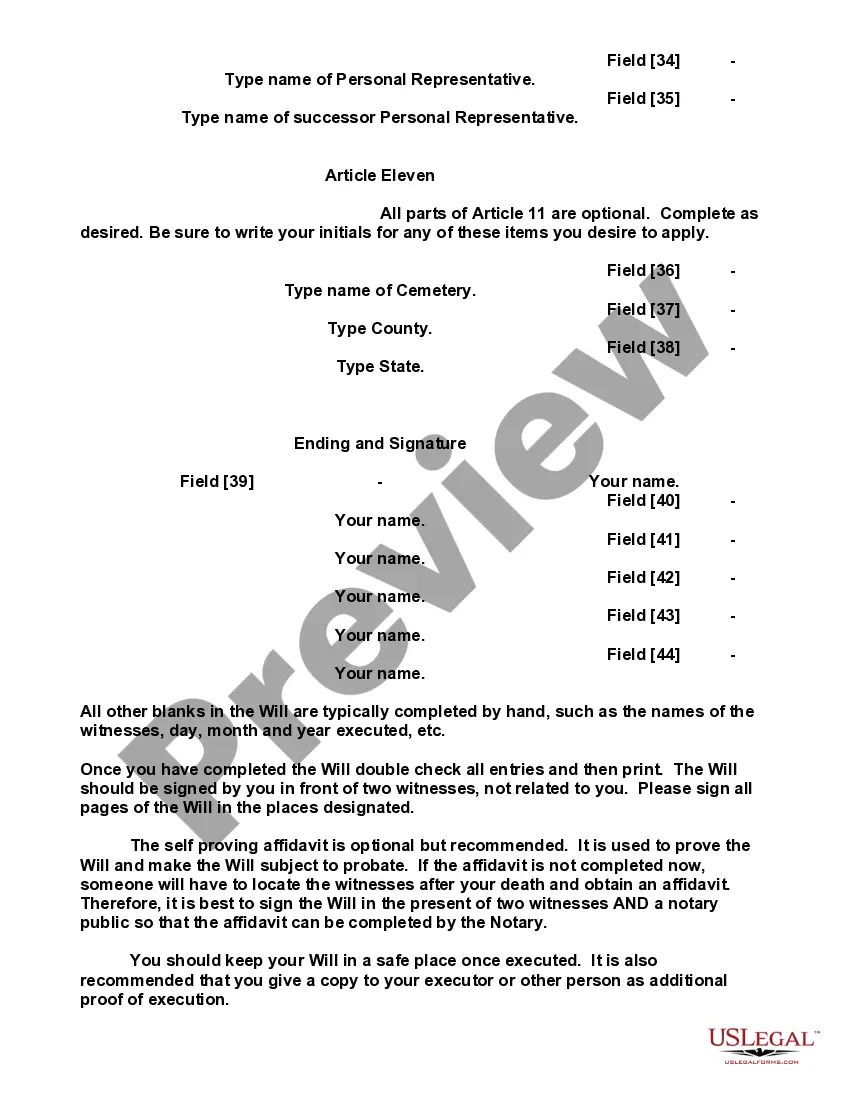
- Sign the wills in front of two witnesses, ensuring they are not related to you and are not named in the wills.
Does this document require notarization?
Yes, this form must be notarized to be legally valid. It is recommended to have a notary public present when signing the wills to complete the self-proving affidavit, streamlining the probate process.
Get your form ready online
Our built-in tools help you complete, sign, share, and store your documents in one place.
Make edits, fill in missing information, and update formatting in US Legal Forms—just like you would in MS Word.
Download a copy, print it, send it by email, or mail it via USPS—whatever works best for your next step.
Sign and collect signatures with our SignNow integration. Send to multiple recipients, set reminders, and more. Go Premium to unlock E-Sign.
If this form requires notarization, complete it online through a secure video call—no need to meet a notary in person or wait for an appointment.
We protect your documents and personal data by following strict security and privacy standards.

Make edits, fill in missing information, and update formatting in US Legal Forms—just like you would in MS Word.

Download a copy, print it, send it by email, or mail it via USPS—whatever works best for your next step.

Sign and collect signatures with our SignNow integration. Send to multiple recipients, set reminders, and more. Go Premium to unlock E-Sign.

If this form requires notarization, complete it online through a secure video call—no need to meet a notary in person or wait for an appointment.

We protect your documents and personal data by following strict security and privacy standards.
Common mistakes to avoid
- Failing to have the wills signed in front of two qualified witnesses.
- Not specifying all desired specific bequests in Article Three.
- Neglecting to appoint a personal representative in Article Six.
- Omitting to keep copies of the signed wills in a secure, yet accessible place.
- Not considering changes to property ownership arrangements which may affect the wills' provisions.
Advantages of online completion
- Convenience of downloading and completing the form at your pace.
- Editable format that allows for easy updates to your wishes as needed.
- State-specific guidance ensures compliance with local laws.
- Trusted templates drafted by licensed attorneys enhance reliability.
- Access to additional legal resources and support as needed.
What to keep in mind
- This form is designed for unmarried couples who wish to establish mutual wills to protect each otherâs assets.
- Clear guidelines are provided to ensure the form is filled out correctly and legally compliant.
- Involving a notary is recommended to ensure your wills remain valid through the probate process.
Looking for another form?



Form popularity
FAQ
No, in Massachusetts, it is not necessary to notarize your will to make it legal. Massachusetts does, however, allow you to make your will "self-proving." A self-proving will speeds up probate because the court can accept the will without contacting the witnesses who signed it.
No, in Massachusetts, it is not necessary to notarize your will to make it legal. Massachusetts does, however, allow you to make your will "self-proving." A self-proving will speeds up probate because the court can accept the will without contacting the witnesses who signed it.
Technically, you can create your own will in Massachusetts. The only legal requirement is that you sign it in front of at least 2 witnesses and that those witnesses also sign the will.
Reciprocal wills could be joint, mirror or mutual, but joint wills (one will made by two people) are not legal in Ontario.A binding written agreement to this effect usually accompanies these Wills. An oral agreement may also be binding.
There must be multiple witnesses of a will in order for it to be valid. In Massachusetts, there must be a minimum of two witnesses, and in most circumstances, they should not be set to benefit from the outcome of the will.
The will must be filed in the county where the decedent last resided with the Probate and Family Court Department so the personal representative may be granted Letters and proceed with the administration of the estate. Someone who dies without a will is called intestate, which invokes the strict laws of intestacy.
The probate file is public record. You can go to the filing room and request to see the file. The file will contain the Will and any other documentation that has been filed thus far. You can also copy documents in the file to take with you.
Signature: The will must be signed by the testator or by someone else in the testator's name in his presence, by his direction. Witnesses: A Massachusetts will must be signed by at least two witnesses, who should not also be beneficiaries in the will. Writing: A Massachusetts will must be in writing.