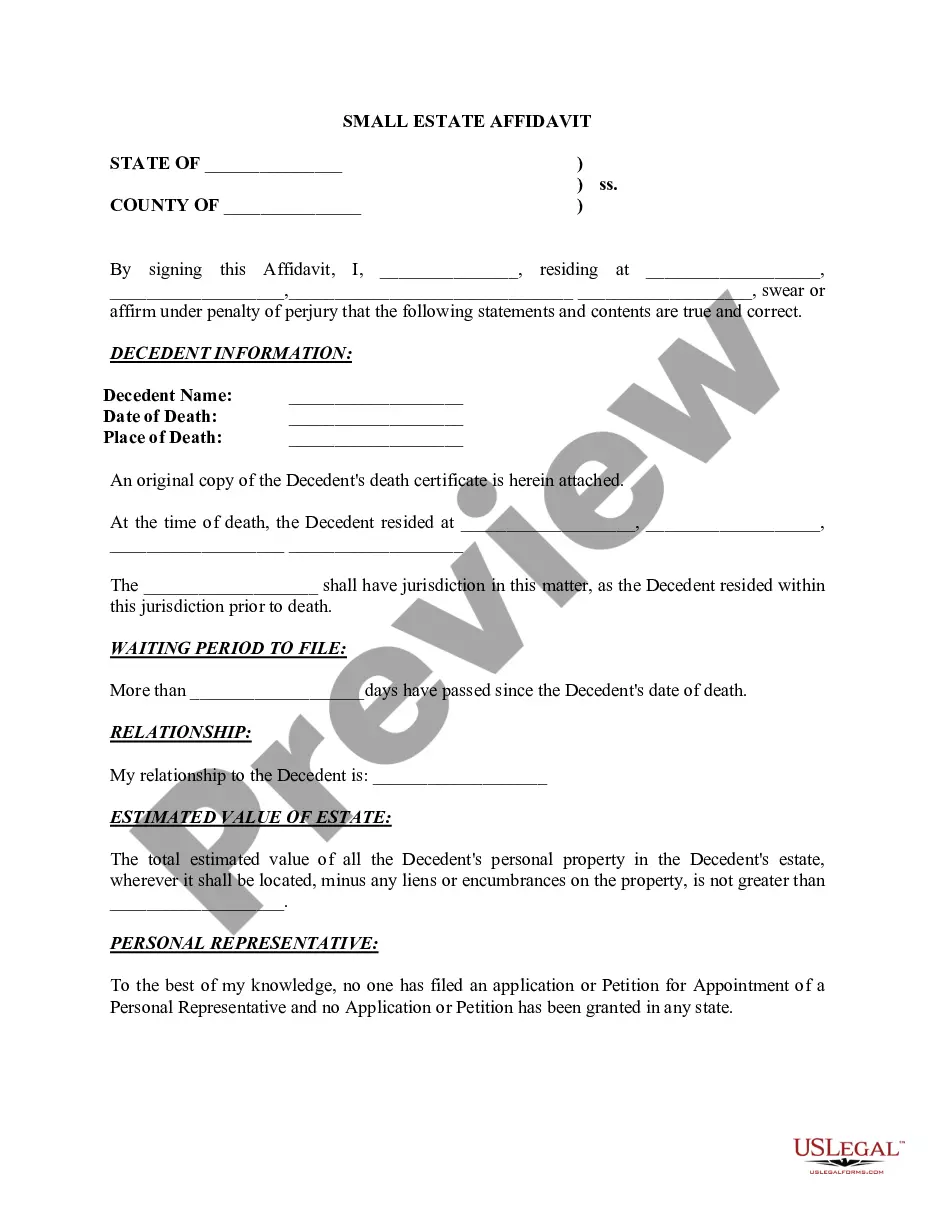
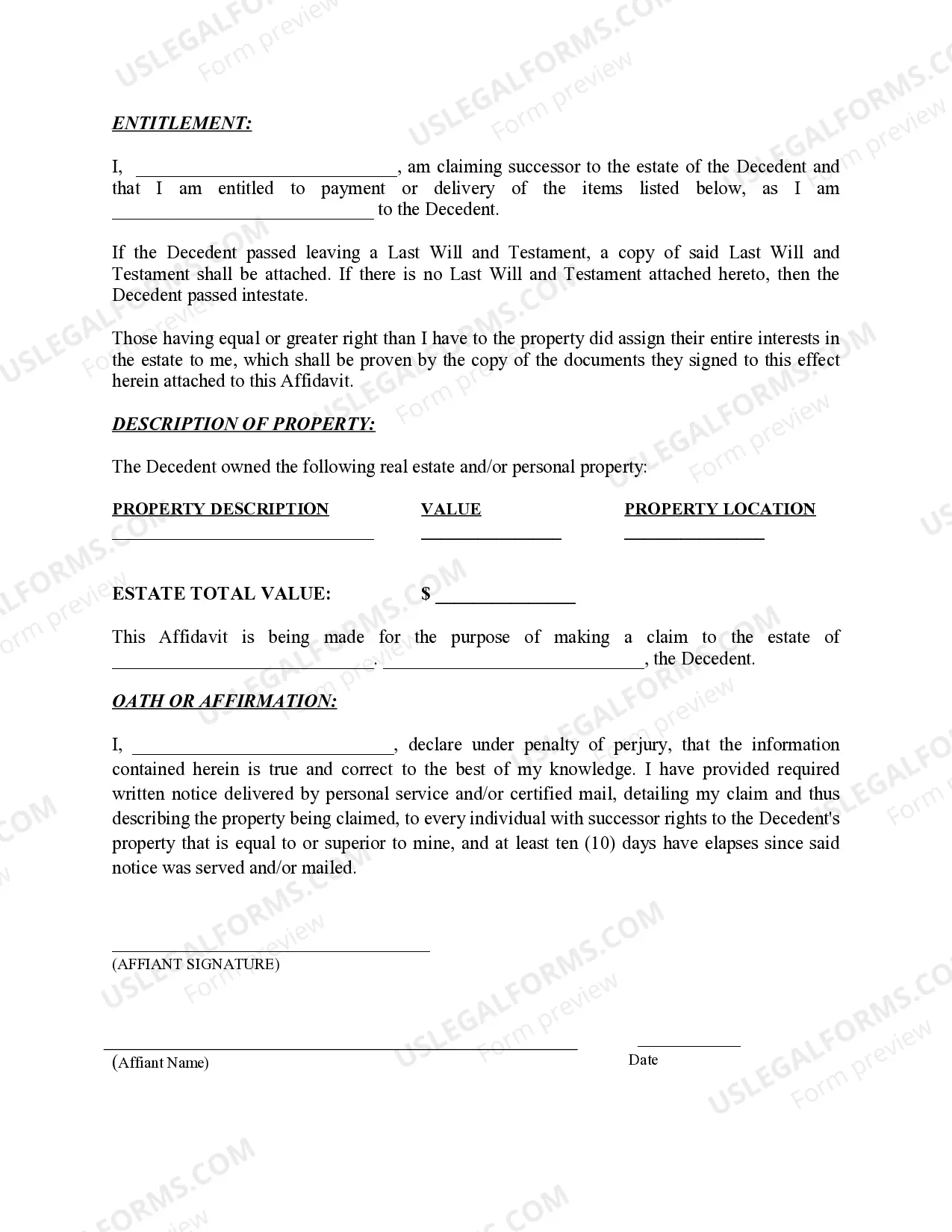
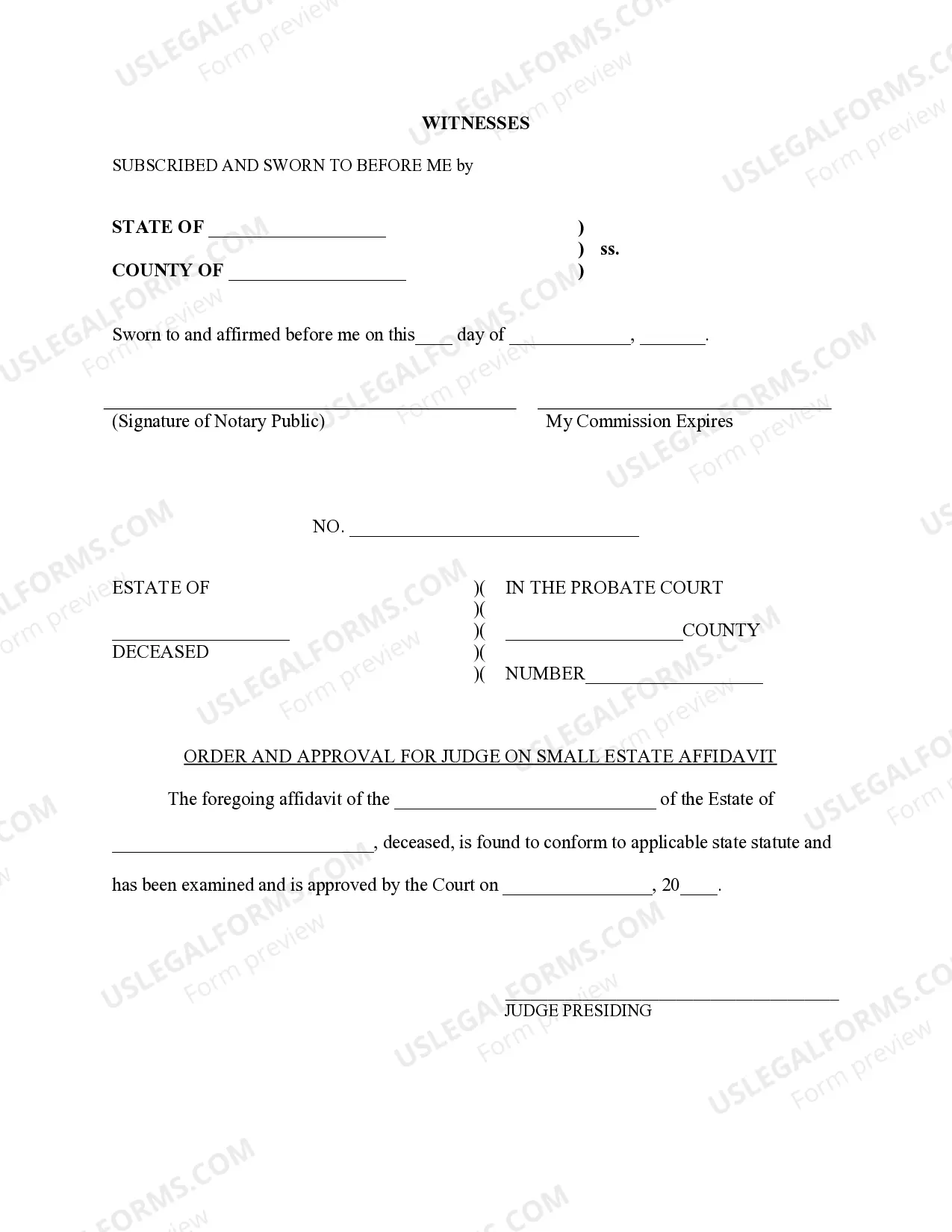
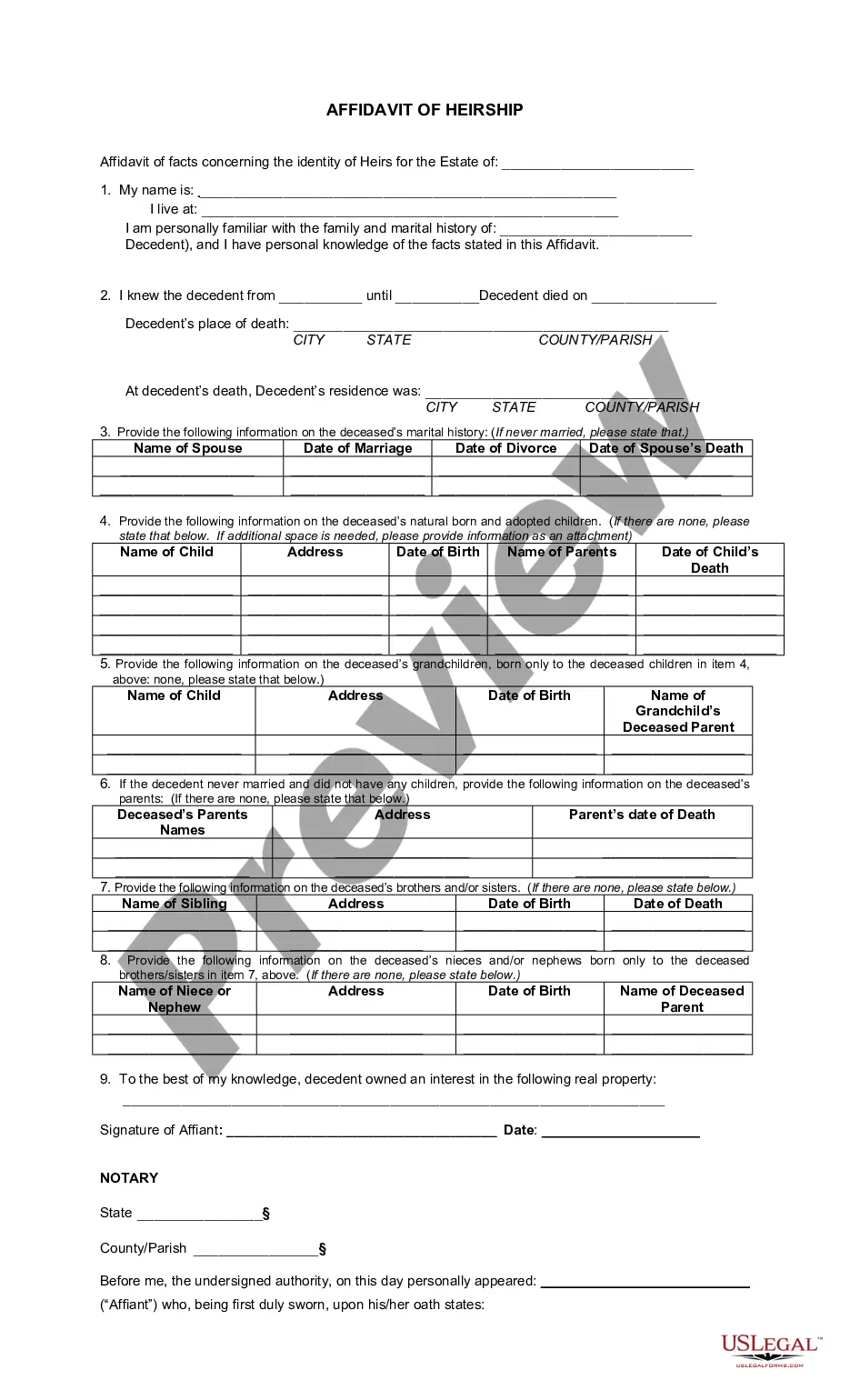
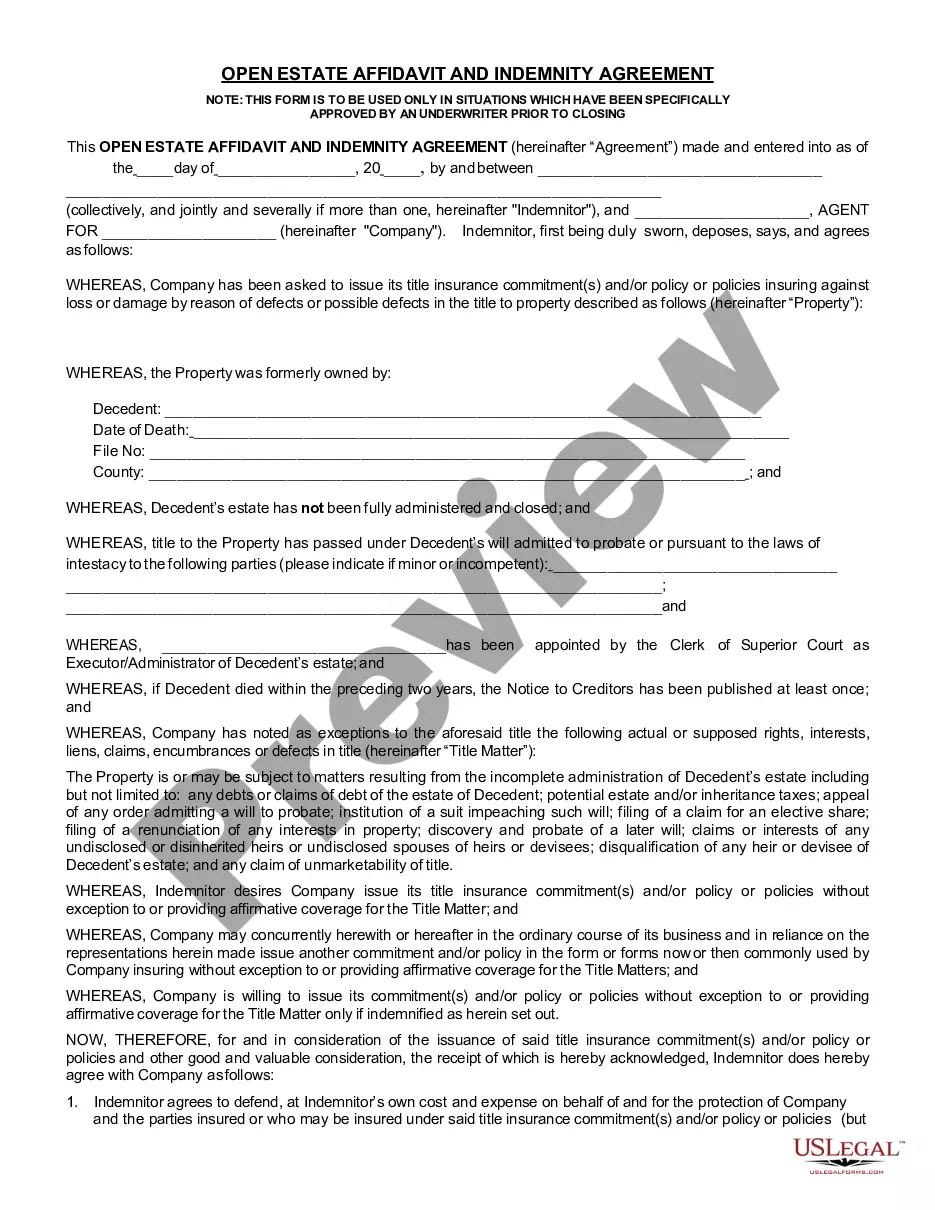
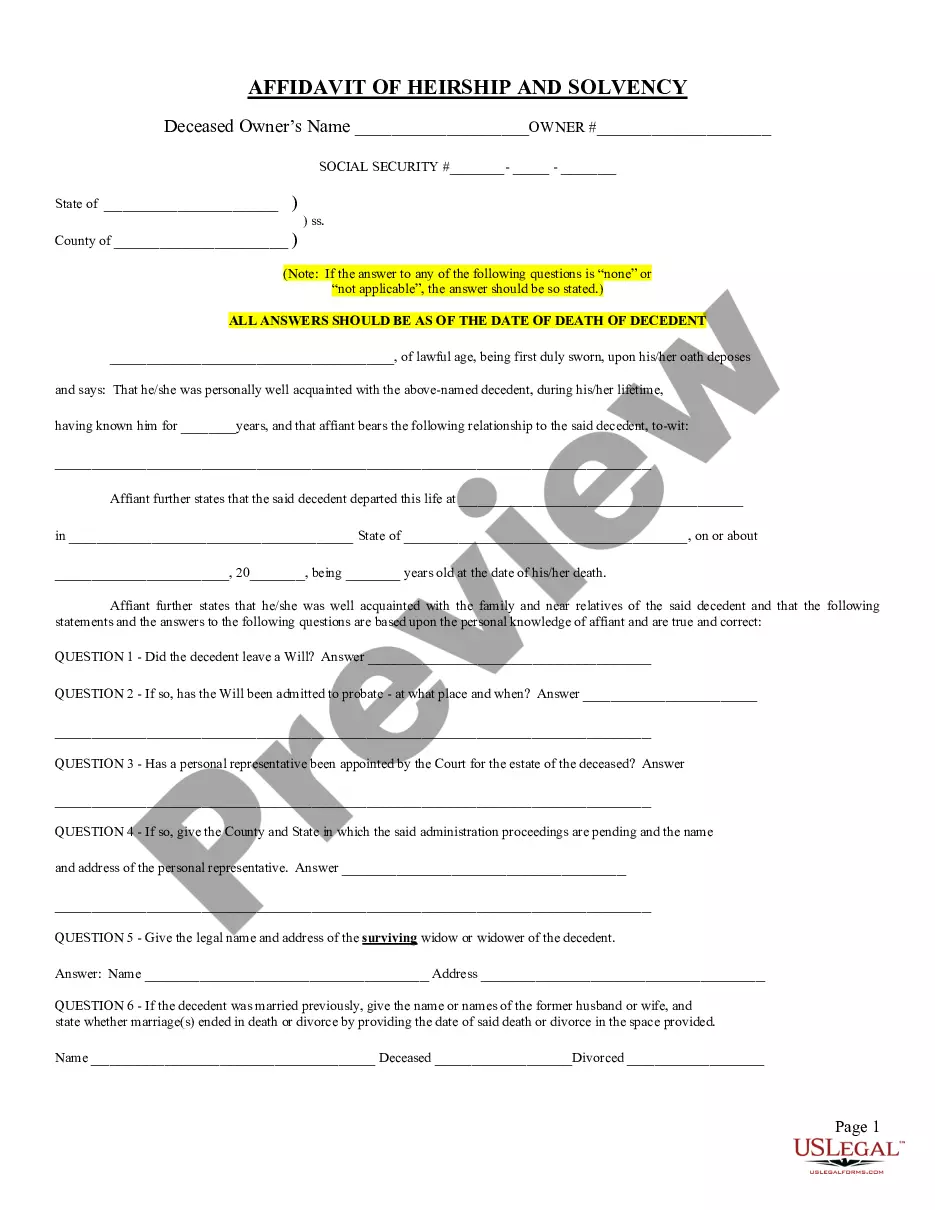
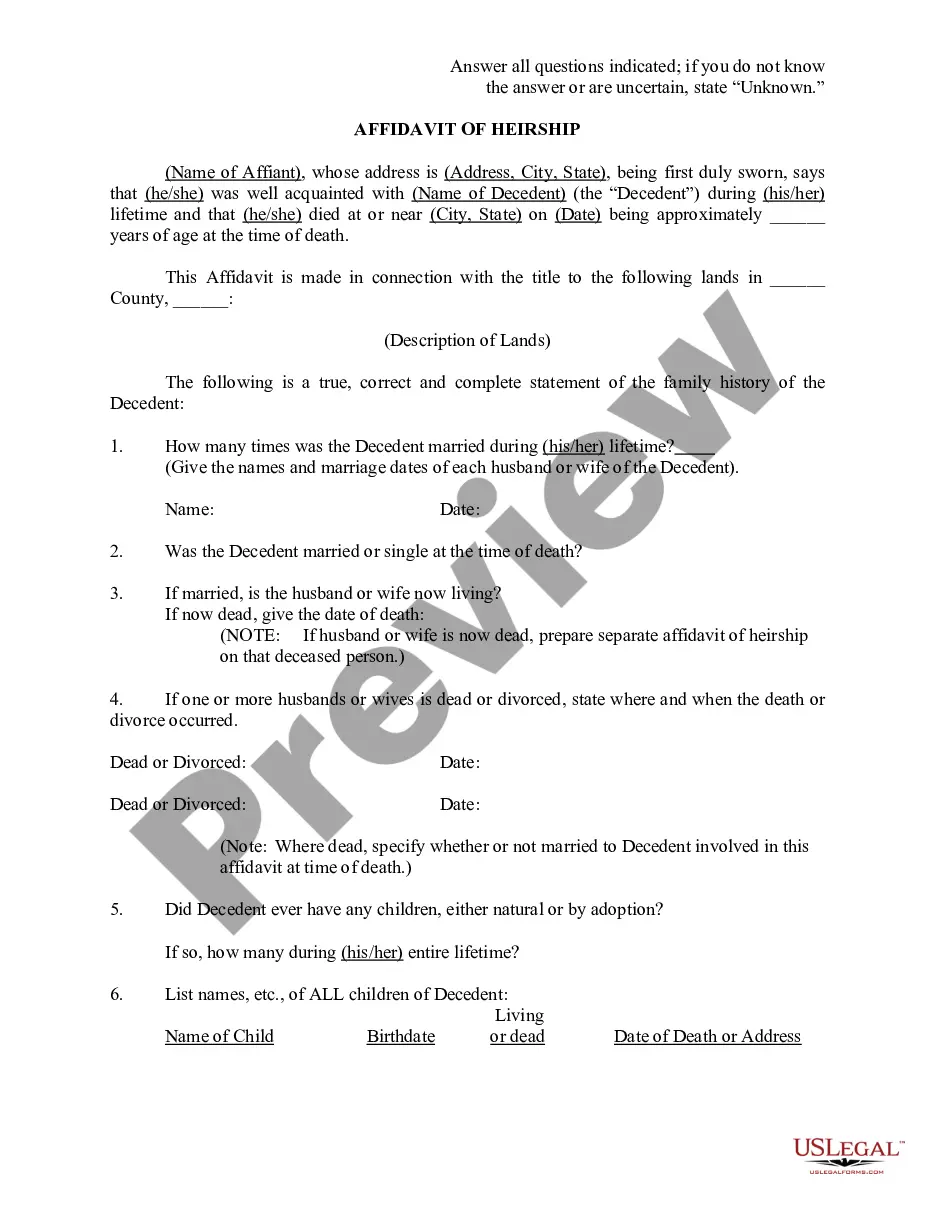
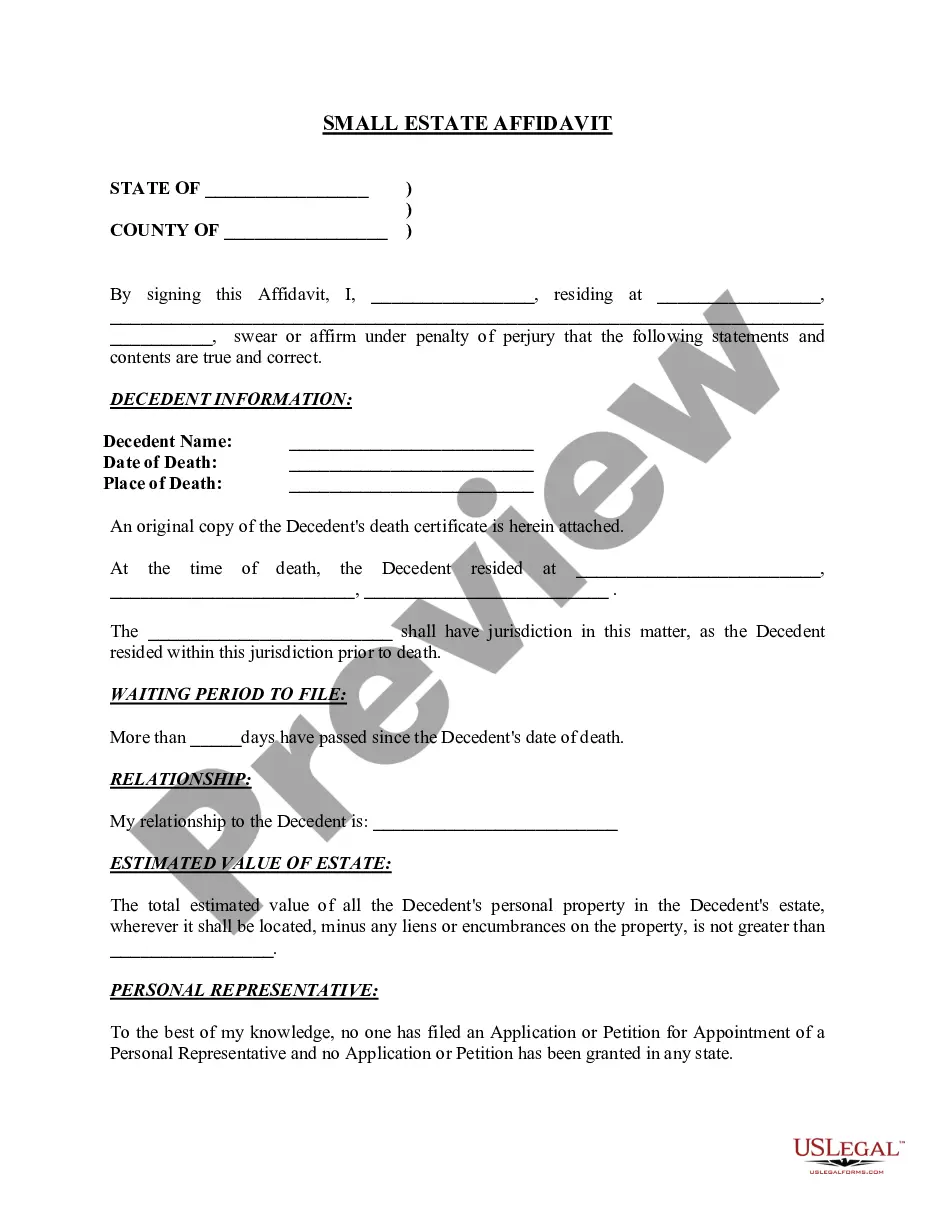
An Affidavit is a sworn, written statement of facts, signed by the 'affiant' (the person making the statement) before a notary public or other official witness. The affiant swears to the truth and accuracy of the statement contained in the affidavit. Where an estate is valued at less than $100,000, an interested party, as successor to the decedent, may, issue a small estate affidavit to collect or claim entitlement to the deceased property.
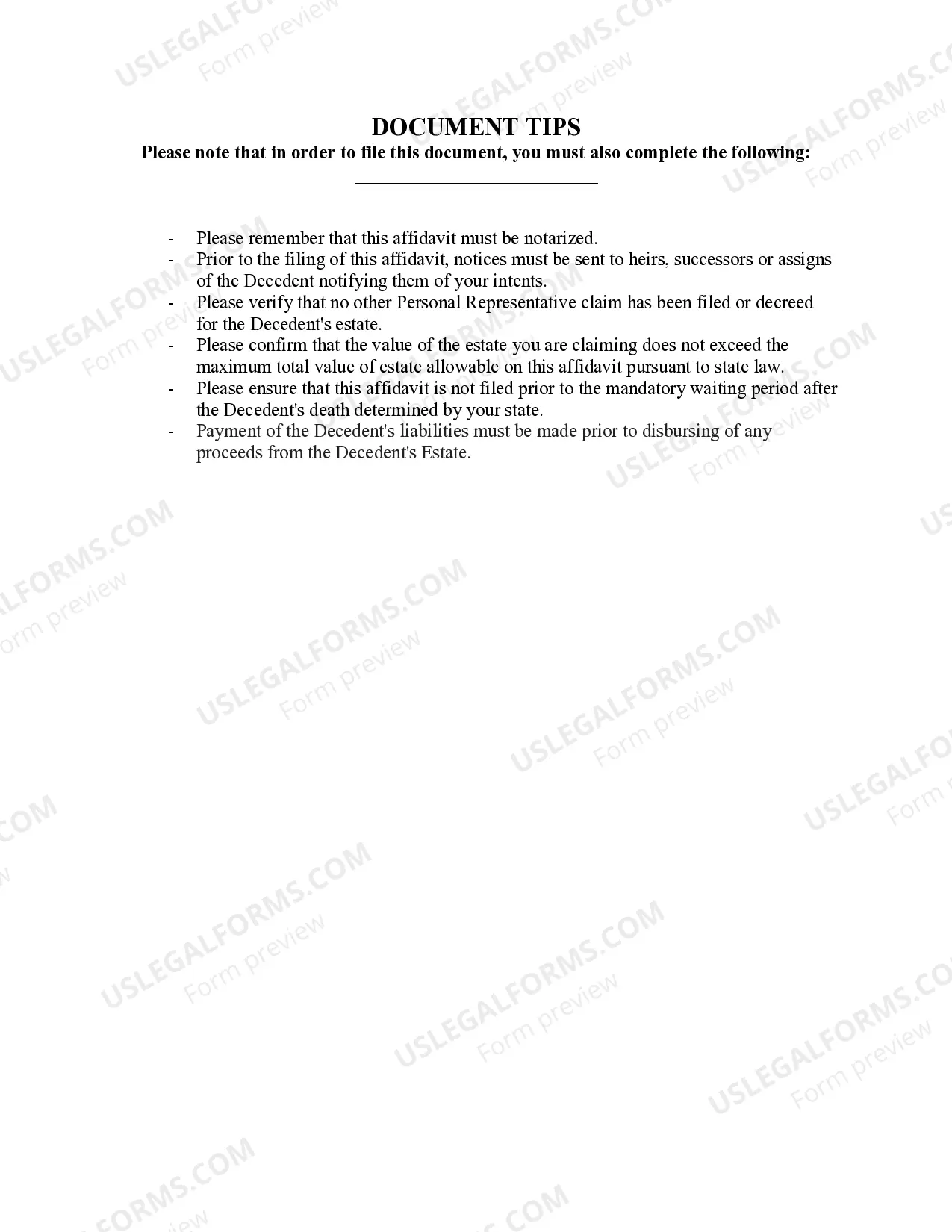
If there are debts, those will need to be settled before the heirs can claim any assets. It’s like cleaning up before you can enjoy the space!
The processing time can vary. Generally, once submitted, it can take a few weeks to a couple of months, but it often depends on the local court's backlog.
While you can do it yourself, having a lawyer can help clarify any tricky parts and ensure everything is done right, so you’re not left scratching your head later.
Filling out a Small Estate Affidavit is pretty straightforward: you'll need to provide basic information about the deceased, the assets, and your relationship to them. Just take your time and make sure everything's accurate.
You can include personal property, bank accounts, and other assets that don't exceed the small estate limit, which can vary by state.
Generally, the person who is specified in the deceased's will or a close relative, like a spouse or child, can use the Small Estate Affidavit to collect assets.
A Small Estate Affidavit is a legal document that allows someone to claim the assets of a deceased person without going through a lengthy probate process, as long as the estate's value is under a certain limit.
Trusted and secure by over 3 million people of the world’s leading companies