Employee Evaluation Form for Pharmacist
What is this form?
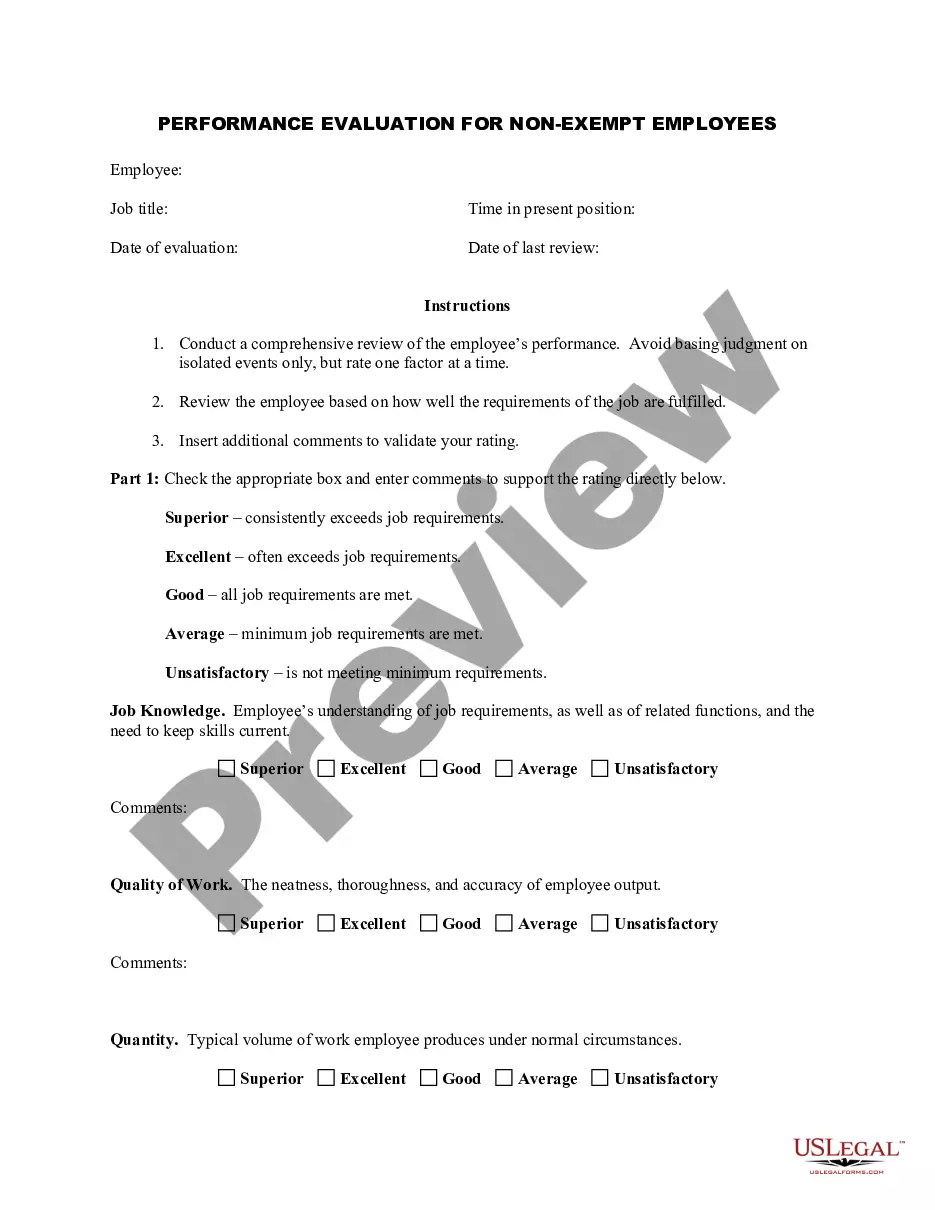
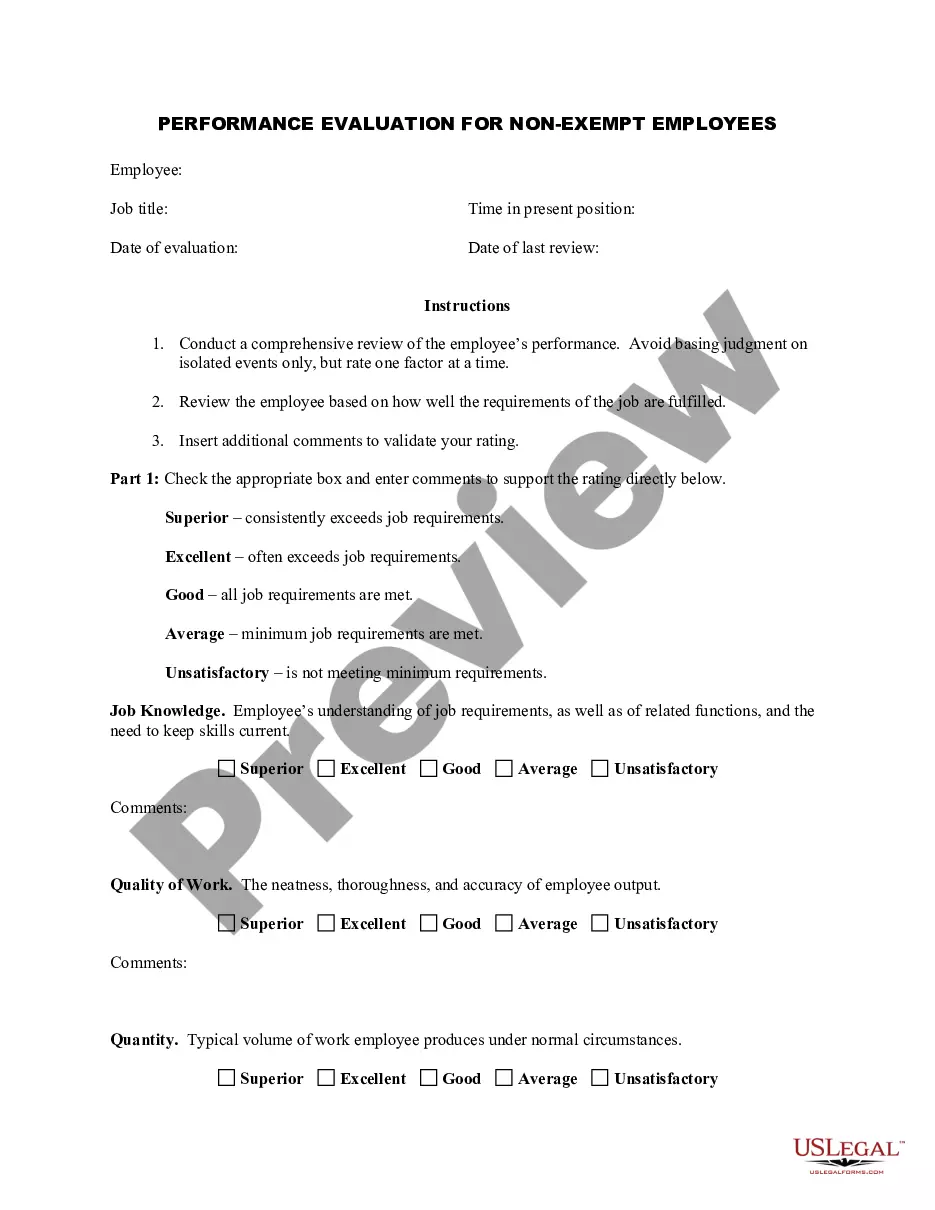
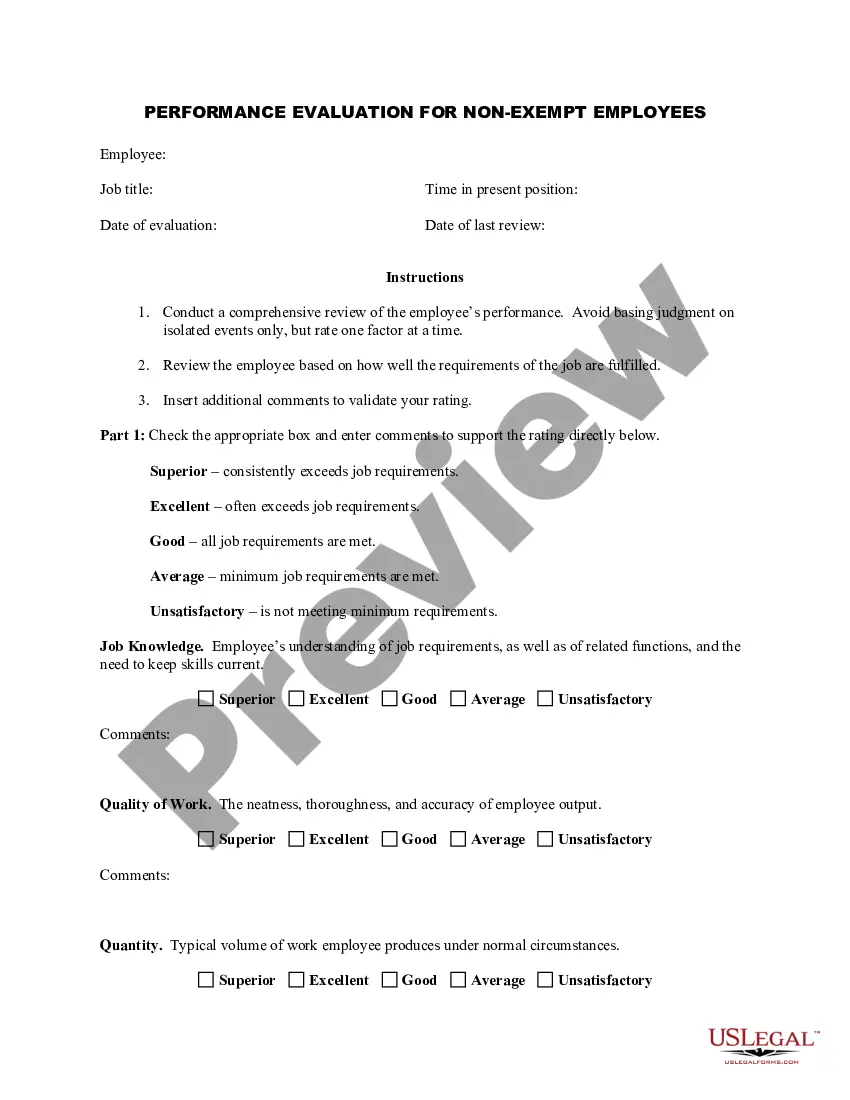
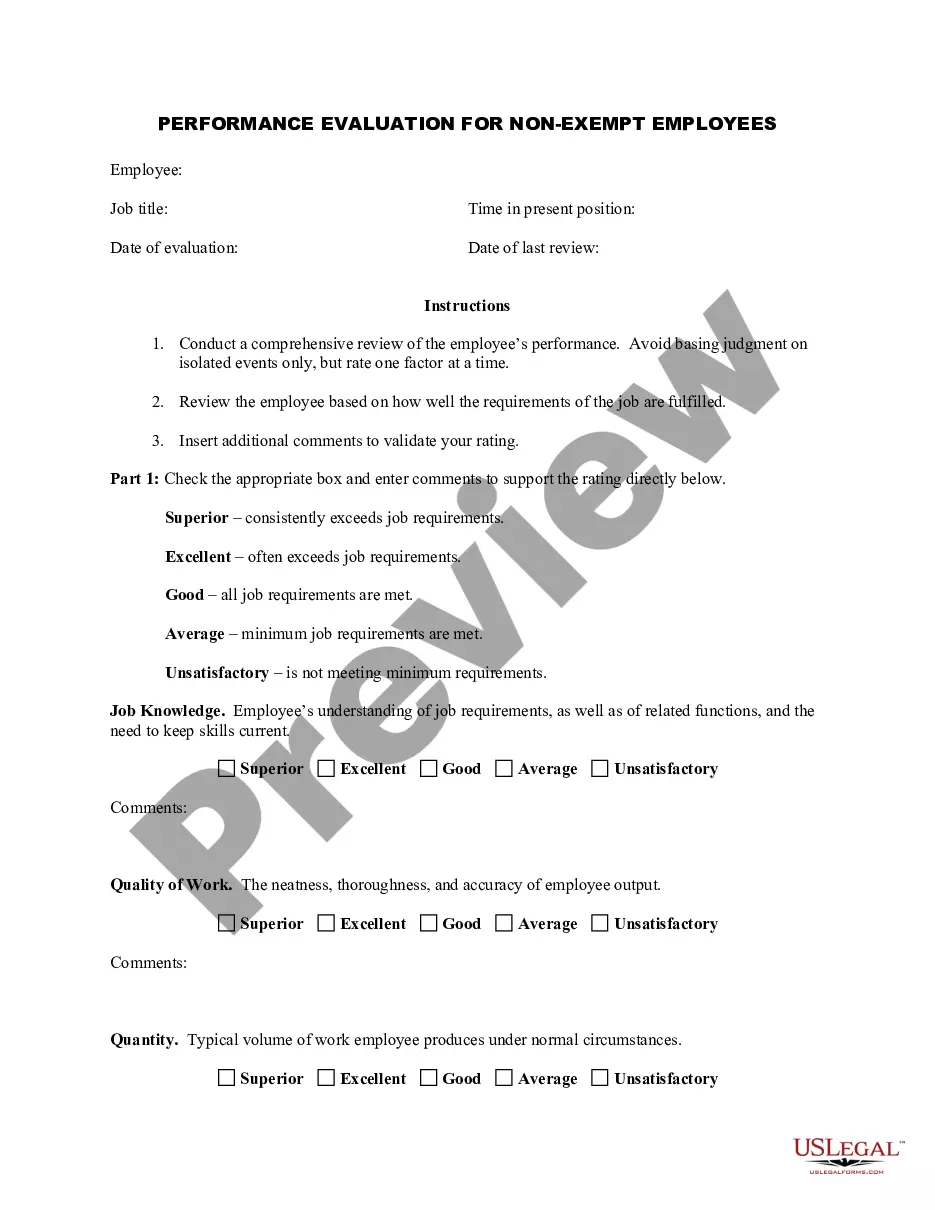
The Employee Evaluation Form for Pharmacists is a structured document used to assess the performance of pharmacy staff based on specific job requirements. This form is essential for systematically reviewing employee effectiveness, identifying areas for improvement, and facilitating meaningful feedback. Unlike general employee performance reviews, this form is tailored specifically for pharmacists, allowing for insights into their unique roles and responsibilities within a healthcare setting.
What’s included in this form
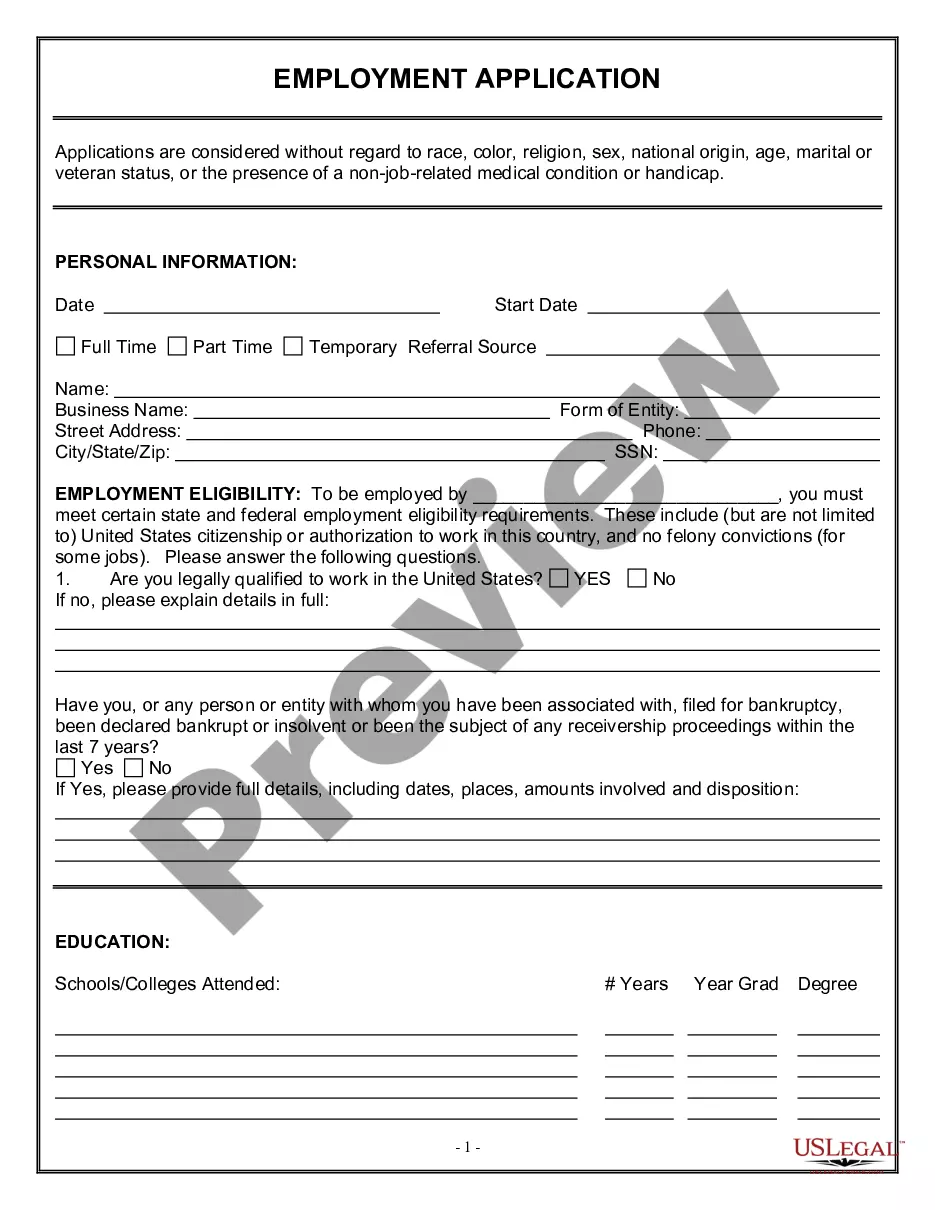
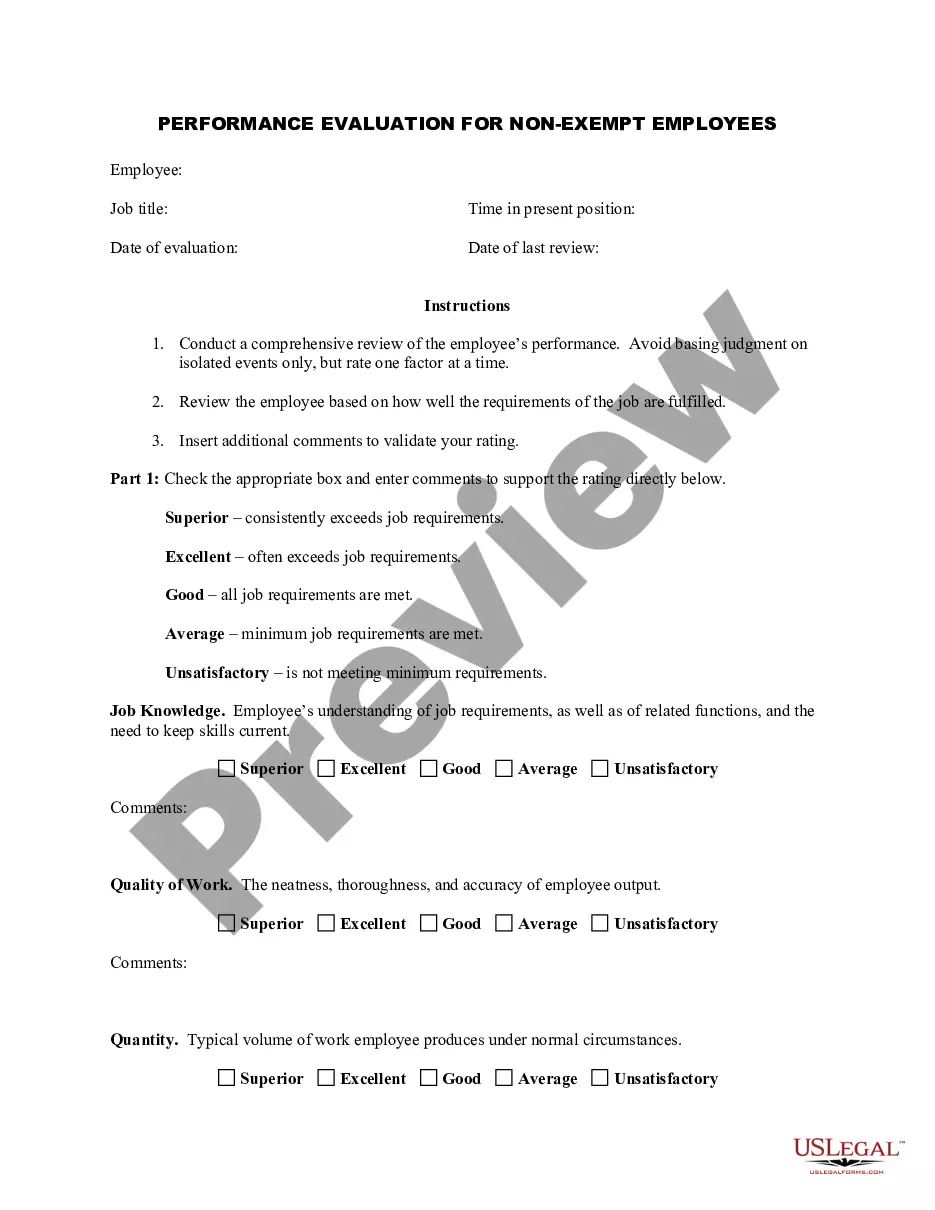
- Employee Information: Details such as name, job title, and evaluation date.
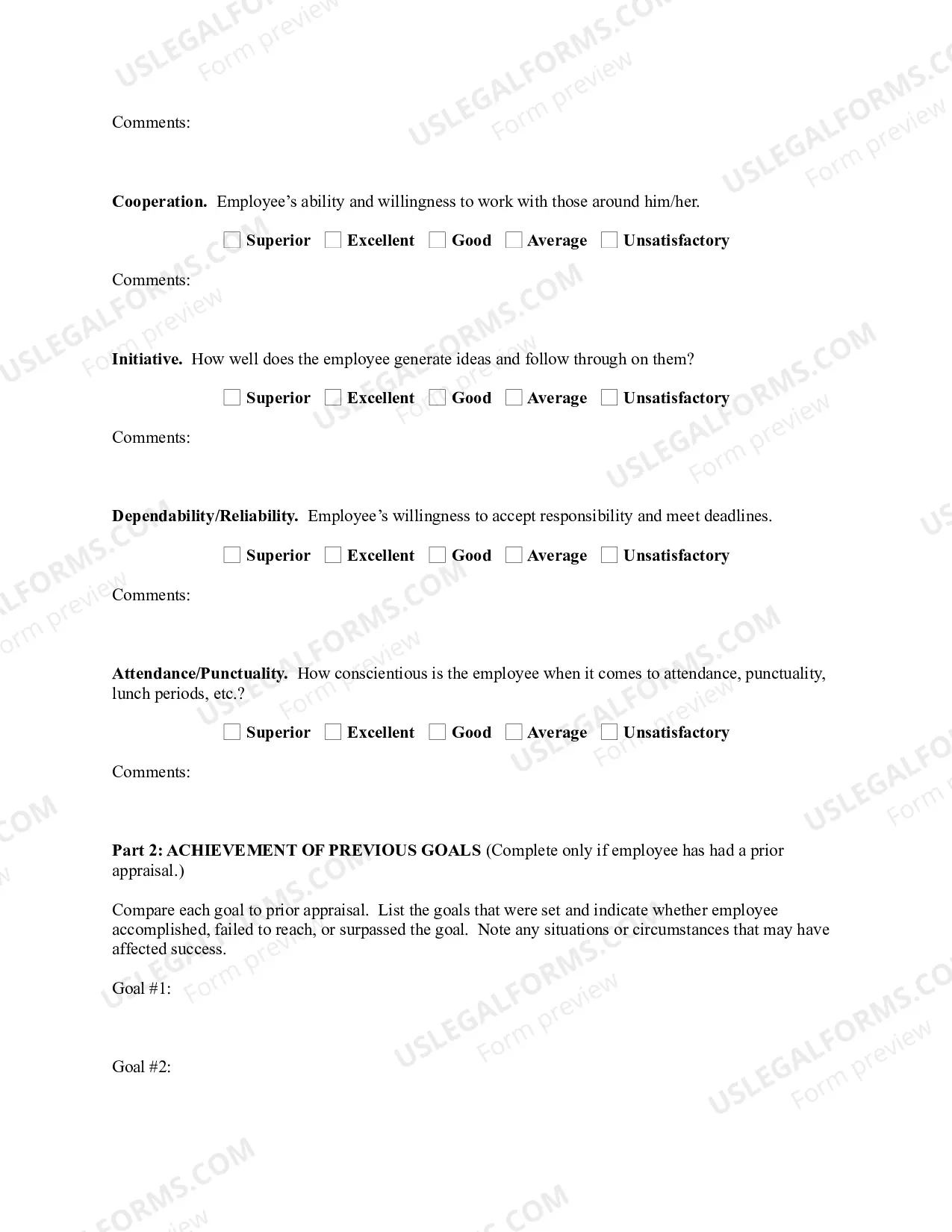
- Performance Ratings: Criteria ranging from superior to unsatisfactory for various job responsibilities.
- Reviewer Comments: Space for evaluators to provide feedback on employee performance.
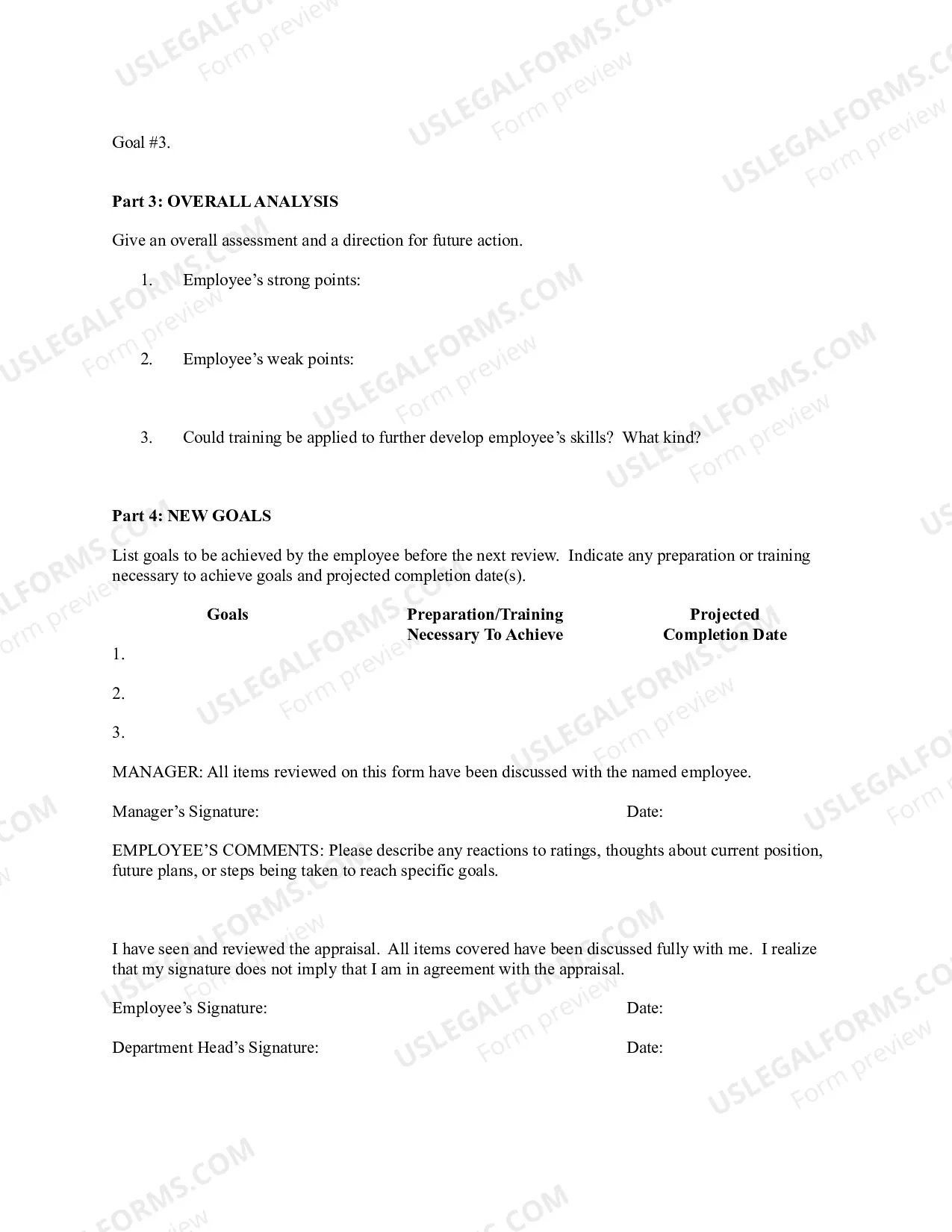
- Goal Assessment: Evaluation of previously set goals and the employee's progress toward them.
- Future Goals: Space to establish new objectives and necessary training for the employee.
- Signatures: Section for both the reviewer and employee to acknowledge the evaluation.
When to use this form
This form should be used during regular performance evaluation periods, such as annual reviews or when transitioning into new roles. It is particularly useful when addressing performance, setting new goals, and fostering development discussions in pharmacy settings.
Who should use this form
- Pharmacy Managers: For evaluating the performance of their pharmacy staff.
- Human Resources Personnel: To maintain records of employee evaluations.
- Pharmacists: To understand their performance and areas for improvement.
How to prepare this document
- Fill out the employee information section, including the employee's name and position.
- Evaluate the employee's performance in various areas such as job knowledge, quality of work, and initiative.
- Provide comments supporting each performance rating to clarify the evaluation.
- Discuss and record goals achieved since the last review, noting any influences on the outcomes.
- Set new goals and identify any training needed for the employeeâs development.
- Secure signatures from both the evaluator and employee to acknowledge the review.
Notarization guidance
This form does not typically require notarization unless specified by local law. It is important for pharmacy managers to verify any specific state requirements that may necessitate notarized evaluations.
Get your form ready online
Our built-in tools help you complete, sign, share, and store your documents in one place.
Make edits, fill in missing information, and update formatting in US Legal Forms—just like you would in MS Word.
Download a copy, print it, send it by email, or mail it via USPS—whatever works best for your next step.
Sign and collect signatures with our SignNow integration. Send to multiple recipients, set reminders, and more. Go Premium to unlock E-Sign.
If this form requires notarization, complete it online through a secure video call—no need to meet a notary in person or wait for an appointment.
We protect your documents and personal data by following strict security and privacy standards.

Make edits, fill in missing information, and update formatting in US Legal Forms—just like you would in MS Word.

Download a copy, print it, send it by email, or mail it via USPS—whatever works best for your next step.

Sign and collect signatures with our SignNow integration. Send to multiple recipients, set reminders, and more. Go Premium to unlock E-Sign.

If this form requires notarization, complete it online through a secure video call—no need to meet a notary in person or wait for an appointment.

We protect your documents and personal data by following strict security and privacy standards.
Avoid these common issues
- Failing to provide specific examples when giving ratings.
- Not including measurable goals in the evaluation.
- Using ambiguous language that may lead to misinterpretation of feedback.
- Neglecting to document discussions held with the employee regarding their performance.
Benefits of using this form online
- Convenient: Easy online access allows for quick completion and distribution.
- Editable: Users can customize the form to meet specific pharmacy needs.
- Reliable: Created by licensed attorneys, ensuring legal compliance.
- The use of a structured evaluation form helps ensure compliance with employment laws.
- Documentation provided can serve as a defense in case of disputes related to employment decisions.
- Clear evaluation criteria support fair and consistent performance assessments across comparable roles.
Looking for another form?
Form popularity
FAQ
Be clear about what is being evaluated; Engage stakeholders; Understand the resources available for evaluation; Design the evaluation to address the questions that you would like answering; Develop an evaluation plan when designing the service;
Medication-use evaluation (MUE) is a performance improve- ment method that focuses on evaluating and improving medi- cation-use processes with the goal of optimal patient outcomes.
Communication. Collaboration and teamwork. Problem-solving. Quality and accuracy of work. Attendance, punctuality and reliability. The ability to accomplish goals and meet deadlines.
Be proud. One major goal of the self-evaluation is to highlight your accomplishments and recollect milestones in your professional development. Be honest and critical. Continuously strive for growth. Track your accomplishments. Be professional.
Evaluation is an essential part of improving the quality of healthcare and understanding whether the services being provided are delivering what they set out to deliver. .
Develop an evaluation form. Identify performance measures. Set guidelines for feedback. Create disciplinary and termination procedures. Set an evaluation schedule.
Gather information. List employee responsibilities. Use objective language. Use action verbs. Compare performance ratings. Ask open-ended questions.
The pharmacist is checking to be sure that that a prescription is appropriate for an individual based on indications, interactions, dose, duplication and quantity. It also could mean that the pharmacist is checking on the legitimacy of the prescription to be sure that it is not a forgery.
A comprehensive medication review (CMR) is an encounter conducted face-to-face or via telephone between a patient and their pharmacist. The pharmacist collects patient-specific information to identify medication-related issues and creates a plan to resolve them, alongside the patient and/or prescriber.