Employee Evaluation Form for Nurse
About this form
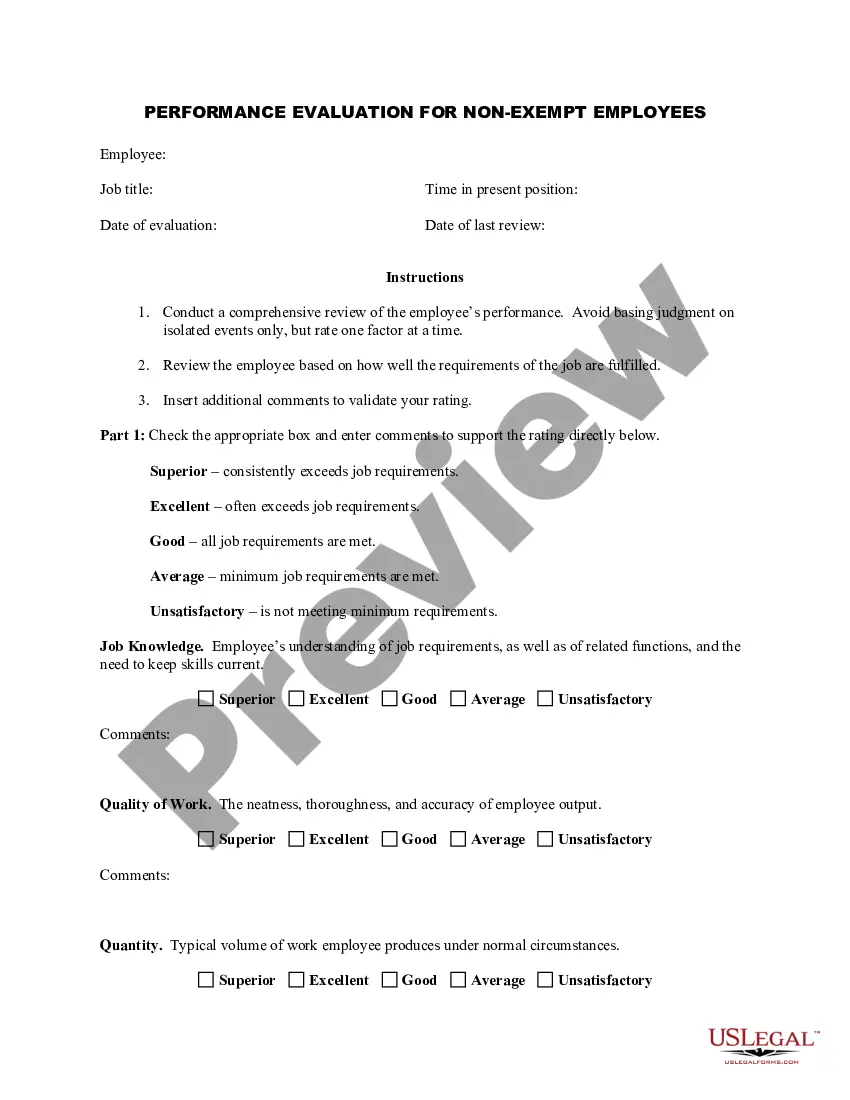
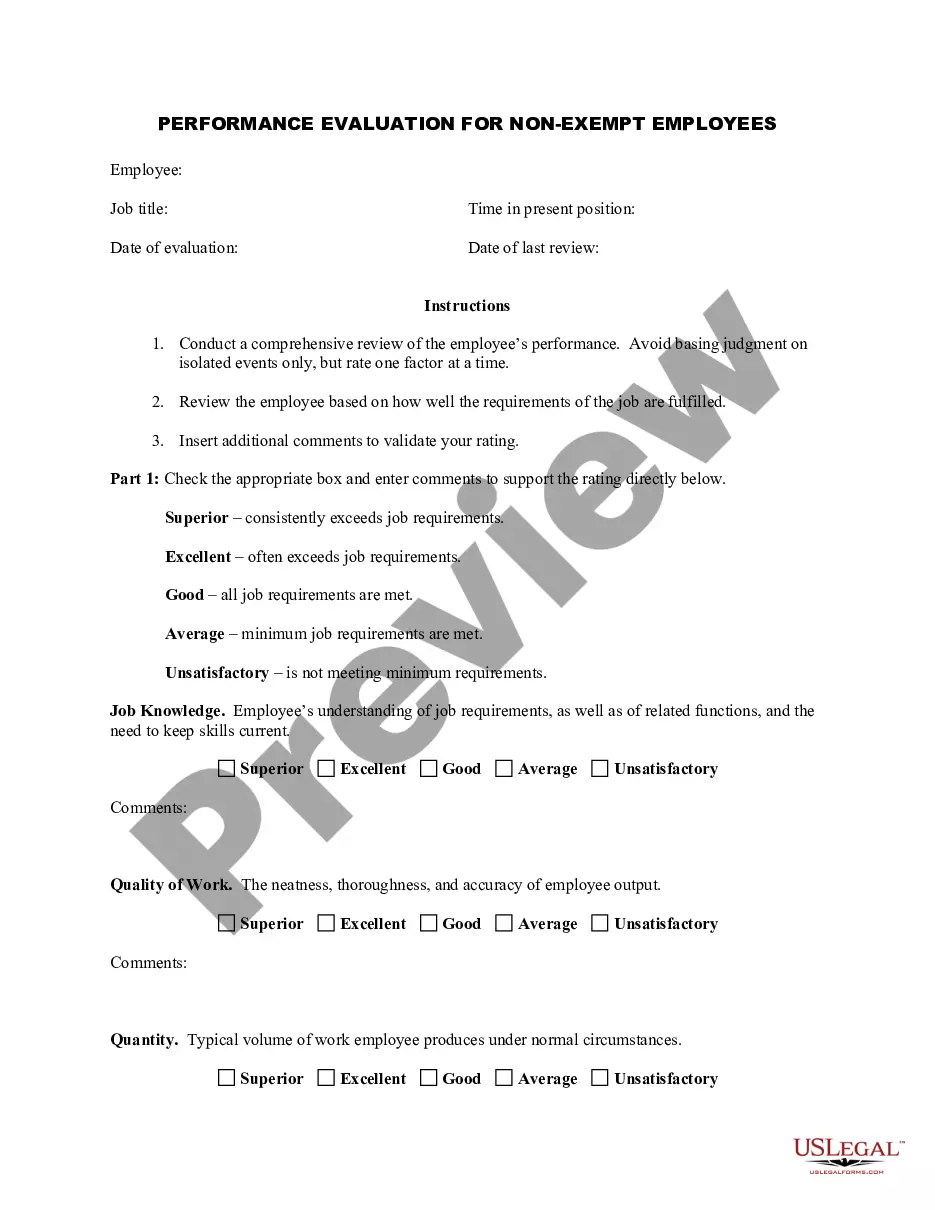
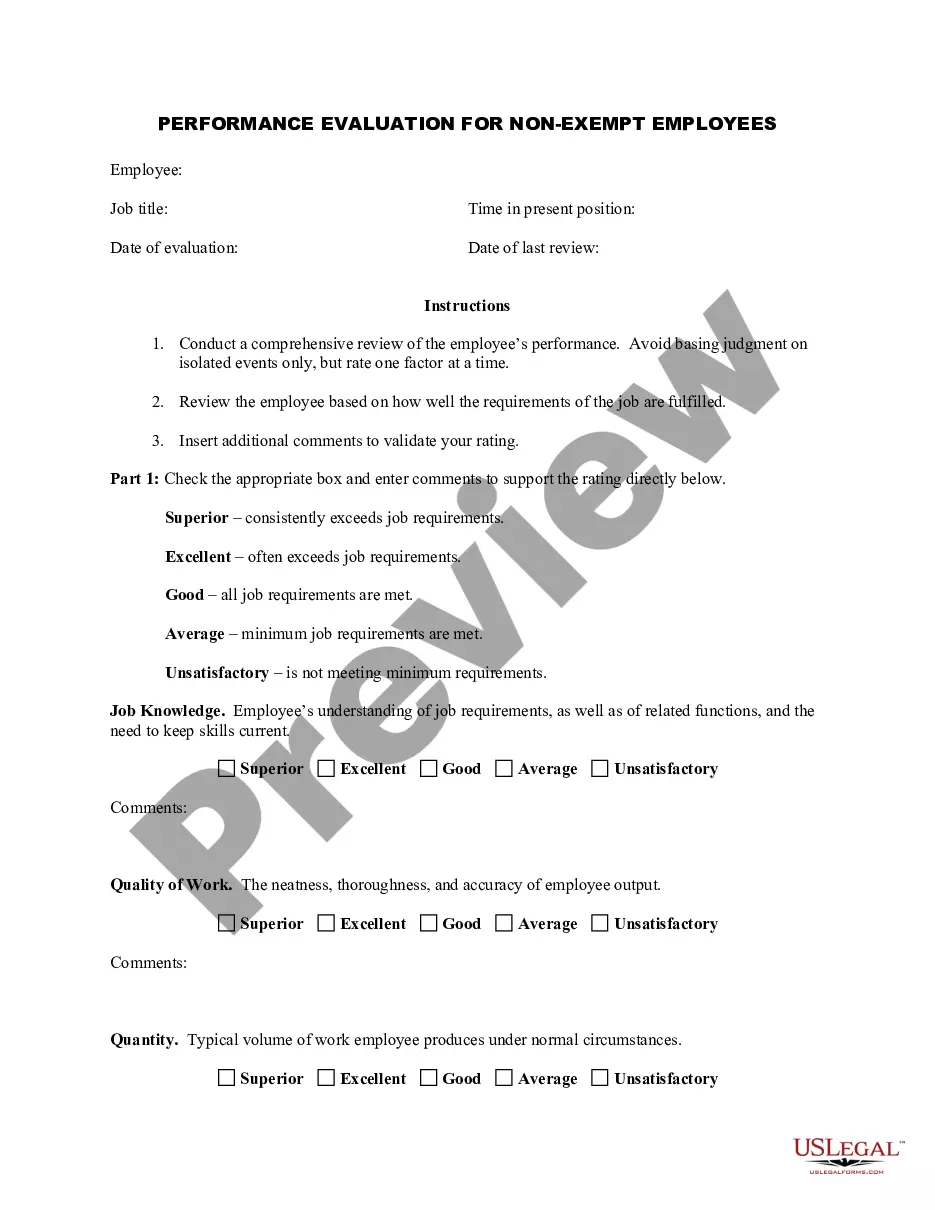
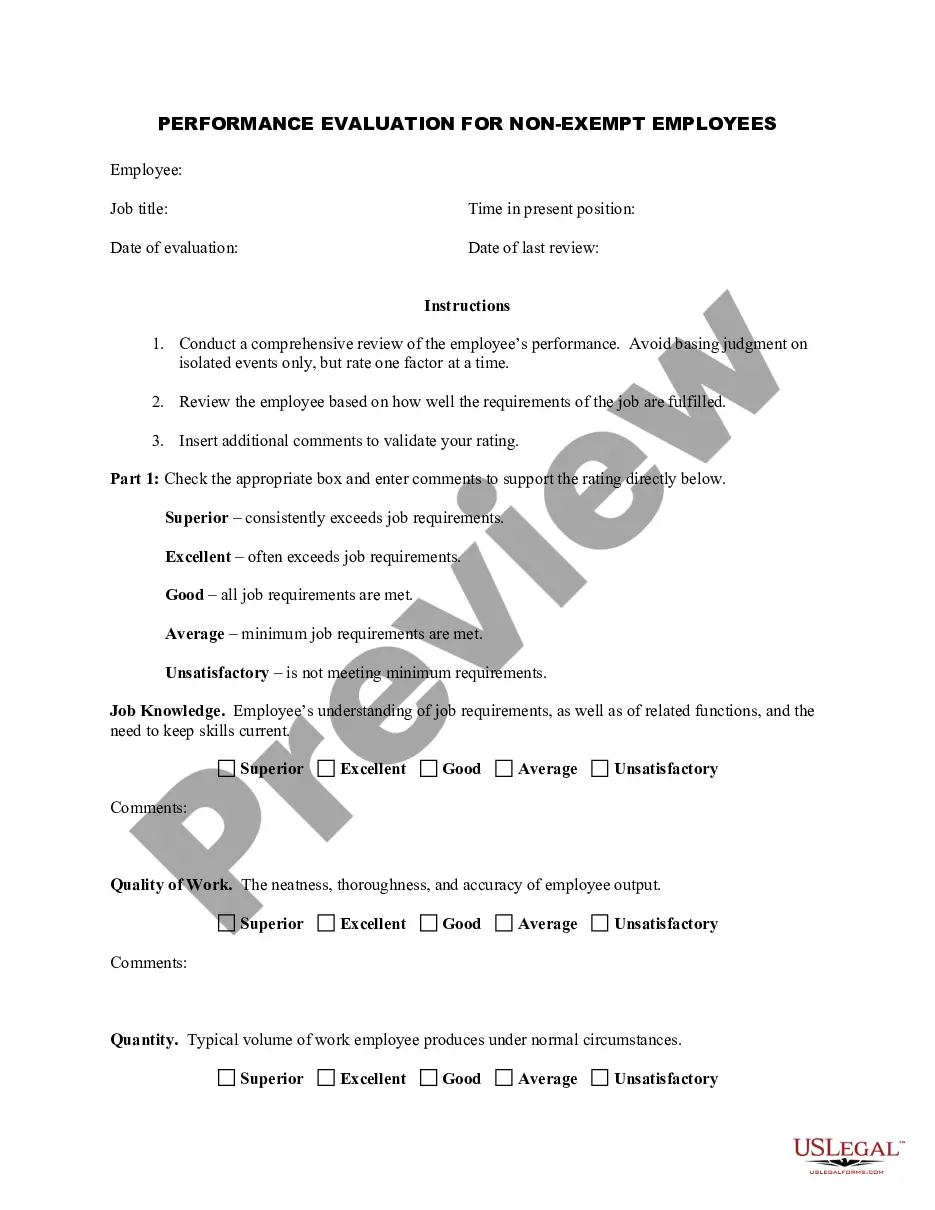
The Employee Evaluation Form for Nurse is a specialized document used to assess the performance of nurses in non-exempt positions. This form helps employers evaluate how well nurses are fulfilling their job requirements, providing an organized method to gather feedback and insights on their performance. Unlike general employee evaluations, this form incorporates specific aspects relevant to nursing, ensuring that all evaluation criteria align with industry standards and practices.
Form components explained
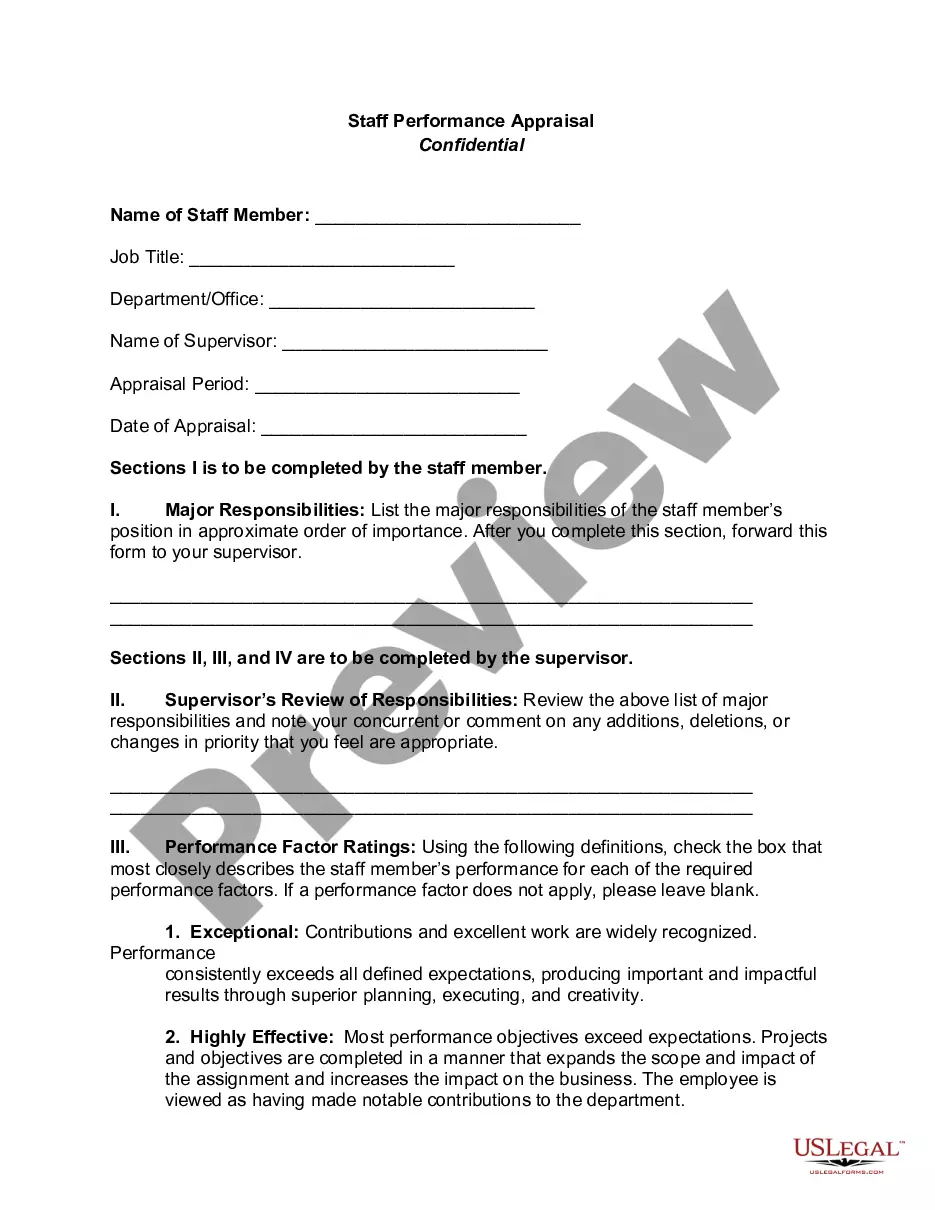
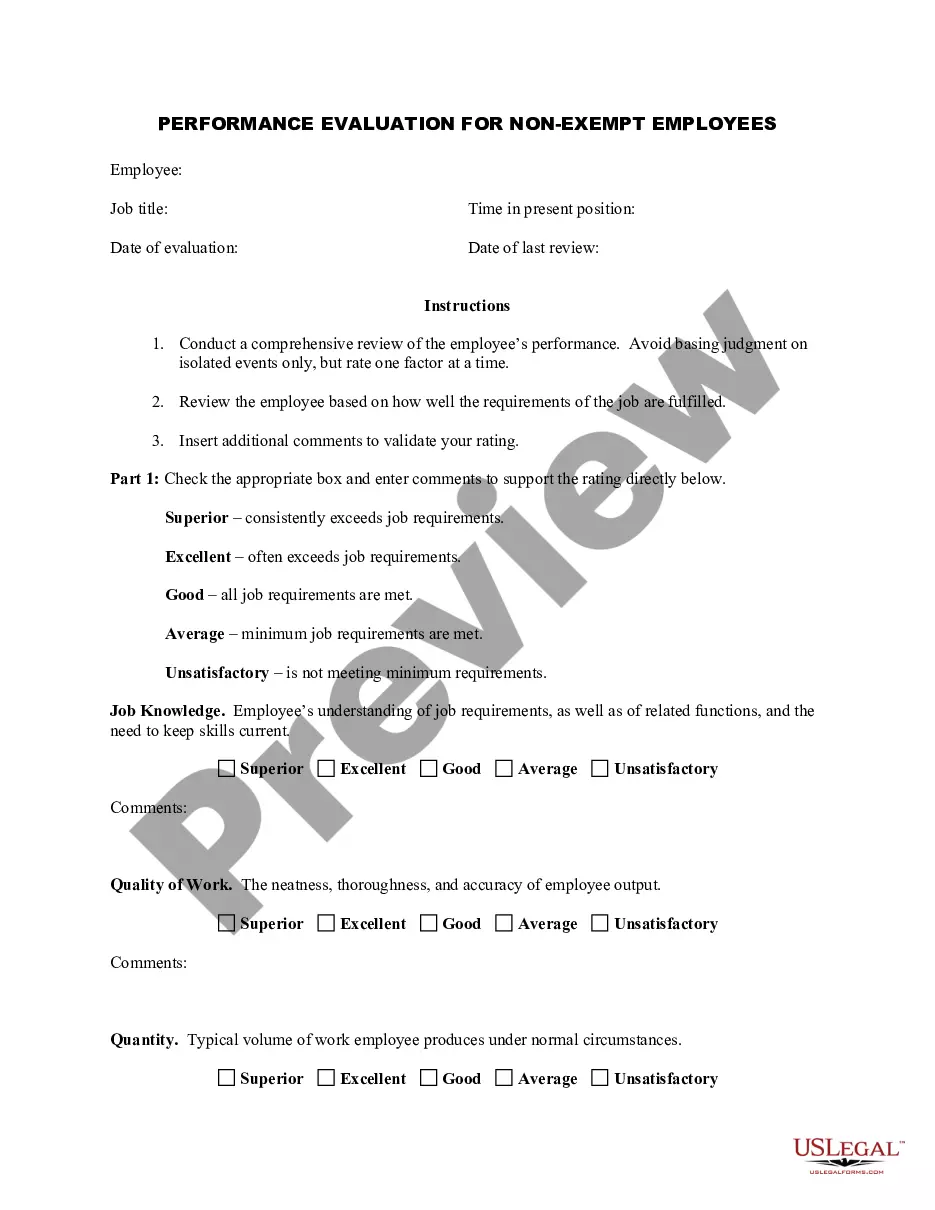
- Employee and evaluator information: includes names, titles, and dates of evaluation.
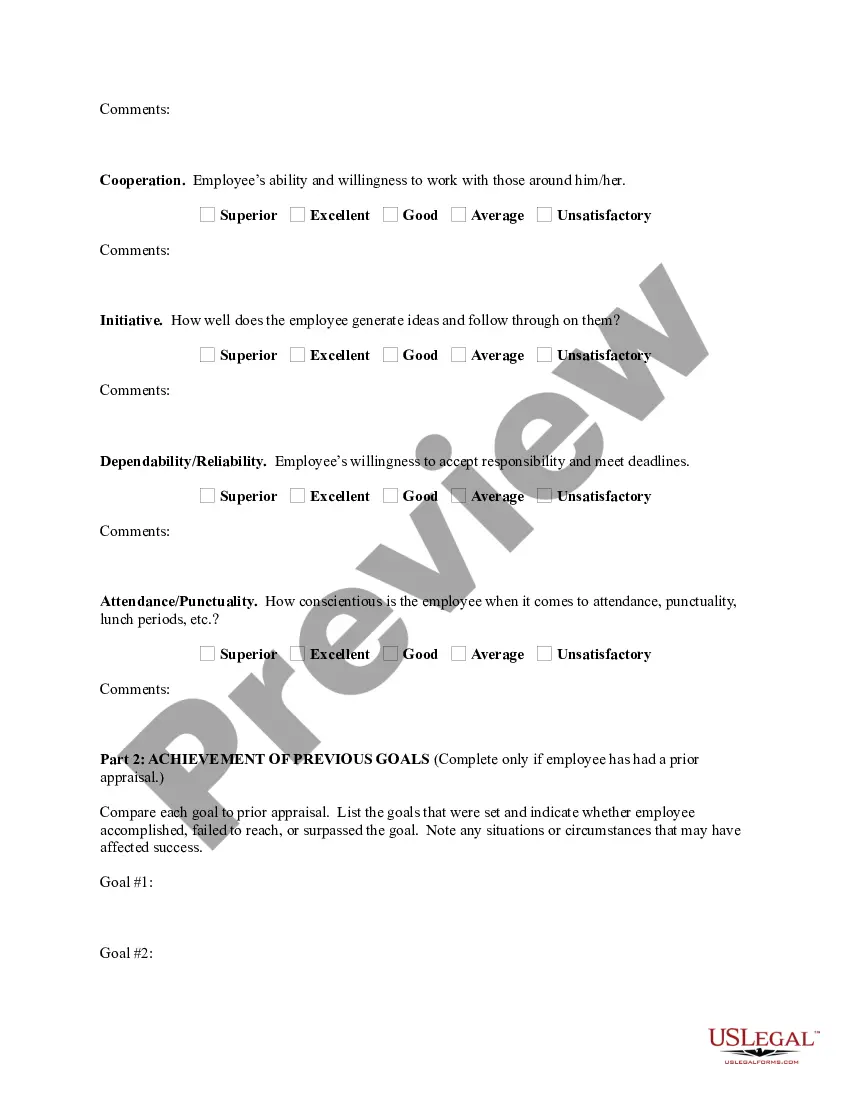
- Job performance categories: sections for assessing job knowledge, quality and quantity of work, cooperation, initiative, dependability, and attendance.
- Rating scales: options to evaluate performance on a scale ranging from superior to unsatisfactory.
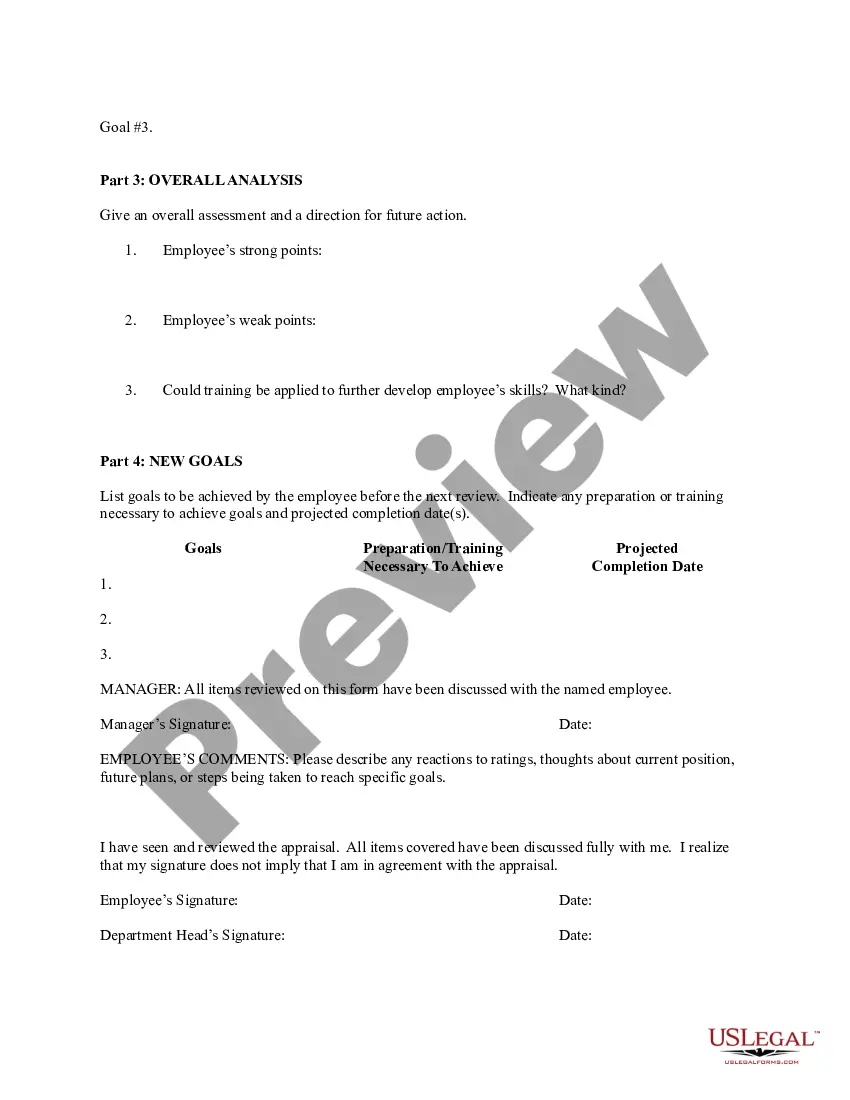
- Goal achievement summary: space for assessing prior goals and objectives set in previous evaluations.
- Overall analysis: a section to summarize strengths, weaknesses, and future development areas.
- Signatures: areas for both employee and evaluator signatures confirming completion and understanding of the evaluation.
Common use cases
This form should be used during periodic performance reviews of nursing staff to ensure consistent evaluation of their job performance. It is especially useful when assessing employee readiness for promotions or identifying areas where further training may be beneficial. Additionally, the form can serve as documentation for performance improvement plans if needed.
Intended users of this form
This form is intended for:
- Healthcare managers or supervisors responsible for evaluating nursing staff.
- Nurses undergoing performance evaluations, helping them understand their strengths and areas for improvement.
- HR professionals involved in performance management within healthcare facilities.
Instructions for completing this form
To complete the Employee Evaluation Form for Nurse, follow these steps:
- Enter the employee's name, job title, and the date of evaluation.
- Provide a detailed assessment for each performance category using the designated rating scale.
- Add comments to justify the ratings given, highlighting specific examples of performance.
- Summarize previous goals and indicate whether they were achieved or not.
- Complete the overall analysis section, outlining key strengths and opportunities for development.
- Ensure both the evaluator and the employee sign and date the form to acknowledge the evaluation.
Is notarization required?
This form does not typically require notarization unless specified by local law. It is designed to be straightforward and user-friendly for both evaluators and employees, ensuring a smooth evaluation process.
Get your form ready online
Our built-in tools help you complete, sign, share, and store your documents in one place.
Make edits, fill in missing information, and update formatting in US Legal Forms—just like you would in MS Word.
Download a copy, print it, send it by email, or mail it via USPS—whatever works best for your next step.
Sign and collect signatures with our SignNow integration. Send to multiple recipients, set reminders, and more. Go Premium to unlock E-Sign.
If this form requires notarization, complete it online through a secure video call—no need to meet a notary in person or wait for an appointment.
We protect your documents and personal data by following strict security and privacy standards.

Make edits, fill in missing information, and update formatting in US Legal Forms—just like you would in MS Word.

Download a copy, print it, send it by email, or mail it via USPS—whatever works best for your next step.

Sign and collect signatures with our SignNow integration. Send to multiple recipients, set reminders, and more. Go Premium to unlock E-Sign.

If this form requires notarization, complete it online through a secure video call—no need to meet a notary in person or wait for an appointment.

We protect your documents and personal data by following strict security and privacy standards.
Common mistakes
- Failing to provide specific examples to support ratings, which can lead to misunderstandings.
- Using vague language instead of clear, constructive feedback.
- Not reviewing performance in relation to set goals, which diminishes the purpose of evaluation.
- Neglecting to discuss the evaluation with the employee, resulting in a lack of clarity and engagement.
- Rushing through the evaluation and missing important details.
Why use this form online
- Convenient online access allows for easy distribution and completion of forms.
- Editability supports customization to meet specific organizational needs.
- Reliable templates drafted by licensed attorneys ensure compliance with legal standards.
Key takeaways
- The Employee Evaluation Form for Nurse is essential for assessing nursing performance regularly.
- Clear criteria and structured feedback help identify strengths and areas needing improvement.
- Involving employees in the evaluation process fosters transparency and professional growth.
Looking for another form?






Form popularity
FAQ
Reflect on feedback. Make a list of your top accomplishments and identify areas for improvements. Gather analytics to show impact. Make a commitment to improve. Set a SMART goal for yourself. Create a plan of action. Communication. Job Performance.
Communication. Collaboration and teamwork. Problem-solving. Quality and accuracy of work. Attendance, punctuality and reliability. The ability to accomplish goals and meet deadlines.
Reflect on feedback. Make a list of your top accomplishments and identify areas for improvements. Gather analytics to show impact. Make a commitment to improve. Set a SMART goal for yourself. Create a plan of action. Communication. Job Performance.
Your best attributes. Hard evidence. Your extra job duties. Career goals. The progress you've made.
Be proud. One major goal of the self-evaluation is to highlight your accomplishments and recollect milestones in your professional development. Be honest and critical. Continuously strive for growth. Track your accomplishments. Be professional.
Gather information. List employee responsibilities. Use objective language. Use action verbs. Compare performance ratings. Ask open-ended questions.
"Evaluation eliminates unnecessary paperwork and care planning." The purpose of evaluation is to determine the effectiveness of nursing care. The other options are not true statements. During evaluation, you do not simply determine whether nursing interventions were completed.
Ask a clinical question. Obtain the best research literature. Critically appraise the evidence. Integrate the evidence with clinical expertise, patient preferences. Evaluate the outcomes of the decision.
Evaluation, the final step of the nursing process, is crucial to determine whether, after application of the nursing process, the client's condition or well-being improves.The nurse conducts evaluation measures to determine if expected outcomes are met, not the nursing interventions.