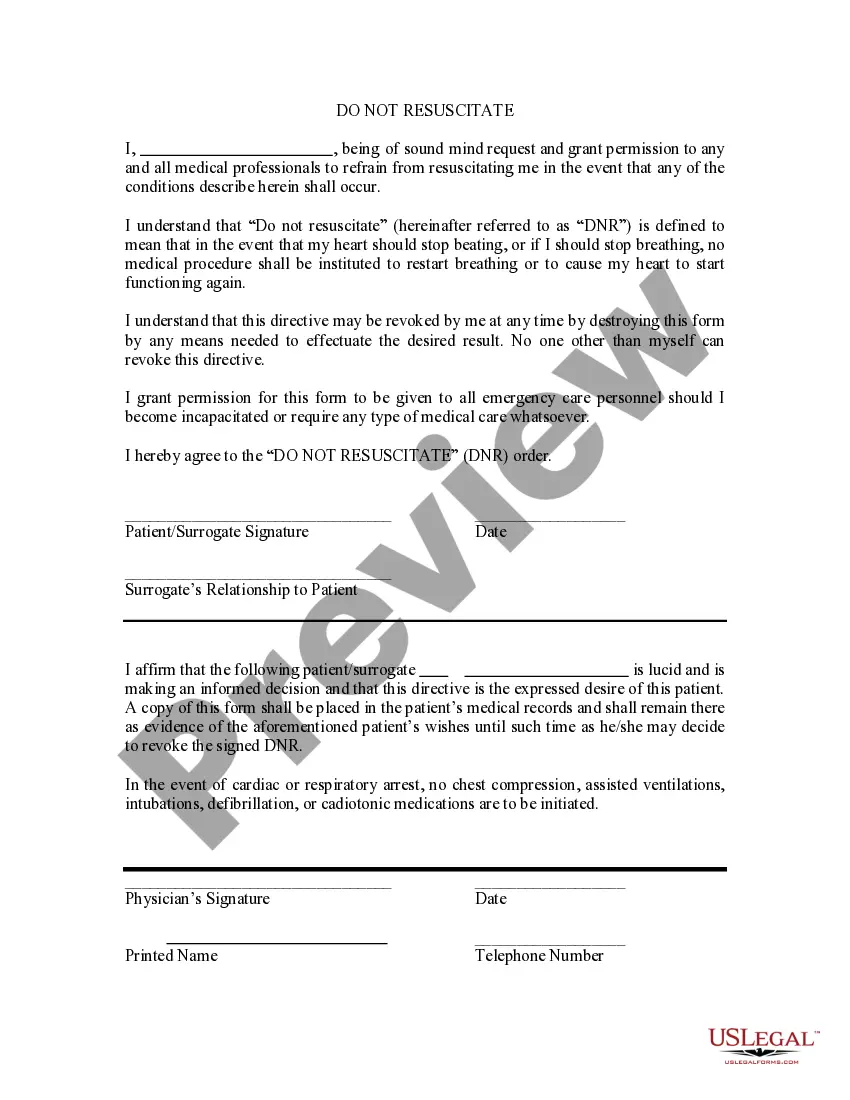
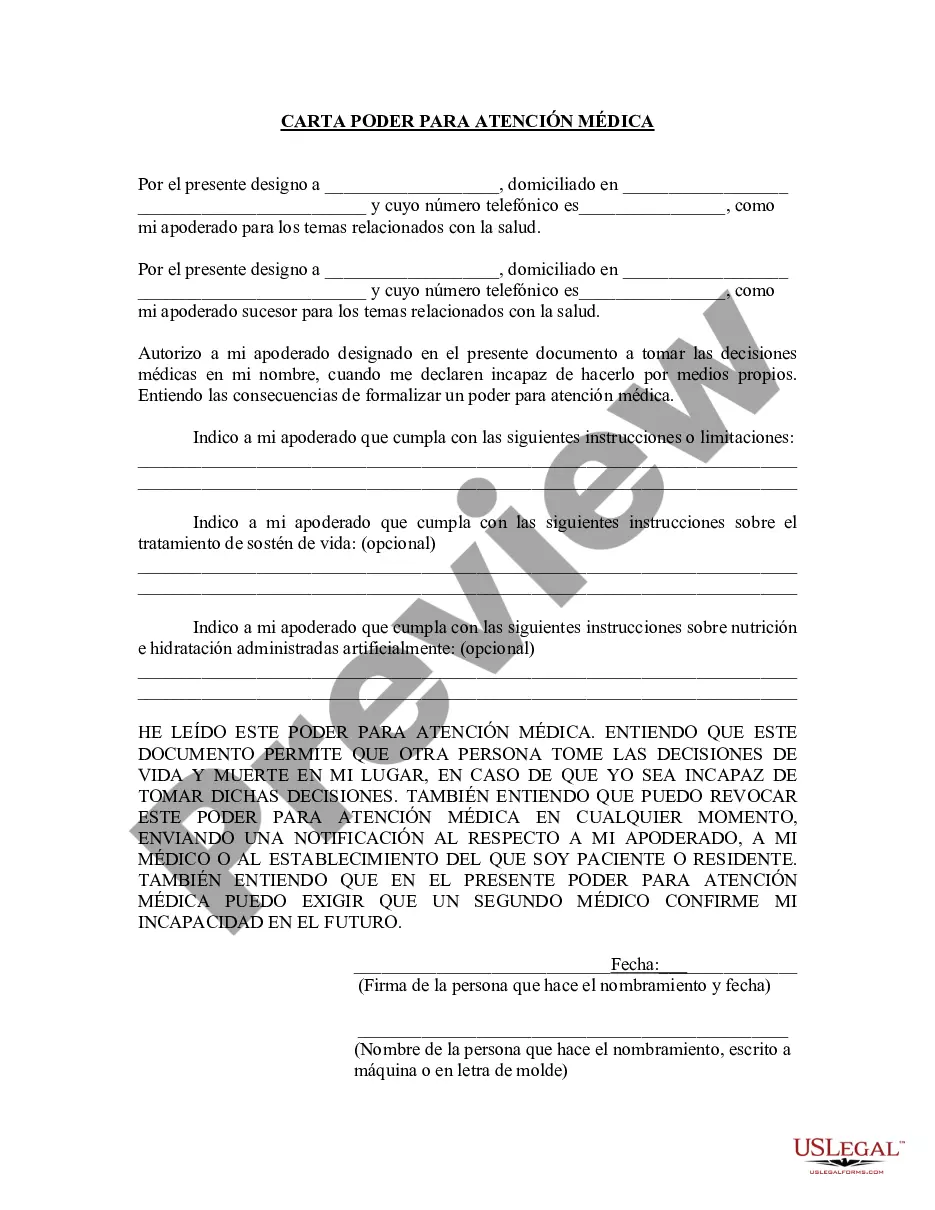
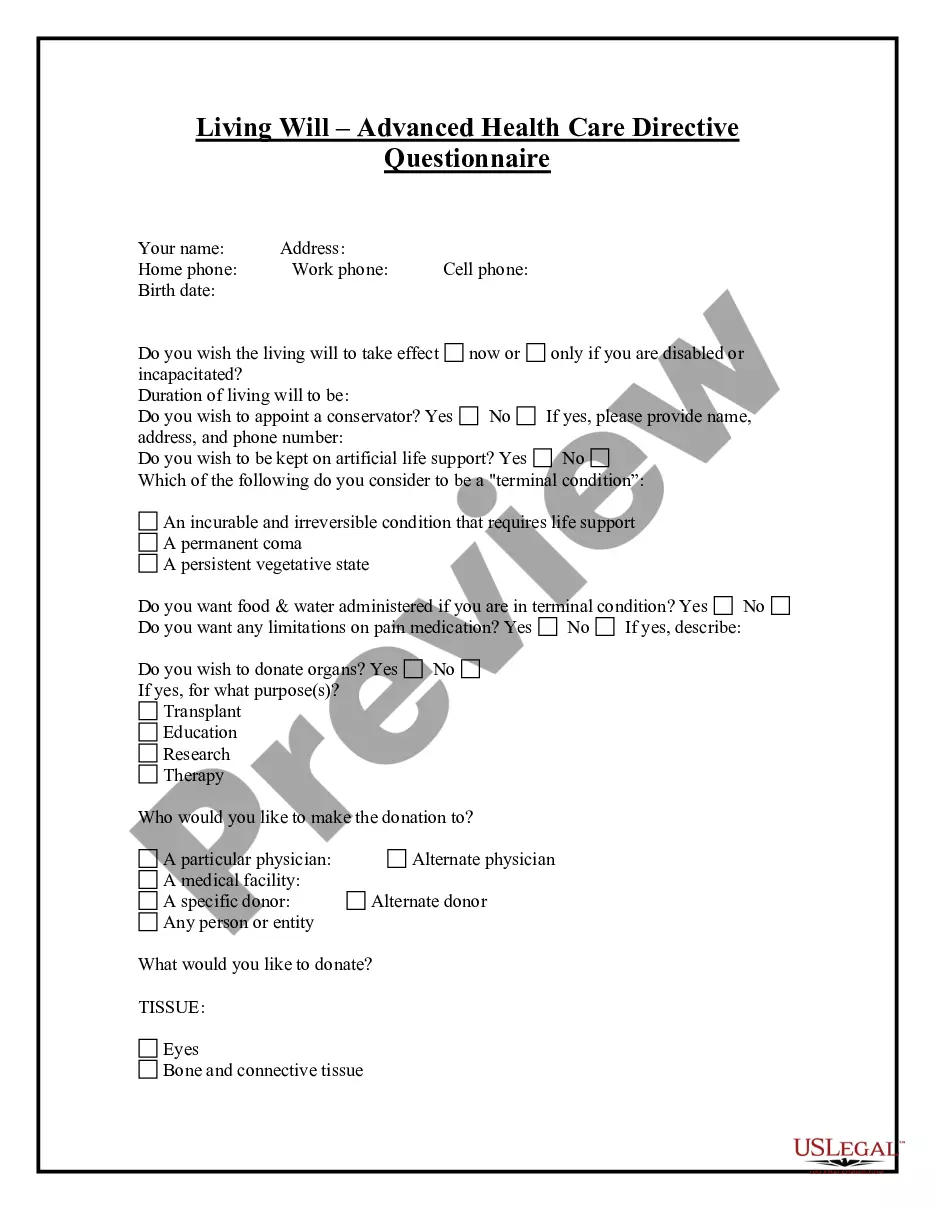
This is a form initiated by a patient requesting that he/she not be resuscitated should he/she stop breathing or should his/her heart stop beating. This form is also to be signed by a physician attesting to patient's wishes and to be placed in the patient's file.
A DNR is specifically about not resuscitating you if your heart stops, while a living will covers a broader range of end-of-life decisions regarding medical treatments.
Without a DNR request, emergency medical staff will typically attempt to resuscitate you if something goes wrong. It's important to communicate your wishes clearly.
Absolutely! You're in the driver's seat. You can change or cancel your DNR request whenever you want. Just make sure to inform your healthcare providers.
Not at all! You don’t need a lawyer; just talk to your doctor, and they'll help you fill out the necessary paperwork.
You can get a DNR order from your doctor or a local hospital. They'll guide you through the process, ensuring all the boxes are checked.
Typically, the patient themselves can make a DNR request if they are of sound mind. If they can't, a legal guardian or health care proxy can step in.
A DNR request is a legal order that tells medical staff not to perform CPR or revive someone if their heart stops or they stop breathing.