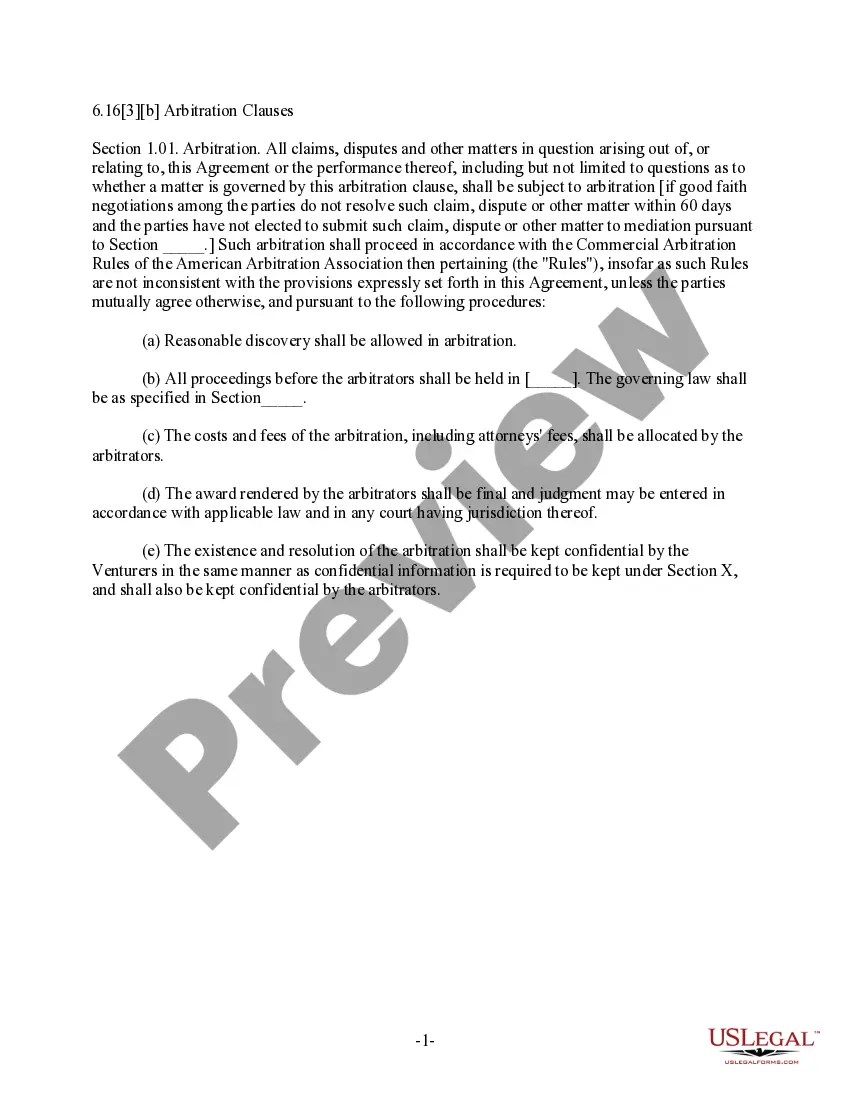
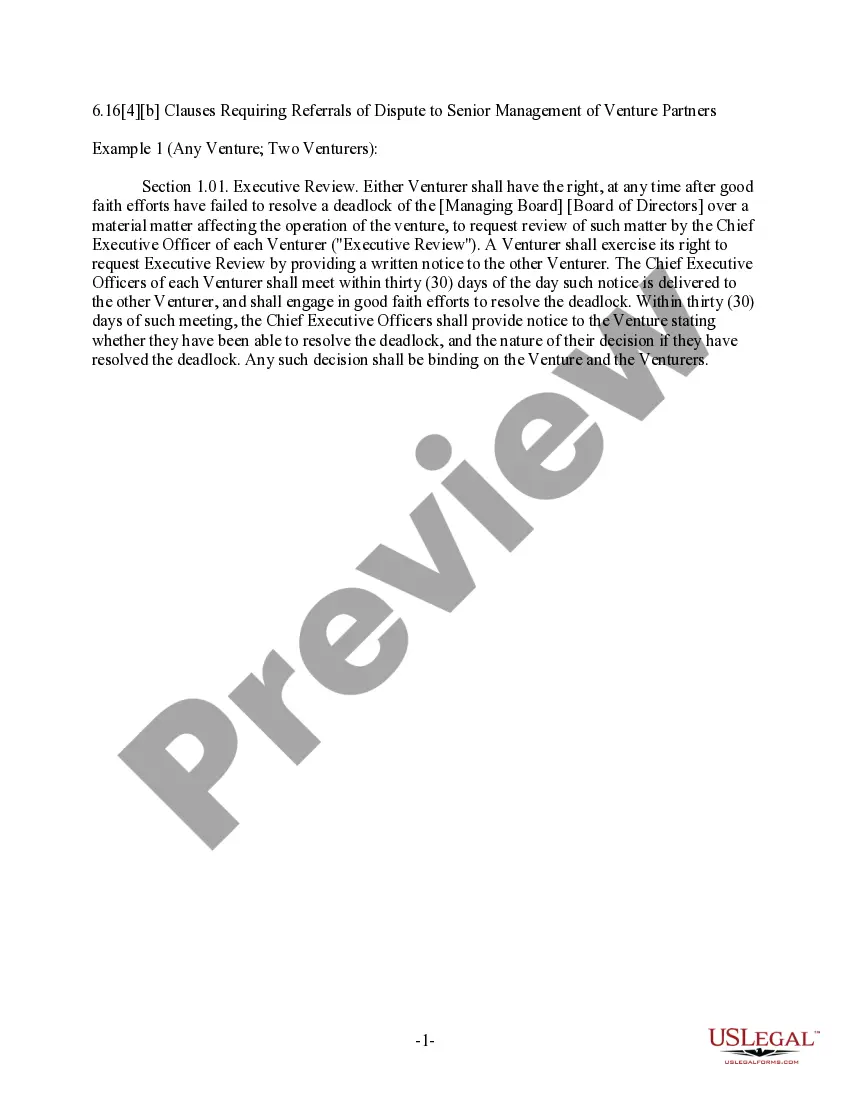
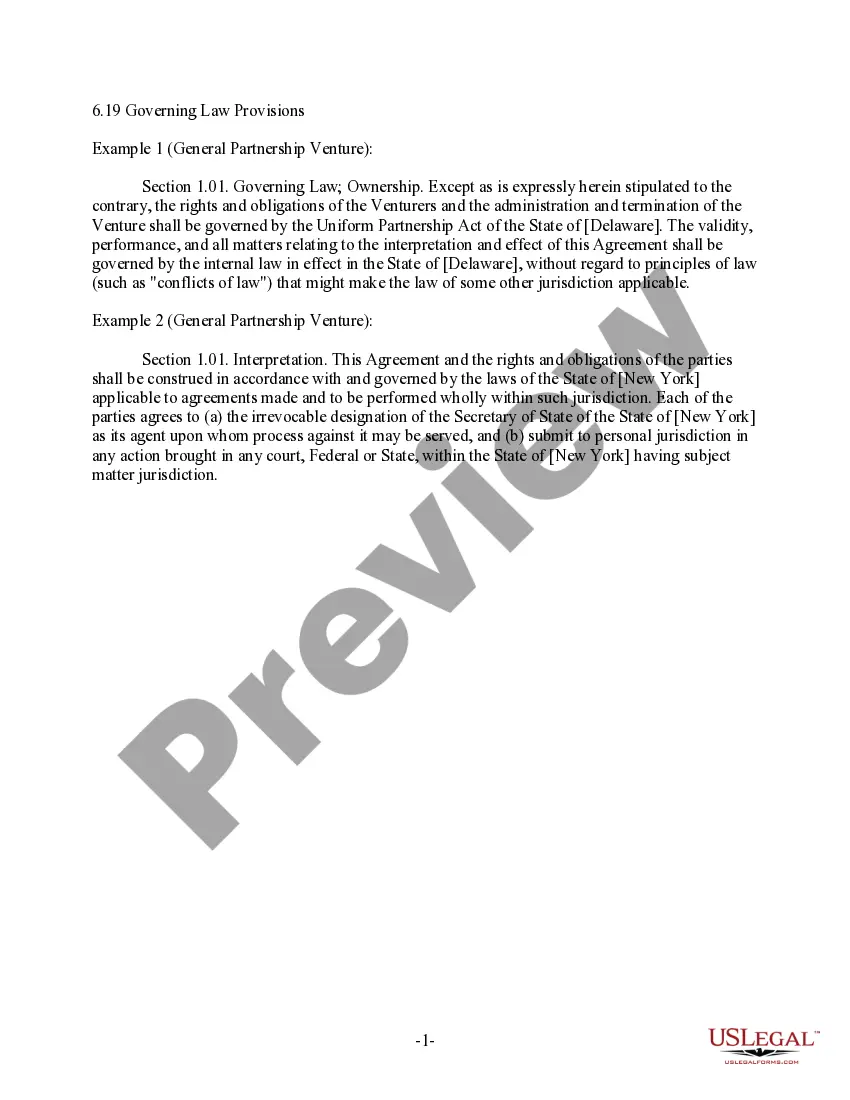
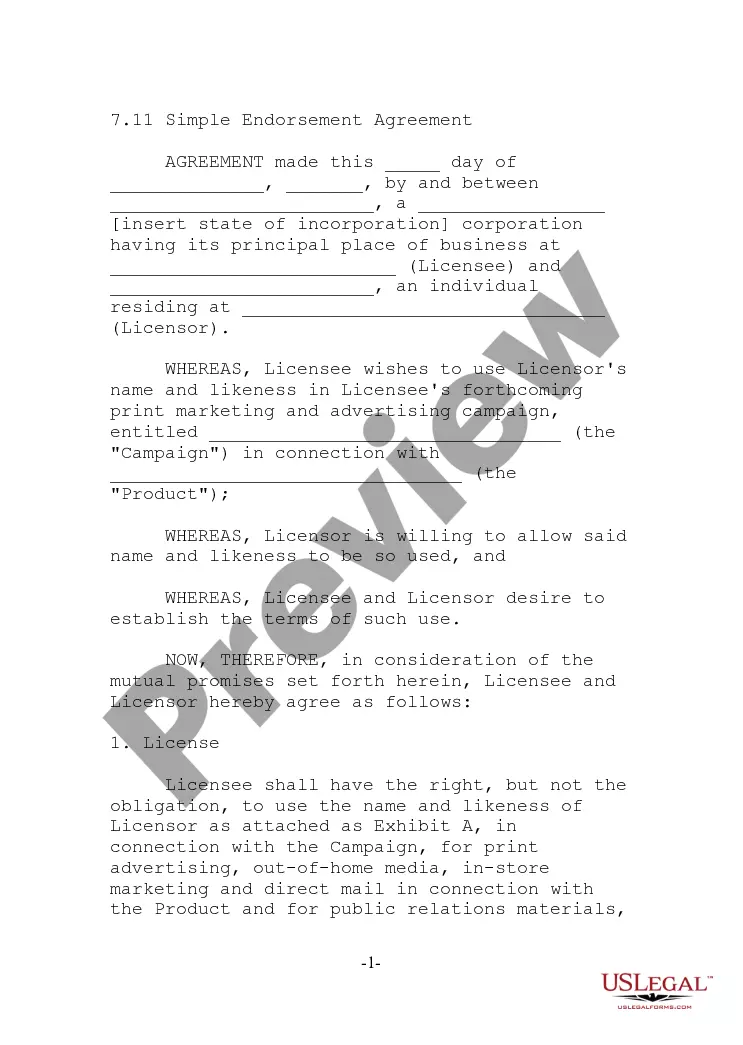
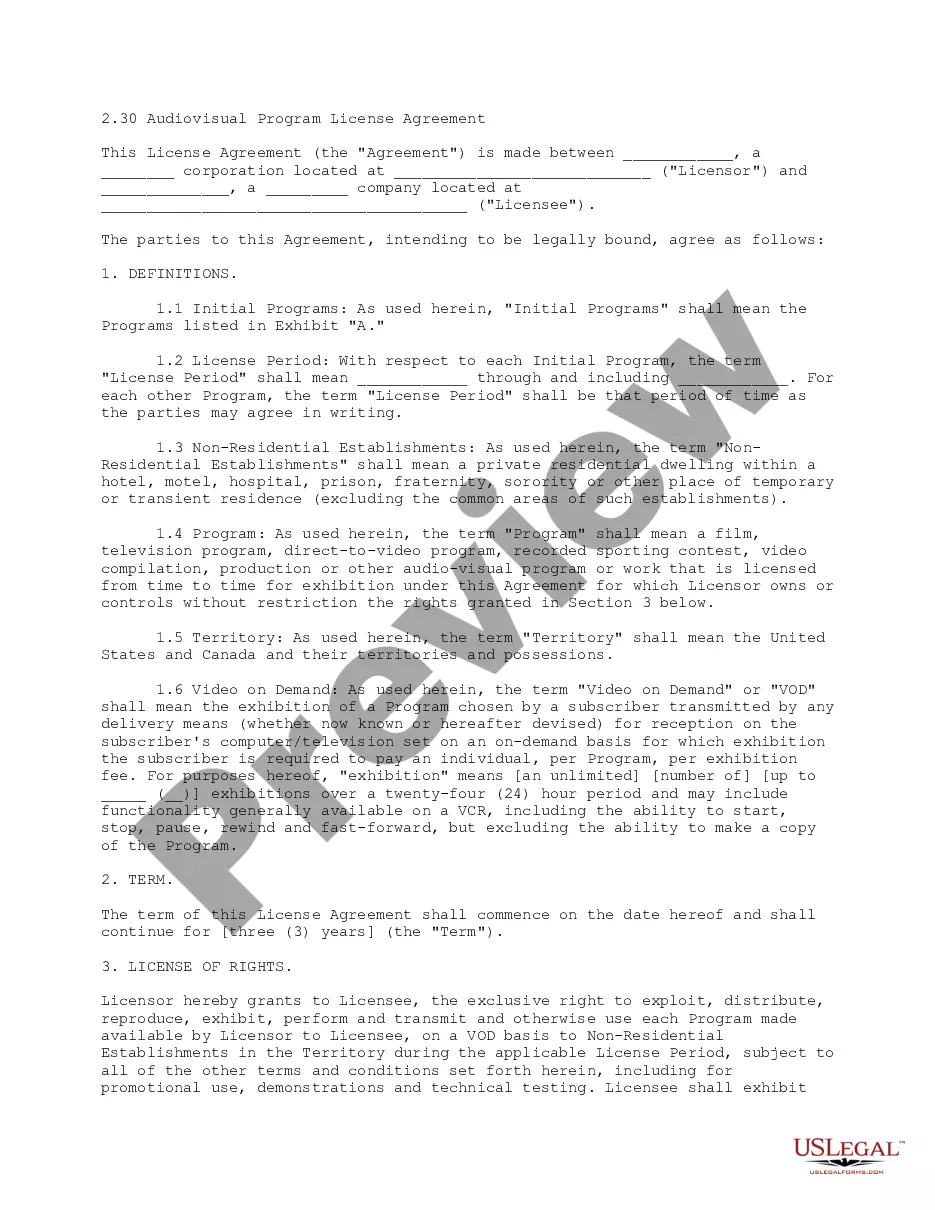
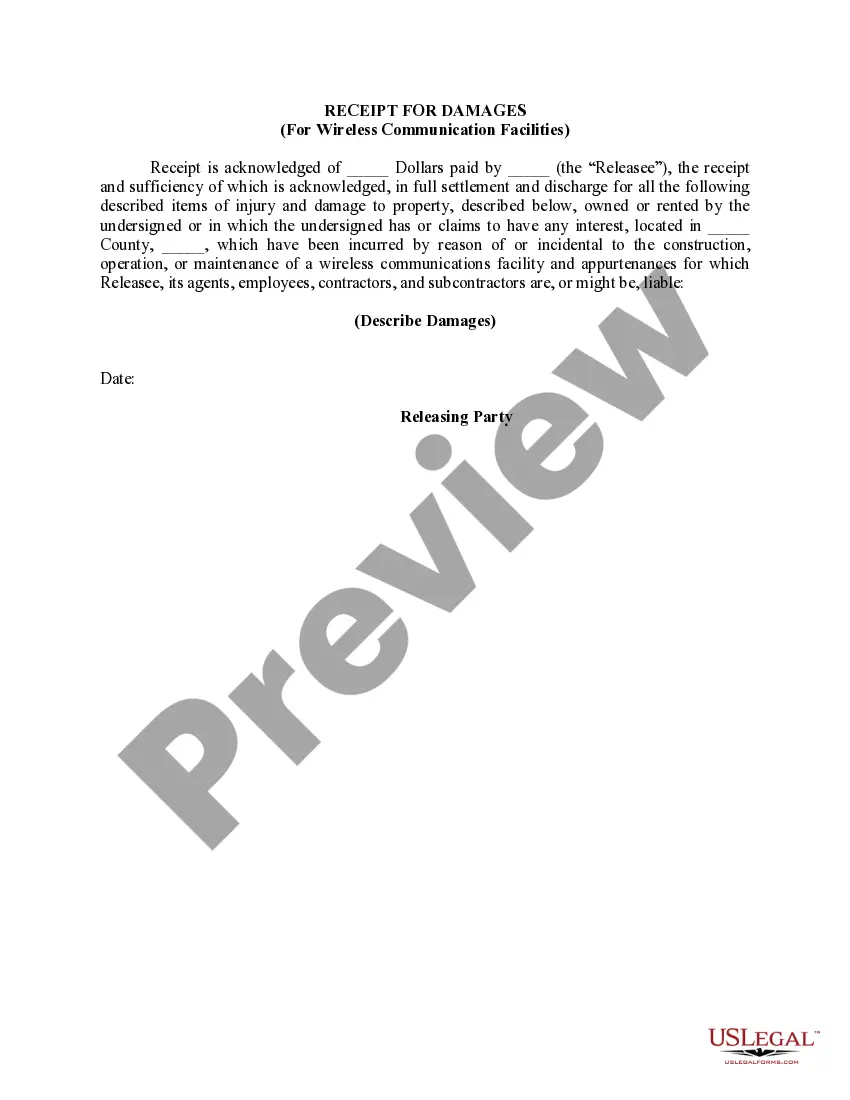
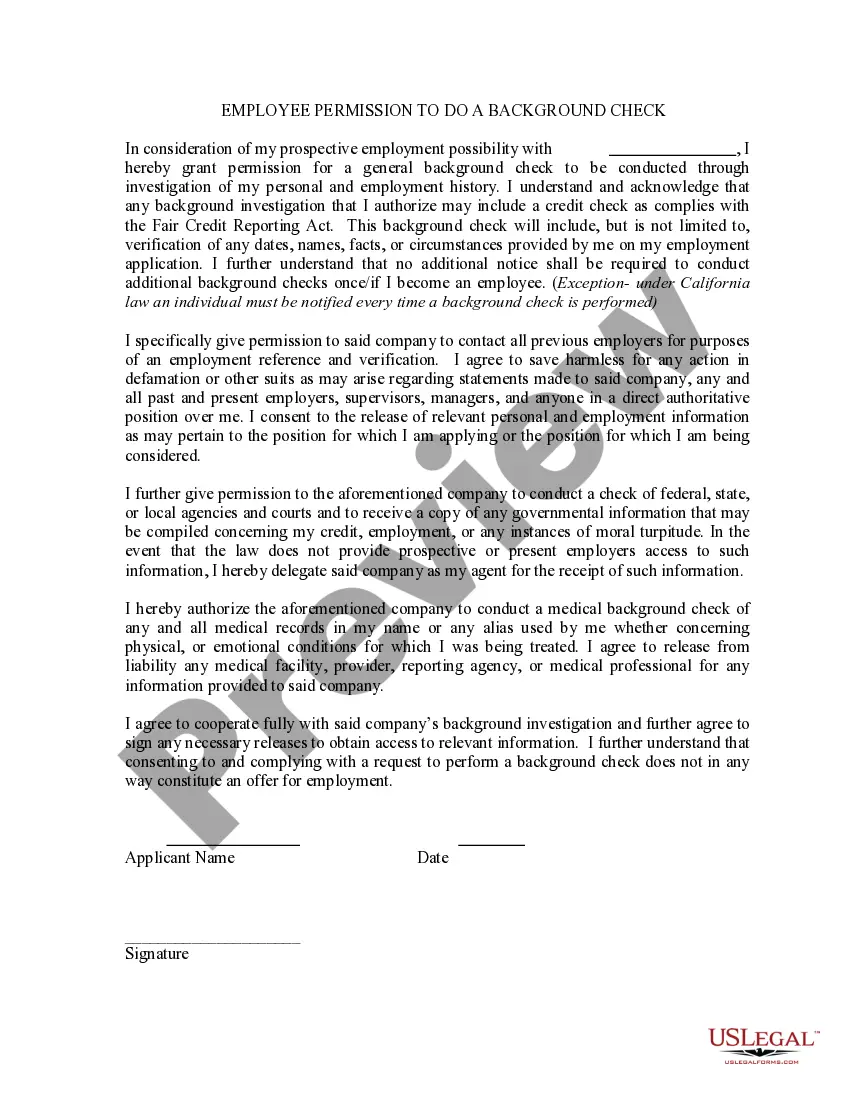
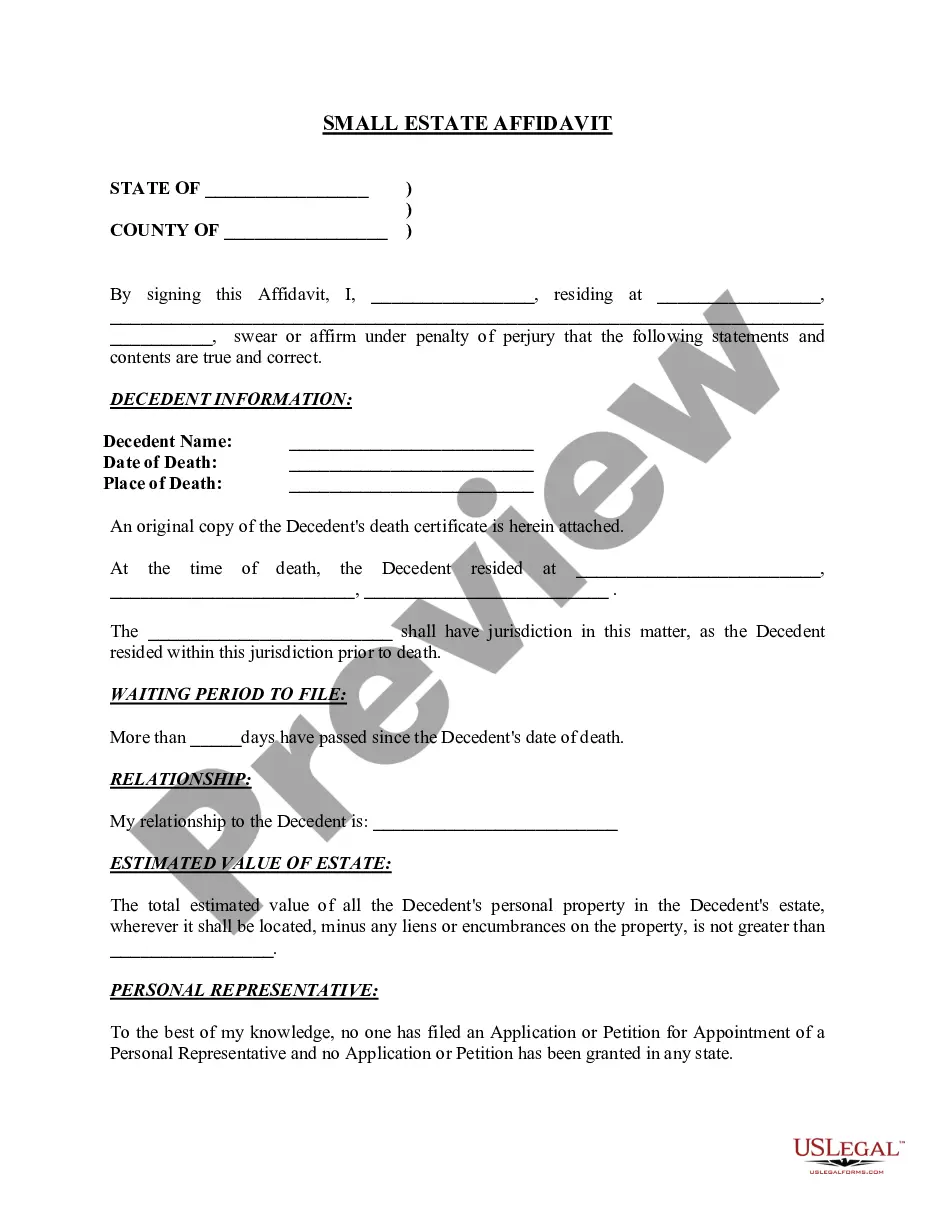
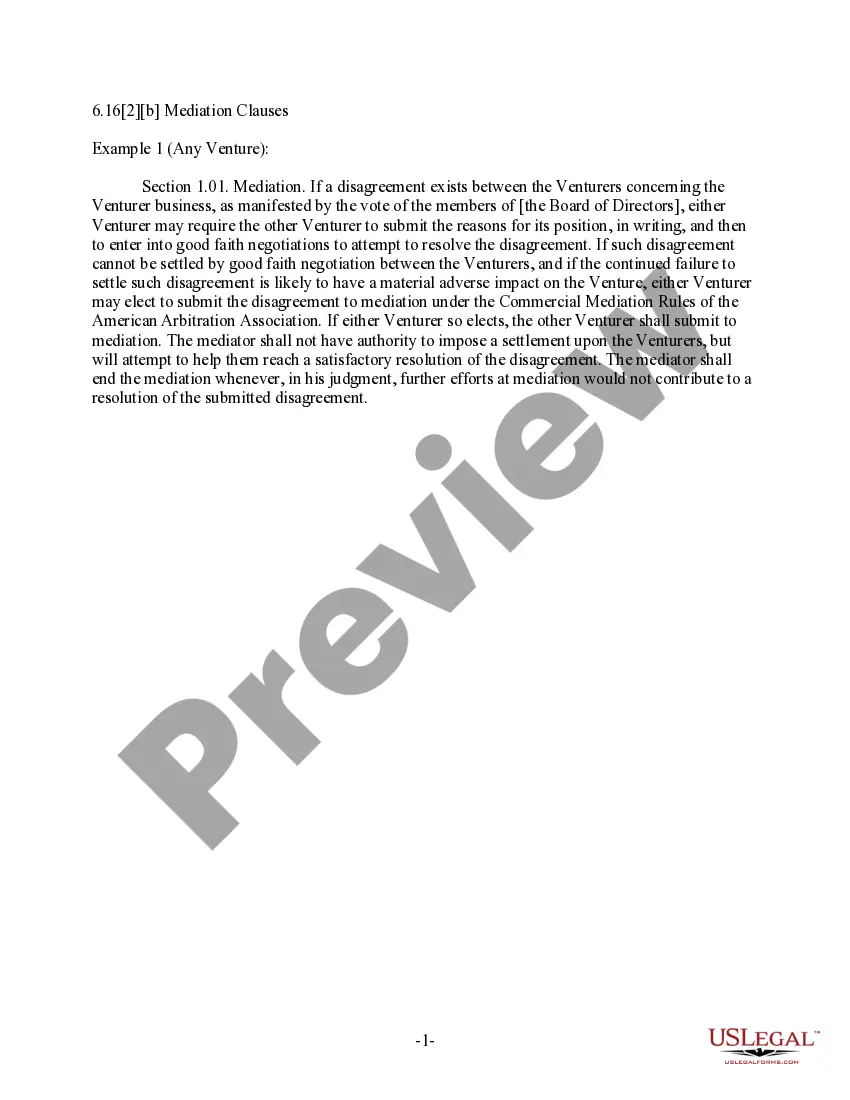
This form is a model adaptable for use in partnership matters. Adapt the form to your specific needs and fill in the information. Don't reinvent the wheel, save time and money.
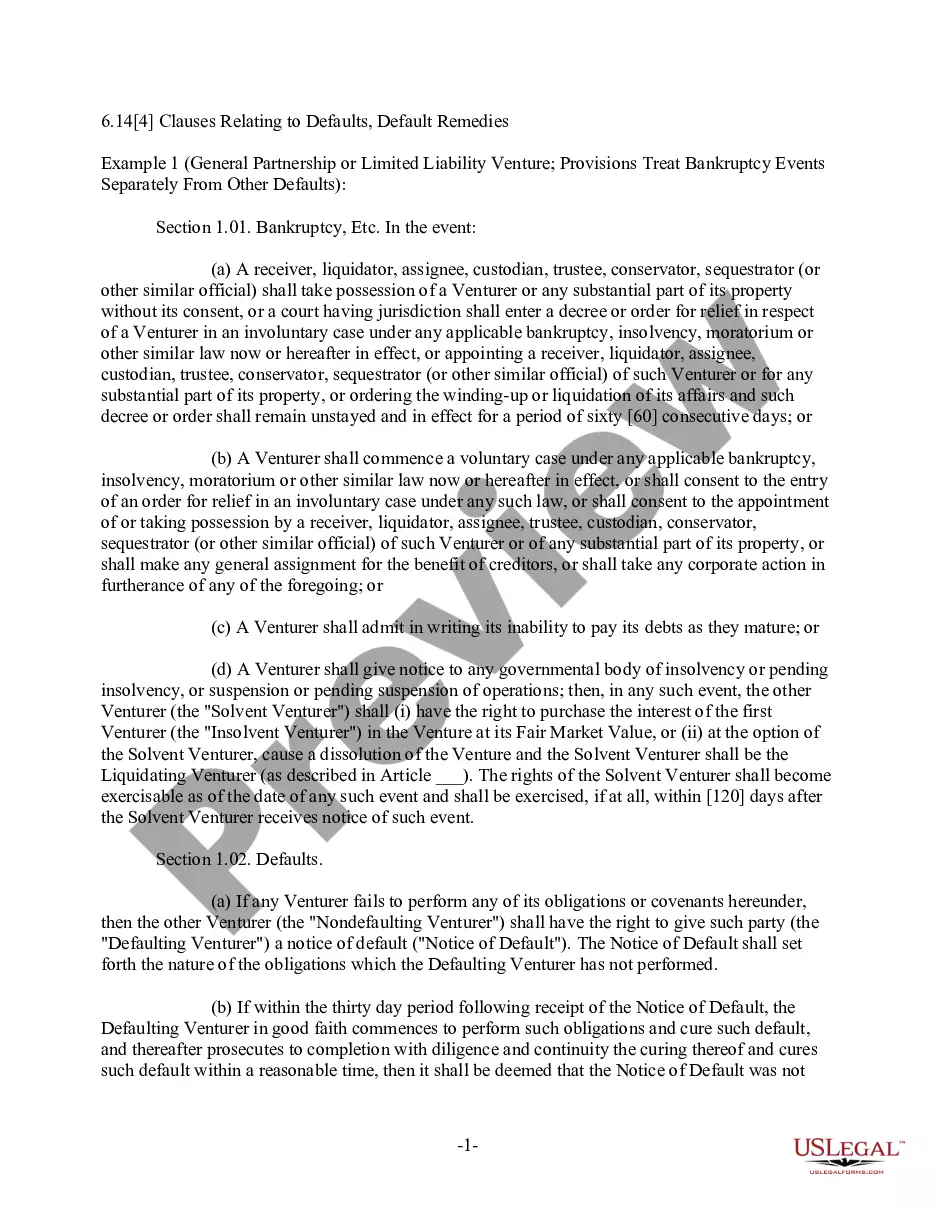
Finding a mediator is as easy as pie! You can look online, ask for recommendations, or check local mediation organizations for qualified people who can help.
Mediation itself isn't legally binding, but if the parties reach an agreement, they can put it in writing and make it binding. Think of it as a handshake that can turn into a contract.
If mediation doesn’t work, you can then move on to other options like arbitration or lawsuits. It's like trying to fix your car before deciding to call a tow truck.
Generally, if your contract has a mediation clause, you have to go through mediation first before taking other steps. It's like having to try a tasting menu before you can order dessert!
Mediation is more like a friendly chat with a neutral third party helping you find common ground, while arbitration is more formal and the arbitrator makes a binding decision for you.
A mediation clause is like a roadmap for resolving disputes. It sets out how parties agree to handle disagreements through mediation before considering other options like going to court.