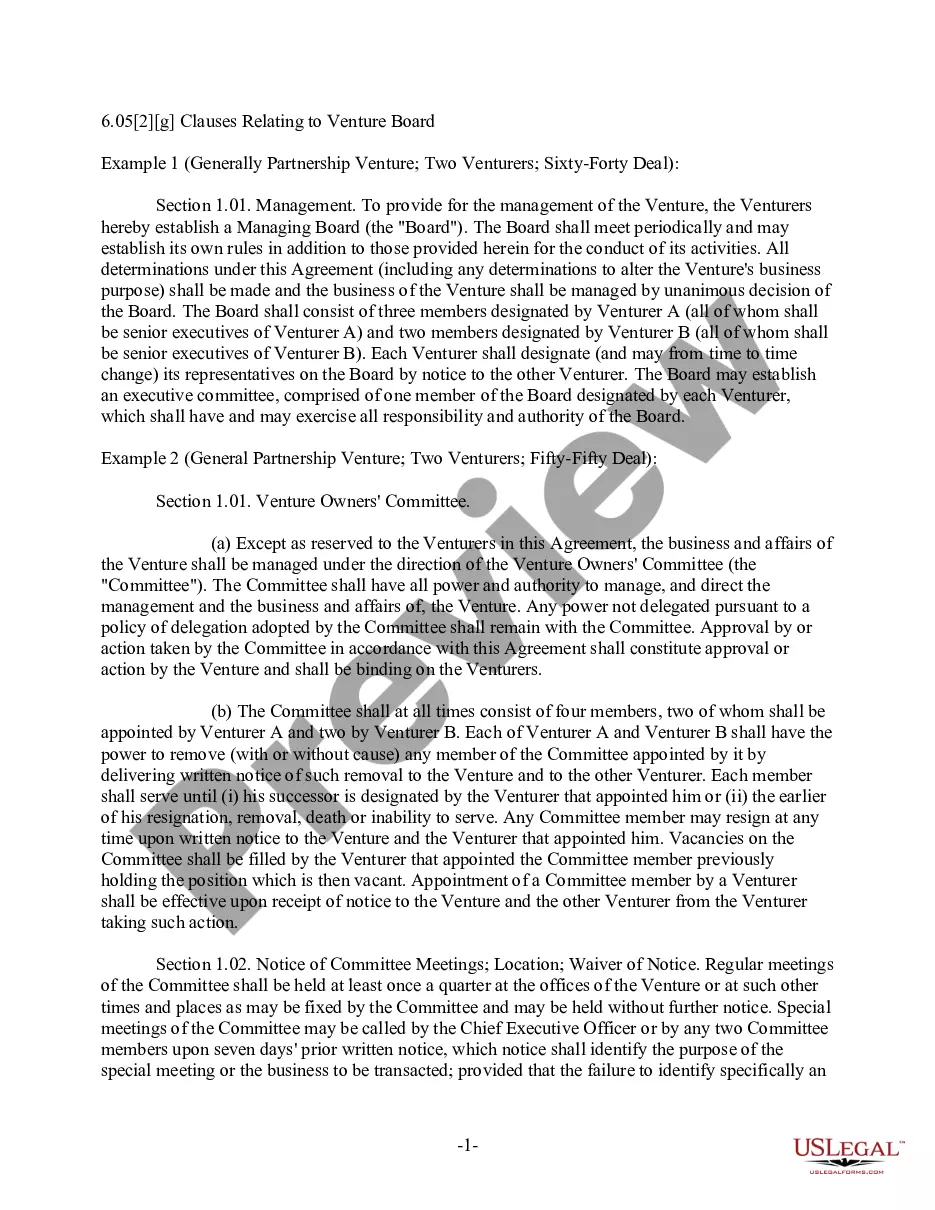
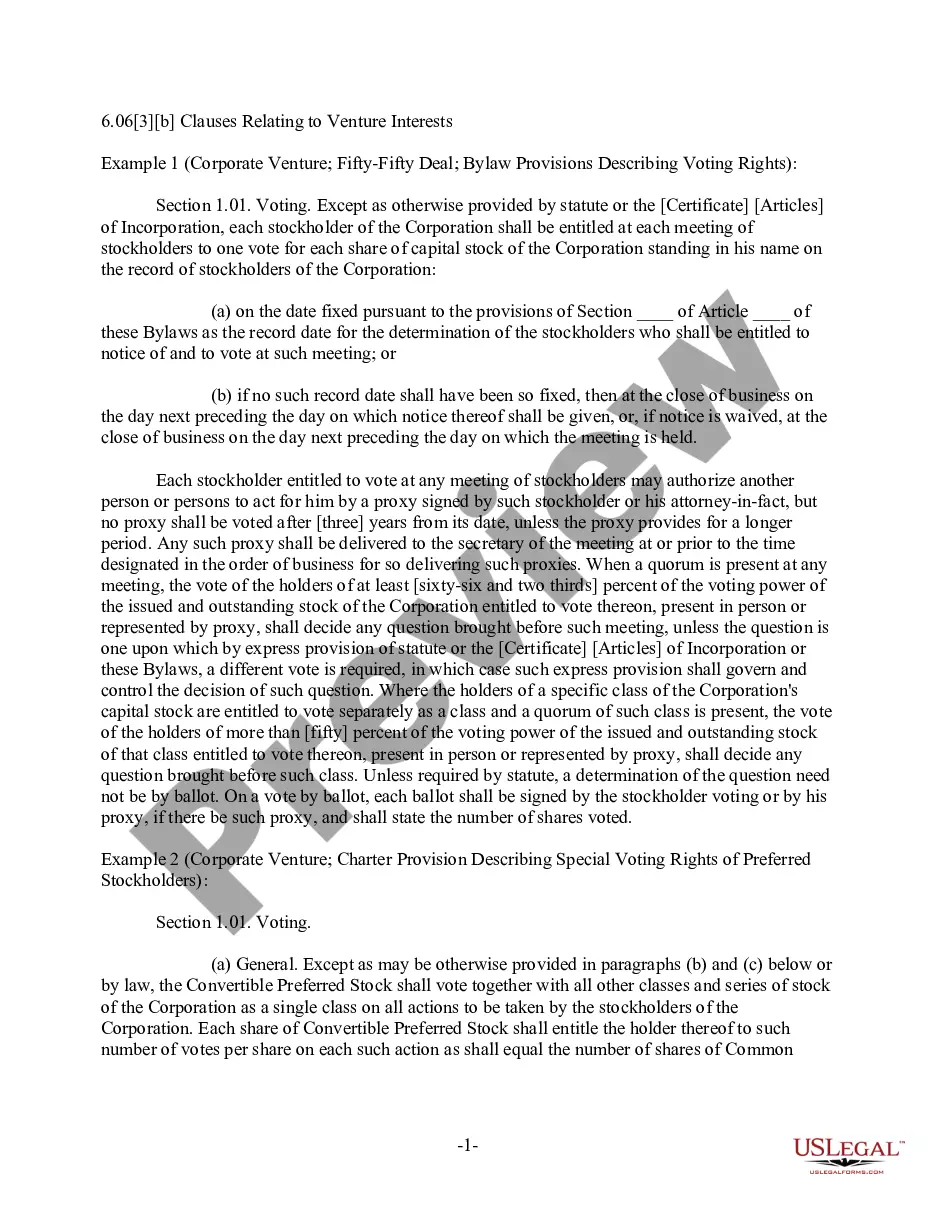
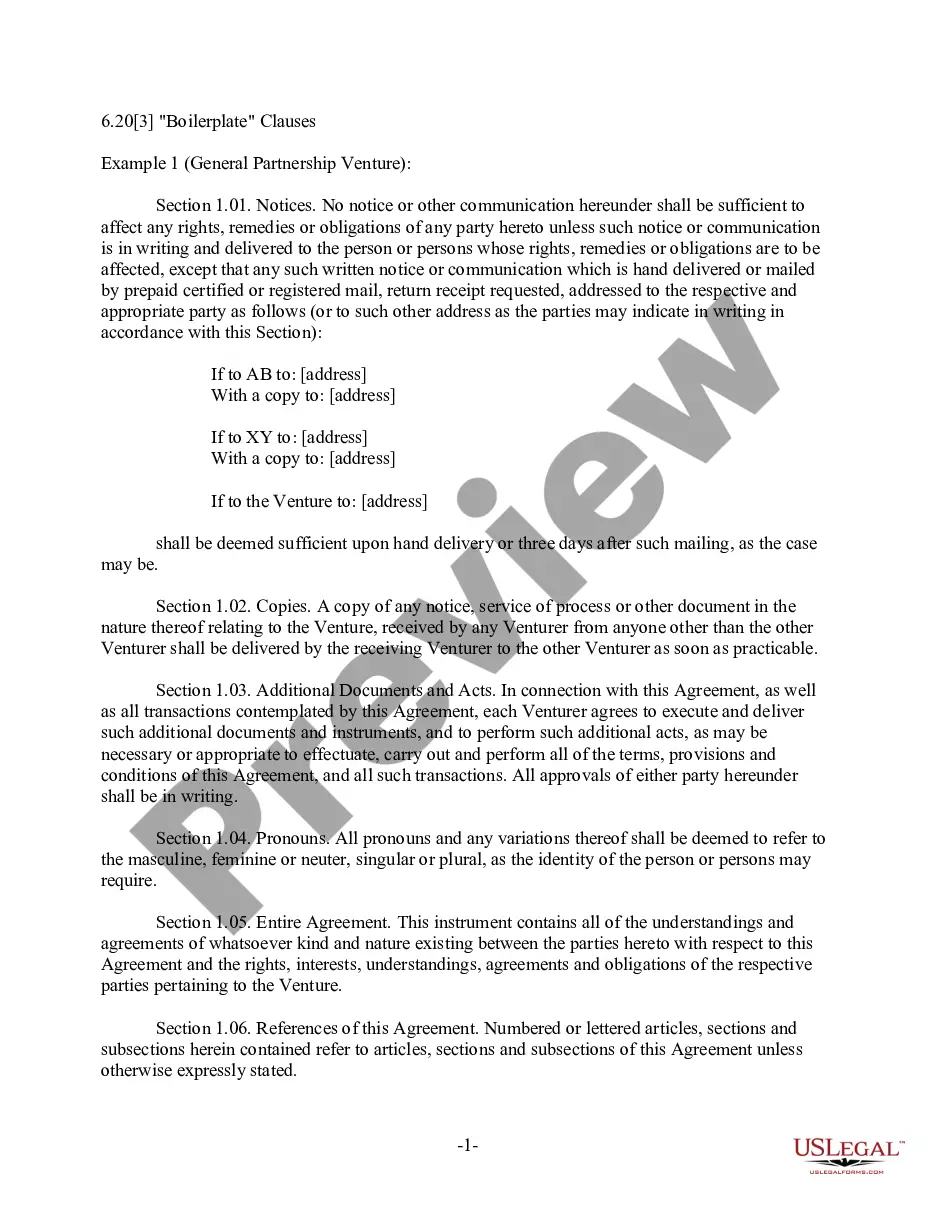
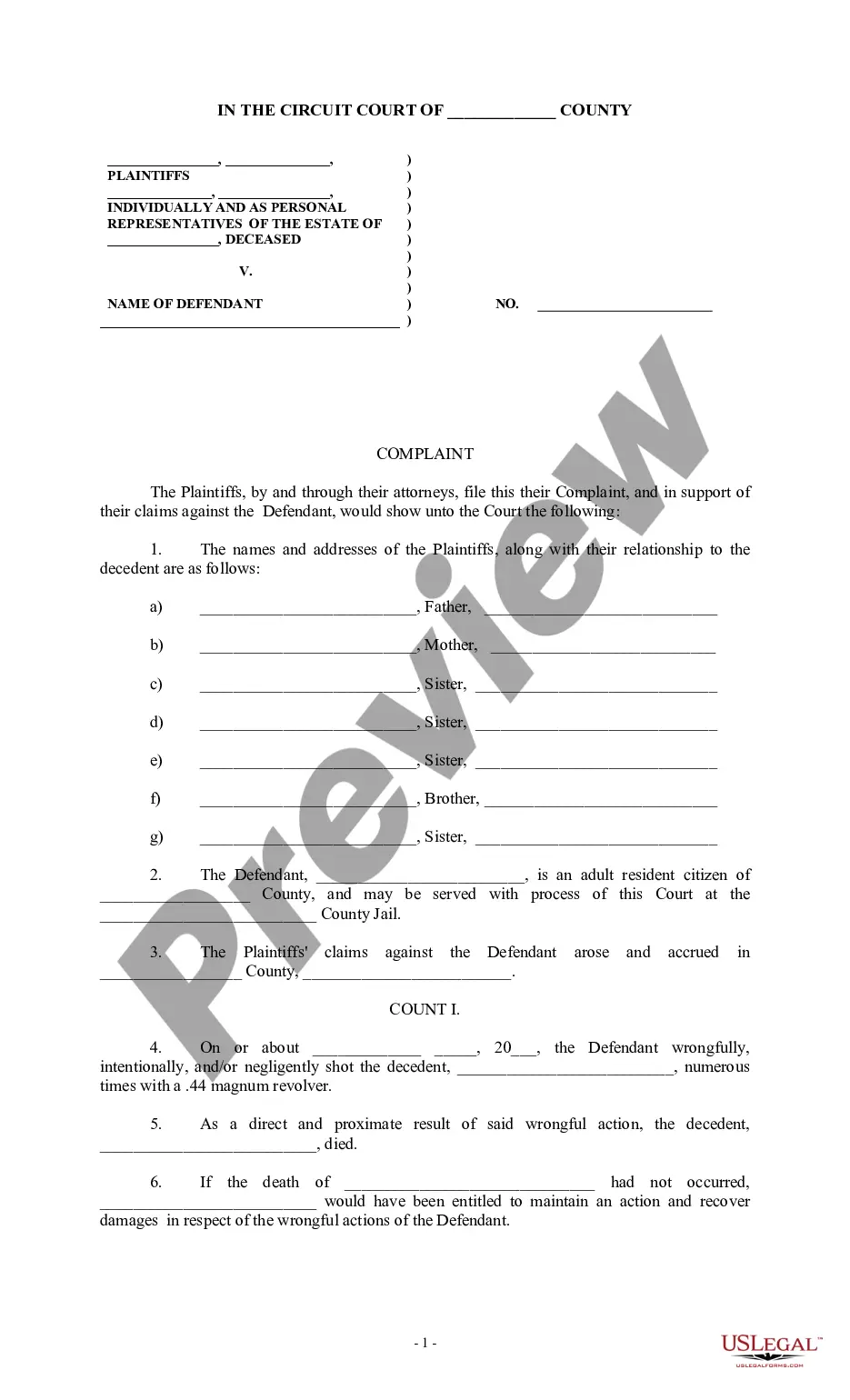
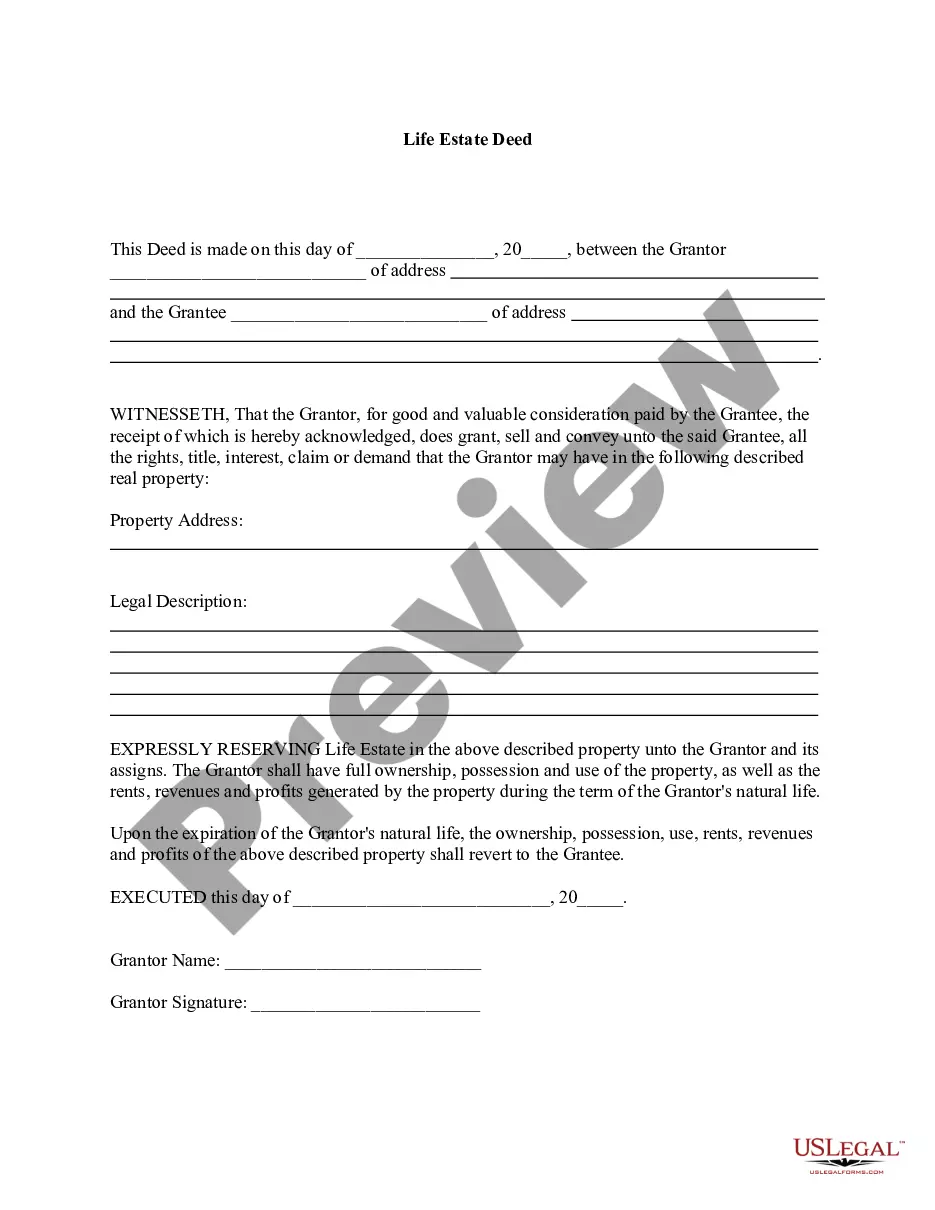
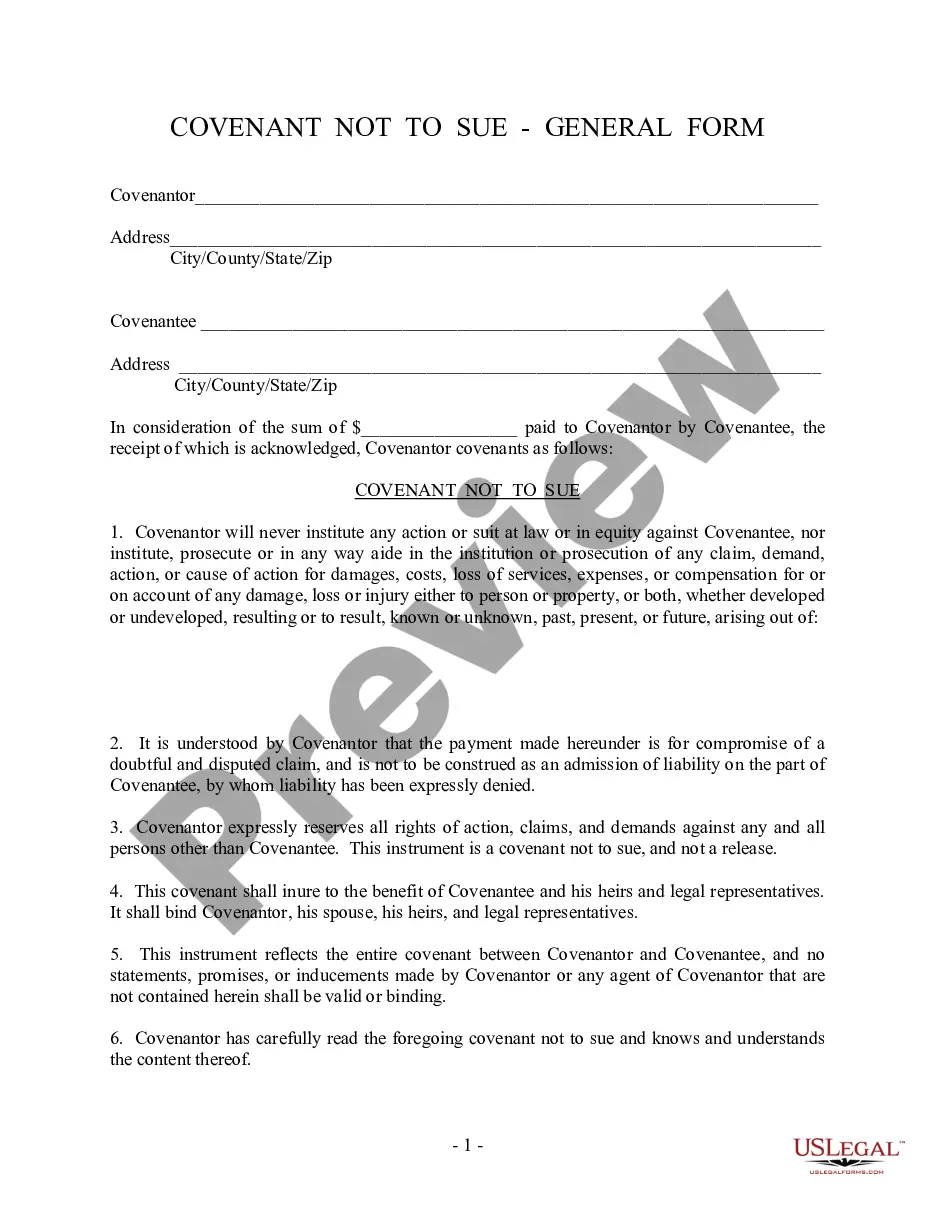
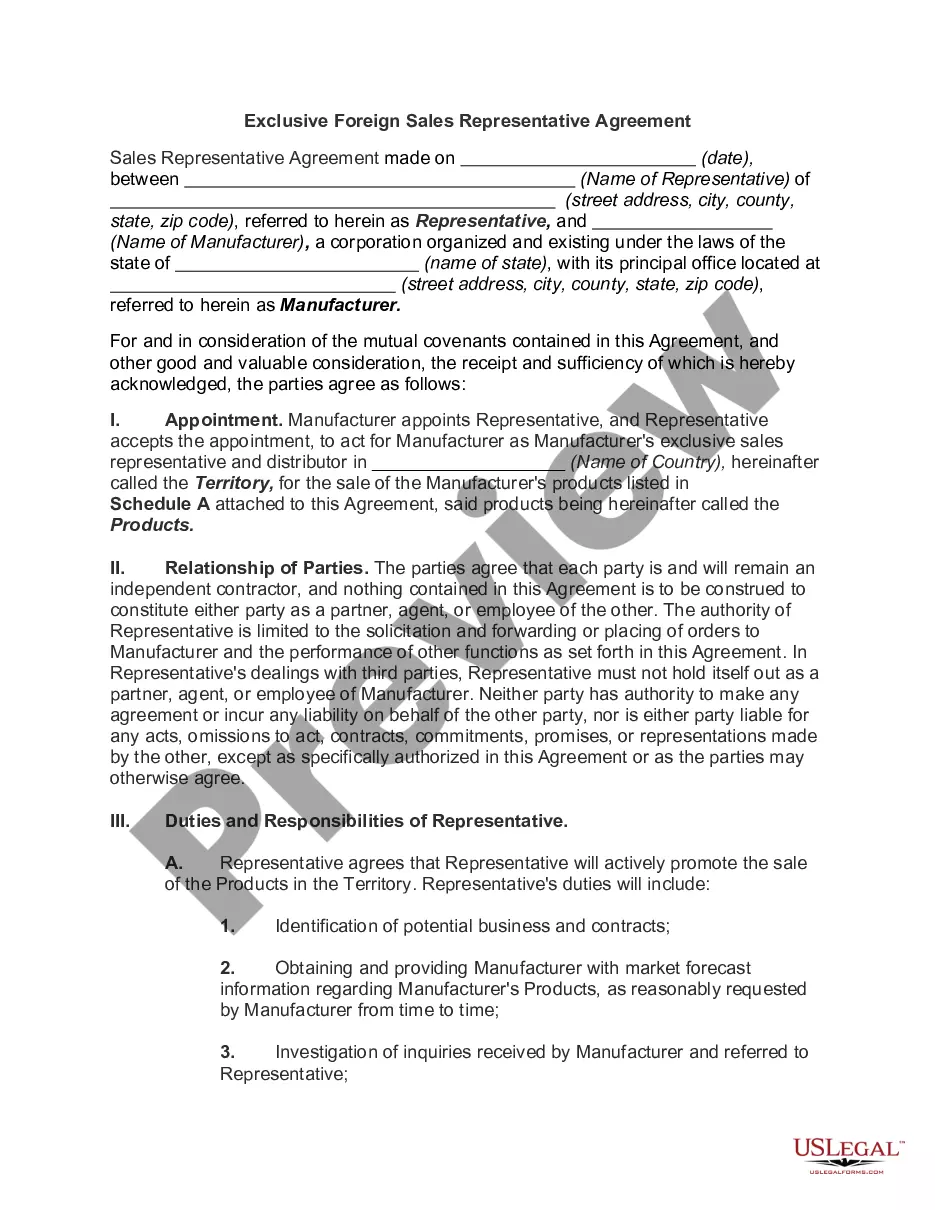
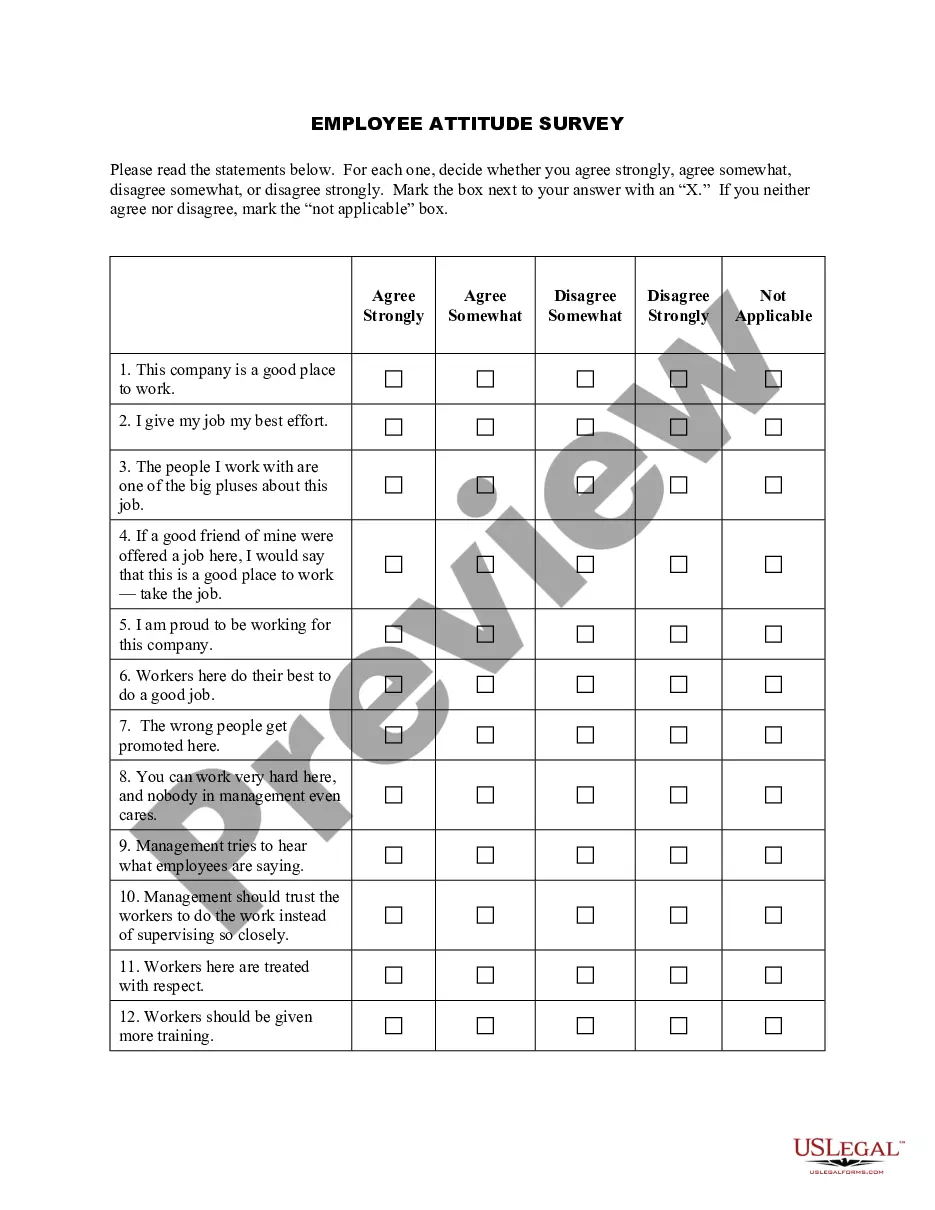
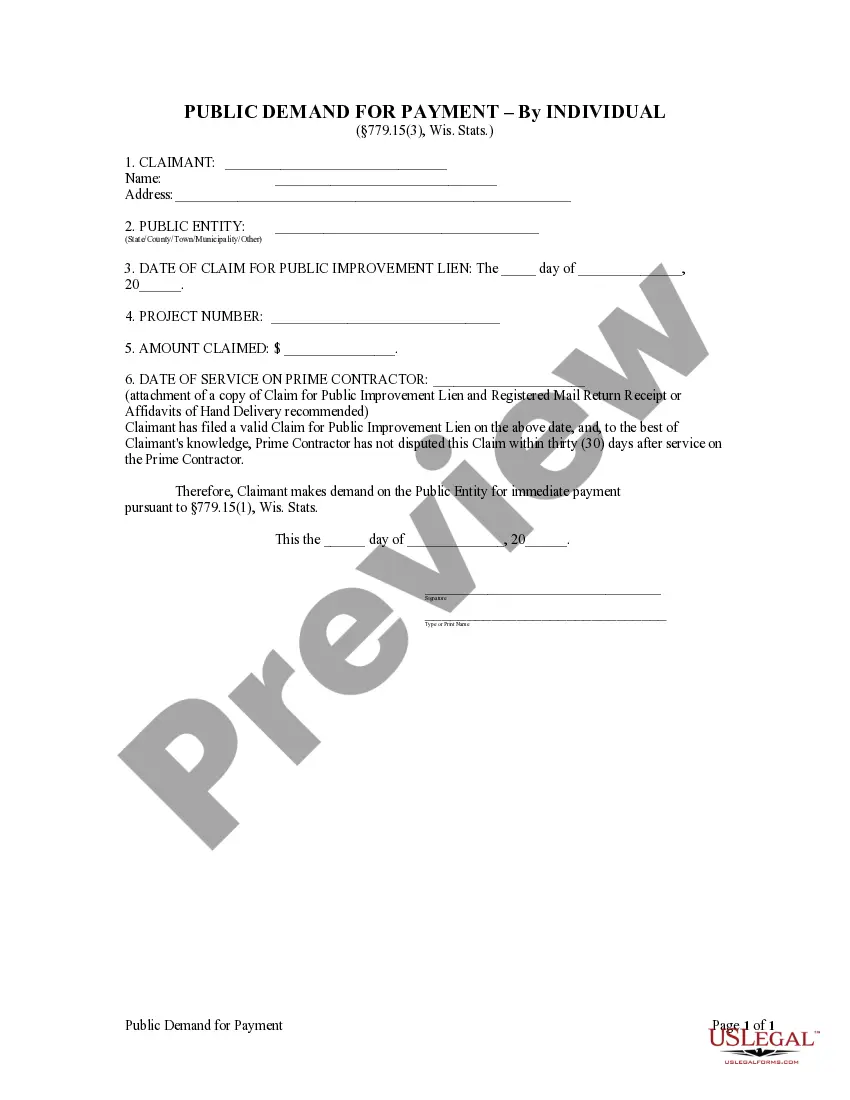
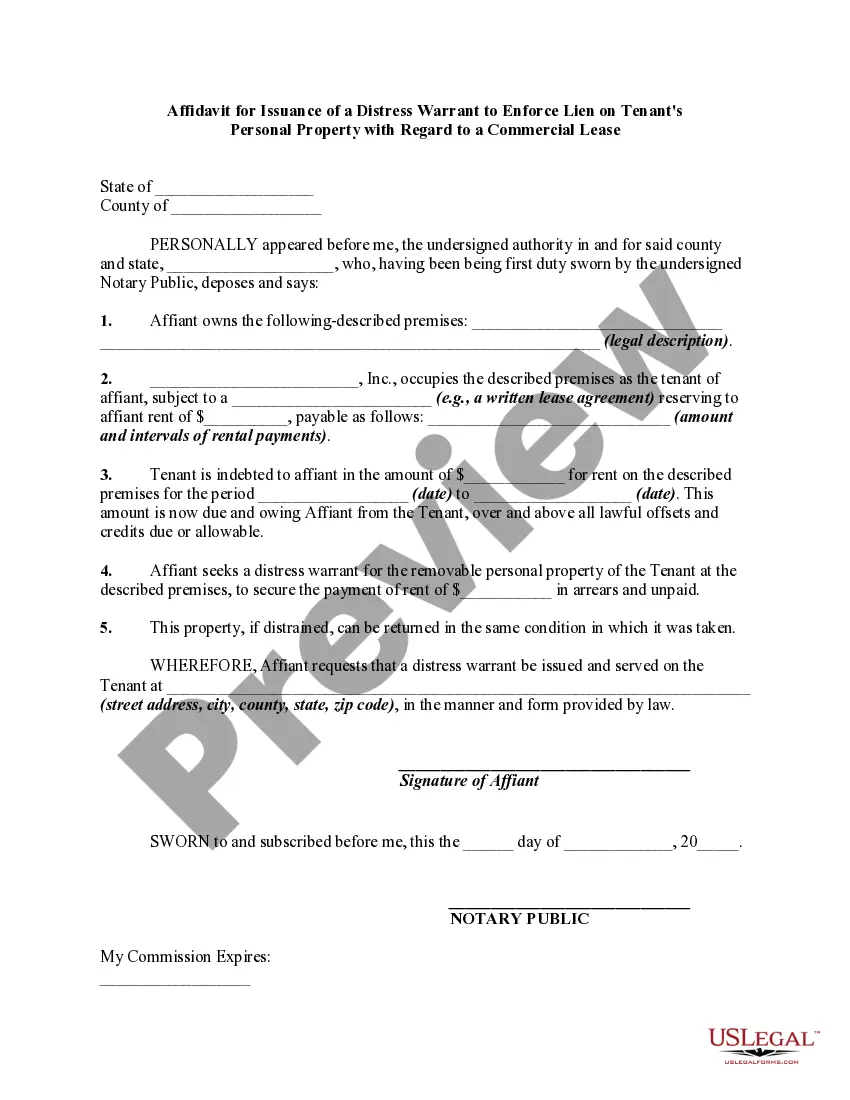
This form is a model adaptable for use in partnership matters. Adapt the form to your specific needs and fill in the information. Don't reinvent the wheel, save time and money.
Absolutely! It’s your contract, so you can tweak the terms to fit your needs before both parties sign it. Just make sure everyone is on the same page!
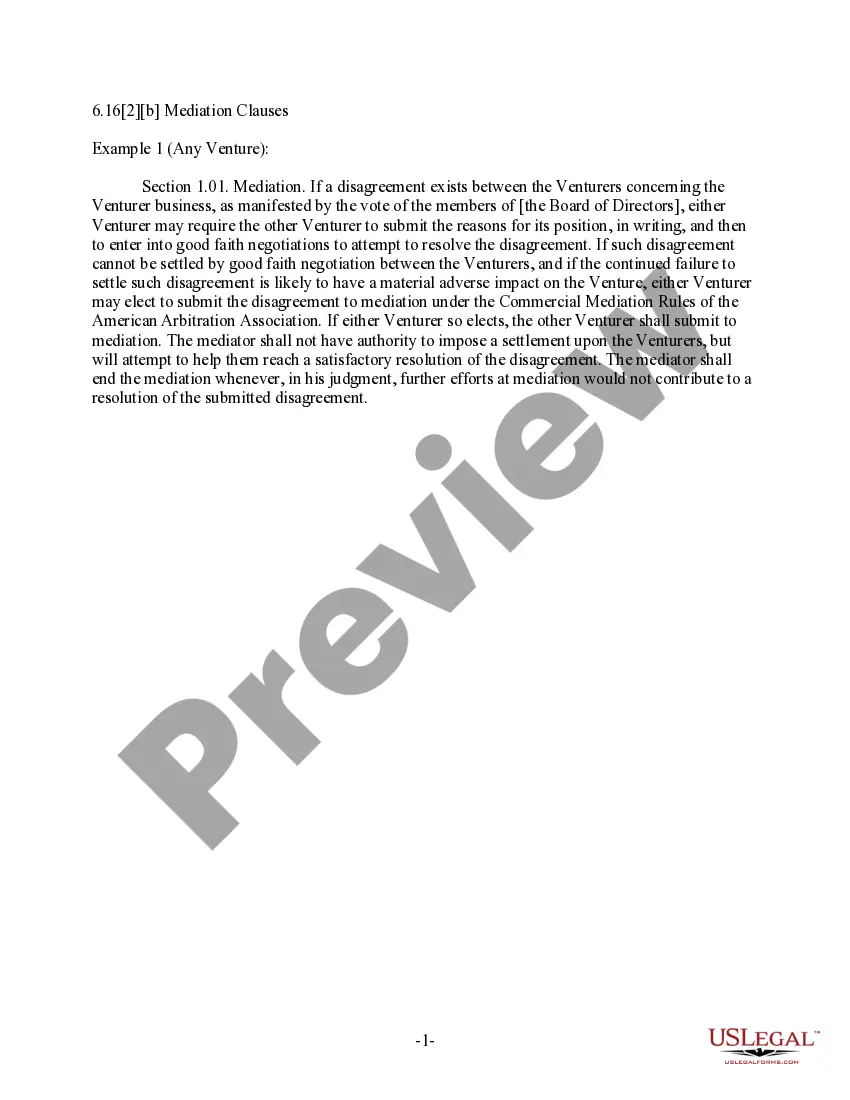
Not quite! Mediation involves a neutral third party helping you reach an agreement. Arbitration, on the other hand, is where the arbitrator makes a binding decision for you.
If you’re not happy with the decision, your options are pretty limited. You can’t appeal just because you disagree; the decision is usually final, as they say, 'that’s the ball game.'
Typically, no. If you’ve agreed to an arbitration clause, you usually have to stick to it first. It’s like signing a deal to keep things out of court.
Yes, usually. Once an arbitrator makes a decision, it’s pretty much the last word. It’s hard to challenge it later, so think carefully before you agree.
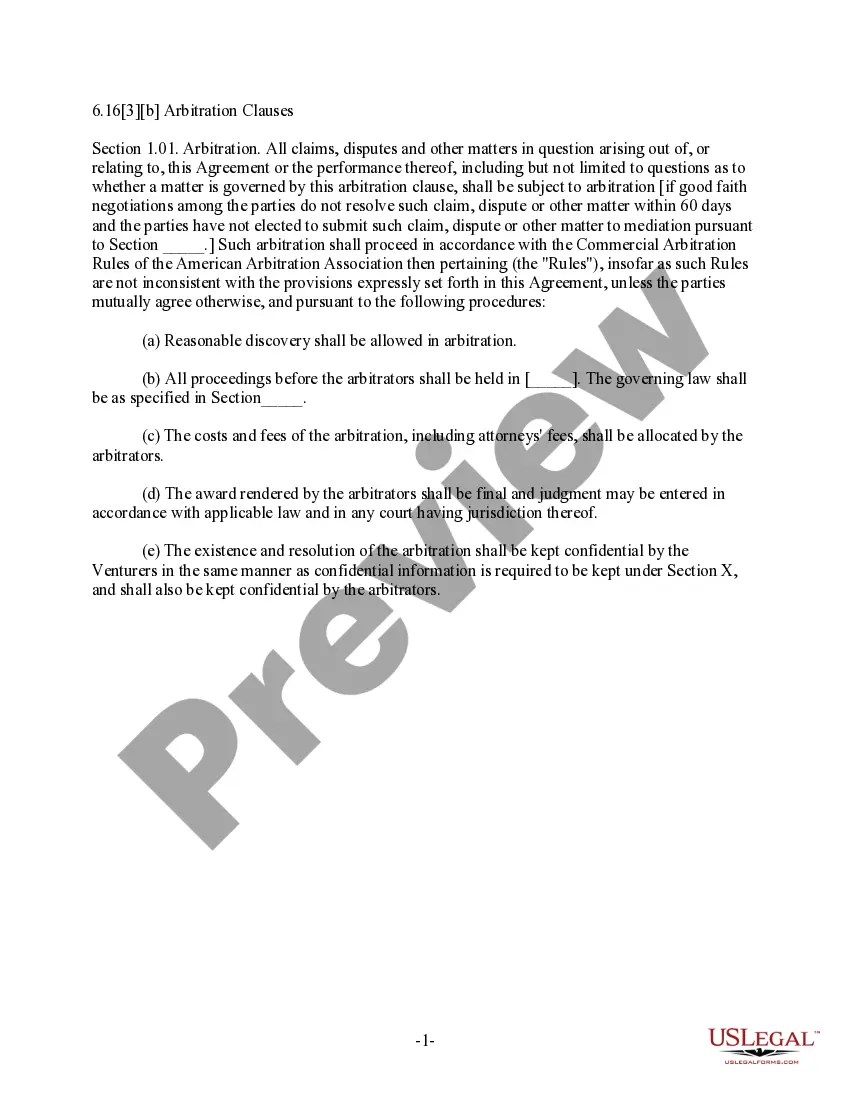
Including an arbitration clause can save you time and hassles. It often leads to quicker resolutions and can be less formal than a courtroom setting.
An arbitration clause is like an agreement where both parties decide to solve their disputes outside of court. Instead of going through a judge, they pick an arbitrator to make decisions.