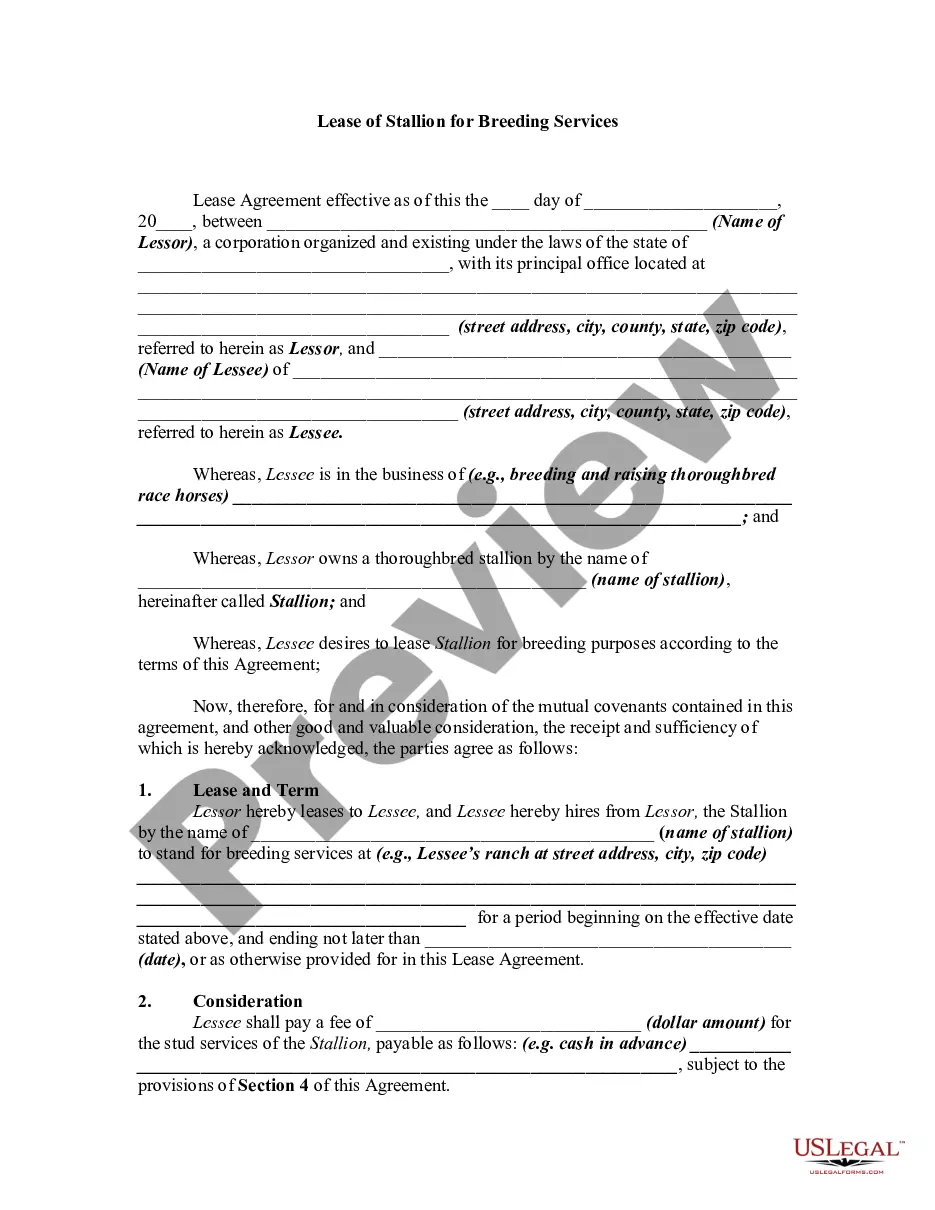
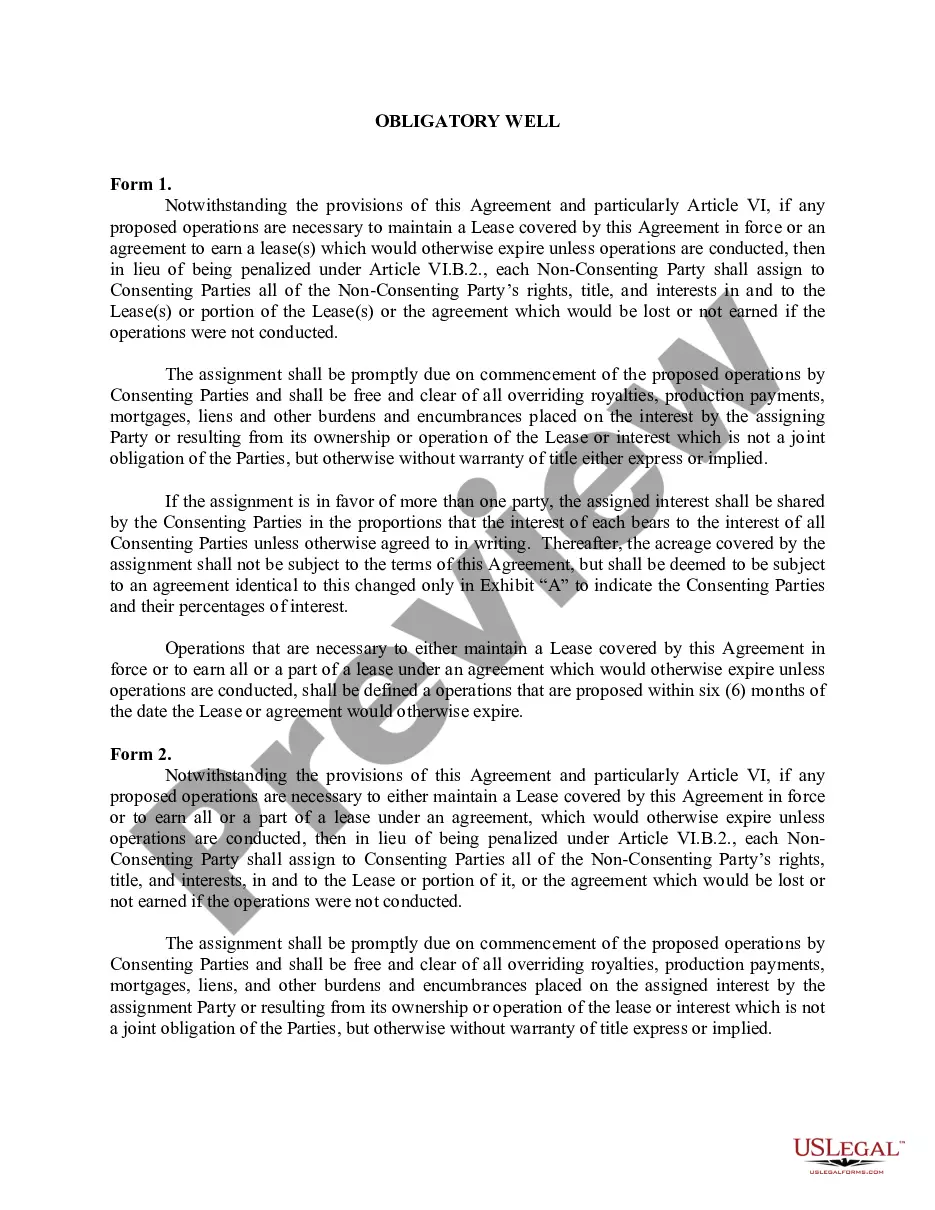
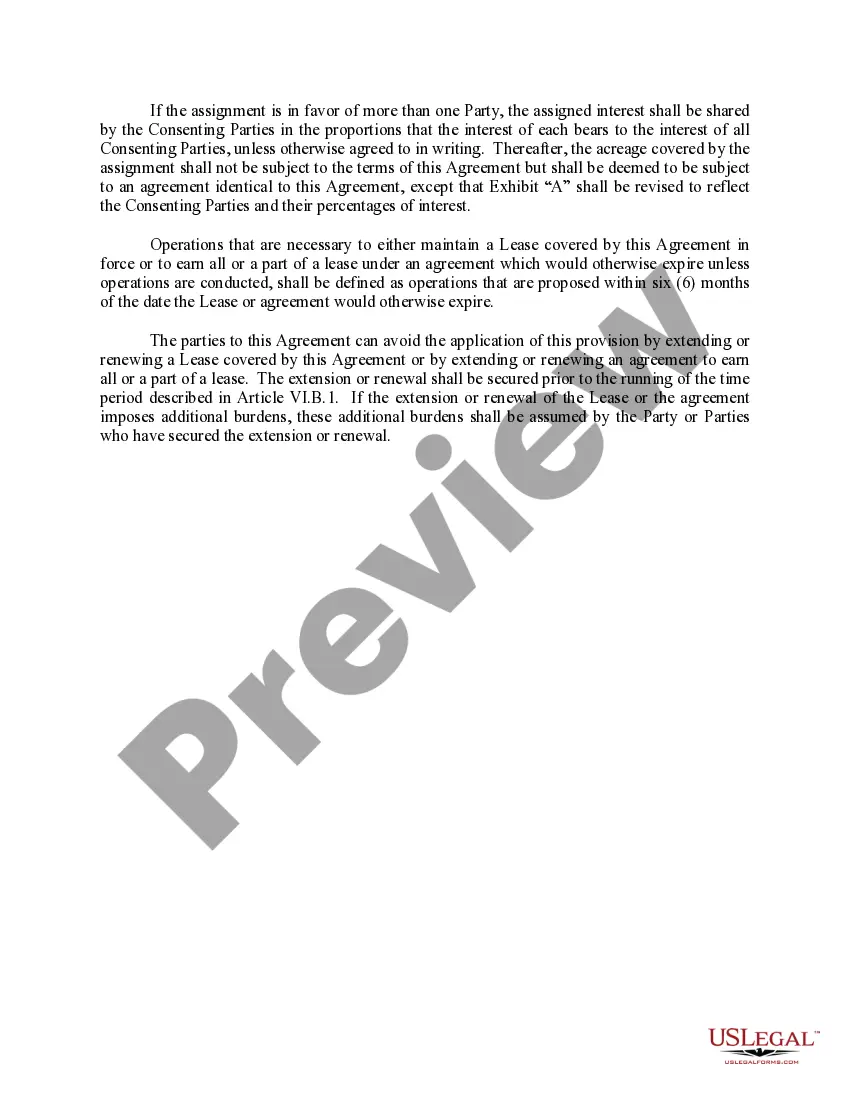
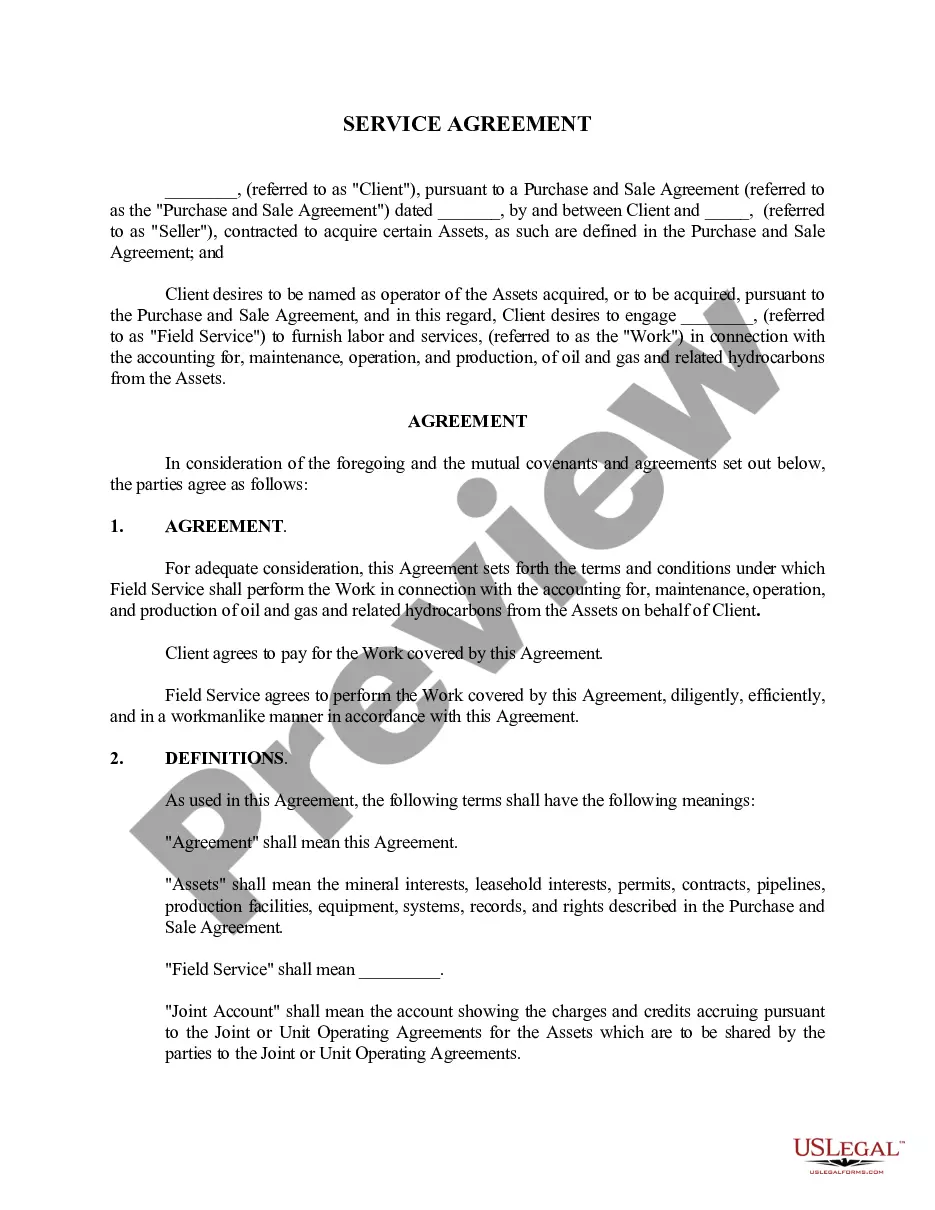
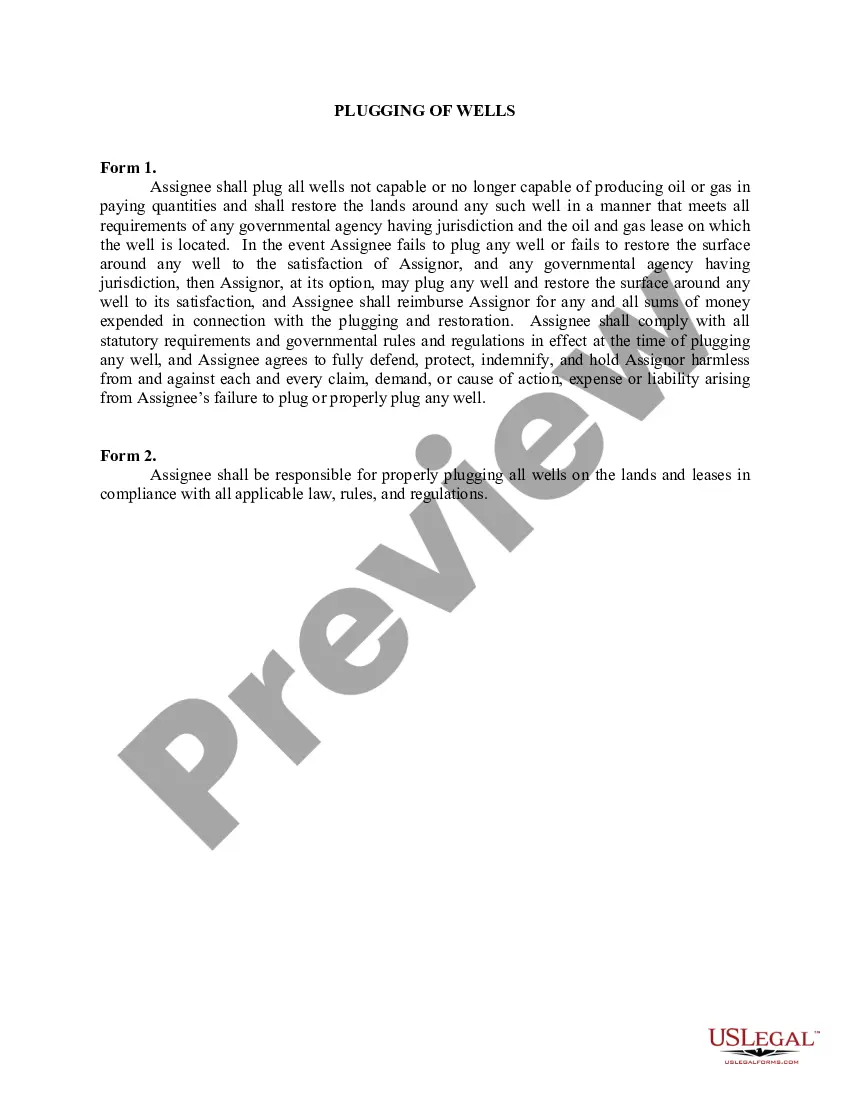
This is a provision for an Operating Agreement that concerns the Assignment of rights to an obligatory well. It provides the assignment options if any proposed operations are necessary to maintain a Lease covered by the Agreement in force or an agreement to earn a lease(s) which would otherwise expire unless operations are conducted.
Cook Illinois Obligatory Well
Category:
State:
Multi-State
County:
Cook
Control #:
US-OG-710
Format:
Word;
Rich Text
Instant download
Description
Free preview

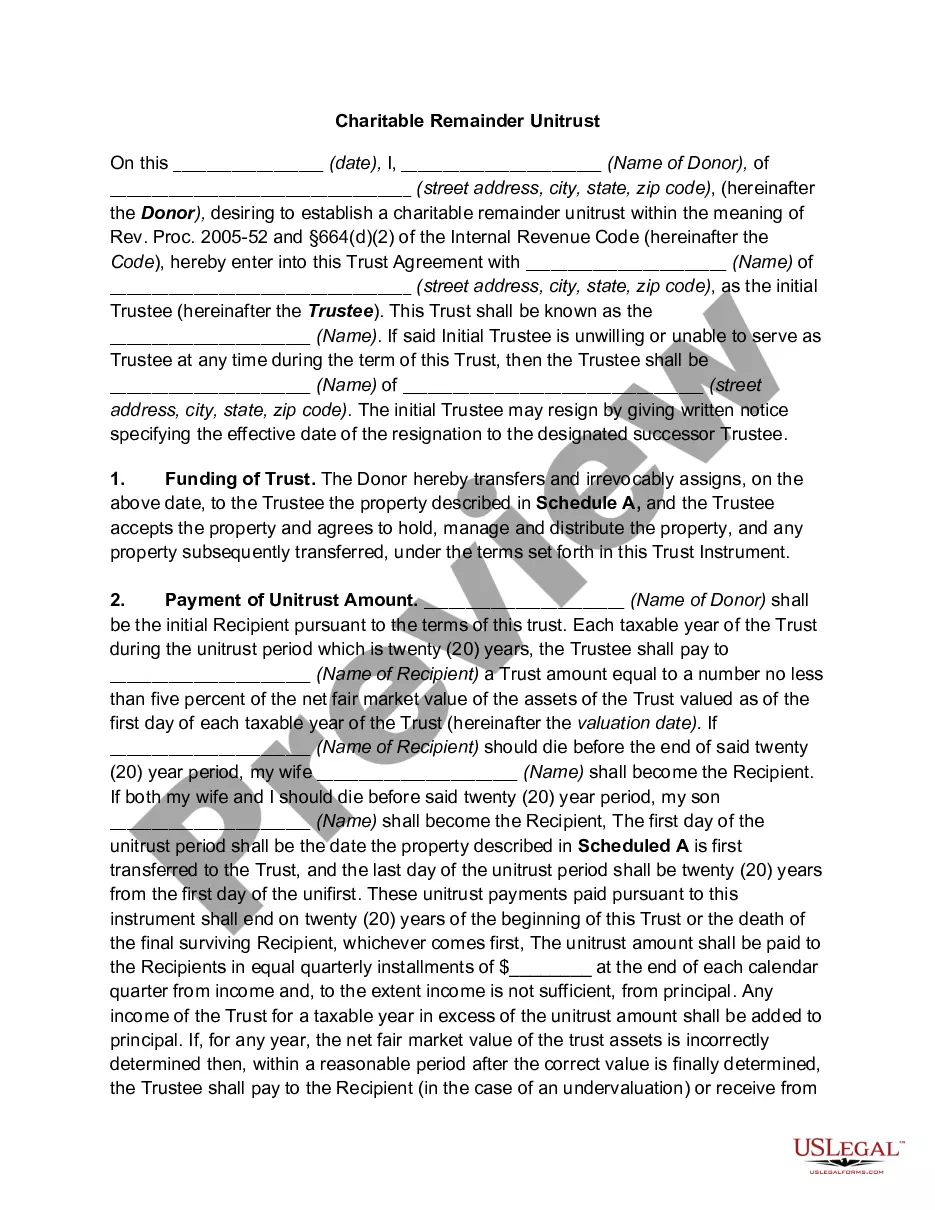

How to fill out Obligatory Well?
Whether you plan to launch your enterprise, engage in a contract, apply for the renewal of your identification, or address familial legal matters, it is essential to prepare particular documentation that aligns with your local statutes and regulations.
Locating the appropriate documents may demand significant time and effort unless you utilize the US Legal Forms library.
The platform offers users over 85,000 professionally drafted and verified legal forms for any personal or commercial occasion. All documents are categorized by state and purpose, making it quick and easy to select a form such as the Cook Obligatory Well.
Download the Cook Obligatory Well in your preferred file format. Print out a copy or complete it and sign it digitally using an online editor to save time. Documents provided by our library are reusable. With an active subscription, you can access all previously purchased paperwork at any time in the My documents section of your profile. Stop wasting time on a never-ending quest for current official documents. Register for the US Legal Forms platform and manage your paperwork efficiently with the most comprehensive online form library!
- Log in to your account and click the Download button adjacent to the desired form.
- If you are new to the service, it will require a few additional steps to acquire the Cook Obligatory Well. Follow the instructions below.
- Ensure the template fits your personal requirements and complies with your state law.
- Review the form description and examine the Preview if available on the webpage.
- Utilize the search bar above with your state to find another template.
- Click Buy Now to obtain the sample once you locate the correct one.
- Select the subscription plan that best accommodates your needs to proceed.
- Sign in to your account and pay for the service using a credit card or PayPal.
Form popularity
FAQ
Hygiene procedures: Cleaning and sanitising practices to avoid contamination of food. Food storage. Handling and disposal of garbage. Personal hygiene. Regular hand washing. Safe and hygienic handling of food and beverages. Safe handling and disposal of linen and laundry.
Do and Don'ts of Personal Hygiene In The Workplace Do clean up after yourself. Do regularly wipe down your workstation. Do wash your cups and mugs daily. Do use sanitiser provided for you. Do adhere to the company's hygiene policy. Don't sneeze or cough without covering your nose and mouth.
Storage Basics Refrigerate or freeze perishables right away.Keep your appliances at the proper temperatures.Check storage directions on labels.Use ready-to-eat foods as soon as possible.Be alert for spoiled food.Be aware that food can make you very sick even when it doesn't look, smell, or taste spoiled.
Here are a few tips: Use healthy cooking methods such as steaming, broiling, grilling and roasting.Cook foods in as little water and for as short a period of time as possible to preserve all water soluble vitamins (Bs and C). Use a variety of herbs and spices for additional flavor rather than relying on salt alone.
Safe food preparation keep raw foods and ready-to-eat foods separate to avoid cross-contamination. use separate, clean utensils and cutting boards for raw foods and ready-to-eat foods, or wash and sanitise utensils and cutting boards between uses.
Here are the most basic cooking techniques to help you survive your first culinary year as a university student. #1 Baking. This involves applying a dry convection heat to your food in an enclosed environment.#2 Frying.#3 Roasting.#4 Grilling.#5 Steaming.#6 Poaching.#7 Simmering.#8 Broiling.
4 Basic Steps for Food Safety Always wash your food, hands, counters, and cooking tools. Keep raw foods to themselves. Germs can spread from one food to another. Foods need to get hot and stay hot. Heat kills germs. Put food in the fridge right away.
Reporting the issue verbally to your supervisor or manager. reporting the issue through the workplace's hazard reporting procedures. raising the issue with the health and safety representative. raising the issue with management through your union representative.
The core messages of the Five Keys to Safer Food are: keep clean; separate raw and cooked; cook thoroughly; keep food at safe temperatures; and. use safe water and raw materials.
Food Safety at Home Clean. Always wash your food, hands, counters, and cooking tools. Wash hands in warm soapy water for at least 20 seconds.Separate (Keep Apart) Keep raw foods to themselves. Germs can spread from one food to another.Cook. Foods need to get hot and stay hot.Chill. Put food in the fridge right away.