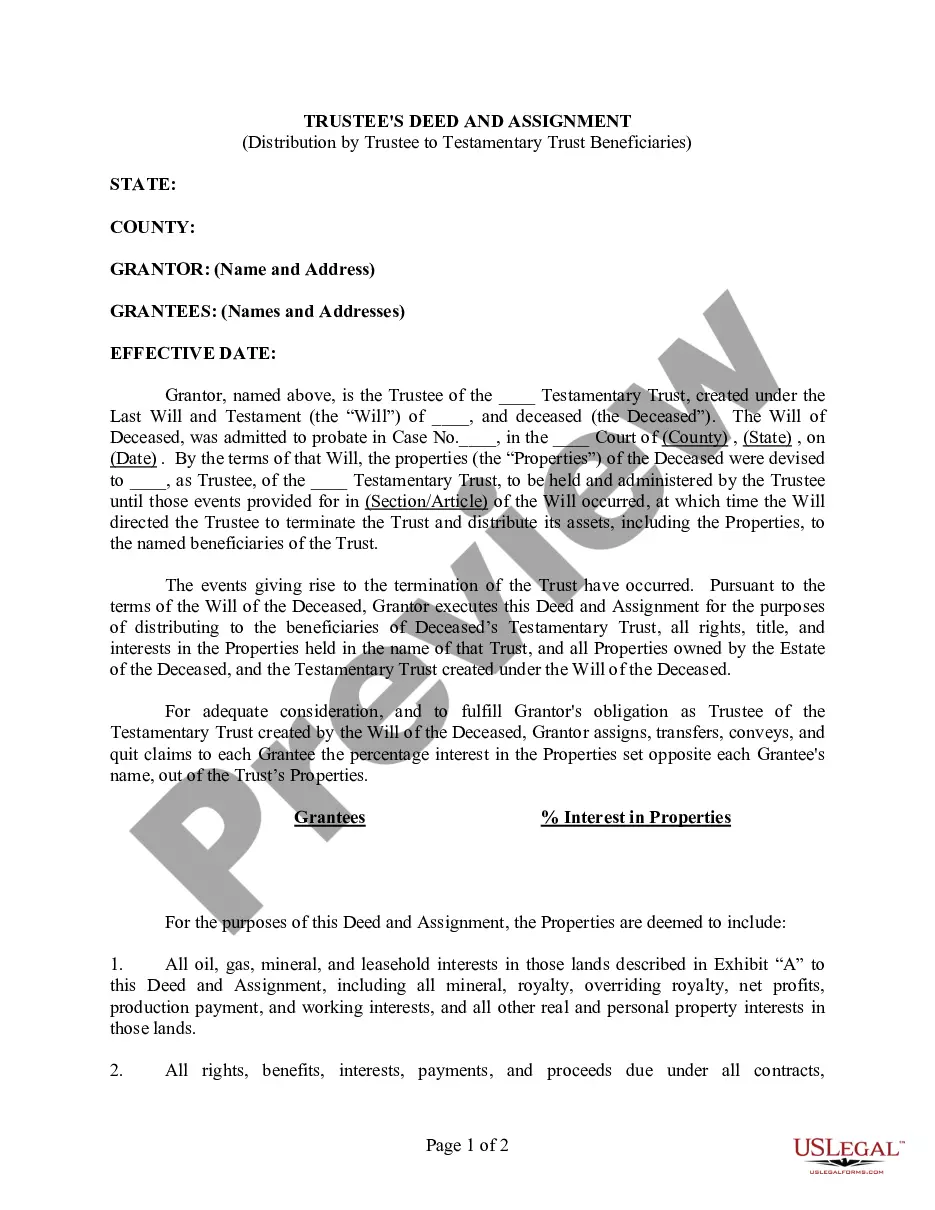
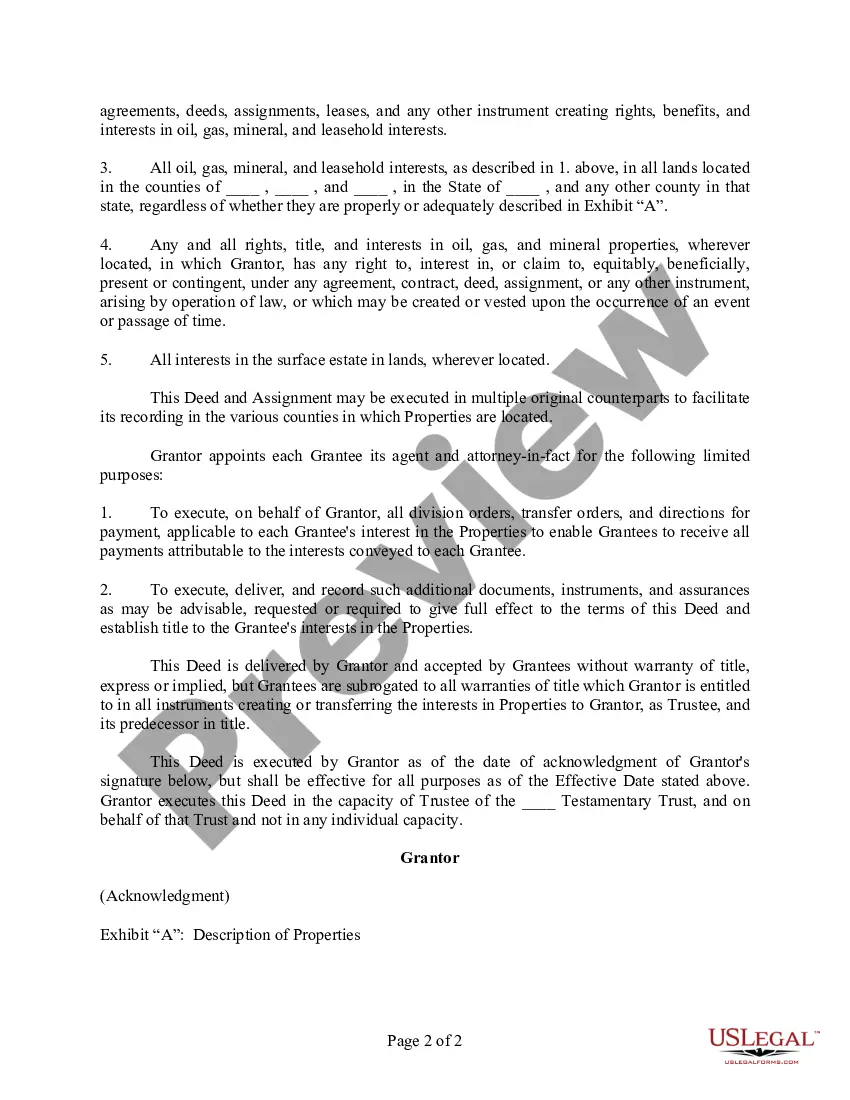
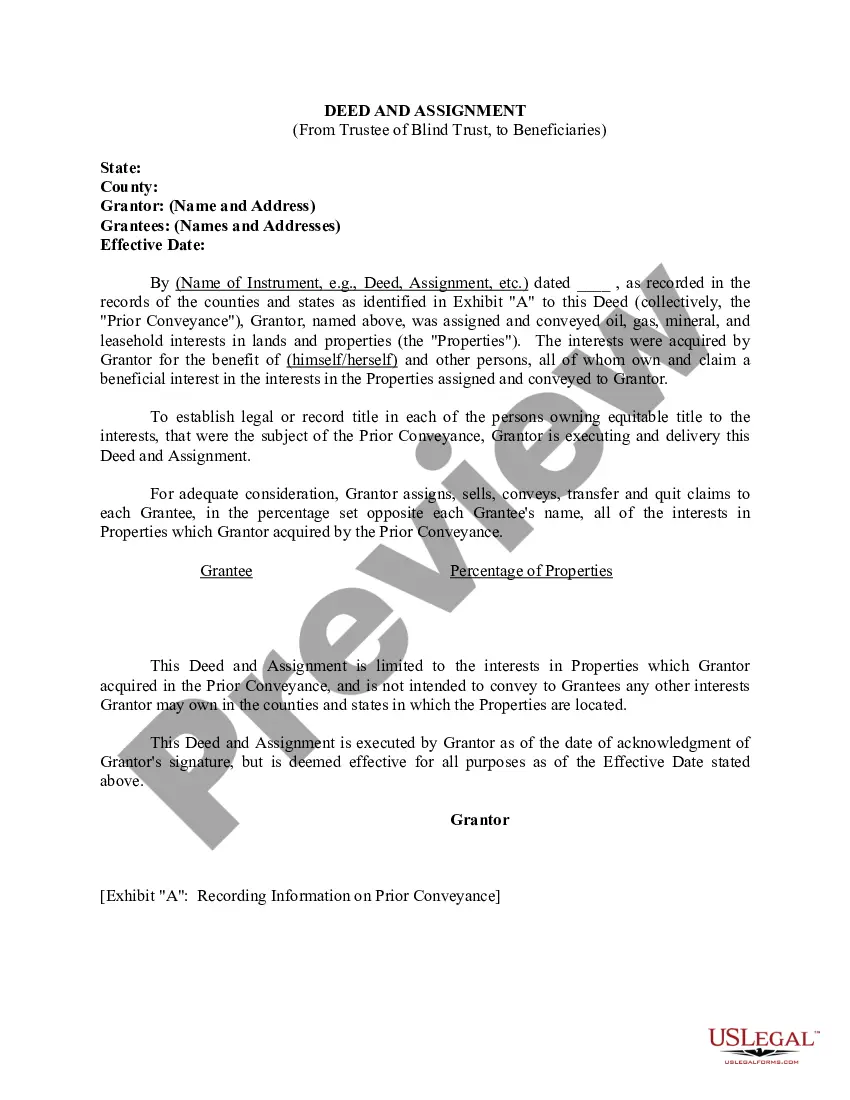
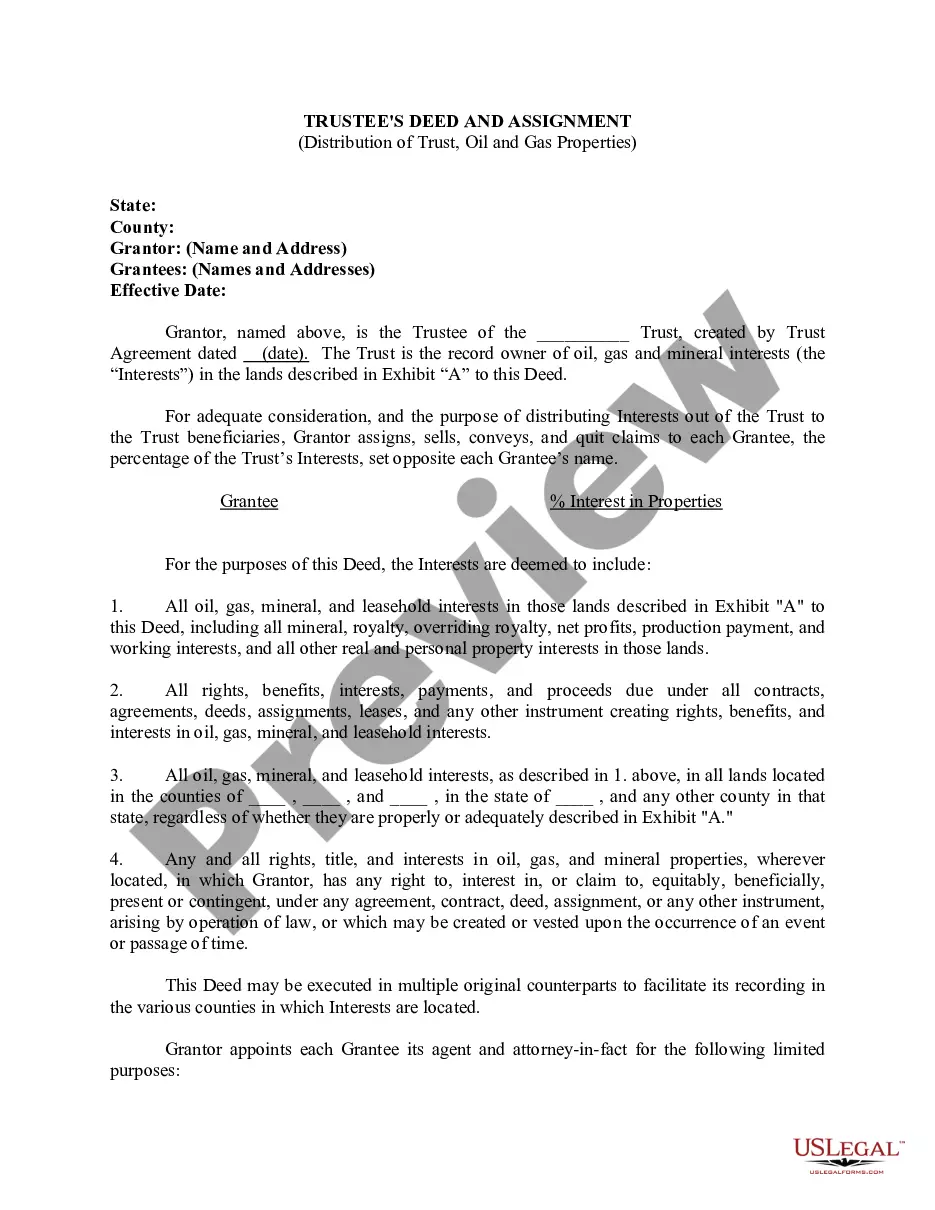
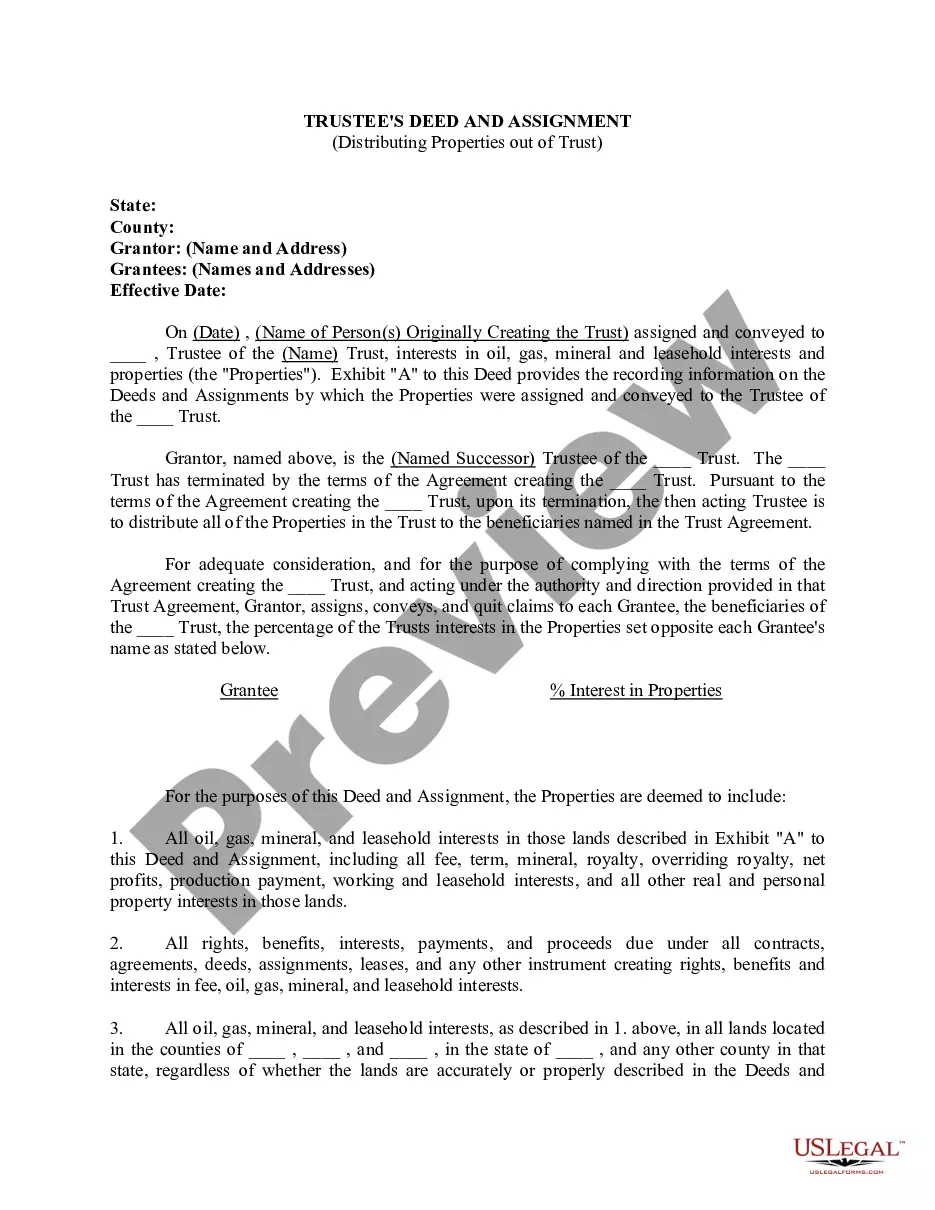
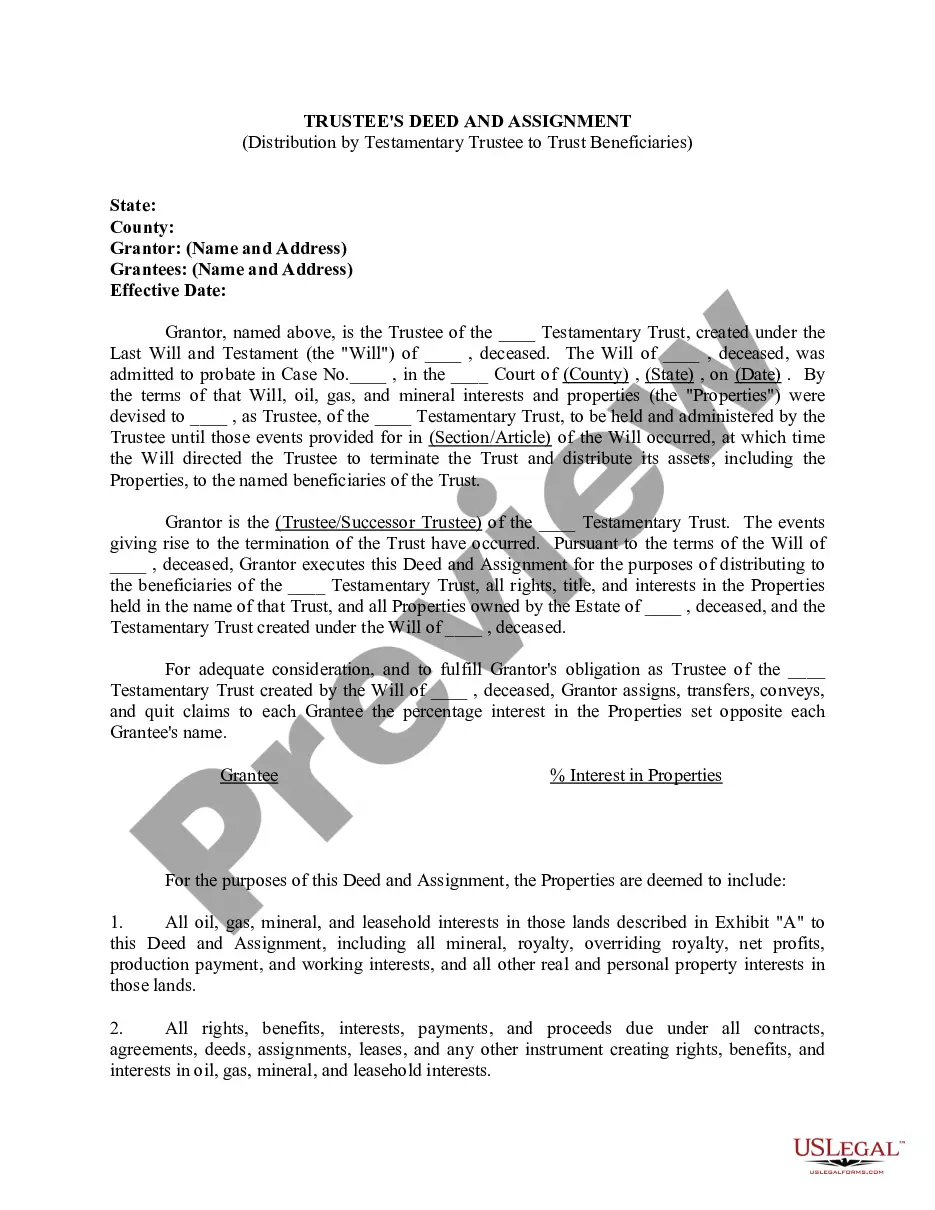
This is a form of deed in which a Trustee of a trust, created under the last will and testament of a deceased party, distributes the assets and interests out of the trust to the beneficiaries named in the trust created under the terms of the deceased's will.
Beneficiaries have the right to receive information about the trust, participate in its management, and receive their fair share as outlined in the trust agreement.
For a Trustee's Deed to be valid, it typically needs to be signed by the trustee and may need to be notarized, in addition to being recorded at the local county clerk's office.
Yes, beneficiaries can contest a Trustee's Deed if they believe that the trustee did not follow the terms of the trust or acted improperly.
A testamentary trust is created through a will and comes into effect only after the person who made the will passes away, unlike other trusts that can be set up during someone's lifetime.
An Assignment for Distribution is when the trustee divides up the trust's assets and assigns them to the beneficiaries based on the trust's instructions.
In Memphis, a trustee can be an individual or a bank or trust company, as long as they are willing to manage the trust according to its terms.
A Trustee's Deed is a legal document that shows the transfer of property from a trustee to a beneficiary, often under the terms of a will or a trust.