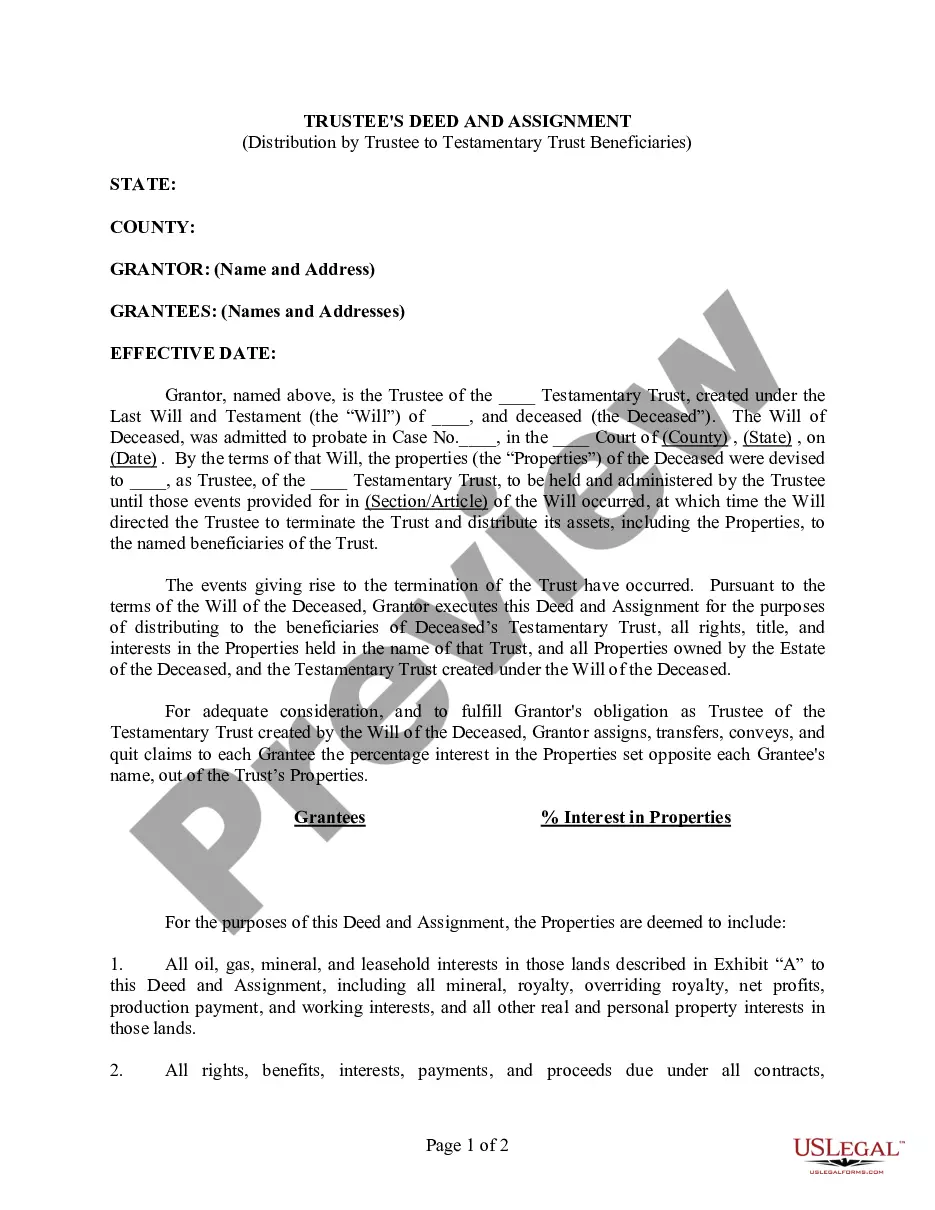
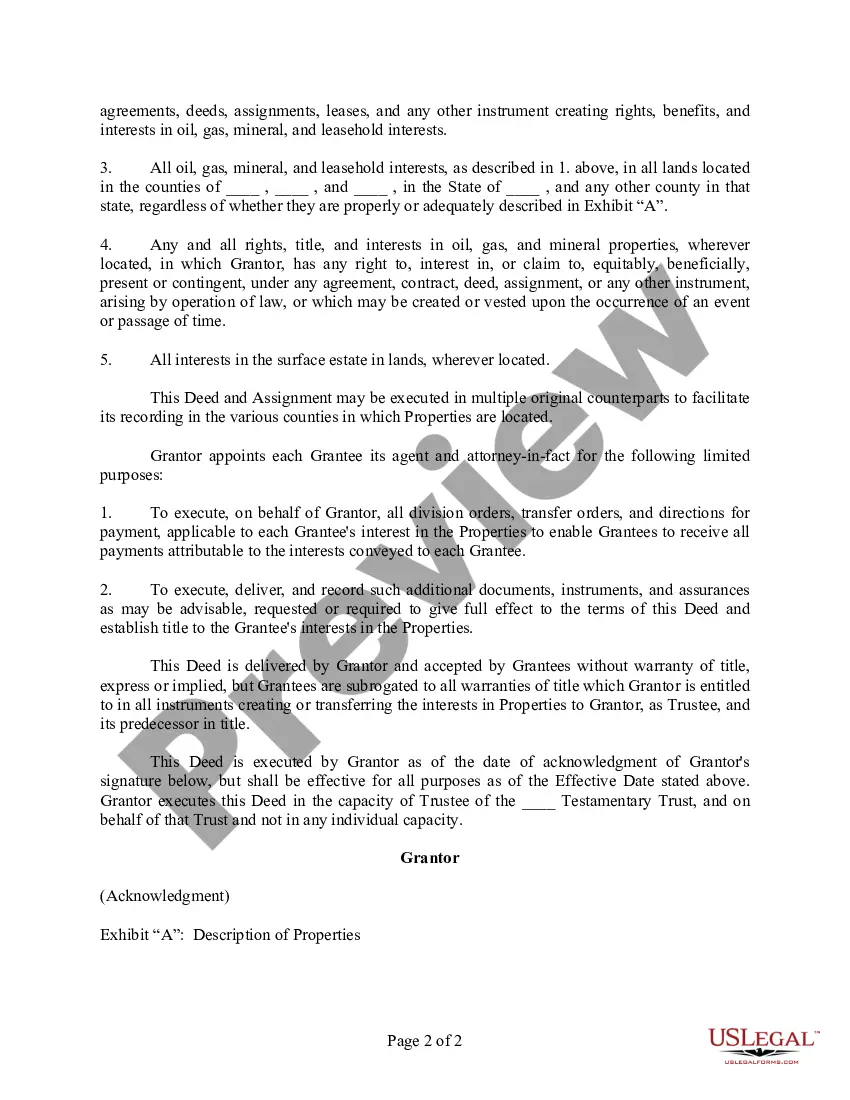
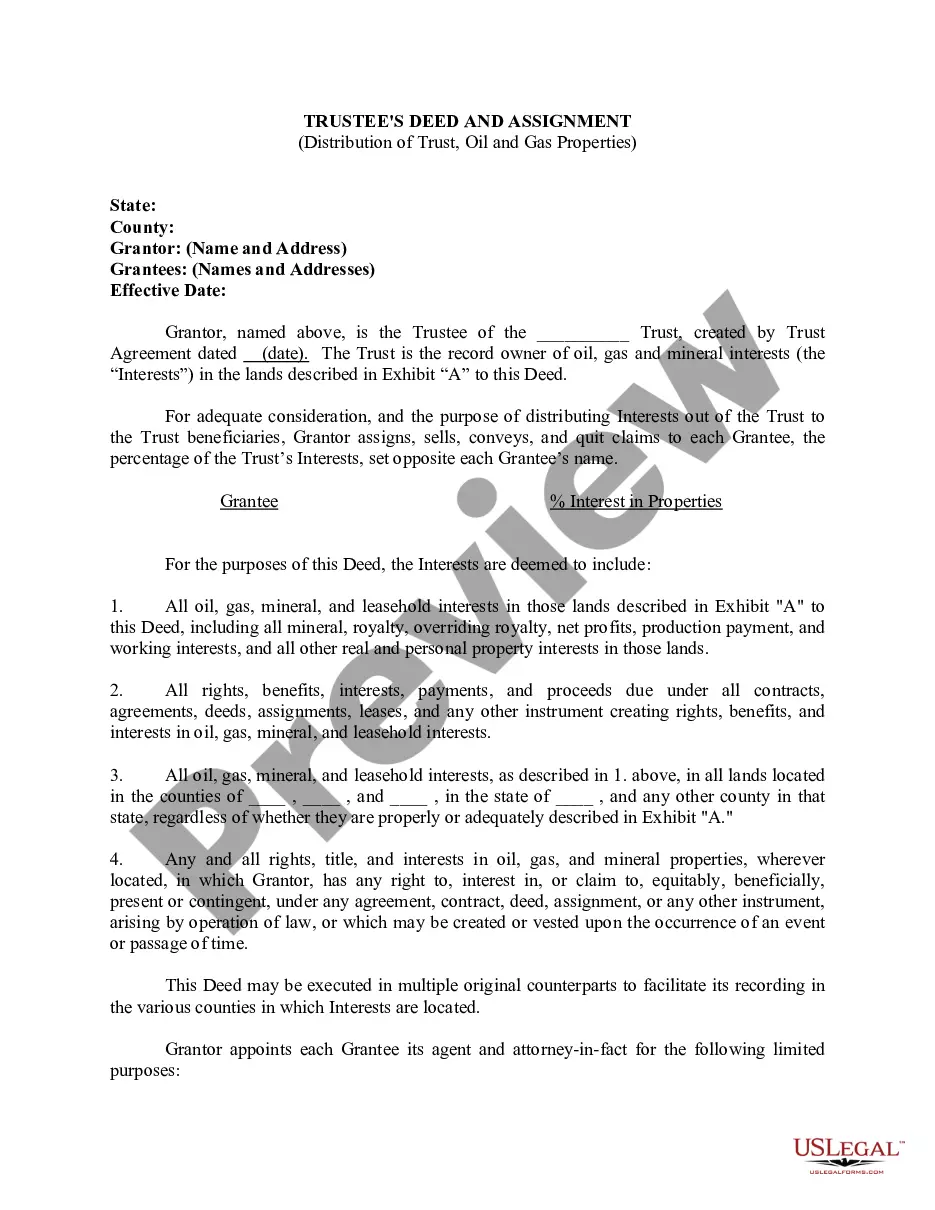
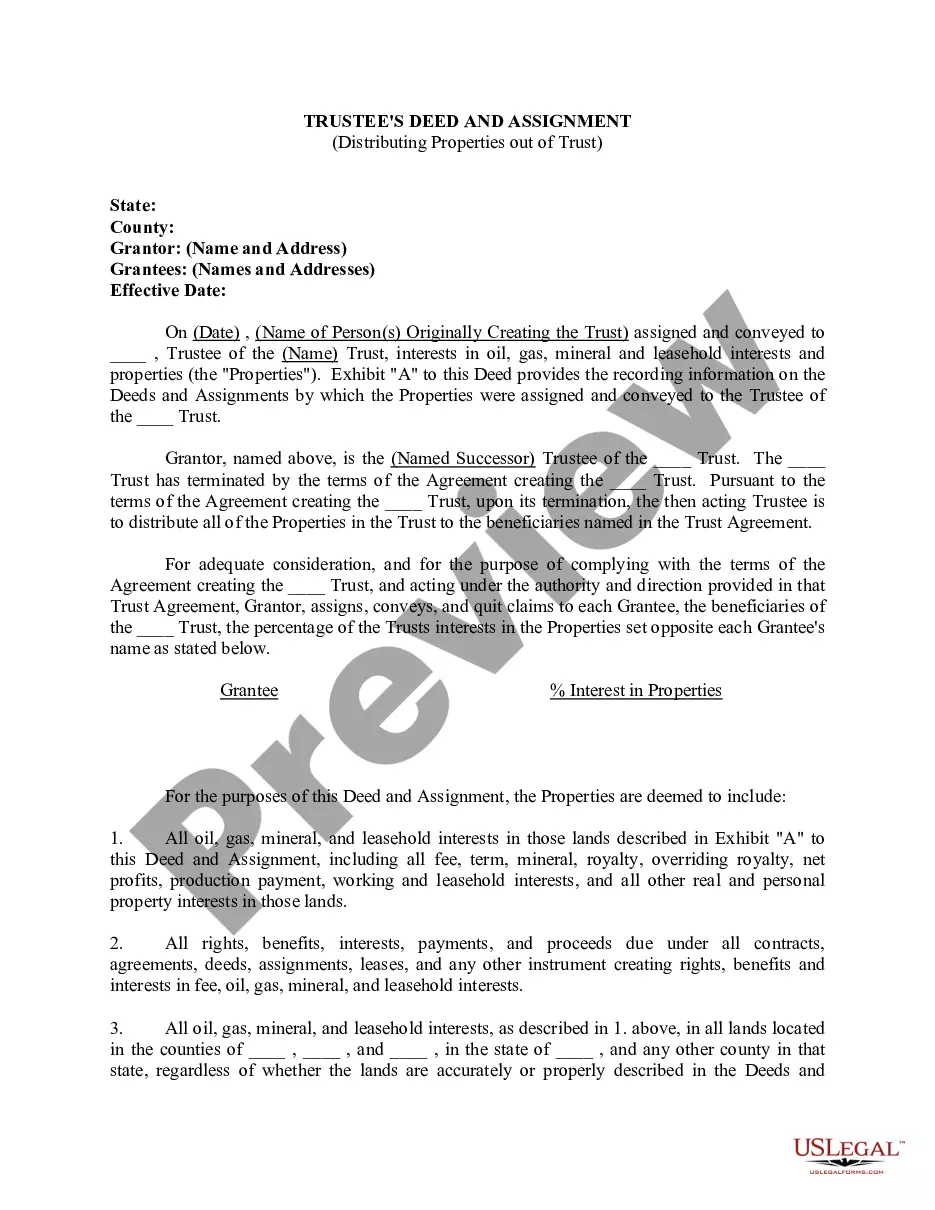
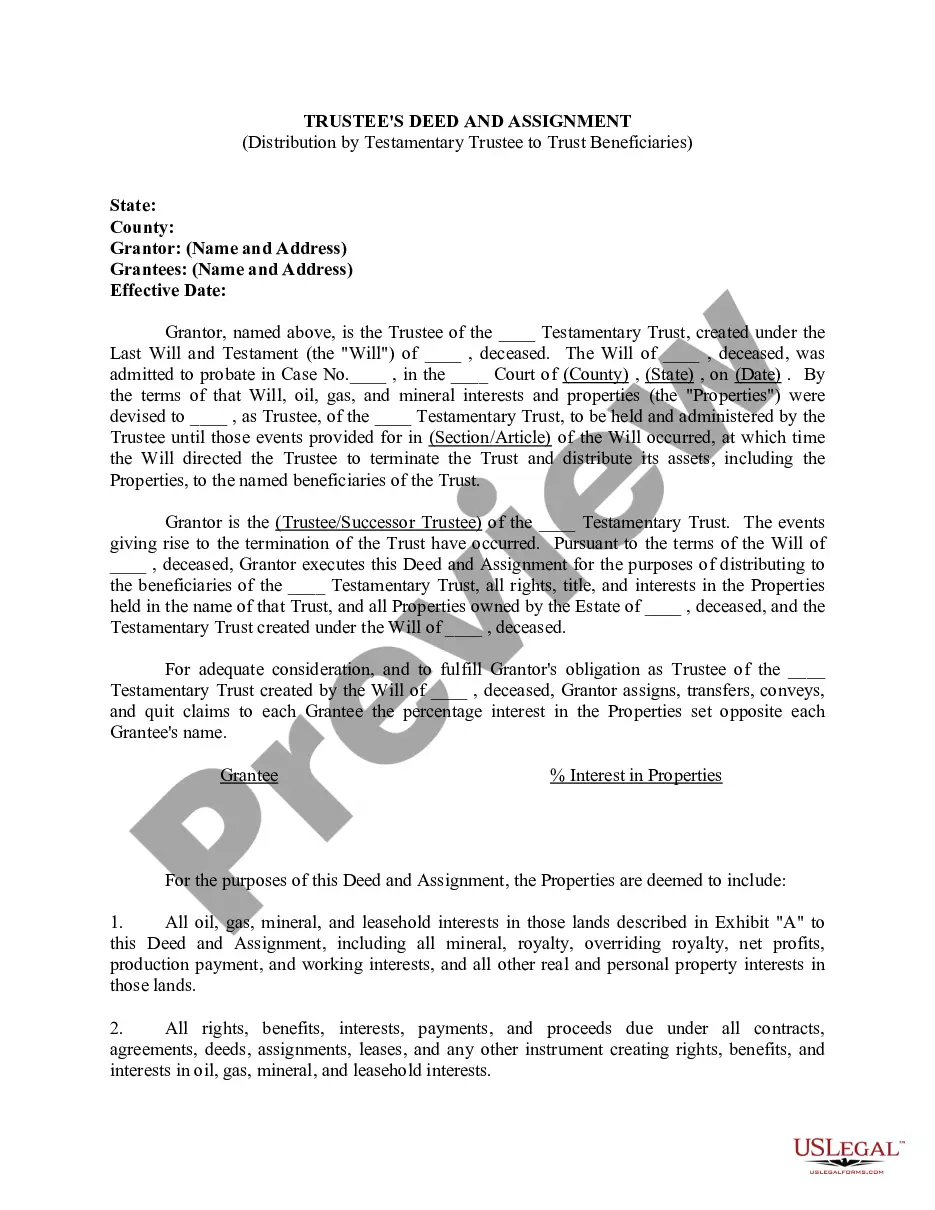
This is a form of deed in which a Trustee of a trust, created under the last will and testament of a deceased party, distributes the assets and interests out of the trust to the beneficiaries named in the trust created under the terms of the deceased's will.
The time can vary based on the complexity of the trust and any potential disputes. Generally, though, you can think of it like brewing a cup of coffee – it takes some time to get it just right, but it’s worth the wait!
Yes, beneficiaries can dispute a Trustee's Deed if they believe the distribution is unfair or not as per the trust terms. It can get a bit murky, like family disagreements during the holidays, but it’s important to sort things out fairly.
If the trust is silent on distribution, the trustee may have to follow Texas state laws or seek court guidance. It's a bit like trying to find your way without a map – you might need to ask for directions to get it right.
An assignment for distribution outlines how the assets are divided among the beneficiaries. Picture it as dividing a pie, making sure everyone gets their fair slice based on what’s written in the trust.
Assigning a deed means giving ownership of the property to the beneficiaries specified in the trust. It’s like passing the baton in a relay race, ensuring that the next runner has what they need to finish the race.
A trustee can be any adult who is trusted to manage the assets in a trust. Think of them as the captain of the ship, making sure everything sails smoothly for the beneficiaries.
A Trustee's Deed is a legal document that transfers property from a trust to a beneficiary. It's like handing over the keys to someone because the previous owner wanted to make sure their loved ones are taken care of after they’re gone.