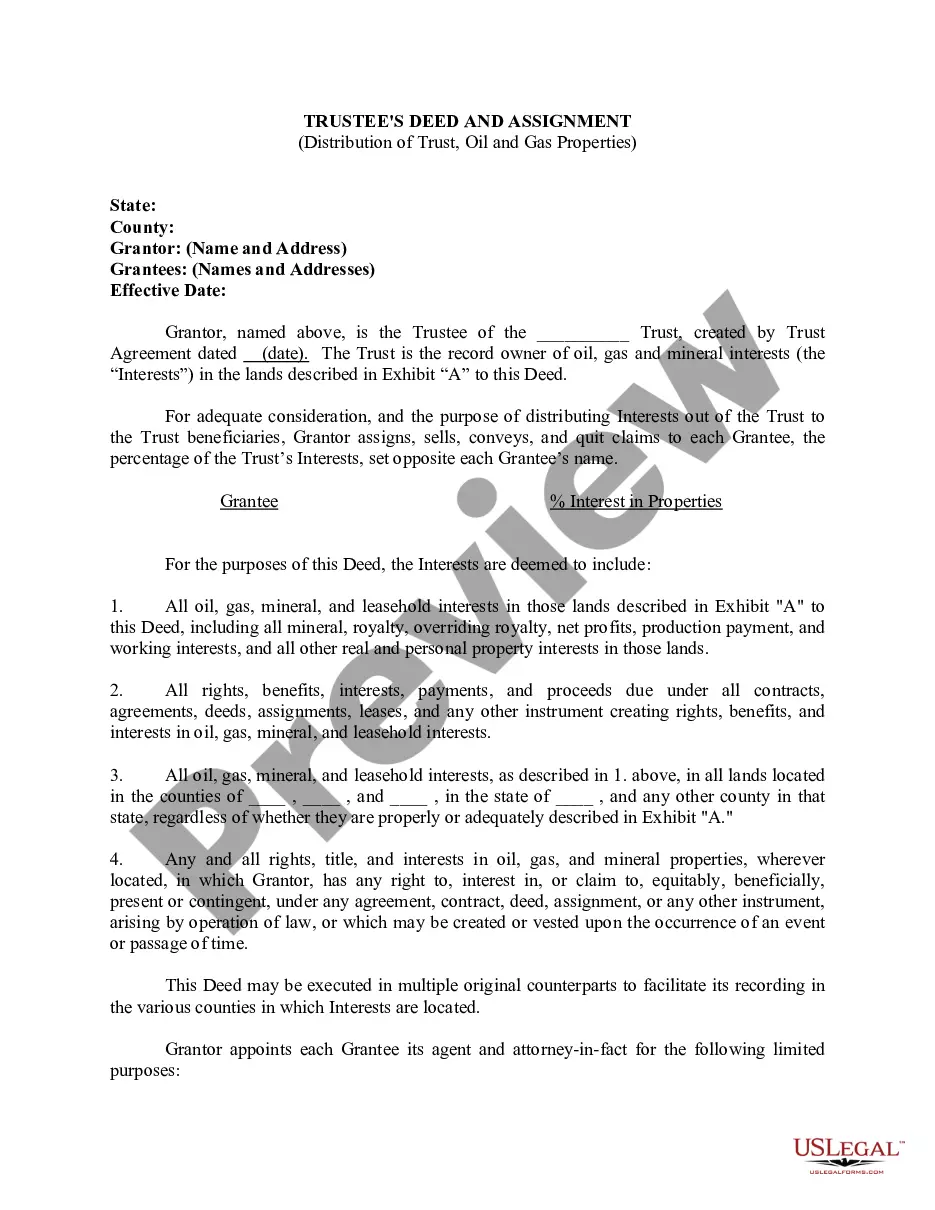
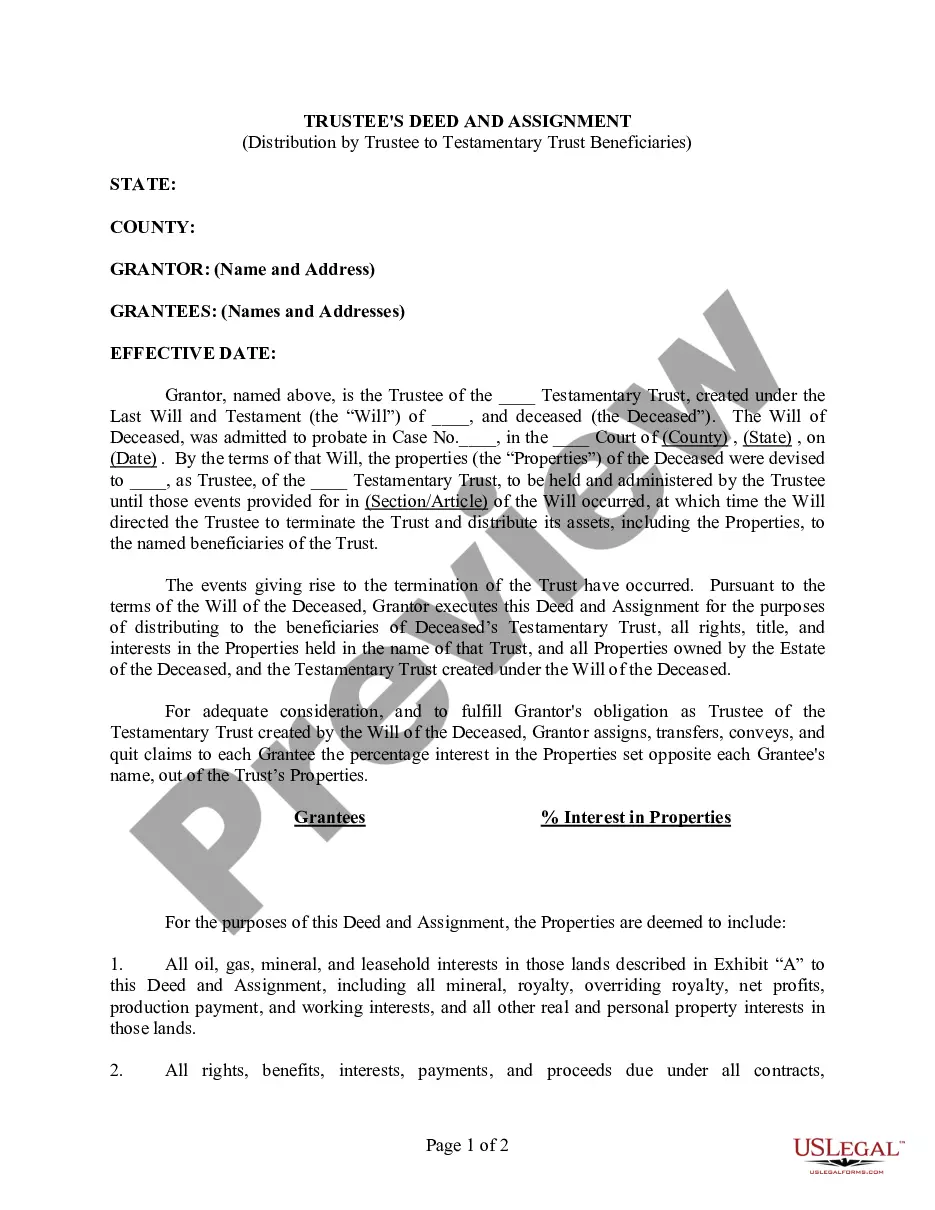
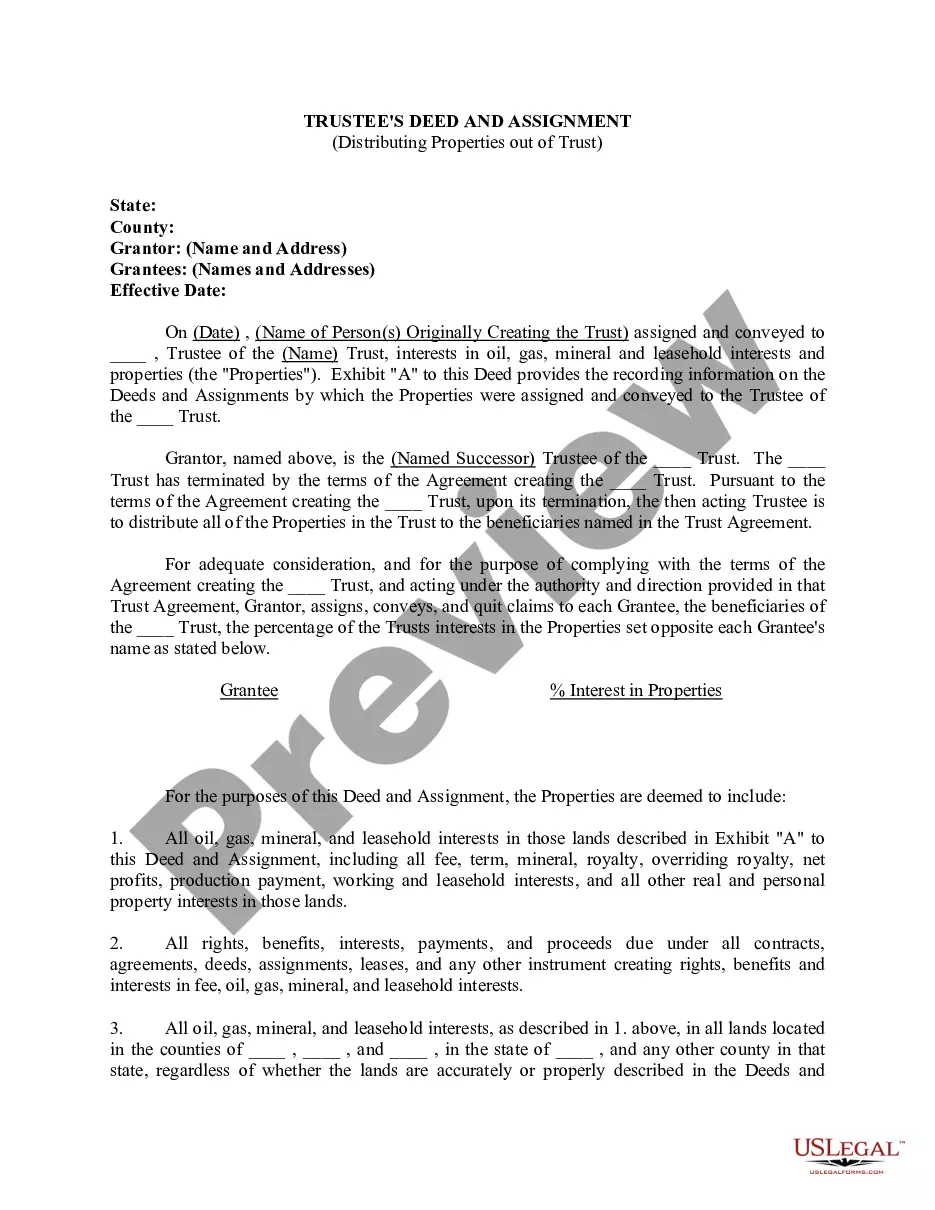
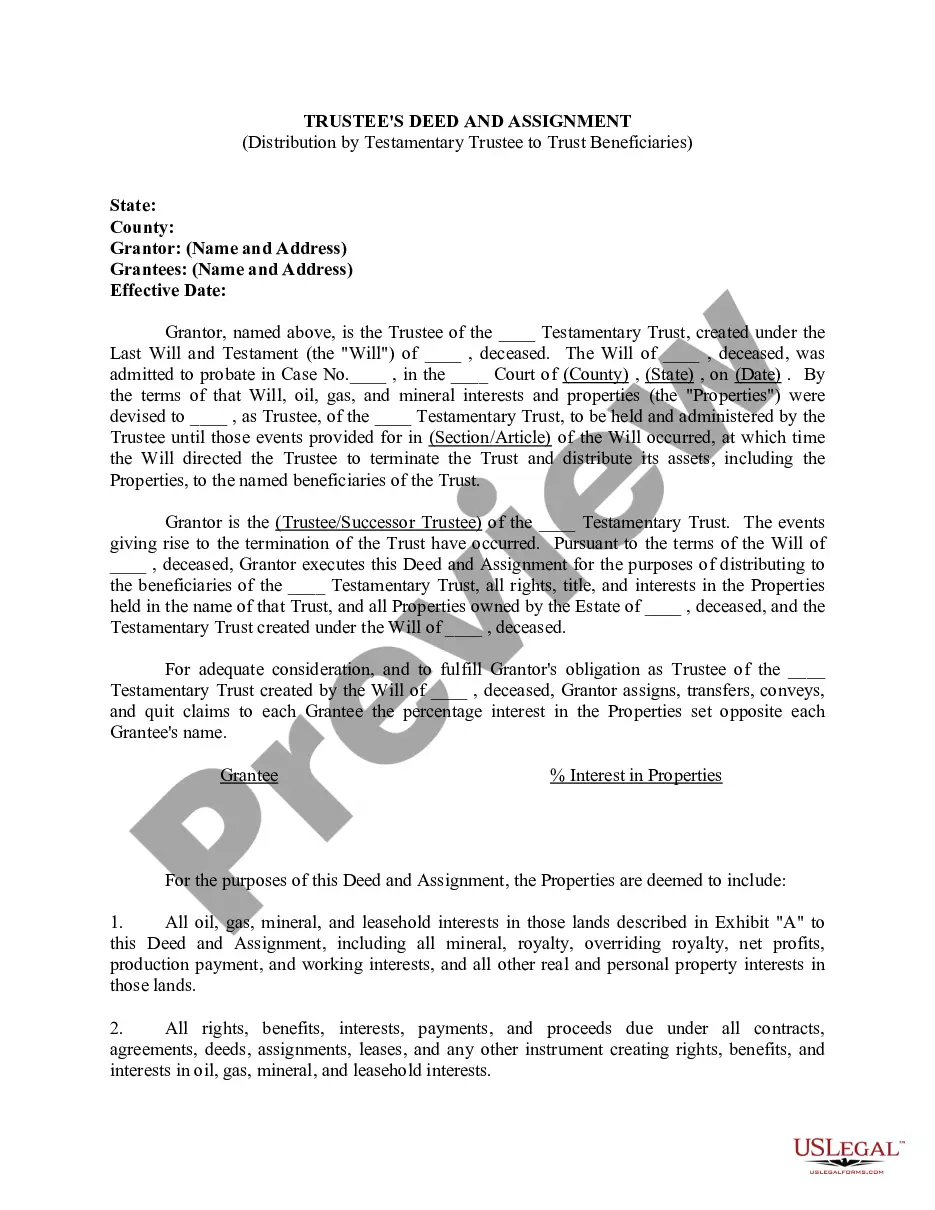
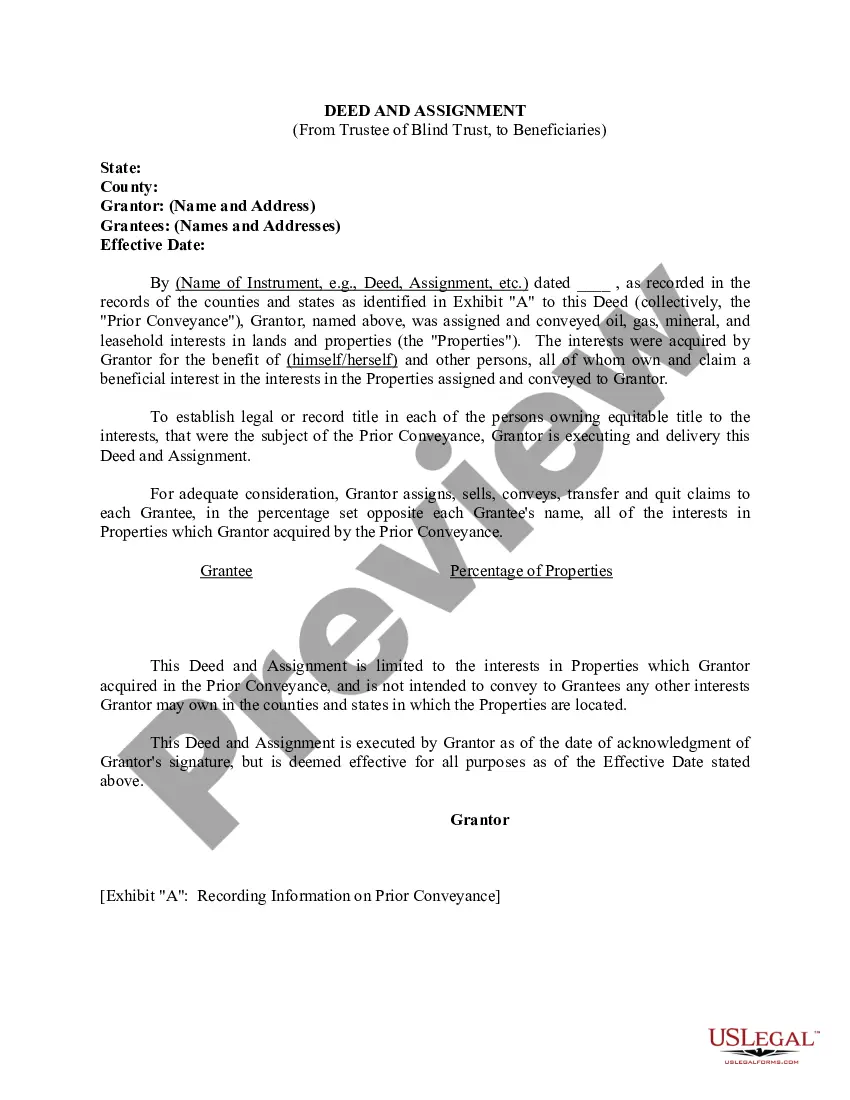
This form addresses the situation where properties are held in trust and the trustee desires to transfer those properties to the beneficiaries named in the trust agreement.

Beneficiaries can protect their rights by reviewing the trust documents and possibly seeking legal advice to navigate the process smoothly, just like having a guide on a road trip!
Generally, once the deed is executed and the property is transferred, it's a done deal! Revoking it can be complicated and may require legal steps, so it's best to make sure everything's in order from the get-go.
Absolutely! It's usually good practice for trustees to inform beneficiaries before making a transfer, keeping everyone in the loop like a family meeting before the big decision.
If beneficiaries disagree, it can lead to disputes, similar to family feuds over an inheritance. It's best to have clear communication and possibly legal help to iron things out.
Yes, in Texas, the transfer must be executed with certain formalities, such as being in writing and sometimes notarized, much like signing your name on the dotted line to make things official!
The trustee may need to transfer property to beneficiaries when the trust has been settled and it's time to distribute the assets as per the trust agreement, ensuring everyone gets what they're entitled to, fair and square.
A deed from a trustee to trust beneficiaries is a legal document that officially transfers property or assets from the trustee to the beneficiaries of a trust. It's like handing over the keys to a house when it's time to move in!