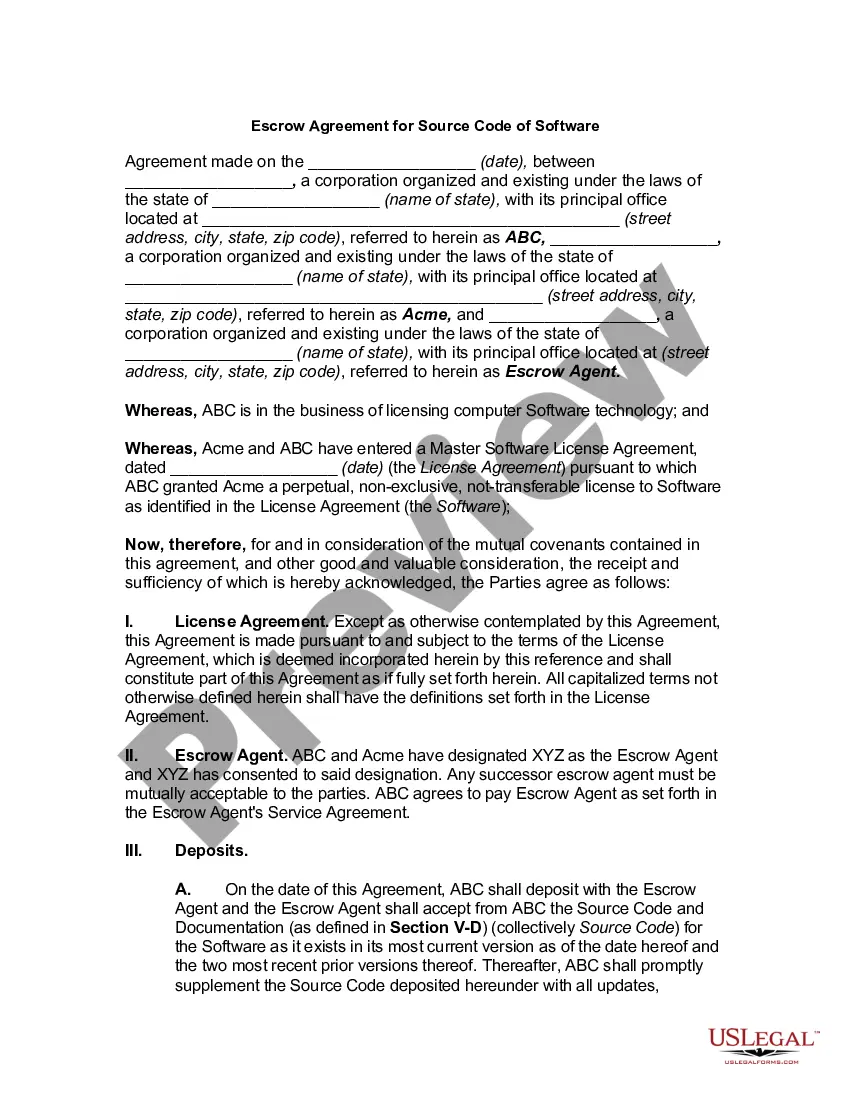
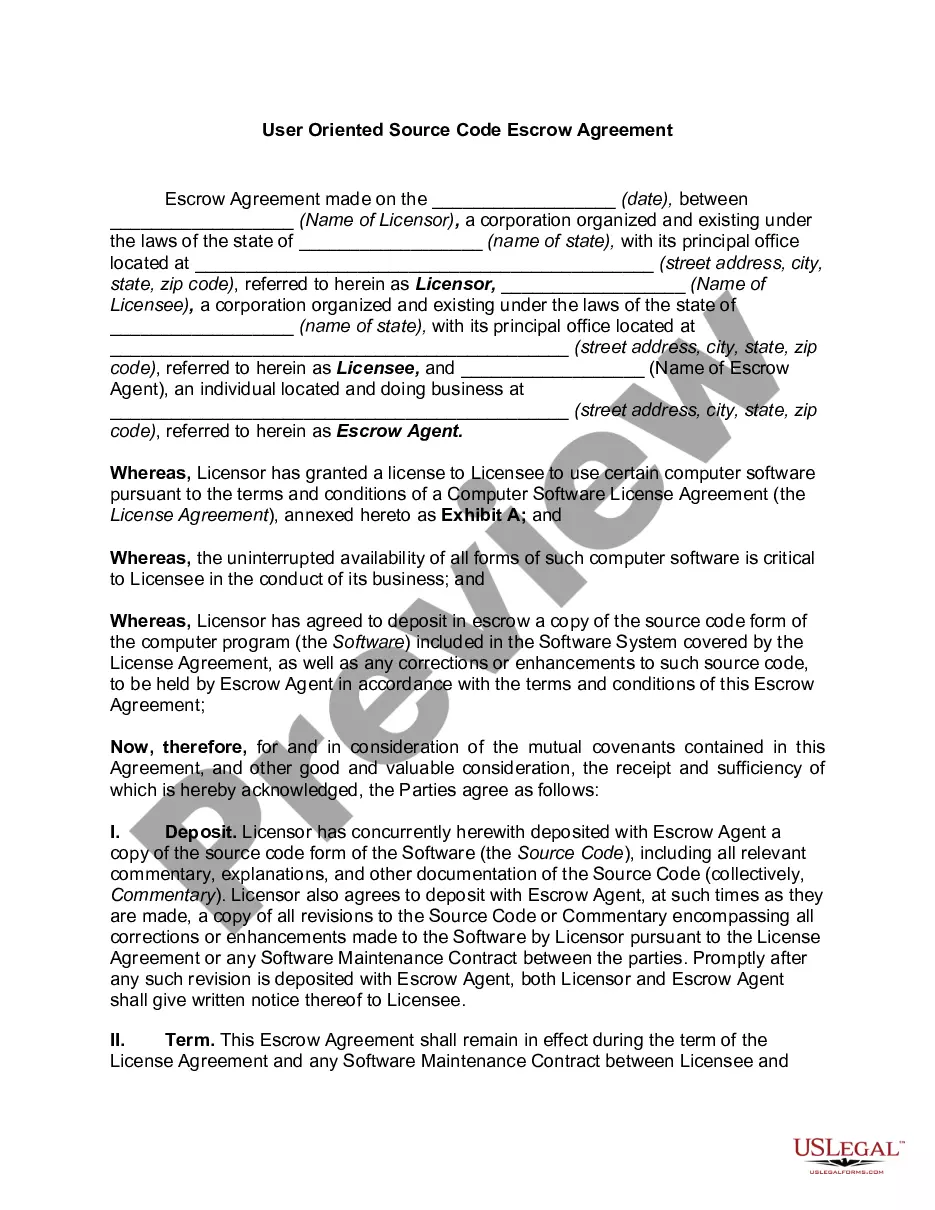
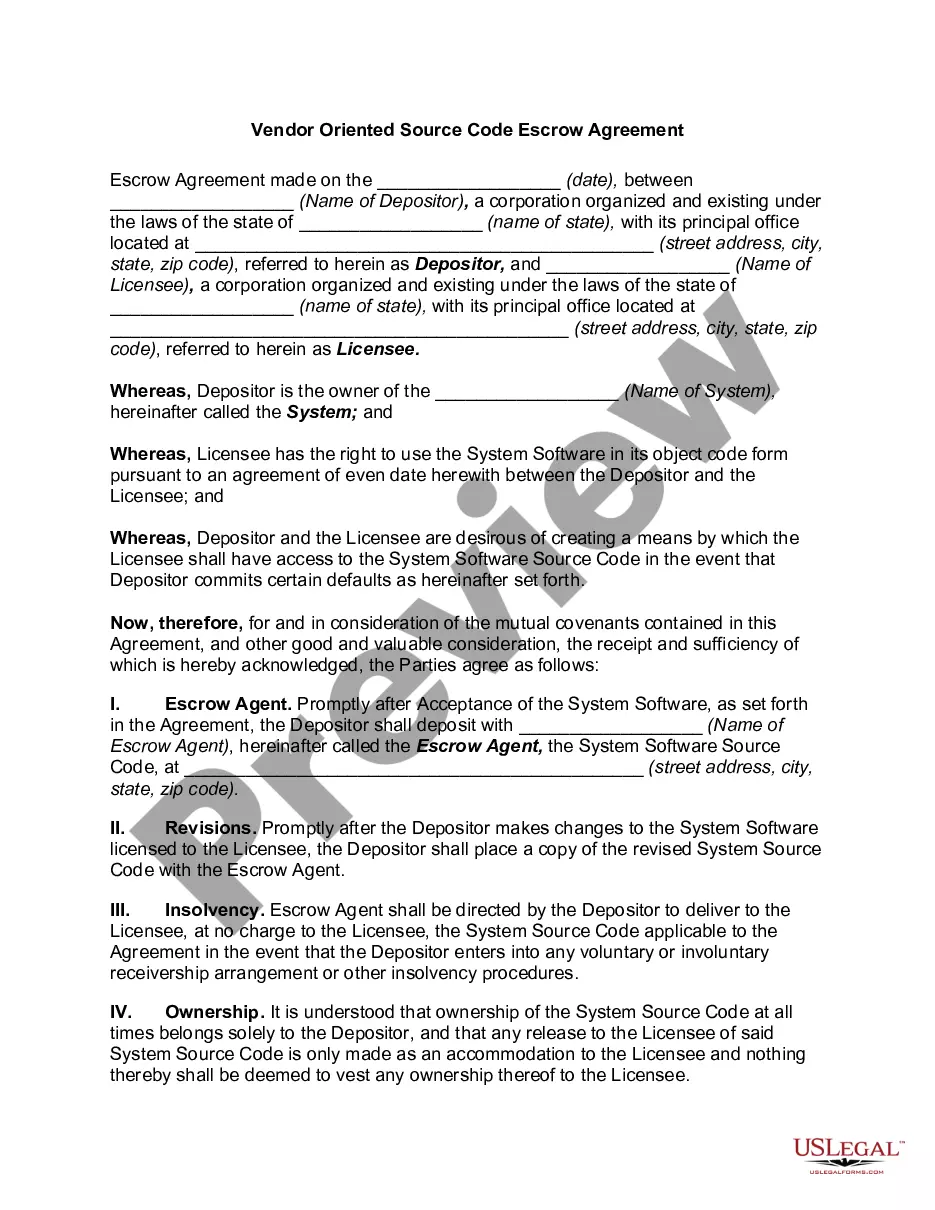
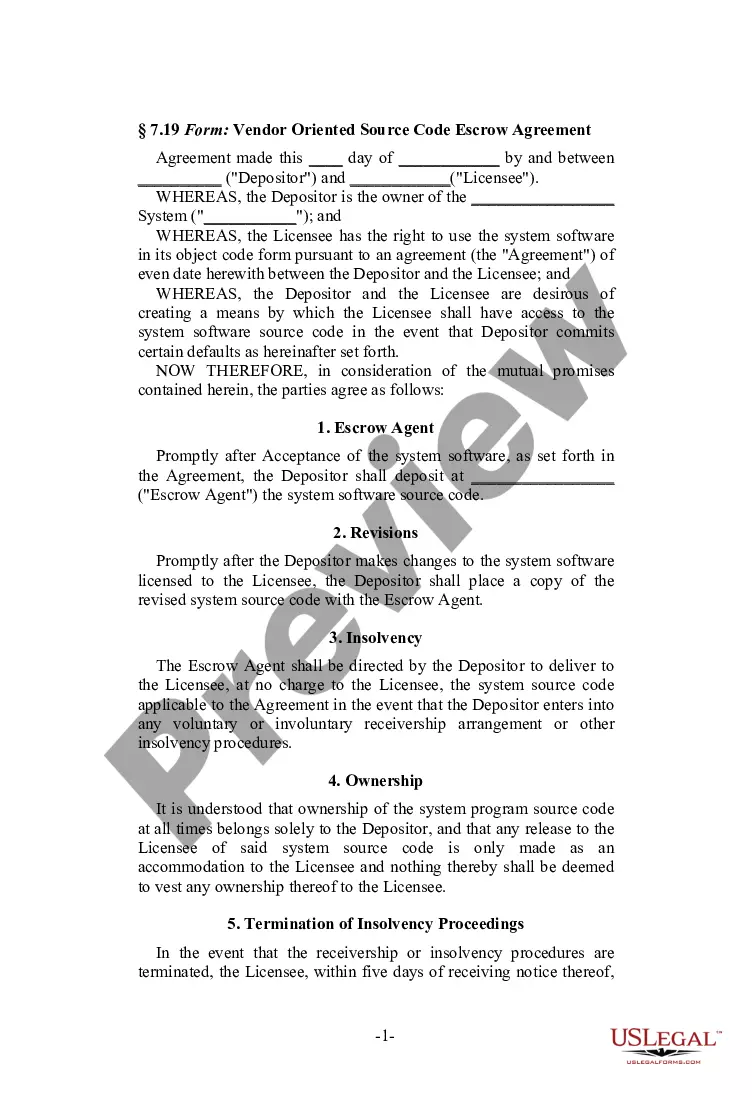
This form is a Source Code Escrow Agreement. The form provides that as compensation for the services to be performed by the escrow agent, the licensee will pay the escrow agent a certain fee which is due at the time of execution of the agreement. The document also provides that neither the escrow agreement, nor any rights, liabilities or obligations may be assigned by the escrow agent without the prior written consent of the licensee and the licensor.
Finding a trustworthy escrow agent is key. Look for someone with experience in the tech industry and a good reputation. Asking for referrals from fellow businesses or checking online reviews can point you in the right direction.
Yes, it is! Once both parties sign the agreement, it's a legally binding contract. This means everyone has to play by the rules outlined in the agreement.
Good question! Typically, the agreement will specify how updates are handled. Some arrangements require the developer to keep depositing the latest versions regularly to keep everything fresh and up-to-date.
Absolutely! Any company or individual using software can set up an escrow agreement. It's a smart move to protect your investment, especially if you depend on that software for your business.
The process is pretty straightforward! The developer deposits the source code with the escrow agent. If the conditions in the agreement are met, like the developer going bust, the escrow agent releases the code to the buyer.
In Seattle's thriving tech scene, having a source code escrow can give you peace of mind. If you rely on a particular software, this agreement ensures that you won't be left in the lurch if the developer goes belly up or stops supporting the product.
A source code escrow agreement is like a safety net for software buyers. It ensures that the source code of a software application is held by a trusted third party. If something goes wrong with the original developer, the buyer can access that source code, keeping their software live and kicking.