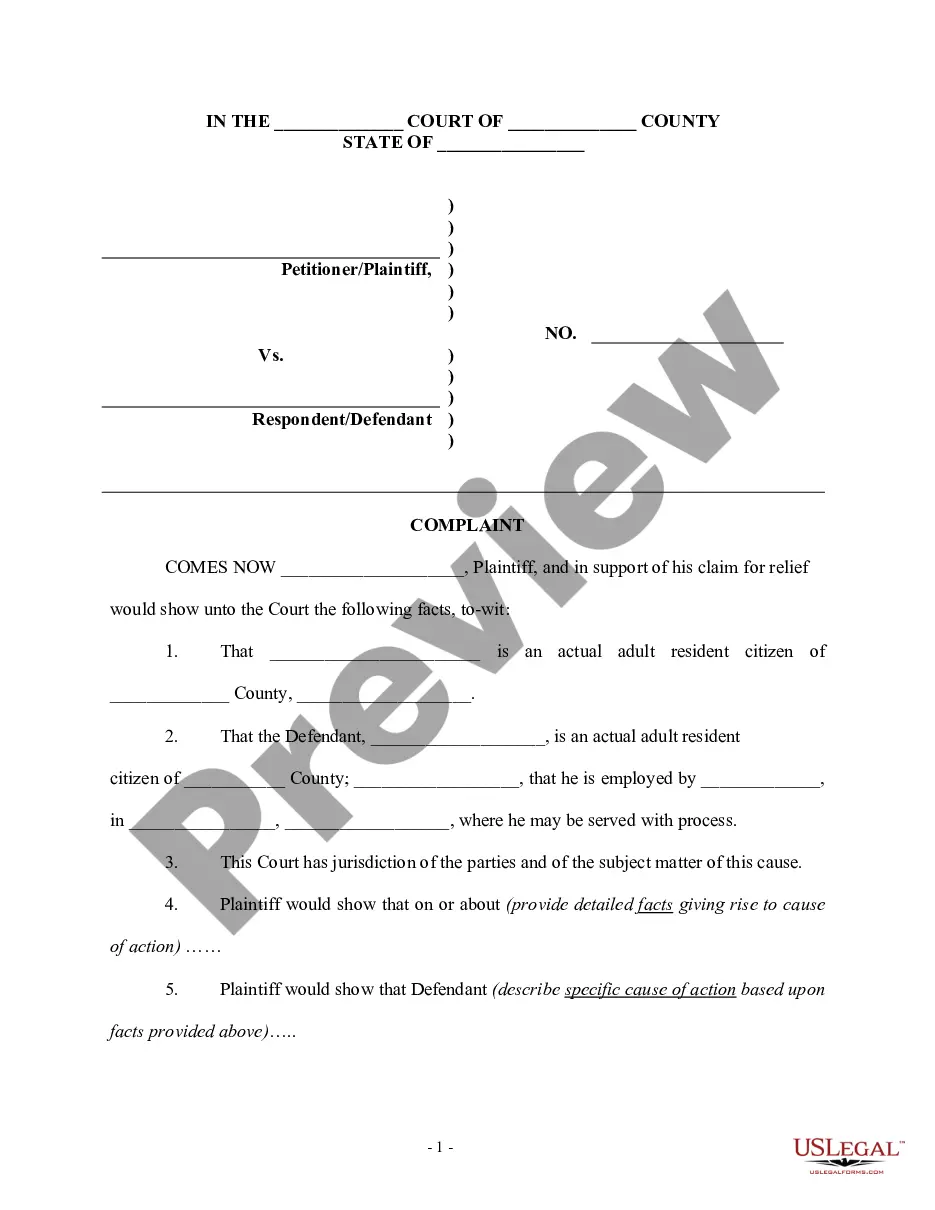
Santa Ana California Complaint for Damages and Declaratory Judgment
Description






Form popularity
FAQ
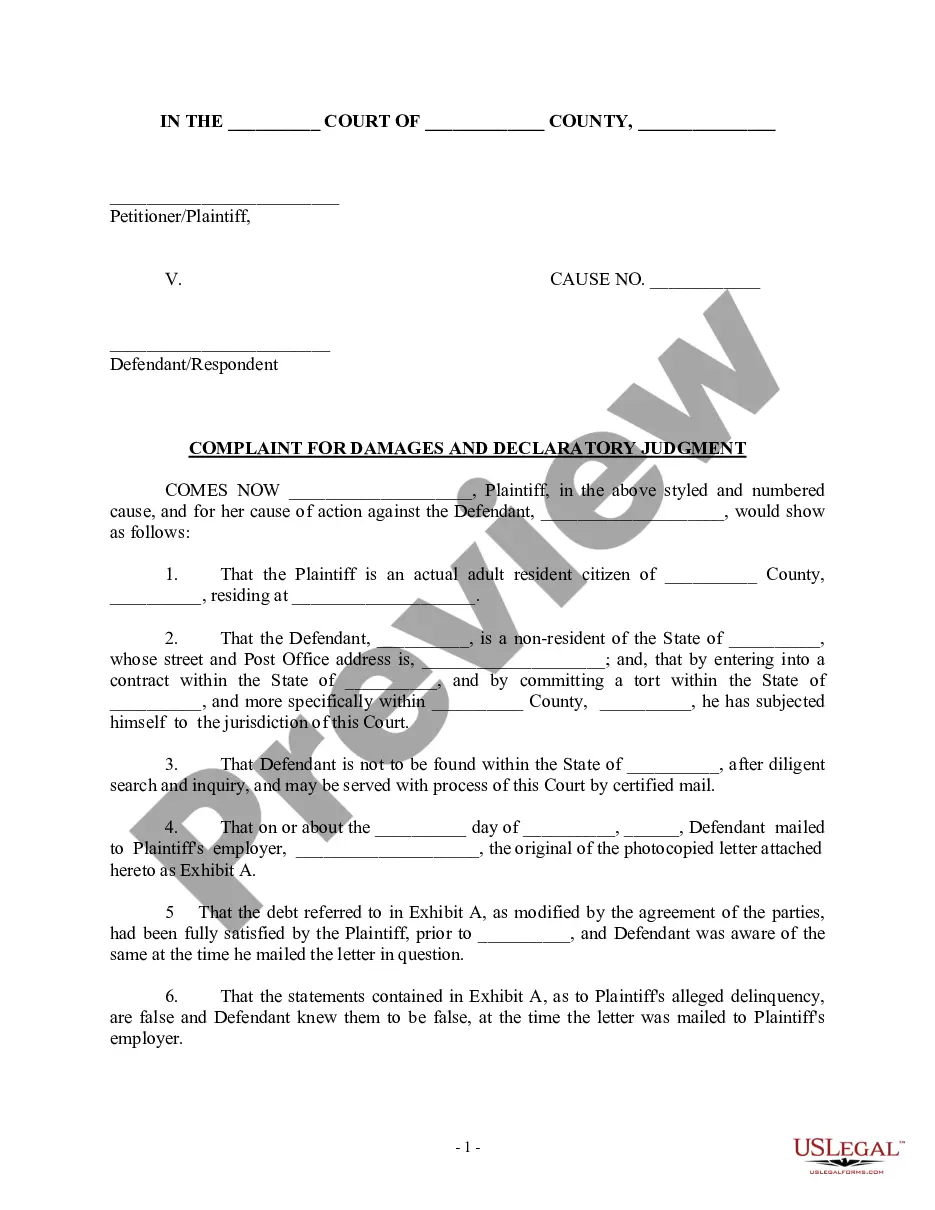
Filing a complaint in Orange County involves several steps, beginning with the preparation of your documents detailing your claims, such as a Santa Ana California Complaint for Damages and Declaratory Judgment. You must then submit these documents to the appropriate court, along with any required fees. Utilizing platforms like US Legal Forms can simplify this process by providing templates and guidance tailored to local requirements, ensuring your filing adheres to legal standards.
Declaratory relief refers to a judicial determination to clarify legal rights or obligations before any further action is taken. In the context of a Santa Ana California Complaint for Damages and Declaratory Judgment, an example could involve a property owner seeking a court ruling on the validity of a restrictive covenant. This ruling can provide clarity and potentially prevent future disputes, empowering parties to move forward with confidence.
In responding to a Santa Ana California Complaint for Damages and Declaratory Judgment, defendants typically outline admissions or denials of each allegation stated in the complaint. They may also include affirmative defenses, counterclaims, or cross-claims depending on the situation. These responses are crucial as they shape the legal landscape moving forward. Understanding these components can help clarify your position in the dispute.
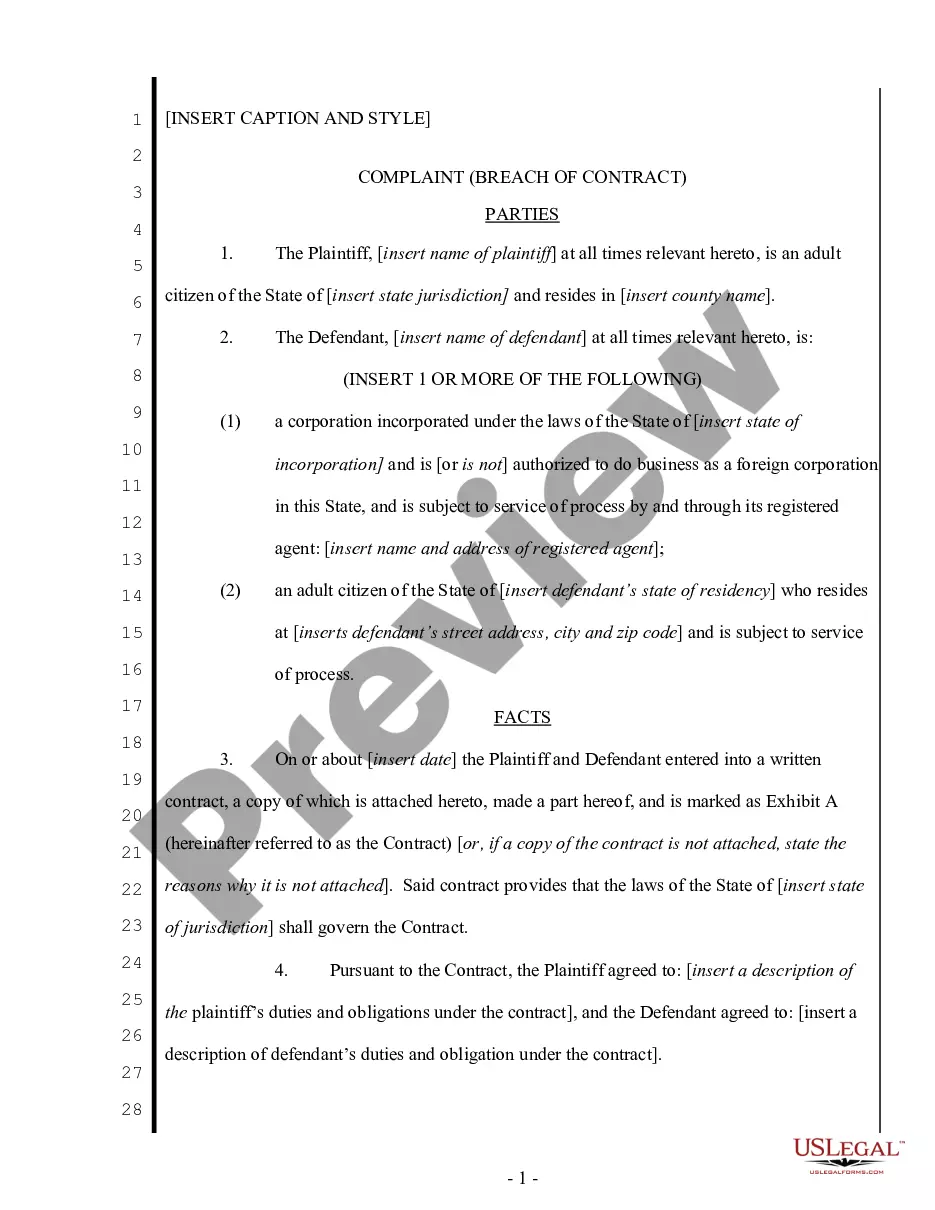
In a Santa Ana California Complaint for Damages and Declaratory Judgment, understanding the three elements of cause of action is essential. First, you must establish the existence of a legal duty owed by the defendant to the plaintiff. Next, demonstrate that the defendant breached this duty, leading to harm. Finally, you must show that this breach directly caused the damages or legal issue you seek to resolve. Addressing these elements clearly strengthens your case and supports your claims.
Rule 3.500 outlines the requirements for filing a request for services, including presenting evidence at trial. This rule is significant for cases that involve a Santa Ana California Complaint for Damages and Declaratory Judgment, as it clarifies how parties can prepare their evidence and witness lists. Following this rule ensures a smoother court process and helps avoid delays during trial.
In California, you can file a statement of damages once you have filed a complaint that seeks monetary damages, particularly for personal injury cases. For a Santa Ana California Complaint for Damages and Declaratory Judgment, this filing is crucial in providing detailed information about the damages you seek to recover. Be sure to follow the proper court procedures when submitting this statement.
In California, you encounter two primary dismissal rules: voluntary dismissal and involuntary dismissal. A voluntary dismissal occurs when the plaintiff, such as in a Santa Ana California Complaint for Damages and Declaratory Judgment, decides to withdraw the case. On the other hand, an involuntary dismissal happens when the court dismisses the case for reasons such as a failure to prosecute.
Rule 3.400 pertains to the assignment of civil cases that require immediate trial settings. This rule is essential for cases such as Santa Ana California Complaint for Damages and Declaratory Judgment, as it helps ensure that your case gets the attention it deserves in a timely manner. Each assignment under this rule aims to promote fairness and efficiency within the court system.
In California, a judgment may be void if the court lacked jurisdiction over the case or the parties involved. Additionally, if due process was not followed, the judgment can be considered invalid. For those filing a Santa Ana California Complaint for Damages and Declaratory Judgment, recognizing the factors that can void a judgment can save significant time and resources.
Rule 3.400 sets guidelines for the general assignment of civil cases within courts. It helps in managing the workloads of judges by establishing protocols on how cases, including a Santa Ana California Complaint for Damages and Declaratory Judgment, are allocated. This ensures efficient handling of cases through a well-structured judicial process.