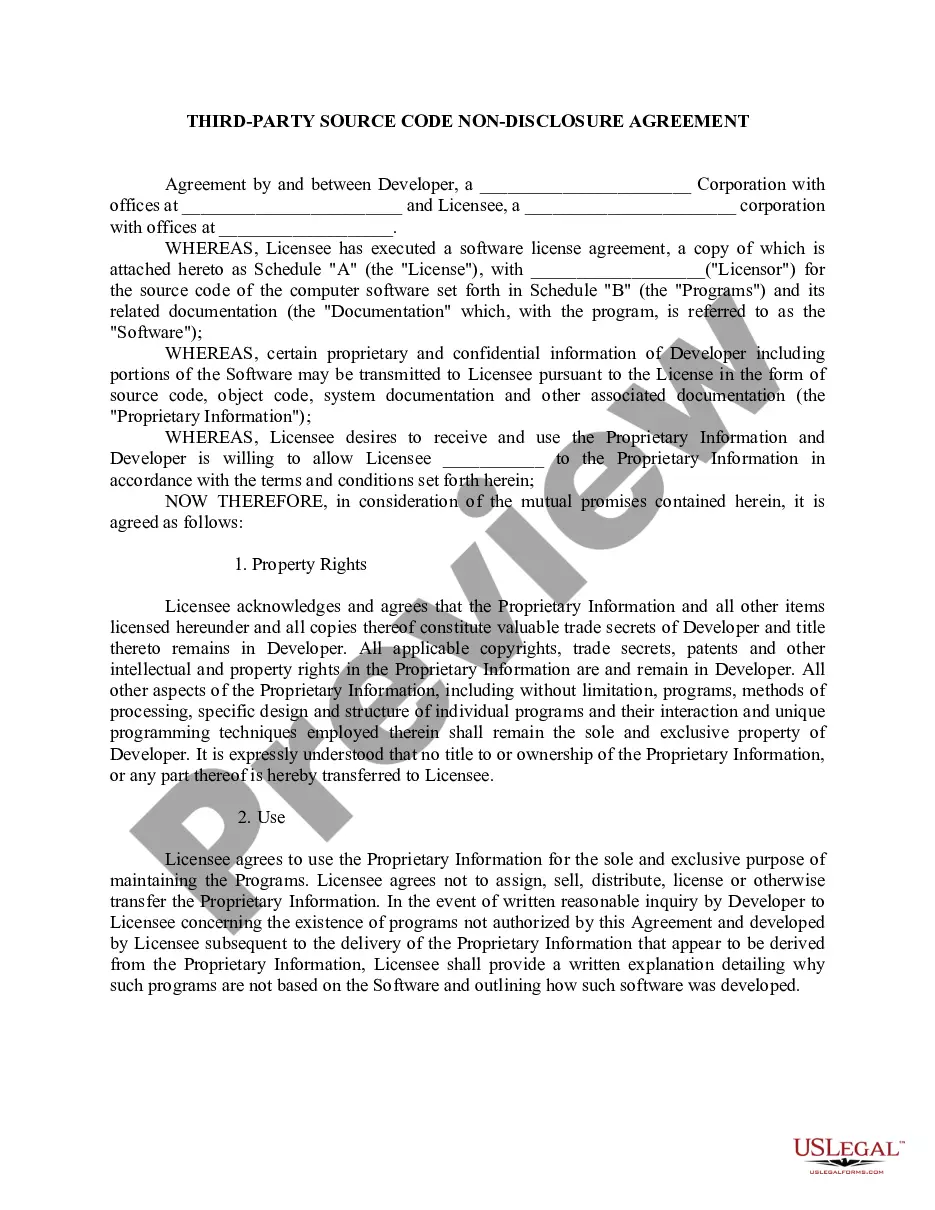
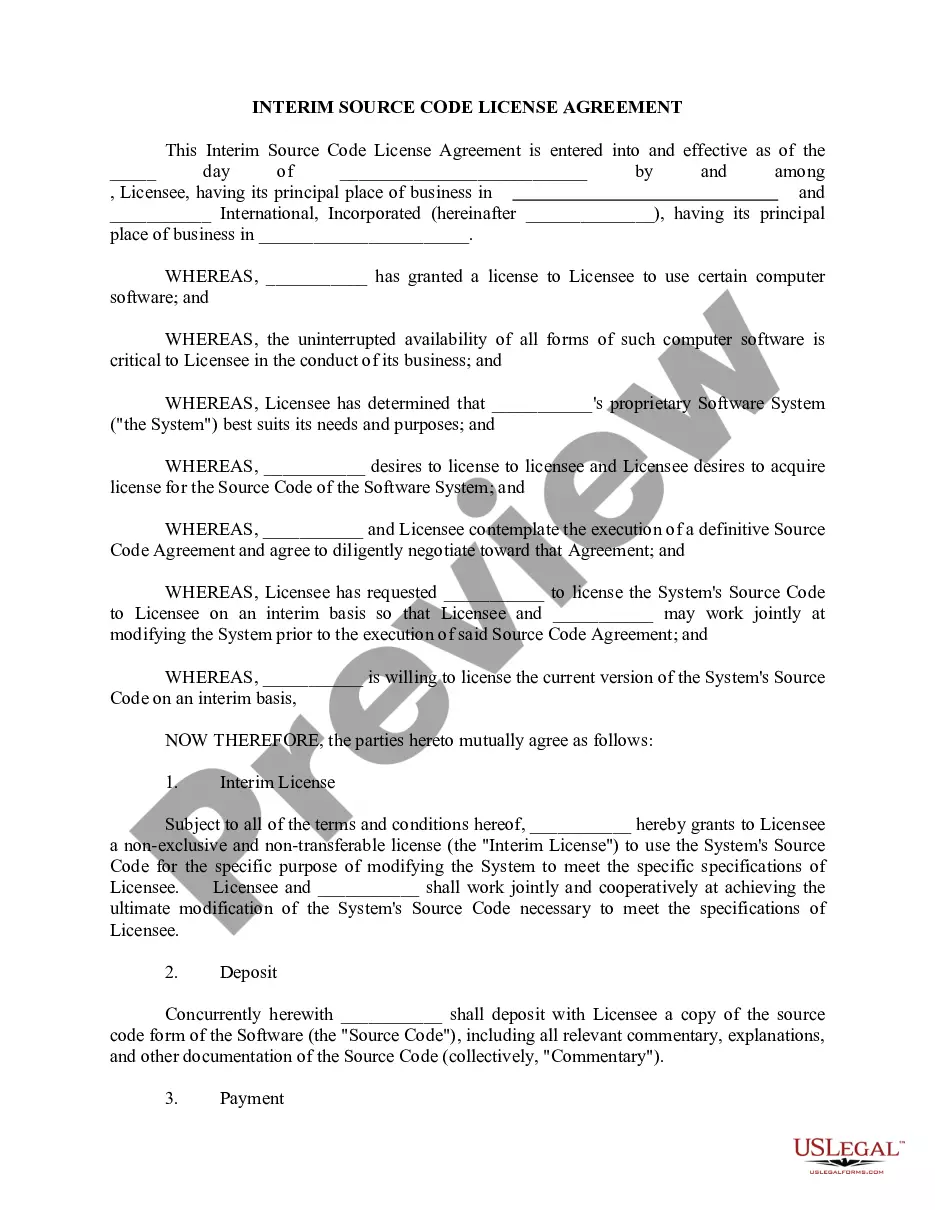
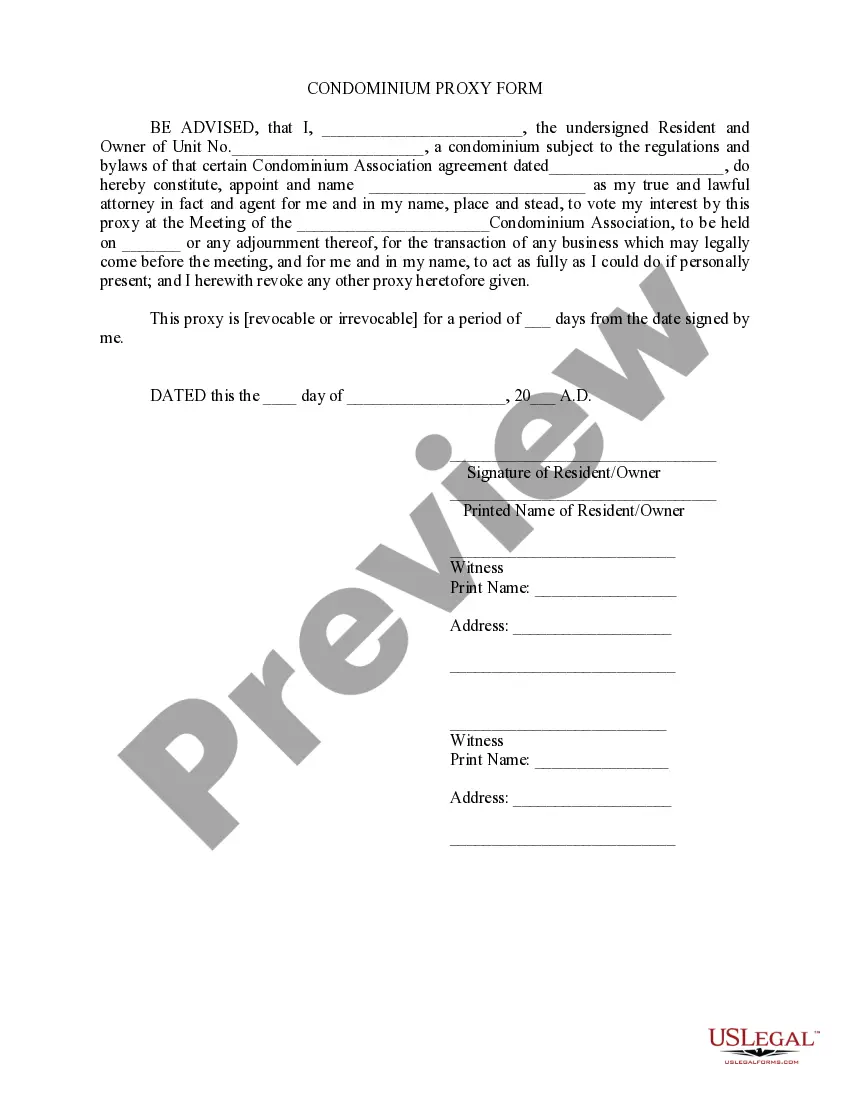
This form is a Condominium Proxy Form. A condominium owner appoints and names his/her attorney in fact and agent who will vote his/her interest by proxy at a meeting of the condominium association.
Irvine California Condominium Proxy Form
Category:
State:
Multi-State
City:
Irvine
Control #:
US-01581A
Format:
Word;
Rich Text
Instant download
Description
Form popularity
FAQ
Filling out the form of proxy requires attention to detail and clarity in your instructions. Begin by entering your name and the name of the proxy clearly, then specify how you want your votes cast on the issues listed. The Irvine California Condominium Proxy Form often includes a section for additional instructions, allowing you to define your decisions explicitly. To make this process easier, uslegalforms provides helpful resources and examples, guiding you through each step.
Certain individuals cannot be appointed as a proxy, which may include those lacking legal capacity or individuals who have conflicts of interest. Additionally, some condominium associations may have specific rules identifying who cannot serve in this role. It is important to review the guidelines outlined in the Irvine California Condominium Proxy Form to ensure compliance. Consult with uslegalforms for legal support and clarification regarding proxy appointments.
Creating a proxy form involves gathering required information, such as the names of the property owner and the appointed proxy, along with the voting issues. The Irvine California Condominium Proxy Form should adhere to local laws regarding format and terminology. Utilizing resources from uslegalforms can help you generate a compliant proxy form quickly, ensuring that you cover all necessary details for effective representation. Remember to review the instructions to avoid any mistakes during the process.
The format of a proxy typically includes essential elements like the name of the condominium owner, the name of the proxy, and clear instructions for voting on specific issues. For the Irvine California Condominium Proxy Form, it is crucial to follow state guidelines to ensure its validity. A well-structured proxy ensures that your vote counts and represents your interests accurately during meetings. You can find templates for the Irvine California Condominium Proxy Form on platforms like uslegalforms, which simplify the process.
Certifying proxies in the context of the Irvine California Condominium Proxy Form means formally verifying that the proxy has been properly appointed by the unit owner. This process ensures that the individual's authority is recognized during meetings. Certification adds a layer of authenticity to proxy appointments, safeguarding the voting process and maintaining the integrity of condominium governance.
The Irvine California Condominium Proxy Form offers two types of proxies: limited and general. A limited proxy grants specific instructions on how to vote on certain issues, while a general proxy allows the designated person to vote on behalf of the owner without restrictions. This distinction is vital, as it empowers unit owners to decide how much control they want to give their proxy over important decisions.
In the context of the Irvine California Condominium Proxy Form, a proxy can be any individual authorized to represent a unit owner at a condominium meeting. This may include friends, family members, or trusted acquaintances. It's important that the proxy is someone who understands the owner’s preferences and can effectively communicate their votes and opinions. Be sure to check your condominium's bylaws for any specific regulations related to proxies.
Creating a proxy form is straightforward when you use an Irvine California Condominium Proxy Form. Start by gathering the necessary information, such as the names of the unit owner and the designated proxy along with the specific meeting details. You can easily find templates online, or platforms like US Legal Forms provide customized options that comply with local regulations. Finally, ensure that the form is signed and dated to validate its legality and effectiveness.
A proxy is a written document that allows one person to act on behalf of another during meetings or votes. For instance, in the context of an Irvine California Condominium Proxy Form, a unit owner may authorize another owner to vote on their behalf concerning important community decisions. This approach ensures that decisions are made efficiently, even if some owners cannot attend the meeting in person. Using a proxy empowers residents to participate in governance without being physically present.