Saint Paul Minnesota Construction Cost Estimate 1
Description





Form popularity
FAQ
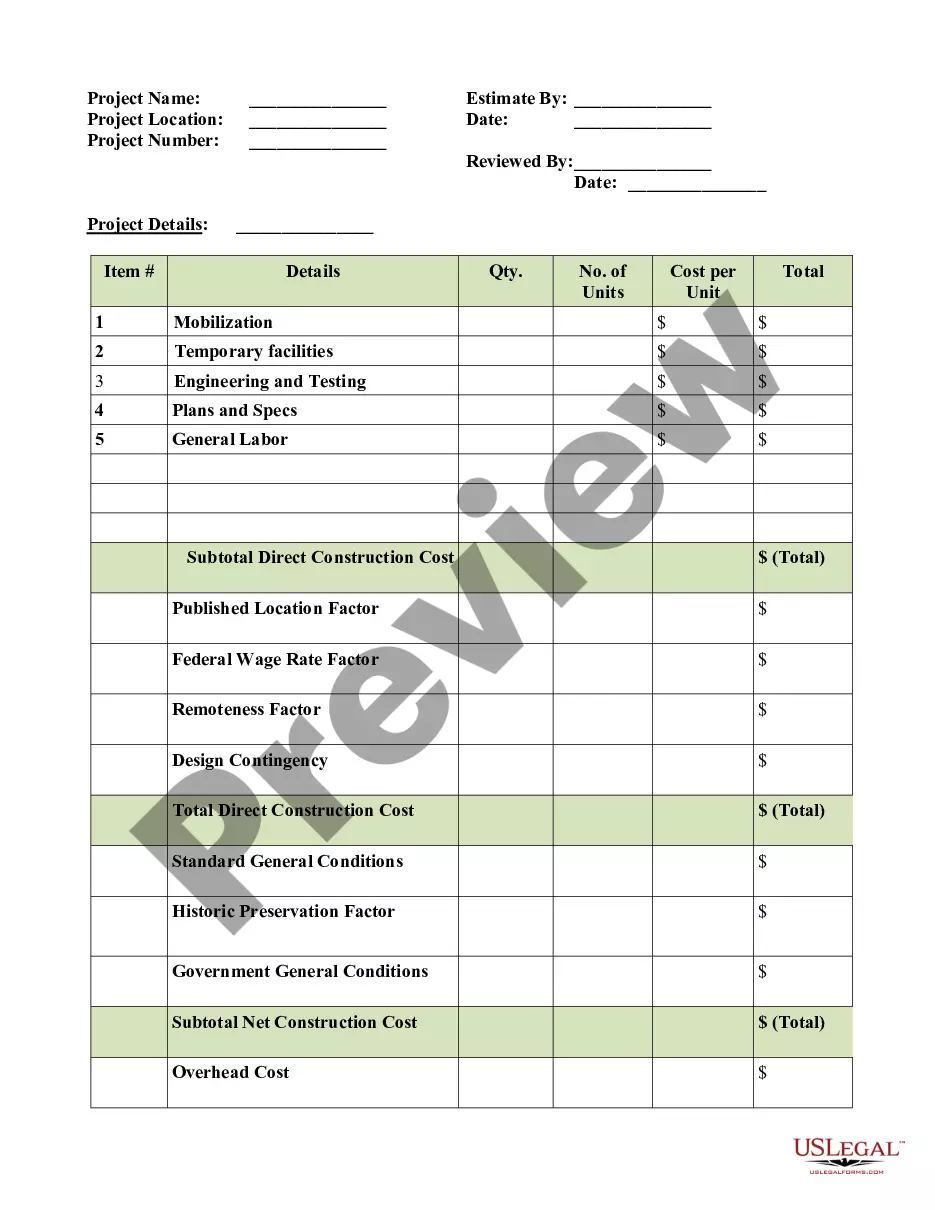
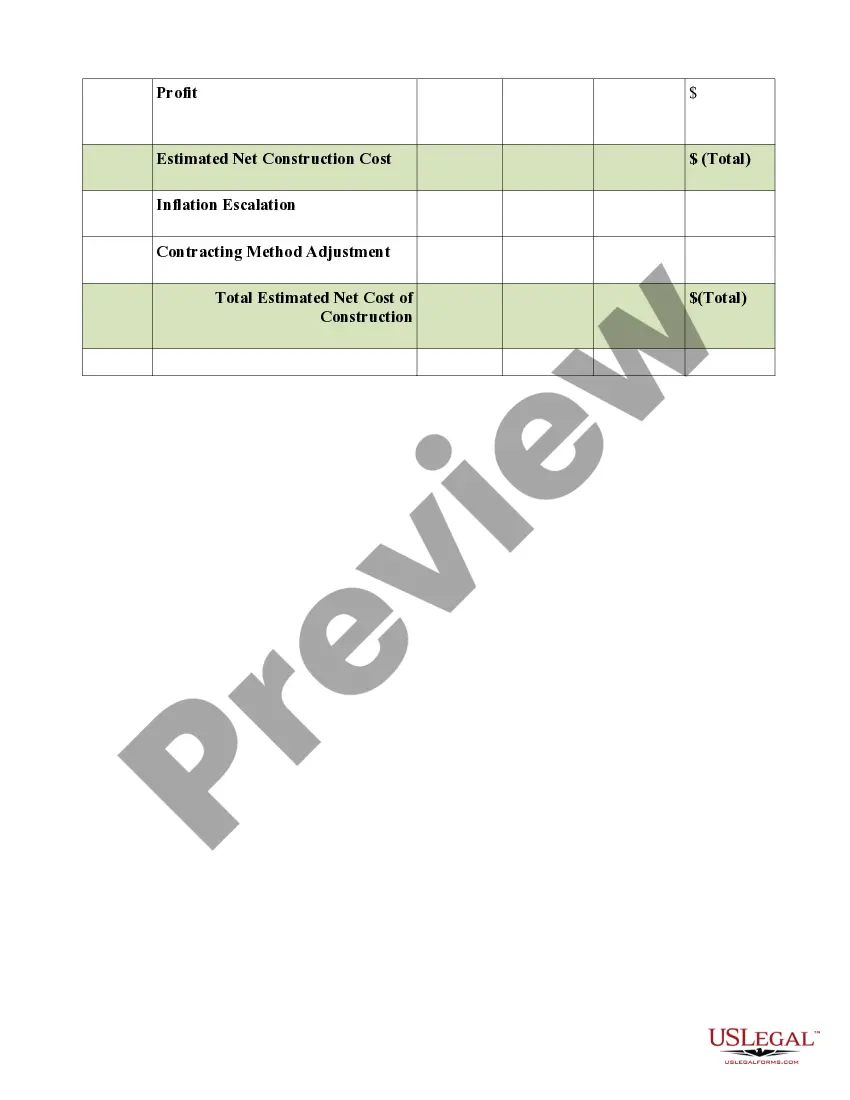
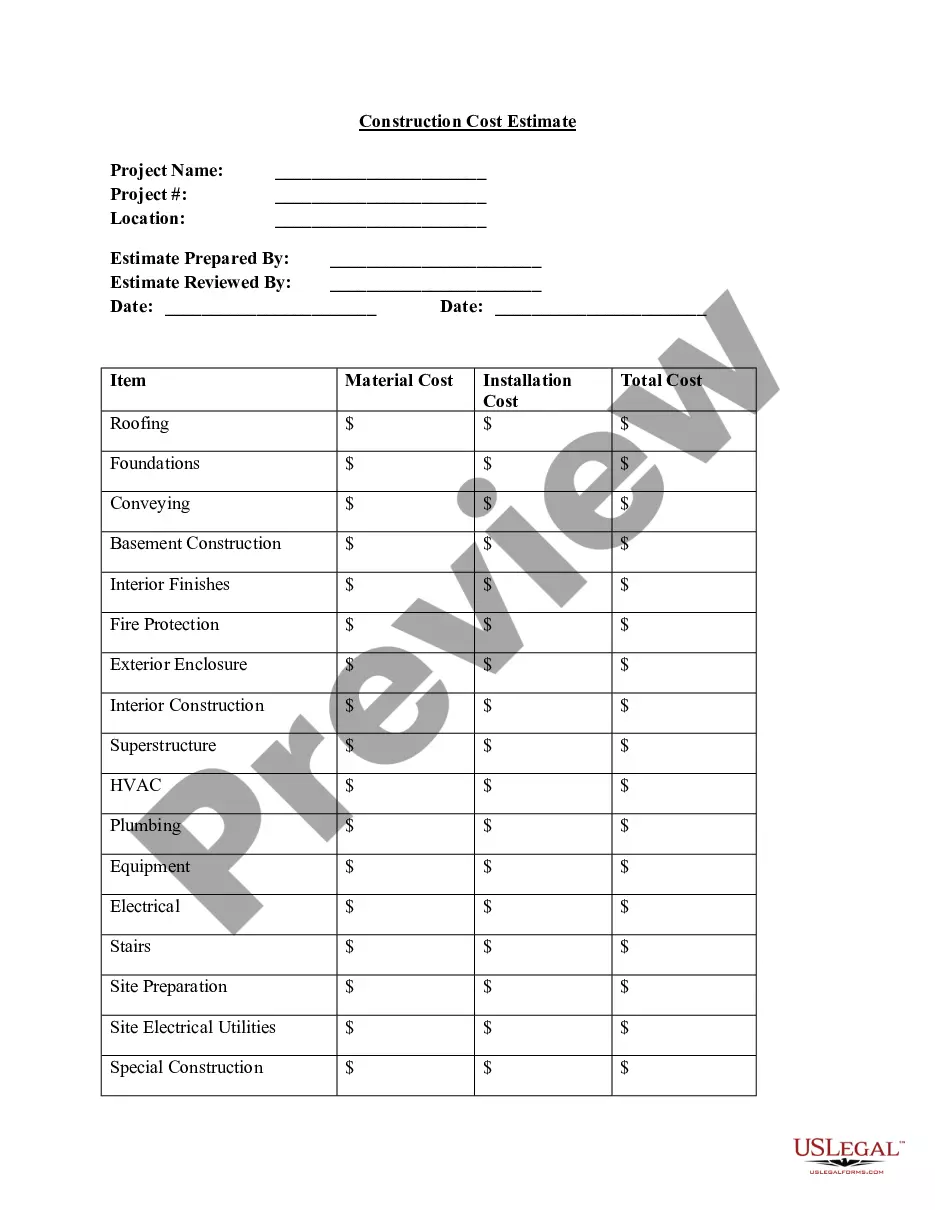
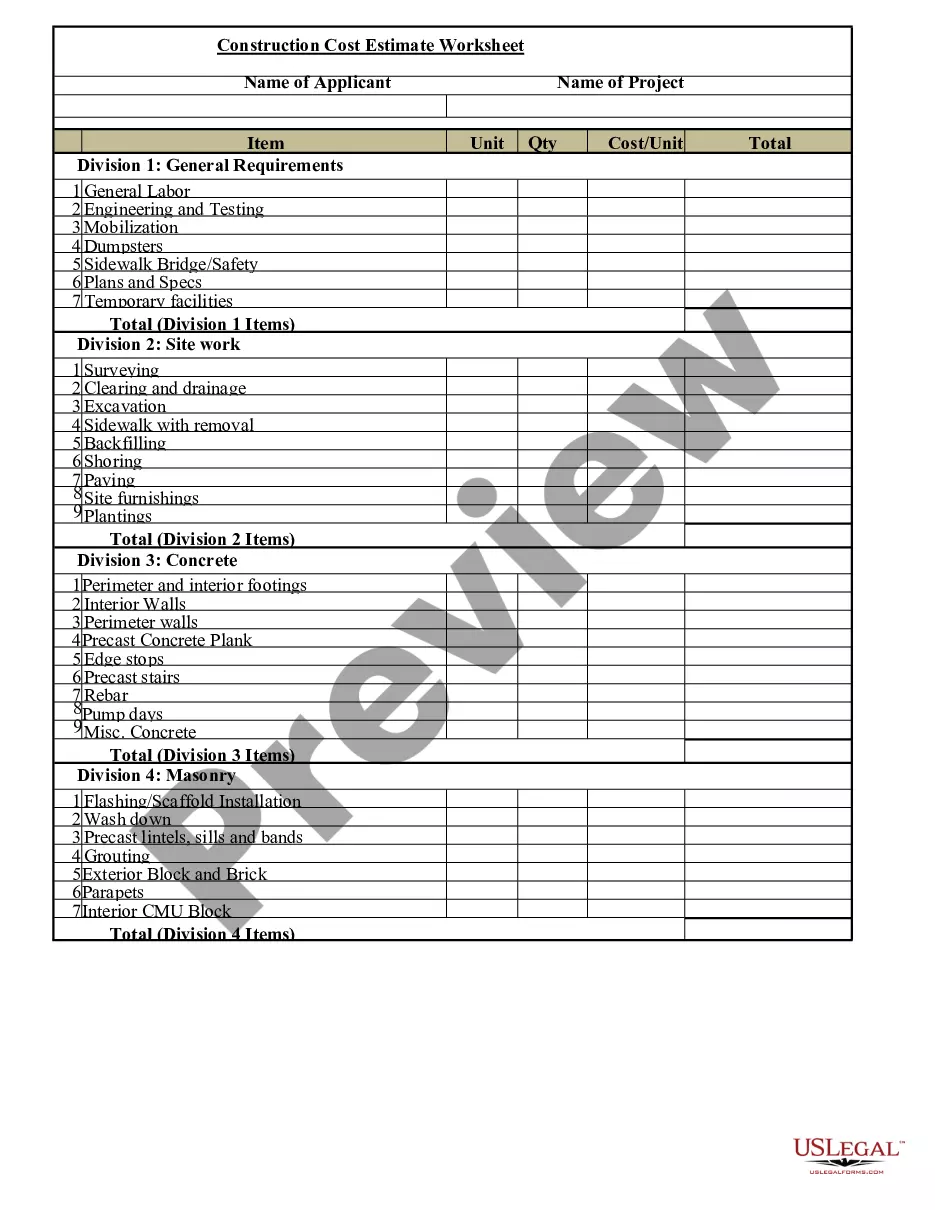
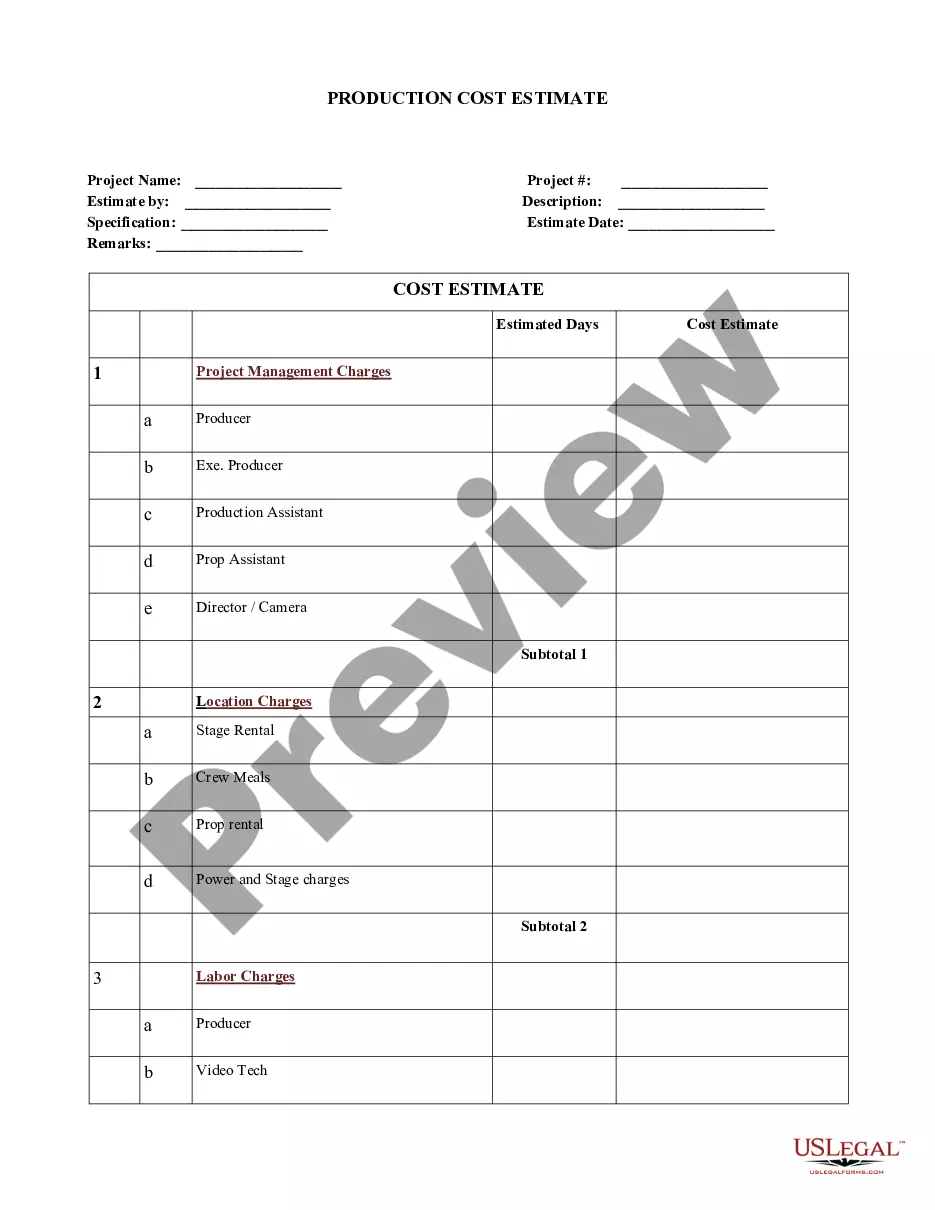
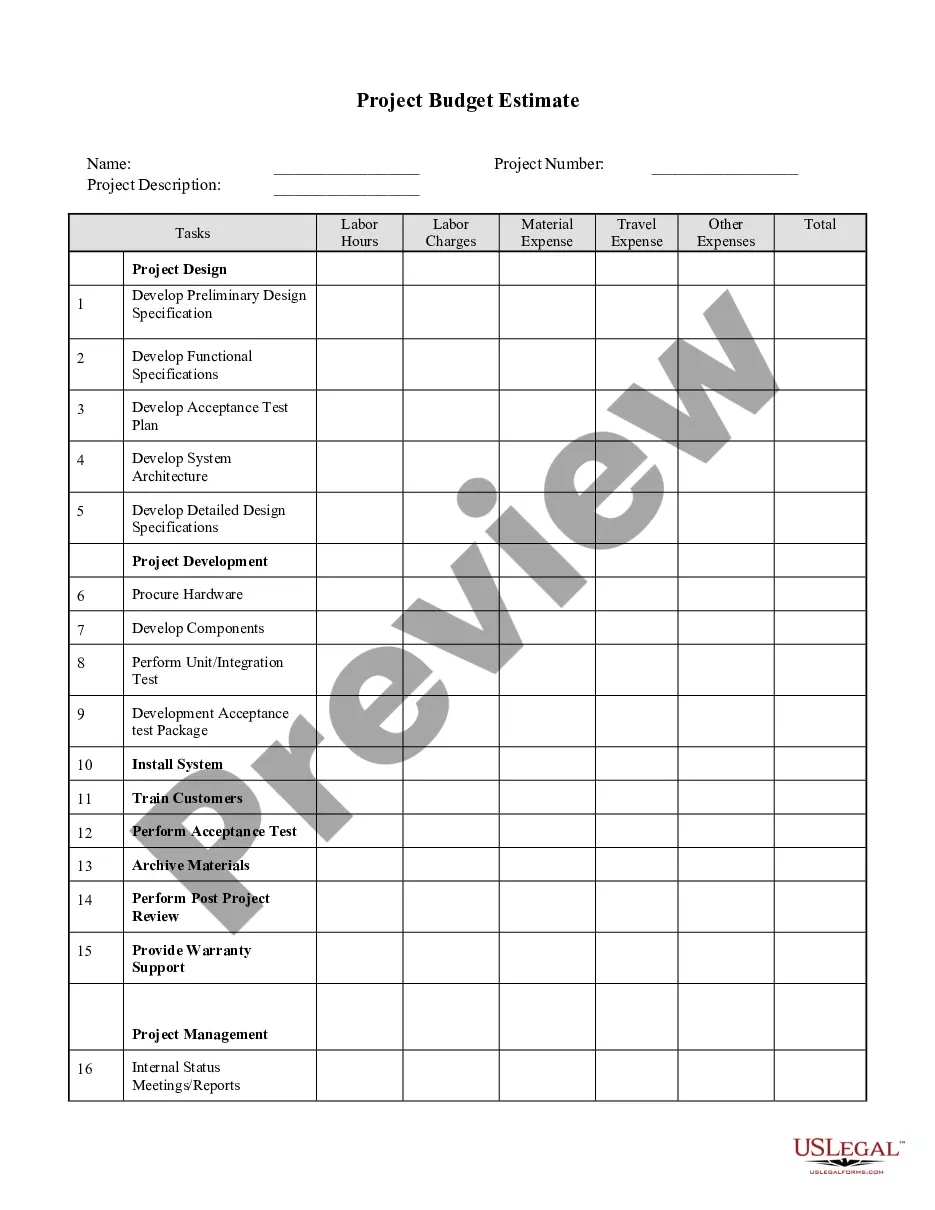
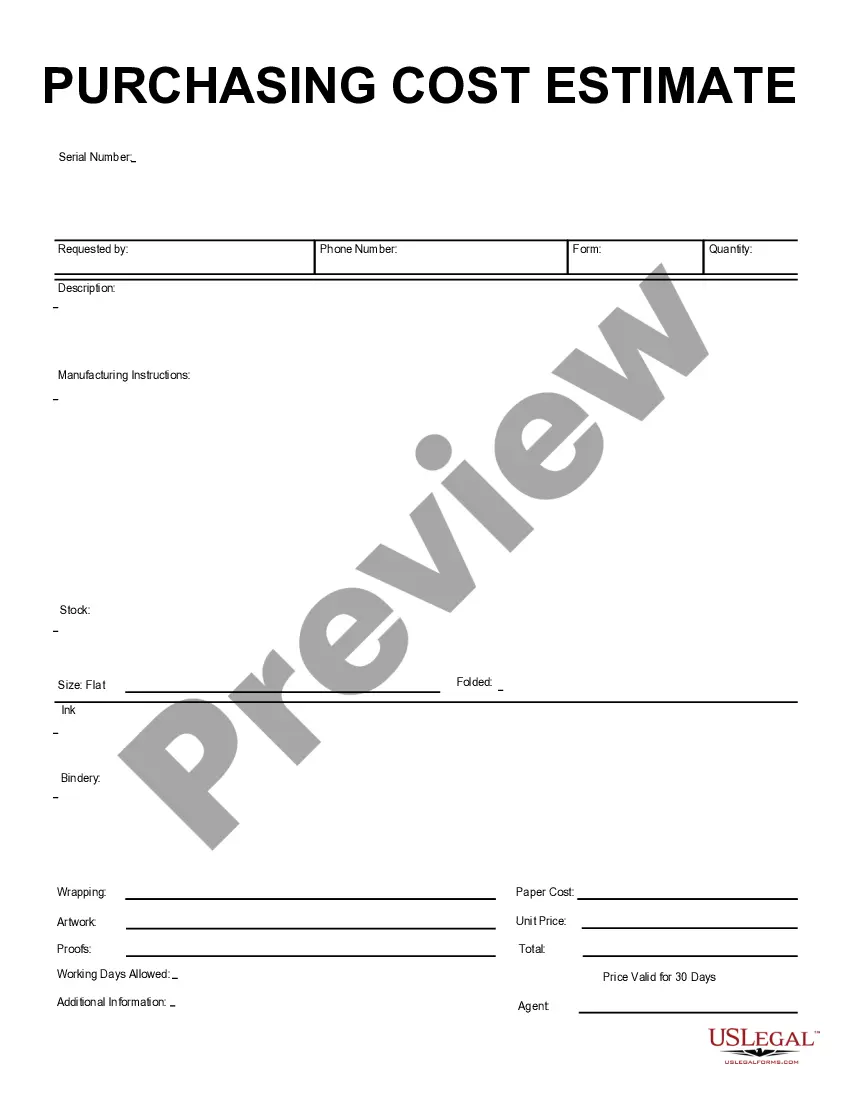
To estimate construction costs effectively, begin by gathering all project details, including drawings, specifications, and timelines. Next, you’ll review local market prices for materials and labor, which is crucial for a Saint Paul Minnesota Construction Cost Estimate. After collecting this data, compile an itemized budget that includes potential contingencies for unexpected issues. Resources from uslegalforms can guide you through this process for comprehensive and accurate results.
The formula for a construction estimate typically combines the cost of materials, labor, and overhead to provide a total project cost. For an accurate Saint Paul Minnesota Construction Cost Estimate, consider the specific project requirements and any local regulations that may apply. Essentially, the formula looks something like: Total Cost = Material Cost + Labor Cost + Overhead. Utilizing specialized services can help refine this formula based on your unique project needs.
Estimating construction costs involves analyzing various factors like labor, materials, and time required for the project. In the Saint Paul Minnesota Construction Cost Estimate, you'll often use historical data and current market rates to create a reliable estimate. This method helps ensure that all aspects of the project are considered, mitigating the risk of unexpected expenses. By using tools and resources available on platforms like uslegalforms, you can make the estimation process more streamlined.
Whether it's cheaper to buy a house or build one in Minnesota depends on various factors, including market conditions and personal preferences. Generally, purchasing an existing home may seem less expensive initially, but it often comes with hidden costs such as repairs and renovations. On the other hand, building a home allows for customization and avoiding compromises, making it critical to get a precise Saint Paul Minnesota Construction Cost Estimate for a clearer financial view.
Paul was not one of the Twelve Apostles, and did not know Jesus during his lifetime. ing to the Acts, Paul lived as a Pharisee and participated in the persecution of early disciples of Jesus, possibly Hellenised diaspora Jews converted to Christianity, in the area of Jerusalem, prior to his conversion.
Before conversion Before his conversion, Paul was known as Saul and was "a Pharisee of Pharisees", who "intensely persecuted" the followers of Jesus.
Definition. Paul was a follower of Jesus Christ who famously converted to Christianity on the road to Damascus after persecuting the very followers of the community that he joined. However, as we will see, Paul is better described as one of the founders of the religion rather than a convert to it.
Paul was a follower of Jesus Christ who famously converted to Christianity on the road to Damascus after persecuting the very followers of the community that he joined. However, as we will see, Paul is better described as one of the founders of the religion rather than a convert to it.
Although St. Paul was not one of the original 12 Apostles of Jesus, he was one of the most prolific contributors to the New Testament. Of the 27 books in the New Testament, 13 or 14 are traditionally attributed to Paul, though only 7 of these Pauline epistles are accepted as being entirely authentic and dictated by St.
He went on to become one of the most powerful preachers of the faith. He was a well-educated man driven by passion and a love for Christ and His Church. Today St Paul is celebrated in the Catholic Church as the patron saint of the missions, writers and publishers.
